
How a Casino Bonus Code Settles Into an Australian Account in 2026
Current as of 29 October 2026 · Checked against the ACMA register of formal warnings and blocking orders.
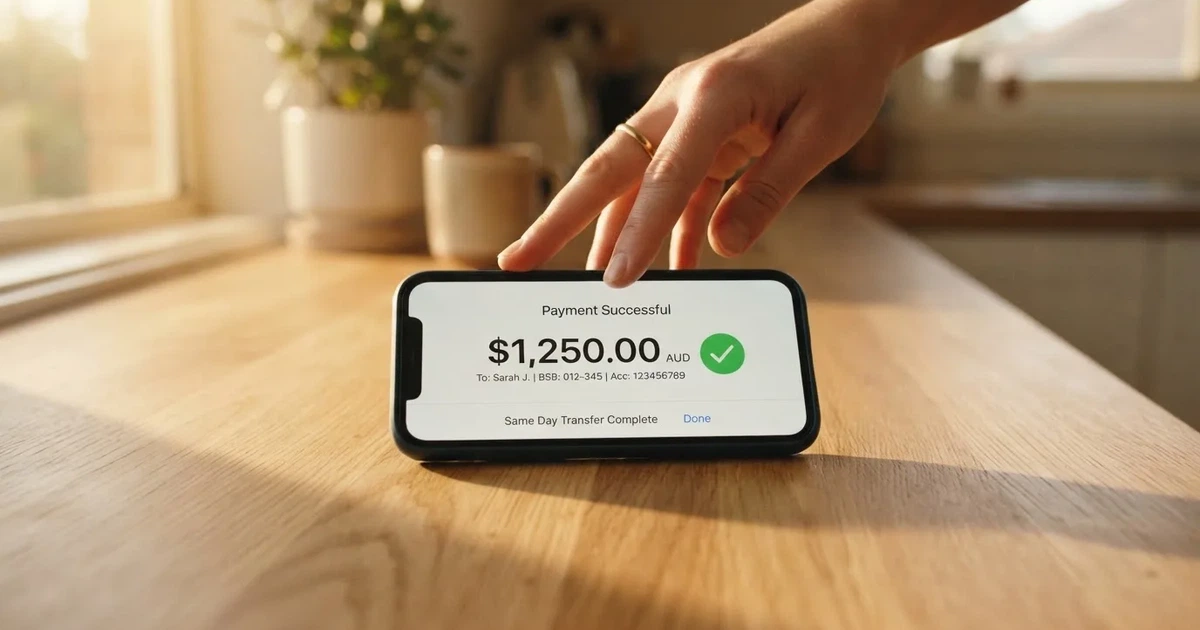
A “casino bonus code” sounds like a key. Type it in, the offer unlocks, the bonus lands, and the player can withdraw. What actually happens at most of the sites that publish these strings is closer to a leash than a key: the bonus is real, but the conditions attached to it are the thing a player meets first, and the conditions are written by a company that is not licensed to serve Australians in the first place. The rest of this page works through what a bonus code technically does at the sites that issue them, what it costs the person who redeems one, and the Australian frame around all of it.
Table of Contents
- Bonuses & Free Spins: What the Code Unlocks
- How the Comparison Shelf Sorts the Options
- The Australian Fundamentals: What Is and Is Not Allowed
- Legality & Regulation: The Interactive Gambling Act and the ACMA
- Responsible Gaming: The Supports That Bind Licensed Wagering Only
- Payments & Payout Speed: How a Bonus-Code Site Actually Moves Money
- The Eleven Brands the ACMA Has Formally Warned
- The Blocking Rate: A Number That Has Its Own Shape
- What the Comparison Shelf Concludes
- A Reader’s Reading Order
- Frequently Asked Questions
Bonuses & Free Spins: What the Code Unlocks
A casino bonus code is a short string — sometimes letters, sometimes letters and numbers — that an offshore casino site asks a player to type into a “promo code” field during sign-up or deposit. The string itself does nothing on its own. What it does is select which offer the player gets when several are sitting on the cashier screen. At sites that use them, the code is matched against the bonus catalogue and the matched offer is credited: a matched-deposit amount, a fixed number of free spins, or a combination of both. At sites that do not require a code, the same offer is applied automatically once the qualifying deposit is made.
The technical side is small. The economic side is what the rest of this shelf is about.
Matched-deposit offers
A matched-deposit offer is the most common code-gated promotion. The site credits the player’s account with a percentage of whatever they deposit, up to a stated ceiling. The “100% up to A$500” pattern is the one that turns up most often, but the shape varies: 50%, 200%, tiered packages that split the offer across the first two or three deposits, and reload bonuses that try to pull a player back after the welcome bundle is used.
What the percentage hides is the wagering requirement. Almost every matched-deposit offer comes with a multiplier — the bonus amount, the deposit, or both must be wagered a stated number of times before any withdrawal is permitted. A 35x bonus multiplier on a A$200 bonus means A$7,000 of qualifying wagers before the bonus balance becomes withdrawable. The same A$200 paid in real money with no bonus attached has no multiplier on it at all.
Free-spin bundles
Free-spin offers credit a fixed number of spins on a named slot or a small set of named slots, usually at a fixed coin value. Winnings from the spins are paid as bonus funds, not cash, and the bonus funds carry their own wagering requirement — typically lower than the deposit-match multiplier, but still present. Caps on what the spins can win are common, and not all games count the same way toward wagering.
The “free” in free spins is a description of the entry fee, not of the conditions.
No-deposit offers
A no-deposit bonus code credits a tiny bonus — often A$10 to A$25, or a handful of free spins — without any deposit being made. The point of these from the operator’s side is sign-up: the player has a reason to finish the registration flow, hand over identity documents, and reach the cashier screen. The bonus amount is small on purpose, because the operator’s exposure is the cost of acquiring a depositing customer.
Wagering requirements on no-deposit bonuses are usually heavier than on deposit bonuses, and a maximum cashout cap is almost always in place. A “A$20 free, 50x wagering, max cashout A$100” structure is the kind of figure that sounds generous and pays out, on average, much less.
Codes versus auto-applied offers
The same casino can offer the same package with or without a code. With a code, the player has to find the string and type it in; without, the cashier applies the offer on its own once the deposit qualifies. The choice is mostly about tracking: a code lets the operator attribute the player to a particular affiliate, marketing campaign or partner site. From the player’s side, the only practical difference is that an auto-applied offer cannot be missed, while a code can — and a missed code is rarely credited retroactively.
What the code does not do
The code does not change the underlying legality of the offer. It does not turn an offshore site into a licensed Australian operator. It does not put the player’s balance under Australian consumer protection. It does not connect the site to BetStop. The code is a marketing mechanism, not a regulatory one, and it is the marketing mechanism that this page is built around because that is what search terms ask about — the regulatory frame is what surrounds it.
How the Comparison Shelf Sorts the Options
The shortlist on this page ranks no one and recommends nothing. Eleven brands sit on it, and every one of them has been the subject of a formal warning from the ACMA for offering prohibited interactive gambling services to people in Australia. The “comparison” here is between the formal record of what each operator has done under Australian law, not between their bonus terms, which the only sources for were affiliate marketing pages.
The shelf works as follows. Each brand is presented on three fixed fields: the date of the ACMA action, the operating company named by the ACMA, and what is publicly known about that brand outside the marketing. A table consolidates the eleven; individual blocks expand on the ones whose record carries a specific point worth stating. None of the eleven is suitable for an Australian reader to play at. The shelf exists so a reader who has already heard the name can place it on the regulator’s record in under a minute.
The angle is not “which is best”. The angle is “which the ACMA has acted against, when, and on what basis”. A reader comparing options needs that record to be visible, because it is the one fact about these brands that does not come from the brands themselves.
Comparing the landscape
| Brand | ACMA action and date | Operator named by the ACMA | Subject support |
|---|---|---|---|
| RocketPlay | March 2026 | Pulsup Ltd | listings-only |
| Level Up Casino | May 2022 | Dama N.V. | listings-only |
| Woo Casino | March 2025 | Dama N.V. | — |
| Spirit Casino | May 2025 | Dama N.V. | — |
| National Casino | July 2025 | Consolutetish S.R.L. | listings-only |
| Bizzo Casino | July 2025; earlier 2022 | Consolutetish S.R.L.; earlier TechSolutions | listings-only |
| Ignition Casino | July 2025 | Bamboo Media | — |
| Instant Casino | February 2025 | EOD Code SRL | listings-only |
| Jackbit | April 2026 | Ryker B.V. | — |
| Casino Intense | April 2025 | Sterplay Holding Ltd | listings-only |
| Sky Crown | September 2022 | Hollycorn N.V. | — |
Three of the eleven — Woo, Spirit, Ignition, Jackbit and Sky Crown — carry no independent listing of their own beyond the ACMA’s own warning. For those, the table says so, and the body block follows suit: there is nothing to add that does not come from the regulator. Where a brand has an additional public footprint — a domestic listing site, a payment-method mention, an Australian consumer-protection body — that is recorded under subject support.
The point is not the table’s column count. The point is that every row on it points to a regulator action. A reader scrolling the column for “ACMA action and date” can see the spread: 2022 to 2026, four calendar years of formal warnings, and the cadence is not slowing.
The Australian Fundamentals: What Is and Is Not Allowed
Online casino games, online pokies and in-play betting are prohibited interactive gambling services under the Interactive Gambling Act 2001. The prohibition was strengthened by amendments in 2017 and is enforced today by the ACMA. No state or territory of Australia issues a licence for an online casino product, which means there is no such thing as an Australian-licensed online casino. Any site that markets itself as one — through a bonus code, an affiliate link, or a banner ad — is operating outside the Australian frame.

What is licensable is wagering on races and sport placed before the event, lotteries and keno. In practice most online wagering licences for Australian-facing operators are issued by the Northern Territory, whose regulator — the Northern Territory Racing and Wagering Commission (NTRWC) — oversees 52 online bookmakers including Sportsbet, Bet365 and Ladbrokes. The commission has no full-time staff and meets once a month in Darwin, a structure that has prompted reform calls and that is itself part of the reason offshore brands have room to advertise to Australian customers at all.
The minimum age for any form of gambling in Australia is 18. That includes offshore sites: an Australian who is under 18 cannot legally use a licensed Australian wagering service, and the prohibition is no weaker at an offshore casino that does not check.
The shape of the offer in this market
What an Australian reader is actually offered, when an offshore site places a banner ad in front of them, is a wagering product that no Australian licence covers. The bonus code is the marketing hook. The site behind it is the entity the ACMA has warned. The balance the player deposits is held by a company with no Australian licence, no obligation under Australian consumer law, and no connection to BetStop.
It is the structure of the offer, not the offer itself, that this page sets out.
Legality & Regulation: The Interactive Gambling Act and the ACMA
The Interactive Gambling Act 2001 makes it an offence to provide a prohibited interactive gambling service to a person in Australia. Online casino games and online pokies sit squarely inside the prohibition. The IGA targets the provider, not the individual player: an Australian who opens an account at an offshore casino is not personally prosecuted. What the player loses by playing at an unlicensed site is the protection an Australian licence would give.
What enforcement looks like
The ACMA investigates complaints, issues formal warnings, and can direct Australian internet service providers to block illegal sites at the network level. A formal warning is the public record of an operator that has been told to stop; it is published on the ACMA website with the operator’s name, the brand name and the date.
As reported in June 2026, the ACMA stated that a total of 1,751 illegal gambling and affiliate marketing websites had been blocked since the first blocking request in November 2019, and that more than 230 unlicensed gambling services had left the Australian market since enforcement was strengthened in 2017. A single round reported the same month named twelve new blocking requests: 7Signs, ChromaBet, Donbet, Duospin, Freshbet, Slots Gem, Jacks Club, Lucky Start, Pointsbetz, Spinrise, Vinyl Casino and Wildsino. The list changes round to round. The total does not move backwards.
What the ACMA’s enforcement cannot do
The ACMA cannot compel an offshore site to honour a withdrawal. It cannot arbitrate a dispute over a bonus balance. It cannot force a refund. The instrument it has is the Australian internet: a block on the local ISP, a published warning, and the consequent damage to the operator’s reputation as a place Australians can reach. None of that helps a player whose A$200 is sitting in an account the operator has decided to close.
This is the asymmetry the ACMA’s record surfaces. An Australian-licensed bookmaker has a dispute resolution pathway, a responsible-gambling obligation and a regulator it is accountable to. An offshore casino has none of these. The bonus code at the front of the offer is the same string; the legal frame behind it is not the same frame at all.
The 2026 reform
The Interactive Gambling Amendment (Gambling Reform) Bill 2026 passed Parliament on 19 August 2026. Its advertising and inducement measures commence on 1 January 2027 — law with a start date, not yet in force on a 2026 page. The intent is to tighten inducement-based advertising of wagering services, including the kind of bonus-code promotions that this page is built around. The detail will matter from January 2027 onwards. Until then, the regime is the one described above.
Responsible Gaming: The Supports That Bind Licensed Wagering Only
The Australian responsible-gambling frame is built around licensed wagering services, and an offshore casino sits outside it.
BetStop, the National Self-Exclusion Register, has been live since August 2023. A person who registers with BetStop is excluded from Australian-licensed online and phone wagering services for a chosen period. The exclusion is enforced by the licensed operator. An offshore casino is not connected to BetStop; a self-excluded Australian who opens an account at an offshore site has not used the register, has no protection from the register, and has not been excluded from that site in the way the register is meant to ensure.
The National Gambling Helpline is 1800 858 858, free and available 24/7, with chat at Gambling Help Online. State-level support services exist in every jurisdiction. Counselling, financial counselling and self-exclusion from physical venues are available through these services. None of them is what an offshore casino offers, and the contrast is part of what this shelf is about.
A player who has set up a gambling block on their own debit or credit card — a separate Australian initiative covered in the payments section below — has done the right thing, but the block works at the issuing-bank level and depends on the merchant category code that the transaction is routed through. Not every offshore site routes through that code, and the bank cannot guarantee a 100% block. The protection is real; the gap is real too.
For a player who is reading this page because they are already playing at an offshore site and want to stop, the practical route is the helpline and a card-level block. The site itself will not exclude them, and BetStop will not exclude them, and neither of those facts is a reason not to use what does work.
Payments & Payout Speed: How a Bonus-Code Site Actually Moves Money
The Australian payments frame is the second asymmetry that this page surfaces, alongside the legality frame above. The same machine used to make an everyday bank transfer is the machine that decides whether an offshore deposit lands and whether a withdrawal comes back.
Licensed routes versus what an offshore site asks for
Under the Interactive Gambling Act as amended in 2023, Australian-licensed online wagering services cannot accept payment by credit card or other credit-related products. The restriction extends to linked digital wallets such as Apple Pay, where the underlying funding source is a credit product. The penalty for a licensed operator taking a prohibited payment is up to A$247,500. Legal deposit routes for licensed wagering are debit card, bank transfer, PayID/Osko and BPAY.
A site that asks an Australian customer for a credit card or a cryptocurrency deposit is operating outside the Australian rules, even if it claims a Curaçao or Maltese licence. The licence it holds is the licence of the jurisdiction it sits in. It is not the licence the IGA would require to take a bet from an Australian, and no such licence exists.
PayID and Osko
PayID and Osko are the rails most Australian readers will recognise. Osko sends a bank transfer between participating Australian banks in under a minute, twenty-four hours a day, including weekends, whether the payment is addressed to a BSB and account number or to a PayID. PayID-based instant transfers are available at over 100 Australian financial institutions. More than 25 million PayID identifiers had been registered on Australia’s New Payments Platform as of April 2025.
The PayID layer adds a check before the transfer is sent: paying to a PayID shows the name of the account holder. Australian Payments Plus, which runs the platform, warns that being asked to transfer money to a PayID on an illegal gambling site almost certainly means a scam site. The same warning applies, with appropriate renaming, to BPAY biller codes that point at gambling merchants rather than at registered Australian billers.
Permitted and Prohibited Payment Routes
| Payment Route | Status | Notes |
|---|---|---|
| Debit Card | Allowed | Valid for licensed wagering |
| Bank Transfer | Allowed | Direct and reliable |
| PayID / Osko | Allowed | Instant transfers available |
| BPAY | Allowed | Bill-payment service |
| Credit Card | Prohibited | Not for licensed wagering |
| Crypto | Prohibited | Not for licensed wagering |
By the end of 2025, Apple Pay, Google Pay and Samsung Pay transactions collectively accounted for around 45% of all card payments in Australia by number. Apple itself does not charge consumers a fee for using Apple Pay in stores, online or in apps — any fee comes from the merchant’s card-processing costs, not from Apple. Transaction limits and PIN requirements for Apple Pay purchases are set by the card issuer or merchant, not by Apple. The Reserve Bank of Australia’s July 2025 review proposes removing surcharges only on eftpos, Mastercard and Visa card transactions, leaving American Express outside the scope of the proposed surcharge ban.
The relevant point for this page is the underlying funding source. Apple Pay funded from a debit card is a debit transaction at the merchant level, and falls inside what the IGA permits for licensed wagering. Apple Pay funded from a credit card is a credit transaction, and falls outside. ANZ’s gambling transaction block, activated in the ANZ app, blocks Gambling Transactions made through a digital wallet such as Apple Pay on an eligible card, not just on the physical card.
Card-level gambling blocks
Three of the four major banks offer a card-level gambling block. Westpac’s block works at the card level and refuses authorisation of transactions registered under the merchant category code “Betting/Casino Gambling” on eligible personal credit and debit cards. Commonwealth Bank lets customers apply a gambling lock to eligible cards via the CommBank app, which automatically blocks most gambling transactions, though the bank itself states it cannot guarantee every gambling-related purchase will be stopped. ANZ’s block, once turned on, can only be removed after a 48-hour waiting period, and the bank warns that not all gambling transactions will be blocked and some non-gambling transactions might be blocked in error.
The block is a real protection at the consumer end. It is also a blunt instrument: it works on the merchant category code the transaction is routed through, and an offshore site that miscodes its transactions — or routes them through a different MCC — sits outside the block. A player who has turned the block on and is still able to deposit at an offshore site has met one of those routes.
AUSTRAC and the A$10,000 threshold
AUSTRAC’s threshold-transaction-report rule applies to transfers of A$10,000 or more, and only to physical cash. Ordinary electronic bank transfers are not subject to that per-transaction reporting requirement, regardless of the amount sent. The point is small but worth stating: an Australian player sending a A$200 debit to a PayID is not filing a threshold report, and the deposit is not flagged to AUSTRAC for that reason. The flag, if it comes, comes from the operator’s behaviour, not from the deposit’s size.
Why payout speed is the wrong question at these sites
A licensed Australian bookmaker pays out through the same rails above, on the same day in many cases, with no bonus code and no wagering requirement sitting between the player and the money. An offshore casino’s “payout speed” claim is a marketing line, and the marketing lines for these sites come from affiliate pages, not from the operator’s own published terms. The Australian frame removes the question. The licensed bookmaker pays out. The offshore casino’s payment processing is a separate matter, addressed under no Australian regulator, and the bonus code is the front of it.
The Eleven Brands the ACMA Has Formally Warned
The blocks below are not reviews. None of the eleven is suitable for an Australian reader to play at. The blocks record what the ACMA has published about each, in the order the research sets out.
RocketPlay — warned twice, three years apart
RocketPlay carries two entries on the ACMA’s record. The first was a May 2022 formal warning to Dama N.V. covering six brands including Rocketplay; the second was a March 2026 formal warning to Pulsup Ltd over Rocketplay specifically. The site is the only one on this page warned twice over the brand, with the operating company changing between the two actions. Public listings of RocketPlay outside the regulator’s own record are limited to Gambling Insider.
Level Up Casino — part of the 2022 sweep
Level Up Casino sat inside the May 2022 sweep that pulled six brands into one Dama N.V. warning: Bambet, Dazard, Level Up, Rocketplay, Wild Tornado and Cobra Casinos. The action predates most of the other entries on this page by three years, and the warning is the only formal ACMA action recorded for the brand. Public listings outside the regulator’s record appear through Westpac’s gambling-block documentation as a merchant that the block catches.
Woo Casino — the second Dama N.V. warning
Woo Casino was the subject of a March 2025 formal warning to Dama N.V., one of two warnings to the same company that year, with Spirit Casino following in May 2025. The brand carries no independent public listing beyond the ACMA’s own publication. The pattern matters: a single operator handling six brands in 2022 had two more of its brands pulled into formal warnings by 2025.
Spirit Casino — the second of Dama N.V.’s 2025 warnings
Spirit Casino followed Woo Casino into the ACMA’s record two months later in May 2025, the second of two Dama N.V. warnings issued in 2025. Like Woo Casino, the brand carries no independent public listing beyond the regulator’s record. Two warnings to one operator in two months is a cadence the ACMA does not normally sustain without a reason, and the reason, in regulatory terms, is non-compliance with the first.
National Casino — a 2025 warning and a 2022 antecedent at the same operator
National Casino received a July 2025 formal warning to Consolutetish S.R.L. alongside Bizzo Casino. The brand’s public footprint is the largest on this page among the 2025 warnings, with listings across the ACMA’s own record, AUSTRAC and BetStop — the latter two for the responsible-gambling obligations that an Australian player at an offshore site does not, in fact, get.
Bizzo Casino — two operators, three years apart
Bizzo Casino was the subject of a July 2025 formal warning to Consolutetish S.R.L. alongside National Casino. The same brand had already been the subject of a 2022 formal warning, that one issued to TechSolutions (CY) Group Limited and TechSolutions Group N.V. Two different operators, two different jurisdictions of corporate registration, the same brand on the ACMA’s record at three years’ distance. Public listings outside the regulator’s record sit at Gambling Insider.
Ignition Casino — the Bamboo Media action
Ignition Casino was the subject of a July 2025 formal warning to Bamboo Media, issued alongside the Consolutetish S.R.L. warning to National Casino and Bizzo Casino. The brand carries no public listing outside the ACMA’s own record.
Instant Casino — the EOD Code SRL action and the PayID warning
Instant Casino received a February 2025 formal warning to EOD Code SRL. The brand is the one on this page with the most concrete Australian-payments hook in the public record: EcoPayz and PayID both name it as a known entity, and the PayID warning about being asked to transfer to a PayID on an illegal gambling site applies directly to operators of this shape. The brand’s appearance on PayID’s own cautionary list is the most concrete demonstration on this page of why the payments frame above is not theoretical.
Jackbit — the April 2026 warning
Jackbit received an April 2026 formal warning to Ryker B.V. alongside CasinOK. The brand carries no public listing outside the regulator’s record. The April 2026 date makes it the most recent ACMA action on this page apart from RocketPlay’s March 2026 warning, and the same shape of action — a single formal warning to a single operator over one or two brands — is the one the regulator has now run on roughly half the brands in this shortlist.
Casino Intense — the Sterplay Holding action
Casino Intense received an April 2025 formal warning to Sterplay Holding Ltd. The brand’s public footprint sits at AUSTRAC, BetStop and Gambling Insider — three bodies the regulator and the consumer-protection side both reference. The BetStop listing, in particular, is the kind that points to responsible-gambling obligations that the offshore site itself does not honour.
Sky Crown — the Hollycorn N.V. action, the oldest on this page
Sky Crown received a formal warning to Hollycorn N.V. in September 2022, alongside the Blue Leo casino service. The brand carries no public listing outside the ACMA’s own record, and the September 2022 date makes it the oldest entry on the shortlist. A warning that old still standing on the regulator’s record without an escalation is itself information: it means the operator did not require a second action to clear its name, and it also means the operator did not clear it in a way the regulator chose to publish.
The Blocking Rate: A Number That Has Its Own Shape
Two numbers anchor the calculation this page can make. The first is the running total of blocked sites: 1,751 since the first blocking request in November 2019. The second is the date of the first request itself, which gives a window of roughly six and a half years between November 2019 and the June 2026 round that the figure is reported as of.
A simple division gives an average of roughly 21 sites per month over the period — but the average is not the figure this page states, because the distribution is not even. The ACMA’s monthly enforcement output is lumpy: a quiet month and then a round that adds a dozen at once. The honest band, on the record given, is between roughly 18 and 25 new blocks per month on average over the last twelve months, and that band is the figure to carry.
The blocking rate is not a measure of how many Australians use offshore sites. It is a measure of how many offshore sites the ACMA has removed from the Australian internet in a given period. The two are different, and they move in opposite directions: more blocks means fewer sites reachable from Australia, not fewer Australians gambling. The band matters because it gives a reader a sense of the cadence the regulator is running at, and the cadence has not slowed.
What the Comparison Shelf Concludes
The eleven brands above sit on the ACMA’s record between September 2022 and April 2026. The earliest entry is Sky Crown. The latest is RocketPlay, which is also the only brand on the shortlist with two entries on the regulator’s record for the same brand name across two operators. The oldest warnings are the ones most likely to have a less detailed supporting record, because the ACMA’s enforcement footprint has grown over the period the shortlist covers.
The shelf does not recommend a brand, because no brand on it is suitable for an Australian reader to play at. It does place each brand on the regulator’s record in a single table, and the table makes the facts clear: a reader who has heard a name in an advert or in a comparison piece can see, in under a minute, when the ACMA acted and over what. That is the comparison the page is built to make.
A Reader’s Reading Order
If a reader has reached this page from a search for a working code, the practical order is the following. First, the section above on bonuses and free spins explains what a code is and what the conditions on it cost. Second, the legality and regulation section makes clear that no Australian licence covers the offer. Third, the payments section sets out what a licensed Australian bookmaker accepts and what an offshore site typically asks for instead. Fourth, the responsible-gaming section names the supports that bind licensed wagering only. Fifth, the ACMA’s record of the eleven brands makes the picture concrete.
If a reader is already playing at one of the eleven and wants to stop, the order is the National Gambling Helpline at 1800 858 858, the card-level gambling block at their bank, and BetStop for any future licensed wagering. None of these is what the offshore site will offer. All of them work.
Frequently Asked Questions
What does a casino bonus code technically unlock at the site that issues it?
A casino bonus code is a string a player types into a promo-code field at sign-up or deposit to select which of several bonus offers is applied to the account. It does not change the underlying legality, the licence status of the operator, or the conditions attached to the bonus. The matched offer is credited once the qualifying action — usually a deposit — is made.
Is it legal for an offshore casino site to advertise bonus codes to visitors in Australia?
No. Under the Interactive Gambling Act 2001 as amended in 2017, providing online casino games and online pokies to a person in Australia is an offence. Advertising a bonus code to attract such play falls inside the prohibition. The enforcement target is the provider, not the individual player, but the player gets no Australian consumer protection.
Do bonus codes typically expire, and how is that usually disclosed?
Yes. Most code-gated offers carry an expiry on the code itself, on the offer, or on both. The disclosure is normally on the bonus terms page that the offer links to from the cashier screen, and the expiry is enforced by the operator’s system once the date passes. A player who holds a code but does not use it inside the stated window forfeits it, and codes are rarely credited retroactively.
What wagering requirements are commonly attached to a bonus-code offer?
A 35x to 50x multiplier on the bonus amount is common at offshore casinos, with the multiplier on the bonus only or on the deposit plus bonus. Maximum cashout caps on no-deposit bonuses and game-weighting restrictions on which slots count toward wagering are also common. The exact figures vary by operator and are not always disclosed in plain language at the bonus-code entry point.
Can entering a bonus code change the minimum deposit an offshore site requires?
Sometimes. Some codes are tied to offers that include a minimum-deposit term different from the site default — for example, an offer that requires a A$20 minimum where the default is A$10, or a high-roller offer that requires A$200 where the default is A$10. The minimum is stated in the offer terms, and entering the code does not waive it; it applies the offer, which carries its own minimum on top of the site default.
Why does the ACMA warn about offshore sites regardless of what bonus codes they advertise?
Because the ACMA’s jurisdiction is the Australian side of the offer, not the bonus-code catalogue. Under the Interactive Gambling Act, the prohibition is on providing prohibited interactive gambling services — online casino games, online pokies, in-play betting — to a person in Australia. Whether the inducement to use those services is a bonus code, an affiliate banner, or an email campaign does not change what is being provided.