Online craps for Australian players in 2026: the law, the market, and the choices that remain
 Available in US
A reader typing “best casinos for online craps australia 2026” into a search box is, almost always, after a working shortlist — somewhere to log in, somewhere to play, ideally a bonus attached. The honest version of that page does not exist in the way it might for a player in another country, and the rest of this article is about why. Under the Interactive Gambling Act 2001, offering online casino-style games — craps included — to anyone in Australia is a federal offence, and no state or territory issues a licence that would change that fact. The ACMA’s record of formal warnings and blocked sites is the public map of who is still trying, and BetStop is the only national self-exclusion tool that touches a player’s own behaviour. So the page below does three things in this order: it explains the game itself, it lays out the legal frame that the search term runs into, and then it walks through the brands the ACMA has acted against — not as recommendations but as a record of what is being blocked and why. Anyone reading this from inside Australia looking for a place to play craps online will not find one here, because there is not one to find.
Currency figures below are current as of 24 September 2026 and have been checked against the ACMA register, the IGA 2001 as published on legislation.gov.au, and the Interactive Gambling Amendment (Gambling Reform) Bill 2026 as passed on 19 August 2026.
Table of Contents
- The game itself: what craps actually is
- Variants and where the game sits next to baccarat and blackjack
- What the Interactive Gambling Act 2001 actually says
- The scale of the illegal market
- Player protection: BetStop and the self-exclusion gap
- The bonuses the unlawful market still advertises
- The ACMA’s published formal warnings: the brands on the record
- How fast the ACMA is actually blocking
- What a reader in Australia actually has
- Tax and what winnings actually mean
- What to take from this page
- Frequently asked questions
The game itself: what craps actually is
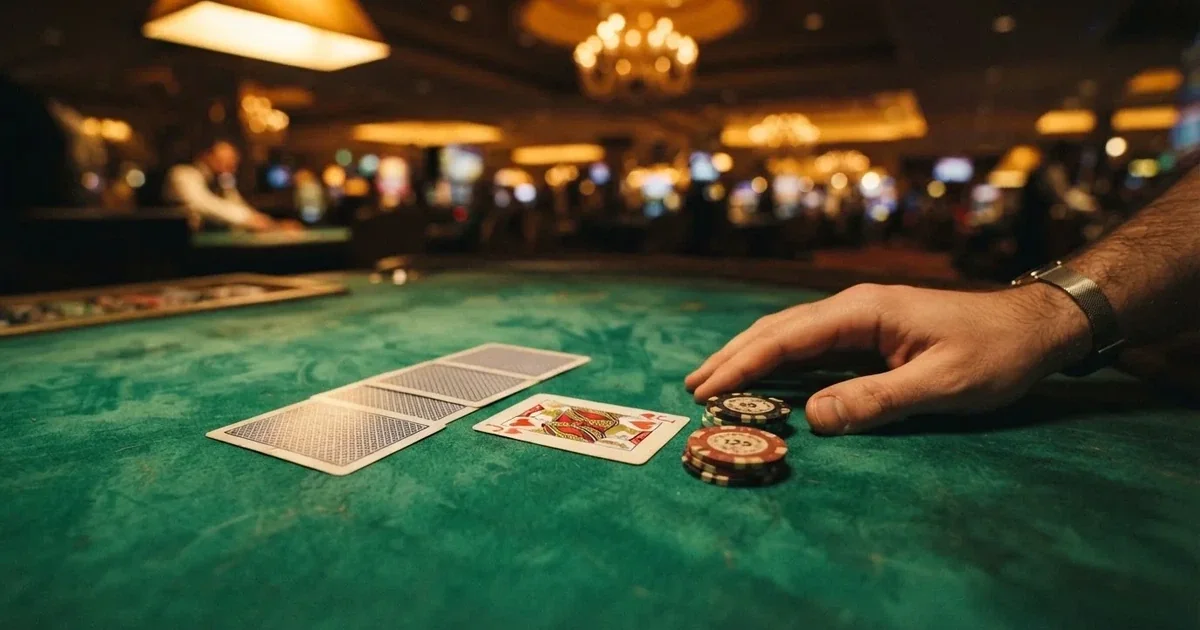
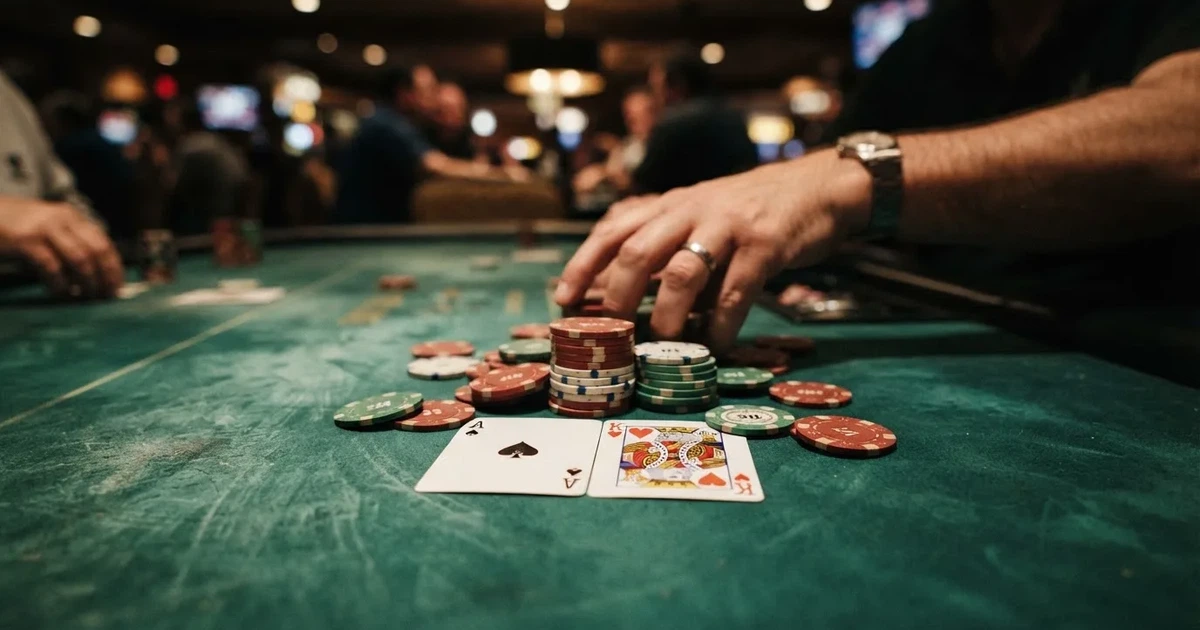
The table is wider than almost anything else in a casino, and it is run by a single shooter standing at the near end with a stick. Two dice, four casino staff, and a layout that runs the entire length of the felt. Most players never touch the dice. They back the shooter, or back against them, by laying chips on a grid of bets that look, to a newcomer, like the markings on a complex road map. The game runs as a sequence of rounds, each round tied to a single come-out roll, and the rhythm of that round is the simplest thing to understand before any of the bets make sense.

The come-out roll and the point
A round begins with the shooter making the come-out roll. If that roll is a 7 or an 11, the Pass Line wins immediately and the round is over. If it is a 2, a 3 or a 12 — “craps” numbers — the Pass Line loses immediately and the round is also over. Any other number — 4, 5, 6, 8, 9 or 10 — becomes “the point”. A white puck marked ON is placed on that number, and the shooter keeps rolling. From here, the round ends only when the shooter either repeats the point (Pass Line wins) or rolls a 7 first (Pass Line loses). The come-out and the point run together is the spine of every hand of craps.
The Pass Line, Don’t Pass, and what “free odds” means
The Pass Line is the bet most players make, simply because it is the bet that wins on a natural 7 or 11 and follows the shooter through the point. The Don’t Pass does the mirror image: it wins on a come-out 2 or 3, loses on 7 or 11, and pushes on 12. These are the two bets that carry the lowest house edge on the table — Pass/Come sits at 1.41%, Don’t Pass/Don’t Come at 1.36% — and almost every other layout exists for variety and for the casino’s margin. What makes craps genuinely unusual among casino games is the free odds bet: a stake laid behind a Pass or Don’t Pass bet, after a point is established, that pays at true odds. The casino takes no edge on it, which is why serious craps players size their free-odds wager as the largest part of their play.
The bets to avoid
Almost every other marked box on the table exists for a reason that is not the player’s. The Field bet carries a 5.56% house edge. The Any Craps bet — a single roll on 2, 3 or 12 — carries an 11.11% edge, the figure every craps primer starts from when it explains why the bet is on the layout at all. The Any 7 bet sits at 16.67%, the worst single wager on the table. Hardways, proposition bets in the centre of the felt and most of the one-roll side wagers all carry an edge that an experienced player treats as decoration, not as a way to play. A reader who learns nothing else from this section should learn that the table has two good bets, a near-zero-edge add-on, and a long list of bets the layout exists to sell.
Where the game comes from
Craps as it is played in casinos is an American simplification of an older English dice game called Hazard, brought to New Orleans around 1805 by Bernard Xavier Philippe de Marigny de Mandeville. The “Don’t Pass” side of the layout — the bet that wins against the shooter — was added in 1907 by a Philadelphia dice maker named John H. Winn, whose change gave the casino a reason to use fair dice rather than loaded ones. The game that exists today, on the green felt under the lights of Crown Melbourne or The Star Sydney, is essentially the game John H. Winn designed in 1907, with the proposition bets added around it.
Variants and where the game sits next to baccarat and blackjack
Craps is not the only table game that runs under its own logic, and a reader deciding what to spend time on at a lawful Australian venue — or what they are being offered by an offshore site — benefits from seeing the comparison. Baccarat is the simplest case. The casino banks the game at all times; the player backs Banker, Player or Tie; the drawing rules are fixed. The house edge sits at 1.06% on Banker, 1.24% on Player, and 14.36% on Tie — figures that put Banker close to Pass Line craps in fairness, and that put Tie in the same bucket as Any Craps as a bet to leave alone. Blackjack, played with optimal strategy under liberal Las Vegas Strip rules, sits at roughly 0.28% house edge — the lowest of the three by a clear margin — though that figure depends on the rule sheet, and Atlantic City rules move it up to about 0.43%.
Crown Melbourne runs three approved baccarat variants — Traditional Baccarat, Crown Baccarat and 2 to 1 Baccarat — under the Victorian Gambling and Casino Control Commission. The VGCCC’s public log of approved rule changes covers blackjack too, including a renaming of the “Perfect Pairs” side bet to “Crown Pairs” in December 2024 and the introduction of a “Free Bet” option with a new “Pot of Gold” side bet in March 2024. None of this is craps; it is the context a reader needs to understand where craps sits in the wider table-game landscape and why a lawful venue’s table-game offering is shaped the way it is.
Variants that change the rules
Beyond standard craps, two variants are worth naming. Crapless Craps removes 2, 3, 11 and 12 as come-out losing numbers — the shooter cannot lose on the come-out, which sounds like a benefit but reshapes the probabilities of every later bet. Street craps is the informal version played without a marked table or a stickman, often for small stakes among friends, and it is not the casino product anyone is being offered online. The variants that show up under the “craps” tab on an offshore casino site are almost always the standard casino game with a different skin, not a genuine rules change.
What the Interactive Gambling Act 2001 actually says
The Interactive Gambling Act 2001 is a federal statute that makes it an offence to provide certain gambling services to customers physically present in Australia. The 2017 amendments broadened it to cover online casino-style games — the category that includes craps, online pokies, online blackjack and online roulette — and they strengthened the ACMA’s enforcement tools. The penalties are aimed at the provider, not the player: individuals face fines up to A$220,000 per day and corporations up to A$1.1 million per day for supplying a prohibited interactive gambling service to someone in Australia.
What the Act does not prohibit is the player. There is no offence against the person who logs in, places a bet or wins money at an offshore site. The criminal liability sits upstream of the wager. This is a meaningful distinction for a reader trying to work out where the law touches them and where it does not — the short answer is that it touches the operator and the platform, not the punter who found the platform.
What is and is not licensable
What is licensable under Australian law is wagering on races and sport placed before the event, lotteries and keno. These are, in practice, licensed and regulated at state and territory level — the Northern Territory Racing and Wagering Commission regulates 52 of Australia’s online bookmakers, including Sportsbet, Bet365 and Ladbrokes, which are licensed in the Territory for tax reasons. The NTRWC has no full-time staff and meets once a month in Darwin, which is itself a story about how thin the regulatory layer is on the licensed side of the market, but it is still a regulator with statutory footing.
What is not licensable is any online casino game, including craps. No state or territory issues a licence for it. An offshore site displaying a Curaçao or Anjouan seal is not licensed to take Australian customers for these games — it is licensed in a jurisdiction that has no Australian jurisdiction at all. The Australian-licensed bookmakers named above offer sports and racing, not craps, and the distinction is not a marketing nuance: it is the line the law draws.
The ACMA and how enforcement actually works
The Australian Communications and Media Authority is the body that investigates complaints, issues formal warnings, and directs Australian internet service providers to block illegal services. The mechanism works in three escalating steps. First, a formal warning is issued to the operator named in the ACMA’s finding. If the service continues to accept Australian customers, the ACMA can ask ISPs to block the site at the DNS level. If the operator moves the service to a new domain, the ACMA can issue further blocking requests, and the cycle repeats until either the operator stops serving Australia or the regulator’s patience runs out.
The cumulative record is large. As of June 2026, the ACMA reports that 1,751 illegal gambling and affiliate marketing websites have been blocked since the first blocking request in November 2019, and more than 230 unlicensed gambling services have left the Australian market since enforcement was strengthened in 2017. The most recent published round, reported on 26 June 2026, asked ISPs to block 12 more sites: 7Signs, ChromaBet, Donbet, Duospin, Freshbet, Slots Gem, Jacks Club, Lucky Start, Pointsbetz.com, Spinrise, Vinyl Casino and Wildsino. The pace has not slowed.
The scale of the illegal market
The reason the ACMA’s enforcement matters is the scale of what it is enforcing against. H2 Gambling Capital’s 2025 report estimates that Australians lose about A$3.9 billion a year to illegal gambling sites, and that the share of gambling going through legal channels fell from 74% in 2021 to 64%. Those are the two numbers to carry: roughly four billion dollars a year flowing to sites the ACMA considers prohibited, and a legal-channel share that has dropped ten percentage points in four years.
This is not a picture in which the offshore market is a marginal curiosity. It is the majority of online gambling spend by Australians, by the most generous reading of the figures, and a meaningful fraction of total gambling spend across all channels. The enforcement record is the ACMA’s response to that fact, and the slow accumulation of blocked sites is the visible part of a contest that is otherwise fought in DNS records and formal correspondence between the regulator and offshore companies.
What offshore play costs the player
An offshore site gives no Australian consumer protection. There is no Australian complaints body to write to if a withdrawal is refused. There is no recourse if the site changes its terms, voids a bonus, or closes the account with a balance on it. And the site can be blocked with a balance still in it — the ACMA does not compensate players whose funds are stranded by a blocking order, because the funds were never in a position the law recognises. A reader who treats an offshore craps site as functionally equivalent to a licensed venue is making a calculation that ignores this asymmetry entirely.
This is the heart of why the “best casinos” framing does not survive contact with the legal frame. The question the search implies — which is the best place to play? — assumes a market of licensable options. The market that exists in fact is a market of prohibited services, and the ranking the reader wanted to read cannot be honestly written inside it. What can be written is a record of who is operating in it, and what the ACMA has done about each of them.
Player protection: BetStop and the self-exclusion gap
BetStop is the National Self-Exclusion Register, live since August 2023. It binds Australian-licensed online and phone wagering services — which is to say, licensed bookmakers offering sports and racing, not offshore casinos offering craps. A person who registers with BetStop is excluded from those licensed services for a period they choose, and the licensed operators are required to enforce that exclusion.
What BetStop does not cover is any offshore site. The technical binding runs through the Australian-licensed operator; an offshore site has no obligation to check the BetStop register and no incentive to refuse a self-excluded Australian player. The result is a gap: a person who has decided to stop gambling can exclude themselves from the lawful market and remain fully exposed to the unlawful one. The gap is not a secret. It is the reason the ACMA’s enforcement matters — closing the supply side is the only lever the regulator has, because the demand-side tool only reaches the licensed half.
Helplines and what to do if gambling stops being fun
The National Gambling Helpline is 1800 858 858 — free, 24/7, with chat available at Gambling Help Online. The line is for anyone affected by their own or someone else’s gambling, and the calls are confidential. A reader who is chasing losses, borrowing to play, or finding it hard to stop is a reader the helpline is set up for. The lawful market has a layer of support behind it; the unlawful market has none.
The bonuses the unlawful market still advertises
The shelf of “craps bonus” or “casino craps bonus” searches is, on the surface, about promotional inducements: deposit matches, free play offers, reload bonuses tied to dice games. Underneath the surface, every figure attached to those offers comes from affiliate marketing pages rather than from any audited or regulated source. The bonuses exist as marketing copy. The wagering requirements, the maximum cashout caps, the game-weighting rules and the expiry windows that would make a bonus worth evaluating — none of these are published in a form a reader can verify against an Australian register.
That is the structural problem with evaluating a craps bonus for an Australian reader. The mechanism is straightforward: a deposit-gated package with a wagering multiple of, say, 35x the bonus amount means a player has to wager 35 times the bonus before any withdrawal is permitted, and craps is typically weighted at 10–20% of stake toward that requirement on most offshore sites that publish a weighting table at all. At 20% weighting, a A$100 bonus with 35x wagering requires A$17,500 in craps turnover before withdrawal. The expected loss on that turnover, at the Pass Line house edge of 1.41%, is roughly A$247. The bonus is paid in nominal dollars and paid out in real money only after the turnover is complete, and the house edge is collected across the turnover regardless of whether the player wins any individual hand. The arithmetic of “free money” tends to come out the other way once the weighting and the edge are written down.
This is also why the brand-by-brand section that follows carries no bonus terms. The only sources for those terms were affiliate marketing pages, and the only honest answer is that the offers cannot be verified against a regulator an Australian reader could complain to. The bonuses exist. The protection around them does not.
The ACMA’s published formal warnings: the brands on the record
The brands below are listed because the ACMA has issued a formal warning over each of them for offering prohibited interactive gambling services to Australians. They are not a recommended shortlist. They are a record. No Australian licence covers any of them for online craps or any other online casino game, and the fact that an offshore site displays a licence seal in another jurisdiction does not change that.
| Brand | ACMA action and date | Operator named by the ACMA | Subject support |
|---|---|---|---|
| RocketPlay | Formal warning March 2026 (Pulsup Ltd); earlier May 2022 (Dama N.V.) | Pulsup Ltd / Dama N.V. | — |
| Level Up Casino | Formal warning May 2022 | Dama N.V. | Listings-only (Bgaming.com) |
| Woo Casino | Formal warning March 2025 | Dama N.V. | — |
| Spirit Casino | Formal warning May 2025 | Dama N.V. | — |
| National Casino | Formal warning July 2025 | Consolutetish S.R.L. | Listings-only (en.wikipedia.org) |
| Bizzo Casino | Formal warning July 2025; earlier 2022 (TechSolutions) | Consolutetish S.R.L. / TechSolutions | — |
| Ignition Casino | Formal warning July 2025 | Bamboo Media | — |
| Instant Casino | Formal warning February 2025 | EOD Code SRL | — |
| Jackbit | Formal warning April 2026 | Ryker B.V. | — |
| Casino Intense | Formal warning April 2025 | Sterplay Holding Ltd | Listings-only (Abc.net.au, acma.gov.au, Crownmelbourne.com.au) |
| Sky Crown | Formal warning September 2022 | Hollycorn N.V. | — |
RocketPlay
The ACMA’s most recent action over RocketPlay is a formal warning issued in March 2026 to Pulsup Ltd over Rocketplay.com.au. That is the second round of regulatory attention on the brand; an earlier formal warning went to Dama N.V. in May 2022, covering Rocketplay alongside five other casino brands (Bambet, Dazard, Level Up, Wild Tornado and Cobra Casinos). A brand with two warnings across four years is a brand the regulator has been clear about, and the position is unchanged: no Australian licence covers the service for online craps or any other online casino game.
The picture for a reader is straightforward. Rocketplay is reachable from Australia in the technical sense — the site resolves and the forms work — but it is the kind of site the ACMA has been formally warning for years, with the additional complication that the operator behind the brand has changed between the two warnings. A brand whose corporate parent has been swapped is a brand whose terms, payout policies and dispute resolution may have changed with it, and there is no Australian register to check against.
Level Up Casino
The ACMA issued a formal warning over Level Up Casino in May 2022, addressed to Dama N.V. That same warning covered five other brands under the same operator umbrella (Bambet, Dazard, Rocketplay, Wild Tornado and Cobra Casinos), and Level Up has not been the subject of a separate published enforcement action since. The site continues to be reachable from Australia, and it continues to advertise online casino games to that audience.
What the research turns up on the game side is limited to listings on game-provider pages: Level Up appears in the directory at Bgaming.com, which is a software provider that lists the casino as one of its clients. That tells a reader that a recognised game supplier’s content is running on the platform, which is a small piece of information but not a green light. A game provider listing a casino as a client is the provider’s own commercial relationship, not a regulatory endorsement, and it does not speak to the operator’s licensing position for Australian customers.
Woo Casino
The ACMA issued a formal warning to Dama N.V. over Woo Casino in March 2025. That puts Woo inside the second wave of formal warnings the regulator has issued to Dama N.V. — the May 2022 round was the first, and the March 2025 round followed. A formal warning to the same operator group on a second brand, three years after the first, is the regulator indicating that the operator has not changed its behaviour in the interval.
A reader weighing Woo against another brand on the same Dama N.V. warning list would not, on the available evidence, find a meaningful difference between them. The regulator has been clear about the operator; the operator has not withdrawn from the Australian market; the player who finds Woo reachable is a player the ACMA’s enforcement has not yet reached.
Spirit Casino
The ACMA issued a formal warning to Dama N.V. over Spirit Casino in May 2025. Spirit is a relatively recent addition to the Dama N.V. stable on the regulator’s record, and there is no earlier action on the brand itself. The operator group, however, has a four-year pattern of formal warnings across multiple brands, and Spirit is now part of that pattern.
The verdict for a reader is the same one that applies to every brand in the Dama N.V. portfolio on this list. The site is reachable, the games are advertised to Australian customers, the operator has been warned repeatedly, and the site has not been blocked at the time of writing. The technical reachability of the site is not the same as lawful access, and the ACMA’s accumulated record is the closest thing to a regulatory signal a reader in Australia can use.
National Casino
The ACMA issued a formal warning to Consolutetish S.R.L. over National Casino in July 2025. The same July 2025 round also covered Bizzo Casino, and the operator named in both warnings is the same. Consolutetish S.R.L. had not appeared on the ACMA’s published warning list before that round, and the two brands are the regulator’s first published action against the operator.
The limited game-side information available for National Casino comes from listings on Wikipedia, where the brand appears in coverage of online casino operators. That kind of listing is descriptive rather than evaluative: it says the brand exists and has been written about, not that it is licensed for any particular jurisdiction. For an Australian reader, the position is unchanged from the rest of the table — the service is not licensable for online craps in Australia, the ACMA has warned the operator, and the site continues to accept Australian customers.
Bizzo Casino
The ACMA issued a formal warning to Consolutetish S.R.L. over Bizzo Casino in July 2025. That is the second time the brand has been the subject of a formal warning — an earlier warning went to TechSolutions (CY) Group Limited and TechSolutions Group N.V. in 2022. A brand with two formal warnings across three years, addressed to two different corporate entities, is a brand whose ownership has changed hands in the interval and whose regulatory history has followed the operator rather than the brand name.
For an Australian reader, this is the kind of pattern that makes the offshore market look the way it does. The brand continues. The operator behind it has shifted. The regulator’s record tracks the shifts, but the player who arrives at the site from a search result does not see them. What they see is a brand name with a bonus offer attached, and what is behind it is a sequence of corporate changes the ACMA has had to chase.
Ignition Casino
The ACMA issued a formal warning to Bamboo Media over Ignition Casino in July 2025. Ignition had not appeared on the ACMA’s published warning list before that round. Bamboo Media as an operator name had not appeared either, in the published record available here, which means the July 2025 warning is the first time the regulator has publicly named either the operator or the brand for an Australian-facing service.
That relative novelty does not give a reader any more reason to use the site. The legal frame is the same — no Australian licence covers online craps, the ACMA has warned the operator, the site continues to accept Australian customers — and the absence of an earlier warning is not the same as a clean record. It is only an absence.
Instant Casino
The ACMA issued a formal warning to EOD Code SRL over Instant Casino in February 2025. Instant Casino had not been on the regulator’s published warning list before that round. EOD Code SRL as an operator name had not appeared either. The February 2025 warning is, in the published record available here, the regulator’s first public action against either.
The position for a reader is unchanged. The site is not licensable for online craps in Australia, the ACMA has formally warned the operator, and the operator has not withdrawn the service from the Australian market. The absence of an earlier warning does not constitute a positive signal.
Jackbit
The ACMA issued a formal warning to Ryker B.V. over Jackbit in April 2026. The same April 2026 warning also covered CasinOK, and the operator named in both is Ryker B.V. Jackbit and CasinOK are the first brands on the ACMA’s published record under the Ryker B.V. name, and the regulator’s action is recent.
The pattern that has emerged across the ACMA’s record is that operators rotate through brand names and corporate shells, and the regulator’s warnings accumulate across the rotations. Jackbit is the current name; the operator behind it may not be the operator behind the brand the reader first heard about. What does not change is the legal frame — no Australian licence, ACMA warning, no recourse under Australian consumer law.
Casino Intense
The ACMA issued a formal warning to Sterplay Holding Ltd over Casino Intense in April 2025. Sterplay Holding Ltd had not appeared on the regulator’s published warning list before that round, in the record available here. Casino Intense had not been the subject of an earlier formal warning either. The April 2025 action is the first published enforcement step the ACMA has taken against either.
The game-side information available for Casino Intense comes from listings across several sources, including the ABC, the ACMA’s own publications and Crown Melbourne’s site. The first two are the regulator and a national broadcaster — neither constitutes a positive endorsement. The Crown Melbourne listing is the relevant one to read carefully: Crown Melbourne is a lawful Australian venue regulated by the VGCCC, and its site may reference Casino Intense in the context of industry coverage rather than as a partner or recommendation. A reader who arrives at Casino Intense through a Crown Melbourne search result is a reader who has been led to an offshore service by an unrelated search, and the lawful venue’s name in the chain does not confer any status on the offshore site.
Sky Crown
The ACMA issued a formal warning to Hollycorn N.V. covering its Sky Crown and Blue Leo casino services in September 2022. That warning is among the earlier entries on the regulator’s published record for online casino services, and it is one of the published formal warnings that established the ACMA’s pattern of addressing the operator group behind multiple brands in a single action.
Hollycorn N.V. has not, in the published record available here, been the subject of a follow-up formal warning to Sky Crown since September 2022. That does not mean the site has withdrawn from the Australian market — it means the regulator’s published action has not been repeated. A reader weighing Sky Crown against a brand with two or three formal warnings on the record would be weighing a brand with a quieter regulatory history against brands with a louder one, and the quieter history is not the same as a clean one. It is only quieter.
How fast the ACMA is actually blocking
The arithmetic at the centre of the ACMA’s enforcement record is the rate at which the regulator has been moving. The first blocking request went out in November 2019. The cumulative count, as of June 2026, is 1,751 illegal gambling and affiliate marketing websites blocked. That works out to a band of roughly 250 to 270 sites blocked per year across the six-and-a-half-year span, with the annual rate having risen as the ACMA’s enforcement tools were strengthened after 2017 and as more ISPs complied with blocking directions.
The number to sit with is the total — 1,751 sites blocked since November 2019 — and the date that anchors it. The rate is not the figure a reader needs to memorise; the total is, because it is the visible size of the prohibited market the regulator has been chipping away at. The 230-plus unlicensed services that have left the Australian market since 2017 is the other side of that figure: the operators who decided the cost of staying was higher than the cost of leaving, and quietly withdrew.
What a reader in Australia actually has
For a reader physically in Australia who wants to play craps, the lawful options are: a licensed land-based casino (Crown Melbourne, Crown Perth, The Star Sydney, The Star Gold Coast, Treasury Brisbane and the Adelaide casino are the main venues), where craps may or may not be on the floor — Australian casinos are not required to offer craps, and the table-game mix varies. A licensed pub or club with pokies is not a craps option; pokies and craps are different products under different regulatory frames.
What a reader in Australia does not have, and cannot lawfully be offered, is an online casino site licensed to take Australian customers for craps. The licensed bookmakers offering sports and racing do not offer craps. The lottery operators do not offer craps. The offshore sites offering craps are not licensed in Australia, are on the ACMA’s published warning list, and can be blocked at any time.
Where the law is heading
The Interactive Gambling Amendment (Gambling Reform) Bill 2026 passed Parliament on 19 August 2026. Its advertising and inducement measures commence on 1 January 2027 — law with a start date, not yet in force. The bill addresses a different part of the problem than the IGA 2001 itself: it targets how licensed and unlicensed operators market to Australians, including inducements to open accounts and to continue playing, rather than the underlying prohibition on supply. The full text of the bill and the commencement schedule are on the Parliament of Australia’s website.
For a reader in 2026, the practical effect is that the legal frame has not yet changed. The IGA 2001 as amended in 2017 is still the operative statute. The new advertising measures take effect from the start of 2026 + 1. The offshore market is still prohibited, and the ACMA’s enforcement is still the primary mechanism by which that prohibition is felt on the supply side.
Payments: another angle on the prohibition
Since 11 June 2024, credit cards, credit-related products and digital currency have been banned as payment methods for licensed online wagering in Australia. Penalties for licensed operators that accept them reach A$247,500. The legal deposit routes for licensed wagering are debit card, bank transfer, PayID/Osko and BPAY. The credit-card ban and the crypto ban are not aimed at the player — they apply to the operator — but they shape what an Australian reader sees on the deposit page of any site they try to use.
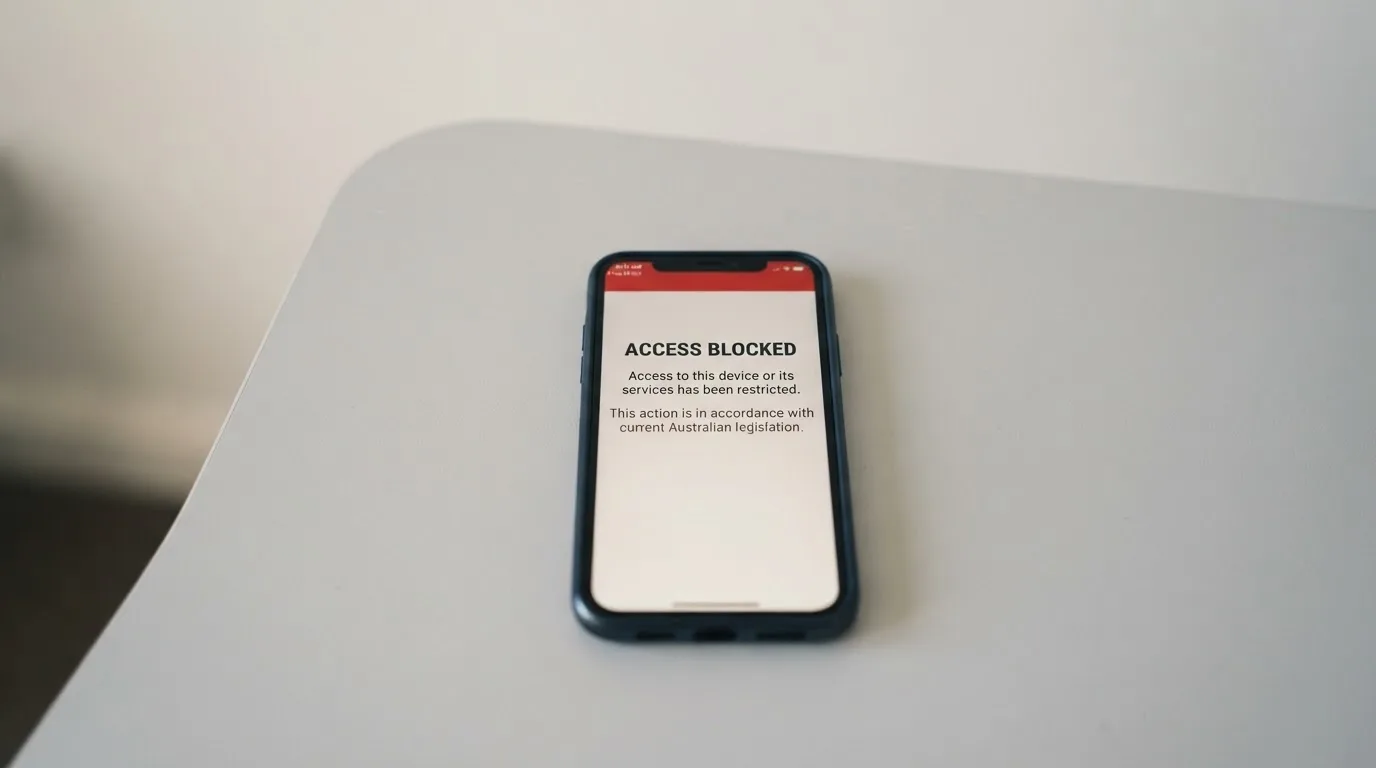
An offshore site that accepts credit cards and crypto deposits from Australian customers is, by definition, not operating under the Australian rules, because it cannot do both. A reader who deposits by credit card to an offshore casino is depositing through a payment channel the licensed Australian market does not permit, to a site the licensed Australian market does not recognise. That is a second signal, separate from the ACMA warning, that the site is operating outside the local frame.
Tax and what winnings actually mean
Gambling winnings of a recreational player are not assessable income in Australia, under section 6-5 of the Income Tax Assessment Act 1997, and losses are not deductible. The exception is a person who carries on a business of gambling — professional poker players and the like — whose gambling income is assessable and whose losses are deductible as business expenses. The ATO’s own guidance makes the recreational-vs-professional distinction the test that matters, and the assumption that most readers of this page fall on the recreational side is the safe one. A reader with a specific tax question should check with the ATO or a registered tax agent; the model here is “recreational player, winnings not taxable, losses not deductible, check with the ATO”.
What to take from this page
The thing a reader came to this page for — a working shortlist of online casinos for craps — is not a thing that exists for an Australian player in 2026. The Interactive Gambling Act 2001 makes the offering a federal offence. The ACMA’s enforcement record shows how the prohibition is applied: formal warnings, then blocking requests, then further warnings as the operator rotates through brand names. The brands listed above are on the ACMA’s published warning list for that reason, and they are not recommended.
The lawful options are a licensed land-based casino, a licensed bookmaker for sports and racing, and the lottery and keno products that fall under their own regulatory frame. BetStop is the national self-exclusion tool that touches the licensed half of the market. The National Gambling Helpline is 1800 858 858, free and 24/7, for anyone whose own gambling has become a problem.
A reader who has decided to stop gambling can register with BetStop, contact the helpline, and use the lawful market’s exclusion mechanism. A reader who has decided to continue gambling can do so at a licensed venue, on a licensed product, under a regulatory frame that gives them a complaints body and a consumer-protection regime. An offshore craps site offers none of those things. The fact that the search result leads to one is not a recommendation — it is a path that ends at a warning the regulator has already published.
Frequently asked questions
What house edge does the Pass/Come bet carry in craps?
The Pass Line and Come bets in craps both carry a house edge of 1.41%, which is among the lowest on any casino table game outside baccarat’s Banker bet (1.06%) and liberal-rule blackjack (around 0.28%). A player who sticks to Pass Line and free odds is playing close to the fairest wager the casino offers.
What is the difference between a Pass Line and a Don’t Pass bet in craps?
The Pass Line wins on a come-out 7 or 11 and loses on 2, 3 or 12; the Don’t Pass does the opposite, winning on 2 or 3 and pushing on 12. Don’t Pass carries a slightly lower house edge at 1.36% versus Pass Line’s 1.41%, and pays at the same true-odds rate on free odds behind it.
Is it legal for an online casino to offer craps to players in Australia?
No. Under the Interactive Gambling Act 2001, it is a federal offence to provide online casino-style games — including craps — to customers physically present in Australia. Penalties reach A$1.1 million per day for corporations. The individual player is not prosecuted, but the offshore site gives no Australian consumer protection.
Why is the Any Craps bet considered a poor-value wager?
Any Craps is a single-roll bet on 2, 3 or 12 and carries a house edge of 11.11%. Compare that to the Pass Line’s 1.41%, and the cost of the bet becomes clear: ten times the edge for a one-roll payout that pays 7 to 1. Any 7, at 16.67%, is the worst single wager on the table.
Can craps be played at a licensed Australian land-based casino?
Craps is not a mandated table game at Australian casinos, and the mix varies by venue. Crown Melbourne, Crown Perth, The Star Sydney, The Star Gold Coast and the Adelaide casino each set their own table-game offering under their state regulator. A reader who specifically wants to play craps should check the venue’s current table lineup before travelling.
What should someone do if they are chasing craps losses online?
Register with BetStop, the National Self-Exclusion Register, to exclude from licensed Australian wagering services. Call the National Gambling Helpline on 1800 858 858 — free, 24/7, confidential — or use the chat at Gambling Help Online. If the losses are on an offshore site, BetStop will not reach that site; the helpline will, and the conversation with them is where the practical next step starts.
Created by the ”Casino Payments Hub” editorial team.