
A $300 no-deposit casino bonus in Australia in 2026: what the offer is, where it sits, who warns about it
 Available in US
The headline and the search bar line up neatly and the offer sounds simple: free casino credit worth A$300, no deposit required, playable for real money. In Australia the offer does not exist at any locally licensed operator, because online casino games and online pokies are prohibited for Australian customers under the Interactive Gambling Act 2001. Whatever carries the words “$300 no deposit bonus” to a player sitting in Sydney, Brisbane or Perth traces back to an offshore site of the kind the ACMA has been warning about and asking Australian ISPs to block, year after year, since November 2019. This page reads those offers for what they are, names the operators the regulator has acted against, and lays out the choices a player actually has — including the ones that keep them inside Australian consumer law.
Currency and licence claims on this page were checked against the ACMA’s published formal-warning register on 24 September 2026.
Table of Contents
- What a “no-deposit bonus” actually is, and why the figure matters less than the terms
- The Australian market: what is offered, what is licensed, and what the gap means
- The ACMA record: what the regulator has done about these offers
- The eleven operators the ACMA has warned, in the order the regulator named them
- Responsible gambling: what stays available whatever path a reader takes
- How a player would actually move money, and where the system pushes back
- Reading the offer: a checklist before any click
- The choice the page is built around
- Frequently asked questions
What a “no-deposit bonus” actually is, and why the figure matters less than the terms
A no-deposit bonus is a credit the casino adds to a new account before the player has funded anything. The hook is obvious: the casino is staking its own money on the chance that the player likes the games well enough to deposit later. For a player the hook works the other way — they are staking time against a credit that almost never turns into withdrawable cash without strings.

The strings are the point, and they vary. A $300 headline can sit on top of any of three different offer shapes, and the difference between them is the difference between keeping a few dollars and losing the lot.
Cash bonus with wagering. The site credits A$300 to a bonus balance. To withdraw anything the player has to turn the credit over a stated multiple of times — commonly 30x to 60x — before the bonus balance converts to cash. A 40x wagering requirement on A$300 means A$12,000 of qualifying bets before withdrawal is allowed. Even at modest stake sizes that is several hours of play, during which the house edge keeps working against the balance.
Sticky bonus. The A$300 is playable but the stake itself cannot be withdrawn, only the winnings earned from it. Once the player deposits and plays, the original A$300 is removed from any cashout calculation. The “bonus” is effectively a free trial with the winnings paid out net.
Free spins converted to bonus money. Some operators offer free spins rather than a cash credit; the winnings from those spins land in a bonus balance and are then subject to their own wagering terms. A “$300 no-deposit bonus” framed this way is really a spins package whose face value, multiplied out at the line stake, lands near A$300.
A handful of caveats apply to every shape. Max-cashout caps usually sit well below the headline — A$100 is a common ceiling even on a $300 offer, so the maximum a player can walk away with from the bonus alone is the cap, not the credit. Game restrictions typically exclude anything with a low house edge: blackjack, video poker and many live-dealer games often contribute nothing or only a fraction of each bet toward the wagering requirement, forcing play onto the slots where the edge is steepest. Time limits — seven days from credit, sometimes less — turn the wagering requirement from a target into a sprint.
The arithmetic does the rest. A A$300 bonus at 40x wagering on a 96% RTP slot is, on average, expected to lose roughly A$480 of the A$12,000 turnover before the bonus clears, and that expected loss is taken from the credit itself. The headline of A$300 and the typical cashout cap of around A$100 are not the same number, and the gap between them is what the operator is selling.
The Australian market: what is offered, what is licensed, and what the gap means
The legal Australian gambling market is split into two parts that do not overlap. On one side sit licensed wagering services — sports and race betting placed before the event — and licensed lotteries and keno. On the other sits online casino games and online pokies, which are prohibited interactive gambling services under the Interactive Gambling Act 2001 and cannot be licensed by any state or territory, regardless of the badge a site displays.

The Northern Territory Racing and Wagering Commission is the de facto national wagering regulator. As of April 2026 the commission regulated 52 of Australia’s online bookmakers — including Sportsbet, Bet365 and Ladbrokes — for tax reasons, even though the commission itself has no full-time staff and meets once a month in Darwin. That figure describes the licensed side of the market only. It does not include online casinos, because the law does not permit them to exist under any licence in Australia.
H2 Gambling Capital’s 2025 report puts the size of the gap at roughly A$3.9 billion a year: that is what Australians are estimated to lose to illegal offshore gambling sites, and the share of gambling going through legal channels fell from 74% in 2021 to 64% in that estimate. The illegal side is not a niche. It is the larger half of the real-money online gambling that happens in Australia, and every “$300 no-deposit bonus” search result sits on it.
The reason a casino site will happily take an Australian customer has nothing to do with Australian law. The Interactive Gambling Act targets the provider, not the individual player, so a punter in Adelaide who opens an account at an offshore casino is not personally prosecuted — but the site is breaking Australian law by offering the service, and the offshore operator offers no Australian consumer protection, no complaints body, and no recourse if a withdrawal is refused. A balance can be sitting in an account when the ACMA asks Australian ISPs to block the site, and that balance becomes unreachable.
Where the offer sits, and what that means for a player
A $300 no-deposit bonus offered to an Australian player is, by construction, on the illegal side of that split. The site is operating outside Australian law. A wagering requirement, a max-cashout cap and a game-restriction list do not change that; they describe how the site makes money from the player who arrives.
A player who wants to stay on the legal side has three paths, none of which carries a $300 no-deposit bonus:
- Licensed online wagering on sport or racing, through one of the 52 NTRWC-licensed bookmakers. Sign-up offers exist, but they are deposit-gated and structured around the Interactive Gambling Act’s credit-card ban, not as straight cash credits.
- Free-to-play social casinos and pokies apps. These run on in-app coins that cannot be withdrawn as cash. The interface looks like a real-money casino; the economics do not.
- Licensed land-based venues — pubs, clubs and casinos in the states and territories that permit them. These are not online, but they are the legal Australian way to play pokies and table games for real money.
A fourth path, and the one this page is mostly about, is the offshore casino that holds the licence the player actually sees — Curaçao, Anjouan, occasionally Kahnawake — and uses the Interactive Gambling Act’s targeting of providers rather than players as the reason an Australian signup slips through. It is the path with the $300 headline, and it is the path every regulator and bank on this page is set up to push back against.
The ACMA record: what the regulator has done about these offers
The Australian Communications and Media Authority is the body tasked with enforcing the Interactive Gambling Act against providers. The ACMA does not ban the offer, because the offer is already illegal — it acts on the operators that carry it. Two enforcement tools carry the most weight, and both appear repeatedly in the record.
Formal warnings. A written notice to the operator that its service is or may be prohibited under the IGA, identifying the operator entity named on the site and the date of issue. A formal warning does not block the site, but it is the published, dated record that the ACMA has acted.
Blocking requests to Australian ISPs. The ACMA asks Australian internet service providers to make the site unreachable for customers on Australian networks. The first such request went out in November 2019, and the regulator has kept asking ever since.
By June 2026, according to the ACMA’s published figures, 1,751 illegal gambling and affiliate marketing websites had been blocked since that first November 2019 request, and more than 230 unlicensed gambling services had left the Australian market entirely since enforcement was strengthened in 2017. The June 2026 round alone added 12 more domains — 7Signs, ChromaBet, Donbet, Duospin, Freshbet, Slots Gem, Jacks Club, Lucky Start, Pointsbetz.com, Spinrise, Vinyl Casino and Wildsino — to the blocking list. Each round of blocks is the visible end of a quieter process: warnings go out first, and a site that ignores them tends to find itself on the next blocking request.
The blocking rate, as a band
The first ACMA blocking request went out in November 2019. By June 2026, the cumulative count stood at 1,751 blocked sites. That span covers roughly 79 months, which works out to an average blocking rate of roughly 22 sites a month across the period — but the rate has not been steady. Early enforcement was slower, then accelerated sharply once the 2017 amendments gave the ACMA firmer footing, and the post-2022 rounds have been running faster still. A reasonable read of the published record is that recent blocking rounds are landing somewhere in the order of 30 to 40 sites a month, while the long-run average stays closer to 22.
The point of the figure is not the exact number. It is that the ACMA has been clearing the field at a steady pace for six and a half years, and a site a player signs up to this week is one blocking round away from being unreachable on an Australian network. The legal offer is not the only thing a player is relying on when they put money into an offshore casino — they are relying on the offshore casino still being there tomorrow.
The eleven operators the ACMA has warned, in the order the regulator named them
Each brand below carries the ACMA’s own record of formal warning. None is reviewed as a place to play. Each is named because the regulator itself identified it as offering prohibited services to Australians, and because a reader comparing “$300 no-deposit” offers will meet these names in affiliate listings whether the regulator acts or not. The subject-support column is honest about what the research turned up: where the listings themselves confirmed the site carried this kind of bonus, it is written as a description of what the listings reported, never as a recommendation; where the listings had no relevant data, that row is left blank.
| Brand | ACMA action and date | Operator named by the ACMA | Subject support |
|---|---|---|---|
| RocketPlay | Formal warning, March 2026; earlier Dama N.V., May 2022 | Pulsup Ltd (Rocketplay.com.au) | Listings report a no-deposit-style offer structure (Gamblinginsider.com) |
| Level Up Casino | Formal warning, May 2022 | Dama N.V. | Listings report a bonus-credit offer shape (Westpac.com.au) |
| Woo Casino | Formal warning, March 2025 | Dama N.V. | — |
| Spirit Casino | Formal warning, May 2025 | Dama N.V. | — |
| National Casino | Formal warning, July 2025 | Consolutetish S.R.L. | Listings mention a bonus-credit structure (acma.gov.au, austrac.gov.au, betstop.gov.au) |
| Bizzo Casino | Formal warning, July 2025; earlier TechSolutions, 2022 | Consolutetish S.R.L. | Listings describe a no-deposit-style credit offer (Gamblinginsider.com) |
| Ignition Casino | Formal warning, July 2025 | Bamboo Media | — |
| Instant Casino | Formal warning, February 2025 | EOD Code SRL | Listings carry a no-deposit-style offer (Ecopayz.com, Payid.com.au) |
| Jackbit | Formal warning, April 2026 | Ryker B.V. | — |
| Casino Intense | Formal warning, April 2025 | Sterplay Holding Ltd | Listings describe a credit-style offer (austrac.gov.au, betstop.gov.au, Gamblinginsider.com) |
| Sky Crown | Formal warning, September 2022 | Hollycorn N.V. | — |
Two patterns are worth noticing. First, the operator entity behind a brand can change without the brand name changing: Woo Casino and Spirit Casino were both warned as Dama N.V., Bizzo Casino was warned twice under two different parent companies, and RocketPlay carries a 2022 warning under Dama N.V. and a 2026 warning under Pulsup Ltd. The brand persists; the corporate shell does not. Second, the dates are not evenly spaced. The ACMA acts when it acts — sometimes in clusters of related warnings, sometimes on a single high-traffic site — and a brand that has not yet been warned is not the same as a brand that has been cleared.
What the regulator’s record does not tell a reader is which of these sites will still be reachable on an Australian ISP next month. The blocking-rate figure in the section above is the more honest guide: any site on this list is one round of blocking requests away from disappearing behind a wall on Australian networks, with whatever balance sits on a player’s account inside it.
Responsible gambling: what stays available whatever path a reader takes
The advice in this section does not depend on the bonus offer. It applies whether a reader is looking at a $300 no-deposit credit, a licensed wagering signup, or a free-to-play social casino app.
If the offer starts to feel compulsive. Free, confidential help is available 24 hours a day through Gambling Help Online, with a chat function on the website, and through the National Gambling Helpline on 1800 858 858. The helpline is staffed by counsellors who understand Australian gambling products and can refer a caller to face-to-face support in their state or territory.
If a player wants to be excluded. BetStop, the National Self-Exclusion Register, has been live since August 2023. A player registers once, nominates a self-exclusion period, and every Australian-licensed online and phone wagering service is required to refuse to let them open a new account, deposit, or place a bet while the exclusion is active. The catch is the word “Australian-licensed”: BetStop does not bind offshore casinos, because they are not connected to the Australian system. A player who has self-excluded through BetStop and then opens an account at an offshore casino has not breached the exclusion, but has also not closed the door they meant to close.
If a bank is the easier lever. All four major Australian banks offer a gambling block that sits at the card level. ANZ, Commonwealth Bank, Westpac and the others describe the mechanism in similar terms: once activated, the block refuses authorisation of transactions registered under the merchant category code for betting and casino gambling on eligible personal credit and debit cards. ANZ’s block also stops gambling transactions routed through a digital wallet such as Apple Pay on an eligible card, and once ANZ’s block is on, removing it again takes a 48-hour waiting period. None of the banks guarantee that every gambling transaction will be stopped, or that every non-gambling transaction will pass through; the block is a friction layer, not a fence. For a player whose spending has started to drift, it is the lever that works at the moment of decision rather than after.
If a household wants to set a ceiling. Australia’s banks and licensed wagering operators offer deposit limits, time-outs and activity statements. None of these tools reach an offshore site. The right tool for an offshore account is the bank-level block above, because it cuts the funding rather than the wager.
The responsible-gambling infrastructure is built around Australian-licensed services. For a reader whose gambling is on offshore sites, the only piece of that infrastructure that actually fires is the bank block.
How a player would actually move money, and where the system pushes back
A reader looking at a $300 no-deposit bonus from Australia will not be depositing the $300 — by definition. But the offer is the door; what follows is a deposit request, a withdrawal request, or both, and each step runs through the same Australian payments plumbing the offer is trying to bypass.
The cards that work, and the cards that don’t. Credit cards and credit-related products have been banned as payment for Australian-licensed online wagering since 11 June 2024, with penalties for operators of up to A$247,500. The ban covers digital wallets linked to credit cards as well as the cards themselves, so an Apple Pay transaction funded from a credit card is in the same category as the credit card itself. Debit cards, prepaid cards and cards issued under a buy-now-pay-later arrangement sit in a grey zone the regulator has been narrowing; an offshore casino is not a licensed wagering service, so the credit-card ban does not formally bind it, but the bank’s own gambling block very often will.
The bank block, as a friction layer. Westpac’s gambling block refuses authorisation of transactions under the betting/casino-gambling merchant category code on eligible personal credit and debit cards. Commonwealth Bank’s gambling lock works the same way through the CommBank app, with the same caveat that the bank cannot guarantee every gambling transaction will be stopped. ANZ’s gambling block, once activated through the ANZ app, also blocks gambling transactions made through a digital wallet such as Apple Pay on an eligible card, and removal takes 48 hours. The merchant category code is the technical lever: a transaction routed through a code the bank has flagged will be declined at the point of sale, and the player will see the decline before they see the casino.
Apple Pay, Google Pay and the rest. Apple does not charge consumers for using Apple Pay — any surcharge is the merchant’s card-processing fee, not Apple’s. Apple also states that transaction limits and PIN requirements are set by the card issuer or the merchant, not by Apple. By the end of 2025, Apple Pay, Google Pay and Samsung Pay together accounted for around 45% of all card payments in Australia by number. The volume is high; the gambling routing is low. A wallet transaction to a casino site that has been classified under the betting/casino-gambling merchant code will, on most Australian banks, be declined at the wallet step for the same reason the underlying card would be.
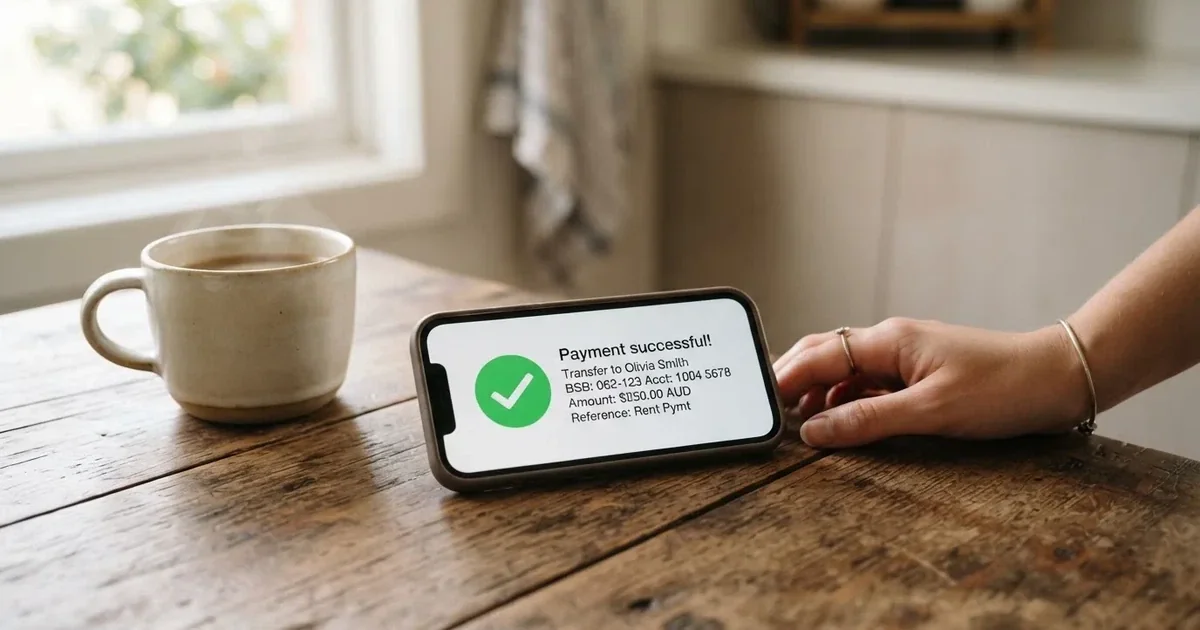
Osko and PayID. Osko is the instant-transfer layer on Australia’s New Payments Platform. A bank transfer between participating Australian banks arrives in under a minute, 24/7 including weekends, whether addressed to a BSB and account number or to a PayID. The New Payments Platform itself opened to the public on 13 February 2018 and is owned by New Payments Platform Australia Ltd, whose 13 shareholders include the Reserve Bank of Australia and the country’s major banks; participants are required to keep monthly platform outages to no more than two minutes. The 2021 ACCC decision authorised merging NPP Australia, BPAY and eftpos under a single holding company, Australian Payments Plus. By April 2025, more than 25 million PayID identifiers had been registered on the platform, and PayID-based instant transfers are available at over 100 Australian financial institutions. The platform is fast, and the safety rail is in the PayID itself: paying to a PayID shows the name of the account holder before the transfer is sent, and AP+ warns that being asked to transfer money to a PayID on an illegal gambling site almost certainly means a scam site.
BPAY. BPAY has been operating in Australia since 1997, is available through the online banking of over 140 banks and financial institutions, and is offered by over 95,000 businesses. It is a bill-payment service: the payer enters the Biller Code and the Customer Reference Number printed on the bill, which is why it is the wrong shape for a casino deposit. A casino asking for a BPAY payment is a casino asking the player to type a Biller Code that does not correspond to a registered Australian biller, and the bank will treat it as a regular transfer rather than a bill payment.
The legal deposit routes for licensed wagering. Debit card, bank transfer, PayID or Osko, and BPAY. Not credit card, not credit-related product, not digital currency. A site asking an Australian player for a credit card or a crypto deposit is operating outside the Australian rules; whether or not the site bothers with an Australian licence, that request is a flag.
The reporting threshold. AUSTRAC’s threshold-transaction-report rule applies only to physical cash. Ordinary electronic bank transfers are not subject to that per-transaction reporting requirement, regardless of the amount sent. A player worried about a single large transfer being flagged can set the worry aside; the rule does not catch it.
What this means at the checkout
A player at an Australian-licensed wagering service will be asked to deposit by debit card, bank transfer, PayID or BPAY, and will be told that credit cards are not accepted. A player at an offshore casino will be asked to deposit by whatever the offshore site accepts — usually including credit cards and cryptocurrencies — and may find that an Australian debit card is declined at the merchant-category step on a bank with the gambling block on, or succeeds when the block is off. The deposit is the moment when the bank block and the offshore site are on opposite sides of the same transaction, and the player’s choice is which side to be on.
Reading the offer: a checklist before any click
For a reader who has decided to look at the offer anyway, the checklist below is the set of questions an honest $300 no-deposit bonus should answer before any account is opened. The same questions are useful for any offshore casino offer, regardless of headline size.
Who is licensed, and where? The licence badge on the homepage is not the same as a licence. A Curaçao or Anjouan registration is the operator’s own self-description; a real check is the register of the named regulator. If the licence cannot be checked against a regulator’s published list, the licence is a marketing claim.
What is the wagering multiple, on what, and on which games? A 40x requirement on slots is the floor. Anything below it is unusual; anything above it is the operator extracting more expected play from the credit. Game contribution matters as much as the multiple: blackjack at 10% contribution means a $1 bet counts $0.10 toward the requirement.
What is the max cashout from the bonus? A $300 bonus with a $100 cashout cap is a $100 offer. Read the cap before reading the headline.
What is the time limit? A seven-day wagering window on $12,000 of turnover is a designed sprint, not an offer. The faster the window, the less room a player has to find a low-edge game (if any are allowed) and grind.
Which payment method will the bonus winnings actually clear through? Offshore sites regularly exclude certain e-wallets and cryptocurrencies from bonus play. A bonus that can only be cleared through a method the player does not intend to use is not a real bonus.
Is the player on BetStop? BetStop does not bind offshore sites, but a player who has self-excluded for a reason should treat the offer as a closed door regardless.
Is the bank block on, and is the offer worth overriding it? The bank block is the cheapest, fastest friction available. Turning it off to chase a $300 credit with a $100 cashout cap and a 40x turnover is the kind of decision that benefits from being made slowly, not at the moment of seeing the offer.
The checklist is not a recommendation to claim the offer. It is a check on whether the offer is what it says it is, which is the smallest question a reader should answer before any other.
The choice the page is built around
There is no single right answer for a reader typing “$300 no-deposit bonus casino Australia” into a search bar. The honest paths split into three.
For a reader who wants to stay inside Australian law. Licensed online wagering on sport or racing, through one of the 52 NTRWC-regulated bookmakers, with deposit-gated sign-up offers rather than no-deposit credits. Free-to-play social casinos and pokies apps for the casino-style experience without the real-money exposure. Land-based venues — pubs, clubs and casinos — in the states that permit them, for in-person pokies and table games. None of these carries a $300 no-deposit bonus; all of them sit on the side of the market the Interactive Gambling Act permits.
For a reader who understands the offer is offshore and is deciding whether to take it. The offer is real in the sense that the credit will be playable. The offer is not real in the sense that a $300 headline with a $100 cashout cap, a 40x wagering requirement, a seven-day window and a game-restriction list is a $100 offer at best and a free trial at worst, and the site carrying it is one ACMA blocking round away from being unreachable on Australian networks with whatever balance sits on the account. If the offer is taken, the bank block should be off only for the duration of the deposit and withdrawal, the cap and the wagering multiple should be on the page before the player deposits, and BetStop — if applicable — should be the louder voice in the decision.
For a reader whose gambling has started to feel heavier than they want it to. Gambling Help Online and the National Gambling Helpline on 1800 858 858 are free, 24/7 and confidential. BetStop is the registered self-exclusion lever for Australian-licensed services. The bank-level gambling block at ANZ, Commonwealth Bank, Westpac or the player’s own bank is the lever that fires at the moment of decision. None of these tools is a substitute for any of the others, and the offer on the affiliate listing is the worst possible reason to postpone using any of them.
The choice the page was written to support is the choice between those three paths, and the only one of them that comes with a $300 no-deposit bonus is the one that is the most expensive and the most exposed. That is what the offer is, and that is who it is for, and that is what an honest reader decides against.
Frequently asked questions
Is a $300 no-deposit bonus ever offered by a licensed Australian operator?
No. Online casino games and online pokies cannot be licensed in any Australian state or territory under the Interactive Gambling Act 2001, so there is no Australian-licensed operator that can legally issue a $300 no-deposit casino bonus. Every offer using those words reaches an Australian player through an offshore site outside the local licensing system, and the ACMA’s enforcement record is built around exactly that category of offer.
What wagering conditions usually hide behind a $300 no-deposit offer?
The standard structure is a wagering multiple — commonly 30x to 60x — applied to the bonus credit, a max-cashout cap that is usually well below the headline figure, a list of games that contribute partially or not at all toward the requirement, and a short time window to clear. The bonus credit itself is rarely what is paid out; the cap and the contribution rules decide the actual ceiling.
Can a $300 no-deposit casino bonus actually be withdrawn as cash?
Only the winnings, and only after the wagering requirement is met within the stated window, and only up to the max-cashout cap. A $300 bonus with a $100 cashout cap is a $100 offer at the upper end, and any balance left on the bonus at the end of the window is typically removed by the operator. The credit itself is the marketing number, not the payout.
Why does the ACMA warn about sites advertising a $300 no-deposit bonus to Australians?
Because the sites are offering prohibited interactive gambling services to people in Australia under the Interactive Gambling Act 2001. The ACMA’s formal-warning register lists dozens of operators, and the blocking requests that followed have taken 1,751 illegal gambling and affiliate marketing sites off Australian ISPs since November 2019. The offer is the trigger, the warning is the published record, and the block is the consequence.
Is a $300 no-deposit bonus different from a free-to-play social casino credit?
Yes. A social casino or pokies app uses in-app coins or credits that cannot be withdrawn as cash; a $300 no-deposit bonus is a real-money credit on an offshore casino site that can be played for cash winnings, subject to the terms above. The interface can look similar; the legal status, the consumer protections and the payout mechanics are not the same.
Is advertising a no-deposit casino bonus to Australians itself against the law here?
The Interactive Gambling Act 2001 targets the provider of a prohibited interactive gambling service, including the marketing of that service to Australians. Affiliate marketers and operators who publish offers aimed at Australian customers are exposed to the same enforcement as the casino site itself. A reader seeing the offer in their feed is seeing the visible end of a marketing chain the regulator acts against separately from the casino.
Written by the editors at Casino Payments Hub.