Best keno online casino australia 2026 — the legal picture readers actually need
 Available in US
Current as of 24 September 2026 and cross-checked against the Australian Communications and Media Authority register of formal warnings and the Interactive Gambling Act 2001 as published on the Federal Register of Legislation.
A search for “best keno online casino australia 2026” lands on a market that does not exist in the form the query imagines. No Australian casino is licensed to offer online keno to anyone in Australia. The product the page ranks for — a regulated, online, real-money keno casino with a bonus attached — is, by definition, the product the Interactive Gambling Act 2001 forbids an Australian-licensed operator to offer. The honest answer is not a top ten. The honest answer is what is licensed, what the regulator has acted against, and where a player who wants to play keno legally can actually play it.
That framing runs through this entire page. The shelves below cover the gameplay itself, the legal frame around offering it online from Australia, and the offshore brands the ACMA has issued formal warnings over for providing prohibited services to Australian customers. None of those brands is recommended. They are described because the regulator named them, and because anyone comparing options needs to see what “offshore keno casino” looks like in practice once the regulator has looked at it.
Table of Contents
- Keno as a game: paytable, draw, and what the house edge actually means
- The origins and the modern format
- Keno in Australia: what is licensed, where it actually runs
- Online casino games and the Interactive Gambling Act 2001
- How the ACMA enforces: blocking, warnings, and what the record shows
- Crypto and anonymity: what an Australian reader actually sees
- Responsible gambling: BetStop, the helpline, and what they cover
- The brands the ACMA has acted against: a comparison table
- The picture, by brand
- Reading the picture: where the law puts the reader
- Blocking rate as a working figure
- Live keno versus an automated keno draw
- Why a top ten does not exist for this search
- Frequently asked questions
Keno as a game: paytable, draw, and what the house edge actually means
Keno is one of the simplest gambling products to explain and one of the hardest to price. A player picks up to twenty numbers from a field of one to eighty. The house draws twenty numbers, either by a physical ball machine or by a certified random number generator. Payouts depend on how many of the player’s chosen numbers match the drawn set.

The reason the game earns its reputation starts with the paytable. Wizard of Odds puts the house edge at 25% to 29% across the most common keno variants, the highest of the standard casino games, and its survey of live keno in Las Vegas found returns of 65% to 80%. Wikipedia’s article on keno is broader still: a range from under 4% to over 35% in online play, and 20% to 40% in in-person casino play. Both ranges sit well above the edge on most non-slot casino games.
For comparison, baccarat runs at 1.06% on the Banker bet, 1.24% on the Player bet, and 14.36% on the Tie. With optimal play, blackjack drops to about 0.28% under liberal Las Vegas Strip rules and 0.43% under Atlantic City rules. The point is not that keno is uniquely bad; the point is that the same A$100 wagered through a keno ticket returns substantially less, on average, than the same A$100 wagered on a baccarat hand or a blackjack round played well. A reader who enjoys keno for its own sake should know that. A reader choosing a game by return should know it more sharply.
The headline-tier outcome is also worth stating plainly. Hitting all twenty numbers on a 20-spot keno ticket has odds of about one in 3.5 quintillion. That is not a number a player should expect to meet. It is the shape of the prize that is marketed when the game is marketed.
The origins and the modern format
Keno’s lineage is unusually long. The game is credited, in legend, to the Han-dynasty strategist Zhang Liang, who is said to have invented it during the Chu-Han Contention. Early ticket sheets were reportedly printed with the first eighty characters of the Thousand Character Classic rather than numbers — the eighty-character field that the modern game still uses, in shape if not in script.
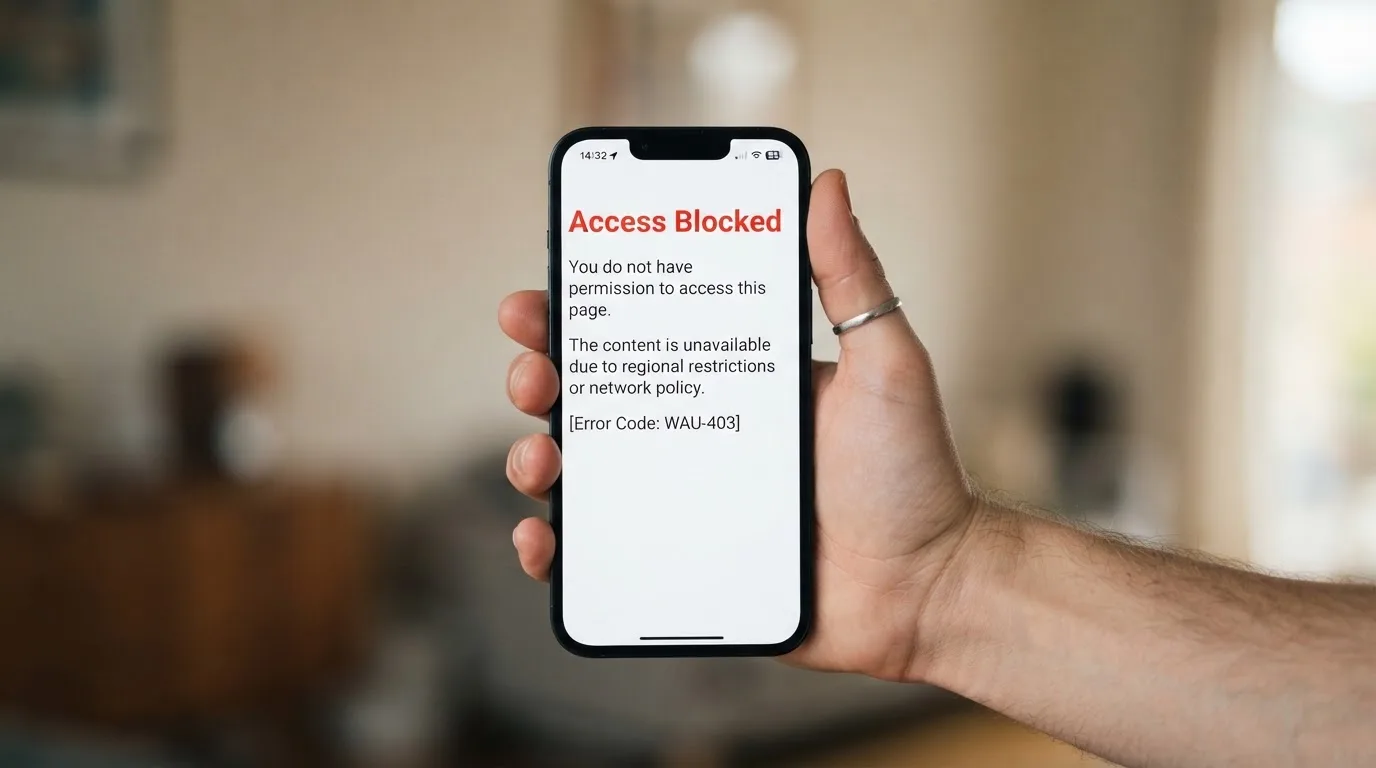
In modern keno, the format is consistent across jurisdictions and providers. The player picks up to twenty numbers from one to eighty. Twenty numbers are drawn, either by a ball machine or by an RNG certified for the market. Payouts scale with how many of the player’s picks match. The payout table is the game — same mechanic everywhere, but the math underneath it varies by venue, by provider, and by the specific paytable the operator publishes. Two keno games with identical rules can sit on opposite ends of the 4%–35% range depending on what the paytable rewards.
Why returns vary so widely between venues
Two structural reasons. First, the paytable. A paytable that rewards ten out of ten at one price and five out of five at another sets the game’s long-run return; small wording changes move that figure substantially. Second, the draw mechanism. A live ball draw in a regulated venue is auditable. An RNG draw is only as honest as the certification behind it, and not every offshore site publishes that audit. A reader comparing two keno games at different venues is, in practice, comparing two paytables and two audit stories — and the audit story is rarely the one the marketing tells.
Keno in Australia: what is licensed, where it actually runs
Keno is one of the gambling products that can be offered legally in Australia through state- or territory-licensed operators. The product sits alongside lotteries, wagering on races, and wagering on sport, and is regulated separately from the casino games the Interactive Gambling Act 2001 prohibits online. That distinction is what makes a keno page on an Australian guide different from the equivalent page for most other casino games.
In Queensland, Keno (QLD) Pty Ltd is the exclusive keno licensee, regulated by the state’s Office of Liquor and Gaming Regulation under the Keno Act 1996, the Keno Regulation 2007, and the Keno Rule 2010. In New South Wales, the keno operator and product licence was granted a 28-year extension to 1 April 2050, with the joint licensees agreeing to pay the state more than A$230 million, including a A$25 million upfront fee plus annual licence duty. In Victoria, twenty-year keno licences were issued from 15 April 2022 under the Gambling Regulation Act 2003 to Keno (VIC) Pty Ltd and Lottoland Australia Pty Ltd, regulated by the Victorian Gambling and Casino Control Commission; Lottoland Australia was renamed to KenoGo Pty Ltd on 9 September 2025.
What all of those licences share is the channel. Keno in Australia runs at licensed venues — pubs, clubs, and land-based casinos — through licensed operators. The same product, online, from an Australian-licensed operator, is not licensed and is not on offer. A reader who wants to play keno in Australia has three lawful paths: a licensed pub or club, a land-based casino in a state that hosts one, or a state-licensed lottery product where keno is folded into the lottery offering.
Online casino games and the Interactive Gambling Act 2001
The Interactive Gambling Act 2001, strengthened by the Interactive Gambling Amendment Act 2017, makes it an offence to provide online casino games, online pokies, or in-play betting to a person physically in Australia. No state or territory licenses online casino games, online pokies, or in-play wagering. The minimum age for any licensable Australian gambling product is 18. Keno sits outside that prohibition at the venue level, but not online.
The provider is the target of the law, not the player. The individual customer is not prosecuted. But the consumer protection that comes with playing through a licensed operator — dispute resolution, complaints bodies, the BetStop register, withholding on winnings, rules around marketing — is not present at an offshore site. If an offshore operator refuses a withdrawal, the Australian customer has no Australian complaints body to take that to. If the site is blocked mid-session, the balance left on it may be unrecoverable. The product prohibition exists for a reason, and most of that reason is what an offshore site cannot be relied on to provide.
Credit cards, crypto, and what is banned at the payment layer
Credit cards, credit-related products, and digital currency are banned as payment for licensed online wagering in Australia since 11 June 2024, with penalties up to A$247,500 for operators that take them. Legal deposit routes for licensed wagering are debit card, bank transfer, PayID and Osko, and BPAY. A site asking an Australian customer for a credit card or for a crypto deposit is, by that single fact, operating outside the Australian wagering rules — a marker that helps separate the lawful product from the offshore one even before the regulator steps in.
What the 2026 reform bill changes
The Interactive Gambling Amendment (Gambling Reform) Bill 2026 passed Parliament on 19 August 2026. Its advertising and inducement measures commence on 1 January 2027. That makes it a law with a start date, not a law already in force on a 2026 page. The ban on offering online casino games to Australian customers is unchanged by the bill; the bill tightens what licensed wagering operators can advertise and what inducements they can offer. A reader in 2026 is reading under the regime the bill amends, not the regime the bill is about to bring in.
How the ACMA enforces: blocking, warnings, and what the record shows
Enforcement under the Interactive Gambling Act 2001 runs through the Australian Communications and Media Authority. The ACMA investigates complaints, issues formal warnings to operators it judges to be offering prohibited services, and can direct Australian internet service providers to block illegal sites. Two figures summarise the running record.
According to the ACMA as reported in June 2026, a total of 1,751 illegal gambling and affiliate marketing websites had been blocked since the first blocking request in November 2019. More than 230 unlicensed gambling services had left the Australian market since enforcement was strengthened in 2017. H2 Gambling Capital’s 2025 report estimates that Australians lose about A$3.9 billion a year to illegal gambling sites, and that the share of gambling going through legal channels fell from 74% in 2021 to 64%. The blocking programme is real, the volume is real, and the demand it sits against is real.
In the round reported on 26 June 2026, the ACMA asked Australian ISPs to block 12 more illegal gambling websites: 7Signs, ChromaBet, Donbet, Duospin, Freshbet, Slots Gem, Jacks Club, Lucky Start, Pointsbetz, Spinrise, Vinyl Casino, and Wildsino. The pattern of names — a different operator behind each site, frequently a new one within weeks of the previous round — is the pattern of a market that adapts as fast as it is blocked.
The Northern Territory Racing and Wagering Commission regulates 52 of Australia’s online bookmakers — Sportsbet, Bet365 and Ladbrokes among them — licensed in the Territory for tax reasons. The commission has no full-time staff and meets once a month in Darwin. That is the regulator a reader hears about when an Australian-licensed bookmaker is named; it is not a regulator for online casino games, because online casino games are not licensed in Australia for anyone.
Crypto and anonymity: what an Australian reader actually sees
A reader searching for “bitcoin keno casino” or “crypto casino keno” lands on the same offshore market as every other online keno search — a service that the Interactive Gambling Act 2001 forbids an Australian-licensed operator to offer. The crypto angle does not change that. A cryptocurrency deposit does not turn an offshore casino into an Australian-licensed one; it turns an offshore casino into an offshore casino that takes crypto. The Australian ban on digital currency as a payment method for licensed wagering, in force since 11 June 2024, applies to the licensed side. On the offshore side, there is no rule at all — and that is the problem.
The structural features a crypto-friendly offshore casino advertises — no identity verification on signup, no Australian phone number required, deposits settled on-chain rather than through a bank — are real, and they are exactly what an Australian reader cannot get through an Australian-licensed operator. They are also what makes the offshore product what the ACMA acts against. No KYC means no Australian complaints body knows who the customer is; no Australian bank in the loop means no Australian dispute resolution; no on-chain settlement means no Australian payment protections. The trade is not “anonymous and convenient”; the trade is “anonymous and outside any Australian protection.”
A reader who holds bitcoin and wants to play keno with it has, in practice, three positions to weigh. First, holding the bitcoin and not gambling on it. Second, converting to Australian dollars through a regulated Australian exchange and using the funds through a lawful Australian keno venue, where that venue exists. Third, sending bitcoin to an offshore keno casino, accepting that the transaction is unregulated and the operator is one the ACMA may have warned or blocked. The third position is the one the ACMA’s blocking record sits on top of.
Responsible gambling: BetStop, the helpline, and what they cover
Two services sit between an Australian reader and any wagering product. BetStop, the National Self-Exclusion Register, has been live since August 2023. It binds Australian-licensed online and phone wagering services — a player can register once and have every Australian-licensed operator exclude them. An offshore casino is not connected to BetStop, and a player registered with BetStop who then plays at an offshore site is not protected by the registration.
The National Gambling Helpline, 1800 858 858, is free, runs 24/7, and offers chat at Gambling Help Online. It is the right first call for any Australian whose gambling has moved from entertainment into harm, and it works regardless of whether the gambling is happening through a licensed Australian operator or through an offshore site. Help is not jurisdiction-bound; the offshore loophole is.
A reader who has searched for keno online in Australia and is reading this page because they want to play should know what they are buying into if they choose an offshore site. They are buying into a product the regulator has explicitly identified as prohibited, with no consumer protection, no complaints body, no connection to BetStop, and a real chance the site is on the next blocking round. The licensed alternative — a venue, a pub, a club, or a land-based casino — is what the regulator was built around.
The brands the ACMA has acted against: a comparison table
What follows is not a ranking. It is not a recommendation. Each brand below is listed because the ACMA itself issued a formal warning over it for offering prohibited online casino services to people in Australia. The page’s own subject — online keno from Australia — cuts against every brand in this list, because the product each one offers is a service that the Interactive Gambling Act 2001 forbids an Australian-licensed operator to offer. The comparison is included because a reader searching for this market is meeting the names regardless, and an honest page names them in one place with what is publicly known about each.
| Brand | ACMA action and date | Operator named by the ACMA | Subject support |
|---|---|---|---|
| RocketPlay | Formal warning, March 2026; earlier formal warning May 2022 (under a different operator) | Pulsup Ltd (March 2026); Dama N.V. (May 2022) | — |
| Level Up Casino | Formal warning, May 2022 | Dama N.V. | Listed by BGaming among operators carrying the provider’s keno titles |
| Woo Casino | Formal warning, March 2025 | Dama N.V. | — |
| Spirit Casino | Formal warning, May 2025 | Dama N.V. | — |
| National Casino | Formal warning, July 2025 | Consolutetish S.R.L. | Listed on Wikipedia among Australian-facing offshore brands |
| Bizzo Casino | Formal warning, July 2025; earlier formal warning 2022 | Consolutetish S.R.L. (July 2025); TechSolutions (CY) Group Limited and TechSolutions Group N.V. (2022) | — |
| Ignition Casino | Formal warning, July 2025 | Bamboo Media | — |
| Instant Casino | Formal warning, February 2025 | EOD Code SRL | — |
| Jackbit | Formal warning, April 2026 | Ryker B.V. | — |
| Casino Intense | Formal warning, April 2025 | Sterplay Holding Ltd | Listed by Australian media coverage and regulator releases; also indexed in Crown Melbourne and ACMA pages |
| Sky Crown | Formal warning, September 2022 | Hollycorn N.V. | — |
The table carries only what the ACMA’s published formal warnings carry: the action, the date, and the operator the regulator named. The “Subject support” column reflects whether the operator’s site lists keno content from a recognised provider — a thin column, because most of these brands either do not publish that information or are not indexed by the providers themselves. The em dash is a no-data marker; it is not a denial that keno is offered. The em dash is the right thing to print when the evidence is silent.
The pattern under the table matters. Six of the eleven brands sit behind Dama N.V. or its successor operators, three sit behind Consolutetish S.R.L. or TechSolutions, and the rest are spread across separate corporate vehicles. The ACMA is not warning eleven independent small businesses; it is warning the same handful of operators under different brand names, which is the structural feature of the offshore market the Interactive Gambling Act 2001 was amended to address.
Reading the table as a player
Three things the table tells a reader without telling them. First, the ACMA’s enforcement is concentrated — most of the warnings cover the same operators under the same holding structures. Second, the warnings span 2022 through 2026, so the regulator’s activity is current, not a one-off. Third, none of the brands has an Australian licence, because an Australian licence for online casino games does not exist. A “Curacao-licensed” or “Costa Rica-licensed” badge on any of these sites is a badge issued by a jurisdiction that is not Australia, for a product that is prohibited in Australia, to a customer the ACMA has explicit statutory grounds to act against.
The picture, by brand
What follows is what is publicly known about each of the eleven brands on the regulator’s record. Each entry carries the same shape: the ACMA action, the operator the regulator named, and a closing read on what the brand is, in light of the rest of the page. No brand is recommended. The closing read is the page’s own judgment of what the brand is, not a verdict on whether the reader should use it — that question is answered by the law above, not by the brand’s profile.
RocketPlay
The ACMA issued a formal warning to Pulsup Ltd over RocketPlay in March 2026. An earlier formal warning was issued to Dama N.V. in May 2022 covering six casino brands, RocketPlay among them. The site presents itself as a multi-vertical offshore casino; the ACMA’s record shows that the operator behind the brand has changed since 2022, but the regulatory situation for an Australian customer has not. The brand’s distinguishing feature in this comparison is recency — March 2026 is the most recent formal warning in the regulator’s published list, and the one that most clearly says the ACMA is still issuing warnings, not just blocking sites.
Level Up Casino
The ACMA issued a formal warning to Dama N.V. in May 2022 covering Level Up Casino along with five other brands. The provider side indexes Level Up among operators carrying BGaming’s keno titles, which means a reader searching for “keno casino” can land here through a provider directory rather than through an affiliate review. The brand’s distinguishing feature is the provider-listing angle: this is one of the few brands in the regulator’s record where a third party — not the operator, not an affiliate — has documented the keno catalogue.
Woo Casino
The ACMA issued a further formal warning to Dama N.V. over Woo Casino in March 2025, on top of the 2022 warning that did not name Woo specifically. Spirit Casino, the next entry, was warned in the same May 2025 round. Two Dama N.V. brands in two consecutive months is the regulator’s enforcement record saying the holding structure is the unit it acts against, not the brand.
Spirit Casino
The ACMA issued a formal warning to Dama N.V. over Spirit Casino in May 2025. Spirit sits next to Woo Casino in the regulator’s 2025 file; the two warnings are the regulator’s record of what happens when one operator runs several brands in parallel.
National Casino
The ACMA issued a formal warning to Consolutetish S.R.L. over National Casino in July 2025. The brand is listed on Wikipedia among Australian-facing offshore brands, which is a thinner form of evidence than a provider directory but reflects how the brand surfaces in searches.
Bizzo Casino
The ACMA issued a formal warning to Consolutetish S.R.L. over Bizzo Casino in July 2025. The same brand had already been the subject of a 2022 formal warning to TechSolutions (CY) Group Limited and TechSolutions Group N.V. — a separate operator, the same brand, the same prohibited product. The pattern of a brand moving between operators while remaining on the regulator’s record is the pattern of a market that rebrands faster than the regulator can publish.
Ignition Casino
The ACMA issued a formal warning to Bamboo Media over Ignition Casino in July 2025. The brand is one of the longer-running offshore casinos marketed to Australian readers, which is what makes the warning worth recording separately from the holding company.
Instant Casino
The ACMA issued a formal warning to EOD Code SRL over Instant Casino in February 2025. The brand surfaced in search results throughout 2026; the ACMA’s record shows the regulator acted against the operator in the same year.
Jackbit
The ACMA issued a formal warning to Ryker B.V. over Jackbit in April 2026. Ryker B.V. was warned in the same round over CasinOK; two brands from one operator in one round is the regulator’s enforcement pattern again.
Casino Intense
The ACMA issued a formal warning to Sterplay Holding Ltd over Casino Intense in April 2025. The brand is indexed in Australian media coverage and in the ACMA’s own pages, and surfaces in coverage alongside Crown Melbourne — a comparison the brand’s own marketing does not invite and the regulator’s record does not soften.
Sky Crown
The ACMA issued a formal warning to Hollycorn N.V. over Sky Crown and its sister brand Blue Leo. The warning is from September 2022; it is the oldest entry in the table and the one that established the ACMA’s willingness to act against operators running multiple brands under one holding company.
Reading the picture: where the law puts the reader
The headline is the right place to start and the right place to end. A reader searching for online keno from Australia is searching for a product that is prohibited for an Australian-licensed operator to supply, that the ACMA has spent the last several years blocking and warning against, and that the licensed Australian keno offering runs around at the venue level rather than the online one. The eleven brands the ACMA has named are the brands a reader searching this market will encounter. None of them is a substitute for what the law actually offers, and the law’s actual offer is the part that is easy to miss.
A reader who wants to play keno in Australia has a real path. They can play at a licensed venue — a pub, a club, a land-based casino — in any state or territory that hosts one, with keno running through a licensed operator. They can register with BetStop if they want wagering products to refuse them service. They can call 1800 858 858 if the gambling has moved from entertainment into something else. None of those paths runs through an offshore casino, and none of them asks the reader to weigh a Curacao-licensed badge against an Australian statutory prohibition.
A reader who is going to play at an offshore site regardless — and the ACMA’s blocking record shows that many do — is making a choice the regulator has explicitly acted against. The honest version of that choice is the version this page is for: here are the names, here are the operators, here is the date the regulator named them, and here is what the product is, in the regulator’s own framework. The product is prohibited. The numbers the marketing copy quotes sit on top of a house edge the regulator does not vouch for. The balance on the site can be lost to a blocking round. That is the picture, and it is what an Australian reader searching for this market deserves to see in one place.
Blocking rate as a working figure
The arithmetic the regulator’s own record supports is straightforward. From the first blocking request in November 2019 to the June 2026 round, the ACMA reports 1,751 illegal gambling and affiliate marketing websites blocked. That is 1,751 blocked sites across roughly 80 months, or about 22 blocked sites per month on average. The June 2026 round alone added 12 sites — roughly half a month’s average volume, in one round, on one date. The condition behind the figure is that the ACMA reports a blocking request only after the regulator has investigated, formally warned the operator, and referred the matter to Australian ISPs; the rate above reflects enforcement output, not detection of new sites.
What the rate means for an Australian reader. Any single offshore brand on the regulator’s record is roughly 80 months of enforcement away from where the regulator started. The regulator’s pace has not slowed; the June 2026 round is the most recent data point and shows a single round’s volume equal to several weeks of average activity. A brand that is not yet on the regulator’s record is a brand the regulator has not yet acted against, not a brand the regulator has cleared. The blocking rate is the rate at which the offshore market is being closed, and the rate has stayed steady.
Live keno versus an automated keno draw
A reader searching for “live keno” will encounter the same two formats the page has already named. A live ball draw, in a regulated venue, runs from a physical ball machine, with the draw observable and the audit trail kept by the venue. An automated draw, at an offshore casino, runs from a random number generator, with the audit trail resting on whatever certification the operator publishes. The audit difference is the substantive difference — the marketing difference is small, and most offshore keno pages use the word “live” loosely. A reader who cares about the draw being independently verifiable is, in practice, asking for a licensed venue, because that is where the audit sits.
Why a top ten does not exist for this search
The page has described eleven offshore brands the ACMA has named, and has done so in a comparison table. A different search — for online casino games generally, or for pokies — would yield a similar regulator’s record and a similar table. The reason there is no top ten of Australian-licensed online keno casinos is structural: there are no Australian-licensed online keno casinos, because no Australian jurisdiction licenses them. The product the search ranks for is the product the law prohibits.
A page that ships a top ten for this search is either ranking offshore brands or ranking licensed land-based venues by something other than what the search asked for. Both happen on the open web; neither is what an Australian reader is actually looking for, and neither is what this page is.
Frequently asked questions
What house edge does keno typically carry compared with other casino games?
Keno carries one of the highest house edges of the standard casino games. Wizard of Odds puts it at 25% to 29% across the most common variants, with returns of 65% to 80% in surveyed live play. Wikipedia’s broader figure is 4% to 35% online and 20% to 40% in person. By comparison, baccarat runs at about 1.06% on the Banker bet and blackjack at about 0.28% with optimal play under liberal Las Vegas Strip rules. Keno’s edge is structurally higher than most of the table games a casino offers.
Is keno available at licensed pubs and clubs in Australia, not just casinos?
Yes. Keno runs at licensed pubs and clubs in every state and territory that hosts it, alongside the land-based casino offering. In Queensland, Keno (QLD) Pty Ltd is the exclusive licensee under the Keno Act 1996. In New South Wales, the operator and product licence was extended to 1 April 2050 with a A$230 million-plus state payment. In Victoria, twenty-year licences were issued from 15 April 2022. The pub and club channel is the licensed Australian keno channel.
Is it legal for an online casino to offer keno to players in Australia?
No. The Interactive Gambling Act 2001, strengthened by the Interactive Gambling Amendment Act 2017, makes it an offence to provide online casino games, online pokies or in-play betting to a person in Australia. No state or territory licenses online keno. The provider is the target of the law; the individual customer is not prosecuted. An offshore site offering online keno to Australians is offering a prohibited service, which is why the ACMA issues formal warnings and blocks sites.
How does live keno differ from an automated keno draw?
A live keno draw runs from a physical ball machine, in a regulated venue, with an audit trail kept by the venue and the regulator. An automated draw runs from a certified random number generator, with the audit resting on whatever certification the operator publishes. The substantive difference is verifiability. An offshore “live keno” page is, in practice, an RNG game with a live presenter overlay; the audit is the same as the RNG game without the overlay. A reader who wants an independently verifiable draw is asking for a licensed venue.
Can keno be played with a Bitcoin deposit at an offshore site?
Yes, at most offshore keno casinos a Bitcoin deposit is supported. The legal position is unchanged: that legislation strictly restricts these offerings, and a cryptocurrency deposit does not turn an offshore casino into an Australian-licensed one. Credit cards, credit-related products and digital currency are banned as payment for licensed online wagering since 11 June 2024. A bitcoin deposit at an offshore site sits outside any Australian consumer protection, BetStop registration, or regulator audit.
Why do keno returns vary so widely between venues?
Two structural reasons. The paytable — the specific payouts the operator publishes for matching numbers — sets the long-run return, and small wording changes move the figure substantially across the 4% to 35% range. The draw mechanism — a live ball draw at a regulated venue, or an RNG draw with the operator’s own certification — sets the audit story behind the numbers. A reader comparing two keno games at different venues is comparing two paytables and two audit stories, and the audit story is rarely the one the marketing tells.
Written by the editors at Casino Payments Hub.