Best 3-Reel Slots in Australia: The Format, the Law, and the Offshore Shelf
 Available in US
Three-reel slots are the original slot machine. They predate video screens, bonus rounds, and the cascading reels that now dominate online lobbies. The format survives because it is simple: three columns of symbols, one or a handful of paylines, and a paytable printed on the glass. What a player in Australia needs to understand about the format, though, runs straight into a hard legal wall before the first spin lands. No online casino is licensed anywhere in Australia to offer slots of any reel count, and the Australian Communications and Media Authority has spent years warning, blocking, and pushing offshore brands off the local market.
This page is a guide to the format itself, what the Australian legal frame actually permits, and the offshore shelf where these games appear. It is not a recommendation to play. It is an honest account of what a punter is choosing between in 2026.
Data current as of 24 September 2026. Licence and enforcement claims verified against ACMA publications.
Table of Contents
- What a 3-Reel Slot Actually Is
- Where the Format Still Lives in Australia: Clubs, Pubs, and Casino Floors
- The Australian Legal Frame for Online Play
- What a Real-Money Online 3-Reel Slot Would Need
- What “Bonuses” and “Free Spins” Mean on a 3-Reel Slot
- The Offline Comparator: Regulation of Australian Gaming Machines
- What the Reel Count and Paytable Structure Mean for Volatility
- The Australian Enforcement Record Against Offshore Sites
- The Offshore Shelf: Brands the ACMA Has Acted Against
- What Player Protection Actually Applies
- The 2026 Reform Package
- What to Take Away
- Frequently Asked Questions
What a 3-Reel Slot Actually Is
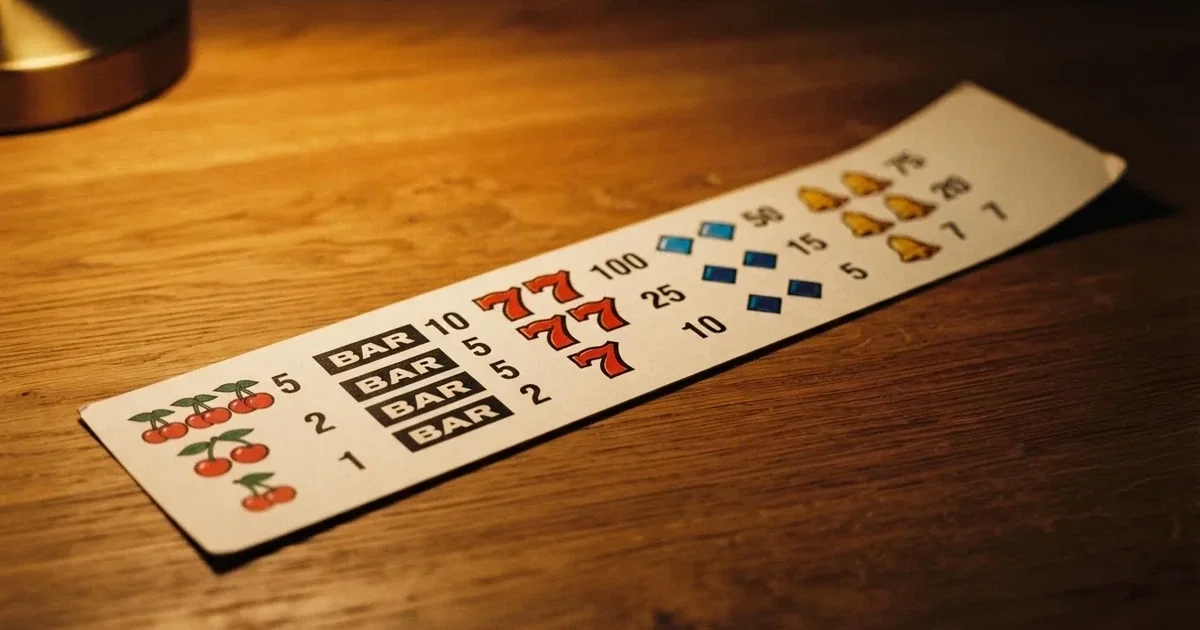
A 3-reel slot is a machine or a digital game built around three spinning reels, each carrying a fixed set of symbols arranged in vertical strips. The player bets, the reels come to rest, and any matching symbols along a designated payline trigger a payout at the rate printed on the paytable. The format traces back to Charles Fey’s late-19th-century Liberty Bell, a three-reel mechanical machine with five symbols (horseshoes, diamonds, spades, hearts, and the Liberty Bell itself), where three bells in a row paid the top prize of ten nickels.

What distinguishes a 3-reel slot from a modern video slot is scale. A classic mechanical three-reel machine with roughly ten symbols per reel offers about one thousand possible combinations across three rows. Modern five-reel video machines can carry fifty or more symbols per reel across five or more reels, and the odds against a top combination can run as high as 300 million to one. The arithmetic behind the older format is therefore far more legible: a player can roughly count how often a top prize is “due.” Whether that legibility is a feature or a trap is a separate question.
Two more features define the 3-reel format in practice. The first is the paytable as a contract: the symbol values, the winning combinations, and the credit values for matching one, two, or three of each symbol are printed openly and do not change from spin to spin. The second is the absence of the bonus mechanics that dominate 5-reel games. There are no free-spin triggers, no scatter pays, no expanding wilds, and no pick-em rounds in the strict 3-reel version. Some titles now marketed as “3-reel slots” include a bonus feature anyway, but those are hybrids rather than the classic format.
Symbol Structure and Paylines
The original Liberty Bell used five symbols across three reels, giving a small number of outcomes. Most 3-reel slots still in circulation use ten to fifteen symbols per reel, sometimes more on digital versions. With three reels and a single horizontal payline through the centre, the number of distinct three-symbol outcomes is the product of the three symbol counts. With ten symbols per reel, that product is exactly 1,000, the same rough figure the mechanical era produced.

When a digital 3-reel slot offers three paylines (across the top, centre, and bottom of the visible symbols), or five paylines with diagonals, the number of possible combinations multiplies accordingly. The paytable will spell out which combinations pay, and at what multiple of the line bet. A common arrangement pays the jackpot only for three matching symbols on the centre line, with smaller prizes for matches on the upper and lower lines.
What the Paytable Shows
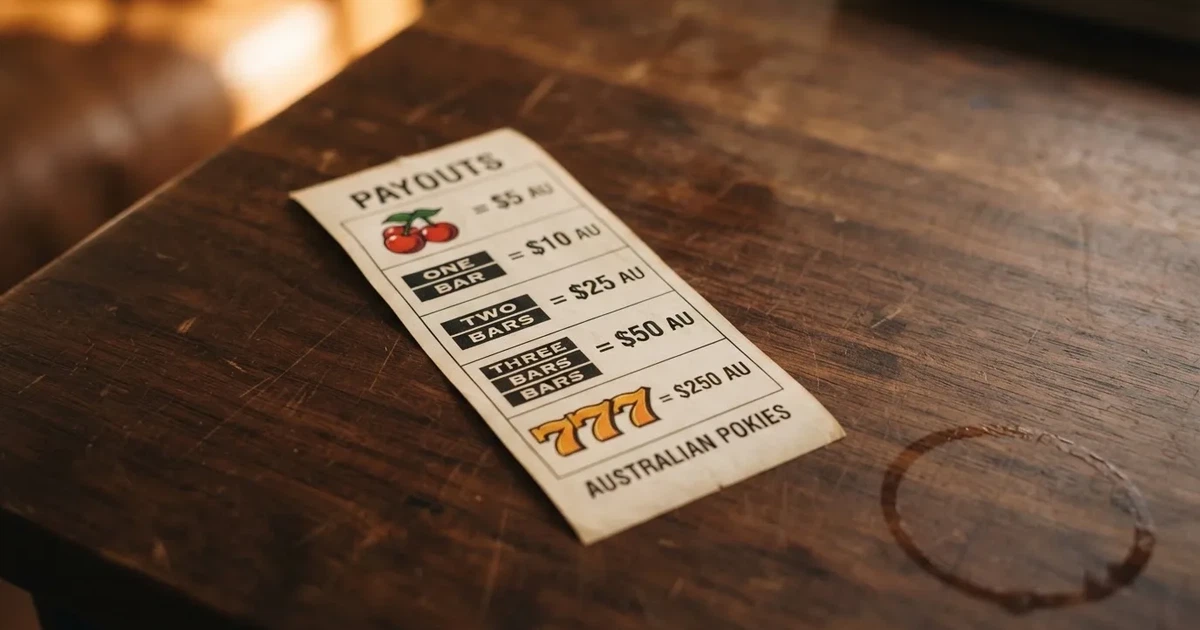
The paytable is the contract. For each symbol, it states the credit value for one match (rarely paid on a 3-reel format), two matches (paid on most variants), and three matches (paid on every variant). Special symbols such as wilds substitute for others, but their substitution rules vary from game to game and are spelled out on the glass or its digital equivalent. The original Liberty Bell paid ten nickels for three bells; a digital 3-reel slot today might pay two hundred credits for three of its top symbol at the maximum coin level.
A key consequence: the higher the coin level, the higher the payout per match, sometimes disproportionately so. A game that pays 200 credits for three sevens at one coin per line, 400 at two coins per line, and 1,000 at three coins per line, is rewarding max-coin play in a way that a single-coin player never sees. This is the original “play max” mechanic, and it predates the modern slot industry.
3-Reel Slots in a Modern Lobby
What gets labelled a “3-reel slot” in an online lobby in 2026 is rarely the mechanical-era game. It is a digital emulation with a small symbol set, a small reel count, and a deliberately retro look. Some of these titles do carry a bonus feature, often a free-spin round or a simple pick-em, which would have been impossible on a mechanical Liberty Bell. The marketing frame “classic 3-reel” usually means a low-symbol-count digital slot rather than a mechanical device.
This matters for the volatility profile. A 3-reel slot with three paylines and modest jackpot values tends to produce frequent small wins and infrequent large ones. A 5-reel video slot with twenty paylines and several bonus mechanics tends to spread wins more thinly across many outcomes but offer larger prizes when a bonus round lands. Neither is uniformly better. The 3-reel format simply hands more of the outcome to those few specific combinations.
Where the Format Still Lives in Australia: Clubs, Pubs, and Casino Floors
No online casino game is licensed for real-money play in Australia, regardless of reel count. The Interactive Gambling Act 2001, strengthened by the Interactive Gambling Amendment Act 2017, makes the provision of online casino games and online pokies to a person in Australia an offence. No state or territory issues a licence for them. The 3-reel online slot lives only on offshore sites operating outside Australian law.
The format does exist in physical venues, where state and territory regulators do approve the games. Pokies-style slot machines outside casinos numbered 87,298 in New South Wales as of June 2023, 26,380 in Victoria in 2021–22, 21,122 in Queensland in October 2023, 11,672 in South Australia in September 2023, and 3,587 in the ACT in November 2023. These are predominantly multi-game video machines rather than strict 3-reel mechanical slots, but the 3-reel format appears as one option among several in club and pub machine menus, alongside 5-reel video titles and the linked progressive games that pool jackpots across venues.
NSW legalised slot machines in 1956, and by 2010 Australia operated an estimated 97,103 gaming machines outside casinos, a per-capita rate about five times that of the United States. The category was already dominated by mechanical and early video 3-reel games in the 1950s and 1960s. Bally’s “Money Honey,” released in 1963, was the first slot machine with a bottomless hopper and automatic payout of up to 500 coins without an attendant, the mechanical step that freed the format from having a person standing beside every machine.
Casino floors are a separate shelf. Crown Melbourne’s table game approvals from the Victorian Gambling and Casino Control Commission cover card games such as baccarat and blackjack variants, with each rule change logged publicly. Slot machines on a casino floor fall under a different approval regime but are inspected and approved in much the same way, with each game’s theoretical return percentage filed with the regulator before the cabinet goes live.
The Australian Legal Frame for Online Play
The Interactive Gambling Act 2001 is the governing statute, and the Interactive Gambling Amendment Act 2017 strengthened it. The IGA makes it an offence to provide certain interactive gambling services to a person physically in Australia. The list is explicit: online casino games (which includes online slots of every reel count), online pokies, and in-play betting on sport. Lotteries, keno, and pre-event wagering on races and sport are not prohibited services and can be licensed.
Licensed wagering in Australia is, in practice, licensed by the Northern Territory. The Northern Territory Racing and Wagering Commission regulates 52 of Australia’s online bookmakers, including Sportsbet, Bet365, and Ladbrokes. The commission has no full-time staff and meets once a month in Darwin, a structure that has drawn political criticism but has not changed. What is licensed, in other words, is wagering on sport and racing. What is not licensed, and cannot be, is an online slot machine of any format.
The minimum age for any form of licensed Australian gambling is 18. The individual player is not prosecuted under the IGA; the statute targets the provider, not the customer. Playing on an offshore site is not, on its own, an offence for an Australian resident. The consequence of playing offshore is that no Australian consumer protection applies: there is no Australian complaints body, no local recourse if a withdrawal is refused, and the site can be blocked with a player funds still held in the account.
Payments and the Credit-Card Ban
A specific payment rule applies to Australian-licensed online and phone wagering services. Since 11 June 2024, credit cards, credit-related products, and digital currency have been banned as payment methods for licensed online wagering, with penalties of up to $247,500 for operators that breach the rule. The legal deposit routes that remain for licensed wagering are debit card, bank transfer, PayID/Osko, and BPAY.
This rule applies only to licensed wagering services, not to offshore casino sites, which are prohibited services in the first place. The practical signal is that an Australian-licensed bookmaker asking for a credit card or a crypto deposit is breaking the Australian rules, and an offshore casino asking for either is operating entirely outside them. Both situations are warnings, not endorsements.
Tax Treatment for Recreational Players
Gambling winnings of a recreational Australian player are not assessable income, and losses are not deductible. The relevant provision is section 6-5 of the Income Tax Assessment Act 1997, which excludes gambling gains from the income tax base for players who are not carrying on a business of gambling. A punter who bets occasionally on horses or plays the pokies does not declare winnings and cannot claim losses against other income. A professional gambler, defined by the ATO through a businesslike pattern of activity, is taxed on net profit. This is the model rather than personalised tax advice; the ATO is the authority on individual circumstances.
What a Real-Money Online 3-Reel Slot Would Need
If an online casino wanted to offer a 3-reel slot to an Australian player for real money, it would need an Australian licence, and no such licence exists for the category. State and territory regulators license the venues and the machines inside them, not the offshore servers. An offshore site offering real-money 3-reel slots to Australians is therefore in breach of the IGA by virtue of the offer itself.
The offshore site may display a licence from Curaçao, Anjouan, or another jurisdiction. That licence covers the operator’s right to run the site from the licensing country. It does not authorise the offering of interactive gambling services to Australians, because no foreign licence can confer that authority under Australian law. The two regimes operate on different sovereign planes and do not override each other.
A player who registers, deposits, plays, and tries to withdraw from such a site has no Australian pathway for a complaint. The site may resolve disputes through its own internal process, an alternative dispute resolution provider named in its terms, or the regulator named on its licence. None of those are Australian bodies. If the site is added to an ACMA blocking list, the player’s session may end with funds stranded on the offshore side of a server.
What “Bonuses” and “Free Spins” Mean on a 3-Reel Slot
The bonus and free-spin offer is the most heavily marketed part of any offshore online casino lobby. For a 3-reel slot specifically, the offers generally work the same way as for any other slot: a deposit match (the casino adds a percentage of the player’s deposit as bonus funds), free spins (the casino credits a fixed number of spins at a fixed stake on a named game), or a no-deposit package (a small credit issued before the player has deposited). These structures are standard across the offshore market.
What the marketing tends to underweight is the wagering requirement, which is the multiplier applied to the bonus before any winnings become withdrawable cash. A “100% match up to A$500 with 40x wagering” means the player must wager the bonus amount forty times before the bonus-derived winnings can be cashed out. On a 3-reel slot with a low house edge and a small per-spin stake, clearing the requirement is a long mechanical grind. On a higher-volatility 5-reel slot, the same requirement can be cleared in fewer spins but with more variance.
There is also the maximum-cashout rule, common on free-spin offers, that caps how much of the bonus-derived winnings can be withdrawn regardless of the spin result. A “max cashout of 5x the bonus” on a free-spin package means that even a player who lands the bonus’s top payout withdraws only five times the bonus value, with the rest written off by the terms. The exact rules vary by site and by promotion; the category exists across most of the offshore shelf.
These mechanics are not unique to 3-reel slots, but they sit heavily on a format that was originally designed to be transparent. A player who wants to know what a spin is worth historically looked at the paytable on the glass. The bonus framework adds a second contract layered on top of the first, and reading both at once is more than most marketing pages invite.
The Offline Comparator: Regulation of Australian Gaming Machines
A useful comparison is the regulatory frame that does apply to slot machines in Australia: the offline one. State and territory regulators approve every game before it goes on a club, pub, or casino floor. The game submission includes the theoretical return to player (RTP), the volatility profile, the rules for any bonus feature, and the cabinet configuration. The regulator checks the math and the cabinet before authorising deployment.
In the United States, state regulation sets minimum slot machine payout percentages that vary by jurisdiction: Nevada requires at least 75%, Mississippi at least 80%, and New Jersey at least 83%. Australia does not publish a single federal minimum across all states, but the state-level regulators do set and enforce minimum RTPs for the machines they license, and the published return percentages on Australian club and pub machines are considerably higher than those US floors, generally in the eighty-five to ninety-plus percent range.
This is the frame an Australian player has on a physical machine: an approved game, a regulated cabinet, an approved venue, and a local complaints body if something goes wrong. The frame does not extend to the offshore online shelf.
What the Reel Count and Paytable Structure Mean for Volatility
Volatility in slot design is the spread of outcomes: low-volatility games produce frequent small wins, high-volatility games produce infrequent large wins. Reel count and paytable structure both feed into this profile.
A 3-reel, single-payline game with a small number of top combinations produces a relatively simple volatility profile. There are not many distinct outcomes, so the distribution between losing spins and winning spins is fairly close to what the paytable shows. The top prize is rare but the smaller prizes are reasonably frequent.
A 5-reel game with twenty paylines spreads the winning outcomes across many symbol combinations, often across many smaller wins per spin. With more symbols on each reel and more reels, the number of distinct combinations can run into the tens of millions. The volatility profile depends on how the paytable is weighted: a game that pays heavily on five-of-a-kind bonuses will skew high-volatility; a game that pays modestly on every three-of-a-kind combination will skew low.
The classic 3-reel format with three paylines is generally a medium-volatility format, sitting between the very low variance of a single-line mechanical game and the high variance of a 5-reel progressive. None of this is a guarantee of any specific session result; it is a description of the distribution the player is sampling from.
The Australian Enforcement Record Against Offshore Sites
The ACMA’s enforcement against offshore online casinos is the most concrete piece of evidence about how seriously the Australian regime treats the prohibition. Three kinds of action appear in the record: formal warnings issued to operators, blocking requests issued to Australian internet service providers, and the broader count of services that have left the Australian market in response to enforcement pressure.
According to the ACMA as reported in June 2026, a total of 1,751 illegal gambling and affiliate marketing websites had been blocked since the first blocking request in November 2019, and more than 230 unlicensed gambling services had left the Australian market since enforcement was strengthened in 2017. The blocking figure is cumulative, drawn from every round of blocking requests the ACMA has directed to ISPs since 2019, and the exit figure is the running count of operators who have withdrawn from the Australian market rather than face continued enforcement.
In a round reported on 26 June 2026 the ACMA asked Australian internet service providers to block 12 more illegal gambling websites: 7Signs, ChromaBet, Donbet, Duospin, Freshbet, Slots Gem, Jacks Club, Lucky Start, Pointsbetz.com, Spinrise, Vinyl Casino and Wildsino. This is one round; the cumulative total includes dozens of similar rounds since 2019.
The blocking list compounds. The November 2019 starting point for the count means the ACMA has been running this regime for roughly seven years. In that period, the rate of blocking has accelerated and the ranks of named operators have changed, but the legal frame has not. The IGA is the same statute, and the prohibition on providing online casino games to Australians is the same prohibition.
The Blocking Rate as a Measure of Enforcement Pace
The blocking count provides a way to read the enforcement pace. From the first request in November 2019 to the June 2026 report, the ACMA moved from one to 1,751 blocked sites. That is an average of roughly 220 sites per year across the seven-year window, though the rate has not been constant: the early years were slower as the regime was being established, and the later years have run faster as the ACMA has built out its processing capacity.
Within that average, the most recent annual rounds show the ACMA regularly asking ISPs to block sites in batches of twelve to twenty at a time, with formal warnings issued separately and concurrently. The pace is meaningful because it indicates the regulator’s sustained attention rather than a one-off crackdown. An offshore operator named in one round can expect to be named again, and a new operator entering the Australian market can expect to be processed into the system within weeks of detection.
H2 Gambling Capital’s 2025 report estimates that Australians lose about A$3.9 billion a year to illegal gambling sites, and that the share of gambling going through legal channels fell from 74% in 2021 to 64%. The blocking rate and the loss estimate point in the same direction: the demand is real, the offshore supply is meeting it, and the enforcement is sustained but not yet close to closing the gap.
Formal Warnings Against Named Operators
The ACMA’s formal warnings are issued to the legal entity behind an offshore site, naming the entity and the brands it operates. The warnings are public, posted on the ACMA’s website, and signal that the named operator is in breach of the IGA and that further enforcement action may follow.
In March 2026 the ACMA issued a formal warning to Pulsup Ltd over Rocketplay.com.au. In May 2022 the ACMA issued a formal warning to Dama N.V. covering six casino brands: Bambet, Dazard, Level Up, Rocketplay, Wild Tornado, and Cobra Casinos. The ACMA issued further formal warnings to Dama N.V. over Woo Casino (March 2025) and Spirit Casino (May 2025). In July 2025 the ACMA issued formal warnings to Bamboo Media over Ignition Casino and to Consolutetish S.R.L. over National Casino and Bizzo Casino; Bizzo Casino had already been the subject of a 2022 formal warning to TechSolutions (CY) Group Limited and TechSolutions Group N.V. In February 2025 the ACMA issued a formal warning to EOD Code SRL over Instant Casino. In April 2026 the ACMA issued a formal warning to Ryker B.V. over Jackbit and CasinOK. In April 2025 the ACMA issued a formal warning to Sterplay Holding Ltd over Casino Intense. The ACMA also issued a formal warning to Hollycorn N.V. over its Sky Crown and Blue Leo casino services in September 2022.
The repetition across these warnings is instructive. Some operators are named more than once: RocketPlay has been the subject of warnings to two different entities (Dama N.V. in 2022 and Pulsup Ltd in 2026), and Bizzo Casino has been warned under both Consolutetish S.R.L. and TechSolutions Group. The repetition is consistent with how the offshore market operates: a brand is sold or transferred between entities, and the ACMA tracks the brand and the entity behind it as separate compliance questions.
The Offshore Shelf: Brands the ACMA Has Acted Against
The brands below are not recommendations. Each is on this page because the ACMA has issued a formal warning over it for offering prohibited online casino services to Australians. The list is drawn directly from the ACMA’s published warnings.
| Brand | ACMA action and date | Operator named by the ACMA | Subject support |
|---|---|---|---|
| RocketPlay | Formal warning, March 2026 | Pulsup Ltd (Rocketplay.com.au) | — |
| Level Up Casino | Formal warning, May 2022 | Dama N.V. | Listed by BGaming |
| Woo Casino | Formal warning, March 2025 | Dama N.V. | — |
| Spirit Casino | Formal warning, May 2025 | Dama N.V. | — |
| National Casino | Formal warning, July 2025 | Consolutetish S.R.L. | Listed on Wikipedia |
| Bizzo Casino | Formal warning, July 2025 | Consolutetish S.R.L. | — |
| Ignition Casino | Formal warning, July 2025 | Bamboo Media | — |
| Instant Casino | Formal warning, February 2025 | EOD Code SRL | — |
| Jackbit | Formal warning, April 2026 | Ryker B.V. | — |
| Casino Intense | Formal warning, April 2025 | Sterplay Holding Ltd | Listed by various references |
| Sky Crown | Formal warning, September 2022 | Hollycorn N.V. | — |
The “Subject support” column captures the only available signal about whether the brand has a public connection to 3-reel slot content in third-party listings. Most entries are blank because the research did not turn up a meaningful 3-reel slot footprint for those brands; a few are noted as appearing in third-party directories that list the brand but do not verify 3-reel slot availability. The point of the column is to be honest about how thin the signal is: a brand can be well-known in the offshore market and still have nothing verifiable about its 3-reel slot offering in the sources consulted.
RocketPlay
RocketPlay was warned by the ACMA under two separate entities. The earlier warning, in May 2022, named Dama N.V. as the operator across six brands, including RocketPlay. The more recent warning, in March 2026, named Pulsup Ltd as the operator of Rocketplay.com.au specifically. The dual-track record is consistent with the brand having changed hands between entities, and the ACMA’s enforcement track having followed it across that transition. There is no public signal in the consulted sources about RocketPlay’s specific 3-reel slot content; the brand’s offshore shelf is documented through the warnings rather than through game catalogues.
The honest read for a player is that RocketPlay is on the ACMA’s active enforcement list as of 2026, and any 3-reel slot it offers is being offered from outside Australian law. A player who reaches the site through a VPN or an offshore affiliate link does not change that legal frame.
Level Up Casino
Level Up Casino was named in the May 2022 Dama N.V. warning, one of six brands covered by that single ACMA action. Level Up has appeared in third-party listings of BGaming’s game distribution partners, which is the only verifiable signal the consulted sources carry about the brand’s slot content. The signal is a distribution relationship, not a guarantee of any specific 3-reel offering, and it predates the ACMA’s warning by several years.
The 2022 warning is the more current legal frame. A site that was the subject of an ACMA formal warning four years ago is a site the regulator has actively named, not one that has merely been mentioned. The brand may have changed hands, rebranded, or quietly continued; the ACMA’s enforcement file follows the legal entity behind the brand.
Woo Casino
Woo Casino was warned by the ACMA in March 2025 under Dama N.V., the same operator named in the 2022 warning that included Level Up. The Dama N.V. cluster of brands is therefore a useful category in itself: the operator was warned twice in three years over different brand portfolios, indicating either a continued operation across both rounds or a successor entity operating under similar brand arrangements.
For a player looking specifically for 3-reel slot content on Woo Casino, the consulted sources do not carry any verifiable signal about which games are offered or under what return percentages. The brand’s offshore shelf is documented, its Australian legal status is not in doubt, and its specific game catalogue is opaque from a public-source perspective.
Spirit Casino
Spirit Casino was warned by the ACMA in May 2025, again under Dama N.V., making it the third Dama N.V. brand to be named in a warning. The three warnings span 2022 to 2025 and cover a portfolio that includes RocketPlay, Level Up, Woo Casino, and Spirit Casino, with additional brands named in the same actions. The pattern is consistent with an operator that has continued to operate Australian-facing offshore casino brands across the period despite the warnings.
The Australian legal status is the same as for every other brand on this list: prohibited service, formal warning, no Australian consumer protection. The brand’s 3-reel slot shelf specifically is not documented in the consulted sources.
National Casino
National Casino was warned by the ACMA in July 2025 under Consolutetish S.R.L., which was also named in the same round for Bizzo Casino. The brand has appeared in third-party listings, including Wikipedia’s coverage of online casino operators, which is the verifiable signal carried by the consulted sources. The listing presence is not a recommendation; it is a marker that the brand is documented enough to appear in reference material.
The ACMA’s enforcement action against Consolutetish S.R.L. over National Casino is the operative fact for an Australian player. The brand’s appearance in third-party directories does not change its status as a prohibited service in Australia.
Bizzo Casino
Bizzo Casino carries a longer ACMA record than most brands on this list. The 2025 warning to Consolutetish S.R.L. was a second action: Bizzo had already been the subject of a 2022 formal warning to TechSolutions (CY) Group Limited and TechSolutions Group N.V. The two actions under two different named entities suggest the brand has moved between operators, with the ACMA tracking both transfers.
A brand with two warnings four years apart is a brand that has continued to operate Australian-facing services despite enforcement pressure. The brand’s offshore shelf is documented, and its Australian legal status is unambiguously adverse.
Ignition Casino
Ignition Casino was warned by the ACMA in July 2025 under Bamboo Media. The brand is better known in the United States, where its sportsbook and casino operation has historically been the focus of media coverage, but the ACMA’s enforcement action is about its Australian-facing services.
The warning is the operative fact. The brand’s American footprint is irrelevant to its Australian legal status, which is that of a prohibited service.
Instant Casino
Instant Casino was warned by the ACMA in February 2025 under EOD Code SRL. The warning is among the more recent actions on this list and indicates an operator that was actively serving Australian customers in 2024–25 despite the prohibition. The consulted sources do not document a specific 3-reel slot offering.
A brand warned within the last twelve months is at the front edge of the ACMA’s current enforcement attention. An Australian player reaching Instant Casino is engaging with a brand the regulator has named as in breach of the IGA in 2026 or the year prior.
Jackbit
Jackbit was warned by the ACMA in April 2026 under Ryker B.V., which was named in the same action over CasinOK. The brand has a sportsbook-heavy positioning in the offshore market, with casino content as a secondary category. The consulted sources do not document a specific 3-reel slot offering.
The April 2026 warning is current to 2026. Jackbit is on the active enforcement list as of the most recent ACMA round.
Casino Intense
Casino Intense was warned by the ACMA in April 2025 under Sterplay Holding Ltd. The brand has appeared in third-party reference listings, including coverage from the ABC and the ACMA’s own enforcement file, which is the verifiable signal carried by the consulted sources. The 2025 warning is the operative fact for an Australian player.
Casino Intense is among the smaller brands on this list by traffic and recognition. The smaller the brand, the less the public source material covers it, and the harder it is to verify any specific 3-reel offering. The warning is the verifiable record.
Sky Crown
Sky Crown was warned by the ACMA in September 2022 under Hollycorn N.V., the same entity named in a warning over Blue Leo casino. The 2022 warning is older than most entries on this list, but the brand has not been removed from the ACMA’s enforcement file. The consulted sources do not document a specific 3-reel slot offering from Sky Crown.
A warning that is several years old does not mean the brand has ceased operating. It means the ACMA named it as in breach in 2022, and no subsequent action has overturned or replaced that finding. An Australian player reaching Sky Crown today is engaging with a brand whose Australian legal status has been on the ACMA’s file for over three years.
What Player Protection Actually Applies
The Australian framework for player protection is built around licensed services. The National Self-Exclusion Register, known as BetStop, has been live since August 2023 and lets a person exclude themselves from every Australian-licensed online and phone wagering service at once. The exclusion periods run from a minimum of three months to a permanent exclusion, and the licensed operators are bound to enforce it.
BetStop does not bind offshore casino sites. An Australian who has registered with BetStop is excluded from licensed wagering but can still reach an offshore casino site through a regular browser. This is the central gap in the framework: the self-exclusion tool is comprehensive within its scope and ineffective outside it. The offshore site has no obligation to honour an Australian self-exclusion registration, and most do not check against BetStop.
The free, 24/7 support line is 1800 858 858, the National Gambling Helpline, with chat available through Gambling Help Online. These services are available regardless of whether the person plays on licensed or offshore platforms. The support is the same; the registration tools are not.
The 2026 Reform Package
The Interactive Gambling Amendment (Gambling Reform) Bill 2026 passed Parliament on 19 August 2026. The bill introduces advertising and inducement measures that commence on 1 January 2027, meaning the bill is law with a start date, not yet in force on a page read in 2026. The 2026 reform does not change the underlying prohibition on online casino games; it adds further restrictions on how licensed operators can advertise and on what inducements they can offer.
For an Australian player interested in 3-reel slots, the 2026 reform is a forward-looking signal rather than an immediate rule. The 1 January 2027 commencement means the inducement rules apply to licensed wagering advertising from that date. The underlying prohibition on online casinos remains, and the offshore shelf remains outside Australian jurisdiction.
What to Take Away
A 3-reel slot is a simple format with a long history and a transparent paytable. The format is alive in Australian clubs, pubs, and casino floors, and is emulated in digital form in offshore online lobbies. The Australian legal frame does not permit the offshore real-money version, and the ACMA’s enforcement against the offshore shelf is sustained and growing. A punter who wants the 3-reel experience has the licensed offline options; a punter who wants it online is engaging with an offshore site that operates outside Australian consumer protection.
The honest answer to “what are the best 3-reel slots in Australia” depends on what the question is really asking. For the format itself, the answer is the simple, transparent 3-reel, 3-payline, small-symbol-set game that has existed in roughly that shape since the Liberty Bell. For real-money online play of the format in 2026, the answer is that no Australian-licensed site offers it, and the offshore shelf that does is subject to ongoing ACMA enforcement and offers no Australian consumer protection.
Frequently Asked Questions
What makes a 3-reel slot different from a standard 5-reel video slot?
A 3-reel slot uses three columns of symbols with one to five paylines, while a 5-reel video slot uses five columns with twenty or more paylines and usually includes bonus features. The 3-reel format produces roughly a thousand distinct symbol combinations with ten symbols per reel, whereas a modern 5-reel game can produce tens of millions. The 3-reel format therefore shows a simpler, more legible paytable.
Can 3-reel slot machines be found in licensed Australian pubs and clubs?
Yes. Australian clubs and pubs operate tens of thousands of approved gaming machines, including 3-reel titles, with state-level regulators approving each game’s theoretical return before deployment. New South Wales alone had 87,298 pokies-style machines outside casinos as of June 2023, and the 3-reel format appears as one option on multi-game cabinets alongside 5-reel video titles.
Do 3-reel slots typically pay out differently than newer 5-reel formats?
The two formats differ in volatility profile rather than in any universal payout rate. A classic 3-reel game with three paylines tends toward medium volatility, with frequent small wins and infrequent larger prizes. A 5-reel video slot can be tuned to any volatility the designer chooses, from very low to very high, depending on the symbol weighting and bonus feature design.
Is a 3-reel slot online the same game as a 3-reel machine on a casino floor?
The format is the same but the regulation is not. An online 3-reel slot offered by an offshore site is a prohibited service under the Interactive Gambling Act 2001, with no Australian consumer protection. A 3-reel machine in a licensed Australian venue is approved by a state or territory regulator, operates under local rules, and is covered by Australian complaints pathways.
Are 3-reel slots for real money available legally from an Australian-based site?
No online casino game, including 3-reel slots of any description, is licensed for real-money play in Australia. The Interactive Gambling Act 2001 prohibits the provision of online casino games to Australians, and no state or territory issues a licence for the category. The only Australian-licensed online gambling is wagering on sport and racing, lotteries, and keno.
Do reel count and paytable structure affect how a slot’s volatility is described?
Yes. Reel count and paytable structure are two of the main inputs to a slot’s volatility profile. A 3-reel game with a single payline and a small number of top combinations has a narrow distribution of outcomes; a 5-reel game with twenty paylines and several bonus mechanics spreads outcomes more widely. The volatility classification (low, medium, high) is set by the designer based on the combined effect of these inputs.
Created by the ”Casino Payments Hub” editorial team.