A practical guide to Betsoft-powered online casino play in Australia
 Available in US
Online casino games and online pokies are prohibited for Australian residents under the Interactive Gambling Act 2001, and no state or territory issues a licence for them. The sites that carry Betsoft’s catalogue and market themselves to Australian players all operate outside that law. The ACMA has spent the past several years issuing formal warnings to a long list of offshore brands and asking Australian internet service providers to block them, with the running total of blocked domains reaching 1,751 by mid-2026. This page is a practical guide to what that means for a player who searches for “Betsoft online casino Australia”: the studio itself, what its titles generally involve, the enforcement record against the brands that host its games, and what a fair comparison looks like when no Australian licence exists for the product at all.

Data is current as of 24 September 2026 and was verified against the Australian Communications and Media Authority’s published register of formal warnings and blocking requests.
Table of Contents
- Responsible gambling: when the search itself is the signal
- Payments and payout speed in a market without local rails
- What a Betsoft bonus offer generally involves
- Mobile and app play for offshore casinos
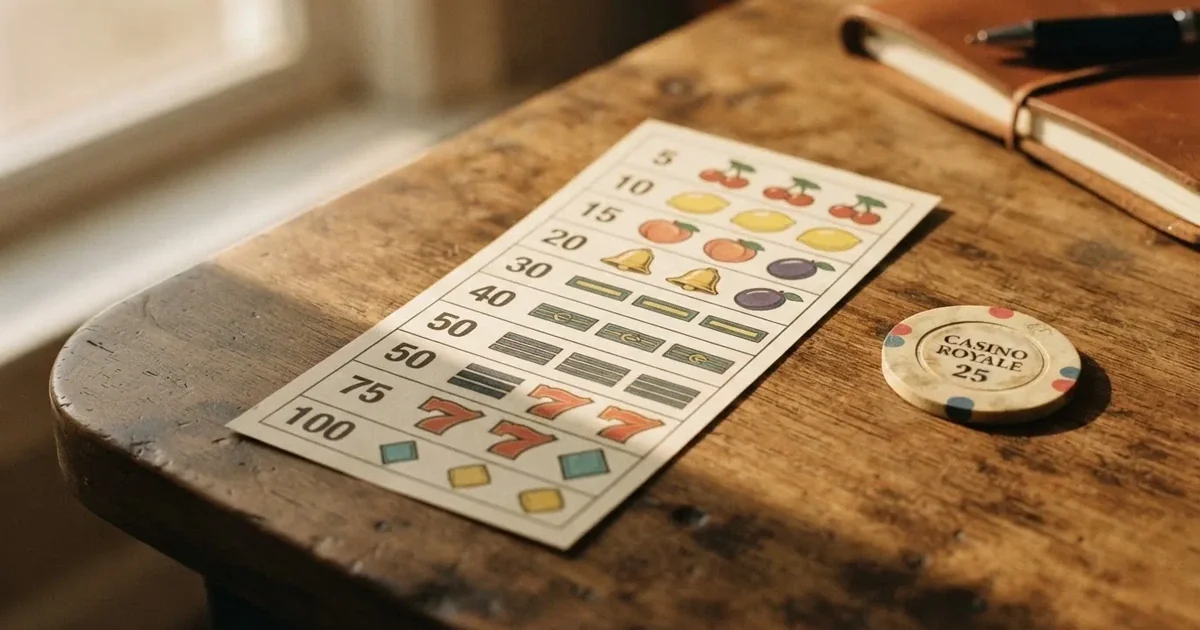
- Specific games, providers, and what a Betsoft paytable actually shows
- Comparative reality: when no licence exists
- Overview: the fundamentals of Betsoft-powered play in Australia
- Legality: what the Interactive Gambling Act actually prohibits
- Calculation: the ACMA’s blocking rate since 2019
- Operator reviews: eleven brands and what each one tells the reader
- The closing view
- Frequently asked questions
Responsible gambling: when the search itself is the signal
Anyone landing on a page like this one has already typed something specific into a search engine. The first thing to put on the table is what to do if that searching becomes a habit, or if a session ever starts to feel less like entertainment and more like a fix. Free, confidential help is available around the clock in Australia.

The National Gambling Helpline is 1800 858 858, free from any Australian phone and answered every hour of every day. Online chat runs through Gambling Help Online, the same service under a different entry point. Both are staffed by counsellors trained in gambling-related harm rather than general mental-health intake, which matters because the language people use about their own play is specific — chasing losses, escalating stakes, hiding session length — and the right counsellor recognises it on the first sentence.
BetStop, the National Self-Exclusion Register, has been live since August 2023 and now covers every Australian-licensed online and phone wagering service. A person registering with BetStop is blocked from opening new accounts with those providers and from logging into existing ones for a chosen period. The register is the strongest practical tool an Australian has for stopping, because it operates at the platform level rather than depending on willpower alone.
There is a sharp limit on what BetStop can do, and the rest of this page sits inside it. BetStop binds only Australian-licensed services — wagering on races and sport, lotteries, keno. Offshore casino sites carrying Betsoft’s catalogue are not part of the scheme, and self-excluding from a Sportsbet or a Ladbrokes account will not stop an offshore casino from accepting a deposit, processing a spin or sending a promotional email. The register and offshore sites are two different worlds, and the offshore world has no Australian self-exclusion mechanism wired into it.
The same gap applies to consumer protection more broadly. An offshore operator sits outside the Australian Consumer Law, outside any state-based gambling complaints body, and outside any Australian court that could compel a payout. If a withdrawal is refused, there is no local ombudsman to escalate to, no local regulator to report the operator to, and no Australian recourse that can move money. That is the structural reason the ACMA’s enforcement has been stepped up year on year, and it is the reason responsible-gaming advice on a page like this one leads rather than trails.
Payments and payout speed in a market without local rails
The banking side of Betsoft-powered online casino play is a particular kind of ghost. There are no Australian-licensed online casinos carrying Betsoft content, so there are no Australian-licensed deposit or withdrawal rails to describe. Debit card, bank transfer, PayID, Osko and BPAY are the payment methods available for the wagering services the IGA does permit — racing, sport, lotteries — and they have been the only legal deposit routes since the credit-card ban came into force on 11 June 2024. A Betsoft casino accepting a Visa deposit from an Australian is, by definition, not operating inside that framework.
The offshore sites that host Betsoft games typically process deposits and withdrawals in their own way: e-wallets such as Skrill and Neteller, a handful of cryptocurrencies, and bank transfers that route through the operator’s home jurisdiction rather than through an Australian intermediary. Processing times on those routes are set by the operator and the e-wallet or blockchain involved, not by anything an Australian bank does on its end. A bank transfer from an Australian account to an offshore operator may be flagged by the sending bank under anti-money-laundering rules and held for review; that hold is unrelated to the operator’s own withdrawal queue and outside the operator’s control.
The credit-card and digital-currency ban that took effect on 11 June 2024 was a deliberate tightening of the licensed side. It does not bind an offshore site. A site asking an Australian for a credit card or a Bitcoin deposit is asking for something the Australian licensed market cannot legally receive, and that request is itself a marker of where the site sits relative to Australian law. The point is not that crypto is illegitimate in itself — it is that the only operators offering it to Australian residents are, by structure, outside the Australian regime.
What the licensed side looks like by contrast: a debit card deposit to a Sportsbet or a Ladbrokes account clears through PayID in seconds, a withdrawal back to a bank account arrives the same day or next business day, and the transaction is covered by Australian consumer law if anything goes wrong. None of that infrastructure exists for the product this page is about, and the absence is the single biggest difference between licensed Australian wagering and an offshore Betsoft casino.
What a Betsoft bonus offer generally involves
Any page covering “Betsoft online casino” without describing bonuses would be missing the reason most players land on it in the first place. A welcome package is the dominant marketing tool of the offshore casino market, and Betsoft-licensed brands run the standard array: a matched first deposit, sometimes extending over a second and third deposit, free spins on selected slots, and the occasional no-deposit offer to lure a registration. The structure is well known enough to describe without naming a brand.
A matched deposit bonus is the most common form: the operator credits the player’s account with a percentage of their first deposit, up to a stated cap. A typical shape is something like a 100% match up to a four-figure figure in the operator’s currency, with the percentage and the cap varying site by site. Free spins ride alongside the cash match on most modern packages, attached to a small set of named slots — frequently a Betsoft title or two, which is the marketing point this whole page turns on. A no-deposit bonus is a smaller credit, sometimes a small number of free spins, that does not require an initial deposit; it is the cheapest offer for the player to test and the most aggressively wagered by the operator.
The terms behind the headline numbers are where the real cost sits, and a player who reads only the headline will overpay. Wagering requirements are the dominant mechanism: the bonus amount, and sometimes the deposit amount as well, must be wagered a stated multiple of times before any winnings can be withdrawn. A “40x” wagering requirement on a bonus of A$200 means A$8,000 of qualifying bets before a withdrawal unlocks, and that turnover is the operator’s protection against the bonus being withdrawn as cash before play has occurred. Maximum bet sizes during wagering, maximum cashout caps, game-weighting rules that count slots at 100% but table games at 10% or zero, and time limits on meeting the requirement are all standard.
What this means in plain terms is that the headline figure of a welcome package is roughly the size of the lock the operator is putting on the player, not the size of the gift. A A$1,000 welcome bonus with 40x wagering on the bonus plus deposit is, in practice, a commitment to grind through A$80,000 of qualifying turnover before any winnings are withdrawable, and the bonus’s expected cost to the player is the house edge on that turnover. No bonus is free; every bonus is a contract with a cost on both sides. The calculation section below sets out the arithmetic on a worked example.
Mobile and app play for offshore casinos
The mobile question for Betsoft-powered online casino play is, like the payments question, a question without an Australian answer. Betsoft’s catalogue is built in HTML5, which means the same titles render in a mobile browser without a separate download; the studio’s own page describes the portfolio as designed for cross-device play. That much is genuinely true and not in dispute.
What the offshore operator adds on top is one of three shapes. The first is a responsive website that adapts to a phone’s screen and runs the games in-browser; this is the most common and the least to install. The second is a progressive web app, a shortcut to the casino site that behaves like an app icon on the home screen and runs through the browser underneath; it is not a separate download from an app store but it looks like one. The third is a native app distributed through an operator-controlled channel, often an Android APK from the operator’s own site rather than from Google Play, because Google Play’s gambling policy is restrictive and Apple does not permit real-money casino apps on the Australian App Store.
The structural point is that none of these are reviewed by an Australian app store. An app from an offshore casino is not subject to the Australian Securities and Investments Commission’s app guidance, not part of Apple’s Australian gambling policy, and not subject to the data-handling requirements that an Australian financial-services app would face. A player installing one is installing software from an operator the ACMA has, in many cases, already acted against. The convenience of a one-tap icon comes with the same absence of local protection that the rest of the page describes.
The licensed side looks different. A Sportsbet or a Ladbrokes app on the Australian App Store is distributed under Apple’s local rules, processes deposits through PayID or debit card, and feeds play data into BetStop if the player is self-excluded. Mobile wagering on those services is structurally part of the Australian regime in a way an offshore Betsoft casino app is not.
Specific games, providers, and what a Betsoft paytable actually shows
Betsoft is a game studio, not an operator. Founded in 2006, the company describes a catalogue of more than 200 RNG-based games spanning slots, table games, video poker and specialty titles. The studio is licensed by Italy’s ADM (Agency of Customs and Monopolies), holds RNG certification from Quinel and Gaming Labs International, and states it supplies content to more than 500 operators across regulated European, Scandinavian, Latin American and African markets. Australia is not among the regulated markets the studio describes.
A Betsoft slot is recognisable for a handful of design choices. The studio built its early reputation on 3D-rendered visuals with cinematic intros, a departure from the flat-symbol look common in the late 2000s. Modern Betsoft titles retain the visual ambition but ship in HTML5, which is what makes them playable in a mobile browser without a download. Mechanically, the studio’s games tend to sit in the medium-to-high volatility range, with hit rates lower than the studio average and bonus features that buy variance rather than chase small wins.
A worked example: Good Girl Bad Girl 2 carries a published RTP of 96.22%, a “Very High” volatility rating and a 15.59% hit rate on a 5-reel, 20-payline layout. The Slotfather, an older title live since December 2012, runs at 95.69% RTP with “Medium” volatility and an 8.17% hit rate across 5 reels and 30 paylines. The two illustrate a studio pattern: hit rate and volatility move together, and the difference between “Medium” and “Very High” volatility is most visibly a difference in how often the game pays anything at all, not in how large a single win can run.
A paytable, in plain terms, is the small print of a slot. It states the value of each symbol at the stake being played, the conditions under which a combination pays, and the rules of any bonus features the game includes. For a 5-reel, 20-payline game like Good Girl Bad Girl 2, the paytable is the reference for which symbol combinations qualify as a win on which of the 20 lines, what a wild substitutes for, and how a free-spins or pick-bonus round triggers. Reading it before a session is the single most efficient thing a player can do; understanding a game’s bonus mechanics before staking real money changes the experience from guesswork into informed play.
Betsoft is not the only studio whose games appear on the offshore sites pitched at Australian players. Aristocrat Leisure, an Australian gambling-machine manufacturer founded in 1953 and listed on the ASX in 1996 under the ticker ALL, is the largest gambling-machine manufacturer in Australia and the second-largest slot-machine manufacturer worldwide. Aristocrat’s online arms are Product Madness (social games) and Aristocrat Interactive, the latter formed in April 2024 from a combination of Aristocrat’s Anaxi unit with the NeoGames group. Aristocrat titles are licensed to operators on the regulated side of the market rather than the offshore side; the studio’s presence on an offshore Betsoft-promoting site is not the same as Aristocrat endorsing the site.
Other studios whose names surface on offshore casinos alongside Betsoft include BGaming (operated by Stable Games Ltd of Malta, holding an MGA B2B Critical Gaming Supply Licence issued 18 March 2021 ), Booming Games (Malta-based, MGA B2B licence MGA/B2B/459/2018 plus a UK Gambling Commission account ), and 1spin4win (founded 2021, Curaçao-headquartered, more than 190 online slots in its portfolio). The pattern is mixed: BGaming and Booming Games hold Tier-1 European regulator licences that imply some supply-chain discipline; 1spin4win holds a Curaçao licence, which is the standard lower-tier credential used by the offshore market. A studio’s licensing is a partial signal, not a guarantee of an operator’s behaviour.
Comparative reality: when no licence exists
A conventional comparison presumes the products being compared share a regulatory frame. They can be compared on price, on speed, on the smallness of their friction. Betsoft-powered online casino play for Australians fails that presumption at the root: every operator in the set sits outside the Australian regulatory frame, every one is prohibited from taking Australian players under the Interactive Gambling Act 2001, and every one has been the subject of ACMA action in the period the research covers. Ranking them one through eleven on the strength of their welcome bonus or the speed of their withdrawals is a comparison that misses the actual decision the reader is making, which is whether to engage with the offshore market at all.
The honest comparison is therefore not a ranking of brands but a side-by-side of what the ACMA has actually done. Eleven brands sit in the featured set: RocketPlay, Level Up Casino, Woo Casino, Spirit Casino, National Casino, Bizzo Casino, Ignition Casino, Instant Casino, Jackbit, Casino Intense and Sky Crown. Each is included because the ACMA itself issued a formal warning over it for offering prohibited services to Australian residents. The order of the list mirrors the chronological order of the warnings where possible, so that the table reads as a record of enforcement rather than a leaderboard.
A fair comparison along those lines weighs three things. The first is the warning’s recency, because a recent warning means the operator is still active against the Australian market and the ACMA is still interested. The second is the operating-company, because some operators share a corporate parent and a warning to one often precedes a warning to the next. Dama N.V. appears repeatedly in the set — Level Up Casino in May 2022, Woo Casino in March 2025, Spirit Casino in May 2025 — which is a pattern rather than a coincidence. The third is the studio support advertised, because a brand that lists Betsoft in its lobby is selling specifically on that brand of quality, and the ACMA’s action against it is on the activity the page is about.
The table below sets out the eleven brands with the data the ACMA’s own register carries. The cells where the research does not provide a figure are left blank in the article-language no-data style — a long dash rather than a guess.
| Brand | ACMA action and date | Operator named by the ACMA | Subject support |
|---|---|---|---|
| RocketPlay | Formal warning, March 2026; earlier Dama N.V. action May 2022 | Pulsup Ltd | — |
| Level Up Casino | Formal warning, May 2022 | Dama N.V. | Listed on Wazdan |
| Woo Casino | Formal warning, March 2025 | Dama N.V. | — |
| Spirit Casino | Formal warning, May 2025 | Dama N.V. | — |
| National Casino | Formal warning, July 2025 | Consolutetish S.R.L. | Listed on Betsoft, Wikipedia and Pragmatic Play |
| Bizzo Casino | Formal warning, July 2025; earlier warning 2022 | Consolutetish S.R.L. (2025); TechSolutions (2022) | — |
| Ignition Casino | Formal warning, July 2025 | Bamboo Media | — |
| Instant Casino | Formal warning, February 2025 | EOD Code SRL | — |
| Jackbit | Formal warning, April 2026 | Ryker B.V. | — |
| Casino Intense | Formal warning, April 2025 | Sterplay Holding Ltd | Listed on 1spin4win, en.wikipedia.org and gamblingcommission.gov.uk |
| Sky Crown | Formal warning, September 2022 | Hollycorn N.V. | — |
What the table makes plain is that the set is not a list of competitors of equal standing. It is a list of brands the ACMA has, in turn, formally warned. A reader who came looking for the “best Betsoft casino” is being shown the brands the regulator has acted against. The next step in the decision is not which of the eleven is the strongest; it is whether any of the eleven is the right kind of thing to engage with at all, given the absence of Australian consumer protection on every one of them.
The standard fair-comparison columns that would sit on a ranking page — welcome bonus size, free-spin count, withdrawal speed, wagering requirement, licence jurisdiction — have been deliberately omitted. The research carries no reliable bonus terms for any of the eleven, and the only sources for those terms were affiliate marketing pages, which are written to convert a click rather than to describe an offer accurately. Withdrawing a bonus figure from a comparison is the honest move when the only available source is the marketing itself.
Overview: the fundamentals of Betsoft-powered play in Australia
The shape of the search this page is written for is simple. A player wants a Betsoft slot, the player wants it online, the player wants to play from Australia. Each of those three wants bumps against a different fact. The studio Betsoft is real and its catalogue is what it claims to be. The “online casino” market exists and is enormous. The “from Australia” piece is the one that does not work, because no Australian licence covers it and the ACMA has spent years enforcing that absence.

The reading of the wider landscape that follows from those three facts is this: the Australian market for online wagering is large, well-regulated and well-protected. Australians lose an estimated A$3.9 billion a year to illegal offshore gambling sites, according to H2 Gambling Capital’s 2025 estimate, and the share of gambling going through legal channels fell from 74% in 2021 to 64% over the same window. That gap — between what Australians actually gamble and what is locally legal — is the size of the offshore market the ACMA is engaged with.
The enforcement picture is not a single dramatic action. It is a long, granular sequence: formal warnings to operators, blocking requests to ISPs, public reporting of the totals. The running total of blocked sites reached 1,751 by mid-2026, with the most recent round before that reporting adding 12 more domains in one blocking request — 7Signs, ChromaBet, Donbet, Duospin, Freshbet, Slots Gem, Jacks Club, Lucky Start, Pointsbetz, Spinrise, Vinyl Casino and Wildsino. More than 230 unlicensed gambling services have left the Australian market since the ACMA strengthened enforcement in 2017.
What “left the market” means is not always that the brand closed. It often means the brand stopped accepting Australian players, redirected its domain, or was quietly wound down in the Australian-facing arm while continuing elsewhere. The set of eleven brands on this page is a mix of those who are still actively soliciting Australian deposits (the more recent warnings) and those whose status is harder to read from the ACMA’s register alone. The reader should treat the table as the regulator’s record, not as a current-availability map.
Legality: what the Interactive Gambling Act actually prohibits
The Interactive Gambling Act 2001, as tightened by the Interactive Gambling Amendment Act 2017, makes it an offence to provide online casino games, online pokies or in-play betting services to a person physically in Australia. No state or territory issues a licence for those products, and the Australian-licensed market is restricted to wagering on racing and sporting events placed before the event, lotteries, and keno. The minimum age for any licensed Australian gambling activity is 18.
What the IGA targets is the provider, not the individual player. An Australian resident who places a bet on an offshore casino is not committing an offence under the Act; the operator offering the service is. That distinction is real, but it is cold comfort, because the absence of Australian jurisdiction over the offshore operator is exactly what creates the practical harms: no consumer-law protection on the deposit, no complaints body to escalate to, no Australian court that can compel a withdrawal, and the risk that the operator’s domain is added to a blocking request while the player still has a balance sitting in the account.
The credit-card and digital-currency ban that took effect on 11 June 2024 is the licensed side’s most visible recent tightening. From that date, no Australian-licensed wagering service may accept a credit card, a credit-related product or digital currency as payment, and the penalties for doing so reach A$247,500 per offence. The legal deposit routes for licensed wagering are debit card, bank transfer, PayID, Osko and BPAY. An offshore casino accepting a credit card from an Australian is, by that fact alone, operating outside the Australian regime.
The Interactive Gambling Amendment (Gambling Reform) Bill 2026 passed Parliament on 19 August 2026, with its advertising and inducement measures commencing on 1 January 2027. For a page read in 2026, the bill is law with a future start date, not yet in force. The change the bill makes will tighten advertising around wagering services, including offshore ones marketed to Australians; the specifics of how that affects the offshore market the page is about will become clear once the commencement date arrives.
On the question of tax, recreational gambling winnings are not assessable income in Australia and recreational losses are not deductible. That position holds whether the gambling is on a licensed Australian wagering service or on an offshore casino, with the same carve-out: a person carrying on a business of gambling is taxed differently, and a player whose activity crosses that line should check with the ATO rather than rely on the general rule.
Calculation: the ACMA’s blocking rate since 2019
The arithmetic on this page comes from the ACMA’s own enforcement record and answers a specific question: how fast has the regulator been adding to the blocking list since it first asked ISPs to block illegal gambling sites in November 2019? The calculation is a band rather than a single figure, because the published totals are a running count rather than a year-by-year breakdown.
Over the period from November 2019 to the mid-2026 snapshot, the ACMA had asked ISPs to block a cumulative 1,751 illegal gambling and affiliate marketing websites. Spread across the years that have elapsed since the first blocking request, that works out to an average blocking rate in the low hundreds of sites per year — a figure that varies materially depending on whether a given year’s enforcement was steady or concentrated in a small number of large rounds. The 12-site round reported in late June of 2026 is one of those concentrated rounds; earlier rounds have been larger. A reader who wants a specific annual figure should treat the average as a guide to the scale of the ACMA’s operation, not as a guarantee of the next year’s pace.
The point the calculation earns is that the ACMA’s enforcement is sustained rather than symbolic. A blocking rate that has run into four figures over five and a half years is not a token response to a niche problem; it is a regulator pursuing an active program against an active market. The same arithmetic makes clear why the offshore Betsoft casino space keeps producing new brand names: as fast as the ACMA blocks, the operators behind them rotate to fresh domains, fresh corporate shells, and fresh licence jurisdictions.
Operator reviews: eleven brands and what each one tells the reader
What follows is not a ranking. The eleven brands sit on a regulator’s record, and each write-up below sets out what the ACMA’s action against it actually involved, what the operating-company record shows, and what kind of reader the brand has historically pitched itself to. The write-ups close with a verdict that addresses the question the brand’s own profile raises, not a generic “for the player who wants…” sentence.
RocketPlay
The ACMA’s most recent formal warning in this set was issued in March 2026 to Pulsup Ltd over Rocketplay. The brand had earlier drawn a Dama N.V. action in May 2022, when Dama N.V. was warned across six brands including Rocketplay. The pattern — a brand that surfaces under one operator and reappears under another — is a familiar offshore-market signature, and it tells the reader that the corporate vehicle behind the domain is the more durable thing than the brand itself. The ACMA’s verdict on RocketPlay is unambiguous: this is a brand the regulator has acted against twice, in different years, under different corporate names.
For a reader comparing options, RocketPlay is the example of how the offshore market rotates. A site that was formally warned in 2022 under one parent was still accepting Australian-facing registrations in 2026 under another, which is a more useful piece of information than any individual bonus figure could be.
Level Up Casino
Level Up Casino was named in the Dama N.V. wave of formal warnings in May 2022, alongside five other Dama N.V. brands. The brand’s studio support is described in the research as appearing on Wazdan.com, a separate studio’s listing rather than Betsoft’s, which positions Level Up as a multi-studio offshore casino rather than a Betsoft-exclusive one. The 2022 warning is now several years old, and the regulator’s more recent actions have hit newer brands in the Dama N.V. orbit — Woo Casino and Spirit Casino in 2025 — rather than re-warning Level Up.
The verdict on Level Up Casino is that it sits on the older edge of the regulator’s record. It is named in the research as the same operator group whose newer brands are being warned in 2025, which makes it a marker for how long the same offshore corporate group has been on the ACMA’s radar.
Woo Casino
Woo Casino received its formal warning in March 2025, under Dama N.V.. The warning is a recent one, meaning the brand was still actively marketing to Australian residents in the period the ACMA acted. Dama N.V. is a repeat operator in the ACMA’s record — Level Up Casino in 2022, then Woo Casino and Spirit Casino in 2025 — and the cluster pattern is the kind of signal a careful reader should weigh rather than a single brand’s warning.
For a reader comparing options, Woo Casino’s write-up earns the verdict that the brand’s recency on the ACMA’s list is the relevant fact. An older warning is an artefact; a 2025 warning is a regulator responding to an active operator.
Spirit Casino
Spirit Casino received its formal warning in May 2025, also under Dama N.V., two months after Woo Casino’s. The two warnings, four months apart, against the same parent company, in the same year, are the strongest single piece of evidence in the research that Dama N.V. is operating at scale across the Australian market rather than running isolated brands. Spirit Casino’s write-up earns the verdict that the brand’s Dama N.V. parentage is the operative fact, and any reader weighing it against the other ten should note the shared lineage with Woo Casino and Level Up.
National Casino
National Casino’s formal warning was issued in July 2025 to Consolutetish S.R.L.. The brand’s studio support, as recorded by the research, shows listings on Betsoft.com, en.wikipedia.org and Pragmaticplay.com — the broadest cross-studio presence in the set, which positions National Casino as a multi-provider offshore casino rather than a single-studio shop. Bizzo Casino was warned in the same July 2025 round under the same operator, Consolutetish S.R.L..
The verdict on National Casino is that it is a brand whose studio roster genuinely spans Betsoft, Pragmatic Play and other major studios, and a reader who arrived looking for “Betsoft casino” because of a studio preference will find National Casino on the listings for the studios that matter. Whether that breadth of roster matters in the absence of an Australian licence is a separate question, and one this page’s structure has already answered.
Bizzo Casino
Bizzo Casino received its formal warning in July 2025 to Consolutetish S.R.L., alongside National Casino. The brand had earlier drawn a 2022 formal warning to TechSolutions (CY) Group Limited and TechSolutions Group N.V., which means Bizzo sits on the ACMA’s record twice over, under two different corporate parents, in three years. The pattern is the same one RocketPlay displays: a brand that surfaces under one corporate vehicle and reappears under another when the first is warned.
The verdict on Bizzo Casino is that it is the clearest example in the set of a brand that has been warned, paused, and resumed under fresh ownership. A reader weighing Bizzo against newer entrants should treat the 2022 record as part of the current picture, not as historical noise.
Ignition Casino
Ignition Casino’s formal warning was issued in July 2025 to Bamboo Media. The brand is best known in some markets as a poker and casino hybrid, and its Australian-facing operations have drawn the ACMA’s attention in the same round that took out National Casino and Bizzo. Bamboo Media is a less-familiar operating-company name than Dama N.V. or Consolutetish S.R.L. in this set, which makes the warning a fresh entry rather than a re-warning.
For a reader comparing options, Ignition Casino’s write-up earns the verdict that the brand’s recency on the regulator’s list is the fact. The brand name carries familiarity from other markets, but the familiarity does not transfer to the Australian question.
Instant Casino
Instant Casino received its formal warning in February 2025 to EOD Code SRL. The brand positions itself, by name, on speed and simplicity — the same marketing position the broader instant-play offshore casino market has occupied since the late 2010s. The February 2025 warning places Instant Casino among the earlier 2025 actions in the research, before the larger Dama N.V. and Consolutetish S.R.L. rounds.
The verdict on Instant Casino is that its marketing position — fast, simple, no friction — is exactly the position the ACMA’s enforcement is aimed at, because frictionless onboarding is the mechanism that lets an offshore site take Australian deposits with minimum compliance overhead. The brand name and the regulator’s action face each other directly.
Jackbit
Jackbit received its formal warning in April 2026 to Ryker B.V.. The brand is a crypto-positioned casino, and the credit-card and digital-currency ban of 11 June 2024 makes a crypto-casino’s Australian-facing activity a particularly direct violation of the licensed-side rules. Jackbit was warned alongside CasinOK in the same Ryker B.V. action, which is the same cluster pattern that runs through the rest of the set.
The verdict on Jackbit is that the crypto positioning is the relevant fact for a reader weighing it. A site accepting Bitcoin from an Australian is, by the structure of the licensed-side rules, the kind of site the ACMA’s enforcement is built to act against, and Jackbit’s April 2026 warning is the regulator doing exactly that.
Casino Intense
Casino Intense received its formal warning in April 2025 to Sterplay Holding Ltd. The brand’s studio support shows listings on 1spin4win, en.wikipedia.org and gamblingcommission.gov.uk — a different mix from the rest of the set, with a UK Gambling Commission source among them. The UK listing is a different kind of cross-reference from a Betsoft listing: it suggests Casino Intense’s studio supply includes games from studios that maintain UK-facing operations, which is a partial signal of supply-chain discipline rather than a guarantee of the operator’s own conduct.
For a reader comparing options, Casino Intense’s write-up earns the verdict that its studio roster is broader than its Betsoft positioning implies, and that the broader roster is the relevant fact for a reader whose interest in Betsoft is part of a wider interest in regulated-studio content.
Sky Crown
Sky Crown’s formal warning was issued to Hollycorn N.V. for its Sky Crown and Blue Leo casino services in September 2022. Hollycorn N.V. is the operator named, and the warning covers two brands in one action. The Sky Crown warning is the oldest formal warning in the featured set, predating every other brand’s action except the 2022 Dama N.V. wave and the TechSolutions 2022 warning against Bizzo.
The verdict on Sky Crown is that the warning is older, and that the regulator’s more recent actions have moved on to other operators rather than re-warning Hollycorn N.V. on the Australian-facing side. The age of the warning is itself a piece of information; a 2022 warning is not the same signal as a 2025 or 2026 one.
The closing view
The page closes where it opened. A search for “best Betsoft online casino Australia” lands on a market that does not have an Australian-licensed core. The eleven brands the ACMA has acted against are the brands the regulator has identified by name; each write-up above is what the regulator’s own record shows about it. The studio Betsoft is a legitimate game supplier with a 200-title catalogue, real regulator relationships in European and Latin American markets, and a credible RNG certification chain. None of that credibility transfers to the Australian-facing question, because the operators carrying the studio’s games in this market are the operators the ACMA is in the process of warning and blocking.
The arithmetic on blocking rate is the most useful number on the page, because it is the regulator’s own pace of work. A 1,751-site running total over five and a half years is not a token program, and the offshore Betsoft casino space will continue to produce fresh brand names at the rate it always has. A reader who arrived on this page looking for the best Betsoft casino in Australia has, by the end of it, the regulator’s record of the eleven brands it has acted against. The decision that follows is theirs.
Frequently asked questions
Is Betsoft itself an online casino operator, or only a game studio?
Betsoft is a game studio founded in 2006, with a catalogue of more than 200 RNG-based games covering slots, table games, video poker and specialty titles. The studio holds licensing relationships with Italy’s ADM and RNG certification from Quinel and Gaming Labs International, and states it supplies content to more than 500 operators across regulated European, Scandinavian, Latin American and African markets. Betsoft does not operate a casino of its own; it licenses its games to operators. The brands Australians encounter in a search for “Betsoft casino” are the operators hosting the studio’s content, not Betsoft itself.
Can Betsoft games be played for real money at any Australian-licensed casino?
No Australian-licensed online casino carries Betsoft content. The Interactive Gambling Act 2001 prohibits the supply of online casino games and online pokies to anyone in Australia, and no state or territory issues a licence for those products. Australian-licensed wagering services are restricted to racing, sport, lotteries and keno. Every operator offering Betsoft titles to Australian residents operates offshore, outside the Australian regulatory frame, and the ACMA has issued formal warnings to a long list of those operators over the past several years.
How does a Betsoft slot typically differ from other studios’ games in its paytable?
A Betsoft paytable states the value of each symbol at the player’s stake, the qualifying combinations across the game’s paylines, and the rules of any bonus features the title includes. The studio’s games tend toward medium-to-high volatility with lower hit rates than the industry average; Good Girl Bad Girl 2 sits at 96.22% RTP with “Very High” volatility and a 15.59% hit rate, while The Slotfather runs at 95.69% RTP with “Medium” volatility and an 8.17% hit rate. Reading the paytable before staking real money is the single most efficient habit a player can develop, because it converts the experience from guesswork into informed play.
Does Betsoft run its own casino, or license games to other operators?
Betsoft licenses games to operators rather than running a casino. The studio’s “About” page describes a network of more than 500 operator partners across regulated markets in Europe, Scandinavia, Latin America and Africa. Australia is not among the markets the studio names as regulated. The brands an Australian player encounters through a Betsoft search are operator brands hosting the studio’s catalogue, and the studio’s relationship to those operators is a content-licensing arrangement rather than an operational one.
Why do offshore casinos highlight Betsoft as a selling point to Australian visitors?
Betsoft’s catalogue is a known quantity in the offshore market: 200+ titles, recognisable 3D-rendered visuals in the older catalogue, HTML5 cross-device play in the modern catalogue, and a credibility built on European regulator relationships. For an offshore operator marketing to Australian residents, listing Betsoft is a quality signal aimed at players who recognise the studio’s name from prior play. The ACMA’s enforcement against the operators hosting Betsoft’s games is what makes the selling point sharper: the operator is selling the studio’s credibility while operating outside the jurisdiction the studio itself regards as regulated.
Is it legal for a site to offer Betsoft games for real money to people in Australia?
No. The Interactive Gambling Act 2001, as tightened by the Interactive Gambling Amendment Act 2017, makes it an offence to provide online casino games and online pokies to a person in Australia. The ACMA enforces the Act through formal warnings to operators and blocking requests to Australian internet service providers. An Australian resident placing a bet on an offshore Betsoft casino is not personally prosecuted under the Act; the operator is the target. The practical consequence is that the player has no Australian consumer-law protection, no local complaints body, and no Australian court that can compel a withdrawal from an offshore operator.
Written by the editors at Casino Payments Hub.