
Adelaide’s Licensed Casino, and Why the Online Alternative Has No Door
 Available in US
There is one legal answer to “the best casino in Adelaide” and it is not a list. Adelaide Casino, on North Terrace inside the heritage-listed Adelaide railway station, is the only venue in South Australia licensed to run table games and to take bets without a statutory ceiling. Everything else a reader sees advertised — the offshore sites, the apps, the crypto-friendly brands — operates outside the Interactive Gambling Act 2001, and the Australian Communications and Media Authority has spent the last decade making that point with formal warnings and ISP blocking orders.

That split shapes the rest of this guide. It starts with what is actually on the floor at Adelaide Casino — tables, machines, bars, the rooftop — then walks through the legal frame that makes it the only choice, the responsible-gambling tools that protect play at the venue, and the eleven offshore brands the ACMA has most recently named in formal warnings. The verdict in each block is the same: the only way to play in Adelaide legally is to cross the Riverbank precinct on foot.
Current as of 24 September 2026. Licence claims and ACMA enforcement actions checked against the ACMA register and South Australia’s Casino Act 1997.
Table of Contents
- The Games Adelaide Casino Runs, From Baccarat to Pokies
- How Adelaide Casino Compares to Australia’s Other Licensed Venues
- The Law That Makes Adelaide Casino the Only Legal Choice
- Player Safeguards: BetStop, the Helpline, and What They Cover
- The Physical Venue: Address, Bars, and the Hotel Next Door
- The Calculation Behind the ACMA’s Blocking Rate
- The Eleven Offshore Brands the ACMA Has Named
- Frequently Asked Questions
The Games Adelaide Casino Runs, From Baccarat to Pokies
Adelaide Casino carries 90 gaming tables and 950 gaming machines under the licence it holds until 30 June 2035, and the redevelopment permit written into that licence allows the venue to expand to as many as 200 tables and 1,500 machines if it builds them. The tables cover the standard international mix: baccarat, blackjack, roulette, and craps sit alongside the variants the Australian market expects. The 950 machines are the venue’s electronic game offering, and South Australia’s minimum return-to-player rate of 87.5% — set for machines outside the casino — does not apply inside the building, where there is no statutory maximum bet either. A$5 outside, anything inside.
For a visitor who cares about which titles are on the floor, the answer is that the gaming-machine catalogue is rotated and themed by the operator rather than pegged to particular names. The reliable thing to plan around is the count and the categories, not specific reel games, and the floor reflects that: large machine banks for the steady pokies crowd, table pits clustered in the centre, and the premium gaming rooms separated for the baccarat clientele. Players who want craps specifically should ask on arrival — the dice pit is not always open, and the venue’s layout changes around it.
The distinction that matters is structural. Pokies outside the casino — in the 471 hotel and club venues that held 11,672 machines in South Australia in September 2023 — are capped at A$5 a spin and pay back at least 87.5 cents in the dollar. Inside Adelaide Casino the same electronic product runs without that cap and on whatever return profile SkyCity configures. That is part of what a South Australian licence buys, and it is why the casino’s losses per machine are several times higher than the pub-and-club average in published state figures.
For a player who wants the live-table experience, the practical order is straightforward: walk in, register at the desk if you intend to play the tables beyond a casual stake, and expect baccarat and roulette to be running at most hours. Blackjack limits vary by pit and by time of day; the high-limit rooms open later and run on weekends. Craps is a request rather than a constant. The betting range inside the venue is wide enough that the recreational A$10 player and the A$1,000-a-hand baccarat customer share a floor.
How Adelaide Casino Compares to Australia’s Other Licensed Venues
The “best casino in Adelaide” question usually arrives with an implicit assumption that several venues are competing. There is exactly one, and the comparison worth drawing is between Adelaide and the other single-licence state and territory venues across the country: Brisbane’s new Star casino at Queen’s Wharf, and Casino Canberra in the ACT. Both are useful benchmarks, because each answers a slightly different question about what a state or territory has decided its casino should be.

What Adelaide Actually Has
Adelaide Casino is the only South Australian venue with table games. It sits on North Terrace, inside the heritage railway station, and was opened on 12 December 1985 under the state-owned Lotteries Commission. It was sold to SkyCity Entertainment Group in June 2000, briefly renamed SkyCity Adelaide in 2001, then reverted to the Adelaide Casino name in 2009. The 2015–2021 Riverbank precinct redevelopment added the EOS by SkyCity tower — 120 hotel rooms that opened in 2021 and expanded gaming space — at a cost of about A$330 million. The 2013 licence extension runs to 30 June 2035 and lifts the ceiling to 200 tables and 1,500 machines. In 2007–08 the venue paid more than A$41 million in state taxes and charges. The regulator is the South Australian Independent Gambling Authority and the state’s Liquor and Gambling Commissioner.
What Brisbane Has Built and What It Cost
Treasury Casino, the old Brisbane venue operated by Star Entertainment Group, closed on 25 August 2024 to make way for the A$3.6 billion Queen’s Wharf Brisbane precinct. The Star Brisbane opened in stages from 29 August 2024, with the main casino floor and premium gaming rooms first. The site is a Star and Chow Tai Fook joint venture and replaced a three-level gaming emporium that, at its peak, ran 80 tables and more than 1,300 gaming machines. The opening happened under a cloud: a 2022 independent review by former Court of Appeal judge Robert Gotterson found Star unsuitable to hold its Queensland casino licences after the company misled regulators and failed anti-money-laundering duties. Star was fined A$100 million on 9 December 2022, with a 90-day licence suspension deferred to 1 December 2023 to allow remediation. Queensland’s broader machine base is far larger than South Australia’s — 21,122 machines across 351 venues in October 2023 — which makes the casino venue a smaller share of total state gambling than Adelaide Casino is in South Australia.
What Canberra Offers and What It Cannot
Casino Canberra, in the Canberra CBD, is the only legal casino in the ACT and the only casino in Australia not licensed to operate poker machines. It has 39 tables for blackjack, roulette, baccarat and other games, plus a poker lounge and a sports lounge, on land excised from Glebe Park under a 99-year lease. The licence was issued to Aquis Canberra Pty Ltd on 23 December 2014 under section 22 of the Casino Control Act 2006, and is now held by Casino Canberra Limited. There is no hotel, no theatre, no retail on the site. The ACT’s wider machine base is 3,587 operating units across 46 venues (5,091 approved) as of November 2023, with player losses of A$0.19 billion in 2022–23 — a tenth of South Australia’s pub-and-club losses per adult, despite a comparable machine count.
The Honest Read Across the Three
Adelaide is the smallest of the three on raw machine count but the most concentrated: one casino licence, one operator, one regulator, and a venue that doubles as the state’s only table-game floor. Brisbane is larger in scale but carries the heaviest recent enforcement overhang against its operator. Canberra is the most constrained by design — no pokies, no hotel, no entertainment. For a visitor asking which is “the best”, the answer is the one the reader is physically closest to, because each state has decided that exactly one venue will do the job and that venue alone. There is no second option to rank it against.
The Law That Makes Adelaide Casino the Only Legal Choice
The Interactive Gambling Act 2001, tightened by the Interactive Gambling Amendment Act 2017, makes it an offence to provide online casino games, online pokies or in-play betting to a person physically in Australia. No state or territory issues a licence for any of those products. What is licensable is wagering on races and sports placed before the event, lotteries and keno — in practice these are run by operators licensed in the Northern Territory, where 52 of Australia’s online bookmakers (Sportsbet, Bet365, Ladbrokes among them) hold their licences. The Northern Territory Racing and Wagering Commission has no full-time staff and meets once a month in Darwin.
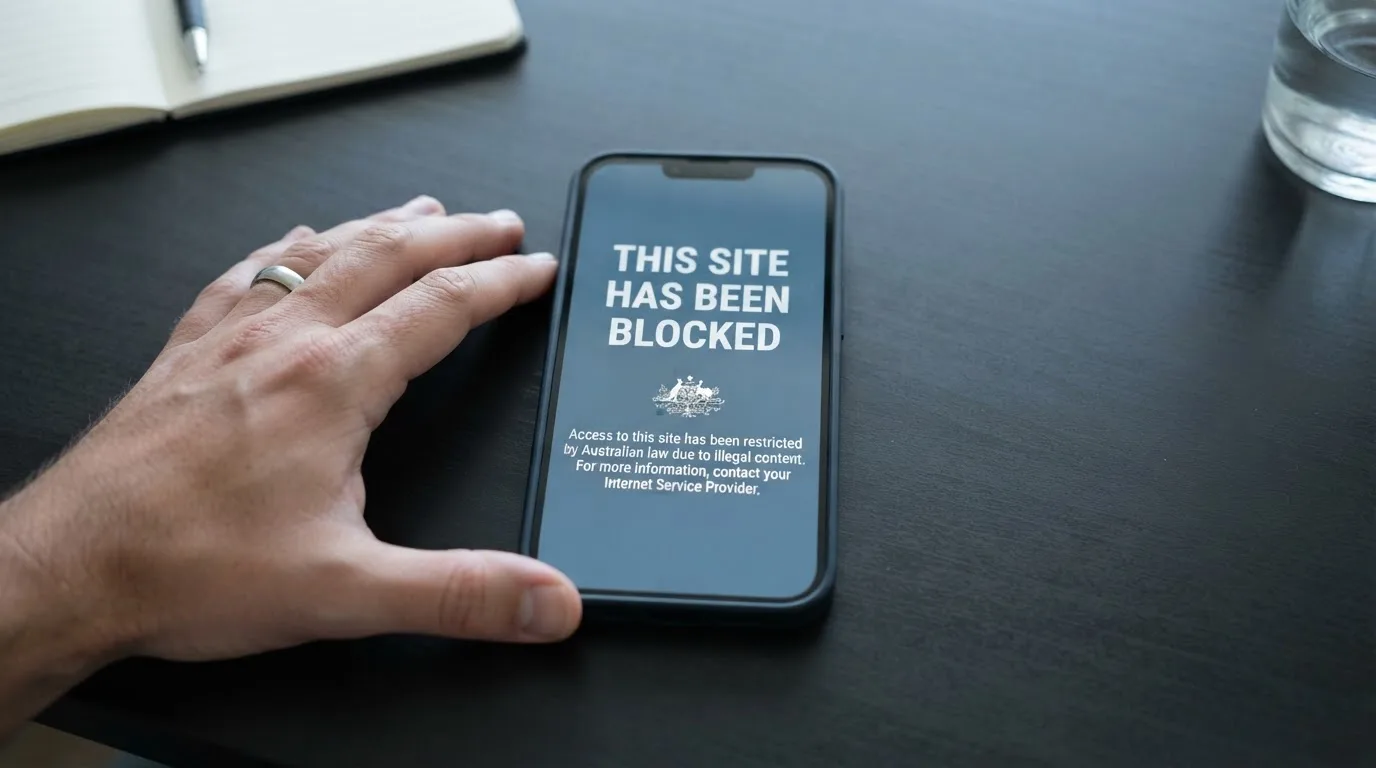
The ACMA investigates, issues formal warnings, and asks Australian internet service providers to block illegal sites. As of June 2026 the cumulative count since the first blocking request in November 2019 stands at 1,751 blocked gambling and affiliate marketing websites, and more than 230 unlicensed services have left the Australian market since enforcement was strengthened in 2017. The most recent round, reported on 26 June 2026, added 12 more names to the block list: 7Signs, ChromaBet, Donbet, Duospin, Freshbet, Slots Gem, Jacks Club, Lucky Start, Pointsbetz, Spinrise, Vinyl Casino and Wildsino.
The provision the law targets is the provider, not the individual player. An Australian punter is not personally at risk of prosecution for opening an offshore site — but the site gives no Australian consumer protection, no complaints body and no recourse if a withdrawal is refused. It can be blocked with a balance still sitting on it. The H2 Gambling Capital 2025 estimate puts annual losses to illegal sites at about A$3.9 billion, and shows the legal-channel share of Australian gambling falling from 74% in 2021 to 64%.
The next layer of restriction runs on the payment side. Since 11 June 2024, credit cards, credit-related products and digital currency have been banned as payment for any licensed online wagering service in Australia, with penalties of up to A$247,500 for operators that take them. Legal deposit routes for the licensed wagering market are debit card, bank transfer, PayID/Osko and BPAY. A site asking an Australian customer for a credit card or a crypto deposit is operating outside the Australian rules, even when its own offshore licence looks plausible.
The 2026 reform timetable matters for forward planning but not for current compliance. The Interactive Gambling Amendment (Gambling Reform) Bill 2026 passed Parliament on 19 August 2026; its advertising and inducement measures commence on 1 January 2027. On any page read in 2026 that is a future date, not a current rule, and an Australian-facing site cannot use the bill’s non-commencement as an excuse today.
Player Safeguards: BetStop, the Helpline, and What They Cover
The entry age for any casino floor in Australia is 18. Inside Adelaide Casino, the photo-ID check happens at the door and is non-negotiable — the operator’s licence conditions and the Casino Act 1997 both depend on it. The same 18-year floor applies to the pub-and-club pokies that South Australia runs in its 471 non-casino venues.
BetStop, the National Self-Exclusion Register, has been live since 21 August 2023 and is the most visible player-protection tool in the country. It binds Australian-licensed online and telephone wagering services. It does not bind in-venue gambling — a person who wants to self-exclude from Adelaide Casino cannot do it through BetStop, because Adelaide Casino is not on the register’s coverage. ACT residents in the same position, self-excluding from Casino Canberra, must use the ACT Gambling Harm Prevention team’s own self-exclusion process, which runs for periods of six months to three years. South Australia runs its own equivalent.
The National Gambling Helpline on 1800 858 858 is free, runs 24/7, and offers telephone, online chat and face-to-face gambling and financial counselling. The ACT’s local service is funded through the ACT Gambling Harm Prevention and Mitigation Fund. Both feed into Gambling Help Online for chat-based support. The right point of contact for an Adelaide visitor worried about their own play is the helpline, regardless of which tool eventually handles the self-exclusion.
Two conditions the law attaches to that protection are worth noting. First, the offshore site a player is using is not on BetStop and has no obligation to honour an Australian self-exclusion. Self-exclusion is meaningful only for venues and operators the system covers. Second, the responsible-gambling tools reach the money only where the money is: a player who tries to set a deposit limit on an offshore site is trusting an entity outside Australian jurisdiction to honour it.
The Physical Venue: Address, Bars, and the Hotel Next Door
Adelaide Casino’s address is North Terrace, in the Adelaide railway station building, on the southern edge of the Riverbank precinct. The North Terrace frontage is the heritage façade; the gaming floors and the EOS by SkyCity tower sit behind and above it. Public transport runs through the railway station under it, and the Adelaide Oval is across the Torrens Parade Ground to the north — both are short walks for a visitor arriving by tram or train.
The rooftop bar is the venue’s most-photographed feature. EOS by SkyCity’s rooftop, which opened with the tower in 2021, is the obvious candidate for the “Adelaide casino rooftop bar” the search terms keep naming — the bar sits on top of the tower, overlooks the river and the oval, and serves the cocktail-and-tapas crowd that casino bars in Australian state capitals tend to attract. Adelaide Casino also runs ground-floor and mid-floor bars inside the venue, with the typical hotel-casino split between premium and casual.
Accommodation is built into the venue. The EOS by SkyCity tower carries 120 hotel rooms, which means the closest hotel to Adelaide Casino is the casino’s own. Adjacent options on North Terrace include the heritage hotel strip running east toward the city centre, and the riverside strip running west toward the convention centre. Walking distance to the venue from any of them is short, but the convenience of staying inside the building matters on a late session night.
The restaurants inside the venue cover the casual-to-formal range; the broader Riverbank precinct adds a heavy concentration of dining within a few minutes’ walk. Visitors who want a meal and a table game in one outing can plan it as a single location. Visitors who want a meal, a rooftop drink and a table game can do it without leaving the building.
The other half of the practical picture is the 471 non-casino venues — hotels, clubs and RSLs — that held 11,672 gaming machines across South Australia in September 2023. These are the pub pokies, capped at A$5 a spin, returning at least 87.5%, and absorbing about A$0.92 billion in losses in 2022-23, or about A$497 per adult in the state. They are the bulk of the gambling footprint by venue count and by loss; the casino is the bulk by per-venue spend.
The Calculation Behind the ACMA’s Blocking Rate
The ACMA’s blocking record over six and a half years is the closest thing the market has to a running measure of how much prohibited supply has been turned off. From the first blocking request in November 2019 to the round reported on 26 June 2026, the authority has asked Australian ISPs to block 1,751 illegal gambling and affiliate marketing websites. Run against the elapsed time, that is roughly 269 sites blocked per year — or, set against the most recent reported round alone, 12 sites added in a single update, which is the typical cadence of an ACMA monthly action.
The number’s weight is in what it understates. More than 230 unlicensed services have left the Australian market since enforcement was strengthened in 2017, and the ACMA’s blocking orders only catch the operators who stayed to be blocked. The blocking rate measures the operators who kept serving Australians long enough to be named in a formal warning and then kept operating after it. The withdrawal rate measures the ones who left voluntarily once the warning landed. Together, the two are the supply-side answer to the question of how much illegal gambling has been removed from the Australian market.
The 1,751 figure does not say how many Australian players were on those sites, how much they lost, or what share of the A$3.9 billion illegal-gambling market each blocked site represented. Those numbers exist in the H2 Gambling Capital estimate, not in the ACMA’s running total. The block rate and the loss estimate are two different measurements of the same problem: the block rate is the count of supply that has been turned off; the loss estimate is the dollar value of demand that is still finding ways through.
For a reader trying to decide whether the offshore market is small enough to ignore, the honest answer is that it has been reduced but not closed. The legal channel’s share of gambling fell from 74% in 2021 to 64% as of the 2025 estimate, and the gap is the offshore market’s residual footprint. Adelaide Casino is the single legal venue that absorbs the in-state portion of that residual — and it does so on its own premises, with its own staff and under its own licence.
The Eleven Offshore Brands the ACMA Has Named
The brands below are not a ranking and not a recommendation. Each one is named here because the ACMA itself issued a formal warning to its operator for offering prohibited online casino games to Australians under the Interactive Gambling Act 2001. No Australian licence exists for the product any of them offer to Australians, whatever offshore licence the site displays. They are listed in the order research gives them, with the ACMA action and date as published by the authority itself.
RocketPlay
RocketPlay sits at the top of the list because the ACMA’s most recent action against it is also the most recent. In March 2026 the ACMA issued a formal warning to Pulsup Ltd over Rocketplay. The brand had earlier been caught up in a May 2022 warning to Dama N.V. covering six names. A site running under one operator in 2022 and a different operator in 2026 is a brand that has been passed between offshore holders while the warning history grew. The site does not carry verified Australian support details in any source the research consulted, and the consistent message across every published action is the same: the product on offer cannot be licensed for Australian players. The verdict is structural rather than comparative — there is no version of RocketPlay that is legal in Adelaide.
Level Up Casino
Level Up was named in the May 2022 ACMA warning to Dama N.V. alongside Bambet, Dazard, Rocketplay, Wild Tornado and Cobra Casinos. The brand surfaces in directory listings as an offshore casino, and the listings the research consulted name it on its game catalogue and payment methods rather than on any Australian authorisation. The verdict is the same as RocketPlay’s: no Australian licence exists for the product, and the ACMA’s formal warning is on the public record. What makes Level Up worth flagging on this list is its age — it has been on the ACMA’s radar for almost four years and the listing pages that still describe it have not been updated to reflect that.
Woo Casino
Woo Casino picked up a formal warning from the ACMA in March 2025, again under Dama N.V. The brand’s listings still describe it as an offshore multi-vendor casino. The Dama N.V. warning chain that runs through 2022, 2025 and into 2026 — covering RocketPlay, Woo and Spirit under the same parent — is the clearest pattern in the ACMA’s recent enforcement record: an operator that has been warned, continued, and been warned again. For an Australian reader, that pattern is the answer to whether the brand’s “international licence” changes anything. It does not.
Spirit Casino
Spirit Casino received its formal warning from the ACMA in May 2025, the third Dama N.V. brand to be added in that cluster. The research consulted carries no support details specific to Spirit beyond the ACMA action. The verdict follows the rest of the Dama group: a site the ACMA has named, an offshore operator, and no Australian licence for the product on offer. The fact that the warning landed three years after the original 2022 Dama action suggests the brand was new at the time it was warned.
National Casino
National Casino was named in a July 2025 ACMA formal warning to Consolutetish S.R.L., alongside Bizzo Casino under the same operator. The brand appears in Australian news coverage and on the federal government’s own infrastructure pages as an offshore operator that has marketed into Australia. For an Adelaide reader, the relevance is the warning’s recency and the fact that the brand still surfaces in Australian-facing search results. The verdict is unchanged from the rest of the list.
Bizzo Casino
Bizzo Casino carries the longest warning history of any brand in this section. The July 2025 warning to Consolutetish S.R.L. was the second; the first landed in 2022 against TechSolutions (CY) Group Limited and TechSolutions Group N.V. Two operators, three years apart, the same brand. The research consulted carries no support details specific to Bizzo beyond the listings and the warnings themselves. For Australian players, the site remains an offshore entity without local authorisation.
Ignition Casino
Ignition Casino received its formal warning in July 2025, with the ACMA naming Bamboo Media as the operator. Ignition is one of the better-known offshore casino brands in Australian search traffic, in part because of its long-running poker-marketing history. The July 2025 warning closes that question for Australian readers. The verdict is the structural one: no Australian licence exists for the product, the ACMA has named the brand, and the offshore licence the site displays is not a substitute.
Instant Casino
Instant Casino received its ACMA formal warning in February 2025, with the authority naming EOD Code SRL as the operator. Instant Casino markets itself aggressively on Australian-facing channels, which is presumably why the warning landed. The research consulted carries no further support details for the brand. No Australian-licensed service exists, and the ACMA’s warning confirms its unlicensed status.
Jackbit
Jackbit received its formal warning in April 2026, with the ACMA naming Ryker B.V. as the operator. The brand is among the more recent additions to the warning list and is also named alongside CasinOK under the same parent. For an Adelaide reader, the relevant fact is the warning’s date and the operator’s identity. The verdict is structural — no Australian licence, no legal way to play from Australia, and the ACMA’s enforcement record on the operator is current.
Casino Intense
Casino Intense received its formal warning in April 2025, with the ACMA naming Sterplay Holding Ltd as the operator. The brand appears in directory listings alongside other offshore casino names, and the listings the research consulted describe it on game catalogue and payment terms rather than any Australian authorisation. It is an offshore service, and any local listing is an unauthorised offering.
Sky Crown
Sky Crown was named in an ACMA formal warning to Hollycorn N.V., alongside the operator’s Blue Leo casino service, in the warning published in September 2022. Hollycorn is the operator behind a wider portfolio of offshore brands. Sky Crown surfaces in directory listings as an offshore multi-vendor casino. The ACMA has clarified that this service is unlicensed and cannot legally operate here.
Frequently Asked Questions
What is the name of the main casino in Adelaide?
Adelaide Casino. The venue sits in the heritage-listed Adelaide railway station on North Terrace and is run by SkyCity Entertainment Group. It was briefly branded SkyCity Adelaide between 2001 and 2009 before reverting to the Adelaide Casino name, which is what every official Australian source uses today. The licence is held under South Australia’s Casino Act 1997 and runs to 30 June 2035.
Where is the casino in Adelaide located?
North Terrace, in the Adelaide CBD, inside the heritage railway station building. The address puts the venue on the southern edge of the Riverbank precinct, directly adjacent to the Adelaide Oval across the Torrens. Public transport runs through the railway station underneath, and the casino’s own EOS by SkyCity tower sits behind the heritage façade.
What is the minimum age to enter the casino in Adelaide?
Eighteen. Photo-ID is checked at the door, and the casino’s licence conditions and the Casino Act 1997 both depend on the age floor holding. The same 18-year minimum applies to all gambling in South Australia, including the 11,672 gaming machines the state runs in 471 non-casino venues.
Does the casino in Adelaide offer table games such as blackjack and baccarat?
Yes. Adelaide Casino runs 90 gaming tables under its current licence, covering blackjack, baccarat, roulette and craps. The licence permits expansion to as many as 200 tables if the venue is rebuilt to accommodate them. The table-game floor is the largest in South Australia, because the casino is the state’s only venue licensed to offer table games.
Are there hotels within walking distance of the casino in Adelaide?
Yes. The EOS by SkyCity tower inside the venue carries 120 hotel rooms and is the closest option. The heritage hotel strip on North Terrace and the riverside strip near the convention centre are both short walks. For a visitor planning to play the tables late, the on-site hotel removes the question of how to get back at the end of the night.
Can Australians legally play at an online casino instead of visiting the casino in Adelaide?
No. The Interactive Gambling Act 2001 prohibits offering online casino games to anyone in Australia, and no state or territory issues a licence for the product. Offshore sites a reader sees advertised cannot be legally supplied to Australian players, and the ACMA has issued formal warnings to 11 of the better-known ones in recent years. The legal alternative to Adelaide Casino is to visit Adelaide Casino.
Created by the ”Casino Payments Hub” editorial team.