
Casino promo codes in Australia: the inducement, the offshore reality, and the rules around them
A “casino promo code” is a short string of letters and numbers an offshore casino asks a player to enter at sign-up or deposit, in exchange for bonus cash, free spins, or both. The mechanism is universal across the offshore market; what varies sharply is what the strings actually deliver, who is on the other end, and what an Australian player is agreeing to when one is redeemed. This page works through each of those layers in turn.

Data current as of 29 October 2026. Licence claims and ACMA actions cross-checked against the Australian Communications and Media Authority’s published register of formal warnings and blocking requests.
Table of Contents
- The inducement: how promo-code offers are built
- How a casino shortlist actually gets put together
- The Australian fundamentals: what is and isn’t licensed here
- The prohibition: what the ACMA has acted on
- Responsible gambling: the supports that actually reach Australian players
- Payments and payout speed: how money actually moves
- The blocking rate: how fast the regulator is catching up
- The operators: what each ACMA warning covers
- Putting it together
- Frequently asked questions
The inducement: how promo-code offers are built
A promo code is the trigger; the offer behind it is what the operator is actually selling. The two are not the same thing, and most of the friction a player runs into comes from the offer’s fine print, not from whether a code was entered correctly. Understanding the structure of the offer is the first step in seeing why two codes that look identical on a banner can cost very different amounts to clear.
Bonus types. The offshore market splits its inducements into a few recurring shapes. A deposit match multiplies the first deposit by a stated percentage — a “100% match up to A$500” returns one extra dollar for every dollar paid in, capped at the headline figure. A no-deposit bonus credits a small amount of bonus cash or a handful of free spins simply for registering an account, with no payment required upfront. Free spins packages attach a fixed number of spins at a fixed coin value to a minimum deposit. Cashback returns a percentage of net losses over a defined period. Reload bonuses — second, third, fourth-deposit matches — extend the same mechanic across a player’s early tenure. A promo code is the voucher for any of these; the offer type is decided by the site, not by the code.
Wagering requirements. The number that decides whether a bonus is worth taking is the wagering multiplier — the figure research and operators call the “wagering requirement” or “playthrough”. A A$100 bonus with a 40× multiplier must be staked A$4,000 before the resulting balance becomes withdrawable. Industry practice runs from roughly 35× at the light end to 60× or higher at the heavy end. A 35× bonus is not “the same kind” as a 50× bonus with a bigger headline — the second one needs 43% more action to clear, which at standard slots returns roughly 43% more expected loss.
Maximum-bet caps. Almost every promo-code offer carries a per-spin or per-round stake ceiling during the bonus — typically A$5 to A$10. The cap is the rule that breaks a player’s strategy the moment they stop noticing it. Anything above the cap, even by accident, voids the bonus and any winnings tied to it. The rule is enforced automatically; the loss is final.
Game weighting. Not every game contributes the full stake toward clearing a wagering requirement. Slots usually count at 100%; table games and live dealer games often count at 10% to 20%, or not at all. A player who tries to clear a bonus on blackjack with a 10% weighting has to wager ten times as much as the headline suggests.
Expiry windows. Promo codes and the bonuses they unlock almost always expire — the code itself within days or weeks of issue, the bonus once credited within a window that is often 7 to 30 days. The expiry clock starts at credit, not at registration, and it does not pause for inactivity. Unused bonus funds and any winnings tied to them are removed when the window closes.
Max-cashout caps. Some no-deposit bonuses and free-spin packages cap the amount a player can actually withdraw from bonus-derived winnings, even after the wagering requirement is met. The cap is the figure that turns a headline of “win up to A$500” into a hard ceiling of, say, A$100. Anything above that figure stays on the site.
Country and payment restrictions. Promo codes are almost always geo-targeted. A code issued for a Canadian market will not work on the Australian version of the same site, and the deposit method that unlocks a code in one country may disqualify it in another. The published terms list the eligible countries and deposit methods; the bonus is void if either does not match.
What the marketing usually leaves out. The phrase “no deposit required” is the most consistently mis-sold piece of language in the offshore market. The deposit may not be required, but the wagering requirement, the max-cashout cap, the game weighting, and the expiry window are. The arithmetic behind the headline is almost always worse than the headline itself.
How a casino shortlist actually gets put together
A ranking of “best casino promo codes” is a constructed object. The criteria vary, the weighting varies, and the honest shortlists are transparent about both. This page is not that kind of shortlist — the brands that follow are not ranked by offer quality, because every one of them operates outside Australian law, and there is no Australian consumer-protection framework to rank them against. They are listed because the ACMA, the regulator that can act on operators, has acted on each of them.
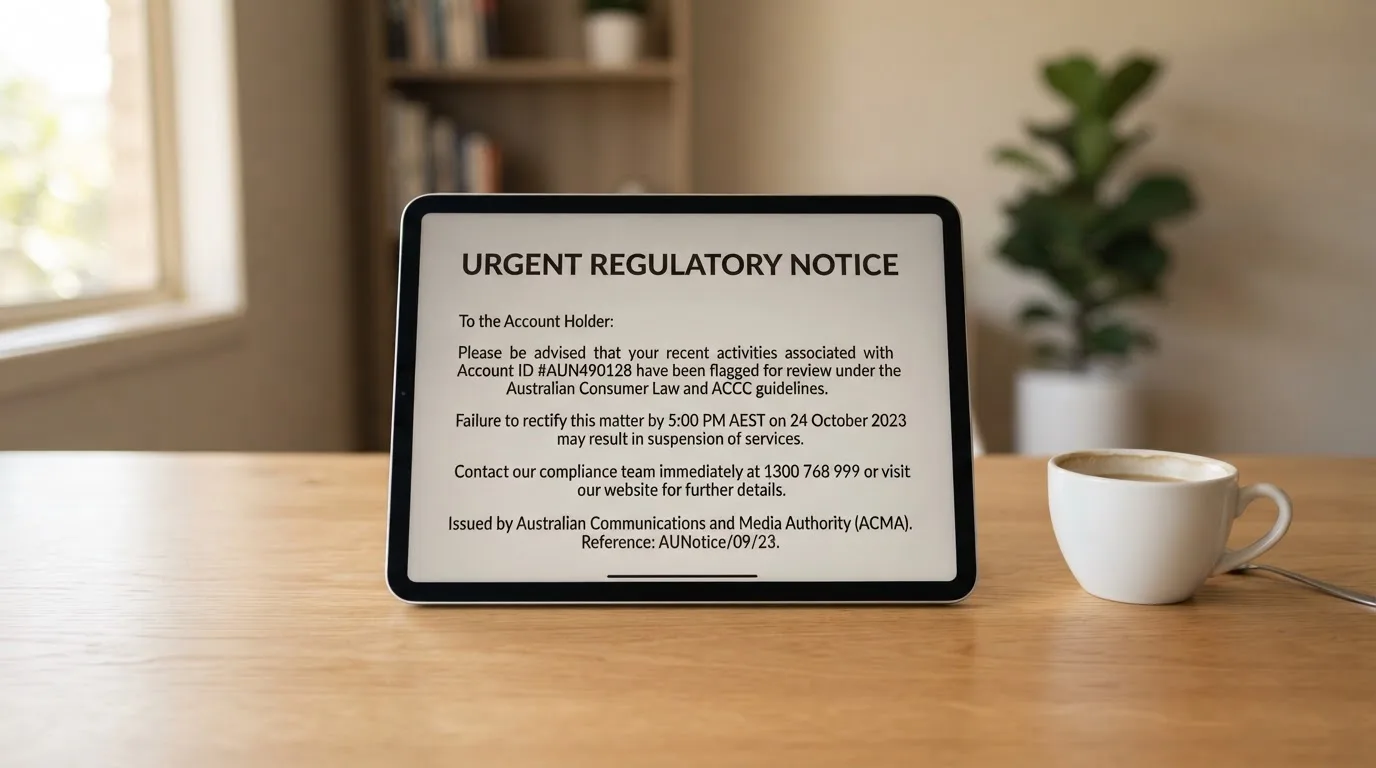
The method, for clarity, is the same method a legitimate shortlist would use — it just answers a different question.
Licence and jurisdiction. A licensed operator is regulated; an unlicensed one is not. In Australia, the Interactive Gambling Act 2001 makes it an offence to provide online casino games or online pokies to a person physically in Australia. No state or territory issues a licence for that product. An offshore site displaying a Curaçao, Anjouan, or Kahnawake licence is licensed somewhere, and that licence does not bind it to Australian consumer law.
Operator history. Where the ACMA has issued a formal warning — the regulator’s first formal enforcement step before referral to blocking — the operator has been put on notice that its service is prohibited. The brands on this page are the ACMA’s own list of operators it has warned; the warnings are matters of public record.
Payment infrastructure. The practical question of whether a deposit clears, whether a withdrawal arrives, and how long that takes is the one most likely to determine the player experience. The page’s payments section below works through it in detail.
Bonus terms, in full. Where terms are published in full — wagering multiplier, game weighting, max bet, expiry, max cashout — they are the only honest basis for ranking offers. Where terms are partial, or changed after sign-up, or available only after creating an account, the offer is not evaluable from the outside. None of the brands on this page publishes a complete terms set through a third-party source the page can independently verify, which is itself the verdict.
The Australian fundamentals: what is and isn’t licensed here
The fundamentals of casino promo codes in Australia start with the legal frame, because the legal frame decides what the rest of the page is talking about.

The product that is licensed. The Northern Territory Racing and Wagering Commission (NTRWC) regulates 52 of Australia’s online bookmakers — Sportsbet, Bet365 and Ladbrokes among them — licensed in the Territory for tax reasons. The commission has no full-time staff and meets once a month in Darwin. What these operators are licensed to offer is wagering on races and sport placed before the event. They are not licensed to offer online casino games, online pokies, or in-play betting on sport. The split matters: a promo code attached to a casino product is not the same product as a promo code attached to a pre-event sports bet, even if both come from the same licensed operator.
The product that is not licensed. No Australian state or territory issues a licence for online casino games or online pokies. None. The Interactive Gambling Act 2001 makes the provision of those services to a person in Australia an offence, and the Interactive Gambling Amendment Act 2017 strengthened the enforcement powers behind that prohibition. A site displaying any kind of offshore licence — Curaçao, Anjouan, Kahnawake, Malta, Gibraltar — is licensed somewhere else, not in Australia. The licence the site advertises governs its relationship with its home regulator; it does not extend to Australians.
What enforcement looks like. The Australian Communications and Media Authority (ACMA) investigates complaints, issues formal warnings, and can direct Australian internet service providers to block illegal sites at the network level. Since the first blocking request in November 2019, a cumulative total of 1,751 illegal gambling and affiliate-marketing websites has been blocked. More than 230 unlicensed services have left the Australian market since enforcement was strengthened in 2017. The individual player is not prosecuted — the Act targets the provider — but the practical effect of a block is that an offshore site can disappear with a balance still on it, and there is no Australian complaints body to take that loss to.
The cost, in aggregate. H2 Gambling Capital’s 2025 estimate puts annual losses to illegal offshore sites at around A$3.9 billion a year, with the share of gambling going through legal channels falling from 74% in 2021 to 64%. The trend line, in other words, runs against the regulated channel. Whether the regulated channel expands to capture that spend is a matter for Parliament; it has not yet done so.
The 2026 reform. The Interactive Gambling Amendment (Gambling Reform) Bill 2026 passed Parliament on 19 August 2026. Its advertising and inducement measures commence 1 January 2027 — law with a start date, not yet in force. The provisions matter to anyone thinking about how offshore operators market to Australians, because the marketing itself is what the new measures address; they do not change the underlying prohibition on the product, which has been in force since 2001.
Reform effect on this page. A page written in late 2026 cannot describe the inducement landscape as if the new rules apply. The rules apply from 2027 onwards. Until then, the inducement — promo codes, free spins, deposit matches, “no deposit required” headlines — is governed by the 2001 Act and its 2017 amendments. The page below is built around that frame.
The prohibition: what the ACMA has acted on
Prohibition enforcement is where the page meets the operators themselves. The brands below are not a ranked shortlist of “best” promo-code casinos. They are the operators the ACMA has named in a formal warning — the regulator’s first formal enforcement step, before a site is referred for blocking — for offering prohibited interactive gambling services to people in Australia. The list is the regulator’s own. Every brand on it is, by definition, the kind of site the Australian legal frame is built to keep out.
The table below shows the ACMA action, the operator the regulator named, and the date of publication. The order matches the §6 ordering; the operator names match the ACMA’s own wording.
| Brand | ACMA action and date | Operator named by the ACMA | Subject support |
|---|---|---|---|
| RocketPlay | Formal warning, March 2026 | Pulsup Ltd (Rocketplay.com.au); earlier Dama N.V., May 2022 | listings-only |
| Level Up Casino | Formal warning, May 2022 | Dama N.V. | listings-only |
| Woo Casino | Formal warning, March 2025 | Dama N.V. | — |
| Spirit Casino | Formal warning, May 2025 | Dama N.V. | — |
| National Casino | Formal warning, July 2025 | Consolutetish S.R.L. | listings-only |
| Bizzo Casino | Formal warning, July 2025 | Consolutetish S.R.L.; earlier TechSolutions, 2022 | listings-only |
| Ignition Casino | Formal warning, July 2025 | Bamboo Media | — |
| Instant Casino | Formal warning, February 2025 | EOD Code SRL | listings-only |
| Jackbit | Formal warning, April 2026 | Ryker B.V. | — |
| Casino Intense | Formal warning, April 2025 | Sterplay Holding Ltd | listings-only |
| Sky Crown | Formal warning, September 2022 | Hollycorn N.V. | — |
Every one of those operators is, in ACMA’s published view, providing a prohibited interactive gambling service to Australians. Whatever offshore licence the operator displays — Curaçao, Anjouan, Kahnawake — that licence does not convert a prohibited service into a licensed one under Australian law. The table does not say which operator’s terms are worst. It does not rank the bonus value. It says what the regulator has already said: each of these brands has been put on notice.
The cumulative effect. The latest published blocking round, reported on 26 June 2026, asked Australian ISPs to block another 12 illegal services: 7Signs, ChromaBet, Donbet, Duospin, Freshbet, Slots Gem, Jacks Club, Lucky Start, Pointsbetz.com, Spinrise, Vinyl Casino and Wildsino. The pace of blocking has not slowed. Since the first blocking request in November 2019, the cumulative count has reached 1,751 illegal gambling and affiliate-marketing websites. At a steady reading, that is roughly 250 to 300 sites blocked per year over the seven-year span — a running average that captures both the early slow build-up and the steeper enforcement of the past two years. The pace is what the regulator’s published record shows; the year-by-year mix varies with how many referrals land in each reporting period.
Why the names recur. The same operator company surfaces across multiple brands. Dama N.V. has been warned over Woo Casino, Spirit Casino, Level Up Casino, and RocketPlay at various points; the two-year span between Rocketplay’s 2022 warning (under Dama N.V.) and the 2026 warning (under Pulsup Ltd) shows the operator name changing around the same underlying brand. Consolutetish S.R.L. appears against both National Casino and Bizzo Casino in the same July 2025 round. The pattern is the kind of thing a reader comparing brands will notice: a warning over the operator is not the same as a permanent exit, because the same brand can re-emerge under a new corporate wrapper. The ACMA’s job is to follow the service, not the company name.
What a warning does. A formal warning is the ACMA’s documented first step. It is published on the regulator’s website, naming the operator and the service, and it is followed, where the conduct continues, by a referral to Australian ISPs for blocking. The published record shows that progression on a number of the brands in the table. The warnings are not advisory notes — they are the regulator telling the named operator that it has formed the view the service is prohibited and is publishing that view.
Responsible gambling: the supports that actually reach Australian players
The responsible-gambling supports below are the ones that bind Australian-licensed operators. An offshore casino is not connected to any of them. The distinction is the point of the section.
BetStop. BetStop, the National Self-Exclusion Register, has been live since August 2023. A person who registers with BetStop is excluded from all Australian-licensed online and phone wagering services for a period of their choice — three months, one year, or five years — and the exclusion cannot be reversed early. Offshore casinos are not connected to BetStop. The register binds the licensed channel, which means an exclusion under BetStop leaves the offshore channel entirely open.
Gambling Help Online. The National Gambling Helpline — 1800 858 858 — is free, available 24/7, and offers counselling in person, by phone, and by live chat at Gambling Help Online. The service is funded to support anyone affected by gambling harm in Australia, regardless of whether the gambling occurred through a licensed or an offshore channel. The line is the single most useful thing on this page for a reader who has read this far and decided they want to stop.
State and territory supports. Each Australian state and territory runs its own problem-gambling program, with face-to-face counselling, financial counselling, and self-exclusion from physical venues. The programs differ in name and scope — New South Wales’ Responsible Gambling Fund, Victoria’s Gambler’s Help, Queensland’s Gambling Help Network — but they are all reachable through the national helpline as a starting point.
Gambling blocks on bank cards. Major Australian banks now offer card-level gambling blocks that refuse authorisation of transactions registered under the merchant category code for betting and casino gambling. Westpac’s block, activated through the bank’s online portal, refuses transactions at the merchant-code level. ANZ’s gambling block, activated through the ANZ app, also blocks gambling transactions made through a digital wallet such as Apple Pay on an eligible card. The block cannot be lifted for 48 hours after it is turned off. Commonwealth Bank offers a similar lock on eligible cards through the CommBank app. The banks publish the standard caveat: a gambling block catches most gambling transactions, not all of them, and may occasionally block a transaction that is not gambling-related.
Limits and deposit ceilings. The Australian-licensed channel operates under deposit and loss limits, mandatory pre-commitment in some states, and the credit-card ban on licensed wagering services that took effect on 11 June 2024. Limits on the licensed side are part of the product; offshore sites run on their own house rules, and a player who relies on a deposit limit at an offshore site is relying on a setting the site can change or remove.
The honest summary. The Australian responsible-gambling framework is built around the licensed channel. Offshore casinos are not part of it. The supports above are what a player in Australia can reach; the offshore sites are where most of them cannot reach a player who needs help.
Payments and payout speed: how money actually moves
The mechanics of moving money to and from an offshore casino are the part of the page that intersects most directly with the Australian banking system. A promo code attached to a deposit bonus does not change the payment rails the deposit and the eventual withdrawal run on.
Credit cards. Under the Interactive Gambling Act 2001 as amended in 2023, Australian-licensed online wagering services cannot accept payment by credit card or other credit-related products. The ban constrains gambling use of linked digital wallets — Apple Pay, Google Pay, Samsung Pay — where the underlying funding source is a credit card. The penalty for an Australian-licensed operator that accepts a credit-card deposit is up to A$247,500. The offshore channel does not enforce the same rule, but the underlying card-issuer block catches the transaction upstream.
American Express. Amex operates a three-party network — issuer, acquirer, and cardholder — rather than the four-party structure of Visa and Mastercard. The Reserve Bank’s July 2025 review of card surcharging proposes removing surcharges on eftpos, Mastercard, and Visa transactions, and explicitly leaves American Express outside the scope of the proposed ban. Amex surcharges at many Australian merchants for that reason. At an offshore casino, whether Amex is accepted at all depends on the operator; many restrict to Visa and Mastercard, and some decline Amex outright.
Apple Pay and the digital wallets. Apple does not charge consumers for using Apple Pay — any surcharge is the merchant’s own processing fee, not Apple’s. Transaction limits and PIN requirements are set by the card issuer or by the merchant, not by Apple. By the end of 2025, Apple Pay, Google Pay, and Samsung Pay collectively accounted for around 45% of all card payments in Australia by number. Whether an offshore casino accepts Apple Pay depends on whether the operator has integrated it; many have not, and the deposit falls back to the underlying card.
Debit cards and bank transfers. Debit cards, direct bank transfers via PayID or Osko, and BPAY are the standard payment rails for Australian-licensed wagering. An offshore site typically accepts Visa or Mastercard debit cards, and some accept direct bank transfers. The card-based deposit is the slowest to clear back out: withdrawals back to a debit card can run two to five business days after the operator has approved them.
PayID and Osko. With Osko, a bank transfer between participating Australian banks arrives in under a minute, 24/7 including weekends, whether addressed to a BSB and account number or to a PayID. PayID-based instant transfers are available at over 100 Australian financial institutions, and more than 25 million PayID identifiers were registered on the New Payments Platform as of April 2025. Paying to a PayID shows the name of the account holder before the transfer is sent; AP+ warns that being asked to transfer to a PayID on an illegal gambling site is almost certainly a scam site.
BPAY. BPAY has operated since 1997 and is available through the online banking of over 140 Australian financial institutions and over 95,000 billers. It is a bill-payment service — the payer enters the Biller Code and the Customer Reference Number printed on the bill — which is why it is available at licensed Australian wagering operators and almost never at offshore casinos. BPAY is owned equally by ANZ, Commonwealth Bank, NAB, and Westpac through Cardlink Services Limited, and runs as part of Australian Payments Plus.
The New Payments Platform. The NPP became accessible to the public on 13 February 2018 and is owned by NPP Australia Ltd, a non-profit whose 13 shareholders include the Reserve Bank of Australia and the major banks. Participants must keep monthly outages to no more than two minutes. The ACCC authorised the 2021 merger of NPP Australia with BPAY and eftpos into Australian Payments Plus.
AUSTRAC reporting thresholds. AUSTRAC’s threshold-transaction-report rule requires reporting of transfers of A$10,000 or more, but the rule applies only to physical cash. Ordinary electronic bank transfers are not subject to per-transaction reporting, regardless of amount. The threshold is the one AUSTRAC rule players most often ask about; it does not apply to the kind of transfer an offshore deposit generates.
What this means for an Australian player. A deposit from an Australian debit card to an offshore casino will, in most cases, arrive without an issue — the bank does not screen for the destination merchant category on the deposit leg the way it does on gambling-specific transactions. A withdrawal is where the friction concentrates. Card-issuer rules vary, payout queues at offshore operators vary, and the merchant category code on the original deposit can complicate the refund path. The honest answer is that the timing depends on the operator and the bank, and the operator has no incentive to publish its slowest payout figures.
The blocking rate: how fast the regulator is catching up
The rate at which the ACMA’s blocking list is growing reveals how enforcement is scaling. With a cumulative count of 1,751 illegal gambling and affiliate-marketing websites blocked since the first blocking request in November 2019, the running average works out to roughly 250 sites blocked per year over the seven-year span — closer to 270 to 300 per year once the late-2024 and 2025 rounds are factored in. That is a band, not a single figure, because the regulator does not publish a year-by-year breakdown and individual reporting rounds vary in size.
What the band says is that the rate of new blocks has been broadly steady for the past two years, after a slower start. It also says that the cumulative count grows faster than the regulator’s enforcement headcount alone can be expected to keep up with — which is why the ACMA’s strategy has been to combine formal warnings, blocking referrals, and the now-active 2026 reform’s advertising measures, rather than to rely on any single lever. The cumulative count is the number to watch; the year-by-year mix is the one that varies.
The operators: what each ACMA warning covers
The eleven brands below are not ranked by offer quality. They are listed in the order the research puts them, and each entry is the regulator’s own statement of why the brand is on this page.
RocketPlay
The ACMA issued a formal warning over RocketPlay in March 2026, naming Pulsup Ltd as the operator and Rocketplay.com.au as the service. An earlier May 2022 warning covered the same brand under Dama N.V. — a change of corporate wrapper around the same product, which is a common pattern across this list. The page describes RocketPlay only in terms of the warning; the bonus terms published on affiliate pages are not the basis of the page’s assessment, because they are marketing material rather than independently verifiable terms.
Level Up Casino
Dama N.V. was warned by the ACMA over Level Up Casino in May 2022, as part of a six-brand warning that also covered Bambet, Dazard, Rocketplay, Wild Tornado and Cobra Casinos. The brand has not, to the ACMA’s published record, been the subject of a separate later warning — which is not the same as saying the conduct has stopped, only that the regulator’s later actions have been directed at other Dama N.V. properties.
Woo Casino
The ACMA issued a further formal warning to Dama N.V. over Woo Casino in March 2025. The “further” matters: Dama N.V. has been warned repeatedly, across multiple brands, and the Woo Casino action is one entry in a longer file on the operator. The same applies to the other Dama N.V. brands further down the list.
Spirit Casino
A formal warning over Spirit Casino was issued to Dama N.V. in May 2025 — two months after the Woo Casino warning, against the same operator, on the same underlying pattern. The two warnings, taken together, are the regulator telling the same operator twice that the conduct has not changed.
National Casino
The ACMA warned Consolutetish S.R.L. over National Casino in July 2025, in the same round that also named Bizzo Casino. Independent financial review sites have occasionally listed this brand, but such listings are marketing material and do not verify the operator’s bonus terms.
Bizzo Casino
Consolutetish S.R.L. was warned by the ACMA over Bizzo Casino in July 2025. The brand had already been the subject of a 2022 formal warning to TechSolutions (CY) Group Limited and TechSolutions Group N.V., which is the regulator’s name for the operator at that earlier date. The two warnings, separated by three years, are the regulator’s record on the brand.
Ignition Casino
Bamboo Media was the operator named in the ACMA’s July 2025 formal warning over Ignition Casino. Verification of payment-method availability at this operator is not possible through reliable third-party sources.
Instant Casino
A formal warning over Instant Casino was issued to EOD Code SRL in February 2025. While some affiliate pages mention payment methods, these claims lack verifiable independent documentation.
Jackbit
Ryker B.V. was the operator named in the ACMA’s April 2026 formal warning over Jackbit — the same warning also named CasinOK under the same operator. Information regarding payment methods for this brand remains unconfirmed by any independent source.
Casino Intense
A formal warning over Casino Intense was issued to Sterplay Holding Ltd in April 2025. Listings on third-party sites or registry pages are available for this brand, though these sources provide no verified data on actual bonus terms or payment processing.
Sky Crown
The ACMA issued a formal warning to Hollycorn N.V. over its Sky Crown and Blue Leo casino services, in a published formal warning dated September 2022. Hollycorn was warned as a single operator across two brands, which is the same pattern the regulator has used against Dama N.V. and Consolutetish S.R.L.
The shared verdict across the eleven
Each of the eleven is, on the regulator’s published view, providing a prohibited interactive gambling service to Australians. None of them is bound by Australian consumer law. None of them is connected to BetStop. None of them participates in the Australian banking or payments framework as a licensed wagering operator. The bonus terms a player sees on the marketing page are the operator’s own, enforced by the operator’s own, and the only complaints body for a dispute is the operator’s own. That is the feature all eleven share, and it is the reason none of them is presented as a place to play.
Putting it together
The page’s intent, in plain terms, is to give an Australian reader comparing options the structure to compare them with. The legal frame says the product is prohibited; the regulator has acted against every brand named on the page; the payment rails carry the bank’s own gambling-block logic; the responsible-gambling supports are not connected to the offshore channel. A reader who finishes this page still has a choice to make — the offshore sites are not technically unreachable, and the regulator’s enforcement is a probabilistic matter, not an absolute one. What the page does is make the costs of the choice legible: the legal exposure of the operator, the absence of consumer protection, the terms on which any bonus is actually delivered, and the supports that do and do not reach an Australian player.
The single best thing on this page for a reader who has decided enough is the National Gambling Helpline, 1800 858 858. The second-best thing is the BetStop exclusion register. Both are reachable today, both are free, and both are connected to the Australian framework the offshore sites sit outside.
Frequently asked questions
How does a casino promo code differ from a permanent welcome offer?
A promo code is the voucher; the welcome offer is the underlying promotion. A welcome offer can run without a code — it’s just a bonus credited on first deposit — and a promo code can attach to something other than a welcome offer, like a reload or a tournament entry. The two words are not interchangeable. A code that is “permanent” is just one the operator has not yet retired; the offer it unlocks is built the same way as any other.
Are promo-code offers from offshore casino sites subject to any Australian consumer protection?
No. The Interactive Gambling Act 2001 prohibits the provision of online casino games and online pokies to people in Australia, and the Australian Consumer Law does not apply to a service the regulator has formally warned an operator is prohibited. There is no Australian complaints body, no local recourse for a refused withdrawal, and no obligation on the operator to publish its full terms or honour its marketing.
What’s a common maximum-bet restriction attached to promo-code winnings?
Offshore operators commonly impose a per-spin or per-round stake cap — typically A$5 to A$10 — during the period a bonus is being cleared. The cap is enforced automatically; a single bet above the cap, even by accident, voids the bonus and any winnings tied to it. The published terms state the figure; the marketing page rarely does.
Can a promo code be combined with another offer at the same offshore site?
Almost never. Operators publish a one-bonus-at-a-time rule, and the rule is enforced strictly: activating a second bonus while a first is still being cleared voids the first. The exceptions are rare and usually written into the second offer’s terms; the default position, which holds for nearly every offshore operator, is one active bonus per account.
Why do promo codes often carry a short expiry window?
A short expiry window forces the player to clear the wagering requirement quickly, which concentrates the play and the resulting house edge within a short window. A 7-day expiry on a 40× bonus on a A$100 deposit means the player has to stake A$4,000 in seven days — an average of A$571 per day — to clear the bonus. The clock is built into the offer because the operator’s economics depend on it.