
Best pokies in Tasmania 2026: the licensed venues, the cashless card shift, and the offshore sites the ACMA keeps naming
Data current as of 25 November 2026, checked against the ACMA’s list of formal warnings and active blocking requests.
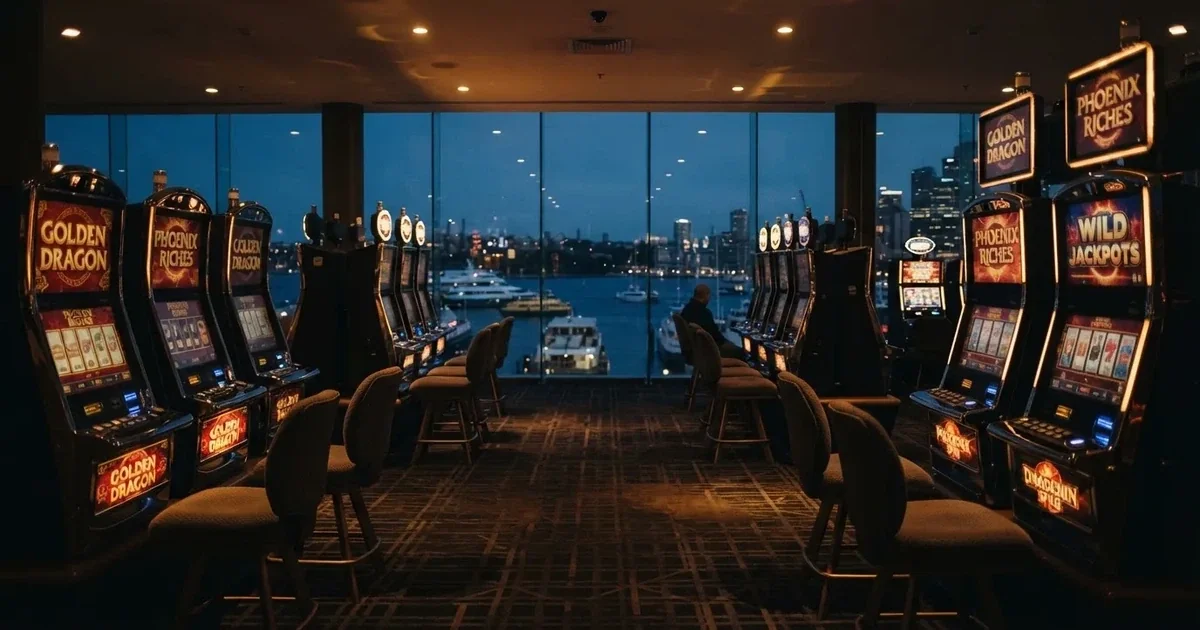
The island has two casinos, a network of pubs and clubs that began mandatory cashless card play in December 2025, and a regulator that has been quietly telling offshore operators to stop. Tasmania is not short of places to play pokies. It is short of places to play them with an Australian licence attached to the spin. This page lays out where that line sits in 2026, what changed when the cashless gaming card became mandatory, and which offshore brands the Australian Communications and Media Authority has named in formal warnings — because anyone advertising “pokies” to a Tasmanian resident online is selling a product that no Australian state or territory will license.
Table of Contents
- The lay of the island: Tasmania’s two casinos
- Cashless gaming card: the rule that changed in December 2025
- Pubs, clubs and the wider venue network
- Why there is no online substitute
- What an offshore “pokies” page actually means in Tasmania
- The payment question, answered by the rules rather than the marketing
- How to read a paytable: the only numbers that matter
- Land-based venues compared with the rest of Australia
- A guide to the formal warnings: who the ACMA has named, and when
- Where the blocking-rate calculation sits
- RocketPlay: a brand that has been warned twice
- Level Up Casino: a 2022 warning that has not gone away
- Woo Casino: a March 2025 warning under the same parent
- Spirit Casino: the other May 2025 Dama N.V. action
- National Casino: a Consolutetish S.R.L. brand from 2025
- Bizzo Casino: a brand with a previous warning under a different parent
- Ignition Casino: a Bamboo Media brand from July 2025
- Instant Casino: an EOD Code SRL brand from February 2025
- Jackbit: an April 2026 warning under Ryker B.V.
- Casino Intense: a Sterplay Holding Ltd brand from April 2025
- Sky Crown: a Hollycorn N.V. brand from September 2022
- How these blocks were put together
- What the cashless card does and does not do for problem gambling
- Tasmania’s path through the wider Australian reform
- What to do if a brand on this page has your money
- The numbers behind the loss
- A short reading list before choosing where to play
- Frequently asked questions
The lay of the island: Tasmania’s two casinos
Tasmania is one of the smaller Australian gambling markets by machine count, but it has held onto the country’s first legal casino longer than any other. Wrest Point Hotel Casino in Sandy Bay, on the Hobart waterfront, opened on 10 February 1973 and is still operating under the same licence lineage. The Country Club Casino in Launceston, opened by Federal Group in 1982, sits inside a resort complex modelled on the stately homes of the American South — a deliberate Georgian styling picked for the rural setting rather than the riverfront of the southern capital. Together they are the only two casinos the state licenses to run table games and electronic gaming machines inside a single building.

Outside the two casinos, the picture used to look very different. For decades, Federal Group held the exclusive licence to operate electronic gaming machines in Tasmania’s pubs and clubs under the Gaming Control Act 1993. In August 2017 the group relinquished that monopoly, and individual hotels and clubs were allowed to hold their own machine entitlements for the first time. The change did not redistribute the money so much as redistribute the paperwork: venue operators now negotiate directly with the Tasmanian Liquor and Gaming Commission rather than through a single state-wide holder. Federal Group itself stayed in the casino business, and through Mulawa Holdings reported profit rising from $13.9 million to $24.4 million in the year to 30 June 2018, on revenue of $543 million, while paying around $75 million in gaming taxes and licence fees to the Tasmanian government.
The Farrell family has owned the Federal Group since 1989 and privatised it in 1990. The group remains Tasmanian family-owned — a fact that matters when the question is who answers to a Tasmanian regulator and who does not. Every pokies spin inside the state sits on a paper trail that ends in Hobart or Launceston.
What the two casinos actually offer
Wrest Point and the Country Club both run electronic gaming machines in the same regulatory regime as the pubs and clubs. The number of EGMs, the hours and the gaming floor layouts differ, and the two properties market themselves to different visitors — Wrest Point to the cruise-ship day-tripper and the Hobart conference market, the Country Club to the Tamar Valley wine trail and the northern Tasmanian drive market. What they share is more important: both operate under Tasmanian oversight, both take part in the cashless gaming card system that became mandatory in hotels and clubs from December 2025, and both answer to the Liquor and Gaming Commission rather than to a regulator on the other side of the world.
Cashless gaming card: the rule that changed in December 2025
The single biggest change to how Tasmanians play pokies in the years leading into 2026 was the rollout of mandatory cashless carded play for hotel and club poker machines. From December 2025, no money goes into a pub or club machine in Tasmania without first passing through a registered player card. The default loss limits that came with the system are $100 a day, $500 a month and $5,000 a year, and a player who wants to raise those limits has to wait a minimum of 24 hours after requesting the change. The 24-hour buffer is the deliberate friction in the design: it is the gap between deciding to lift the ceiling and being allowed to.
The Tasmanian Liquor and Gaming Commission oversees the system. As of September 2024 no casino rollout date had been set, which means Wrest Point and the Country Club have continued to operate alongside the carded pub and club network rather than inside it. That detail is not a loophole. Casinos in other states have been brought into equivalent regimes on different timetables, and the Tasmanian commission has been deliberate about phasing the change.
What it changes for someone sitting at a machine is the basic experience. No cash into the coin slot, no anonymous session, no playing for an hour without anyone in the system knowing. The card is the session. What it does not change is the underlying return-to-player maths, the operating hours, or the legal status of the activity: carded or uncarded, this is the licensed product the state permits.
Pubs, clubs and the wider venue network
Outside the two casinos, the licensed pokies footprint in Tasmania is the pub and club network that took over its own machine entitlements in 2017. The exact number of venues shifts as entitlements trade hands, and the Liquor and Gaming Commission publishes the current register. What is stable is the structure: a hotel or club that wants to install electronic gaming machines applies for an entitlement, fits the venue with the required number of machines, and connects them to the centralised monitoring system that records every spin.
The reform that followed the 2017 change was not just the cashless card. Loss-limit defaults, mandatory pre-commitment information at the machine, and the requirement to display the helpline number on every EGM screen are all part of the same consumer-protection frame. Tasmania’s per-adult loss figures across the network have been lower than South Australia’s on a venue-by-venue basis, partly because the network is smaller and partly because the machines in pubs and clubs sit under the kind of cap-and-display regime that some other states have only recently introduced.
For someone walking into a pub in Hobart, Launceston, Devonport or Burnie, the practical reality of playing pokies in Tasmania in 2026 is that the spin is no longer anonymous. The card is in front of the machine. The default daily, monthly and yearly limits sit on it, ready to be raised only after a deliberate pause.
Why there is no online substitute
Tasmania sits inside a national framework that has been consistent on one point for a quarter of a century: online casino games, online pokies and in-play betting cannot be licensed for Australian customers. The Interactive Gambling Act 2001, strengthened by the Interactive Gambling Amendment Act 2017, makes it an offence to provide those services to a person physically in Australia. No state or territory has moved to license them since, and the Interactive Gambling Amendment (Gambling Reform) Bill 2026 — which passed Parliament on 19 August 2026 — tightens advertising and inducement rules further from 1 January 2027 without opening the door to a licensed online casino product.
What is licensed in Australia is wagering on races and sport placed before the event, lotteries, and keno. In practice, the online bookmakers Australians use — Sportsbet, Bet365, Ladbrokes — are licensed by the Northern Territory Racing and Wagering Commission, which has no full-time staff and meets once a month in Darwin. That is the entire online wagering regulatory footprint for the country. There is no equivalent regulator for an online casino. There is no state-issued licence that allows a site to take a Tasmanian resident’s deposit for a spin on a virtual reel.
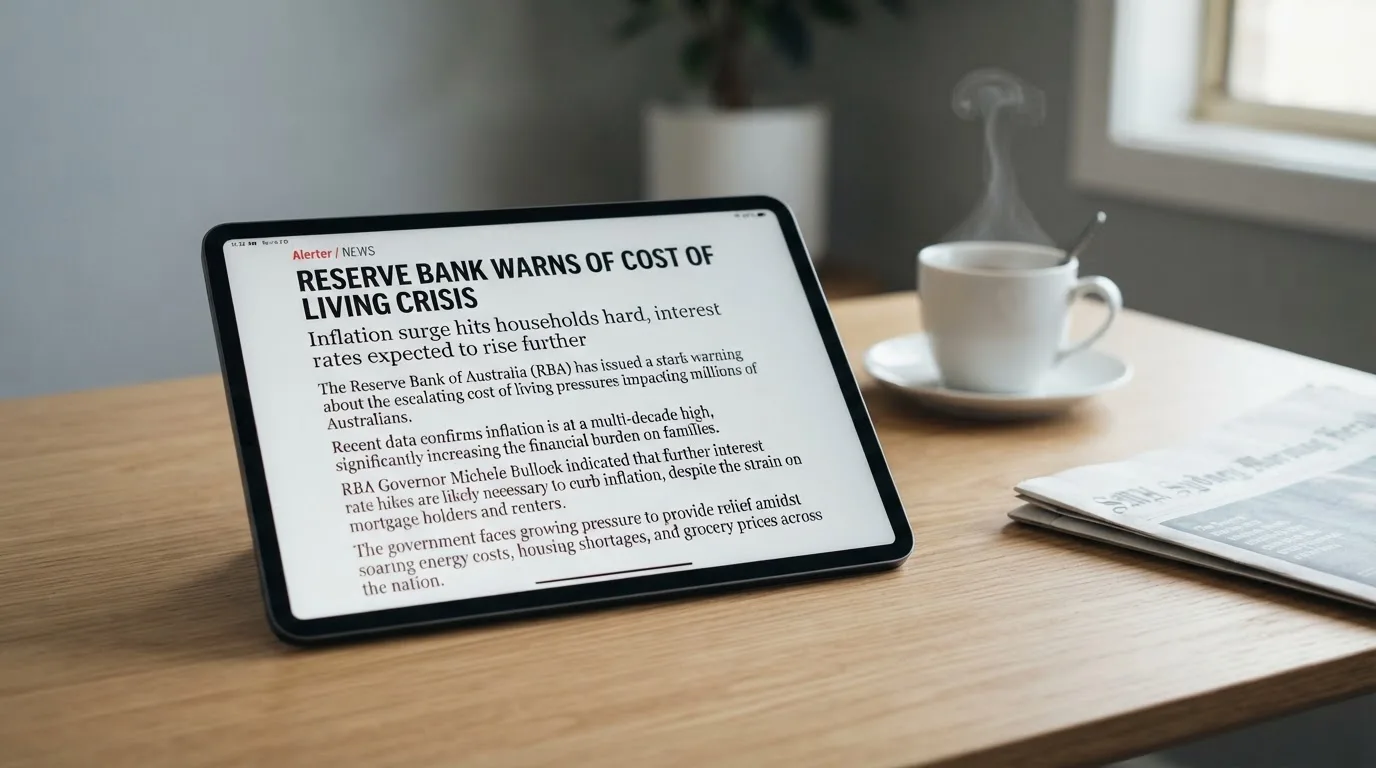
The enforcement has been visible. The ACMA, the Australian Communications and Media Authority, has issued blocking requests to Australian internet service providers, and as of June 2026 had asked for 1,751 illegal gambling and affiliate marketing websites to be blocked since the first blocking request in November 2019. More than 230 unlicensed services have left the Australian market since enforcement was stepped up in 2017. The June 2026 round alone added 12 more domains, from 7Signs and ChromaBet to Wildsino, to the list.
The individual Tasmanian who clicks a link to one of those offshore sites is not the target of the law — the Interactive Gambling Act aims at the provider. But the player has no Australian consumer protection, no complaints body, and no recourse if a withdrawal is refused. The site can be blocked with a balance still sitting on it. H2 Gambling Capital’s 2025 estimate puts Australian losses to illegal gambling sites at around A$3.9 billion a year, and the share of gambling going through legal channels has slipped from 74% in 2021 to 64% over the same window. That is the market the offshore brands are after.
What an offshore “pokies” page actually means in Tasmania
A site that brands a section “pokies” to a Tasmanian reader is selling a product that does not exist under Australian law. The licence the site displays, however plausible, was not issued by a Tasmanian, Australian state, territory or Commonwealth regulator. The games were not approved by the Tasmanian Liquor and Gaming Commission. The return-to-player figure on the paytable has not been audited against Australian standards. And when the site disappears — whether through an ACMA blocking request or an operator walking away from the market — the balance on the account goes with it.
The same point applies to deposits. From 11 June 2024, credit cards, credit-related products and digital currency are banned as payment for licensed online wagering in Australia, with penalties up to $247,500 for operators. The legal deposit routes for licensed wagering are debit card, bank transfer, PayID, Osko and BPAY. An offshore casino asking for a credit card or a crypto deposit from a Tasmanian customer is operating outside the Australian rules on at least two counts. The deposit is a tell as reliable as the licence.
The payment question, answered by the rules rather than the marketing
Tasmania’s licensed venues take cash, and from December 2025 take cashless card play by default. The licensed online wagering providers, where a Tasmanian does want to bet on a race or a sport, accept debit card, bank transfer, PayID, Osko and BPAY. Crypto and credit cards are not part of the legal frame.
What this means for payout speed is that the licensed venues pay out at the cashier. The licensed bookmakers settle through the bank rails above, usually same-day or next business day. The offshore brands publish payout times measured in hours or days for an Australian customer who has just sent a deposit from a country where the brand is not licensed and is not subject to local consumer protection law. The advertised speed is not the relevant figure. The relevant figure is whether the payout arrives at all, and into what recourse if it does not.
How to read a paytable: the only numbers that matter
A pokies paytable is a contract between the machine and the player. Three numbers on it are worth holding in mind.
The return-to-player percentage is the share of money taken in by the machine that the machine is programmed to return to players over the long run. South Australia sets a minimum of 87.5% for gaming machines outside Adelaide Casino, which gives a sense of the band the smaller Australian jurisdictions work within. Tasmania’s machine-level RTP figures vary by venue and by title, and the venue’s signage or the Tasmanian Liquor and Gaming Commission is the place to confirm the figure for the specific machine being played.
The maximum bet is the highest single wager the machine will accept. Outside Adelaide Casino, South Australia caps that at A$5.00. Inside Adelaide Casino, there is no maximum-bet limit at all — a reminder that casino floors and pub floors operate under different rules in the same state.
The volatility, where it is published, tells the player how the wins are distributed: frequent small wins, or rare large ones. It does not change the return-to-player in the long run, but it changes the experience of playing through a session.
None of these numbers is improved by switching to an offshore site. The offshore paytable is not audited against an Australian standard. The cashless card, the venue’s monitoring system and the Tasmanian regulator are.
Land-based venues compared with the rest of Australia
Tasmania’s footprint is small. For scale, South Australia counted 11,672 gaming machines outside Adelaide Casino in 471 venues as of September 2023, while Adelaide Casino itself held 90 gaming tables and 950 gaming machines inside the heritage-listed railway station building on North Terrace. Queensland had 21,122 gaming machines across 351 venues in October 2023 — before Treasury Casino closed on 25 August 2024 to make way for the new Star Brisbane at Queen’s Wharf, which opened on 29 August 2024 inside the A$3.6 billion precinct.
Each of those states carries its own history with how its casino licence was awarded and policed. Queensland’s regulator found Star Entertainment unsuitable to hold its Queensland casino licences in late 2022 after a review by former Court of Appeal judge Robert Gotterson concluded the operator had misled regulators and failed its anti-money-laundering duties. Star was fined $100 million on 9 December 2022, with a 90-day suspension of the Treasury Brisbane and Star Gold Coast licences deferred to 1 December 2023 to allow remediation. The Star Brisbane at Queen’s Wharf was developed jointly with Hong Kong-based Chow Tai Fook Enterprises and opened against that backdrop.
Tasmania has not had a comparable upheaval, partly because its casino licence sits with Federal Group rather than with a multinational operator, and partly because the two-casino structure has been stable for decades. That stability is a feature, not a coincidence: it is what the state decided the market should look like, and what the state’s regulators continue to defend.
A guide to the formal warnings: who the ACMA has named, and when
The ACMA’s list of formal warnings under the Interactive Gambling Act 2001 is a public ledger. It does not name every offshore site that has ever targeted Australian customers — many of those have been blocked without a published warning, and many more have moved on without ever appearing in a regulator’s filing. The brands below appear because the ACMA published a formal warning naming the operator behind them, and the publication date and operator name are on the regulator’s site. The table records what the regulator published. It does not record the brand’s own description of itself, which is generally more flattering and less specific.
| Brand | ACMA action and date | Operator named by the ACMA | Subject support |
|---|---|---|---|
| RocketPlay | Formal warning, March 2026 (Pulsup Ltd); earlier Dama N.V. action, May 2022 | Pulsup Ltd, and Dama N.V. for the earlier action | — |
| Level Up Casino | Formal warning, May 2022 | Dama N.V. | Listings note only |
| Woo Casino | Formal warning, March 2025 | Dama N.V. | Listings note only |
| Spirit Casino | Formal warning, May 2025 | Dama N.V. | — |
| National Casino | Formal warning, July 2025 | Consolutetish S.R.L. | Listings note only |
| Bizzo Casino | Formal warning, July 2025 (Consolutetish S.R.L.); earlier TechSolutions, 2022 | Consolutetish S.R.L., and TechSolutions for the earlier action | — |
| Ignition Casino | Formal warning, July 2025 | Bamboo Media | — |
| Instant Casino | Formal warning, February 2025 | EOD Code SRL | — |
| Jackbit | Formal warning, April 2026 | Ryker B.V. | — |
| Casino Intense | Formal warning, April 2025 | Sterplay Holding Ltd | Listings note only |
| Sky Crown | Formal warning, September 2022 | Hollycorn N.V. | Listings note only |
The pattern in the operator names is informative on its own. Dama N.V. appears four times across the table: for the original May 2022 warning covering six brands (Bambet, Dazard, Level Up, Rocketplay, Wild Tornado and Cobra Casinos), then again for Woo Casino in March 2025 and Spirit Casino in May 2025, with a further Rocketplay warning under Pulsup Ltd in March 2026. A formal warning is not a prosecution, and the regulator does not pretend otherwise. The repeated naming is what the ACMA does when the operator continues to offer the same prohibited product to Australian customers under a different brand.
Where the table records “listings note only” under subject support, it means that the only places this guide found the brand named were third-party listings pages rather than the brand’s own documentation. That is a different kind of information from the regulator’s warning, and the page treats it as such.
Where the blocking-rate calculation sits
The blocking request log is one of the few public measures of how visible the offshore market has been in Tasmania and across Australia. The ACMA’s first blocking request went out in November 2019. By June 2026 the running total of blocked sites reached 1,751. The arithmetic is straightforward: take the total and divide it by the years elapsed since the first request, and a baseline figure of roughly 263 sites blocked per year falls out. Spread the same total across the months instead, and the rate lands somewhere between 21 and 22 blocked domains a month.
That band — a few dozen a month — is the rate at which the regulator has been naming new domains. The June 2026 round alone added 12, and the regulator’s log shows similar-sized rounds spaced through 2024 and 2025. The relevant detail for a reader is not the precise rate but the direction: blocking requests have continued at a steady pace rather than tapering, and the ACMA’s published warnings have named both the operators behind the sites and, in the Dama N.V. case, the operator’s habit of rebranding under a new corporate name after a previous warning. The blocking-rate band is a way of saying that the regulator’s enforcement has been persistent rather than symbolic.
RocketPlay: a brand that has been warned twice
RocketPlay carries the unusual distinction of appearing in the ACMA’s formal warnings twice — once under Dama N.V. in May 2022 and again under Pulsup Ltd in March 2026. The intervening years saw the brand continue to take Australian-facing traffic under a series of apparently related corporate owners. The regulator’s March 2026 warning named Pulsup Ltd as the operator behind RocketPlay. That the brand has been warned under two different parent companies in four years is the point of the warning: a formal warning is not a permanent injunction, and the regulator’s response when the operator changes its name is to issue another one.
For a Tasmanian player, the practical question is not whether RocketPlay has a welcome bonus. The brand, like every other entry in this section, is offering a product that cannot be licensed for Australian customers under any state or territory regime. The ACMA has named it twice. The deposit routes it accepts are unlikely to be the legal set. The site’s balance is held under a jurisdiction outside Australian consumer protection law.
Level Up Casino: a 2022 warning that has not gone away
Level Up Casino was named in the ACMA’s May 2022 warning to Dama N.V. alongside Bambet, Dazard, Rocketplay, Wild Tornado and Cobra Casinos. It is one of six brands the regulator grouped into a single action, on the basis that they shared an operator. The brand continues to be reachable through affiliate marketing pages targeting Australian traffic. The only places this guide found Level Up named outside those affiliate listings were general reference pages, which do not constitute independent endorsement of the operator.
The same warning, the same operator, the same prohibition. The question the May 2022 action asked — and did not receive a satisfactory answer for, judging by the follow-up warnings to Dama N.V. in 2025 — is whether the operator intends to stop offering prohibited services to Australians. The regulator has not said it has.
Woo Casino: a March 2025 warning under the same parent
Woo Casino was named in the ACMA’s March 2025 warning to Dama N.V., one of two Dama N.V. follow-up warnings that year alongside Spirit Casino in May 2025. The first Dama N.V. action in May 2022 covered six brands; the 2025 actions cover two more. The pattern is consistent: the regulator has been content to name the operator repeatedly rather than to escalate to prosecution on a single occasion, and the operator has been content to rebrand and continue.
Woo Casino, like every other brand in this section, cannot lawfully offer online casino games to a person in Australia. The brand’s third-party listings do not change that fact. The fact that the regulator has now named Dama N.V. three times under three different brand headings is a record the reader can hold against the brand’s own description of its licensing.
Spirit Casino: the other May 2025 Dama N.V. action
Spirit Casino was named in the ACMA’s May 2025 warning to Dama N.V., four days after Woo Casino received its own warning. Both warnings went to the same parent. The timing — two formal warnings to one operator in two months — suggests the regulator was willing to name multiple brands in close succession rather than waiting for each to resolve on its own.
Spirit Casino’s third-party footprint is small. The brand appears in affiliate marketing pages and general reference listings, and that is the limit of what the public sources carry for it. The substance is the same as for the rest of the Dama N.V. family: an offshore operator offering a product that cannot be licensed in Australia, named by the regulator, continuing to advertise.
National Casino: a Consolutetish S.R.L. brand from 2025
National Casino was named in the ACMA’s July 2025 warning to Consolutetish S.R.L., alongside Bizzo Casino, in the same action. The two brands share an operator. National Casino’s third-party footprint extends to general news coverage and infrastructure reference pages; the brand is known enough that it has been cited in passing in Australian reporting on the offshore market.
What the regulator’s action tells a reader is that the operator behind National Casino is the same operator behind Bizzo Casino, and that operator had not previously appeared on the ACMA’s warning list. The two brands were new to the regulator’s published record. The product they were offering — online casino games to Australian customers — was not new. It is the same prohibited product every other entry on the table is offering.
Bizzo Casino: a brand with a previous warning under a different parent
Bizzo Casino carries the unusual distinction of having been named in a formal warning twice and under two different operators. The ACMA’s earlier 2022 warning covered TechSolutions (CY) Group Limited and TechSolutions Group N.V. The July 2025 warning to Consolutetish S.R.L. covered National Casino and Bizzo Casino — and noted that Bizzo Casino had already been the subject of the earlier 2022 action. The regulator was explicit that this was a re-offence under a new parent.
For a reader, the lesson is structural: a brand can change corporate parent and continue to offer the same product to Australian customers, and the regulator’s response is to issue another warning. The TechSolutions-to-Consolutetish handoff is the cleanest example of the pattern in the published record.
Ignition Casino: a Bamboo Media brand from July 2025
Ignition Casino was named in the ACMA’s July 2025 warning to Bamboo Media, in the same action that named Consolutetish S.R.L. for National Casino and Bizzo Casino. Bamboo Media had not previously appeared in the regulator’s warning list. The product Ignition Casino offers — online casino games to Australian customers, including online pokies — is the same product the regulator has been warning operators about for the better part of a decade.
The reference footprint for Ignition Casino is small. The brand does not appear in any Australian-facing independent coverage this guide could verify. What carries weight is the regulator’s action, not the brand’s own marketing.
Instant Casino: an EOD Code SRL brand from February 2025
The ACMA’s February 2025 warning to EOD Code SRL named Instant Casino as the brand the operator was using to offer prohibited services to Australian customers. EOD Code SRL had not previously appeared on the regulator’s published list. The warning was the regulator’s first published action against the operator.
Instant Casino’s brand has been more visible than most entries on the table — it has appeared in mainstream Australian media coverage of the offshore market, and its name is well-known enough that the regulator’s warning was covered as news rather than buried in the regulator’s archive. The substance of the warning is the same as for every other entry on the table: an offshore operator offering a product that cannot be licensed in Australia.
Jackbit: an April 2026 warning under Ryker B.V.
Jackbit was named in the ACMA’s April 2026 warning to Ryker B.V. alongside CasinOK, in the same action. Both brands share the operator. The warning is one of the more recent entries on the regulator’s published list. Ryker B.V. had not previously appeared in a published warning.
The reference footprint for Jackbit is small and largely confined to affiliate marketing pages. The brand’s recent entry on the regulator’s warning list is the most concrete public record available; what sits behind it is the same prohibited product every other entry offers.
Casino Intense: a Sterplay Holding Ltd brand from April 2025
Casino Intense was named in the ACMA’s April 2025 warning to Sterplay Holding Ltd. The brand’s reference footprint is wider than most entries on the table — it has appeared in mainstream Australian media coverage, industry trade press and South Australian regulator filings. Sterplay Holding Ltd had not previously appeared in a published warning.
The product Casino Intense offers is the same product every other entry offers: online casino games to Australian customers, including online pokies. The fact that the brand has been visible enough to attract mainstream coverage does not change the fact that the regulator has named it.
Sky Crown: a Hollycorn N.V. brand from September 2022
Sky Crown was named in the ACMA’s September 2022 warning to Hollycorn N.V., alongside Blue Leo. The published warning is the oldest entry on the table that has not been refreshed by a follow-up action under a different operator. Hollycorn N.V.’s wider portfolio has been visible in general reference coverage; the regulator’s action against the operator for the Sky Crown and Blue Leo brands remains on the published record.
Sky Crown’s continued presence in affiliate marketing pages targeting Australian traffic is the visible evidence that the September 2022 warning did not end the operator’s Australian-facing activity. Whether the regulator considers the matter closed or has decided to take no further action is not a question the published record answers.
How these blocks were put together
The list is the ACMA’s, not a ranking. No brand in this section has been screened, recommended or assessed on its merits as a place to play. Each appears because the regulator published a formal warning naming the operator behind it for offering prohibited services to Australian customers under the Interactive Gambling Act 2001.
What makes the list useful is the structure of the warnings themselves. A formal warning is the regulator’s first formal step: it tells the operator that the regulator considers the conduct to be a contravention of the Act and asks the operator to demonstrate what it has done to address it. A blocking request is the heavier tool, applied where the operator does not respond or where the regulator considers the warning insufficient. The June 2026 round, which added 12 more domains to the list of blocked sites, sits on top of the warnings published over the years and is the more visible enforcement step.
The brand-level detail — the corporate parent, the warning date, the third-party footprint — is what the public record carries. The brand’s own claims about its licence, its payout times, its welcome bonus and its player protection are not part of this assessment and are not the basis on which any of the entries appear.
What the cashless card does and does not do for problem gambling
The cashless gaming card that became mandatory in Tasmanian pubs and clubs from December 2025 is a behaviour-shaping tool rather than a treatment for problem gambling. It changes what the machine sees: every spin is tied to a registered player, every session is tied to a card, and the default loss limits — $100 a day, $500 a month and $5,000 a year — sit on the system rather than at the player’s discretion. The 24-hour wait to raise those limits is the deliberate gap between impulse and action.
What it does not do is replace the help services that exist for Tasmanians whose gambling has moved past the point a card can shape. Gambling Helpline Tasmania, on 1800 858 858, is run by Anglicare Tasmania’s Gamblers Help Service and provides free 24-hour phone counselling for anyone affected by gambling in Tasmania. In-person counsellors are based in Hobart, Launceston, Devonport and Burnie. The same number connects to Gambling Help Online for chat and email support.
Venue-level self-exclusion, which has been available in Tasmania for years and which the cashless card system supports, lets a player ask a venue to refuse them service for a set period. BetStop, the National Self-Exclusion Register that went live in August 2023, extends the same principle to Australian-licensed online and phone wagering services. BetStop binds only the licensed operators; an offshore casino is not connected to the register and is not bound by an exclusion request made through it.
Tasmania’s path through the wider Australian reform
The Interactive Gambling Amendment (Gambling Reform) Bill 2026 passed Parliament on 19 August 2026. Its advertising and inducement measures commence on 1 January 2027. The Bill does not open the door to licensed online casinos — it tightens the existing prohibition. For a page written before that commencement date, the Bill is law with a future start date: it has been passed, but the advertising and inducement provisions are not yet in force. The enforcement tools the ACMA has been using — formal warnings, blocking requests, the running total of 1,751 blocked sites since November 2019 — continue to apply.
The wider picture is one of tightening rather than loosening. The Northern Territory, which licenses 52 of Australia’s online bookmakers through a commission that has no full-time staff and meets once a month, has been the subject of reform pressure. The ABC reported in April 2026 on a bill to reform the de facto gambling regulator, but the underlying structure — a small Territory commission licensing the country’s largest online bookmakers for tax reasons — has not changed.
For a Tasmanian reader, the practical effect of the national framework is that the licensed onshore offer is the two casinos and the pub and club network, with online wagering on races and sport placed through a Northern Territory-licensed bookmaker. Everything else is offshore and outside the Australian consumer protection regime.
What to do if a brand on this page has your money
If a Tasmanian resident has a balance sitting with any of the brands on this page — RocketPlay, Level Up Casino, Woo Casino, Spirit Casino, National Casino, Bizzo Casino, Ignition Casino, Instant Casino, Jackbit, Casino Intense or Sky Crown — the regulator’s action is the place to start. The ACMA’s formal warning publications are the public record of what the regulator has done; the blocking request log is the public record of what the regulator has asked Australian ISPs to do. None of those records contains a refund process.
The realistic options for a player who wants their money back are limited. The licensed dispute resolution pathways that exist for Australian-licensed operators do not apply. The operator is in a different jurisdiction, often Curaçao or Cyprus, and the local regulator there does not owe an Australian player an answer. Some operators do respond to chargeback requests through the player’s bank; some do not. The deposit was made in breach of the Interactive Gambling Act in the sense that the operator offered a prohibited service, but the player is not the party the Act targets. That distinction leaves the player in an awkward position: not liable, but also without an Australian regulator to complain to.
The honest reading is that money sent to one of these brands is money sent under the brand’s own terms. A reader who wants to recover it has the same options as a customer of any offshore operation: the brand’s own complaints process, the card issuer’s chargeback process, and the regulator in the brand’s home jurisdiction, none of which is fast and none of which is certain.
The numbers behind the loss
H2 Gambling Capital’s 2025 estimate puts Australian losses to illegal gambling sites at around A$3.9 billion a year. That figure is the total across the country, not the share attributable to Tasmanians. The dollar figure is large in absolute terms and small in per-capita terms relative to the legal market, but it is the figure the offshore industry is fighting for.
The same report notes that the share of gambling going through legal channels has fallen from 74% in 2021 to 64% over the same window. The slippage is small in percentage terms and large in dollar terms — a ten-point shift in the legal-versus-illegal split of an industry that size is billions of dollars of moved spend. The regulators’ response — the blocking requests, the formal warnings, the cashless card rollout — is the visible side of the policy effort to push that share back the other way.
For a Tasmanian reader, the practical question is not the national dollar figure but the local one. Tasmania’s per-adult losses across the licensed network are smaller than South Australia’s, where the 2022-23 figure outside Adelaide Casino was around A$0.92 billion, or about A$497 per adult. Tasmania’s network is smaller and its casino licence is held by a local operator. The licensed offer, in dollar terms, is a smaller market.
A short reading list before choosing where to play
For a Tasmanian who has decided to play pokies in 2026, the short list is short. Wrest Point and the Country Club are the two casinos. The pub and club network is the licensed alternative. Every online site is operating outside Australian law, whatever its own description of itself says. The cashless card is the new layer over the pub and club network. The helpline is on the machine.
For a Tasmanian who has decided the answer is an offshore site regardless, the questions worth asking are not the ones the affiliate marketing pages answer. Is the operator on the ACMA’s published warning list? If yes, the regulator has already said the brand is offering a prohibited product. Is the deposit route one of the legal Australian set? If not, the operator is asking the player to use a payment method that no Australian-licensed operator would accept. Does the brand’s licence, if it has one, come from a jurisdiction with enforceable consumer protection for Australians? Almost always no.
The answer to the question “where should I play pokies in Tasmania” is not a single brand. It is the licensed venue and the cashless card, with the helpline number one tap away on the machine screen.
Frequently asked questions
Which venues in Tasmania are licensed to operate pokies?
Two casinos hold the state’s casino licences: Wrest Point Hotel Casino in Hobart, opened on 10 February 1973, and the Country Club Casino and Resort in Launceston, opened by Federal Group in 1982. Outside those two properties, individual pubs and clubs hold their own machine entitlements under the Gaming Control Act 1993, a change that came into effect when Federal Group relinquished its exclusive licence in August 2017. The Tasmanian Liquor and Gaming Commission publishes the current register of licensed venues.
Are pokies in Tasmania available around the clock?
Not as a general matter. The two casinos have their own opening hours, with Wrest Point and the Country Club running on schedules set by their operator and varying by season. Pubs and clubs in Tasmania are subject to the state’s general liquor licensing hours, which do not run 24 hours as a default. No licensed pokies venue in the state is automatically open all night in the way the term “24 hour pokies” suggests — a player checking late at night should confirm the specific venue’s hours before travelling.
What identification do venues in Tasmania require before letting someone play pokies?
From December 2025, all hotel and club poker machines in Tasmania operate under the mandatory cashless gaming card system. A player registers for a card, which is tied to the player’s identification, and uses that card to play. Default loss limits of $100 a day, $500 a month and $5,000 a year apply, raisable only after a 24-hour waiting period. The system is overseen by the Tasmanian Liquor and Gaming Commission. Casino pokies at Wrest Point and the Country Club have their own identification arrangements, with rollout of the card system to casinos not yet dated as of the most recent commission update.
Can visitors to Tasmania use self-exclusion schemes at local pokies venues?
A visitor can ask a venue to exclude them for a set period under the venue’s own self-exclusion arrangements. Gambling Helpline Tasmania on 1800 858 858 can help arrange that exclusion, and the same number connects to Anglicare Tasmania’s Gamblers Help Service. BetStop, the National Self-Exclusion Register that has been live since August 2023, covers Australian-licensed online and phone wagering services but does not bind offshore casinos. A visitor who has self-excluded through BetStop at home remains excluded from the Australian-licensed wagering operators while in Tasmania.
How does the payout percentage on Tasmania pokies compare with other Australian cities?
Tasmania’s machine-level RTP figures vary by venue and title, and the Tasmanian Liquor and Gaming Commission is the place to confirm the figure for a specific machine. For comparison, South Australia sets a minimum gaming-machine return-to-player rate of 87.5% outside Adelaide Casino, with a general maximum bet of A$5.00; Adelaide Casino itself has no maximum-bet limit. The casino-versus-non-casino split is the more meaningful gap within a state than the interstate comparison, and Tasmania’s two-casino, pub-and-club structure follows the same pattern.
Is it legal for an online casino to advertise ‘pokies’ in Tasmania the same way a pub or club does?
No. The Interactive Gambling Act 2001, strengthened by the Interactive Gambling Amendment Act 2017, makes it an offence to provide online casino games, online pokies and in-play betting to a person in Australia, and the Interactive Gambling Amendment (Gambling Reform) Bill 2026 tightens the advertising and inducement rules further from 1 January 2027. The ACMA has issued formal warnings to offshore operators and asked Australian ISPs to block more than 1,750 illegal sites since November 2019. An online casino advertising “pokies” to a Tasmanian reader is doing so in breach of Australian law, regardless of what its own pages say about licensing.