
New online casino sites and the Australian reader: a working picture for 2026
Every few weeks another “new online casino” hits the market, advertised to anyone with a search box and a credit card. Most of those sites will not be lawful for a reader sitting in Australia. The Interactive Gambling Act 2001 prohibits the supply of online casino games and online pokies to anyone physically in Australia, and no state or territory issues a licence for them. What follows is a practical look at what that gap means, which offshore brands the Australian Communications and Media Authority has moved against in the past year, and what lawful alternatives a reader in Australia actually has.

Data current as of 8 November 2026, checked against the ACMA’s published register of formal warnings and blocking actions.
Table of Contents
- The shape of the Australian online casino market
- How the ACMA has moved against new casino sites
- What an Australian reader is being offered
- Reading a new casino site’s fine print
- What is lawful in Australia for an Australian reader
- Paying at a new online casino site from Australia
- Crypto and the offshore new casino
- Mobile, apps, and what to check before installing
- A side-by-side look at the brands the ACMA has acted against
- BetStop, gambling blocks, and what a reader can actually use
- The promotional inducement, in plain terms
- What changes in 2026 and after
- Reading the picture, end to end
- Frequently asked questions
The shape of the Australian online casino market
A search for “best new online casino sites Australia” returns a wall of offshore brands offering pokies, blackjack, roulette and live dealer tables. They look polished. They accept Australian dollars. Some even let you sign up without a document check. None of that makes them legal here.

The Interactive Gambling Act 2001 makes it an offence to provide online casino games, online pokies or in-play betting to a person physically in Australia. The 2017 amendments to the Act gave the Australian Communications and Media Authority the tools to investigate, warn and, when warnings are ignored, ask Australian internet service providers to block the offending websites. The IGA targets the provider, not the player — no Australian reader has been prosecuted for opening an account. But the same Act also strips the offshore site of every protection an Australian consumer would otherwise have: no Australian complaints body, no recourse if a withdrawal stalls, no guarantee the site stays reachable tomorrow. And a balance held offshore when a block lands is, for practical purposes, gone.
H2 Gambling Capital’s 2025 report estimates Australians lose about A$3.9 billion a year to illegal gambling sites, and that the share of gambling going through legal channels fell from 74% in 2021 to 64%. The illegal market is not a fringe. It is a third of what Australians wager each year.
What is licensed is narrower than most readers expect. Wagering on racing and sport placed before the event is licensable, and most online bookmakers — Sportsbet, Bet365, Ladbrokes — are licensed in the Northern Territory through the Northern Territory Racing and Wagering Commission. Lotteries and keno are licensed separately by each state. Online casino games, the bulk of what those offshore “new casinos” sell, are not.
How the ACMA has moved against new casino sites
The ACMA’s enforcement record is the most concrete picture of which offshore brands target Australian players. By June 2026 the authority had asked Australian ISPs to block 1,751 illegal gambling and affiliate marketing websites since the first blocking request in November 2019, and more than 230 unlicensed gambling services had left the Australian market since enforcement was strengthened in 2017.
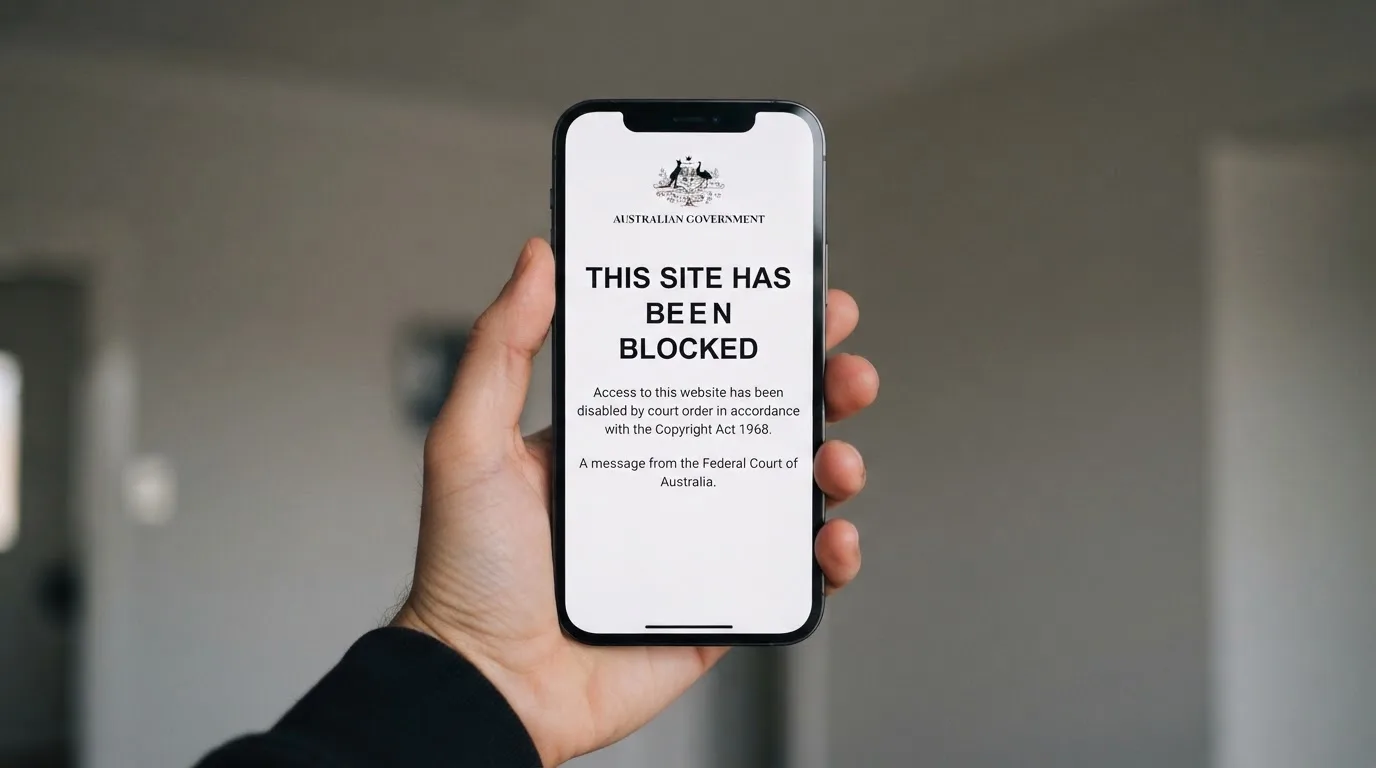
The June 2026 round alone added twelve more domains to the block list: 7Signs, ChromaBet, Donbet, Duospin, Freshbet, Slots Gem, Jacks Club, Lucky Start, Pointsbetz, Spinrise, Vinyl Casino and Wildsino. The pace has not slowed.
A formal warning is the step before a block. The ACMA publishes each one with the operator behind it. In March 2026 the authority warned Pulsup Ltd over Rocketplay. In May 2022 it warned Dama N.V. over six brands at once — Bambet, Dazard, Level Up, Rocketplay, Wild Tornado and Cobra Casinos — then returned in March 2025 over Woo Casino and in May 2025 over Spirit Casino. In July 2025 the ACMA warned Bamboo Media over Ignition Casino and Consolutetish S.R.L. over National Casino and Bizzo Casino; Bizzo had already been warned in 2022 to two TechSolutions entities. In February 2025 the ACMA warned EOD Code SRL over Instant Casino. In April 2026 Ryker B.V. was warned over Jackbit and CasinOK. In April 2025 Sterplay Holding Ltd was warned over Casino Intense. Hollycorn N.V. was warned over Sky Crown and Blue Leo in 2022.
A reader who sees any of these names advertised to them as a “new online casino” is being advertised a service the ACMA has either warned or blocked.
The blocking rate, measured from the first request
The first blocking request went out in November 2019. By June 2026 the ACMA had asked ISPs to block 1,751 sites, a running total that includes affiliate marketing pages as well as gambling sites themselves.
Spread across roughly 80 months, that is an average of close to 22 sites blocked per month — slightly under that if the count is read strictly, slightly over if the first months are treated as a ramp-up. Either way, the average flatters the actual pace. The early years ran slower. The 2024 to 2026 stretch is closer to one new blocked domain a working day. The blocking rate is not a steady drip. It is the visible surface of a continuous stream.
The number a reader should hold onto is the band rather than the average: somewhere between 20 and 30 sites per month across the lifetime of the regime, and the upper end of that band is what the last two years have looked like. New “casino” domains enter the ACMA’s queue faster than older ones leave it.
What an Australian reader is being offered
The standard pitch for a new online casino site follows the same script. A welcome package worth several thousand dollars in matched deposits and free spins. A loyalty programme with cashback and tiered rewards. A live dealer lobby with blackjack, roulette and game shows streamed from studios in Europe or Latin America. Tournaments with prize pools. VIP hosts. And somewhere in the small print, a wagering requirement, a maximum cashout cap, a list of countries where play is “restricted” — Australia included, in theory, in practice not.
A reader in Australia will not see the same product catalogue as a reader in a regulated jurisdiction. Games that the site itself describes as “blocked in your region” are stripped out. Bonus terms carry clauses that void winnings if the player is detected from a prohibited country. Withdrawal queues are slower. KYC checks happen at cashout, not at signup, and can take weeks.
None of this changes the legal position: the IGA prohibits the supply, and the ACMA’s enforcement record shows which offshore groups continue to supply anyway.
What the marketing claims do not say
A matched deposit “up to A$5,000” sounds generous until the wagering multiple attached to it is read. The bonus itself is not withdrawable. It has to be turned over a stated number of times — often 35 to 50 times the bonus amount — before any winnings derived from it become withdrawable. A A$1,000 bonus at a 40x turnover is A$40,000 of wagering required before the first dollar of bonus-derived winnings moves.
Free spins are quoted in the same breath. A “200 free spins on sign up” headline carries a per-spin value, a list of qualifying titles, and the same wagering multiple applied to anything the spins return. The headline counts spins. The actual offer counts the value of those spins after the wagering is done.
Maximum cashout caps are the third clause most readers miss. Some sites cap the amount withdrawable from a no-deposit bonus at a small multiple of the bonus itself. A A$20 no-deposit free chip with a 10x cap means at most A$200 can ever leave the account from that promotion, regardless of what the spins actually win.
These terms are standard in the offshore market. They are not the mark of a rogue site. They are the mark of a market with no consumer protection.
Reading a new casino site’s fine print
The pattern below is what a careful reader checks before depositing anywhere, regardless of how new or established the brand is.
Licence claims. A Curaçao or Anjouan licence at the footer of a site does not change the Australian position. The IGA targets the supply of the service to a person in Australia. The offshore licence is real, in the sense that it exists, and irrelevant, in the sense that no Australian authority recognises it.
Restricted country lists. Most offshore casinos list Australia in their restricted jurisdictions and then geo-exclude Australian IPs at signup. A reader who has travelled, used a VPN, or signed up while overseas and then tried to play from a Sydney address has read this clause the hard way.
Bonus terms. Wagering multiples, game-weighting tables (slots usually 100%, live dealer often 10% or excluded), maximum cashout caps, expiry windows and minimum deposit thresholds all sit inside the bonus terms. A two-minute read costs less than a disappointed cashout.
Withdrawal conditions. KYC checks at first withdrawal are the rule rather than the exception. Expect to upload a photo ID, a proof of address and, increasingly, a proof of the deposit method. Offshore sites routinely impose “source of funds” requests beyond the basic three.
Self-exclusion tools. The site’s own self-exclusion is a courtesy, not a legal mechanism. BetStop, the National Self-Exclusion Register, binds only Australian-licensed wagering services. An offshore casino is not connected to it.
A reader who decides to play an offshore site despite all of the above is making a personal choice. The page does not pretend that choice is illegal at the player end. It is also not making the choice for the reader.
What is lawful in Australia for an Australian reader
The lawful options for someone in Australia who wants to gamble are narrower than the offshore catalogue but real.
Licensed bookmakers. Sportsbet, Bet365, Ladbrokes, Tabcorp and the rest of the licensed online bookmakers take wagers on racing and sport, placed before the event. The Northern Territory Racing and Wagering Commission regulates 52 of these operators — a body with no full-time staff that meets once a month in Darwin. The thinness of that regulator is the structural reason offshore sites keep finding Australian customers: the licensed market is large enough to be a target and small enough that offshore brands see an opening.
Lotteries and keno. State and territory lotteries are licensed separately. TattsLotto, Oz Lotto and the weekly draws are run under state legislation. Keno is available in pubs and clubs in most states and at some newsagents.
Pokies in licensed venues. Around 200,000 poker machines sit in clubs and hotels across Australia. Each state regulates them separately, with different return-to-player settings, different harm-minimisation measures and different opening hours. The ACT, for instance, has a cap on the number of machines and a maximum bet. Western Australia keeps pokie-style gaming in Crown Perth and nothing else.
Land-based casinos. Crown Melbourne, Crown Perth, The Star Sydney, The Star Gold Coast, SkyCity Adelaide and the Jupiters and Conrad properties in Queensland are the licensed casino venues. Their electronic gaming floors are large, regulated and physically located in Australia.
None of these offer the breadth of an offshore “new online casino” — the thousands of slots, the live dealer studios, the cryptocurrencies. They are also the only Australian-legitimate paths.
Paying at a new online casino site from Australia
Most offshore new casino sites accept cards, e-wallets, bank transfers and a long list of cryptocurrencies. The payment mix matters because the IGA, as amended in 2023, prohibits Australian-licensed wagering services from accepting credit cards, credit-related products and digital currency as payment — and that prohibition reflects a wider concern about how easily players can fund gambling from borrowed money.
For a reader funding an offshore account, the practical picture is different.
Cards
Visa and Mastercard debit work for offshore deposits at most sites. The bank’s own gambling transaction block can interfere: Westpac’s block refuses authorisation on transactions registered under the merchant category code “Betting/Casino Gambling” on eligible cards. ANZ’s block, activated in the ANZ app, also blocks gambling transactions through a digital wallet such as Apple Pay on an eligible card. Commonwealth Bank offers a gambling lock on eligible cards via the CommBank app, with the same caveat that the bank cannot guarantee every gambling-related purchase is stopped.
American Express sits slightly apart. Amex was established in 1850 as a freight-forwarding company and became a card issuer with its first charge card on 1 October 1958; it issues cards and processes transactions itself as a three-party scheme, rather than running through the four-party Visa or Mastercard networks. The Reserve Bank of Australia’s July 2025 review on surcharging proposed removing surcharges only on eftpos, Mastercard and Visa card transactions, and explicitly left American Express outside the scope of the proposed ban. Most offshore casinos do not accept Amex for gambling.
Digital wallets
Apple Pay does not carry a separate fee from Apple; any surcharge comes from the merchant’s own card-processing fees, not from the wallet. Transaction limits and PIN requirements for Apple Pay purchases are set by the card issuer or the merchant, not by Apple. By the end of 2025, Apple Pay, Google Pay and Samsung Pay transactions collectively accounted for around 45% of all card payments in Australia by number — the wallet has become the default for many Australians, and the issuer-level gambling block now applies through the wallet as well as the card.
Bank transfers and PayID
The New Payments Platform became accessible to the public on 13 February 2018, owned by New Payments Platform Australia Ltd, a non-profit whose 13 shareholders include the Reserve Bank of Australia and the major banks. Participants must keep the platform’s monthly outages to no more than two minutes; in 2021 the ACCC authorised the merger of NPP Australia with BPAY and eftpos into a single company, Australian Payments Plus.
PayID lets a payer address a transfer to a phone number, email or ABN rather than a BSB and account number. The system shows the name of the account holder before the transfer is sent — and Australian Payments Plus warns that being asked to transfer to a PayID on an illegal gambling site almost certainly means a scam site. PayID-based instant transfers are available at over 100 Australian financial institutions, and more than 25 million PayID identifiers had been registered on the platform by April 2025.
Osko delivers a bank-to-bank transfer in under a minute, 24/7 including weekends, whether addressed to a BSB and account number or to a PayID. For an Australian funding an offshore casino account, Osko is the fastest legal route money can move.
BPAY
BPAY is a bill-payment service inside online banking. The payer enters the Biller Code and the Customer Reference Number printed on the bill. BPAY launched on 18 November 1997 and is available in the online banking of over 140 banks and financial institutions, offered by over 95,000 businesses. It is owned equally, via parent company Cardlink Services Limited, by Australia’s four major banks. BPAY was not designed for funding casino accounts, and offshore casinos do not accept it.
AUSTRAC and threshold reports
AUSTRAC’s threshold-transaction-report rule applies only to physical cash. Ordinary electronic bank transfers are not subject to that per-transaction reporting requirement, regardless of the amount sent. A A$10,000 transfer to an offshore casino through Osko does not, by itself, trigger a threshold report. It will, however, leave a record on both sides of the transfer that the bank and the casino each hold.
Crypto and the offshore new casino
A reader asking specifically about “new crypto casino” or “new bitcoin casino” finds a different catalogue. These brands lead with deposits in BTC, ETH, USDT and a long tail of altcoins, sometimes without any fiat rail at all. Some advertise themselves as “no KYC” casinos, accepting wallet addresses and crypto balances as the only identity.
The Australian position on crypto for gambling follows the same logic as cards. The Interactive Gambling Amendment Act 2023 makes digital currency a prohibited payment method for Australian-licensed wagering services — the change took effect on 11 June 2024, with penalties of up to A$247,500 for operators who accept it. A reader funding a crypto casino from an Australian exchange is not, themselves, committing an offence. The offshore casino accepting the deposit is the side the IGA targets.
The operational picture is different from a card deposit. Crypto deposits are usually credited after a set number of blockchain confirmations — anywhere from one to six depending on the coin. Withdrawals are sent from the casino’s hot wallet to the player’s address, and the speed depends on whether the casino processes withdrawals manually or automatically. “No KYC” usually means no document check at signup, but most of these sites still request KYC at the first withdrawal above a stated threshold.
Crypto is also where the offshore sites’ “anonymity” pitch runs out of road. Every Bitcoin transaction is recorded on a public ledger. A wallet address is pseudonymous, not anonymous. Chain analysis firms sell transaction tracing to anyone willing to pay, and Australian authorities have used those tools in other enforcement contexts. The pitch that crypto gambling is untraceable is not one the data supports.
Mobile, apps, and what to check before installing
A “new mobile casino” is most often the same offshore brand with a responsive website that loads inside a phone browser. Some push native apps through the App Store or Google Play, more often direct APK downloads from the brand’s own site because Google Play and the App Store prohibit real-money gambling apps in most categories.
A reader who sees a casino app advertised through an Instagram post, a Telegram channel, or a push notification should treat the download the way they would treat any unfamiliar executable. Verify the publisher. Verify the URL the APK came from. Verify the licence claim — Curaçao and Anjouan are the common ones, neither is an Australian licence. Verify the developer’s other apps. A genuine app from a brand that has been around for years will show history; a freshly registered developer account pushing a gambling APK is a different signal.
Most readers who want a mobile experience are better served by the licensed wagering apps: Sportsbet, Bet365, Ladbrokes and the state lottery apps, all of which sit in the Australian app stores and are bound by Australian consumer law.
A side-by-side look at the brands the ACMA has acted against
The eleven brands below are the ones the ACMA has formally warned in the period covered by this research. They appear here not as a ranking but as a reference list. A reader who sees any of them advertised to them as a “new casino” is seeing a brand the Australian regulator has already moved against.
| Brand | ACMA action and date | Operator named by the ACMA | Subject support |
|---|---|---|---|
| RocketPlay | Formal warning March 2026; earlier May 2022 to Dama N.V. | Pulsup Ltd (Rocketplay); earlier Dama N.V. | Gambling trade listings describe RocketPlay as an offshore casino brand |
| Level Up Casino | Formal warning May 2022 | Dama N.V. | Westpac’s own materials describe Level Up Casino as an offshore gambling brand for the purpose of its merchant category block |
| Woo Casino | Formal warning March 2025 | Dama N.V. | No information available |
| Spirit Casino | Formal warning May 2025 | Dama N.V. | No information available |
| National Casino | Formal warning July 2025 | Consolutetish S.R.L. | ACMA and AUSTRAC pages and BetStop reference National Casino among offshore gambling brands operating in Australia |
| Bizzo Casino | Formal warning July 2025; earlier 2022 to TechSolutions | Consolutetish S.R.L.; earlier TechSolutions (CY) Group Ltd and TechSolutions Group N.V. | Gambling trade listings describe Bizzo Casino as an offshore casino brand |
| Ignition Casino | Formal warning July 2025 | Bamboo Media | No information available |
| Instant Casino | Formal warning February 2025 | EOD Code SRL | EcoPayz’s merchant category page and PayID materials describe Instant Casino among the offshore brands targeting Australian players |
| Jackbit | Formal warning April 2026 | Ryker B.V. | No information available |
| Casino Intense | Formal warning April 2025 | Sterplay Holding Ltd | AUSTRAC and BetStop materials, alongside gambling trade listings, place Casino Intense among offshore casino brands targeting Australian players |
| Sky Crown | Formal warning (PDF) September 2022 | Hollycorn N.V. | No information available |
The pattern across the list is the same one the ACMA’s enforcement record has been showing for years. A handful of operators — Dama N.V. has been warned in 2022, 2025 and again in 2026 — hold multiple brands and rotate them as the ACMA moves against each. The reader who sees a “new” name attached to a familiar operator is being advertised a rebrand, not a new service.
RocketPlay
RocketPlay is the brand the ACMA most recently warned, in March 2026, naming Pulsup Ltd as the operator behind Rocketplay. The same brand was caught up in Dama N.V.’s 2022 warning, so RocketPlay has been on the regulator’s record for nearly four years. Trade listings describe it as an offshore casino brand. The ACMA has acted twice. A reader who saw RocketPlay advertised this year is being advertised the same brand the regulator has warned twice. The pattern speaks for itself.
Level Up Casino
Dama N.V. was warned over Level Up Casino in May 2022. Westpac’s own published materials describe Level Up Casino among the offshore gambling brands the bank’s merchant category block targets. The combination — an ACMA warning on the regulator’s side and a major Australian bank’s fraud-prevention page naming the brand — is as close to a definitive signal as the public record carries. There is nothing here to recommend.
Woo Casino
Dama N.V. was warned over Woo Casino in March 2025. No further detail is available from the consulted sources. The warning is enough by itself: a brand the ACMA has formally moved against inside the last 18 months is not a “new” casino in any meaningful sense, and the regulator’s case file is the most relevant data point.
Spirit Casino
Dama N.V. was warned over Spirit Casino in May 2025. Again, the consulted sources carry no further detail beyond the warning itself. Two Dama N.V. brands warned in consecutive months — Woo Casino in March, Spirit Casino in May — point to a group that continues to operate against Australian players despite the regulatory pressure.
National Casino
Consolutetish S.R.L. was warned over National Casino in July 2025. The ACMA’s own pages, AUSTRAC materials and BetStop reference National Casino among the offshore gambling brands that target Australian players. The brand sits across three separate regulatory domains: gambling enforcement, anti-money-laundering and self-exclusion. That is as thorough a public record as an offshore brand accumulates.
Bizzo Casino
Consolutetish S.R.L. was warned over Bizzo Casino in July 2025, four years after TechSolutions (CY) Group Ltd and TechSolutions Group N.V. were warned over the same brand in 2022. Two operators, four years apart, one brand — the rotation pattern is visible in plain sight. Gambling trade listings describe Bizzo Casino as an offshore casino brand.
Ignition Casino
Bamboo Media was warned over Ignition Casino in July 2025. The consulted sources carry no further detail beyond the warning. Ignition has been a familiar name in the offshore market for years; the warning is the regulator catching up with the brand’s existing Australian player base.
Instant Casino
EOD Code SRL was warned over Instant Casino in February 2025. EcoPayz’s merchant materials and PayID’s own warnings describe Instant Casino among the offshore brands targeting Australian players. A brand that turns up in two payment-system warnings alongside an ACMA formal warning has crossed every line the Australian payments and gambling regulators have drawn.
Jackbit
Ryker B.V. was warned over Jackbit and CasinOK in April 2026. The consulted sources carry no further detail. Two brands warned at once, both aimed at the Australian market, are consistent with the operator-rotation pattern the regulator has been seeing for years.
Casino Intense
Sterplay Holding Ltd was warned over Casino Intense in April 2025. AUSTRAC and BetStop materials, alongside gambling trade listings, place Casino Intense among the offshore casino brands operating in Australia. The brand sits in the same regulatory crosshairs as National Casino.
Sky Crown
Hollycorn N.V. was warned over Sky Crown and Blue Leo in September 2022. The consulted sources carry no further detail beyond the warning. Hollycorn is one of the larger operator groups in the offshore market, and the warning predates most of the others on this list — the ACMA’s record with the group is long-standing.
BetStop, gambling blocks, and what a reader can actually use
BetStop, the National Self-Exclusion Register, has been live since August 2023. A registration binds every Australian-licensed online and phone wagering service — Sportsbet, Bet365, Ladbrokes, the state TABs — to refuse the registered person’s account. It does not bind offshore casino sites. A self-excluded Australian who opens an account at an offshore “new casino” will find that site accepts the deposit, because BetStop is a national register of licensed operators and the offshore casino is not one of them.
The three largest Australian banks all offer some form of gambling transaction block. Westpac’s block refuses authorisation on the merchant category code “Betting/Casino Gambling” on eligible personal credit and debit cards. ANZ’s block, set in the ANZ app, also blocks gambling transactions made through a digital wallet such as Apple Pay on an eligible card. Removing the ANZ block requires a 48-hour waiting period, and the bank warns that not all gambling transactions will be blocked and some non-gambling transactions might be blocked in error. Commonwealth Bank offers a gambling lock on eligible cards via the CommBank app, with the same caveat that the bank cannot guarantee every gambling-related purchase is stopped.
None of these blocks reaches the offshore casino that processes a crypto deposit from a non-Australian exchange. The blocks work at the card-and-issuer layer, and crypto sits below that layer. A reader who needs a more comprehensive barrier needs to combine an issuer-level block with a decision not to fund an offshore account.
The National Gambling Helpline is 1800 858 858, free, 24/7, with chat at Gambling Help Online. The helpline is the right call for anyone whose gambling has stopped being a choice.
The promotional inducement, in plain terms
The headline “A$5,000 welcome bonus + 200 free spins” is the offshore new casino’s standard pitch. The fine print below it is where the offer lives or dies.
A typical bonus structure has three layers. The matched deposit, where the casino matches a percentage of the player’s first deposit up to a cap. The free spins, attached to a specified slot or set of slots, with a per-spin value. The reload bonus, offered on subsequent deposits to keep the player funded. Each layer carries its own wagering multiple, its own game-weighting table and its own maximum cashout cap.
The wagering multiple is the figure most worth reading. A 40x multiple on a A$1,000 bonus means A$40,000 of qualifying wagers before any bonus-derived winnings become withdrawable. At an average slot stake of A$1 per spin, that is 40,000 spins. At an average spin duration of five seconds, that is roughly 56 hours of continuous play. The bonus does not pay for itself on a single session; it pays out across a volume of play that most players will never reach.
The game-weighting table matters as much as the multiple. Slots usually count 100% toward wagering. Live dealer games often count 10% or are excluded entirely. Table games count somewhere in between. A player who clears the wagering on roulette rather than slots does it ten times harder, in wagering terms, and most readers do not realise that until they look.
The maximum cashout cap is the third clause. Some bonuses cap the amount that can be withdrawn from bonus-derived winnings at a small multiple of the bonus itself. A A$50 no-deposit bonus with a 10x cap is at most A$500 of withdrawable winnings, regardless of what the player actually wins. A player who hits a larger sum on the bonus money finds the excess voided at cashout.
These are not the marks of a scam. They are the standard shape of the offshore market. The IGA’s prohibition does not change what the offers look like. It changes who can complain about them when they go wrong.
What changes in 2026 and after
The Interactive Gambling Amendment (Gambling Reform) Bill 2026 passed Parliament on 19 August 2026. Its advertising and inducement measures commence on 1 January 2027 — law with a start date, not yet in force on a page dated within 2026.
The bill’s centre of gravity is advertising. It tightens the rules on how licensed wagering services market themselves to Australians, including inducements, sign-up offers and the use of bonus bets. The offshore sites are not its direct target — the bill binds Australian-licensed operators — but a tighter advertising regime at the licensed end shrinks the contrast that makes offshore pitches look attractive in the first place.
Tax is a separate question. Gambling winnings of a recreational player are not assessable income under section 6-5 of the ITAA 1997, and losses are not deductible, unless the person carries on a business of gambling. A reader who wins at an offshore casino does not owe tax on the win. A reader who loses does not get the loss back. The position is straightforward in both directions.
Reading the picture, end to end
A new online casino site pitched at Australian players in 2026 is, in the majority of cases, an offshore brand operating against the Interactive Gambling Act 2001. The ACMA’s enforcement record shows which offshore operators have been warned and which have been blocked; the block list runs to 1,751 sites since 2019, with the 2024 to 2026 stretch running close to one new domain a working day. A small handful of operator groups account for most of the warned brands.
The Australian-legitimate market is narrower. Online bookmakers, state lotteries, licensed pokie venues and land-based casinos are what the law allows. None of these match the offshore catalogue on breadth. They are the only consumer-protected options.
The decision a reader makes is personal. The data above is what that decision sits on top of.
Frequently asked questions
How can someone tell how new an online casino site actually is?
The launch date is rarely on the site itself. A reader who wants to know looks at the domain registration, the licence claim, the footer copyright year and the date of the first indexed page on the major search engines. A domain registered inside the last six months, a one-brand licence in a permissive jurisdiction, and an index date that matches the launch are the pattern of a genuinely new site. A familiar brand name with a new domain is, more often than not, a rebrand of an existing operator — which is exactly the pattern the ACMA has been warning against for years.
Do brand-new casino sites carry more risk than established ones?
Yes, on several fronts. A brand-new site has no withdrawal track record. Its KYC process has not been tested by thousands of cashouts. Its bonus terms have not been read by enough players to surface every clause. An established site with a public complaint history is at least a known quantity. A brand-new site is a guess, and the cost of guessing wrong is the balance sitting in an account the ACMA is about to block.
Is it legal for a newly launched online casino to accept Australian players?
No. The Interactive Gambling Act 2001 prohibits the supply of online casino games, online pokies and in-play betting to a person physically in Australia, and no state or territory issues a licence for online casino games. The IGA targets the provider, not the player — an Australian reader opening an account is not committing an offence — but the offshore operator is, and that is why the ACMA’s block list and warning register keep growing.
What should someone check before trusting a casino site that only just launched?
The licence claim and what it actually covers. The restricted country list and whether it actually excludes Australians. The bonus terms, especially the wagering multiple and the maximum cashout cap. The withdrawal conditions, especially the KYC steps at first cashout. The reputation of the operator group behind the brand — if the brand is new but the operator has been warned by the ACMA before, that is not a “new” casino. The presence or absence of self-exclusion tools. None of these checks are conclusive. They are the floor.
Do new casino sites typically offer a welcome bonus to attract players?
Yes. The welcome package is the standard pitch: a matched deposit bonus, free spins on a specified slot, occasionally a no-deposit bonus to draw the account through signup. The headline number is rarely the value. The wagering multiple, the game-weighting table, the maximum cashout cap and the expiry window are where the actual offer lives, and they are standard across the offshore market rather than unique to a particular brand.
Can a new mobile casino app be verified as genuine before downloading it?
Partially. The publisher name on the app listing can be checked against the operator’s own site. The URL behind a direct APK download should match the domain on the operator’s own page — anything else is a phishing signal. Google Play and the App Store prohibit real-money gambling apps in most categories, so a “new casino” app downloaded outside those stores is outside the platform’s review process. The single most useful check is the licence the app claims and whether the regulator behind it is one that publishes a public register of licence holders.