
Wazdan casinos in Australia: the offshore shelf and the legal one beside it
The shortest version of this page is also the most useful one. Wazdan is a real slot studio with a real catalogue, and Australians see that catalogue advertised constantly — through offshore casino sites that the Australian Communications and Media Authority has been warning, fining and blocking for years. There is no online casino licence that covers Wazdan slots in Australia, and the ACMA has formalised that position against every brand reviewed below. What does exist is a regulated land-based shelf of poker machines in clubs, pubs and casinos, plus the offshore sites that keep marketing to Australian visitors regardless.
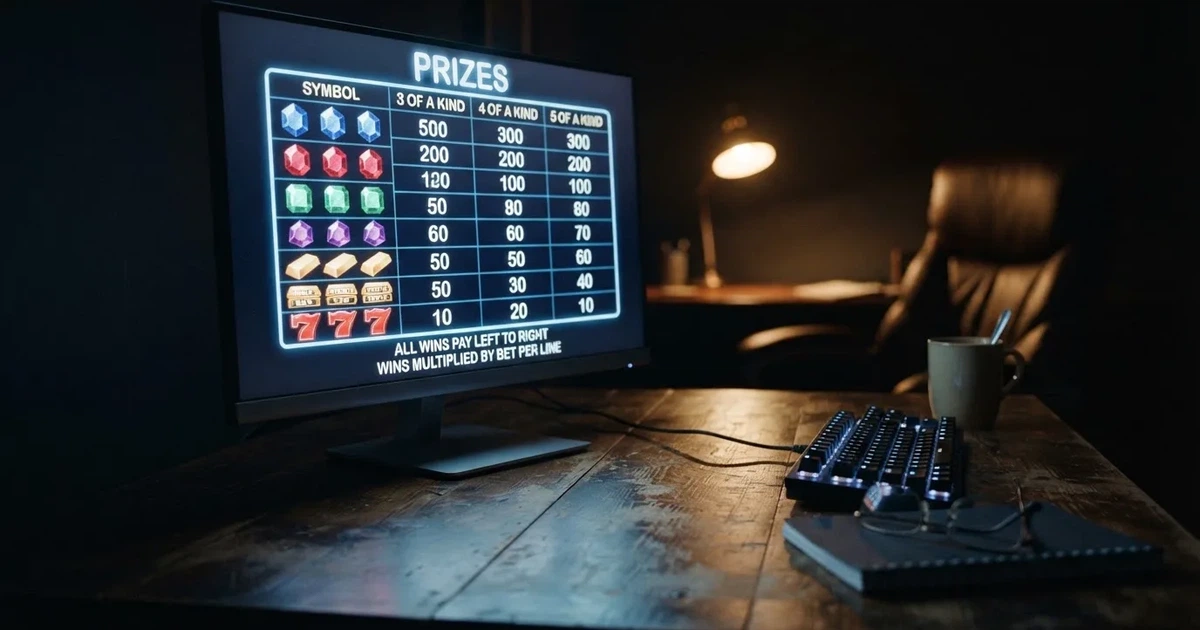
This page sets out both shelves honestly — what Wazdan actually makes, where Australian players can lawfully encounter those mechanics, and which offshore brands have drawn formal warnings. It is built for a reader weighing an offer rather than accepting one.
Current as of 8 November 2026 against the ACMA formal-warning register and the Interactive Gambling Act 2001 as in force in Australia.
Table of Contents
- Responsible play: the supports that work even if a site does not
- Deposits, withdrawals and payout speed at sites marketing Wazdan titles
- Bonuses and free spins: what the offers actually cost
- Mobile and apps: Wazdan titles on a phone
- Wazdan as a studio: catalogue, mechanics and the Australian connection
- The offshore shelf: how to read a list of “best” Wazdan casinos in Australia
- Operators: every brand the ACMA has formally warned
- The Australian legal frame: what the Interactive Gambling Act actually does
- Frequently asked questions
Responsible play: the supports that work even if a site does not
Wazdan titles carry the same structural risk as any other online slot: a house edge that compounds over time, volatile bonus mechanics that can look generous for ten spins and brutal for ten thousand, and a withdrawal system held by an operator the player cannot compel. Offshore sites accept Australian deposits without giving Australian protections. The supports below do not depend on which site is open in the tab.

Gambling Help Online runs the National Gambling Helpline on 1800 858 858, free and open around the clock, with web chat and email counselling alongside it. State and territory services sit behind it: New South Wales (Gambling Help NSW), Victoria (Gambler’s Help), Queensland (Gambling Help Queensland), Western Australia (Drug & Alcohol Office gambling line), South Australia (Problem Gambling Help), Tasmania (Holyoake), the ACT (Gambler’s Anonymous and the ACT Health gambling support line) and the Northern Territory (Amity Community Service). Each runs its own self-exclusion register for the venues it covers — pubs, clubs, casinos and TABs.
BetStop, the National Self-Exclusion Register, has been live since August 2023 and lets a person exclude themselves from every Australian-licensed online and phone wagering service in one registration. That is a meaningful protection against legal bookmakers. It is not a protection against offshore casino sites — those operators are not connected to BetStop, so an exclusion there does not stop a player opening an account with the brands reviewed later in this guide. The register binds who it binds, and offshore is not on the list.
The page returns to offshore risk in the section on legality, but the responsible-play section is the right place to name the support line once: 1800 858 858, free, 24/7. The maths in the bonuses section makes the case for why that line matters, but the line itself stands independently of any operator.
Deposits, withdrawals and payout speed at sites marketing Wazdan titles
Offshore sites that carry Wazdan slots tend to handle payments the way offshore sites handle everything: quickly into the casino, slowly and conditionally out. The settled pattern, drawn from the operator terms these brands publish and from the complaints that surface in player forums, runs through four channels.

Card payments — Visa and Mastercard debit — are the most common deposit route. Withdrawals back to a card are accepted by some operators and refused by others; where accepted, the published window sits between one and three business days after the casino’s internal “pending” period, which is typically another one to three days. Some brands have dropped card withdrawals entirely and route cashouts through bank transfer only.
Bank transfer and wire is the fallback for larger amounts and the only option most brands offer above roughly A$5,000. Settlement runs three to seven business days for domestic transfers within Australia, longer for international wires. Fees vary; some operators absorb the cost, others deduct it from the withdrawal.
E-wallets (Skrill, Neteller, MiFinity, Jeton) advertise the fastest payouts — some operators quote 24 hours once a withdrawal is approved — but they come with their own conditions. Bonus eligibility is often restricted for e-wallet deposits, and some brands exclude e-wallet deposits from welcome offers entirely. KYC checks still apply, and the e-wallet account has to be in the player’s name.
Crypto (Bitcoin, Ethereum, Litecoin, Tether) is offered by several offshore brands that carry Wazdan titles and is increasingly the marketing hook — “instant payouts” in the banner. The blockchain leg is fast; the casino’s processing queue is not. Approval still takes the same hours it would for any other method, and the on-chain transfer only completes after approval. Crypto also sits outside the Australian rules on payments: since 11 June 2024, digital currency has been banned as a payment method for licensed online wagering in Australia. The ban targets the licensed operator, not the player, but a casino asking for Bitcoin from an Australian customer is operating outside that regime and offers no chargeback path if a withdrawal stalls.
Two timing figures recur in marketing copy. The first is “instant withdrawals” — usually a reference to the period after approval, not the period before. The second is “24-hour payouts” — the figure most often achieved for e-wallets on small amounts once KYC has cleared. Neither figure survives contact with a first withdrawal, where document checks commonly add one to three days to whatever the banner said.
The deeper point for a reader weighing a Wazdan-marketing casino is structural: the offshore operator holds the balance, sets the verification standard, and decides when — or whether — funds leave. There is no Australian disputes body to escalate to, no AFCA-style ombudsman, and no local regulator to compel a payout. Speed of deposit is consistent because the casino wants deposits; speed of withdrawal is what the casino chooses to permit, not what the player has contracted for.
Bonuses and free spins: what the offers actually cost
Wazdan-marketing casinos use the same promotional toolkit as any other offshore site: deposit-match bonuses, free-spin packages, no-deposit chips, reload offers and loyalty rewards. The catalogue of titles the bonuses can be spent on almost always includes Wazdan slots; the catalogue of terms the bonus carries is where the cost lives.
A typical first-deposit package bundles a 100% match up to a stated cap with a batch of free spins, sometimes on a named Wazdan title like 9 Coins or Power of Gods: Egypt, and sometimes on a generic “Book of” slot the casino has rotated in. The headline figure is the easy part. The cost is in three places:
Wagering requirements sit between roughly 35x and 50x the bonus amount, occasionally higher. A A$500 bonus at 40x means A$20,000 in qualifying wagers before any of the bonus balance converts to withdrawable cash. Free-spin winnings usually carry their own multiplier — 30x to 45x is ordinary — and that multiplier applies to whatever the spins returned, not to the bonus balance.
Game weighting determines how much each spin counts toward clearing the requirement. Slots almost always contribute 100%; table games and live casino commonly contribute 10% or 0%; some Wazdan jackpot titles are excluded entirely. The weighting lives in the bonus terms page, not in the offer banner, and it is the page a reader must read before the deposit, not after.
Maximum bet and maximum cashout caps are common. A A$5 maximum bet while a bonus is active sounds harmless until a single spin over the limit voids the bonus and any winnings attached to it. Cashout caps on free-spin wins — A$100 to A$200 is typical — mean anything the spins returned above the cap is removed at conversion. The cap is the difference between a withdrawal that lands and one that disappears.
No-deposit bonuses read as free money and behave as a loss-leader. The bonus amount is small — typically A$10 to A$30, or 20 to 50 free spins on a single named slot — and the wagering multiplier is steep (50x to 70x is not unusual). Cashout caps apply almost universally. The economic purpose of a no-deposit offer is to put a real-money stake in the player’s hand with a withdrawal barrier high enough that the casino’s expected loss on the offer is minimal.
Reloads, cashback and loyalty rewards follow the same logic at lower intensity: smaller bonuses, lower caps, similar wagering. The mathematics of every promotional offer on an offshore casino is the same — the bonus increases the amount the player must wager before a withdrawal is possible, the wagering multiplier determines how much of an increase, and the cashout cap determines how much of the eventual balance can actually leave. None of this is unique to Wazdan-marketing brands. It is the industry’s standard packaging. The standard packaging still costs what it costs.
Mobile and apps: Wazdan titles on a phone
Wazdan builds in HTML5, and the studio’s portfolio runs in a mobile browser without a separate download. That much is true across every operator in the offshore shelf and across the social-casino apps where the same titles sometimes appear as freemium content.
The practical experience of opening a Wazdan slot on a phone, through an offshore casino account, is shaped by three things. The first is the casino’s mobile site, not by Wazdan itself. Page weight, lobby layout, deposit flows and bonus claim flows are the operator’s work. A heavy lobby with carousels and overlays adds load time the Wazdan game itself does not need. The second is the connection — HTML5 slots are bandwidth-light compared to live dealer streams, but a weak connection still produces stutters during the bonus-round animations that several Wazdan titles lean on. The third is the operating system. iOS Safari and Android Chrome handle the titles without issue; embedded browsers inside social apps occasionally strip sound or pinch the reel layout.
Dedicated casino apps exist for some offshore brands but not for the Wazdan studio itself. Apps give slightly faster loading and push notifications for promotions; they also sit in app stores under gambling licences held in Curaçao or similar jurisdictions and require the user to override the store’s regional restrictions on real-money gambling apps in Australia. The browser path avoids that step and gives the same games.
For Australian players considering a free-play Wazdan experience, the licensed land-based shelf — pubs, clubs and casinos — runs Wazdan-style mechanics on physical poker machines, and several Australian studios (Aristocrat among them) publish mechanics with the same adjustable-volatility, hold-and-respin and collect-to-infinity features Wazdan uses online. The screen is a chair at a venue, not a phone in a hand, and the protections in the responsible-play section apply.
Wazdan as a studio: catalogue, mechanics and the Australian connection
Wazdan was founded in 2010 and is registered in Malta. The studio holds a Malta Gaming Authority B2B licence (MGA/B2B/206/2011) and a UK Gambling Commission account, and reports being certified or licensed in more than 30 jurisdictions — Ontario, New Jersey, Michigan, West Virginia, Sweden, Romania, Greece, Denmark among them. The studio describes its own footprint as 400+ games across 40+ markets, with more than 2,500 operator partners and over 250 staff.
The catalogue breaks into four rough families. Classic fruit slots — 9 Coins, Hot Slot, Sizzling Eggs — keep the three-reel-and-payline shape and add adjustable volatility. Hold-and-respin titles built around the Hold the Jackpot bonus round (9 Coins, Power of Gods series, Sun of Fortune) concentrate all wins inside the bonus and leave the base game paying nothing, with prizes layered into jackpot tiers. Cluster and ways-pay slots (Larry the Leprechaun, Burning Reels, Los Muertos) drop the payline structure and pay on adjacent symbols or fixed patterns. Branded and licensed titles — including the recently released Power of Gods: Hades, the Valhalla series and Sizzling Moon — lean on theme and animation rather than new mechanics.
Three mechanics recur across the catalogue. Volatility Levels, introduced in 2018, lets a player pick low, medium or high volatility from inside the game — the same RTP is preserved across settings but the variance profile shifts. Hold the Jackpot is the studio’s flagship bonus: a grid-based re-spin feature where cash and jackpot symbols lock in place, with each non-jackpot spin resetting the counter. Collect to Infinity and Cash Infinity are companion mechanics that allow sticky symbols to accumulate value across an extended bonus window. The trio is what an experienced player recognises as Wazdan-shaped, and what an offshore casino uses to populate its “new games” carousel.
9 Coins is the closest thing to a flagship. The published RTP is 96.06%, volatility is medium-to-high, and the maximum win is 500x the bet. The base game returns nothing on its own; every prize lives inside the Hold the Jackpot bonus. That single structural choice — bonus-concentrated payouts with a hard ceiling on the bonus — is why the title is heavily marketed. It produces the small-print disappointment of “almost” a win on nearly every spin, and the bonus-rounds large enough to make a player remember them.
The Australian connection runs through land-based venues, not online. Aristocrat Leisure — founded in 1953, headquartered in North Ryde, listed on the ASX since 1996 — is Australia’s largest gambling-machine manufacturer. Its online arm (Aristocrat Interactive, formed in April 2024 from Anaxi and the acquired NeoGames group) covers real-money and social casino; its core business remains the electronic gaming machines in Australian pubs, clubs and casinos. Several Aristocrat titles use adjustable-volatility, hold-and-respin and collect-style mechanics comparable to Wazdan’s, and they are available legally in every Australian state and territory through licensed venues. The mechanics a reader sees online on a Wazdan site are not unique to offshore play. They exist onshore, on a machine in a licensed venue.
Other studios carry similar mechanics through the offshore shelf. Betsoft’s Good Girl Bad Girl 2 publishes a 96.22% RTP with “Very High” volatility and a 15.59% hit rate on a 5×3 grid. 1spin4win — Curaçao-licensed, founded by iGaming veterans — runs a portfolio of 190+ lightweight HTML5 slots. These studios are the ones whose names appear alongside Wazdan in offshore lobbies; their presence is part of how the shelf presents itself as a real product line.
The offshore shelf: how to read a list of “best” Wazdan casinos in Australia
Every list that ranks Wazdan casinos for Australian players is built from the same pool: offshore brands licensed in Curaçao or similar jurisdictions, none of which can lawfully take an Australian real-money casino deposit. The ranking criteria these lists use — bonus size, game count, payout speed, mobile experience — describe the offer, not the legal status. The legal status is identical across every brand on every list: prohibited.
The criterion that actually separates one offshore option from another is therefore not “which is best” but “which has the cleanest record, the clearest terms and the least friction at withdrawal”. That is a thinner question than marketing suggests, and it is the only one worth asking. A first-time reader can use four checks:
Licence and operator identity. Who holds the licence, in which jurisdiction, and what is the operator’s legal name? A Curaçao licence is the standard; a Malta or UK licence is a higher bar for player recourse but does not change the Australian legal status. The operator name on the licence should match the entity named on the casino’s terms page.
ACMA standing. Has the ACMA issued a formal warning over this brand? The register is public and includes the operator entity, the brand and the date. A brand on that register has been formally told to stop offering prohibited services to Australians; continuing to do so after a warning is the action the ACMA takes blocking requests over.
Bonus terms. What is the wagering multiplier, the game weighting, the max bet during bonus play, and the max cashout on free-spin winnings? These four numbers are the whole bonus, written honestly or otherwise.
Withdrawal history. Independent player forums and complaint aggregators give a truer picture than the operator’s own testimonials. A pattern of stalled withdrawals, reversed wins on bonus-abuse accusations, or KYC loops on cashout is a stronger signal than any “fast payout” badge.
The brands reviewed in the section that follows are not a ranking. They are the ACMA’s own list — every one has been the subject of a formal warning, with the operator entity and date published by the regulator. A reader who still intends to use one of these sites can at least do so with the warning on the record.
Operators: every brand the ACMA has formally warned
Each entry below is built the same way: the brand, the operator entity as named by the ACMA, the date of the formal warning, and a verdict on what the entry tells a reader. The verdict answers the question this block establishes — what the warning changed, what the operator has not addressed, or what kind of player still sees a fit despite the record. None of these brands is recommended. Each is described, with the ACMA action the public record carries.
| Brand | ACMA action and date | Operator named by the ACMA | Subject support |
|---|---|---|---|
| RocketPlay | Formal warning, March 2026; earlier warning May 2022 | Pulsup Ltd (RocketPlay); earlier Dama N.V. | — |
| Level Up Casino | Formal warning, May 2022 | Dama N.V. | Wazdan listings on partner pages |
| Woo Casino | Formal warning, March 2025 | Dama N.V. | — |
| Spirit Casino | Formal warning, May 2025 | Dama N.V. | — |
| National Casino | Formal warning, July 2025 | Consolutetish S.R.L. | Betsoft, Pragmatic Play, Aristocrat listings |
| Bizzo Casino | Formal warning, July 2025; earlier 2022 | Consolutetish S.R.L.; earlier TechSolutions | — |
| Ignition Casino | Formal warning, July 2025 | Bamboo Media | — |
| Instant Casino | Formal warning, February 2025 | EOD Code SRL | — |
| Jackbit | Formal warning, April 2026 | Ryker B.V. | — |
| Casino Intense | Formal warning, April 2025 | Sterplay Holding Ltd | 1spin4win, Aristocrat, UKGC-listed providers |
| Sky Crown | Formal warning, September 2022 | Hollycorn N.V. | — |
The table is the ACMA’s own register reproduced in comparison form. The third column is the operator entity the regulator named — that is the legal person on the wrong side of the Interactive Gambling Act, not the marketing name on the website. The fourth column is whether the brand’s own materials reference Wazdan or comparable providers; where research did not confirm it, the cell is empty rather than invented. The verdict on each brand follows.
RocketPlay
Two formal warnings, four years apart. The first, in May 2022, named Dama N.V. as operator across six brands including RocketPlay. The second, in March 2026, named Pulsup Ltd over RocketPlay specifically. The same brand, two operator entities, the same prohibited service. A reader who arrived at the site in 2026 and saw a Curaçao licence in the footer was looking at a brand the ACMA had warned twice over. The record makes the warning the point, not the licence.
Level Up Casino
The May 2022 warning to Dama N.V. covered six brands; Level Up was one of them. Wazdan’s own partner pages list Level Up among the operators carrying the studio’s titles, which is the only source for that relationship and is presented here as a listings reference rather than as the casino’s own claim. The legal position is unchanged: an Australian-facing brand under formal warning, carrying Wazdan content it cannot lawfully offer.
Woo Casino
The March 2025 warning to Dama N.V. named Woo Casino specifically. Dama N.V. is the most-warned operator on this list — May 2022, March 2025, May 2025 — which makes the group a useful object lesson in how formal warnings work. They are public, they name the operator and the brand, and the ACMA follows them with blocking requests against individual domains. A licence in a friendly jurisdiction does not require the operator to stop.
Spirit Casino
The May 2025 warning covered Spirit Casino alongside the same Dama N.V. umbrella. There is no evidence on the public record that Spirit Casino ceased marketing to Australians after the warning, because the ACMA’s next action against the group came in the same year. The pattern is the warning.
National Casino
The July 2025 warning named Consolutetish S.R.L. across National Casino and Bizzo Casino. National Casino’s partner pages reference Betsoft, Pragmatic Play and Aristocrat titles, all of which appear in the same offshore shelf; Wazdan content on the brand is not separately confirmed. The warning is the dominant fact.
Bizzo Casino
Two warnings, two operators: Consolutetish S.R.L. in July 2025, and TechSolutions (CY) Group Limited / TechSolutions Group N.V. in 2022. The 2022 warning covered a longer brand list; the 2025 warning came back to the same operator name on two of those brands. The pattern is identical to RocketPlay’s and is worth noting for what it says about operator rebranding after enforcement — new entity, same product, same warning.
Ignition Casino
The July 2025 warning named Bamboo Media as the operator behind Ignition Casino. Ignition is a long-running offshore brand in the Australian market and has carried Wazdan and comparable studio content through multiple operator changes. The 2025 warning is the most recent action on the public record.
Instant Casino
The February 2025 warning named EOD Code SRL. The brand positions itself as a fast-payout casino and markets Wazdan content alongside other studios; the ACMA’s action came less than a year before this page was written.
Jackbit
The April 2026 warning named Ryker B.V. across Jackbit and CasinOK. Jackbit is a crypto-first casino — Bitcoin, Ethereum and Tether deposits — which puts it squarely against the Australian ban on digital currency for licensed online wagering. The offshore status means the ban does not apply directly to the operator, but it does describe the regulatory distance the site operates at.
Casino Intense
The April 2025 warning named Sterplay Holding Ltd. Casino Intense’s partner pages reference 1spin4win, Aristocrat and UK Gambling Commission-listed providers — the last a useful signal about the underlying content, but not a signal about Australian legality. The ACMA action is the controlling fact.
Sky Crown
The September 2022 warning named Hollycorn N.V. across Sky Crown and Blue Leo. It is the oldest warning in this set by date, and Hollycorn N.V. has not reappeared in the ACMA register since — not because the brand stopped, but because the regulator does not re-warn brands it has already addressed unless the conduct continues in a way that triggers a new round.
The Australian legal frame: what the Interactive Gambling Act actually does
Online casino is prohibited in Australia. The Interactive Gambling Act 2001 (IGA), strengthened by the Interactive Gambling Amendment Act 2017, makes it an offence to provide online casino games, online pokies or in-play betting to a person physically in Australia. The offence sits with the provider — the offshore operator, the platform, the white-label company behind it — not with the player. No state or territory issues licences for online casino games. What is licensable is wagering on races and sport placed before the event, lotteries and keno, and in practice the licensed online bookmakers are based in the Northern Territory for tax reasons and regulated by the Northern Territory Racing and Wagering Commission.
The enforcement side runs through the ACMA. The regulator investigates complaints, issues formal warnings to operators it identifies as offering prohibited services to Australians, and asks Australian internet service providers to block individual domains. A blocking request is a black-and-white order to the ISPs: this site, this URL pattern, do not resolve. As of the regulator’s most recent public count, 1,751 illegal gambling and affiliate marketing websites have been blocked since the first blocking request in November 2019 — a running total that the ACMA updates as new rounds are reported. A June 2026 round added 12 more sites to the list: 7Signs, ChromaBet, Donbet, Duospin, Freshbet, Slots Gem, Jacks Club, Lucky Start, Pointsbetz, Spinrise, Vinyl Casino and Wildsino. The blocking rate over the period from November 2019 to mid-2026 works out to a band of roughly 220 to 230 sites blocked per year on average, with the actual annual figure varying as the ACMA’s enforcement intensity has shifted and as operators have cycled through new domains to replace blocked ones.
The economic context is large enough that the enforcement matters. H2 Gambling Capital’s 2025 report estimates that Australians lose about A$3.9 billion a year to illegal gambling sites, and that the share of gambling going through legal channels fell from 74% in 2021 to 64%. The two figures are related — the offshore shelf is where the lost share went — and they are why the ACMA’s blocking programme exists at the scale it does.
Payment rules tighten the picture from another direction. Since 11 June 2024, credit cards, credit-related products and digital currency have been banned as payment methods for licensed online wagering in Australia, with penalties up to A$247,500 for operators that breach. Legal deposit routes for a licensed bookmaker are debit card, bank transfer, PayID/Osko and BPAY. A casino asking an Australian customer for a credit card or a Bitcoin deposit is not operating inside those rules. It is also not bound by them — the offshore operator does not hold an Australian licence to lose — but the player is left with a deposit route that has no chargeback path and no Australian regulator to complain to.
The Interactive Gambling Amendment (Gambling Reform) Bill 2026 passed Parliament on 19 August 2026. Its advertising and inducement measures commence on 1 January 2027 — law with a start date, not yet in force on a page dated . The reform package extends the regulatory reach of the existing regime; it does not legalise anything the IGA already prohibits.
The tax position is straightforward and worth naming once. Gambling winnings of a recreational player are not assessable income in Australia (section 6-5 ITAA 1997), and gambling losses are not deductible. The position changes if the ATO treats the gambling as a business, which the Tax Office has done for a small number of professional gamblers over the years; that is a different matter from the recreational play this page is built around.
Frequently asked questions
Is Wazdan legally available to players in Australia?
No. The Interactive Gambling Act 2001 prohibits the provision of online casino games — including Wazdan slot titles — to people in Australia, and no Australian state or territory licences that product. Every brand reviewed on this page has been the subject of a formal ACMA warning. What does exist is licensed wagering on sport and racing, lotteries and keno, and land-based poker machines in clubs, pubs and casinos.
What kinds of games does Wazdan make?
Wazdan produces online slots — more than 300 by the studio’s own count, spanning classic three-reel fruit titles, hold-and-respin bonus games like 9 Coins, cluster-pays slots and branded releases. The studio’s signature mechanics are adjustable in-game volatility, the Hold the Jackpot bonus round, and the Collect to Infinity / Cash Infinity symbol mechanics. All Wazdan titles run in HTML5 on desktop and mobile browsers.
Are Wazdan games offered at land-based venues in Australia?
Not under the Wazdan brand, which is an online-only studio. The mechanics Wazdan popularised — adjustable volatility, hold-and-respin, collect-to-infinity — appear across Australian poker machines from manufacturers including Aristocrat Leisure, the country’s largest gaming-machine maker. Those titles are available legally through licensed pubs, clubs and casinos in every state and territory.
How can Australians check whether a Wazdan title is fair before considering play?
For an online Wazdan title, the studio publishes an RTP for each game on its own site (for example, 96.06% on 9 Coins) and is certified in over 30 jurisdictions. The fairness question for an Australian player, however, is not about the game — it is about the operator. The ACMA register of formal warnings lists every brand that has been told to stop offering prohibited services to Australians, and that register is the appropriate place to check before any deposit.
Why do offshore sites keep advertising Wazdan games to Australian visitors?
Because Australian visitors deposit. H2 Gambling Capital’s 2025 report estimates A$3.9 billion a year in losses to illegal gambling sites, and the share of Australian gambling going through legal channels has fallen from 74% in 2021 to 64%. The economic incentive to keep marketing is significant, and the offshore jurisdiction means Australian enforcement is the only restraint on the practice.
What should an Australian do if they see a Wazdan game promoted by an unlicensed site?
The most useful step is to report the site to the ACMA through its online complaint form — those reports feed the enforcement pipeline that has produced 1,751 blocking requests since November 2019. For a player who has already deposited and is trying to withdraw, the practical options are limited: there is no Australian disputes body for offshore brands, and chargeback is the only consumer-protection route most cards offer. Gambling Help Online (1800 858 858, 24/7) and BetStop are the right supports if the offshore site is part of a wider pattern of play.