
Quickspin casinos for Australian players: a guide written around the IGA, not around the marketing
Quickspin is a real slot studio with a real catalogue, but for an Australian reader the word “casino” sitting next to it is the part that needs slowing down. Online casino games cannot be licensed to Australian customers under the Interactive Gambling Act 2001, and no state or territory issues that licence. What an Australian player actually finds when they type “Quickspin casino” into a search bar is a list of offshore sites that hold no Australian licence, accept Australian deposits, and have been on the receiving end of formal warnings from the ACMA for doing so. That gap between the studio and the place where its games are sold is what this page is built around. The honest answer to “best Quickspin online casinos Australia 2026” is not a ranked top eleven of places to play. It is a map of what is legal, what is not, and where the licensed alternatives sit.
Data current as of 8 November 2026, cross-checked against the Australian Communications and Media Authority’s register of formal warnings and blocking requests.
Table of Contents
- Where Australian players actually stand on Quickspin titles
- Staying in control while reading this guide
- How deposits and withdrawals actually work at the offshore end
- What a Quickspin bonus actually costs in real time
- How Quickspin titles run on a phone
- What the games themselves actually look like
- How a Quickspin shortlist is actually built
- What the broader Australian landscape actually looks like
- The reading path for an Australian player weighing Quickspin titles
- What the IGA actually says, and what it does not
- Operator-by-operator: what each ACMA warning actually changes
- Why offshore sites keep advertising Quickspin to Australian visitors
- What to do if a reader sees a Quickspin game promoted by an unlicensed site
- Frequently asked questions
Where Australian players actually stand on Quickspin titles
Quickspin itself is a legitimate supplier. Founded in Stockholm in 2011 by three developers, it has been a subsidiary of Playtech since 2016 and now operates from offices in Stockholm, Sliema and Kyiv with roughly 100 staff. The studio holds a Malta Gaming Authority Critical Gaming Supply Corporate licence (MGA/CRP/137/2007, issued 6 December 2018), and its parent Playtech holds an active UK Gambling Commission account (number 38516) covering remote casino and gambling software. None of that licences it to offer online casino games to a person physically in Australia. The Interactive Gambling Act 2001, tightened by the Interactive Gambling Amendment Act 2017, makes the supply of online casino games and online pokies to Australian customers a prohibited interactive gambling service. Quickspin can be a licensed supplier in Malta or the UK, and its games can still be unlawful for Australian residents to play on an offshore site carrying them. Those two facts are not in tension; they sit on top of each other.

What an Australian reader sees online is the second layer: the offshore casino brand. There is no Australian licence for that product, so the brands that carry Quickspin titles and accept Australian players operate outside the Australian consumer-protection framework. The ACMA has issued formal warnings to many of them. Some carry the Quickspin name explicitly in their lobby; others carry it through an aggregator without ever naming it on the front page. The list further down this page is built from the ACMA’s own publication of those warnings, not from affiliate rankings or marketing material.
Staying in control while reading this guide
If Quickspin-style slots are the kind of product a reader came here for, the first page worth opening is the one about staying in control. The Australian system has a national register and a national helpline, and both are built around the licensed wagering services the IGA actually permits — sports and racing bookmakers, lotteries and keno. Offshore casinos are not connected to either, which matters when something goes wrong.
BetStop, the National Self-Exclusion Register, has been live since August 2023 and binds every Australian-licensed online and phone wagering service. Registering once with BetStop tells every licensed operator to refuse the person’s account and not to send marketing. An offshore casino is not on that list, so BetStop does not stop an offshore site from accepting a deposit — that is one of the practical differences between a licensed bookmaker and an unlicensed casino, and it is the reason a player who has self-excluded and then plays at an offshore brand is still gambling rather than honouring the exclusion. The National Gambling Helpline is 1800 858 858, free, 24/7, with web chat at Gambling Help Online. State and territory services sit behind it, including those in New South Wales, Victoria, Queensland, Western Australia, South Australia, Tasmania, the Australian Capital Territory and the Northern Territory, each running its own self-exclusion scheme for the venues it regulates.
A reader who only plays land-based poker machines in a club or pub has a different set of registers: state-level venue exclusion. Those schemes cover the machines inside licensed Australian venues. They do not reach an offshore site either. The practical point is that every protection on the Australian menu is jurisdiction-bound, and an offshore casino is outside every jurisdiction the menu names.
The choice a reader is making, in other words, is not just which bonus to chase. It is which consumer-protection regime they want to be inside when the bonus does not pay out. Australian-licensed wagering services have an Australian complaints body; offshore casinos have whatever complaint route they publish on their own site, which is none of the reader’s to enforce.
How deposits and withdrawals actually work at the offshore end
A reader looking for a “Quickspin deposit bonus” or a “Quickspin no deposit bonus” is searching for an offer that an Australian-licensed wagering operator cannot lawfully give at all, because the IGA’s advertising and inducement rules cover online casino games specifically. Credit cards, credit-related products and digital currencies are banned as payment for licensed online wagering since 11 June 2024, with penalties of up to A$247,500 for operators. The legal deposit routes for a licensed Australian wagering service are debit card, bank transfer, PayID, Osko and BPAY.
The offshore sites that carry Quickspin titles run on a different menu. They typically accept Visa and Mastercard debit, a handful of e-wallets, bank transfer and, on a sizeable minority, cryptocurrencies. A site asking an Australian customer for a credit card or a crypto deposit is operating outside the Australian rules, which is one signal worth treating as informative rather than as a feature. Withdrawal times at the offshore end are usually framed as fast: a few hours to a few days once the account is “verified”, with a small number of brands promising same-day settlement. The verification step is the part where an Australian player is most likely to discover that the offshore operator holds the only copy of the ID document and the only interpretation of its own terms, and that there is no Australian complaints body to appeal to if the verification stalls with a balance on the account.
The most useful comparison a reader can make on this shelf is not between two brands’ e-wallet coverage. It is between the deposit route itself and the licence behind it. A PayID deposit to a Northern Territory-licensed wagering service, with a complaints path through an Australian body if the operator fails, is a different product from a USDT transfer to an offshore casino with the operator’s own terms as the only rule book. The price of the bonus is the same shape; the recourse is not.
What a Quickspin bonus actually costs in real time
A “free spins” offer tied to a Quickspin title at an offshore site reads as marketing copy until the wagering requirement is read. A typical structure across the offshore market is a deposit match on the first deposit, plus a number of free spins on a named Quickspin title, with winnings from those spins carried as bonus money subject to a wagering multiple — often somewhere between 35x and 50x the bonus amount — and a maximum cashout ceiling that is lower than the headline figure implies. Where research did not surface a number for a specific brand, the qualitative picture is the same: the headline is generous, the small print is not.
The arithmetic that makes the offer legible is straightforward. If the bonus is A$200 and the wagering requirement is 40x, the player must turn over A$8,000 before any withdrawal. At a 20-cent spin that is 40,000 spins, which at a five-second interval runs about 56 hours of continuous play. The expected cost to the player, on a slot with a published return-to-player of 96%, is 4% of the turnover, which is around A$320 in statistical loss over those 56 hours. That is the offer’s price, and it is paid in time and in expected loss before a cent is withdrawn. The marketing figure stays the marketing figure; the arithmetic makes it round.
Two caveats carry across every offshore bonus in this space. First, an offer that looks heavier than a competitor’s is usually heavier because the wagering multiple is higher or the max cashout is lower, and the small print is where that lives. Second, an offshore bonus paid in bonus money is paid under the offshore operator’s terms, with no Australian complaints body as a backstop. A reader who treats the bonus as the headline and the terms as the price will read every offer correctly. A reader who treats the bonus as the price will not.
How Quickspin titles run on a phone
A “Quickspin mobile casino” search is, in practice, a search for HTML5 slot titles loading in a mobile browser. Quickspin’s catalogue has been HTML5-first for years, and the titles run on both iOS and Android without a dedicated app on the player side. Offshore casinos that carry the studio either offer a responsive website or wrap that responsive website in a downloadable app. The downloadable app is the part to look at carefully: an offshore casino’s mobile app is distributed outside the Australian App Store and Google Play rules for real-money gambling apps, and the install path is typically a direct download from the operator’s own site rather than through an Australian-channel storefront.
The performance question — load time, frame rate, battery use — is a slot-by-slot question rather than a studio-wide question, and Quickspin’s catalogue is heavy enough that load times vary. The substantive point is that the phone experience at an offshore brand is functionally identical to the phone experience at any other offshore brand, because the studio is the same and the wrapper is broadly similar. Where a difference shows up it is in the wrapper: an app that holds a session over a poor connection, an app that drains the battery harder, an app that the reader installed once and cannot easily remove because it lives outside the standard app management path. Those are not Quickspin issues; they are operator choices.
What the games themselves actually look like
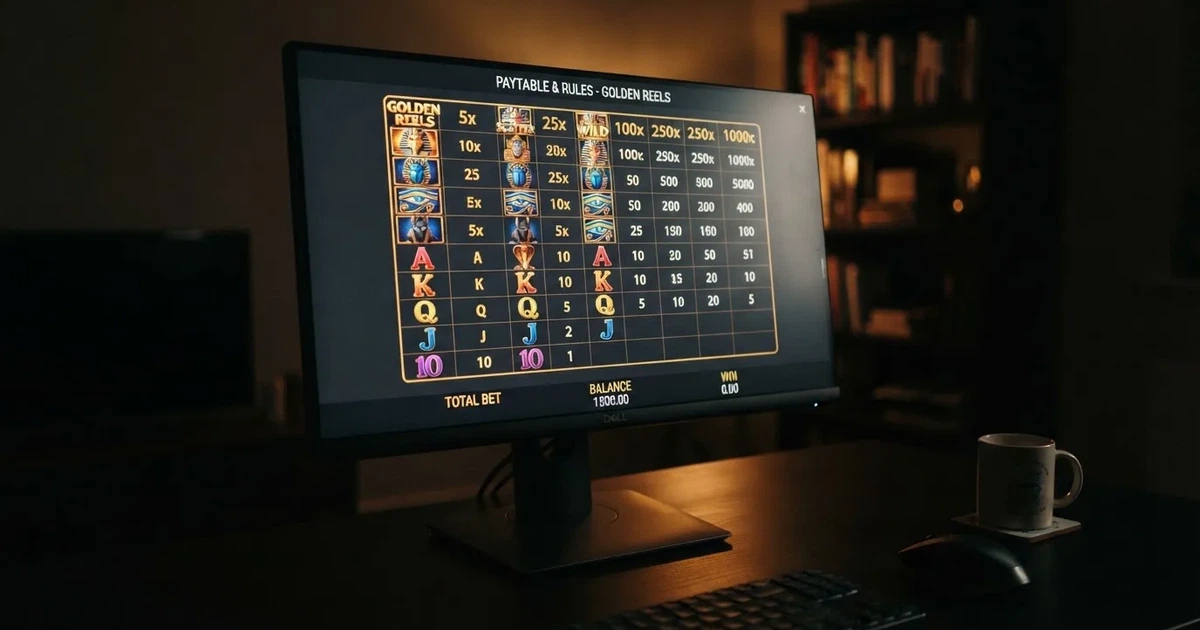
Quickspin’s catalogue is built around video slots, with a handful of table games and scratchcards behind them. The studio’s defining feature is paytable transparency: each title carries a clearly stated return-to-player figure and a volatility tag, with the rules and feature mechanics described on the game’s information page. Quickspin also publishes an “Achilles” series of mechanics — the kind of recurring engine (achievements, free-spin triggers, feature buy options where the regulator permits them) that runs across several titles rather than being rebuilt per game.
The volatility spectrum Quickspin uses runs from Low through Medium and High to Very High. A “Very High” volatility title pays out less often and in larger clusters when it does; a “Low” volatility title pays out more often and in smaller clusters. The trade is between session length and session shape, and it is the same trade across the whole catalogue. The published return-to-player figures on Quickspin titles sit, on the titles where research carries a number, in a band the rest of the market also sits in — mid-90s as a working range, with individual titles either side of that.
For an Australian reader the paytable question leads to a regulatory question: which body, if any, has independently tested the random number generator on the title the reader is looking at? Quickspin’s Malta licence requires independent testing by an approved Maltese lab; the UK account on the Playtech side carries its own testing regime. An Australian player, however, is not protected by either of those licences, because the product is being offered by an offshore casino that is not bound by either regulator. The published RTP and volatility tags are still informative — they tell the reader what the maths of the game is — but the regulator behind the maths is not the regulator in front of the player.
Quickspin and comparable studios
| Studio | Year Founded | HQ | Portfolio Scale |
|---|---|---|---|
| Quickspin | 2011 | Stockholm | Moderate |
| 1spin4win | 2021 | Curaçao | 190+ slots |
| Betsoft | 2006 | Malta | 200+ games |
| BGaming | 2018 | Malta | 250+ games |
A reader who has been pointed at Quickspin specifically has usually been pointed at it because of one or two titles, and a fair number of the same offshore brands that carry Quickspin also carry comparable catalogues from 1spin4win, BGaming and Betsoft, with Aristocrat titles sitting on the licensed Australian side rather than at the offshore end. 1spin4win, founded in 2021 and Curaçao-licensed, reports a portfolio of more than 190 online slots built in HTML5 and more than 1,000 operator partnerships. Betsoft, founded in 2006, catalogues more than 200 RNG games across slots, table games, video poker and specialty titles; its slot Good Girl Bad Girl 2 carries a published RTP of 96.22%, “Very High” volatility and a 15.59% hit rate on a 5-reel, 20-payline layout, while The Slotfather, live since 13 December 2012, sits at 95.69% RTP, “Medium” volatility and 8.17% hit rate across 5 reels and 30 paylines. BGaming, whose team has worked on games since 2012 and which launched as a brand in 2018, lists 250-plus certified games across video slots, video poker, lottery, card, scratch, crash and casual formats.
That breadth is useful for an Australian reader because it answers the question the offshore marketing pages usually answer with one word: Quickspin is one of several studios, not a category of its own. If the choice between studios is what the reader is weighing, the real comparison is between the published RTP and volatility of two specific titles from two specific studios, not between the brand names on the lobby.
Aristocrat Leisure sits on a different shelf. Founded in 1953 by Leonard Ainsworth and listed on the ASX in 1996 under the ticker ALL, it remains the largest gambling-machine manufacturer in Australia and the second-largest slot-machine manufacturer in the world behind International Game Technology. Its 2025 revenue was A$6.30 billion against a normalised net profit after tax and amortisation of A$1.55 billion, with 7,400 employees. Aristocrat develops electronic gambling machines, casino management systems, online real-money gambling technology, iLottery products and social casino games; its online arms are Product Madness (social games) and Aristocrat Interactive, the latter formed in April 2024 from the Anaxi unit combined with the newly acquired NeoGames group, which includes Aspire Global, BtoBet and Pariplay. Aristocrat Interactive is a regulated online real-money-gambling business; it is not a product for Australian casino customers, because Australian consumers are not a market the Interactive Gambling Act permits it to serve.
How a Quickspin shortlist is actually built
A “best Quickspin casinos Australia” list, in honest form, is not built the way an affiliate page builds one. Affiliate pages rank by the commission the operator pays the affiliate; the ACMA ranks by the warning it has issued over the operator. Two very different rankings. The criteria that survive a real comparison are short: which licence the operator holds and where that licence actually allows it to take customers from; whether the operator has been the subject of an ACMA formal warning, and on what date; what the published RTP on the named Quickspin titles is, and whether that RTP has been independently tested by the regulator behind the licence; what the bonus terms look like under the small print rather than the headline.
For an Australian reader that list collapses quickly, because the first criterion — licensed to take Australian customers — is one no offshore casino meets. The honest shortlist, on that criterion, contains zero offshore brands. The honest shortlist for someone who is willing to play on an offshore site is the list of ACMA action against the operator, with the date the warning was issued and the operator name on the warning. That list is the table below.
| Brand | Warning Date | Operator | Multi-studio Support |
|---|---|---|---|
| RocketPlay | March 2026 | Pulsup Ltd | — |
| Level Up Casino | May 2022 | Dama N.V. | Wazdan |
| Woo Casino | March 2025 | Dama N.V. | — |
| Spirit Casino | May 2025 | Dama N.V. | — |
| National Casino | July 2025 | Consolutetish S.R.L. | Betsoft, Pragmatic Play |
| Bizzo Casino | July 2025 | Consolutetish S.R.L. | — |
| Ignition Casino | July 2025 | Bamboo Media | — |
| Instant Casino | Feb 2025 | EOD Code SRL | — |
| Jackbit | April 2026 | Ryker B.V. | — |
| Casino Intense | April 2025 | Sterplay Holding Ltd | 1spin4win |
| Sky Crown | Sept 2022 | Hollycorn N.V. | — |
Two patterns sit inside that table. The first is that the same operator name can run several brands — Dama N.V. carries Level Up, Woo Casino, Spirit Casino and the original Rocketplay warning; Consolutetish S.R.L. carries National Casino and Bizzo Casino; Hollycorn N.V. carries Sky Crown and Blue Leo. A formal warning against one brand is a signal against the group, not just the URL. The second is the date pattern: warnings to Dama N.V. alone cover May 2022, March 2025 and May 2025, which means the same operator received a fresh formal warning after an earlier one. The ACMA escalates by blocking request once warnings fail, and the gap between warning and blocking is the practical window any reader using these sites is operating in.
The “Subject support” column carries what research could verify about Quickspin (or comparable studio) availability at each brand. Three of the eleven — National Casino, Casino Intense and Level Up Casino — appear on third-party listings from studios whose games they carry, with the rest carrying no verifiable Quickspin-specific listing. None of the eleven is licensed to take Australian customers. A dash in the Subject support column means the research did not turn up a listing, not that Quickspin titles are absent from the site; offshore lobbies change frequently and an absence in research is not the same as an absence on the site.
What the table does not say
Three things the table cannot carry, and which matter for the comparison.
The first is that ACMA action is not a comprehensive blacklist. The ACMA acts on complaints, on its own monitoring, and on referrals; a brand not on the table is not necessarily compliant, only not yet the subject of a formal warning. The second is that the table does not show whether the brand is currently accessible from an Australian IP address — Australian ISPs are directed by the ACMA to block individual URLs, and a blocked site can reappear at a new URL under the same operator. The third is that the table does not show what licence the offshore brand displays in its footer; an offshore licence in Curaçao or Malta is a real licence, and it licenses the operator to take customers in jurisdictions where that licence is recognised. Australia is not one of those jurisdictions for online casino games. A footer licence does not change the IGA’s application.
The blocking-rate arithmetic
The ACMA does not publish every block, but it does publish the running totals. As of June 2026, the ACMA reported that 1,751 illegal gambling and affiliate marketing websites had been blocked since the first blocking request in November 2019 — a span of roughly 80 months. That works out to a band of roughly 20 to 25 blocked sites per month across that period, with the rate accelerating from 2017 onward as enforcement strengthened and more than 230 unlicensed gambling services having left the Australian market since then. The arithmetic is presented as a band rather than a single figure because the underlying blocking is lumpy — a single ACMA round can request the block of a dozen sites in one notice, and the next month can pass without a new round. A reader looking for “is the ACMA catching up” reads the band differently from a reader looking for “is my specific site on the list”; the band answers the first question and the ACMA register itself answers the second.
The latest reported round, on 26 June 2026, asked Australian ISPs to block 12 more illegal gambling websites in a single notice: 7Signs, ChromaBet, Donbet, Duospin, Freshbet, Slots Gem, Jacks Club, Lucky Start, several other unlicensed services, Spinrise, Vinyl Casino and Wildsino. A round of 12 in one notice is, on the long-run average, about two-thirds of a normal month’s worth of blocks packed into one decision. The trend is not slowing.
What the broader Australian landscape actually looks like
Australia runs a federal prohibition on online casino games and a state-by-state licensing regime for everything else. The Northern Territory Racing and Wagering Commission regulates 52 of Australia’s online bookmakers — Sportsbet, Bet365 and Ladbrokes among them — under Northern Territory licences that are taken up primarily for tax reasons rather than because the operator’s customer base sits in the Territory. The commission has no full-time staff and meets once a month in Darwin, a structural detail that came up in an April 2026 ABC story on a Northern Territory bill to reform the de facto gambling regulator. That is the regulatory footprint behind the wagering services an Australian can lawfully use; the casino product the IGA prohibits is not on that footprint at all.
The licensed wagering services Australians can lawfully use cover pre-event betting on racing and sport, lotteries and keno. In-play betting — placing a bet after an event has started — sits on the prohibited side of the line. The 2026 reform package, the Interactive Gambling Amendment (Gambling Reform) Bill 2026, passed Parliament on 19 August 2026. Its advertising and inducement measures commence 1 January 2027. As of 2026 that reform is law with a start date, not yet in force; what an Australian reader sees online in 2026 is still the pre-reform regime.
H2 Gambling Capital’s 2025 report estimates that Australians lose around A$3.9 billion a year to illegal gambling sites, and that the share of gambling going through legal channels fell from 74% in 2021 to 64% — a ten-point drop in four years, on the H2 figures. That is the scale of what an “offshore casino” market is in Australia, and it is the reason the ACMA’s enforcement activity continues to grow rather than taper. The A$3.9 billion is also a useful comparison figure for the bonus arithmetic further up the page: an offshore bonus costing a player A$320 in expected loss per A$200 of bonus money is a per-player figure inside an aggregate that runs to billions across the whole player base.
The tax position is the one part of the regime that works in the player’s favour and is worth knowing. Gambling winnings of a recreational player are not assessable income under section 6-5 of the ITAA 1997, and losses are not deductible, unless the person carries on a business of gambling. A punter who plays Quickspin titles at an offshore casino and hits a win does not owe Australian tax on the win; the same punter cannot claim the loss against other income. That is the cleanest version of the position and the reason the ATO’s own guidance says “check with the ATO” — the rule is straightforward, but the boundary around “business of gambling” is not.
The reading path for an Australian player weighing Quickspin titles
A reader who has reached this point with the question “where can I play Quickspin online in Australia” has three honest paths in front of them, and the choice between them is genuinely a reader’s call rather than a marketing call.
The first path is to accept that online casino games, including Quickspin titles, cannot be licensed to Australian customers, and to play nothing. That choice is legal, cost-free, and inside every Australian consumer protection on the books. It is the choice BetStop and the National Gambling Helpline are built to support, and the choice for which the IGA’s prohibition exists.
The second path is to play Quickspin-style video slots at a licensed Australian venue. Poker machines in licensed clubs, pubs and casinos carry games from Australian machine manufacturers — Aristocrat prominently among them — under state and territory regulation. The games are similar in shape to Quickspin’s catalogue without being the same titles; the venue exclusion schemes that go with them are real; the consumer protection is Australian. This is the path the IGA leaves open, and the path most aligned with what the law actually permits.
The third path is to play Quickspin titles at an offshore site. That path is the one the marketing pages point at and the one the ACMA’s formal-warning list names. It is not a path inside the Australian consumer-protection framework. The bonus is larger than the licensed alternative; the recourse is smaller; the offshore site can be blocked with a balance still on the account. For a reader who takes this path knowing all of that, the comparison that matters is not between offshore sites but between this path and the other two.
The page does not recommend one of those three paths. It lays out the legal picture, the protection picture and the cost picture, and it lets the reader choose. The reader’s own situation — bankroll, appetite for the bonus maths, comfort with the consumer-protection regime — is the input that decides which of the three is the right one.
What the IGA actually says, and what it does not
The Interactive Gambling Act 2001 prohibits the supply of online casino games, online pokies and in-play betting to persons in Australia. It does not prohibit the player. It targets the provider — the offshore casino, the affiliate marketer, the payment processor that knowingly processes deposits to a prohibited service. An Australian player who plays at an offshore site does not face Australian prosecution; the Australian player faces the consumer consequences the offshore site imposes, which is a different problem and one without an Australian complaints body to take it to.
The IGA also does not prohibit advertising at the player end in the same way it prohibits the supply. Australian licensed wagering services have advertising rules under state and territory regimes and, from 1 January 2027, the federal reform package. Offshore casino advertising aimed at Australian customers falls foul of the ACMA’s enforcement activity regardless; the ACMA’s formal warnings go to operators, not to players, and the ACMA’s blocking requests go to ISPs. A reader who sees a Quickspin game advertised by an unlicensed site is seeing the product of a marketing arrangement that the ACMA has grounds to act on, and reporting the URL to the ACMA is one route a reader can take.
The minimum age for any gambling product in Australia, licensed or not, is 18. An offshore casino that accepts a 17-year-old is not just breaching the IGA, it is breaching every Australian state and territory child-protection regime that covers gambling. The licensed wagering services in Australia verify age at account creation and again at payout; an offshore casino’s age verification is the offshore casino’s own.
Operator-by-operator: what each ACMA warning actually changes
The eleven operators below are the brands the ACMA itself has acted against. They are listed in the ACMA’s order of publication. None of them is licensed to take Australian customers; none of them is recommended as a place to play. They are listed because the ACMA’s own publication gives a reader a more useful picture than an affiliate ranking does.
RocketPlay — the only ACMA action tied to a .com.au URL
RocketPlay is the brand behind Rocketplay.com.au, and the ACMA’s March 2026 formal warning was issued to Pulsup Ltd, not to Dama N.V. as on the earlier May 2022 warning. Two operators, same brand, three and a half years apart. The switch of operator name is itself a signal: a brand that has cycled through one corporate wrapper to another in the space of an ACMA warning has cycled through the legal entity the warning attached to, which means the warning does not bind the new wrapper in the same way. For a reader the practical question is which corporate entity currently sits behind the URL, and that is information the offshore site itself is not always forthcoming about.
Level Up Casino — the warning is four years old and still relevant
The ACMA’s May 2022 warning to Dama N.V. covered six brands in one notice, of which Level Up Casino is one. A 2022 warning is old by ACMA standards, but it is not stale — the ACMA escalates from warning to blocking request when a brand keeps operating after a warning, and a brand that is still operating in 2026 is operating despite the warning, not because it has been cleared. The listings research carries for Level Up Casino is for a different studio entirely (Wazdan), which means the brand is not specifically a Quickspin carrier in any verifiable sense.
Woo Casino — a fresh warning on an established brand
The ACMA’s March 2025 warning to Dama N.V. over Woo Casino sits alongside the May 2022 warning over a different Dama N.V. brand. The brand has been around long enough to attract a second wave of ACMA attention. A reader looking at Woo Casino in 2026 is looking at a brand whose operator has been warned once and warned again — and that is the pattern the ACMA’s blocking requests tend to follow.
Spirit Casino — same operator as Woo Casino, different brand
The May 2025 warning to Dama N.V. over Spirit Casino is the third Dama N.V. action in the table, after the May 2022 batch and the March 2025 Woo Casino action. A reader treating Dama N.V. as one corporate group is treating the table correctly. The Spirit Casino URL is new enough that the ACMA warning is the first formal action specifically over it, which means the brand is early in its ACMA sequence rather than late.
National Casino — the brand with verifiable Quickspin-adjacent listings
National Casino is one of three brands in the table that research could verify as appearing on third-party listings for the kind of studio product this page covers. The July 2025 warning was issued to Consolutetish S.R.L., and the listings research carries are for Betsoft and Pragmatic Play — both large slot studios, neither Quickspin specifically. The listing pattern is useful because it tells the reader the brand is carrying a multi-studio lobby rather than a Quickspin-only one, which is the typical offshore shape.
Bizzo Casino — two operators, two warnings
The July 2025 warning to Consolutetish S.R.L. over Bizzo Casino sits on top of a 2022 warning to TechSolutions (CY) Group Limited and TechSolutions Group N.V. over the same brand. Two corporate wrappers, the same URL, four years apart. The pattern is the RocketPlay pattern in a different brand: a corporate reshuffle that does not clear the underlying ACMA history, only reattaches it.
Ignition Casino — an offshore brand with a familiar name
Ignition Casino carries a name Australian readers may recognise from the US-facing market. The July 2025 warning was issued to Bamboo Media, and the research carries no verifiable studio-specific listing for the brand. A reader who knows Ignition Casino from its US marketing pages should not infer that the offshore brand carrying the same name has the same licence standing; the US market and the Australian market are governed by different regulators with different rules.
Instant Casino — the brand at the centre of the EOD Code SRL warning
The February 2025 warning to EOD Code SRL over Instant Casino was issued before the broader 2025 wave of Dama N.V. actions, and it sits as a single-brand action rather than as part of a multi-brand notice. A reader looking at the date pattern across the table should note that 2025 alone produced warnings to Dama N.V. (March and May), Bamboo Media (July), Consolutetish S.R.L. (July), EOD Code SRL (February) and Sterplay Holding Ltd (April) — six operators across one calendar year, which is roughly the same number the ACMA was issuing across all of 2022 and 2023.
Jackbit — the most recent ACMA action in the table
The April 2026 warning to Ryker B.V. over Jackbit is the freshest action in the table, sitting alongside the same operator’s warning over CasinOK in the same notice. A reader who came to this page looking for the most up-to-date picture is looking at Jackbit and CasinOK. The fact that two brands from one operator were named in one notice tells the reader the ACMA is willing to escalate to a multi-brand warning when the operator’s structure makes that the efficient action.
Casino Intense — the brand with verifiable studio and licence links
Casino Intense is the second brand in the table with verifiable third-party listings, this time for 1spin4win. The April 2025 warning was issued to Sterplay Holding Ltd, and the listings research carries point to the UK Gambling Commission’s public register as the cross-reference for one of the studios on the brand’s lobby. A reader who treats the UK Gambling Commission register as a check on a studio’s licence standing is reading the listings correctly: the register confirms whether the studio is licensed at all, not whether the casino is licensed for Australian customers.
Sky Crown — the warning with no date precision
The ACMA’s warning to Hollycorn N.V. over Sky Crown (and Blue Leo) was issued in September 2022. The published date is the only date research carries for this action, and the warning is older than most of the table. A 2022 warning on an offshore casino still operating in 2026 is a warning that has been live for roughly four years without the brand being blocked, which is itself a piece of information about how the offshore market operates: warning is not the same as block, and a brand can carry on under warning for an extended period.
Why offshore sites keep advertising Quickspin to Australian visitors
The marketing math is straightforward. Quickspin titles carry name recognition among slot players, and the offshore sites that license them in bulk through aggregators pay a fraction of what a Quickspin-branded game earns through a regulated channel. The cost of acquiring an Australian player through a Google search ad or an affiliate link is comparable to the cost of acquiring a player anywhere else; the lifetime value of that player, on an offshore site with no Australian complaints body and a long bonus tail, is higher than the same player’s value on a regulated site where winnings can be challenged and where deposit limits and self-exclusion bind. The advertising keeps running because the arithmetic keeps paying for it.
The ACMA’s enforcement activity is the pressure on that arithmetic. The blocking-rate band of roughly 20 to 25 sites per month, with 1,751 sites blocked since November 2019, is the regulator’s answer to the marketing spend. The 2026 reform package, with its 1 January 2027 commencement, adds a layer on the advertising side: inducements aimed at Australian customers become a separate compliance question, and the offshore operators who currently advertise Quickspin titles to Australians will need either to stop advertising or to stop accepting Australian customers, and the IGA already requires the second of those two.
The reason the offshore market persists in 2026 is the gap between the legal rule and the practical reality of enforcement against an overseas operator. The legal rule is clear; the practical reality is that an offshore site can rebrand, reincorporate and reappear at a new URL faster than the ACMA can issue a blocking request, and the marketing spend can outpace the enforcement spend on a per-brand basis. The direction of travel is toward more enforcement, not less. The current position is that an Australian player who clicks through to one of these brands is clicking into a market the regulator is actively shrinking.
What to do if a reader sees a Quickspin game promoted by an unlicensed site
The reader-facing version of the enforcement picture is short. An Australian player who sees a Quickspin title on an offshore casino’s marketing email, social media advertisement, search result or affiliate page is seeing a product that the IGA prohibits the operator from supplying to Australians. The reader is not the regulator’s target; the operator is. Three reader-level actions are worth knowing about.
First, the ACMA accepts reports of suspected prohibited services, and the URL of the offshore site is the information the ACMA acts on. The ACMA’s blocking requests follow from reports and from its own monitoring, so a reader who reports a URL is adding to the body of evidence the regulator uses.
Second, the licensed Australian alternative for slot-style play is the venue. Aristocrat machines in licensed clubs, pubs and casinos sit inside state and territory regulation; the games are similar in shape to Quickspin’s catalogue without being the same titles; the consumer protection is Australian; the deposit is in Australian dollars through Australian payment systems.
Third, for a reader who is using — or considering using — an offshore site and finding it hard to stop, the National Gambling Helpline is 1800 858 858, free and 24/7, with web chat at Gambling Help Online. BetStop registration covers the licensed Australian wagering services. The state and territory schemes cover the licensed Australian venues. The offshore site the reader is looking at is outside both of those regimes, which is the structural reason the helpline and the registers are worth contacting rather than the offshore site’s own self-exclusion.
Frequently asked questions
Is Quickspin itself a legal, properly licensed slot studio?
Yes. Quickspin was founded in Stockholm in 2011, was acquired by Playtech in 2016, and holds a Malta Gaming Authority Critical Gaming Supply Corporate licence (MGA/CRP/137/2007, issued 6 December 2018). Playtech’s UK Gambling Commission account (38516) covers it for the UK. Those licences do not extend to offering online casino games to Australian customers under the Interactive Gambling Act 2001; the prohibition sits with the offshore casino that supplies the games, not with the studio that makes them.
Why are Quickspin-branded games listed on offshore casinos that hold an Australian-facing licence?
There is no Australian-issued licence for online casino games. The “Australian-facing” licence an offshore casino displays in its footer is for a different jurisdiction — Curaçao, Malta, the Kahnawake territory — and it does not authorise the operator to take Australian customers for casino games. The IGA targets the supply, not the display of a licence. The same offshore casino will often carry Quickspin alongside 1spin4win, BGaming, Betsoft and Pragmatic Play titles through an aggregator.
How does a reader check whether a Quickspin title has been independently tested?
The published return-to-player figure on a Quickspin title comes with a volatility tag and a hit-rate figure on the game’s information page. For testing, the relevant registers are the Malta Gaming Authority’s public register (which lists Quickspin’s MGA/CRP/137/2007 licence), the UK Gambling Commission’s public register (Playtech account 38516), and the testing-lab certificates those regulators publish. For Australian consumer protection specifically, none of those registers apply, because an Australian customer of an offshore casino is outside every regulator named on the certificates.
What is the difference between a free-spin offer and a deposit-match offer at an offshore site?
A free-spin offer awards a fixed number of spins at a fixed stake on a named title, with winnings usually carried as bonus money subject to a wagering multiple and a maximum cashout ceiling. A deposit-match offer matches a percentage of the first deposit up to a cap, again with the matched amount subject to a wagering multiple. Both structures are inducements; both sit outside the Australian licensed wagering regime entirely; both are governed by the offshore operator’s own terms with no Australian complaints body to challenge them. The free-spin offer is the one whose headline figure most reliably diverges from its real cost, because the headline counts spins rather than cash.
Where does a reader report an unlicensed site that is targeting Australian customers?
The ACMA accepts reports through its website. The URL of the offshore site, the marketing material that reached the reader, and the date are the inputs the ACMA needs. Reports feed into the blocking-request process the ACMA runs through Australian ISPs. A reader who reports a site is contributing to the body of evidence the regulator uses to escalate from formal warning to blocking request, which is the practical path between an offshore site appearing in a search result and that URL being inaccessible from an Australian connection.