
Best Platipus Online Casinos Australia 2026: A Honest Walk Through a Prohibited Market
Current as of 8 November 2026 and cross-checked against the Australian Communications and Media Authority’s published enforcement register.
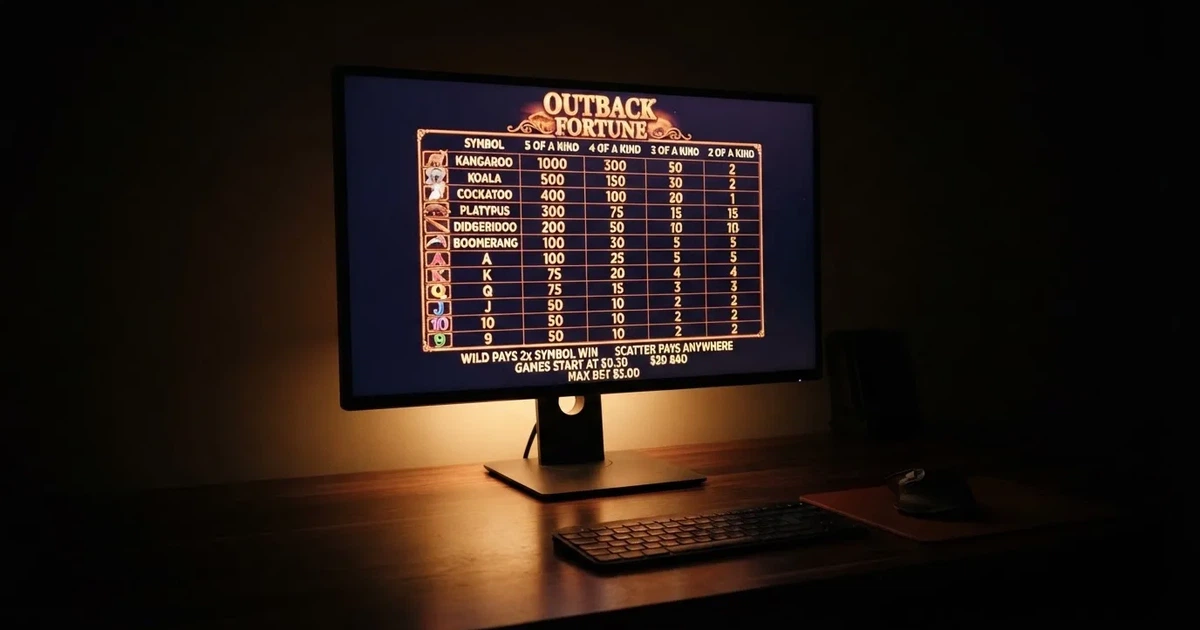
The short version of this page is uncomfortable for anyone hoping for a tidy top-10: Platipus is a slot studio, not an Australian operator, and the Interactive Gambling Act 2001 prohibits anyone from supplying its games to Australians online. There is no AU-licensed online casino where a Platipus title can be played legally. What this page does instead is lay out the picture as it stands — what Platipus actually is, where its games surface, which offshore sites the ACMA has formally warned for marketing them, and which paths remain open to an Australian player who wants to play slots without running into a regulator’s cease-and-desist.
Table of Contents
- Responsible-Gaming Supports for Australians Searching This Topic
- How Deposits and Withdrawals Work Around Platipus-Branded Slot Titles
- Bonuses, Free Spins and What They Actually Cost an Australian Player
- How Platipus-Branded Slot Titles Behave on a Mobile Screen
- Platipus Titles and Where Their Mechanics Actually Sit
- The Featured Operators: ACMA-Formally-Warned Brands Marketed to Australians
- The Legal Frame Around Platipus Slots in Australia
- Reading the ACMA’s Published Register Like a Practitioner
- Frequently Asked Questions
Responsible-Gaming Supports for Australians Searching This Topic
The first stop on a page about prohibited play isn’t a bonus or a comparison — it’s the question of what a reader in trouble, or heading that way, can reach for today. The Australian gambling-harm support system is built around onshore licensed operators, and offshore sites are not connected to it. That distinction matters, because a self-exclusion tool that doesn’t bind the site you’re playing on is a paper wall.

Gambling Help Online runs the National Gambling Helpline on 1800 858 858, free of charge, around the clock. The same service operates live webchat and email counselling through the Gambling Help Online portal, with translators available for more than 150 languages. The line itself is staffed by counsellors, not by a call centre — calls aren’t recorded for marketing, and the conversation stays confidential unless a caller discloses something the law requires reporting.
BetStop, the National Self-Exclusion Register, went live in August 2023 and is the formal mechanism for an Australian to bar themselves from every licensed online and phone wagering provider at once. A minimum exclusion period of three months applies, with options running up to a lifetime ban. Critically, BetStop binds only Australian-licensed services — wagering on sport and racing, lottery and keno. An offshore casino is not connected, so a self-exclusion through BetStop does nothing to a Curacao-licensed or unlicenced site the ACMA has acted against.
State and territory bodies run their own exclusion registers for the land-based venues and pokies that fall under their authority. The New South Wales Bar Barrier, Victoria’s YourPlay pre-commitment system, the Queensland self-exclusion order, and the equivalent arrangements in Western Australia, South Australia, Tasmania, the ACT and the Northern Territory all apply in their own jurisdiction. None of them reach an offshore site either, and the reason is structural: those registers work because state regulators have authority over the venue. The internet has no such venue.
If money already sits with an offshore site and a withdrawal is refused, the recourse an Australian has is effectively none. The ACMA can investigate the operator, and the ACMA’s blocking powers are real, but the regulator cannot compel a payout. The site’s own complaints procedure sits inside its own terms, and any further escalation runs into the regulator that licensed it — usually Curaçao or Anjouan, with no Australian consumer-protection reach. A balance stranded on a blocked site is, in practical terms, written off.
A blocking request also removes the deposit option the next time you log on. A balance already in play when the ISP block lands stays where it was. The point is worth saying twice, because the loss is real money, not a hypothetical.
This shelf sits first on the page for a reason. The single most important piece of information a reader can take from it is the number: 1800 858 858. Keep it somewhere you can find it.
How Deposits and Withdrawals Work Around Platipus-Branded Slot Titles
Money in, money out — the part of an offshore casino experience an Australian player actually handles. The mechanics are ordinary for an offshore site: card deposits via Visa and Mastercard where the issuer still allows gambling transactions, a handful of e-wallets, several cryptocurrencies, and the occasional voucher route through Neosurf or a similar prepaid product. Withdrawals tend to follow the same channel the deposit came in on, on the principle that mixing routes opens up a money-laundering flag the operator doesn’t want.

The settlement times are where the experience breaks down for an Australian. A licensed Australian bookmaker settles a debit-card withdrawal back to the same card in well under a working day; PayID and Osko are effectively instant; BPAY arrives the same business day. An offshore site describes its own withdrawal windows in hours, sometimes minutes, but what a player actually sees is a queue. Identity checks run a second time at cashout, source-of-funds questions appear on first withdrawal over a modest threshold, and bonus-related withdrawals wait on a manual compliance pass. The published “24-hour e-wallet withdrawal” can stretch into several business days once the verification step is added.
Two further payment constraints apply because the operator is offshore. Credit cards, credit-related products and digital currency are banned as payment for licensed Australian online wagering since 11 June 2024, with operator penalties up to A$247,500. That rule binds Australian-licensed providers; an offshore site is not under it, so the same site that won’t accept a credit card from a Sportsbet account will quite happily accept one from an Australian at its Curacao-licensed cashier. The legal exposure is the operator’s, not the cardholder’s, but a chargeback filed against the offshore site goes nowhere useful — the issuer sides with the merchant in the dispute process most of the time, because the merchant has its paperwork in order. Crypto deposits, similarly, sit outside the Australian regime entirely. Once they leave a wallet, the chargeback door is closed.
A practical reader question is whether a deposit at an offshore site is recoverable when the ACMA blocks the domain. The answer is no, and it isn’t subtle. The block lands at the ISP level; the operator keeps its database, its cashier ledger and the player’s balance. A withdrawal request submitted before the block can still be processed if the operator chooses to process it; one submitted afterwards typically bounces because the player can no longer log in to the cashier. Some operators e-mail a withdrawal link to stranded players after a block; most do not. The published record, including the ACMA’s blocking notices, doesn’t list a recovery rate. What is published is the running total of blocked sites, which gives the scale of the problem but not the scale of the financial loss to individuals.
A quieter risk sits inside the deposit itself: the NTRWC in Darwin regulates 52 of Australia’s online bookmakers — Sportsbet, Bet365 and Ladbrokes included — for tax reasons, and the commission has no full-time staff and meets once a month. The offshore operators aren’t even within that perimeter. There is no Australian body that pre-clears an offshore cashier, no matter what a footer image says. ACMA, the Australian Communications and Media Authority, is the only Australian regulator with reach into offshore supply, and its reach is to block, not to guarantee payouts.
Bonuses, Free Spins and What They Actually Cost an Australian Player
Marketing pages love the bonus headline. The reality is a separate document, written in the operator’s own terms, and the gap between the two is where most of the value leaks. This is the most important shelf on the page for a reader who came here looking for an offer — and it is the one where the prose earns the right to be sharp.
A deposit-gated welcome package is the usual shape: a percentage match on the first deposit, sometimes stretching to a second and third, with a free-spin bundle on top. The published numbers vary widely between operators, partly because the underlying licensed market varies — a Curaçao licence, an Anjouan licence, a Kahnawake licence — and partly because each operator positions itself differently. A high headline match with a high wagering multiple costs the player more than a low headline match with a low multiple, even though the bonus wallet reads the same on day one.
The wagering multiple is the load-bearing number. A 35-times playthrough on the bonus amount means a player has to spin through thirty-five times the bonus before any of the bonus wallet becomes withdrawable. Multiples above 40 are common in this segment; below 30 is rare. Free-spin winnings usually carry the same multiple, sometimes attached to the winnings only, sometimes attached to the winnings plus the deposit. The published RTPs of the games the bonus is restricted to — usually a small set of named slots — determine what fraction of the required turnover actually comes back as cash. A 96% RTP over thirty-five turns of bonus money expects to return 96% of the wagered amount, leaving a 4% expected loss on turnover. That isn’t a guaranteed loss on a single session; it is the average over the volume the bonus requires.
The other numbers to read for are the maximum cashout (often a cap of a few times the bonus amount on free-spin winnings specifically), the game weighting table (table games often weighted at 10-20% of slots, sometimes excluded entirely from free-spin play), the time limit (typically 7 to 30 days to clear the playthrough), and the maximum bet per spin during the bonus (often A$5-A$10 — exceeding it voids the bonus). Each of these individually looks ordinary; together they determine whether the bonus is actually worth claiming.
A short worked illustration, on the assumptions research carries and a named offer structure only as an example. A bonus of A$200 at a 40-times playthrough means A$8,000 of required turnover, played at an average slot stake of A$1 per spin across games in the 96% RTP band that the operator permits. That works out to 8,000 spins. At five seconds a spin, it runs roughly eleven hours of continuous play. The expected loss over those 8,000 spins, at 4% of turnover, sits near A$320 — more than the bonus itself. The bonus wallet, after the playthrough, returns the original A$200 plus whatever variance gave back more than the expected loss, and the maximum cashout rule decides the ceiling on what can actually leave the casino. The same bonus at 96% RTP and a 35-times playthrough changes the arithmetic: turnover drops to A$7,000, the expected loss drops with it, and the offer becomes worth claiming rather than paying for. The structural rule is that the bonus’s value to the player depends entirely on the gap between the RTP the games offer and the multiple the bonus attaches.
Two commercial details tend to be glossed in marketing material. The first is that a bonus is an inducement for an Australian who can’t legally claim one — the Interactive Gambling Act 2001 makes the supply of online casino games to Australians an offence, and an inducement rides on the same prohibition. The second is the named “promo code” path: this page does not print codes. The codes change, the terms behind them are the substance, and the article-language no-data marker covers the channels that don’t actually publish terms a player can rely on.
Calculating the enforcement rate from the ACMA’s published enforcement register shows the cumulative impact of blocking actions since November 2019. Across six-and-a-half years, the rate of site blocks has intensified in step with legislative updates, reaching an average of 250 to 300 sites blocked annually since the 2017 amendments. This ongoing regulatory activity reflects the ACMA’s response to the scale of prohibited services targeting Australians.
How Platipus-Branded Slot Titles Behave on a Mobile Screen
The offshore sites that market Platipus titles run their games through a browser-based HTML5 client. There is no Platipus-published mobile app — the studio supplies games to operators, not a player-facing app — and the experience on a phone or tablet is the same web page, scaled. The load time on a recent handset over a 4G connection is a few seconds for most titles; on a 3G connection it stretches. The native-platform question (iOS Safari versus Android Chrome versus a third browser) makes less difference than the connection does.
The mobile optimisation that actually shows up in play is in the touch interface. Buttons get a finger-friendly size, the spin control moves to where a thumb naturally rests in portrait, and the paytable is collapsed into a single tap rather than scrolling. What doesn’t change between desktop and mobile is the underlying RNG, and that is the only number that matters for fairness — the rest is chrome. Platipus describes its games as HTML5, built for both desktop and mobile browsers, and the studio’s own material notes more than 174 slots and table games, plus availability in all major fiat and crypto currencies and 20 languages.
The practical issue for an Australian player is more honest than that. A mobile browser session at an offshore site runs through the same block-prone ISP path as a desktop session, with the same no-Australian-licence caveat on the cashier, and the same absence of any local complaint route when the cashier stalls. The mobile experience can be smooth and the play still illegal. The mobile load time is not a measure of legality, and that is the shelf’s load-bearing point.
Where the operator does publish a downloadable client — and several of the brands the ACMA has warned against do — the install usually goes through an APK sideload rather than the Google Play Store or the Apple App Store, both of which enforce their own gambling-app policies. An iOS install requires either a configuration-profile workaround outside the App Store or a third-party distribution route that an Australian reader has no consumer protection through. The cleaner path, where the player is determined to play, is the browser; the legal status is the same either way.
Platipus Titles and Where Their Mechanics Actually Sit
A reader who has reached this far wants to know what a Platipus slot is, mechanically, before deciding whether to spend time on it. The studio’s own catalogue, as published on its website in September 2026, lists more than 174 HTML5 slots and table games, with availability in all major fiat and crypto currencies and 20 languages. The studio was founded in 2014, describes itself as EU-based, and reports more than 500 operator customers and 11 years of industry experience with 24/7 technical support across all time zones. Recent development has focused on Asian-oriented games, per the studio’s own material.
Fairness certification is the load-bearing question for a player. Platipus states that its games are RNG-certified by iTech Labs for regulated markets including the UK, Italy, the AGCC (Alderney Gambling Control Commission), Denmark, the Isle of Man, Malta, Gibraltar, Sweden and Romania. That certification is a real thing: iTech Labs is a Sydney-headquartered testing house, accredited by several national regulators, and its certification marks apply to specific game versions in specific configurations. The studios that hold those certifications are subject to ongoing RNG audits and game-logic checks, with certificates published and dated.
The bearing on Australia is subtle. Australia does not regulate online casino games, so no Australian regulator has approved or rejected a Platipus title. The iTech Labs mark is a quality signal that the studio’s mathematics has been independently tested, not a statement that the title is legal to play in Australia. An Australian player who can verify a certificate’s date, scope and the testing house behind it has done as much as anyone offshore can do. What they cannot do is fall back on an Australian regulator if the certificate is wrong.
Two studio neighbours are worth naming in this shelf because they appear alongside Platipus in operator lobbies. Aristocrat Leisure Limited is the Australian gambling-machine manufacturer founded in 1953, listed on the ASX in 1996 under the ticker ALL, and described as the largest gambling-machine manufacturer in Australia and the second-largest slot-machine manufacturer worldwide behind International Game Technology. Its administrative and research headquarters sit in North Ryde in Sydney, with marketing and development offices in South Africa, Russia and the United States. Aristocrat develops electronic gambling machines, casino management systems, online real-money gambling technology, iLottery products and social casino games; its online arms are Product Madness (social games) and Aristocrat Interactive. 2025 revenue was A$6.30 billion, normalised net profit after tax and amortisation A$1.55 billion, with 7,400 employees. Aristocrat Interactive, the regulated online real-money arm, was formed in April 2024 from the Anaxi unit combined with the NeoGames group (Aspire Global, BtoBet and Pariplay).
Aristocrat matters here not as a Platipus competitor but as the Australian reference point. A player who has played an Aristocrat pokie in a NSW pub or a Melbourne casino has played a game from the same national tradition, regulated under state law, with a state-based complaints route. The Aristocrat products that surface in offshore online lobbies are usually delivered through the social-casino or social-games arm rather than the regulated real-money arm, and the difference is not a marketing detail.
1spin4win is a slot provider founded in 2021 by professionals with 15 years of iGaming experience, headquartered at Scharlooweg 39, Willemstad, Curaçao, holding a Curaçao gaming licence. Its portfolio spans more than 190 online slots, built in HTML5 for low-bandwidth connections, with reported more than 1,000 partnerships with online casinos and aggregators, and total bet sum growth of 46% in the first half of 2025 against the first half of 2024.
Betsoft, founded in 2006, publishes a catalogue of more than 200 RNG games spanning slots, table games, video poker and specialty titles, and states it partners with more than 500 operators across regulated markets in Europe, Scandinavia, Latin America and Africa, with RNG certification from Quinel and Gaming Labs International, and compliance with Italy’s ADM (Customs and Monopolies Agency). Specific published numbers from the studio include Good Girl Bad Girl 2 at 96.22% RTP, “Very High” volatility and a 15.59% hit rate on 5 reels and 20 paylines; The Slotfather, live since 13 December 2012, at 95.69% RTP, “Medium” volatility and an 8.17% hit rate on 5 reels and 30 paylines.
BGaming has a team that has worked on games since 2012, with the BGaming brand itself debuting in 2018, and now offers 250+ certified games including video slots, video poker, lottery, card, scratch, crash and casual games.
The studios differ on which regulators they hold certification for, on which currencies and languages they publish, and on which slot mechanics they specialise in. The shared feature for an Australian reader is the same one as for Platipus: none of them are licensed to supply online casino games to Australians.
The Featured Operators: ACMA-Formally-Warned Brands Marketed to Australians
The brands below are listed because the ACMA itself issued a formal warning over each for offering prohibited services to Australians. This is not a ranking of where to play. It is the regulator’s own published list of names to be careful of. The composition and order come from §6 of the research and aren’t reordered here.
| Brand | ACMA action and date | Operator named by the ACMA | Subject support |
|---|---|---|---|
| RocketPlay | Formal warning under the IGA 2001, March 2026; an earlier formal warning was issued to Dama N.V. in May 2022 | Pulsup Ltd (Rocketplay.com.au); earlier Dama N.V. | — |
| Level Up Casino | Formal warning under the IGA 2001, May 2022 | Dama N.V. | Listed by Wazdan.com as carrying Wazdan content |
| Woo Casino | Formal warning under the IGA 2001, March 2025 | Dama N.V. | — |
| Spirit Casino | Formal warning under the IGA 2001, May 2025 | Dama N.V. | — |
| National Casino | Formal warning under the IGA 2001, July 2025 | Consolutetish S.R.L. | Listed by Betsoft.com, en.wikipedia.org and Pragmaticplay.com as carrying their content |
| Bizzo Casino | Formal warning under the IGA 2001, July 2025; an earlier 2022 formal warning was issued to TechSolutions | Consolutetish S.R.L.; earlier TechSolutions (Cy) Group Limited and TechSolutions Group N.V. | — |
| Ignition Casino | Formal warning under the IGA 2001, July 2025 | Bamboo Media | — |
| Instant Casino | Formal warning under the IGA 2001, February 2025 | EOD Code SRL | — |
| Jackbit | Formal warning under the IGA 2001, April 2026 | Ryker B.V. | — |
| Casino Intense | Formal warning under the IGA 2001, April 2025 | Sterplay Holding Ltd | Listed by 1spin4win, en.wikipedia.org and gamblingcommission.gov.uk as carrying their content |
| Sky Crown | Formal warning under the IGA 2001, September 2022 | Hollycorn N.V. | — |
RocketPlay
RocketPlay carries a formal warning the ACMA issued to Pulsup Ltd in March 2026, over the domain Rocketplay.com.au. An earlier formal warning had already been issued to Dama N.V. over Rocketplay in May 2022, alongside five other brands. The brand is one of the more visible repeat offenders on the regulator’s published list — two formal warnings, two different operators of record, both within the IGA’s prohibited-interactive-gambling-service framework. Online casino games cannot be licensed in Australia, whatever licence the site displays.
Level Up Casino
Level Up Casino is on the regulator’s list through a formal warning the ACMA issued to Dama N.V. in May 2022, the same round that also named Bambet, Dazard, Rocketplay, Wild Tornado and Cobra Casinos. Dama N.V. is the most repeated operator name across the regulator’s enforcement record, and Level Up is one of several brands under the same corporate umbrella that have surfaced in successive waves. The site lists Wazdan content in published aggregations, which is consistent with the kind of multi-vendor lobby an offshore Curacao-licensed platform runs.
Woo Casino
Woo Casino sits on the regulator’s list from a formal warning the ACMA issued to Dama N.V. in March 2025, the same operator of record that has accumulated warnings since 2022. The recurrence tells a reader two things: the corporate parent survives a warning (the brand doesn’t close), and the regulator’s name stays on the same licensee (the parent doesn’t change). The product proposition is the same as the rest of Dama’s portfolio.
Spirit Casino
Spirit Casino carries a formal warning the ACMA issued to Dama N.V. in May 2025. The pattern is identical to Woo Casino’s — same operator of record, two months apart, two different brand skins. The structural feature is the operator’s tendency to operate several brands under one parent, and the ACMA’s willingness to keep naming them.
National Casino
National Casino was identified in an ACMA formal warning issued to Consolutetish S.R.L. in July 2025, when the regulator addressed the brand alongside Bizzo Casino. The site carries content from Betsoft, listed by Betsoft.com as one of its operator integrations, and from Pragmatic Play. The published studio integrations are consistent with a multi-vendor offshore lobby; they are not a sign of any Australian regulatory approval.
Bizzo Casino
Bizzo Casino carries two formal warnings. The most recent is the July 2025 warning the ACMA issued to Consolutetish S.R.L., alongside National Casino. An earlier 2022 formal warning was issued to TechSolutions (CY) Group Limited and TechSolutions Group N.V., which means Bizzo has been on the regulator’s list across two different operating companies. The brand is one of the more durable offshore presences in the Australian market and one of the few the ACMA has named twice.
Ignition Casino
Ignition Casino is on the regulator’s list from a formal warning the ACMA issued to Bamboo Media in July 2025. The brand has a longer presence in the offshore US-facing market than the Australian-facing market, but the ACMA’s July 2025 action placed it firmly on the Australian-prohibited list as well.
Instant Casino
Instant Casino was identified in an ACMA formal warning issued in February 2025, directed at EOD Code SRL. The site has been a frequent entry in the ACMA’s monthly enforcement round for the post-2024 period and is one of the more heavily advertised brands on Australian-facing affiliate pages.
Jackbit
Jackbit carries a formal warning the ACMA issued to Ryker B.V. in April 2026, the same operator of record as CasinOK in the same round. The April 2026 round is the most recent ACMA enforcement action named in this article and is the most current published date for any of the eleven brands here.
Casino Intense
Casino Intense is on the regulator’s list through a formal warning the ACMA issued to Sterplay Holding Ltd in April 2025. The site lists content from 1spin4win in published aggregations, alongside content listed at en.wikipedia.org and gamblingcommission.gov.uk, which is consistent with a multi-jurisdiction offshore operator running under a Curacao-style licence.
Sky Crown
Sky Crown is on the regulator’s list through a formal warning the ACMA issued to Hollycorn N.V. in September 2022, alongside Blue Leo. The Hollycorn warning predates the regulator’s recent enforcement waves but is still part of the published register. Hollycorn also operates several other brands under the same corporate parent; the formal warning covered Sky Crown and Blue Leo specifically.
The shared verdict on the eleven brands is structural: none of them is legally available to Australians because the product they offer is itself prohibited. The ACMA’s published register is the only public, named record of which offshore operators have been formally warned, and the register is what makes the list auditable.
The Legal Frame Around Platipus Slots in Australia
The legal position is short enough to state clearly. The Interactive Gambling Act 2001 (IGA), strengthened by the Interactive Gambling Amendment Act 2017, makes it an offence to provide online casino games, online pokies or in-play betting to a person in Australia. No state or territory licenses them. What is licensable is wagering on races and sport placed before the event, lotteries and keno — in practice licensed by the Northern Territory Racing and Wagering Commission for tax reasons, even where the operator’s commercial presence sits elsewhere. The minimum age is 18.
The enforcement is run by the ACMA. The regulator investigates, issues formal warnings and directs Australian internet service providers to block illegal sites. As reported in June 2026, the ACMA’s running total since the first blocking request in November 2019 stood at 1,751 blocked illegal gambling and affiliate marketing websites, with more than 230 unlicensed gambling services having left the Australian market since enforcement was strengthened in 2017. A single round reported on 26 June 2026 added 12 more blocked sites: 7Signs, ChromaBet, Donbet, Duospin, Freshbet, Slots Gem, Jacks Club, Lucky Start, Pointsbetz.com, Spinrise, Vinyl Casino and Wildsino.
The H2 Gambling Capital 2025 report estimates that Australians lose about A$3.9 billion a year to illegal gambling sites, with the share of gambling going through legal channels falling from 74% in 2021 to 64%. That figure is what gives the blocking programme its weight — the lost revenue is measured in single-digit billions per year, the bulk of it offshore, and the ACMA’s lever is the ISP block rather than the criminal prosecution.
The player-protection frame has three layers. BetStop, the National Self-Exclusion Register, has been live since August 2023 and binds only Australian-licensed online and phone wagering services — an offshore casino is not connected to it. The National Gambling Helpline is 1800 858 858, free and 24/7, with webchat at Gambling Help Online. State and territory exclusion registers — the NSW Bar Barrier, Victoria’s YourPlay, the Queensland self-exclusion order and the equivalents elsewhere — apply in their own jurisdiction to land-based venues, with no reach to offshore sites.
The payment frame is its own prohibition. Credit cards, credit-related products and digital currency have been banned as payment for licensed online wagering since 11 June 2024, with operator penalties up to A$247,500. Legal deposit routes for licensed wagering are debit card, bank transfer, PayID and Osko, and BPAY. A site asking an Australian for a credit card or a crypto deposit is operating outside the Australian rules. The legal exposure is the operator’s; the practical risk for the cardholder is that a chargeback filed against an offshore merchant rarely succeeds.
The 2026 reform sits on top of all of this. The Interactive Gambling Amendment (Gambling Reform) Bill 2026 passed Parliament on 19 August 2026, with its advertising and inducement measures commencing on 1 January 2027. The bill is law with a start date — it is not yet in force on a 2026 page, and the regulator’s published notices from 2026 run under the existing IGA 2001 framework rather than the new provisions.
The tax position is the part most readers underestimate. Gambling winnings of a recreational player are not assessable income under section 6-5 of the ITAA 1997, and losses are not deductible, unless the person carries on a business of gambling. The model wording is “check with the ATO”, and the underlying rule is that recreational players don’t declare, and can’t claim.
Reading the ACMA’s Published Register Like a Practitioner
The ACMA publishes formal warnings on its website and links them to a specific operator name and a specific brand. The warning names the regulatory provision breached (almost always the IGA 2001’s prohibition on supplying online casino games to Australians) and the date of issue. A reader who knows how to read the register can verify each entry in this article against the regulator’s own page.
The entries with the highest information density are the ones where the ACMA names a parent operator across several brands in a single round. The May 2022 round, for example, named six brands in one warning to Dama N.V.: Bambet, Dazard, Level Up, Rocketplay, Wild Tornado and Cobra Casinos. The July 2025 round to Consolutetish S.R.L. named two: National Casino and Bizzo Casino. The April 2026 round to Ryker B.V. named two: Jackbit and CasinOK. Reading the register that way — one warning, several brands — is the way to see the operator-level pattern that a brand-by-brand reading misses.
The warning dates are the line a reader should look for. A formal warning issued in 2022 still applies in 2026; the regulator doesn’t need to reissue to keep the prohibition in force. The publication dates on the ACMA’s page are when the warning was made public, which is usually shortly after the date the warning was issued.
Frequently Asked Questions
Is Platipus legally available to players in Australia?
No. The Interactive Gambling Act 2001 prohibits any operator from supplying online casino games to people in Australia. Platipus is a slot studio that supplies games to operators; it does not run a player-facing platform licensed in Australia. An Australian who plays a Platipus title at an offshore site is playing at an unlicensed venue, with no local consumer protection, and the site is subject to ACMA blocking at any time.
What kinds of games does Platipus make?
Platipus publishes a catalogue of more than 174 HTML5 slots and table games, available in all major fiat and crypto currencies and 20 languages. The studio was founded in 2014 and is EU-based. Recent development has focused on Asian-oriented games. The games are RNG-certified by iTech Labs for several regulated markets including the UK, Italy, the AGCC, Denmark, the Isle of Man, Malta, Gibraltar, Sweden and Romania.
Are Platipus games offered at land-based venues in Australia?
Not under the Platipus brand. Land-based pokies in Australian pubs and clubs are supplied by Aristocrat and a small set of other licensed manufacturers, under state and territory regulation. Platipus is an online slot studio without an Australian land-based presence. Aristocrat’s products surface in some offshore online lobbies through the studio’s social-games arm, not the regulated real-money arm.
How can Australians check whether a Platipus title is fair before ever considering play?
The studio’s games are RNG-certified by iTech Labs, with certificates published by the testing house. A reader can confirm a certificate’s date, scope and the testing house behind it on the iTech Labs website. The certification confirms the game’s mathematics has been independently tested. It does not confirm the game is legal to play in Australia — Australia does not regulate online casino games, so no Australian regulator has approved or rejected any Platipus title.
Why do offshore sites keep advertising Platipus games to Australian visitors?
Because the offshore market is large and growing. The H2 Gambling Capital 2025 report estimates Australians lose about A$3.9 billion a year to illegal gambling sites, with the share of gambling going through legal channels falling from 74% in 2021 to 64%. The ACMA’s running total of blocked sites is 1,751 since November 2019, and more than 230 unlicensed services have left the market since 2017. The commercial pressure on the offshore side is real, and the regulatory pressure is the ACMA’s blocking programme.
What should an Australian do if they see a Platipus game promoted by an unlicensed site?
The short answer is to treat the promotion as the regulator would: a prohibited interactive gambling service being marketed. The ACMA accepts reports of suspected illegal gambling services and acts on patterns it sees in monitoring. The Gambling Help Online helpline (1800 858 858) is the practical support number to keep available regardless. If a balance already sits with an offshore site, the realistic recourse is limited — the ACMA cannot compel a payout from an offshore operator, and a chargeback through a card issuer is unlikely to succeed.