
Microgaming casinos in Australia: choosing a path that still exists under the Interactive Gambling Act 2001
The phrase “Microgaming casino” carries a clean commercial meaning in most of the world: an online casino whose games come from Microgaming, the Isle of Man software house credited with building the first fully functional online gambling platform in 1994 and the first online progressive jackpot slot, Cash Splash, in 1998. In Australia the phrase runs straight into the Interactive Gambling Act 2001, which has prohibited the offering of online casino games and online pokies to anyone in Australia since 2017. No state or territory licences the activity. The ACMA’s enforcement record on offshore sites that target Australian customers has run to thousands of blocked domains. A reader typing “Microgaming casino Australia” into a search engine in 2026 is therefore not comparing eleven legitimate options. They are comparing eleven ways of describing a service that cannot lawfully be supplied to them, which is what the rest of this page is for.

Current as of 8 November 2026 against the ACMA’s published blocking and warning register.
Table of Contents
- The choice, named plainly
- Responsible play in a market where the offshore shelf is excluded
- Payments: what can lawfully change hands, and at what speed
- Bonuses and the arithmetic behind a “free” headline
- Mobile and the phone-screen experience of Microgaming games
- Specific games: what Microgaming is known for, and how the catalogue breaks down
- A shortlist of the brands the ACMA has named, and what the warning means
- How fast the ACMA has been moving: the blocking rate since November 2019
- What the law actually says, in the parts that matter
- What a reader who wants Microgaming-style play should actually do
- Frequently asked questions about Microgaming casinos in Australia
The choice, named plainly
A shortlist of legitimate Australian options for someone who likes Microgaming-style slots collapses, in practice, into three paths. Each is a different answer to the same want, and the rest of the page treats them as such:

- a licensed Australian pub, club or casino floor with a real-money pokies bank from a domestic or international manufacturer;
- a licensed online wagering account with a Northern Territory bookmaker, restricted to pre-event racing and sport and pre-event lotteries;
- a self-exclusion route through BetStop, the National Self-Exclusion Register, used by anyone who has decided the safer choice is none of the above.
The fourth path — opening an account with an offshore Microgaming-powered casino, often under a Curaçao or similar licence — is not illegal for the individual player, but it is what the Interactive Gambling Act 2001 (IGA) was rewritten to choke off, and what the ACMA has spent 2026 blocking. The brands listed later in this guide are there because the ACMA itself has acted against them, not because they are recommended. Treat the rest of this page as a map of where the lawful routes end, not a green light for what lies beyond.
Responsible play in a market where the offshore shelf is excluded
Responsible gambling in Australia is built around licensed venues, licensed wagering and a national register. BetStop, the National Self-Exclusion Register, went live in August 2023 and binds every Australian-licensed online and phone wagering service. Anyone who registers is excluded from new account openings, deposits and marketing across those services for a period of their choosing (from three months up to a lifetime), and operators are required to act on a registration within days. The matching offline tooling is venue-level self-exclusion at clubs, pubs and casinos, and the support lines behind both: the National Gambling Helpline on 1800 858 858, free and 24/7, and Gambling Help Online for chat and email counselling.
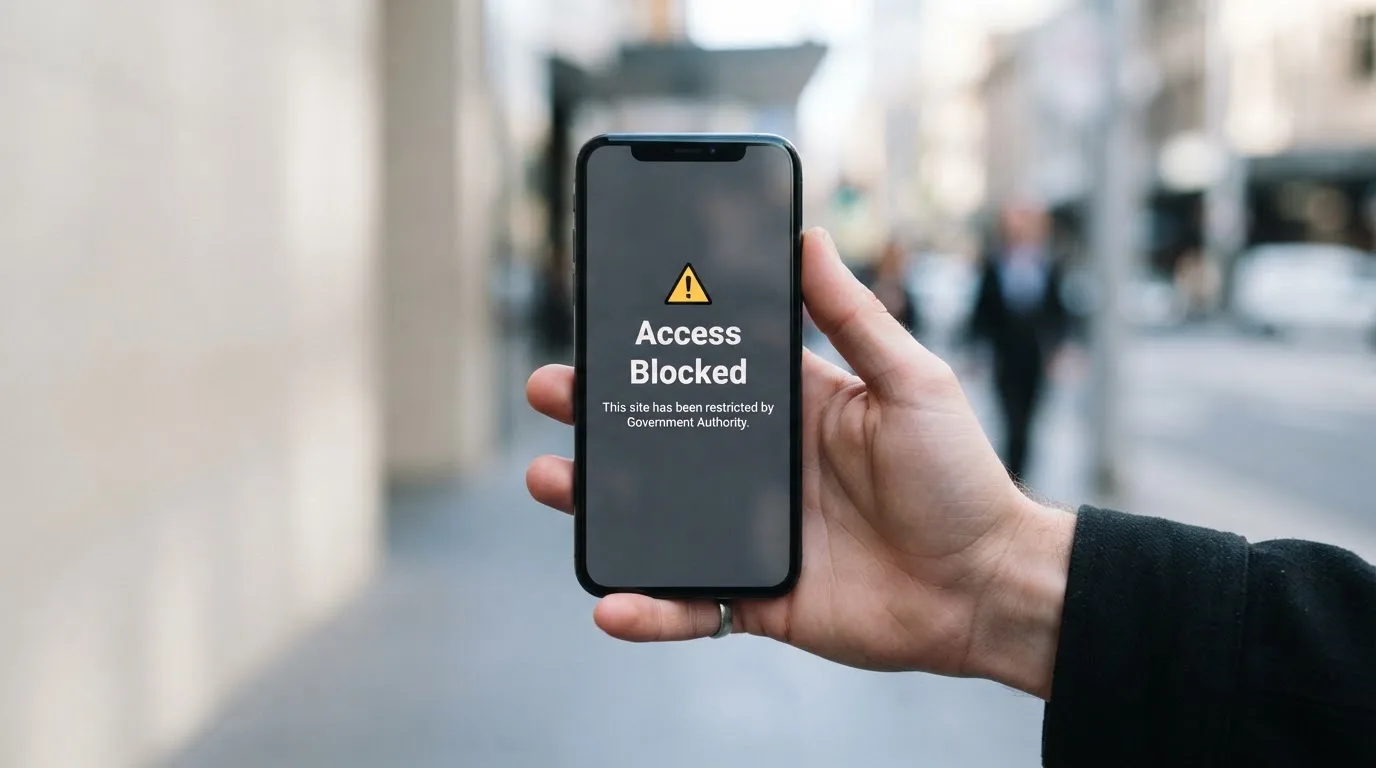
The crucial qualification sits in the verb: BetStop covers Australian-licensed wagering. It does not cover an offshore online casino. Someone excluded through BetStop can still open an account with an offshore site, place a deposit and play Microgaming-powered slots from it — the exclusion only attaches to operators the register can reach. For anyone using BetStop as the protective instrument they intended, that gap is the single most important thing to know about it. The protection has the same shape as the market: bounded by the Australian licence.
Alongside BetStop, the National Consumer Protection Framework for Online Wagering sets a baseline of customer-care obligations on licensed bookmakers — a uniform $5 daily deposit default on new accounts, a state-by-state variation on opt-in increases, real-money spend visible to the customer, mandatory activity statements and staff training. These apply to the licensed wagering market. None of them apply to the offshore casino offering Microgaming games to an Australian IP. The only universally available tools for an offshore account are the ones the operator has chosen to provide, which on a brand the ACMA has just warned tends to be a thin set: deposit limits by request, a logout button and a self-exclusion that the player can revoke from the same screen.
For a reader comparing options honestly, the responsible-gaming argument collapses to one line. The Australian-licensed venues and BetStop are the protective layer; an offshore Microgaming casino is outside it.
Payments: what can lawfully change hands, and at what speed
The payments frame for online gambling in Australia was redrawn on 11 June 2024, when the prohibition on using credit cards, credit-related products and digital currencies (crypto) for online wagering came into force, with penalties up to $247,500 for operators who breach it. A licensed Australian wagering account can therefore be funded by debit card, direct bank transfer, PayID through the Osko network and BPAY. An account that asks for a credit card number or a Bitcoin wallet address is signalling, plainly, that it is not operating inside the Australian regime. That signal is the fastest filter a reader can run before reading anything else about the site.
For the licensed half of the market, payout speed is determined by the rails chosen. PayID and Osko settle in near real time, bank-to-bank, between participating Australian banks; a withdrawal initiated before mid-afternoon on a weekday typically lands the same day. BPAY and direct debit take one to two business days. Debit card withdrawals are usually processed on the same business day and depend on the card issuer’s settlement window, which can stretch the wall-clock arrival to two business days. None of these are exotic, none of them are the operator’s discretion and all of them leave a paper trail the customer can argue with if a transaction goes wrong.
For an offshore Microgaming casino accepting Australian customers, the payment picture inverts. The operator usually takes deposits through a payment processor that supports cards or e-wallets, and offers withdrawals back through the same channel — but the “withdrawal” is paid by an offshore entity, in a currency the player chose at sign-up, often USD or EUR, and arrives only after the operator’s internal pending period (which on some brands runs from 24 hours up to several working days) plus the processor’s own queue. The complaints body that exists in the licensed market — the ACMA, ultimately the Australian Financial Complaints Authority for licensed financial disputes — does not extend to the offshore site. If a withdrawal stalls or is refused for a stated breach of bonus terms, the practical recourse is the licence displayed in the site’s footer: a Curaçao master licence, an Anjouan licence or no licence at all, none of which have an Australian-facing complaints channel. The speed figure an offshore site quotes is, in practice, the speed from their end of the queue, and the speed the player actually sees is whatever survives the additional layers.
For a reader weighing this, the comparison that matters is not Microgaming-A versus Microgaming-B on payout hours. It is licensed-A versus offshore-B on recourse when the payout hours stretch to weeks.
Bonuses and the arithmetic behind a “free” headline
A Microgaming welcome offer is normally advertised as a percentage match on the first deposit, plus a bundle of free spins on a named slot. The number a reader should weigh is not the percentage but the wagering requirement, which is the multiplier attached to either the bonus alone or the bonus plus deposit by which the bonus amount must be turned over before any winnings can be withdrawn. A 100% match to A$500 with a 40× wagering requirement on the bonus alone means the player must place A$20,000 in qualifying bets before the bonus balance converts to withdrawable cash. The same headline at 100% to A$500 with a 40× multiplier on bonus plus deposit means a A$40,000 turnover before the same conversion. The gap between those two numbers is the difference between a steep requirement and an extreme one, and only the small print decides which applies.
Three terms sit on top of this and quietly shrink the headline value. First, a maximum-bet-per-spin cap during the wagering phase, usually A$5 or A$8, which holds the player to a stake band regardless of what they would otherwise wager. Second, a maximum-cashout ceiling on bonus-derived winnings — a cap that converts a multi-thousand-dollar win on a free spin into a fixed payout. Third, a contribution table, the percentage of each game type that counts toward the wagering requirement: a Microgaming slot is normally 100%, a table game might be 10% or 0%. A player who clears the requirement on slots and then tries to grind the last of it on blackjack will find the meter barely moves.
Free-spin bundles are subject to the same machinery. The advertised value is the spin count times the stake times the slot’s return-to-player (RTP), but only if the resulting winnings are credited as bonus money with their own wagering requirement. Reading the small print on a Microgaming welcome package takes about ten minutes and is the single most cost-effective reading a player can do on the page.
For a reader comparing options, the practical test is this. Convert the offer into the turnover the player must generate, then convert that turnover into an expected loss under the slot’s RTP. The bonus’s “real cost” is the expected loss across the required turnover minus any expected return from the bonus and the free-spin bundle. If the expected loss is higher than the deposit the player would otherwise have made, the offer is a cost, not a saving, regardless of the headline.
Mobile and the phone-screen experience of Microgaming games
Microgaming’s catalogue has been built progressively around HTML5 since the late 2010s, which is to say the modern slots and tables are designed to render inside a phone browser without a separate download. The older games in the catalogue, including some of the progressive jackpot network — Mega Moolah being the well-known flagship — are maintained in a dual build so that they still play on a current mobile browser through the operator’s wrapper. The experience is consistent across operators because the underlying client is the same: a portrait-mode reel set, a tap-to-spin button scaled for thumbs, and a collapsible paytable and bet-sizer rather than a redesigned interface per casino.
A practical distinction worth keeping in mind: a mobile browser at an operator is not the same product as a native operator app. A native app, where one exists, caches the game library and the wallet, supports biometric login and can offer push notifications for bonus expiry — but it is also the operator’s walled garden, with in-app purchases and updates governed by the store’s rules. A mobile browser session, on the other hand, lives or dies on the connection’s quality, and on a poor 4G signal the slot’s reel animation will judder or drop. Microgaming’s mobile build is robust enough that this matters only at the connection edge, but at the connection edge it does matter.
For an Australian reader comparing “best Microgaming mobile casino” lists, the practical test is not which operator has the slickest wrapper. It is which operator’s mobile build supports the slot the player actually wants to play, on the device the player actually has, over the connection the player actually uses. The latter three are the inputs; the slick wrapper is the surface.
Specific games: what Microgaming is known for, and how the catalogue breaks down
Microgaming’s reputation is built around a few well-known reference points. The progressive jackpot network — anchored by Mega Moolah and a handful of sister titles — has paid individual eight-figure jackpots over the years. The branded catalogue has produced licensed slots based on film, television and comic properties. The table-game suite covers multiple variants of blackjack, roulette and baccarat in both RNG and live-dealer formats. Beyond the headline titles, the catalogue runs to several hundred slots and a deep back-catalogue of older games that have been kept in active rotation through periodic HTML5 rebuilds.
Live-dealer tables are a separate stream from the slot catalogue: they are powered by a partner studio, distributed into Microgaming-licensed operators through the Microgaming wrapper, and play out from physical studios with real croupiers. The distinction matters because the live product sits on a different uptime profile from the RNG slots — a streamed table is dependent on the studio, the connectivity and the croupier schedule, and the operator’s responsibility for it is correspondingly narrower.
The wider catalogue of third-party providers that operate alongside Microgaming — Betsoft, BGaming, Pragmatic Play, 1spin4win, Aristocrat’s online arm — is what a reader comparing options will actually meet on an offshore site. The brand on the homepage is one provider; the lobby holds several. A shortlist of providers worth knowing by name for the Australian reader, with the only verifiable figures research carries for each:
- Betsoft, founded 2006, catalogue of more than 200 RNG games. Good Girl Bad Girl 2 is published at 96.22% RTP, “Very High” volatility, 15.59% hit rate, 5 reels and 20 paylines. The Slotfather, live since 13 December 2012, is published at 95.69% RTP, “Medium” volatility, 8.17% hit rate, 5 reels and 30 paylines.
- BGaming, the brand since 2018 (the team behind it has worked on games since 2012), with 250+ certified games across slots, video poker, lottery, card, scratch, crash and casual formats. Operated by Stable Games Ltd of Valletta, Malta, under Malta Gaming Authority Critical Gaming Supply Licence MGA/B2B/785/2020 for Type 1 B2B gaming services, issued 18 March 2021.
- 1spin4win, founded 2021 by a team of iGaming professionals, headquartered at Scharlooweg 39, Willemstad, Curaçao, holding a Curaçao gaming licence, with a portfolio of more than 190 online slots built in HTML5. The provider reports more than 1,000 partnerships and a 46% growth in total bet sum in the first half of 2025 against the same period in 2024.
- Aristocrat Leisure, founded 1953 and listed on the ASX in 1996 under the ticker ALL, the largest gambling-machine manufacturer in Australia and the second-largest slot-machine manufacturer worldwide behind International Game Technology. The company’s online real-money arm was reorganised in April 2024 as Aristocrat Interactive, bringing together the Anaxi unit and the acquired NeoGames group, which includes Aspire Global, BtoBet and Pariplay. Aristocrat reported 2025 revenue of A$6.30 billion, normalised net profit after tax and amortisation of A$1.55 billion and 7,400 employees.
A reader who is choosing on catalogue depth rather than on a single headline slot will find the Microgaming suite wide, the Betsoft suite broader in theme, the BGaming suite the deepest in casual and crash formats, and the Aristocrat Interactive catalogue the one most exposed to Australian regulation. The Microgaming + Aristocrat combination is the only pair in this list where both providers have meaningful Australian regulatory exposure; the others operate outside it.
A shortlist of the brands the ACMA has named, and what the warning means
This shortlist is not a recommendation. It is the ACMA’s own published list of offshore operators that have been subject to a formal warning under the Interactive Gambling Act 2001 for offering prohibited services to Australians, including Microgaming-powered casino games. The table below sets the brands side by side on the only fields that matter: the warning the ACMA has issued, the date it carried, the operator entity the ACMA named, and whether research carries any verifiable signal that the brand’s published catalogue includes Microgaming or another named provider. A dash in the final column means no such signal is carried by the research; the brand is presented on the other fields, not denied or affirmed on the catalogue point.
| Brand | ACMA action and date | Operator named by the ACMA | Subject support |
|---|---|---|---|
| RocketPlay | Formal warning, March 2026; earlier warning over the same brand to Dama N.V., May 2022 | Pulsup Ltd (Rocketplay.com.au); Dama N.V. | — |
| Level Up Casino | Formal warning, May 2022 | Dama N.V. | — |
| Woo Casino | Formal warning, March 2025 | Dama N.V. | — |
| Spirit Casino | Formal warning, May 2025 | Dama N.V. | — |
| National Casino | Formal warning, July 2025 | Consolutetish S.R.L. | — |
| Bizzo Casino | Formal warning, July 2025; earlier warning to TechSolutions (CY) Group Ltd and TechSolutions Group N.V., 2022 | Consolutetish S.R.L.; TechSolutions | — |
| Ignition Casino | Formal warning, July 2025 | Bamboo Media | — |
| Instant Casino | Formal warning, February 2025 | EOD Code SRL | — |
| Jackbit | Formal warning, April 2026 | Ryker B.V. | — |
| Casino Intense | Formal warning, April 2025 | Sterplay Holding Ltd | — |
| Sky Crown | Formal warning, September 2022 | Hollycorn N.V. (Sky Crown and Blue Leo) | — |
The pattern in the table is what an Australian reader should weigh, not any single row. Dama N.V. alone appears three times: the 2022 batch (RocketPlay, Level Up, plus Bambet, Dazard, Wild Tornado and Cobra Casinos), the March 2025 warning over Woo Casino and the May 2025 warning over Spirit Casino. Consolutetish S.R.L. appears twice in a single round in July 2025, over National Casino and Bizzo Casino. Hollycorn N.V. is named once, covering both Sky Crown and Blue Leo. What this shows is not that one operator is worse than another; it is that the offshore Microgaming-casino shelf is supplied by a small group of holding companies, and the ACMA’s enforcement moves against the holding company rather than the brand. A reader who has had an account closed at one of these brands and is comparing it to another is, in many cases, comparing two skins of the same operator entity.
RocketPlay — Dama N.V. then Pulsup Ltd
RocketPlay has been on the ACMA’s published register twice: first under Dama N.V. in May 2022 as part of the six-brand batch, and again under Pulsup Ltd in March 2026, naming Rocketplay.com.au specifically. A reader comparing options should read this as two rounds of action against the same brand, by two different corporate entities, over a four-year window. The brand’s catalogue includes Microgaming slots, but no research carries a verifiable figure for the brand on RTP, volatility or payout time. The verdict for an Australian reader is the same as for every other brand in this shortlist: the IGA prohibition applies, the ACMA has acted, and any account balance held with the brand sits inside a wallet the regulator can render inaccessible.
Level Up Casino — Dama N.V., May 2022
Level Up Casino is one of the six Dama N.V. brands the ACMA named in its May 2022 warning. Its casino-game lobby, on the published listings, includes games from providers other than Microgaming; no research carries a verifiable Microgaming catalogue figure. The brand has not been the subject of a separate ACMA action since 2022, but the underlying operator has, twice (Woo Casino in March 2025 and Spirit Casino in May 2025). For a reader, the relevant pattern is the operator, not the brand surface.
Woo Casino — Dama N.V., March 2025
Woo Casino is the first Dama N.V. brand to draw a fresh ACMA warning after the 2022 batch. The 2025 warning indicates that the operator entity continued to offer prohibited services to Australians between the two rounds. The verdict for an Australian reader is the same shape as RocketPlay’s: two cycles of enforcement on one corporate parent, one brand surface per cycle.
Spirit Casino — Dama N.V., May 2025
Spirit Casino is the second Dama N.V. brand in the 2025 round. The pattern here is the same as Woo Casino: a brand added to the ACMA register four years after the parent operator’s first batch, with no published figure on Microgaming catalogue depth.
National Casino — Consolutetish S.R.L., July 2025
National Casino was named in the same July 2025 round as Bizzo Casino, under Consolutetish S.R.L. The brand’s published listings include providers other than Microgaming; no research carries a verifiable Microgaming-specific figure. The verdict is structural: two brands, one operator entity, one ACMA action.
Bizzo Casino — Consolutetish S.R.L., July 2025, on top of a 2022 TechSolutions warning
Bizzo Casino is the only brand in the shortlist with two distinct ACMA warnings from two distinct operator entities: a 2022 warning to TechSolutions (CY) Group Limited and TechSolutions Group N.V., and a 2025 warning to Consolutetish S.R.L. For a reader, the relevant reading is that the brand has moved between operator entities, and the ACMA has caught up with each. This is the strongest version of the pattern already visible in the table: an offshore brand on the Australian shelf can change its corporate parent without changing its catalogue.
Ignition Casino — Bamboo Media, July 2025
Ignition Casino is one of two brands named in the July 2025 round, the other being National Casino. The operator entity is Bamboo Media, distinct from Dama N.V. and Consolutetish S.R.L. No verifiable Microgaming catalogue figure is carried for the brand.
Instant Casino — EOD Code SRL, February 2025
Instant Casino drew an ACMA warning in February 2025, the earliest of the 2025 actions in the shortlist. The operator entity, EOD Code SRL, does not appear elsewhere on the ACMA register in research.
Jackbit — Ryker B.V., April 2026
Jackbit is named alongside CasinOK in a single April 2026 warning to Ryker B.V. The brand’s name is built around cryptocurrency, which places it directly inside the payment prohibition that took effect on 11 June 2024 for licensed Australian wagering. For an Australian reader, the payment-method signal and the ACMA warning are aligned: this is not a brand that has reconciled itself to the Australian framework.
Casino Intense — Sterplay Holding Ltd, April 2025
Casino Intense drew a standalone ACMA warning in April 2025. The operator entity, Sterplay Holding Ltd, does not appear elsewhere on the ACMA register in research.
Sky Crown — Hollycorn N.V., September 2022
Sky Crown is the oldest entry on the table. The September 2022 warning to Hollycorn N.V. covered Sky Crown and Blue Leo, two brands on the one corporate parent. No verifiable Microgaming catalogue figure is carried for either brand.
How fast the ACMA has been moving: the blocking rate since November 2019
The ACMA’s first blocking request was issued in November 2019. By the round reported on 26 June 2026, the cumulative count of blocked illegal gambling and affiliate marketing websites had reached 1,751, with more than 230 unlicensed gambling services having left the Australian market since enforcement was strengthened in 2017. The round itself asked Australian internet service providers to block 12 more: 7Signs, ChromaBet, Donbet, Duospin, Freshbet, Slots Gem, Jacks Club, Lucky Start, Pointsbetz.com, Spinrise, Vinyl Casino and Wildsino.
Translated into a rate, that is 1,751 sites blocked across roughly 80 months from November 2019 to June 2026, an average close to 22 blocked sites per month over the period, with the latest round adding 12 in a single batch. The H2 Gambling Capital 2025 estimate puts annual losses to illegal gambling sites at around A$3.9 billion and the legal-channel share of gambling down from 74% in 2021 to 64% — a market that is shrinking toward the lawful channels but has not closed the gap. A reader who treats the ACMA register as a snapshot is reading it wrong; the register is a moving target, and the rate at which it moves is itself the data point.
For an Australian reader comparing options, the practical implication is that any shortlist drawn from offshore Microgaming casinos has a published half-life. A brand on the register this month may be blocked next month, and any balance held at the moment of blocking sits inside a wallet the regulator has just cut off. A brand not yet on the register is one round away from being on it. The blocking rate is the speed at which the shelf itself expires.
What the law actually says, in the parts that matter
The Interactive Gambling Act 2001 (IGA), as tightened by the Interactive Gambling Amendment Act 2017, makes it an offence to provide online casino games, online pokies or in-play betting to a person physically in Australia. The IGA does not prohibit the player; it prohibits the provider. The minimum age for any Australian-licensed gambling activity is 18.
The Northern Territory Racing and Wagering Commission (NTRWC) regulates 52 of Australia’s online bookmakers — Sportsbet, Bet365 and Ladbrokes among them — licensed in the Territory for tax reasons. The NTRWC has no full-time staff and meets once a month in Darwin, a structural detail that has drawn reform attention: an ABC report from 7 April 2026 covered a Northern Territory bill to reshape the de facto gambling regulator. The licensable activity under this regime is pre-event wagering on racing and sport, and pre-event lotteries and keno. Online casino games are not on the list.
The Interactive Gambling Amendment (Gambling Reform) Bill 2026 passed Parliament on 19 August 2026. Its advertising and inducement measures commence on 1 January 2027 — a law with a start date, not yet in force at the time of writing. For a reader in 2026 looking ahead to 2026+1, the inducement regime that constrains how Australian-licensed operators market wagering will be in effect by the time the year turns.
For recreational players, gambling winnings are not assessable income under section 6-5 of the Income Tax Assessment Act 1997, and losses are not deductible, unless the person carries on a business of gambling. The ATO’s position on what makes a “business of gambling” is not the subject of this page. Where research carries no ATO-published line, none is invented here.
What a reader who wants Microgaming-style play should actually do
For an Australian reader who arrived at this page looking for a shortlist of online casinos running Microgaming games, the shortlist the law leaves standing is short. The licensed wagering market does not offer Microgaming casino games. The licensed land-based market does, through the manufacturers who supply Australian pub and club pokies — Aristocrat being the largest by both Australian and international footprint, with the catalogue’s real-money online arm reorganised in April 2024 as Aristocrat Interactive. BetStop is the protective register for the licensed market, and the National Gambling Helpline on 1800 858 858 is open around the clock.
For a reader who is reading this from inside Australia and is weighing an offshore Microgaming casino regardless, the practical checklist is the same regardless of brand:
- The site is offering a product the IGA prohibits supplying to Australians. The brand’s licence, wherever it is issued, does not change that.
- The ACMA register is the brand’s history on this question. Read the round the brand was named in, the operator entity the ACMA used, and whether the same operator entity has been named again since.
- Payments matter as a filter. A site asking for a credit card or a crypto deposit is operating outside the 11 June 2024 prohibition and is signalling, plainly, what it is.
- Bonuses are an arithmetic problem. The wagering multiplier, the max-bet cap, the max-cashout ceiling and the game-contribution table together decide what the headline is worth.
- Self-exclusion through BetStop binds only Australian-licensed wagering. An offshore site is outside it.
The rest of this guide’s contents sit on top of that. The shortlist of eleven brands above is the ACMA’s own list. The payments section is what the Australian framework allows. The bonuses section is the arithmetic behind the offer. The mobile and games sections are the catalogue as it stands in research, with the verifiable figures research carries and none invented.
Frequently asked questions about Microgaming casinos in Australia
What kind of games does Microgaming make?
Microgaming is an Isle of Man-based online gambling software provider credited with building the first fully functional online gambling software in 1994, secured with technology from CryptoLogic, and with launching Cash Splash in 1998, described as the world’s first online progressive-jackpot slot. Its catalogue spans online slots, table games, video poker and live-dealer tables, with progressive jackpot network titles among the most-played games in its library.
Is Microgaming used by any casino licensed to operate in Australia?
No. Online casino games and online pokies cannot be licensed anywhere in Australia under the Interactive Gambling Act 2001. The activity that is licensed — by the Northern Territory Racing and Wagering Commission among other state and territory bodies — is wagering on pre-event racing and sport, and pre-event lotteries and keno. A licence displayed by an offshore casino, whether issued in Curaçao, Malta or Anjouan, is not an Australian licence and does not authorise the supply of casino games to Australian customers.
Can Australians legally play Microgaming slots at an online casino?
The Interactive Gambling Act 2001 prohibits the supply, not the play. An individual Australian player is not prosecuted for opening an account with an offshore site. The provider is the regulated party, which is why enforcement action takes the form of formal warnings to operators and blocking requests to Australian internet service providers, not player prosecutions. An offshore site gives no Australian consumer protection, no complaints body and no recourse if a withdrawal is refused, and it can be blocked while a balance is still held.
Are Microgaming games available at land-based Australian casinos?
Microgaming’s products are online-only; the company has not, on the public record carried in research, supplied electronic gaming machines to Australian venues. The Australian pub and club pokies market is dominated by Aristocrat Leisure, the largest gambling-machine manufacturer in Australia and the second-largest slot-machine manufacturer worldwide behind International Game Technology, with online arms Product Madness and Aristocrat Interactive. A reader looking for the closest in-venue equivalent to a Microgaming slot is looking at an Aristocrat machine, not a Microgaming one.
What should someone check before trusting a site that claims to offer Microgaming games?
The four practical checks are: whether the site is licensed in Australia at all (the answer is no, for online casino games); whether the ACMA has published a formal warning over the brand or its operator entity, and on what date; whether the site asks for a credit card or a crypto deposit, both prohibited under the 11 June 2024 rules for licensed wagering; and whether the bonus terms carry a wagering multiplier, a max-bet cap, a max-cashout ceiling and a game-contribution table. The first two decide whether to engage at all; the last two decide whether the engagement is worth what it costs.
Does Microgaming software run on mobile browsers?
The modern Microgaming catalogue is built on HTML5 and renders inside a phone browser without a separate download. Older games, including some of the progressive jackpot network, are maintained in a dual build to support current mobile browsers. The performance on a poor 4G connection is the practical edge; otherwise the experience is the same operator wrapper the player would see on a desktop browser, with a portrait-mode reel set, a tap-to-spin button scaled for thumbs and a collapsible paytable.