
Pokies Parlour, 2026: an offshore casino sold across several domains, and what the ACMA has done about it
A site styled as Pokies Parlour does not sit in any Australian licensing register, because no state or territory issues a licence for online casino games at all. What it is, and what several near-identical domains offer, is an offshore operation the Australian Communications and Media Authority has already named, warned and ordered blocked. This page walks through the publicly known facts: the domain cluster, the multi-deposit bonus pattern, the payment methods affiliate pages mention, the formal warnings, and the wider ACMA enforcement picture that frames them.
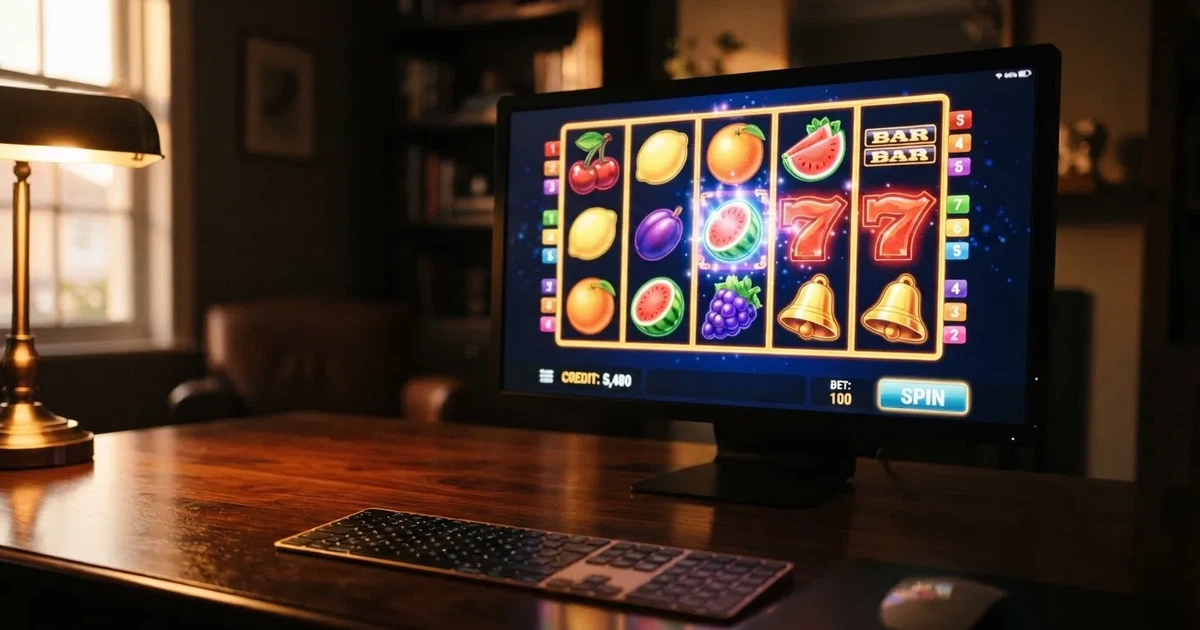
Data current as of 8 November 2026, checked against the ACMA’s formal warning register and the regulator’s public blocking notices.
Table of Contents
- Payment methods named by Pokies Parlour affiliate pages, and what each one actually does
- Bonus patterns affiliate pages attribute to Pokies Parlour
- Paytable, game mix and providers named for Pokies Parlour
- How the Pokies Parlour cluster compares to other ACMA-warned brands
- The site styled as Pokies Parlour: what the public record actually shows
- Why Pokies Parlour has no Australian licence, and what is licensable instead
- Support services Australians can use, and why they do not cover an offshore account
- The blocking rate the ACMA has run, and the rate at which blocked sites are replaced
- Putting the choice together, reader by reader
- Frequently asked questions
Payment methods named by Pokies Parlour affiliate pages, and what each one actually does
A site styled as Pokies Parlour does not publish a single, settled payments page the way a licensed Australian operator does. What is publicly available is a scatter of affiliate write-ups naming the methods the various domains accept, and a regulatory backdrop that disqualifies some of those routes for any site the ACMA has acted against. Five of those methods — Apple Pay, American Express, bank transfer via PayID or Osko, BPAY, and credit cards routed through digital wallets — recur enough to be worth taking in turn.

Apple Pay. Apple Pay itself carries no transaction fee for the consumer and sets no transaction cap of its own; the bank or merchant sets the limits. In Australia the wallet has grown large enough to be impossible to ignore — by the end of 2025, Apple Pay, Google Pay and Samsung Pay between them made up roughly 45% of all card payments by number. That scale matters because Australian banks have started building gambling blocks that reach the wallet as well as the card. ANZ’s gambling block, once switched on, refuses any gambling transaction made through Apple Pay on an eligible card, and removing the block requires a 48-hour cooling-off period. Westpac’s card-level block refuses any transaction tagged under the merchant category code “Betting/Casino Gambling” on personal credit and debit cards. A player who has turned either on is therefore locked out of the deposit screen at the wallet layer, before any offshore site’s own rules apply.
American Express. Amex is the unusual network: it acts as both issuer and processor in its own three-party scheme, which is why it can sit outside the Reserve Bank’s proposed surcharging reforms — the July 2025 review proposes removing surcharges only on eftpos, Mastercard and Visa transactions, and explicitly leaves American Express alone. For an offshore casino the practical question is whether Amex is even in the path. It is not, under Australian rules: licensed wagering has been unable to take credit cards or credit-related products since the 2023 amendment to the Interactive Gambling Act, and that restriction constrains credit-funded digital wallets too. An offshore site asking for an Amex deposit is therefore operating well outside what an Australian player can lawfully fund.
Bank transfer and PayID. Osko, the instant-transfer layer of Australia’s New Payments Platform, settles a bank-to-bank transfer in under a minute at any hour, addressed either to a BSB and account number or to a PayID. The platform itself went live on 13 February 2018 and is currently owned by Australian Payments Plus (AP+), the same body that runs PayID and BPAY. AUSTRAC’s threshold-transaction report rule applies to physical cash over A$10,000 and not to electronic bank transfers, so an ordinary transfer does not trip a per-transaction report — but that does not make a transfer to an offshore casino lawful. PayID adds one protection that a BSB-and-account transfer does not: the payer’s banking screen shows the account holder’s name before the transfer is sent, and AP+ warns that being asked to transfer to a PayID on an illegal gambling site “almost certainly” means a scam site.
BPAY. BPAY is a bill-payment service, not a card network: the payer enters the Biller Code and Customer Reference Number from the bill in their own online banking. It has run in Australia since 18 November 1997, is available through more than 140 banks and financial institutions and is offered by over 95,000 businesses. It is run, like PayID and Osko, by Australian Payments Plus. As a payment method for a casino, BPAY makes almost no sense — a bill-payment rail cannot, by design, route funds in real time to a recipient that is not itself an enrolled biller — and it does not appear as a working deposit path on any licensed Australian wagering product. Its appearance on affiliate pages for offshore sites is therefore more of an inventory line than a usable route.
Credit cards and digital wallets used as credit. Under the Interactive Gambling Act as amended in 2023, Australian-licensed online wagering services cannot accept credit card or credit-related products, and the restriction extends to credit-funded digital wallets. The penalty for licensed operators who take a credit deposit is up to A$247,500. An offshore casino is a different category of operator — the IGA’s penalty provisions do not bind it the way they bind Sportsbet — but the deposit still has to come from somewhere, and a player using a credit card or a credit-funded wallet is, on the Australian side, using a payment method their own regulator has ruled out for gambling. A site asking for one is signalling, more clearly than any review can, that the deposit screen is built for a non-Australian market.
Across all five methods the same picture forms: the methods exist, the methods work in Australian retail life, and the methods are mostly closed or unworkable for a casino the ACMA has already named. The page, or its mirror, that advertises all of them is advertising the inputs of an offshore funnel rather than a path an Australian cardholder can actually walk down.
Bonus patterns affiliate pages attribute to Pokies Parlour
Affiliate pages describing the various Pokies Parlour domains publish a familiar shape: a sign-up offer, several deposit-gated follow-ons, and free-spin bundles attached to one or two of those deposits. None of those pages carry a wagering multiple the ACMA register or any operator terms page can verify, and that gap is itself the point — the offers exist as marketing copy, not as binding terms.
The structural shape the cluster advertises is the multi-deposit welcome package. Across the domains styled as Pokies Parlour, what recurs is a sign-up offer stretched across the first seven deposits, with the headline figure set at A$2,777 in some affiliate write-ups. The mechanics are simple and old: each deposit carries its own percentage match and its own cap, the caps stack to a number larger than any single first-deposit bonus could credibly offer, and the player has to keep funding the account to actually claim the full bundle. A first deposit alone never gets the player close to the headline.
Free-spin packages are attached the same way. Some Pokies Parlour domains bundle spins onto one or two of the later deposits, with the count and the eligible titles set per stage; other domains run free spins as a stand-alone sign-up item, credited after the first real-money deposit clears. What is consistent is the absence, across affiliate pages, of a single wagering multiple or a single maximum-cashout figure that a reader could check. A “777 free spins” line and an “A$777 no-deposit bonus” line both recur in copy, without a number attached that the page can be held to.
The “no deposit” element of the marketing is worth naming on its own. Affiliate pages for several Pokies Parlour domains carry no-deposit bonuses and no-deposit free spins — small in dollar terms, attached to a sign-up with no card required. The mechanics of these offers are the part where the gap between marketing and reality tends to be widest: the headline is the “free” token, the small print almost always converts any winnings from a no-deposit bonus into a balance the player has to deposit and re-wager before withdrawing. A reader weighing one of these offers should treat the “no deposit” headline as the entry point to a longer requirement chain, not as a stand-alone gift.
Why stretch a welcome offer across seven deposits rather than pay a big first-deposit bonus in one go? Three reasons recur in marketing literature and apply here. First, it keeps the player returning across a longer window, which a one-shot bonus does not. Second, it lets the headline total stack higher than any regulator-comfortable single deposit would allow. Third, in a market where the ACMA is actively blocking domains, spreading the marketing across seven staged deposits lets each clone of the site reset its acquisition funnel from its own URL — a single domain is easier to block than seven deposit-gated acquisition sequences running in parallel. The pattern fits what the ACMA has actually had to do.
Paytable, game mix and providers named for Pokies Parlour
The affiliate write-ups describe a fairly standard offshore game catalogue: online pokies, table games, and a live-dealer lobby from a small number of third-party providers whose content appears across most offshore casinos in this segment. The specifics — return-to-player percentages, the volatility classification of any individual title, the exact list of providers — vary by domain and are not presented in a single canonical form anywhere an Australian reader can audit.
What does recur is the “pokies-first” framing the brand name implies, and the implication that Australian-themed slots sit at the top of the lobby. Reviews describe a layout weighted towards five-reel video pokies with bonus rounds and free-spin features, a smaller table-games section covering blackjack, roulette and baccarat in their standard variants, and a live-casino lobby fed by a handful of providers that the offshore segment uses broadly. No claim of a uniquely licensed Australian game appears in the materials.
On the specifics that matter for value — RTP per title, volatility per title, maximum payout, jackpot structure — the affiliate pages either do not publish a figure or publish one only at the aggregate lobby level, which is the level that hides the most. An RTP stated for the lobby as a whole is not an RTP on any spin the player actually makes. The audit here is not that the catalogue is thin; the audit is that the per-title data, which is the only data a player could use to choose a game, is precisely the data the materials do not publish. A reader who wants a real RTP or a real volatility class is better served by a licensed Australian wagering product’s published game rules than by an aggregate figure from an offshore clone.
How the Pokies Parlour cluster compares to other ACMA-warned brands
The Pokies Parlour cluster is one entry in a longer list. The ACMA has, over the past four years, issued formal warnings to offshore operators running prohibited interactive gambling services to Australians across more than a dozen named brands — Rocketplay, Level Up, Woo Casino, Spirit Casino, National Casino, Bizzo Casino, Ignition Casino, Instant Casino, Jackbit, Casino Intense, and Sky Crown among them. The comparison that follows is not a ranking. It is a side-by-side of the public regulatory record, so a reader can see how Pokies Parlour sits in that wider enforcement pattern.
| Brand | ACMA action and date | Operator named by the ACMA | Subject support |
|---|---|---|---|
| Pokies Parlour | Formal warning, September 2026; ISP blocking order, September 2026 | Deloraze Limited and Versus Odds (BV) | — |
| RocketPlay | Formal warning, March 2026 (Pulsup Ltd); earlier May 2022 (Dama N.V.) | Pulsup Ltd | Listings only (industry source) |
| Level Up Casino | Formal warning, May 2022 | Dama N.V. | Listings only (banking source) |
| Woo Casino | Formal warning, March 2025 | Dama N.V. | — |
| Spirit Casino | Formal warning, May 2025 | Dama N.V. | — |
| National Casino | Formal warning, July 2025 | Consolutetish S.R.L. | Listings only (regulator and registry sources) |
| Bizzo Casino | Formal warning, July 2025 (Consolutetish S.R.L.); earlier 2022 (TechSolutions) | Consolutetish S.R.L. | Listings only (industry source) |
| Ignition Casino | Formal warning, July 2025 | Bamboo Media | — |
| Instant Casino | Formal warning, February 2025 | EOD Code SRL | Listings only (payment and registry sources) |
| Jackbit | Formal warning, April 2026 | Ryker B.V. | — |
| Casino Intense | Formal warning, April 2025 | Sterplay Holding Ltd | Listings only (regulator, registry, industry sources) |
| Sky Crown | Formal warning, 2022 | Hollycorn N.V. | — |
Several things are worth reading off the table. First, Pokies Parlour is one of only two entries on the list for which the ACMA has both issued a formal warning and ordered ISPs to block the domain; the other six sites blocked in the same round were Ninja Spins, Pokies Online Casino, CasinoAus, Australian Casino Sites and AU Online Casino. Second, the operators named by the ACMA are almost entirely small, foreign-registered shelf companies — Dama N.V., Hollycorn N.V., Consolutetish S.R.L., Sterplay Holding Ltd, Ryker B.V., Bamboo Media, Pulsup Ltd, EOD Code SRL, Deloraze Limited, Versus Odds (BV). The pattern of a Curaçao or similar offshore holder running several branded casinos under different URLs is the rule, not the exception. Third, several operators have been warned more than once: Dama N.V. covers RocketPlay (2022), Level Up (2022), Woo Casino (2025) and Spirit Casino (2025); TechSolutions and Consolutetish together cover Bizzo Casino (2022 and 2025).
The “Subject support” column is the reader-side detail. A cell marked with a payment, registry or industry source name means that domain has been mentioned in the public listings of that body — for instance, National Casino appearing in the ACMA’s own register and in AUSTRAC’s and BetStop’s listings — but only as an entry in a list, never as an Australian-licensed service. An em dash means no such listing source was found at all. The honest reading is that none of these domains is connected to an Australian consumer-protection body, and the listings in question are the lists of services Australians are warned against, not the lists Australians are protected by.
The site styled as Pokies Parlour: what the public record actually shows
The Pokies Parlour name sits on several domains, none of which is registered in Australia and none of which carries an Australian wagering licence. The brand itself is held by Deloraze Limited and Versus Odds (BV), the two operators the ACMA named when it issued a formal warning under section 64A of the Interactive Gambling Act 2001 in September 2026. The same round saw the ACMA order Australian internet service providers to block Pokies Parlour along with five other offshore sites — Ninja Spins, Pokies Online Casino, CasinoAus, Australian Casino Sites and AU Online Casino — on the finding that each breached the Interactive Gambling Act 2001. Pokies Parlour is the only one of those six for which an individual formal warning has also been published.
The shape of the brand, beyond the regulatory record, is largely what its affiliate pages describe it as: an offshore online casino whose pitch to an Australian audience leans on multi-deposit welcome packages, free-spin bundles, and the Australian English spelling of “pokies” in the brand name. Its licensed status, in any jurisdiction where Australian players might expect one, is not stated on the affiliate pages at all. The licences those pages do reference — typically Curaçao, occasionally Anjouan — apply to the offshore operator and to the offshore player; they do not convert an offshore service into an Australian one.
What the site is not is a place where an Australian can claim Australian consumer protection. The Interactive Gambling Act targets the provider, not the player — no Australian has been prosecuted for placing an offshore bet — but the consequence for the player is that there is no local regulator to complain to, no local alternative-dispute-resolution scheme to escalate a refused withdrawal to, and no local guarantee that a balance on a blocked domain can be recovered. The ACMA’s blocking order comes with a domain going dark in Australia, not with a payout window.
Why Pokies Parlour has no Australian licence, and what is licensable instead
No state or territory in Australia licenses an online casino, an online pokies site or in-play betting. The Interactive Gambling Act 2001, strengthened by the Interactive Gambling Amendment Act 2017, makes the provision of those services to a person in Australia an offence; the Interactive Gambling Amendment Act 2023 added the credit-card ban that has applied to licensed wagering since 11 June 2024. The Interactive Gambling Amendment (Gambling Reform) Bill 2026 passed Parliament on 19 August 2026, with advertising and inducement measures commencing on 1 January 2027 — a law with a start date, not yet in force on a page written in 2026. The minimum age is 18.
What is licensable is wagering on races and on sporting events placed before the event, lotteries and keno. In practice the licensing happens at territory level, and the Northern Territory Racing and Wagering Commission (NTRWC) is the body that regulates 52 of Australia’s online bookmakers — Sportsbet, Bet365, Ladbrokes among them. The NTRWC runs on a small footprint: it has no full-time staff and meets once a month in Darwin. That thin regulator over a large market is part of why the ACMA’s blocking work has been the practical enforcement instrument against offshore operators who ignore the licensing regime altogether.
Enforcement falls to the ACMA, which investigates, issues formal warnings and can direct Australian ISPs to block a domain. As of the round reported on 26 June 2026, the ACMA had asked ISPs to block 1,751 illegal gambling and affiliate-marketing websites since the first blocking request in November 2019, and more than 230 unlicensed gambling services had left the Australian market since enforcement was strengthened in 2017. The 12 sites in that round were 7Signs, ChromaBet, Donbet, Duospin, Freshbet, Slots Gem, Jacks Club, Lucky Start, Pointsbetz, Spinrise, Vinyl Casino and Wildsino. Pokies Parlour’s own block was ordered separately, in the September 2026 round.
The credit-card ban has bite even for offshore sites. Australian-licensed wagering cannot take a credit card or credit-related product, including credit-funded digital wallets like Apple Pay, since 11 June 2024; the penalty for a licensed operator is up to A$247,500. An offshore casino is not directly bound by that penalty, but a player funding a deposit with a credit card is using a payment route their own regulator has ruled out, and an offshore site that accepts one is operating further outside the Australian framework than an offshore site that does not.
Estimated losses to illegal sites, in the most recent published figure, sit around A$3.9 billion a year — a 2025 H2 Gambling Capital estimate reported in June 2026 — and the share of gambling going through legal channels has fallen from 74% in 2021 to 64%. The figure is an estimate, not a measured turnover; the direction is the part the regulator flags.
Tax is the part a player can act on. Recreational gambling winnings are not assessable income under section 6-5 of the Income Tax Assessment Act 1997, and losses are not deductible unless the person is carrying on a business of gambling — a category most readers will not fall into. “Check with the ATO” remains the only safe framing of edge cases.
Support services Australians can use, and why they do not cover an offshore account
The Australian safety net for a player who wants to stop gambling is real, and it sits on three rails.
BetStop, the National Self-Exclusion Register, has been live since August 2023. A registration excludes the player from every Australian-licensed online and phone wagering service. What it does not do is reach an offshore casino. An offshore site is not connected to BetStop, has no obligation to honour a BetStop registration, and is not in any technical position to enforce one. A player who has self-excluded and then opens an offshore account has, in practical terms, self-excluded from the legal market only.
The National Gambling Helpline is 1800 858 858, free, available 24/7, with a chat service at Gambling Help Online. The helpline is for the player, not the offshore operator; it does not arrange withdrawals, it does not negotiate with offshore customer support, and it is not an alternative dispute resolution body. What it does is connect the player to counselling, financial counselling and, where the player wants it, a referral into BetStop.
Bank-level gambling blocks — Westpac’s card-level block on merchant category code “Betting/Casino Gambling”, ANZ’s app-activated block that covers gambling transactions made through digital wallets as well as on the card itself — close the deposit end of the funnel on the player’s own bank account. These are useful against offshore sites as well as licensed ones, because the merchant category code is set at the acquirer level rather than at the operator. The bank’s block is the only safety rail that does not require the operator’s cooperation.
The asymmetry is worth naming: every safety rail Australia offers — BetStop, the helpline, the bank block — is on the player side. None of them is a rail the offshore operator runs on. A player who has a problem with an Australian-licensed wagering product has somewhere to escalate; a player with the same problem on an offshore site does not.
The blocking rate the ACMA has run, and the rate at which blocked sites are replaced
The arithmetic the public record lets a reader do is the rate at which the ACMA’s blocking work has accumulated, and the rate at which the offshore end of the market has had to replace the sites it loses. The headline figures: 1,751 illegal gambling and affiliate-marketing websites blocked since the first blocking request in November 2019, and 12 sites added in the single round reported on 26 June 2026.
That gives a band rather than a single figure. Over the roughly six-and-a-half-year window from November 2019 to June 2026 — about 80 months — the ACMA’s blocking work has averaged between roughly 20 and 25 sites per month, with a clear acceleration after the 2017 enforcement strengthening began to bite and a step-up after BetStop went live in August 2023. The lower end of that band reflects the early years of the regime, when individual blocking rounds were smaller; the upper end reflects the recent pace, where single rounds have moved into double digits. The 12 sites in the June 2026 round are not an outlier against the recent trend — they sit inside it.
The reader-side meaning is that the list of blocked domains is not a one-time event. Each round blocks the specific URLs the ACMA has investigated; it does not block the operator behind them, who can register new domains and resume marketing under a new name within weeks. The Pokies Parlour cluster itself is a version of that pattern: the same brand, the same operator, several domains, each of them a separate target for a blocking round. A reader treating the ACMA’s blocking list as a finished document is treating a moving target as a fixed one. The right reading is the rate, not the snapshot.
Putting the choice together, reader by reader
The page so far has run through what is publicly known about Pokies Parlour — the offshore operator, the multi-deposit marketing, the payments named on affiliate pages, the ACMA warning and the ISP blocking order — and through the wider Australian framework that explains why none of that is licensable here. The remaining choice is the one a reader actually faces, and it looks different depending on who is asking.
A reader who has only ever used Australian-licensed wagering and is meeting the Pokies Parlour name in a search result is being asked, in effect, to step off a regulated rail. The Australian rail carries credit-card and responsible-gambling protections, a complaints path, a self-exclusion register the operator is bound to honour, and a regulator that has already taken action against several of the brands Pokies Parlour sits alongside. The offshore route offers none of those, and adds a deposit-blocking bank screen that an Australian bank has already trained itself to enforce. For that reader, the choice the marketing is selling is a step down in safety for a step up in headline bonus size — and the bonus size, on the figures this page carries, is not what makes the offer worth taking.
A reader who is already using an offshore site and is comparing Pokies Parlour with the other brands on the ACMA’s enforcement list is asking a sharper question. The comparison in the table above shows that Pokies Parlour is one of the few brands on the list that has attracted both a formal warning and a separate blocking order in the same regulatory round, and that the operator behind it is a small, foreign-registered shelf company with no Australian presence. The same is broadly true of the rest of the list, but the block-and-warn combination is not. For that reader, the relevant comparison is not Pokies Parlour against another offshore brand; it is offshore against Australian-licensed, and the table that runs against the offshore set does not change the answer.
A reader whose decision is already made and who is simply looking for the closest match in the offshore segment will not find a benign option here. The data the public record carries does not support a ranking within that segment; it supports the conclusion that the segment itself is outside Australian law. The honest reading of this page, for that reader, is the same as the honest reading for any other: the comparison the page set out to make closes on the licensed end of the market, because that is where the protections sit.
Frequently asked questions
Why does the site styled as Pokies Parlour appear across several different domain names?
The Pokies Parlour name is held by Deloraze Limited and Versus Odds (BV), the two operators the ACMA named in its September 2026 formal warning. The brand has been marketed under several domains over time, in part because each domain the ACMA blocks is replaced by a new one, and in part because affiliate marketing pages run separate landing pages for separate audience targets. None of those domains is registered in Australia.
Is a site styled as Pokies Parlour actually licensed to accept Australian players?
No. Online casino games, online pokies and in-play betting cannot be licensed in any Australian state or territory under the Interactive Gambling Act 2001. An offshore site displaying a Curaçao or similar licence is licensed to operate in that offshore jurisdiction; it is not licensed to accept Australian players, and the ACMA has formally warned the operators and ordered Australian ISPs to block the domain.
What deposit bonus does a site styled this way typically advertise on its various domains?
Affiliate pages for several Pokies Parlour domains advertise a multi-deposit welcome package, in some cases stretching across the first seven deposits and totalling A$2,777 in headline value, often paired with a free-spin bundle attached to one or two of the later deposits. No-deposit bonus and free-spin offers also recur. None of these figures is published with a wagering multiple or maximum cashout an Australian player could check against an operator’s terms.
How can someone tell which of several similarly named domains is currently being advertised?
The clearest tell is the ACMA’s blocking register and formal-warning register, both of which are public and updated each enforcement round. A domain the ACMA has ordered blocked will not resolve through an Australian ISP without a workaround, and the formal warning publication names the operator behind the brand. Affiliate pages also list the current landing URL, but those pages are the marketing side of the funnel and the ACMA register is the regulatory side.
What do reviews of a site like this usually say about its withdrawal process?
Reviews and complaint aggregators for offshore casinos in this segment typically describe withdrawal processes that are slow, conditional on bonus-wagering clearance, and subject to identity verification that the site did not require at deposit. Because the operator is offshore, there is no Australian alternative-dispute-resolution body to escalate a refused withdrawal to, and the ACMA’s blocking order does not include a payout provision — once the domain is blocked, any balance on it is, in practical terms, unrecoverable from the Australian side.
Why would a brand like this run a sign-up bonus across the first several deposits rather than just the first?
Three reasons recur. Spreading the offer keeps the player returning across a longer window than a single deposit would. Stacking several smaller caps lets the headline total reach a figure no single deposit could offer without tripping regulator comfort thresholds. And in a market where the ACMA is actively blocking domains, a staged acquisition funnel lets each clone of the site reset its own marketing under its own URL — easier for the operator to absorb a single blocking round against one URL than against one bonus tied to one URL.