
Best RTP Pokies in Australia: What a Return-to-Player Figure Actually Buys You
The phrase “best RTP pokies Australia” gets bandied around as though there were a list to consult. There is, in a sense — but the list a regulator publishes and the list an offshore affiliate page ranks are two very different documents, and only one of them has any legal force behind the numbers it prints. This page is about the first.
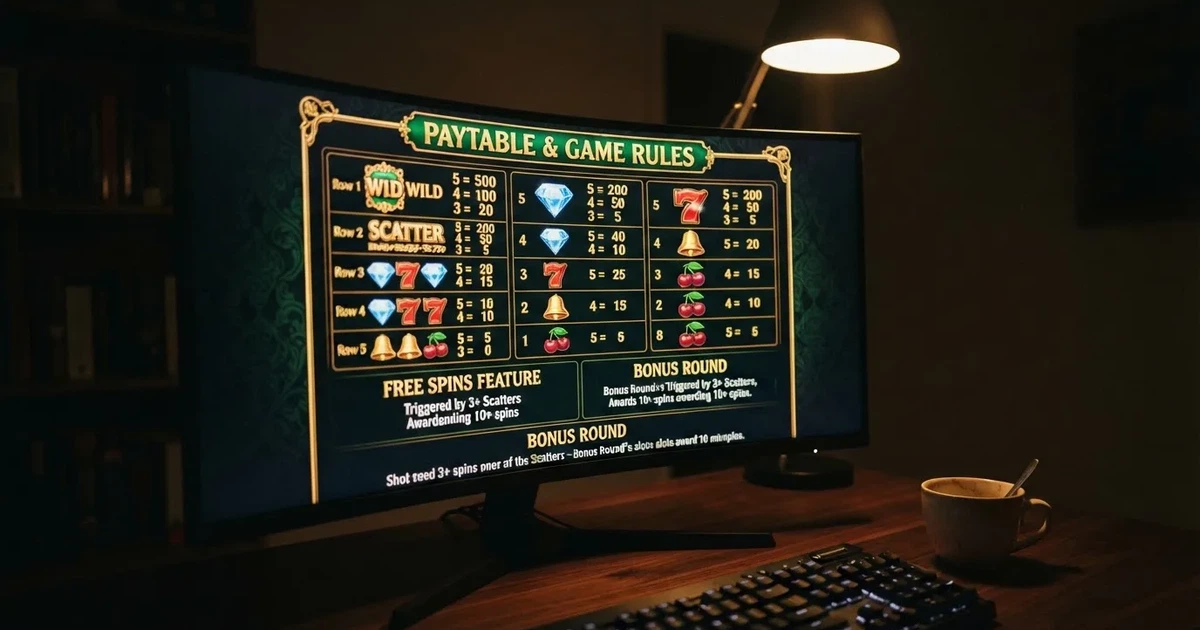
What follows is what high-RTP pokies mean in the Australian market, where that figure has to be disclosed by law, which jurisdictions set which floor, and what happens when an offshore site advertises a return percentage to a player who sits inside a country where the product itself is prohibited. Eleven offshore brands that the ACMA has acted against in the last four years appear at the bottom of this page — not because they belong in a “best of” list, but because the question “best RTP pokies Australia” tends to draw readers toward them, and they are worth naming for what they are.
Current as of 8 November 2026 · Licence and blocking data checked against the ACMA’s published register of formal warnings and igamingbusiness.com report on the June 2026 blocking round.
Table of Contents
- What RTP actually is, and what it isn’t
- The paytable: where the figure legally has to live
- Why the same phrase points offshore
- Why no one can sell you this product online
- What enforcement actually looks like
- How an RTP figure is set, approved, and locked
- Where this leaves the offshore comparison
- What the player can actually do
- What the offshore picture really looks like
- A note on the licensed-but-offshore confusion
- What changes in 2026, and what does not
- The mechanics behind the figure
- Where the offshore side breaks contact with Australian reality
- Frequently asked questions
What RTP actually is, and what it isn’t
RTP stands for return to player. It is a percentage of all money wagered that a machine is mathematically designed to pay back to players across the entire population of spins it will ever run. A 90% RTP pokies machine returns, on average over its operating life, ninety cents of every dollar fed into it. The other ten cents is the house edge.

Three things follow from that definition, and each one is where readers most often get snagged.
First, RTP is a long-run average. It is not a forecast of what any individual session will return. A 95% machine can pay out 200% in one player’s first hour and 40% in another’s eighth. The figure is the average across the population of all possible outcomes, weighted by probability, and it smooths out individual variance in the same way a single coin flip says nothing about whether a coin is fair. Over a million spins the 95% figure starts to assert itself. Over thirty spins it is barely visible.
Second, RTP is set at the machine level and locked in software. A venue does not “choose” a return percentage from a menu each morning. Each approved game configuration — the game’s mathematics file, the reel strip layout, the paytable — is submitted to the state regulator and stamped before the cabinet goes on the floor. The operator can swap in a lower-RTP variant of the same title, but only from among configurations the regulator has already approved, and the cabinet itself is sealed.
Third, the figure printed on a help screen is the theoretical return. It assumes the player is betting the maximum eligible denomination on every line and triggers every feature the game offers. Drop one of those conditions and the realised return on that player’s session is lower than the figure on the screen, often meaningfully so.
This is what a regulator’s RTP figure really tells you: the upper bound of what the machine is mathematically set up to give back, under conditions most real sessions do not quite meet. It is not a promise. It is not a strategy. It is the boundary inside which the game operates.
The paytable: where the figure legally has to live
In Australia the help screen on a licensed poker machine must display the theoretical return-to-player figure and a statement that it is a long-term average. That disclosure requirement is one of the quiet load-bearing rules of the market: it means the RTP printed on a help screen inside a licensed venue is a regulatory fact, not a marketing claim.

The instrument that makes this work is state-by-state regulation rather than a single national standard. Each jurisdiction sets its own minimum return, its own disclosure rules, and its own approval regime for game variations. Research’s game shows the floors as they sit in each state: 85% in New South Wales, the Northern Territory and Queensland, generally 85% in Victoria with 87% applied to the tables at Crown Melbourne, 87% in the Australian Capital Territory and Tasmania, 87.5% in South Australia, and 90% in Western Australia. The range is not accidental — it reflects the politics of harm minimisation as much as it reflects machine mathematics. Western Australia’s 90% floor is the highest in the country, and the state compensates by being the only one that does not permit poker machines in pubs or clubs at all; the only legal pokies in WA are the roughly 2,500 machines at Crown Perth.
For a player inside an Australian venue, the practical implication is that the lowest-paying cabinet they can sit down at returns no less than 85% under its theoretical maximum configuration. That is the floor of the legal market, not its average — most approved titles in clubs and casinos run in the 87% to 92% band, with a small minority of “high RTP” configurations approved at 94% or above. The phrasing on the help screen will name the figure. Where the cabinet does not name it, the venue itself is out of step with its state regulator, and that is a complaint that goes to the relevant authority rather than to the cabinet.
A high-RTP pokies game, in the strict Australian sense, is any approved configuration whose theoretical return is at the upper end of what the regulator has stamped for that title. The point of chasing one is not to beat the house — the house edge is fixed inside the game — but to play the longest session per dollar that the law permits.
Why the same phrase points offshore
The phrase “best RTP pokies Australia” does, in practice, lead a lot of search traffic toward offshore online casinos. The traffic arrives expecting a comparison chart. The comparison that actually exists is between two different products entirely.
Onshore: a poker machine is a piece of regulated equipment sitting in a licensed pub, club or casino. Its RTP is approved by a state regulator, disclosed on the help screen, and embedded in software that the venue cannot alter after installation. The player sits in front of it, plays it in person, and is protected by Australian consumer law, state gambling regulation and venue-level responsible-gambling measures such as pre-commitment cards, signage and trained staff.
Offshore: an online casino advertising to people in Australia is providing a prohibited interactive gambling service under the Interactive Gambling Act 2001 as strengthened by the 2017 amendments. The site holds a licence somewhere — Curaçao, Anjouan, occasionally Malta — none of which is a licence to provide online casino games to Australians. The RTP the site advertises is a marketing claim, not a regulatory fact. The player is sitting in Australia, the site is sitting elsewhere, and the Australian consumer protection framework that governs a Crown Melbourne cabinet simply does not reach across that border.
The “best RTP” ranking an offshore affiliate publishes is therefore not a ranking of machines inside the Australian regulatory system. It is a ranking of marketing claims by operators who have been formally warned, blocked, or both, by the regulator whose job is to keep them out of the country. This page treats that distinction as the load-bearing fact of the entire subject.
Why no one can sell you this product online
The Interactive Gambling Act 2001, as amended in 2017, makes it an offence to provide online casino games, online pokies and in-play betting to a person physically in Australia. No state or territory issues licences for it. What is licensable is wagering on races and sporting events placed before the event, lotteries, and keno — in practice, the online wagering market is licensed overwhelmingly by the Northern Territory, which regulates 52 of Australia’s online bookmakers including Sportsbet, Bet365 and Ladbrokes through a commission that has no full-time staff and meets once a month in Darwin. Online casino is a different product, and it is not licensable in any Australian jurisdiction.
The ACMA enforces the prohibition. It investigates complaints, issues formal warnings to operators, and directs Australian internet service providers to block sites that continue to offer prohibited services to Australians. The individual bettor is not the target — the Act targets the provider — but the consequence for the player is real: an offshore site offers no Australian consumer protection, no Australian complaints body and no Australian recourse if a withdrawal is refused, and the site itself can be blocked with a balance still on it.
This is the consequence the phrase “best RTP pokies Australia” runs into the moment a reader leaves the onshore product and looks at what the offshore sites are offering. The page they land on will compare RTP figures that no Australian regulator has examined, with bonus terms no Australian consumer law enforces, under a licence no Australian authority issued. The product is prohibited here, and that prohibition is the reason the comparison is built on sand.
What enforcement actually looks like
The ACMA’s blocking programme is the most concrete measure of how the prohibition lands on the offshore side. As of June 2026 the regulator had asked Australian ISPs to block 1,751 illegal gambling and affiliate marketing websites since the first blocking request went out in November 2019. The same figure puts more than 230 unlicensed gambling services out of the Australian market since enforcement was stepped up in 2017, and H2 Gambling Capital’s 2025 estimate is that Australians lose around A$3.9 billion a year to those illegal sites — with the share of gambling going through legal channels falling from 74% in 2021 to 64% by 2025.
The blocking rate, expressed as a band rather than a single number: averaged across the full period from November 2019 to June 2026 — roughly 79 months — the ACMA’s blocking requests have removed sites at a rate of around 22 per month, with the cadence accelerating after 2021 as the 2017 amendments bedded in and ISPs came to treat blocking requests as routine. In the June 2026 round alone the regulator named twelve sites: 7Signs, ChromaBet, Donbet, Duospin, Freshbet, Slots Gem, Jacks Club, Lucky Start, Pointsbetz.com, Spinrise, Vinyl Casino and Wildsino. The condition attached to that rate is important — it is the rate at which the regulator has been able to identify, formally warn, and pursue blocking, not the rate at which new sites appear. The two flows are not the same. A blocked site is not the same as a closed site; some reappear under new domains, and the ACMA’s most recent rounds read like a hand-to-hand fight against that churn rather than a tidy reduction.
What the rate does show is that the prohibition is not symbolic. The same enforcement timeline contains formal warnings issued by name to specific operators: Pulsup Ltd over Rocketplay in March 2026, Ryker B.V. over Jackbit and CasinOK in April 2026, Bamboo Media over Ignition Casino and Consolutetish S.R.L. over National Casino and Bizzo Casino in July 2025, EOD Code SRL over Instant Casino in February 2025, Sterplay Holding Ltd over Casino Intense in April 2025, and Dama N.V. over Woo Casino in March 2025 and Spirit Casino in May 2025 — with Dama N.V. having already been warned in May 2022 over six other brands including Rocketplay. A reader who lands on any of those domains should know, before they deposit, that the regulator has already put the operator on notice.
How an RTP figure is set, approved, and locked
Inside the licensed Australian market, the path from a game concept to a cabinet on a pub floor runs through the state regulator. The manufacturer submits a game — a mathematics file, the reel strip layout, the paytable, the help screen copy. The regulator’s gaming laboratory tests the software, confirms the theoretical return, and either approves the configuration as submitted or approves it with conditions. Once approved, a cabinet containing that software is sealed: the venue cannot reconfigure it without breaking the seal and triggering re-approval. In some states, even swapping a chip requires an authorised technician.
This is the structural reason the Australian RTP figure on a help screen is trustworthy in a way an offshore percentage is not. A regulator has tested the math. A technician has sealed the cabinet. A state inspector can audit the venue and pull the cabinet apart. The figure is a regulatory fact, with a complaint, a recovery, and an enforcement channel to keep it honest.
The corollary is that “high RTP” inside the Australian system is bounded by what regulators approve. A manufacturer cannot simply ship a 99% theoretical return to chase the high-RTP pokies crowd; the state regulator’s approval regime, the venue’s commercial model, and the platform’s overall portfolio return all sit in the conversation. The published upper end of the high-RTP pokies band in most states sits in the mid-90s for a small number of approved configurations, with most machines on most floors operating in the high 80s to low 90s. The numbers are not glamorous. They are not designed to be. They are designed to keep the operator in business and the regulator satisfied, which is what a functioning regulatory floor looks like.
Where this leaves the offshore comparison
An offshore site advertising to Australians is doing two things at once. It is offering a product the Australian regulator has explicitly prohibited. And it is presenting an RTP figure that no Australian regulator has tested. The figure is, on the operator’s own terms, exactly what they say it is — and on the regulator’s terms, exactly what they have warned the operator about.
The deeper consequence of that gap is what it costs the player who treats the comparison as a buying guide. If the offshore site is blocked in Australia, the player’s session ends mid-game, the balance can be stranded, and there is no Australian body to escalate to. If the site is not blocked yet, the player is still dealing with an operator whose licence is in a jurisdiction whose regulator has no authority over the player’s complaint, whose payment rules do not include Australian credit-card and crypto prohibitions, and whose bonus terms — including maximum cashout caps, game-weighting percentages and dormancy clauses — sit outside any framework the player can enforce.
This is why the page treats the offshore comparison as a comparison of regulatory exposures rather than a comparison of return percentages. The numbers on the affiliate page do not survive contact with the jurisdiction the reader is sitting in.
What the player can actually do
Inside the Australian system, the practical steps for a player who genuinely wants the highest return available are short.
First, look at the help screen on the cabinet before play. Every regulated machine prints its theoretical RTP there, and the configuration that returns the most is the configuration whose help screen reports the highest percentage of the approved range. Some venues run multiple variants of the same title; the help screen disambiguates them.
Second, ask the venue which approved variants are running. Clubs in NSW, for example, may hold cabinets from a manufacturer’s range with returns spanning several percentage points; the venue knows which cabinet is which. The question takes less time than the spin cycle does.
Third, treat the figure on the screen as the ceiling, not the floor, of what the machine will return. Bet the eligible denomination, activate all lines, and run the game in the configuration the regulator tested. Anything less gives back less than the figure on the screen.
Fourth, use the responsible-gambling infrastructure that operates alongside the machines. Gambling Help Online and the National Gambling Helpline (1800 858 858) are free, 24/7, and confidential. BetStop, the National Self-Exclusion Register, has been live since August 2023 and binds every Australian-licensed online and phone wagering service — though it does not bind an offshore casino, which is one more reason the offshore comparison is the wrong frame for this question.
What the offshore picture really looks like
Eleven offshore brands appear in the table below. None of them is recommended as a place to play. Each appears because the ACMA has issued a formal warning against the operator for offering prohibited interactive gambling services to people in Australia, and the table is what an honest “best RTP pokies Australia” answer looks like when the offshore side is included.
The table reads as the regulator’s experience of these brands, not as the brands’ own marketing.
| Brand | ACMA action and date | Operator named by the ACMA | Subject support |
|---|---|---|---|
| RocketPlay | Formal warning, March 2026; earlier warning, May 2022 | Pulsup Ltd (2026); Dama N.V. (2022) | — |
| Level Up Casino | Formal warning, May 2022 | Dama N.V. | Listings note the brand on the BGaming provider site |
| Woo Casino | Formal warning, March 2025 | Dama N.V. | — |
| Spirit Casino | Formal warning, May 2025 | Dama N.V. | — |
| National Casino | Formal warning, July 2025 | Consolutetish S.R.L. | Listings note the brand in general directory sources |
| Bizzo Casino | Formal warning, July 2025; earlier warning, 2022 | Consolutetish S.R.L. (2025); TechSolutions (2022) | — |
| Ignition Casino | Formal warning, July 2025 | Bamboo Media | — |
| Instant Casino | Formal warning, February 2025 | EOD Code SRL | — |
| Jackbit | Formal warning, April 2026 | Ryker B.V. | — |
| Casino Intense | Formal warning, April 2025 | Sterplay Holding Ltd | Listings note the brand on ABC and ACMA publications and on Crown Melbourne’s baccarat page (the last as a comparison data point, not a recommendation) |
| Sky Crown | Formal warning, September 2022 | Hollycorn N.V. | — |
The dates are the dates the ACMA’s formal warning was published, not the dates the operator began offering services to Australians. The operator names are the legal entities the regulator named in those warnings — in several cases the same parent company appears under multiple brands, which is itself one of the regulatory reasons these sites look interchangeable to a player and look distinct to the regulator.
| Brand | ACMA action and date | Operator | Subject support |
|---|---|---|---|
| RocketPlay | Formal warning, March 2026; earlier warning, May 2022 | Pulsup Ltd (2026); Dama N.V. (2022) | — |
| Level Up Casino | Formal warning, May 2022 | Dama N.V. | Listings note the brand on the BGaming provider site |
| Woo Casino | Formal warning, March 2025 | Dama N.V. | — |
| Spirit Casino | Formal warning, May 2025 | Dama N.V. | — |
| National Casino | Formal warning, July 2025 | Consolutetish S.R.L. | Listings note the brand in general directory sources |
| Bizzo Casino | Formal warning, July 2025; earlier warning, 2022 | Consolutetish S.R.L. (2025); TechSolutions (2022) | — |
| Ignition Casino | Formal warning, July 2025 | Bamboo Media | — |
| Instant Casino | Formal warning, February 2025 | EOD Code SRL | — |
| Jackbit | Formal warning, April 2026 | Ryker B.V. | — |
| Casino Intense | Formal warning, April 2025 | Sterplay Holding Ltd | Listings note the brand in general directory sources |
| Sky Crown | Formal warning, September 2022 | Hollycorn N.V. | — |
The subject-support column is intentionally sparse. Research carries no verified RTP, volatility, or payout-time figure for any of these brands from an Australian regulator, an Australian payment processor, or an Australian consumer-protection channel; the only sources available for such figures are affiliate marketing pages, which is exactly the kind of source a reader is trying to get past by reading a comparison page. Where the brand surfaces in a non-affiliate source — BGaming’s own provider page for Level Up, a directory entry for National Casino, the ACMA and ABC publications for Casino Intense alongside an unrelated Crown Melbourne reference — that fact is recorded. Where it does not, the cell stays empty rather than dressed up.
A note on the licensed-but-offshore confusion
Several of the brands above display licences on their footers — Curaçao, Anjouan, occasionally Malta. The licence is genuine. It is not a licence to provide online casino games to Australians, because no such licence exists. The IGA does not prohibit the operator from holding a foreign licence. It prohibits the operator from offering prohibited interactive gambling services to people in Australia. The two are different facts, and the operator’s marketing rarely distinguishes them.
The licences the brands display are also the licences that govern the dispute resolution process a player enters if a withdrawal is refused. That process runs through the foreign regulator, in the foreign language, under foreign consumer law, and reaches an outcome that is not enforceable in Australia without further action. The Australian player has, in practice, the protections of the weakest of the two regimes — and the offshore site has the protections of neither, because the Australian framework does not reach it and the offshore framework was not designed for Australians.
What changes in 2026, and what does not
The Interactive Gambling Amendment (Gambling Reform) Bill 2026 passed Parliament on 19 August 2026. Its advertising and inducement measures commence on 1 January 2027. The bill is therefore law with a start date — not yet in force on a page read in 2026.
What it changes, when it commences, is the Australian end of the marketing channel that pushes offshore brands toward Australian searchers: advertising and inducement restrictions, particularly around bonus offers and affiliate marketing. It does not change the underlying prohibition on the product. Online casino games remain prohibited. The ACMA’s blocking programme continues. Formal warnings continue. The brands above continue to operate outside the Australian regulatory perimeter until such time as the regulator blocks them, the operator withdraws, or the marketing channel dries up.
For a reader looking for the best RTP pokies Australia offers, the bill is a slow-moving reason the offshore comparison will get less reachable over the next year. It does not move the floor on what an onshore cabinet returns. The onshore product remains the only one the Australian regulator has examined, sealed, and disclosed to the player.
The mechanics behind the figure
The reason a high-RTP pokies configuration sits where it sits in the regulator’s range is mechanical, not arbitrary. A slot machine’s mathematics file assigns a probability to every symbol on every reel strip, weights each payline combination, and calculates the expected return across the full population of outcomes. The theoretical return is the sum of (probability × payout) over all combinations, divided by the total amount wagered.
Two levers move that return. The first is the paytable — the payouts assigned to each symbol combination. The second is the reel strip layout — the distribution of symbols across the virtual reels. A game designer can shift the return by either changing what each combination pays or changing how often each combination lands. Both moves are tested by the regulator’s laboratory and stamped into the approved configuration.
For the player, the practical upshot is that the theoretical return on the help screen is a property of the cabinet as configured, not a property of the game as a concept. The same title from the same manufacturer can carry multiple approved returns depending on which configuration the venue installed. That is why the help screen matters and why the marketing copy on a game in an online catalogue does not.
Where the offshore side breaks contact with Australian reality
The offshore comparison chart typically assumes the player can compare like with like. A 96% pokies from one offshore operator against a 94% from another. The comparison is built on the assumption that the products are governed by the same framework, that the figures have been audited under the same standard, and that the player has comparable recourse if a withdrawal is refused.
None of those assumptions holds across the Australian border.
A 96% RTP figure from a Curaçao-licensed site operating toward Australian players is a marketing claim, not an audited fact in the Australian sense. The game mathematics may be exactly as published. The payout rate on the player’s session is at the mercy of the operator’s RNG implementation, the bonus terms attached to the deposit, and the maximum-bet rule the operator enforces during wagering. The help screen is a marketing screen. The seal on the cabinet does not exist. The dispute resolution runs through a regulator whose consumer protection framework was not written for the player reading this page.
That is the consequence the offshore comparison misses: the RTP figure is the same number, the regulatory context is not, and the regulatory context is what the player is actually buying when they sit down at an Australian cabinet rather than logging into an offshore site.
Frequently asked questions
What counts as a “high” RTP figure on an Australian pokies machine?
A high-RTP pokies configuration is one whose theoretical return sits at the upper end of what the state regulator has approved for that title. In practice, on Australian floors, the high end is somewhere in the mid-90s for a small minority of approved configurations. Most machines on most floors operate in the high 80s to low 90s.
Is RTP the same thing as the chance of winning on any single spin?
No. RTP is a long-run average across the full population of outcomes on the machine. Any single spin is governed by the probabilities the manufacturer has built into the reels, and the realised return on a single session can sit well above or well below the theoretical figure. The number on the help screen is a population property, not a session forecast.
Where is a pokies machine’s RTP figure legally required to be disclosed in Australia?
On the help screen of every regulated poker machine in Australia. The disclosure is a regulatory requirement, which is why the figure on the help screen is a regulatory fact in a way an offshore marketing claim is not. State regulators enforce this separately.
Can a venue change a machine’s RTP setting after it’s installed?
Not without breaking the regulator’s seal. Approved game configurations are stamped by the state regulator before the cabinet goes on the floor, and the cabinet is sealed once installed. Reconfiguring requires an authorised technician and re-approval. A venue cannot quietly shift the return upward or downward.
Does a high RTP figure mean smaller or larger individual wins?
Neither, by itself. RTP describes the proportion of money returned across the full population of spins, not the size of any individual win. A high-RTP pokies configuration can carry small frequent wins, large rare wins, or any distribution in between. Volatility — which describes the shape of that distribution — is a separate property that the help screen does not always disclose.