
Big jackpot slots, offshore sites, and what the ACMA has done about them in 2026
The honest answer to “where should I play big jackpot slots online” from inside Australia is that no Australian licence can issue one. The Interactive Gambling Act 2001 prohibits offering online casino games — jackpot slots included — to anyone physically in Australia, and no state or territory regulator stands ready to license them. What the rest of this page does is not pretend that gap is narrower than it is. It sets out what the law actually says, how the Australian Communications and Media Authority has enforced it against the offshore brands that most often surface in a “big jackpot slots” search, and where a reader who genuinely wants the experience should look instead.
Currency stamp: current as of 30 October 2026; verified against the ACMA’s published formal warnings and the regulator’s own blocking-round register.
Table of Contents
- What a “big jackpot slot” actually is
- Why jackpot slots pay out less often between big wins
- The Australian legal frame
- How fast the blocking programme is moving
- What the formal warnings actually cover
- The licensed alternative Australians can actually use
- Protecting yourself if you play anyway
- Tax and the practical shape of a payout
- What this page is not
- The eleven brands the ACMA has formally warned
- How the table below fits the rest of the page
- What a reader should do with this
- Frequently asked questions
What a “big jackpot slot” actually is
The phrase covers two different machines that share a name. A fixed jackpot pays a set amount that does not change — the prize on the paytable is the prize on the paytable. A progressive jackpot does something else. Each losing wager adds a small slice to a prize pool, the pool keeps growing until somebody wins it, then it resets to a predetermined minimum and starts climbing again. The prize in a progressive network can run into seven figures before it lands.

The history of that second kind goes back further than people often assume. International Game Technology’s Megabucks paid out its first progressive jackpot of $4,988,842.17 on 1 February 1987, and the wider format had been in large casinos for the preceding year. Modern online progressives are software versions of the same idea, except the wagers feeding the pool come from spins on networked machines across many venues rather than from a bank of physical one-armed bandits in a single gaming room.
Two design variants dominate the online catalogue. A standard progressive climbs from a seed amount and pays out on a specific symbol combination — five jackpot symbols on a fixed payline, or a bonus wheel triggered by scatter symbols. A “must-hit-by” progressive, sometimes called a mystery jackpot, is a different animal: a random number generator sets the exact payout figure within a preset range (say A$1,000 to A$3,000) the instant the previous jackpot is won, so the prize is mathematically guaranteed to land before it grows past the upper bound. The player does not need to land a particular combination — entry into the bonus round is enough, which is why these jackpots tend to drop more often and at smaller amounts.
The maths behind the prize is what decides whether the game is worth playing for the jackpot specifically. As the pool grows, the theoretical return to player on the maximum-coin spin can rise above 100 per cent. That is the only condition under which a slot bet can become a positive-expectation wager — the game returns more, on average across many spins, than it costs to place. The break-even point is hard to calculate for slot machines because reel layouts are not published, but the principle is straightforward: the bigger the progressive, the closer the game gets to being worth playing for the headline prize alone.
Why jackpot slots pay out less often between big wins
A progressive jackpot machine is two games glued together. The base game pays out at a normal rate — the regular symbol combinations, the smaller bonus features, the small line wins that keep a session from feeling dead. The progressive pool is funded by a separate slice of every wager, which never pays anything out except when the jackpot itself lands. The more the pool grows, the larger the prize, and the longer since the last win — that is what produces the long flat stretches players notice between headline payouts.
The reason is structural, not stinginess. The slot’s contribution rate to the pool is fixed, and the pool’s reset value is fixed, so the average time between wins on a given network is a function of how many machines are feeding it and how heavily they are played. A wide-area progressive linking hundreds of online casinos across multiple software platforms takes longer to hit than a single-venue progressive because the volume has to be much higher before the odds catch up with the seed-to-cap range. That is also why must-hit-by jackpots land more frequently: the prize ceiling is so low relative to the contribution rate that the math forces a hit within a predictable window.
There is a marketing story around this that does not survive contact with the maths. Operators like to say a progressive is “due” because it has not paid out in a while. The slot has no memory of its last win. Every spin is an independent trial, and the probability of hitting the jackpot on the next spin is the same whether the pool is at its seed value or ten times higher. What changes is the expected value of the spin, because the prize on offer has grown — but that is an average across many spins, not a hint that the next one is special.
The Australian legal frame
The Interactive Gambling Act 2001, tightened by the Interactive Gambling Amendment Act 2017, makes it an offence to provide online casino games or online pokies to a person in Australia. Jackpot slots fall squarely inside that prohibition. The Act does not target the player — it targets the provider — so an individual punter who opens an offshore site from Sydney is not personally exposed to prosecution. The site itself is operating illegally, and the consequences flow to the operator, not the customer.
What is licensable in Australia is narrower than the offshore marketing would have a reader believe. Wagering on racing and sporting events placed before the event is licensable, as are lotteries and keno. In practice those licences cluster with the Northern Territory Racing and Wagering Commission — 52 of Australia’s online bookmakers, including Sportsbet, Bet365 and Ladbrokes, are licensed in the Territory. The Commission is a small body. It has no full-time staff and meets once a month in Darwin, which is part of why reform legislation has been moving through the federal Parliament: the de facto regulator for a large slice of the country’s licensed wagering is run on a part-time basis.
Minimum age across all Australian gambling products is 18. There is no carve-out for jackpot slots, and there is no jurisdiction in which an Australian-licensed online casino can offer them.
How the ACMA enforces the prohibition
The Australian Communications and Media Authority has three tools. It can investigate a service suspected of offering prohibited content to Australians; it can issue a formal warning naming the operator and the breach; and it can ask Australian internet service providers to block a website at the network level. The blocking request is the heaviest of the three — once an ISP receives one, the site becomes unreachable from a standard Australian residential connection.
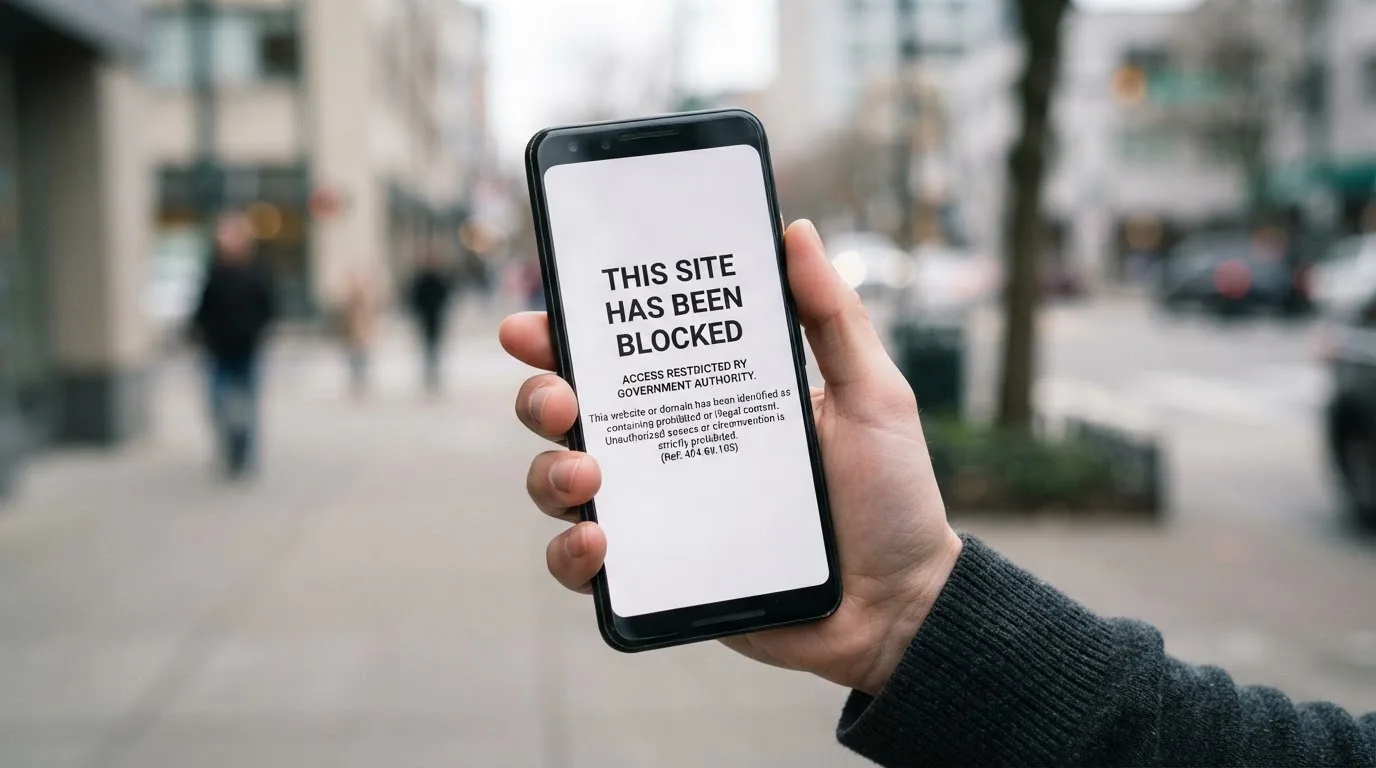
The blocking programme has run for almost seven years. The first blocking request was issued in November 2019, and by June 2026 a running total of 1,751 illegal gambling and affiliate marketing websites had been blocked across every round since. More than 230 unlicensed gambling services have left the Australian market entirely since enforcement was strengthened in 2017, some after a formal warning and others after the prospect of a block became specific enough that they withdrew. In a single round reported on 26 June 2026, the ACMA asked Australian ISPs to block twelve more names: 7Signs, ChromaBet, Donbet, Duospin, Freshbet, Slots Gem, Jacks Club, Lucky Start, Pointsbetz, Spinrise, Vinyl Casino and Wildsino.
The formal warnings are the more visible part of the record, because they name the operator behind the brand. A warning is published on the ACMA’s site, addressed to the company, and ties the breach to the Interactive Gambling Act. The pattern over the last few years is the second fact this page rests on: the same parent companies keep appearing under different brand names, and the ACMA keeps publishing fresh warnings each time a new brand launches into the Australian market.
The wider economic picture explains why the enforcement keeps happening. H2 Gambling Capital’s 2025 report estimates Australians lose about A$3.9 billion a year to illegal gambling sites. The share of gambling going through legal channels has fallen from 74 per cent in 2021 to 64 per cent, which is the gap the ACMA is trying to close. None of that money is recoverable by the player, and none of it generates Australian tax revenue — the operators are offshore, the wagers leave the country, and the consumer protections that attach to a locally licensed wagering service do not apply.
Reading the ACMA’s published warnings
Each formal warning carries three pieces of information a reader can use: the date, the operator company named, and the brand or brands the warning covers. What it does not carry is a finding of fact about the operator’s other business — the warning is about one service at one moment. A company warned in 2022 can be running new brands in 2026 under a different registration, and the ACMA can warn it again the next time those brands target Australian customers.
The pattern is also worth reading for what it is not. The ACMA does not publish a list of every offshore site it has investigated — only the ones it has taken formal action on. A site that has never appeared in a warning is not necessarily lawful; it may simply not have crossed the threshold yet, or it may not have come to the ACMA’s attention in a form that supports a warning.
How fast the blocking programme is moving
The blocking rate is the one calculation on this page. The first ACMA blocking request was issued in November 2019; by June 2026 a running total of 1,751 illegal gambling and affiliate marketing websites had been blocked across every round. Working from those two figures, the blocking programme has been removing sites at an average pace of roughly 265 sites a year — close to five a week, every week, since 2019. The June 2026 round alone asked ISPs to block twelve more, which is a typical week of work for the ACMA rather than an unusual one.
The honest way to present this is as a band rather than a single figure. The total covers more than six and a half years of enforcement, the cadence has accelerated as the ACMA has streamlined its process, and a single year can swing substantially above or below the average depending on how many affiliate marketing pages are caught up in a given round. What the average captures is the steady pressure the ACMA is applying; what it does not capture is that the supply side responds — when one site is blocked, a replacement tends to appear, often under a different name and sometimes from the same operator. The blocking programme is not a one-off clean-up, and the average is the floor, not the ceiling, of how much enforcement the ACMA is doing in any given year.
What the formal warnings actually cover
A formal warning names an operator, not a brand in isolation. The ACMA’s enforcement over the last four years has caught the same handful of parent companies cycling through different brand names, and reading the warnings together gives a clearer picture than reading any one in isolation.
Dama N.V. is the operator that appears most often. The ACMA warned it in May 2022 over six brands — Bambet, Dazard, Level Up, Rocketplay, Wild Tornado and Cobra Casinos — and has since added Woo Casino (March 2025) and Spirit Casino (May 2025) to the same operator’s record. Bamboo Media was warned in July 2025 over Ignition Casino. Consolutetish S.R.L. was warned the same month over National Casino and Bizzo Casino, the latter of which had already been the subject of a 2022 formal warning to TechSolutions (CY) Group Limited and TechSolutions Group N.V. EOD Code SRL was warned in February 2025 over Instant Casino. Ryker B.V. was warned in April 2026 over Jackbit and CasinOK. Sterplay Holding Ltd was warned in April 2025 over Casino Intense. Hollycorn N.V. was warned over Sky Crown and Blue Leo.
What the pattern tells a reader is straightforward. A new offshore brand with a familiar-looking welcome offer, a Curaçao-issued licence at the foot of the page, and a jackpot slots lobby that takes Bitcoin deposits is more likely than not to be one of the names above, a successor to one of the names above, or a brand run by one of the parent companies the ACMA has already warned. The licence number on the page does not change that picture: an offshore licence is not an Australian licence, and the ACMA’s prohibition applies regardless of what any other jurisdiction has authorised.
The licensed alternative Australians can actually use
There is no online licence for jackpot slots anywhere in Australia, and there will not be one in 2026 — the Interactive Gambling Amendment (Gambling Reform) Bill passed federal Parliament on 19 August 2026, but its advertising and inducement measures commence on 1 January 2027, and the prohibition on offering online casino games is not being relaxed. The Bill is law with a future start date, not a green light that has come into force.
What Australians can do, if the experience of playing jackpot slots is what they want, is play them in person. Licensed Australian casinos and registered clubs operate progressive jackpot machines under state and territory regulation. The Crown Melbourne complex, for example, is regulated by the Victorian Gambling and Casino Control Commission — the body that replaced the VCGLR as Victoria’s casino regulator on 1 July 2022 — and the regulator’s published log of approved changes to Crown’s table games is the kind of detail a local operator cannot avoid. State-based regulators publish similar registers for NSW clubs and hotels under the Casino Control Act 1992 framework, and for the smaller venues that operate poker machines under state-level rules. The games are the same Mega Moolah, the same Megabucks-linked progressives, the same must-hit-by formats — they are just played on a machine in a regulated venue rather than through an offshore website.
For readers who want the online experience specifically, the wagering products that are licensable in Australia — pre-event sports and racing bets, lotteries, keno — are run by licensed operators under Australian consumer law. The protections that come with that licence are real. Withdrawals are governed by Australian dispute resolution. A balance on a blocked site is recoverable through Australian channels; a balance on an offshore site that gets blocked tomorrow is not.
Protecting yourself if you play anyway
The starting point is the National Self-Exclusion Register, BetStop, which has been live since August 2023. BetStop binds every Australian-licensed online and phone wagering service — every licensed bookmaker in the country has to honour an exclusion — but an offshore casino is not connected to it, which means a BetStop registration does not stop an offshore account from accepting deposits. The register is a tool for the licensable side of the market; it is not a switch for the whole market.
The National Gambling Helpline is 1800 858 858, free, available 24/7, with a chat service at Gambling Help Online. Neither the helpline nor BetStop will stop an offshore site from accepting a deposit; what they offer is a route back from a session that has gone further than intended, and the trained counsellors on the line are the people who can lay out what that route looks like.
The payment side carries its own restrictions. Credit cards, credit-related products and digital currency have been banned as payment methods for licensed online wagering in Australia since 11 June 2024, with penalties of up to A$247,500 for an operator that takes them. Legal deposit routes for a licensed Australian wagering account are debit card, bank transfer, PayID/Osko and BPAY. An offshore site asking for a credit card or a Bitcoin deposit is operating outside the Australian rules regardless of what its footer says — the offshore licence is irrelevant to the payment restriction, which is Australian law applying to the payment.
Tax and the practical shape of a payout
For a recreational player, gambling winnings are not assessable income under section 6-5 of the Income Tax Assessment Act 1997, and losses are not deductible. The exception is a person who carries on a business of gambling, which is a narrow category and not a way to structure casual play. The Australia Taxation Office’s own guidance is the source for any individual case — the rule of thumb is that a one-off jackpot, however large, is not taxable income for someone who is not in the business of gambling, but a reader whose situation is more complex than that should check with a registered tax agent rather than work from this paragraph.
The offshore wrinkle is the one the tax treatment does not resolve. A jackpot paid out by an offshore site in cryptocurrency or to an e-wallet is not subject to Australian withholding, but the offshore site is also outside the Australian dispute resolution framework. If the site declines to pay — or, more commonly, if the site disappears before the withdrawal clears — the Australian player has no Australian body to complain to. The ATO’s position on the income side does not change the consumer-protection side.
What this page is not
This page does not recommend a place to play. The operators named in the ACMA’s published warnings are named because the ACMA warned them, not because any one of them is a better or worse choice than another — they are all operating outside Australian law, and ranking them is not an editorial question the page can answer honestly. There is no bonus offer, no promo code, and no signup link in any of the write-ups below, because the underlying subject is a product Australians cannot lawfully be sold.
What the write-ups do is set out, for each of the eleven operators the ACMA has formally warned, what the regulator’s published record says. That is the information the regulator itself has put on the public record, and it is the most useful single thing a reader comparing names can have. Where the record carries an additional date for a previous warning to the same operator under a different registration, that is included. Where research carried no further information about the brand, the write-up ends there rather than padding with what is not in evidence.
The eleven brands the ACMA has formally warned
RocketPlay — the most recent warning
RocketPlay is the operator the ACMA warned most recently. The March 2026 formal warning was issued to Pulsup Ltd over Rocketplay. The brand had already appeared on the ACMA’s record once before — under Dama N.V. in May 2022, as part of the same six-brand warning that covered Bambet, Dazard, Level Up, Wild Tornado and Cobra Casinos. The 2022 warning and the 2026 warning point at the same product under two different company registrations, which is the pattern this page keeps returning to: the brand changes, the underlying prohibition does not.
The picture for a reader is the picture for any operator on this list. The licence RocketPlay displays, whatever number it carries at the foot of the page, is not an Australian licence. The site’s product — online casino games, online pokies, jackpot slots — is the product the Interactive Gambling Act 2001 prohibits offering to Australians. The ACMA has now said so twice, under two company names, and the consumer protections that attach to an Australian-licensed wagering service do not apply to an account opened on RocketPlay.
Level Up Casino — part of the 2022 cluster
Level Up Casino was named in the same May 2022 warning as RocketPlay, along with the other four Dama N.V. brands of that round. The 2022 warning is the entry on the ACMA’s record, and the brand has not been the subject of a separate warning since. Reading the absence of a follow-up as clearance would be the wrong inference — the ACMA does not publish a finding of compliance, only findings of breach, and the original warning stands. The brand’s continued availability to Australian customers is the thing the warning covered, not a fact the regulator has separately endorsed.
The brand is listed by at least one software provider’s catalogue page, which is the most that can be said for it under research. That a game provider lists a brand on a directory page is not an endorsement of the operator’s regulatory standing — it is a commercial relationship between the software house and the casino, and the ACMA’s record is the authoritative source on whether the operator may lawfully offer its product to Australians.
Woo Casino — the March 2025 warning
Woo Casino was the subject of a separate ACMA formal warning to Dama N.V. in March 2025, three years after the original May 2022 warning covered the same operator’s other brands. The Dama N.V. name is the through-line: the ACMA has now warned the same operator over six brands in 2022, one in March 2025, and one more in May 2025. The pattern is the same. The product is the same. The licence the operator displays is the same kind of licence.
For a reader, Woo Casino is a useful case study in why the licence footer is not the right place to look. The site carries a Curaçao-issued authorisation. That authorisation is real, in the sense that Curaçao has issued it; it is also irrelevant to whether the operator may offer jackpot slots to Australians, which is the question the ACMA has answered twice. The Interactive Gambling Act does not ask whether an offshore licence exists; it asks whether the product is offered to a person in Australia.
Spirit Casino — the May 2025 warning
Spirit Casino is the third Dama N.V. brand the ACMA has warned over. The May 2025 formal warning is the most recent entry on the regulator’s record for this brand, and it sits alongside the May 2022 warning covering the same operator’s other names and the March 2025 warning covering Woo Casino. By Spirit Casino’s publication date the ACMA had warned Dama N.V. over eight brands in three years.
The product is the same: online casino games and online pokies, jackpot slots included, offered to Australians. The site’s own page carries the same kind of footer RocketPlay and Woo Casino carry, and the same kind of consumer protection gap follows from it — withdrawals handled outside Australian law, no Australian dispute resolution body, no recourse if the site is blocked while a balance remains on it. The page does not recommend Spirit Casino; it notes that the ACMA has warned it, and leaves the verdict to the reader.
National Casino — the July 2025 warning
National Casino was the subject of a July 2025 formal warning to Consolutetish S.R.L., the same operator the ACMA also warned that month over Bizzo Casino. National Casino is the simpler entry on the pair: a single warning, a single operator, a brand that surfaces in online directories in the same way every offshore casino surfaces in online directories.
What the warning tells a reader is what every entry on this list tells a reader. The product is prohibited. The operator has been told so by the regulator with jurisdiction to enforce. The site may continue to accept Australian sign-ups and deposits while the warning sits on the ACMA’s site, but the warning does not lapse — it stands as a published finding of breach under the Interactive Gambling Act 2001, and the consumer protection consequences follow from the operator’s standing outside Australian law rather than from any single warning.
Bizzo Casino — the second warning, four years on
Bizzo Casino is the most useful illustration on this list of why a single warning is not the end of an operator’s record. The ACMA first warned over Bizzo in 2022 — the formal warning was addressed to TechSolutions (CY) Group Limited and TechSolutions Group N.V., the entities operating the brand at that time. The July 2025 warning was addressed to Consolutetish S.R.L., covering both National Casino and Bizzo Casino. The brand is the same; the operating company has changed.
The change is the part a reader who has only seen the 2022 warning might miss. A site that was warned in 2022 can rebrand, change its registration, and accept new Australian customers, and the ACMA will warn it again the second time it surfaces as a target for Australian play. The 2025 entry is not a new finding against an innocent operator; it is the same prohibition enforced against the same product, with a different corporate name attached.
Ignition Casino — the July 2025 warning
Ignition Casino was named in a July 2025 formal warning to Bamboo Media, separate from the Consolutetish S.R.L. warnings issued the same month. Bamboo Media does not appear in the earlier rounds of the ACMA’s enforcement record, which is why the July 2025 entry is the only entry on the regulator’s site for this brand. The product is the same as every other entry on this list — online casino games and jackpot slots offered to Australians — and the consumer protection gap is the same.
For a reader who has only seen Ignition Casino marketed through affiliate pages, the warning is the authoritative source on whether the operator may lawfully offer its product to Australians. The marketing pages describe the bonus structure; the ACMA describes the regulatory standing. The two descriptions are not in conflict, but they answer different questions, and the regulatory standing is the one that determines whether the bonus structure is something an Australian can actually claim.
Instant Casino — the February 2025 warning
Instant Casino was the subject of a February 2025 formal warning to EOD Code SRL. The brand is one of the more visible names on the offshore market, and the warning is one of the more visible entries on the ACMA’s record — partly because the brand runs heavy affiliate marketing in Australian-facing search results, and partly because the warning was issued early enough in 2025 to have set the pattern for the rest of the year’s enforcement.
The standing of the brand for an Australian reader is unchanged by the marketing presence. EOD Code SRL has been told, on the record, that offering online casino games and jackpot slots to Australians is a breach of the Interactive Gambling Act 2001. The site may still be reachable, may still accept Australian sign-ups, and may still process a deposit — but the legal status of the product on offer is settled, and the consumer protection gap that follows from that status is not a marketing risk a reader can discount.
Jackbit — the April 2026 warning
Jackbit was named in an April 2026 formal warning to Ryker B.V., along with CasinOK. The two brands are run by the same operator, and the warning covers both. Jackbit is one of the more cryptocurrency-forward brands on the offshore market — the site’s deposit page lists Bitcoin and a range of altcoins alongside the conventional card and e-wallet options — which makes the warning a useful illustration of the payment-side rule in §7. An offshore site asking an Australian for a crypto deposit is asking for a payment method that has been illegal for licensed Australian wagering since 11 June 2024; the offshore status of the operator does not change the prohibition, it just removes the regulator with jurisdiction to enforce it.
The product on offer is the same product the Interactive Gambling Act prohibits. The licence Jackbit displays is the same kind of licence the other operators on this list display. The ACMA’s published warning is the authoritative source on whether Jackbit may lawfully offer that product to Australians, and the answer in April 2026 was the same as the answer for every other brand on this list.
Casino Intense — the April 2025 warning
Casino Intense was the subject of an April 2025 formal warning to Sterplay Holding Ltd. The brand surfaces in at least one Australian-facing media report and on the ACMA’s own site as an enforcement target. The product is the same as the rest of the list, and the consumer protection gap is the same.
The brand is a useful reminder that the warning list is not exhaustive. The ACMA does not warn every offshore casino it investigates — it warns the ones whose conduct crosses the threshold of a formal warning. A casino that has not appeared in a warning may still be operating illegally; a casino that has appeared is operating illegally and the regulator has put the finding on the public record. The two are not the same, and a reader who treats the absence of a warning as clearance is reading the regulator’s output the wrong way around.
Sky Crown — the Hollycorn N.V. warning
Sky Crown was named in the ACMA’s formal warning to Hollycorn N.V., along with Blue Leo. The warning is one of the earlier entries on the ACMA’s record and remains in force. Hollycorn N.V. is the operator, Sky Crown and Blue Leo are the brands, and the product is the same online casino offering the rest of the list runs.
The verdict for a reader is the verdict for every brand on this page. Sky Crown cannot lawfully offer jackpot slots to a person in Australia. The licence it displays does not change that. The Australian protections that would otherwise attach to a wagering account do not extend to a Sky Crown account. The ACMA’s warning is the public record of the breach, and the consumer protection gap that follows from operating outside Australian law is the consequence a reader weighing the brand against an alternative should be weighing.
How the table below fits the rest of the page
The table that follows gathers the same eleven operators into a single comparison. The columns are the columns the comparison actually needs: the brand a reader would search for, the ACMA action and the date the regulator attached to it, the operating company the warning was addressed to, and the subject-support field where the only sources for a bonus structure or a payout claim were affiliate marketing pages rather than the regulator’s own record. The em-dash in the subject-support column is the no-data marker, used here to mean that research carried no source for that brand’s product claim beyond the affiliate pages themselves.
What the table does not carry is a verdict column, because the verdict is the same for every row: no Australian licence, no Australian consumer protection, no lawful route to the product. Adding a verdict column would give the impression that one operator on the list is a better choice than another, which is an inference the page cannot honestly support.
| Brand | ACMA action and date | Operator named by the ACMA | Subject support |
|---|---|---|---|
| RocketPlay | Formal warning, March 2026 (and May 2022) | Pulsup Ltd; earlier Dama N.V. | — |
| Level Up Casino | Formal warning, May 2022 | Dama N.V. | listings-only (BGaming) |
| Woo Casino | Formal warning, March 2025 | Dama N.V. | — |
| Spirit Casino | Formal warning, May 2025 | Dama N.V. | — |
| National Casino | Formal warning, July 2025 | Consolutetish S.R.L. | listings-only (en.wikipedia.org) |
| Bizzo Casino | Formal warning, July 2025 (and 2022) | Consolutetish S.R.L.; earlier TechSolutions | — |
| Ignition Casino | Formal warning, July 2025 | Bamboo Media | — |
| Instant Casino | Formal warning, February 2025 | EOD Code SRL | — |
| Jackbit | Formal warning, April 2026 (with CasinOK) | Ryker B.V. | — |
| Casino Intense | Formal warning, April 2025 | Sterplay Holding Ltd | listings-only (Abc.net.au; acma.gov.au; Crownmelbourne.com.au) |
| Sky Crown | Formal warning (with Blue Leo) | Hollycorn N.V. | — |
What a reader should do with this
The first decision is whether to play online at all. The Interactive Gambling Act 2001 prohibits offering online casino games to Australians, and no operator on the list above has an Australian licence. The eleven brands named in the table are the brands the ACMA has warned on the public record; the wider offshore market is broader, and the absence of a warning is not clearance. A reader who has decided to play online despite that has decided to play outside the protections that Australian consumer law provides, and that is the consumer’s call.
For readers who want the jackpot slots experience specifically, the licensed alternative is in-person play at an Australian casino or club. The games are the same Mega Moolah and Megabucks-linked progressives that surface on offshore sites, the regulators are the same state and territory bodies, and the consumer protections that attach to a venue are the protections the offshore site does not provide. The wagering products Australians can take online — pre-event sports, racing, lotteries, keno — are licensable and licensed, but they are not jackpot slots and they are not what the offshore marketing is selling.
For readers who want to stop, the National Gambling Helpline is 1800 858 858, free, 24/7, with chat at Gambling Help Online. BetStop is the National Self-Exclusion Register, and it has been live since August 2023; it binds every Australian-licensed online and phone wagering service, which is the licensable side of the market rather than the offshore side. A BetStop registration does not stop an offshore site from accepting a deposit — that is a fact worth holding onto when the marketing says otherwise.
Frequently asked questions
Which single online slot holds the record for the largest jackpot win?
The largest online slot jackpot on record is €19,430,723.60, won on 27 April 2021 by a Belgian player at Napoleon Sports & Casino on Microgaming’s Absolootly Mad: Mega Moolah. The Mega Moolah progressive series is now distributed by Games Global, the business that succeeded Microgaming, and further wins of £11.5 million and 13.5 million have been announced since.
Can a jackpot slot be funded with a cryptocurrency deposit?
On an offshore site, yes — most of the operators named in the table list Bitcoin and other coins on their deposit pages. For an Australian-licensed online wagering service, no: credit cards, credit-related products and digital currency have been banned as payment methods for licensed online wagering since 11 June 2024, with penalties up to A$247,500 for an operator that accepts them. The offshore status of the site does not change the prohibition on the Australian-licensed side; it just removes the regulator with jurisdiction to enforce.
Is it legal for an online casino to offer jackpot slots to Australians?
No. The Interactive Gambling Act 2001, as tightened by the Interactive Gambling Amendment Act 2017, makes it an offence to provide online casino games — jackpot slots included — to a person in Australia. No state or territory issues a licence for it. The Act targets the provider rather than the player, so an individual opening an offshore site from Australia is not personally exposed to prosecution, but the operator is in breach and the Australian consumer protections that would attach to a locally licensed wagering service do not apply.
Why do jackpot slots typically pay out less often between big wins?
Because the progressive pool is funded by a fixed slice of every wager and pays out only when the jackpot itself lands. The bigger the network of machines feeding the pool, the longer it takes to climb from the reset value to the level at which the maths catches up — that is why a wide-area progressive linking hundreds of casinos pays out less often than a single-venue progressive, and why must-hit-by jackpots, with a low preset ceiling, land more frequently than the headline progressives. The base game pays out at a normal rate throughout; the jackpot is a separate structure on top of it.
What happened to the record jackpot won on Mega Moolah in 2021?
The €19.4 million win was paid out by Napoleon Sports & Casino in Belgium to a Belgian player on 27 April 2021, on the Absolootly Mad: Mega Moolah title. The Mega Moolah progressive network has continued to produce seven-figure and eight-figure wins since, with Games Global announcing further payouts of £11.5 million and 13.5 million.
Is there a way to play jackpot-style slots for real money through a licensed Australian venue?
Yes — at a licensed Australian casino or registered club, in person. Crown Melbourne operates progressive jackpot machines under the Victorian Gambling and Casino Control Commission’s oversight, and state-based regulators publish registers of approved games for NSW clubs and hotels under the Casino Control Act 1992 framework. Online, the only licensable gambling products in Australia are pre-event sports and racing bets, lotteries and keno, and jackpot slots are not part of that set.