
Low volatility slots in Australia: the prohibition, the enforcement record, and what a player can actually access
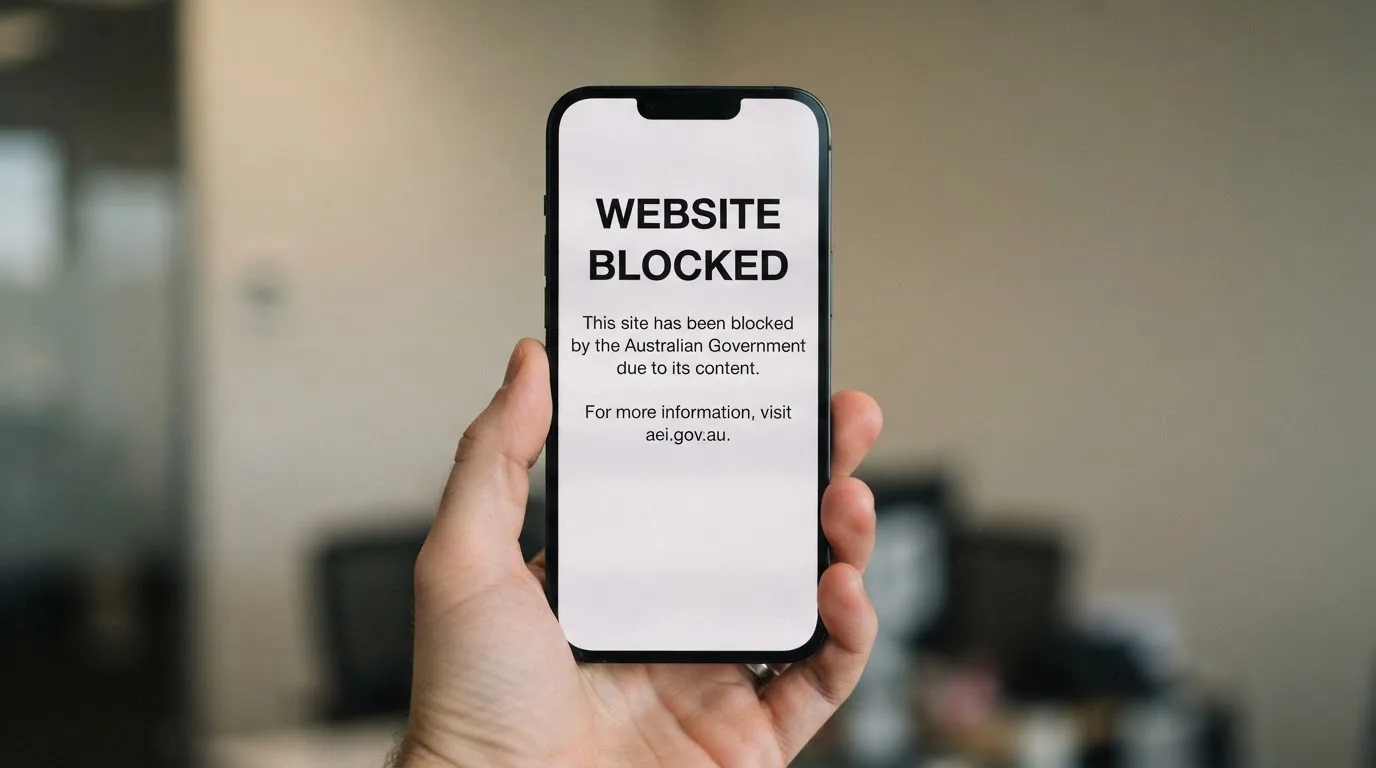
A player searching for low volatility slots in Australia this year will find plenty of marketing for offshore casinos that say they take Australian customers. They will find almost nothing about whether any of those offers are lawful. That gap is the subject of this page, and it is not a technicality. The Interactive Gambling Act 2001 prohibits offering online casino games — including slots, pokies, baccarat, blackjack and craps played online — to anyone physically in Australia. No state or territory issues a licence for it. The Australian Communications and Media Authority investigates, issues formal warnings, and asks internet providers to block the offending sites; in a single round reported on 26 June 2026 it directed the blocking of twelve more domains. The brands that appear in this page appear because the ACMA itself acted against them, not because they are recommended.
Currency of this page: data current as of 30 October 2026, cross-checked against the ACMA Register of Formal Warnings and the published blocking-request notices.
Table of Contents
- What “low volatility” actually means in slot design
- Why volatility is not the same as RTP
- The legal paytable for slots in Australia
- What the ACMA has actually done: the enforcement record
- The formal-warning record, brand by brand
- What a warning actually does to a brand
- What an Australian player can lawfully use instead
- Payment rules that mark an offshore site
- Player protection: what BetStop covers and what it does not
- A brief mechanical history, for context
- Tax treatment, briefly
- What this page is, and what it is not
- Frequently Asked Questions
What “low volatility” actually means in slot design
Volatility, in slot design, is the shape of the payout distribution across many spins, not the size of any individual win. A low volatility slot pays out more often, in smaller amounts, and keeps the bankroll moving in a tight band around its starting point. A high volatility slot does the opposite: long quiet stretches between hits, punctuated by occasional larger payouts. Both sit on a house edge — the casino’s mathematical advantage on each spin — but the texture of play between spins is what changes. Low volatility is the slot equivalent of a low-risk savings bond: many small coupons, no lump sum at the end.

A useful test is what happens in five hundred spins. A low volatility title will typically show a steady drip of returns, with the balance drifting slowly downward under the house edge. A high volatility title may show a flat line for three hundred spins and then a single spin that returns twenty times the stake, or it may show nothing of the kind. Players who want sessions that last and want the balance to survive ordinary bad runs tend to choose the low end of the spectrum. Players who want one big hit and can absorb four hundred empty spins between chances tend to choose the high end.
This mechanical definition is shared by every jurisdiction where slots are legal. Australia is unusual in that the online expression of these mechanics is not lawful at all; what is lawful is the same mechanics expressed through a physical machine in a licensed venue.
Why volatility is not the same as RTP
Return to player, written as a percentage on every published paytable, is the share of all wagered money that the machine returns over its full lifetime. A slot with a 96% RTP returns, on average, 96 cents of every dollar wagered across millions of spins. The 4% remainder is the house edge. Volatility is the path that 96 cents takes to reach the player: drip versus gush. Two slots with identical 96% RTP can feel completely different at the machine, because one returns its 96 cents in a thousand tiny payouts and the other in a few large ones.
A common mistake is to read a high RTP figure as a promise of frequent payouts. It is not. A 96% slot that pays its RTP in one combination out of three hundred million possible outcomes delivers that 96 cents very rarely and very dramatically. A 94% slot that pays its 94 cents in a combination out of a thousand delivers that 94 cents often and modestly. The player who cares about session texture should read volatility; the player who cares about long-run return should read RTP; the player who cares about both has to read them together, because no published figure combines them.
A short note on the house edge in adjacent table games, for context. Baccarat’s house edge is 1.06% on the Banker bet, 1.24% on the Player bet and 14.36% on the Tie. Blackjack under liberal Las Vegas Strip rules sits around 0.28%, and around 0.43% under Atlantic City rules. Craps is 1.41% on Pass/Come and 1.36% on Don’t Pass/Don’t Come. None of these figures makes a casino game a fair exchange, but they do show that some games tax the player a great deal less than others, and that the range is wider than most marketing admits.
The legal paytable for slots in Australia
The starting point is the Interactive Gambling Act 2001, tightened by the Interactive Gambling Amendment Act 2017. The amended Act makes it an offence to provide a prohibited interactive gambling service to a person in Australia. A prohibited interactive gambling service is, in essence, a service that offers online casino games — slots, pokies, table games and the like — for real money to someone physically present in Australia. The provider is the target of the law, not the individual player; Australians are not prosecuted for placing a bet. The provider can be an Australian business or an offshore business; the location of the customer in Australia is what matters.
What is licensed is different, and a player should keep the categories separate. Online wagering on sport and racing placed before the event is licensed and legal in Australia, principally through providers licensed in the Northern Territory. Lotteries and keno are licensed at state and territory level. Online casino games, online pokies, online slots and in-play betting on sport are not licensed and are not legal to provide. A site displaying a Curaçao or Malta or Kahnawake licence is licensed for its own jurisdiction; it is not licensed to provide online casino games to Australians.
The 2026 reform package is worth noting because the law is moving. The Interactive Gambling Amendment (Gambling Reform) Bill 2026 passed Parliament on 19 August 2026. Its advertising and inducement measures commence on 1 January 2027. A page read in late 2026 is reading a Bill that is enacted but not yet in force on its advertising rules, and the prohibition on providing online casino games has been in force since 2017.
The minimum age to participate in any legal gambling product in Australia is eighteen.
What the ACMA has actually done: the enforcement record
The ACMA is the regulator for the prohibition side of the regime. It can investigate, issue formal warnings, accept court-enforceable undertakings, and ask Australian internet service providers to block illegal sites at the network level. The blocking mechanism was inserted by the 2017 amendments and has been used steadily since November 2019, when the first blocking request went out. As reported on 26 June 2026, the cumulative total of blocked gambling and affiliate marketing websites stood at 1,751 since that first request, and more than 230 unlicensed services had left the Australian market since enforcement was intensified in 2017.
The same June 2026 round directed ISPs to block twelve more domains in one action: 7Signs, ChromaBet, Donbet, Duospin, Freshbet, Slots Gem, Jacks Club, Lucky Start, Pointsbetz, Spinrise, Vinyl Casino and Wildsino. A blocking round is not a conviction; it is the regulator’s fastest tool, and it moves without needing to litigate each site individually.
The formal-warning record is the more revealing document, because it names the operator behind the brand. A formal warning is published; it identifies the legal entity, the brand(s) it runs, and the conduct the regulator objects to. The following brands appear in this page because the ACMA itself put them on that published list, with the operator and the date attached.
The blocking rate — the regulator’s own metric — is the arithmetic the page is built around. From the first blocking request in November 2019 to the cumulative figure reported on 26 June 2026, the ACMA has directed the blocking of 1,751 illegal sites. Spread across the years the mechanism has been active, that figure gives a long-run rate of roughly 250 blocked sites a year, with the rate varying year to year and the 26 June 2026 batch of twelve confirming the regulator’s continued use of the tool in 2026. The rate is a band rather than a single figure, because it is shaped by how many new offshore sites enter the Australian market in any given year, and by how many of those the ACMA prioritises for blocking. The condition on the band is that the regulator keeps the resource behind it: investigations, formal warnings and ISP cooperation are not free, and a slow year at the ACMA produces a slow year on the blocking list.
The wider picture on offshore gambling has been quantified by H2 Gambling Capital’s 2025 estimate: Australians lose around A$3.9 billion a year to illegal offshore gambling sites, and the share of gambling going through legal Australian channels fell from 74% in 2021 to 64%. The prohibition is being enforced; the demand it tries to suppress is not being suppressed by enforcement alone.
The formal-warning record, brand by brand
The table below reproduces what the ACMA has published. The operator is the legal entity named in the warning; the date is the date of the warning. Where a brand has been warned more than once, the earlier warning is also noted. The column on subject support records what the ACMA register has to say about the brand’s published catalogue of low volatility slots: where a third-party listing describes the brand as carrying low volatility titles, that is recorded as listings-only; where no such listing could be checked, the cell carries the no-data marker.
| Brand | ACMA action and date | Operator named by the ACMA | Subject support |
|---|---|---|---|
| RocketPlay | Formal warning, March 2026; earlier Dama N.V., May 2022 | Pulsup Ltd (Rocketplay) | — |
| Level Up Casino | Formal warning, May 2022 | Dama N.V. | listings-only (Bgaming listing) |
| Woo Casino | Formal warning, March 2025 | Dama N.V. | — |
| Spirit Casino | Formal warning, May 2025 | Dama N.V. | — |
| National Casino | Formal warning, July 2025 | Consolutetish S.R.L. | listings-only (third-party catalogue) |
| Bizzo Casino | Formal warning, July 2025; earlier TechSolutions, 2022 | Consolutetish S.R.L. | — |
| Ignition Casino | Formal warning, July 2025 | Bamboo Media | — |
| Instant Casino | Formal warning, February 2025 | EOD Code SRL | — |
| Jackbit | Formal warning, April 2026 | Ryker B.V. | — |
| Casino Intense | Formal warning, April 2025 | Sterplay Holding Ltd | listings-only (third-party listings) |
| Sky Crown | Formal warning under the IGA | Hollycorn N.V. | — |
What the table does not carry is a verdict on which brand is best, because the only honest verdict the regulator’s record supports is that none of them is permitted to take Australian customers. A brand that has been the subject of a formal warning cannot advertise to Australians, cannot solicit deposits from Australians, and cannot lawfully provide online casino games to Australians; a brand that has not yet been warned may be doing the same thing and simply not yet on the published list. The table is a record of what the regulator has done, ordered chronologically within the most recent action, and it is the best evidence base a page of this kind can present.
Two details in the table are worth pulling out. First, several brands share a parent operator: Dama N.V. appears behind RocketPlay (2022), Level Up Casino (2022), Woo Casino (2025) and Spirit Casino (2025). Consolutetish S.R.L. appears behind both National Casino and Bizzo Casino in the July 2025 round. The enforcement tool reaches the operator behind multiple skins in a single action; the regulator names the corporate parent, not just the brand. Second, Bizzo Casino was the subject of an earlier warning in 2022 to TechSolutions (CY) Group Limited and TechSolutions Group N.V., which means the ACMA has had cause to act on that brand across two different corporate vehicles in three years.
What a warning actually does to a brand
A formal warning is the regulator’s opening move. It is a written notice that the ACMA believes the recipient has been providing prohibited interactive gambling services to Australians, and that further enforcement action will follow if the conduct continues. The warning is published; the brand is named in the register. Court-enforceable undertakings come next on the ladder, then civil penalty proceedings in the Federal Court, then injunctions. The blocking request sits alongside, not inside, that sequence; the ACMA can ask ISPs to block a site without going to court at all.
For a player, the consequence is straightforward. A brand that has been formally warned is one that the regulator has already identified as offering prohibited services to Australians. The brand’s displayed licence, where it shows one, is a licence for the jurisdiction that issued it; it is not a permission to take Australian customers for online casino games. A player depositing with such a brand is transacting with an entity that the Australian regulator has told to stop.
What an Australian player can lawfully use instead
The legal alternatives sit in licensed venues and licensed wagering channels, and they look different from the offshore casino list.
Licensed pokies venues. Pokies-style slot machines are legal in licensed clubs, hotels and casinos across Australia, with state and territory regulators setting the rules. Outside casinos, the machines numbered 87,298 in New South Wales as at June 2023, 26,380 in Victoria in 2021–22, 21,122 in Queensland in October 2023, 11,672 in South Australia in September 2023 and 3,587 in the ACT in November 2023. These figures cover pubs, clubs and hotels; the casino count is separate. The combined count reflects a per-capita density of machines that has historically run well above comparable countries: by 2010 Australia operated an estimated 97,103 gaming machines outside casinos, a per-capita rate about five times that of the United States.
Land-based casinos. Australia’s licensed casinos operate under state and territory casino control legislation. Crown Melbourne offers baccarat variants — Traditional, Crown and 2 to 1 — as approved table games under the Victorian Gambling and Casino Control Commission, which took over from the VCGLR on 1 July 2022. Blackjack variants at Crown are also approved by the VGCCC, with rule changes logged publicly: the Perfect Pairs side bet was renamed Crown Pairs on 23 December 2024, and a Free Bet option with a Pot of Gold side bet was introduced on 25 March 2024. In NSW, section 66 of the Casino Control Act 1992 requires that a casino operator not permit a game such as baccarat to be played unless the rules are approved by the regulator, with a copy of the approved rules available on request. These are the lawful channels for the games the offshore sites are offering online.
Licensed online wagering. Online wagering on racing and sport, placed before the event, is legal in Australia. The Northern Territory Racing and Wagering Commission regulates 52 of Australia’s online bookmakers — Sportsbet, Bet365 and Ladbrokes among them — and the commission meets once a month in Darwin with no full-time staff. The licence arrangement exists for tax reasons: the bookmakers are based where the licence fee structure works for them, not where the customers are.
Payment rules that mark an offshore site
Since 11 June 2024, credit cards, credit-related products and digital currency have been banned as payment for licensed online wagering in Australia. Penalties for operators using them reach A$247,500. Legal deposit routes for the licensed wagering channels are debit card, bank transfer, PayID/Osko and BPAY. A site that asks an Australian customer for a credit card or a crypto deposit for online casino play is operating outside the Australian rules, even if its licence badge from elsewhere looks official. The payment method a site accepts is, in practice, the cleanest signal a player has of whether the site has thought about Australian law at all.
Player protection: what BetStop covers and what it does not
BetStop, the National Self-Exclusion Register, has been live since August 2023. It binds Australian-licensed online and phone wagering services. A person registered with BetStop is excluded from licensed wagering accounts, and the licensed operators are required to honour the exclusion. The same exclusion does not reach an offshore casino that is not licensed in Australia and not connected to the register. A player who has registered with BetStop is well protected against the licensed wagering market; an offshore casino can still take their deposits and still accept their play, because the offshore operator has no obligation to consult BetStop before doing so. The register is a tool for the lawful market, and a player who needs the protection of the lawful market should be playing in it.
The National Gambling Helpline is 1800 858 858, free and 24 hours, with chat available through Gambling Help Online. The helpline is a service that operates regardless of which channel a player has been using.
A brief mechanical history, for context
The automatic slot mechanism was developed by Charles Fey of San Francisco in the late nineteenth century, a three-reel machine with five symbols (horseshoes, diamonds, spades, hearts and the Liberty Bell), where three bells in a row paid the top prize of ten nickels. Bally’s Money Honey in 1963 introduced a bottomless hopper and automatic payout of up to 500 coins without an attendant. The first video slot machine was developed in 1976 by Fortune Coin Co. in Kearny Mesa, California. New South Wales legalised slot machines in 1956. Modern video slots can use five or more reels and fifty or more symbols per reel, producing odds as high as 300 million to one against a top combination, against roughly 1,000 possible combinations on a classic mechanical three-reel machine. US state regulation gives a sense of how widely minimum payout percentages can vary: Nevada at 75%, Mississippi at 80%, New Jersey at 83%. These figures matter in the United States; Australia does not publish an equivalent minimum for online slots, because there is no lawful online slot market to set a minimum for.
Tax treatment, briefly
Gambling winnings of a recreational player in Australia are not assessable income under section 6-5 of the ITAA 1997. Losses are not deductible. A player who carries on a business of gambling — a professional punter — sits in a different position, and the Australian Taxation Office’s published guidance should be read directly, because the line between recreational play and a business is not a clean one. The general rule for the average reader is that winnings are not taxable and losses are not deductible, which is itself a reason a player should not treat gambling as an investment: there is no offset against other income for the money that goes out.
What this page is, and what it is not
This page is not a ranking of offshore casinos. The marketing pages a player may have arrived from present the brands on a comparative table with bonus percentages and payout speeds; this page is built on a different document, the ACMA Register of Formal Warnings. A player looking for a recommended place to play online slots in Australia will not find one here, because no such place exists in the lawful sense. What the player can find is the record of what the regulator has done about the brands that have offered to take their money, and the lawful channels — licensed venues, licensed casinos, licensed wagering — that the prohibition leaves open.
The brands named in the table are not endorsed and not recommended. They are documented. The factual position is the same for every one of them: the ACMA has identified them as having offered prohibited interactive gambling services to Australians, the Interactive Gambling Act 2001 prohibits that offer, and the player has lawful alternatives that the offshore brands do not.
Frequently Asked Questions
What does low volatility mean for a slot machine?
Low volatility is the shape of the slot’s payout distribution across many spins. A low volatility slot pays out often and in small amounts, keeping the balance moving in a narrow band around its starting point. A high volatility slot does the opposite. Both sit on the same house edge; the difference is the texture of play between spins, not the long-run return.
How does low volatility differ from high volatility in slot design?
The mechanics are the same — a random number generator, a set of symbols, a paytable, a house edge — but the distribution of outcomes is different. Low volatility slots return their RTP through many small wins; high volatility slots return their RTP through a few large wins. The choice is about session texture and bankroll tolerance, not about long-run return.
Is it legal to play low volatility slots at an online casino from Australia?
No. Under the Interactive Gambling Act 2001, as amended in 2017, it is an offence to provide online casino games — including slots — to a person in Australia. No Australian jurisdiction licenses online casino games. The individual player is not prosecuted, but the offshore casino offering the game has no Australian licence and no Australian consumer protection, and it can be blocked at the network level.
Are low volatility pokies-style machines common in Australian pubs and clubs?
Yes. Pokies-style slot machines are legal in licensed clubs, hotels and casinos in every state and territory. New South Wales alone had 87,298 machines outside casinos as at June 2023; Victoria had 26,380 in 2021–22; Queensland had 21,122 in October 2023; South Australia had 11,672 in September 2023; and the ACT had 3,587 in November 2023.
Where can someone see how many pokies machines operate in their state?
State and territory gambling regulators publish machine counts, usually in annual reports. NSW publishes through Liquor & Gaming NSW, Victoria through the Victorian Gambling and Casino Control Commission, Queensland through the Office of Liquor and Gaming Regulation, South Australia through Consumer and Business Services, and the ACT through the ACT Gambling and Racing Commission. The numbers change quarter to quarter, and a regulator’s most recent report is the right source.
Does volatility affect how often a slot machine pays out, not just how much?
Yes. Volatility is a statement about frequency and size jointly. A low volatility slot pays out often and small; a high volatility slot pays out rarely and large. RTP is a separate statement about the long-run share of wagers returned, and the two figures must be read together to get a picture of what a session will feel like.