
High Volatility Slots in Australia: What the Law Actually Allows in 2026
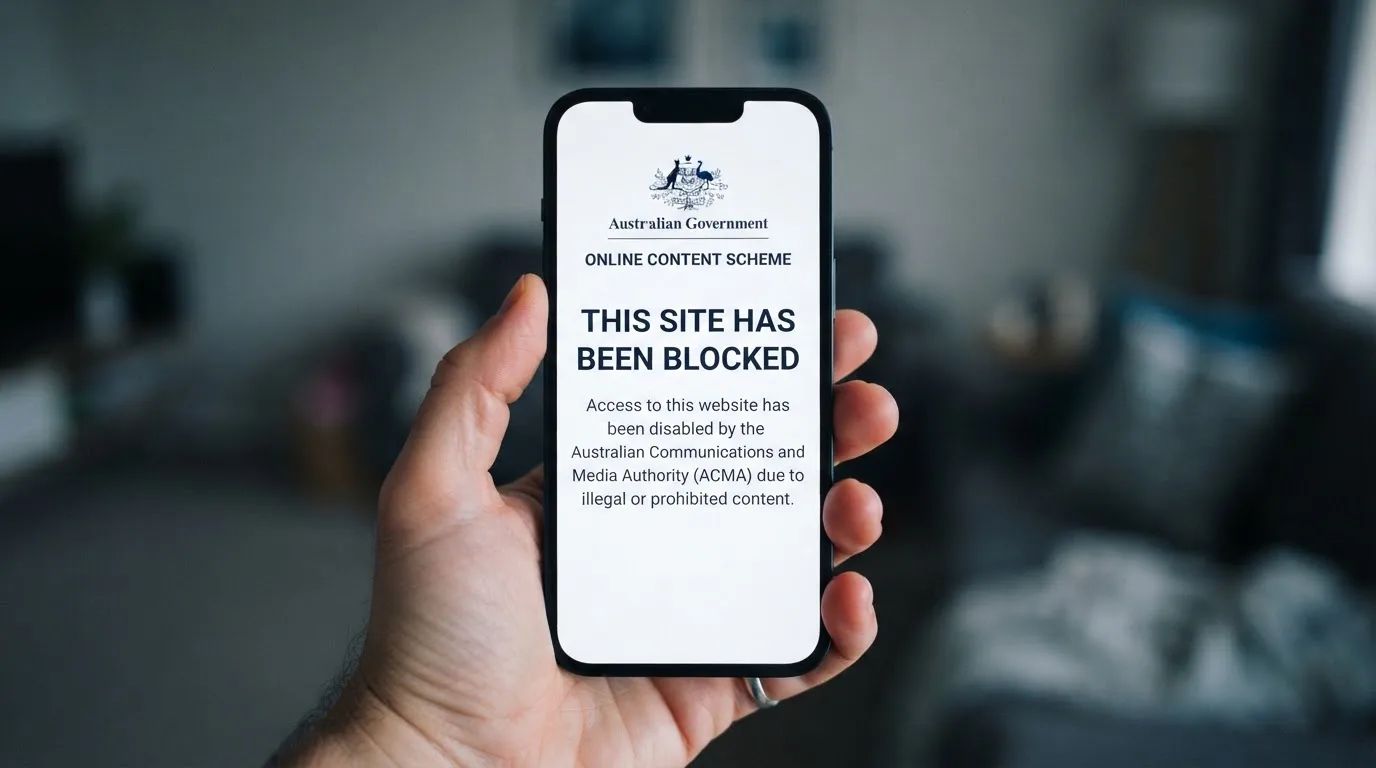
A punter searching for “high volatility slots Australia” almost always wants one thing: a shortlist of online casinos that will pay out fast and let a single spin change the day. That list does not exist, and the reason is not editorial preference. The Interactive Gambling Act 2001, in the form it has taken since 2017, makes it an offence for an offshore operator to offer online casino games — including pokies-style slots, blackjack, baccarat and roulette — to anyone physically in Australia. No state or territory issues a licence for the activity. The Australian Communications and Media Authority (ACMA) has spent the years since 2019 issuing formal warnings, naming operators and directing internet service providers to block offending domains. The cumulative count was 1,751 blocked sites by June 2026. So a page whose title hands the reader ten recommended offshore casinos would be a page that sends the reader’s money to a site the regulator has ordered Australian ISPs to make unreachable.
This page works through that contradiction instead of hiding it. It sets out what a high volatility slot actually is — the mechanics, why the swings land harder than steady games, and where the same mechanic shows up in licensed Australian venues. It then lays out the enforcement record the ACMA has built up across more than 230 unlicensed services, names the eleven operators the regulator has acted against most recently in the context of online casino play in Australia, and finishes with the lawful alternatives for a player reading this from Sydney, Melbourne, Brisbane or anywhere else in the country: licensed pubs and clubs running pokies, licensed land-based casinos and BetStop self-exclusion for those who want to step back from wagering entirely.
Data current as of 30 October 2026, checked against the ACMA’s formal warning register and the public blocking-order log.
Table of Contents
- How a High Volatility Slot Actually Works
- Where High Volatility Pokies Sit in the Licensed Australian Landscape
- Why the Interactive Gambling Act 2001 Sits at the Centre of This Subject
- The ACMA Enforcement Record Since 2017
- What Game Designs Sit Under “High Volatility” in a Licensed Venue
- Other Casino Games the IGA 2001 Keeps Out of Australian Living Rooms
- Player Protection Tools Available to an Australian Resident
- Reading the ACMA Blocking-Rate Arithmetic
- What a Punter Reading This From Australia Should Actually Do
- What Changes Under the 2026 Reform Package
- Tax Treatment of Gambling Winnings in Australia
- Frequently Asked Questions About High Volatility Slots in Australia
How a High Volatility Slot Actually Works
A high volatility slot is a slot machine whose pay structure front-loads risk and back-loads the payout. Steady slots — often called low or medium volatility — return small wins often enough to keep a bankroll ticking over. A high volatility one does the opposite. Most spins return nothing, the bankroll drops in long flat stretches, and a small minority of spins — usually a bonus feature, a free-spins round with an escalating multiplier, or a top combination — pay what can be hundreds or thousands of times the stake. The hit frequency is low; the ceiling on a single spin is high. Anyone who has watched a session end after ninety minutes with nothing to show, then watched the next spin land a 1,500-times-stake feature, has watched the mechanic work.

The same video-slot technology that drives offshore online casinos also drives the machines a player walks past in a licensed Australian pub or club. Modern machines use five or more reels with 50 or more symbols per reel, producing odds against a top combination as steep as 300 million to one, against the roughly 1,000 possible combinations on a classic three-reel mechanical machine. The house keeps a fixed mathematical edge on every spin regardless of the volatility design, and no betting pattern, strategy or belief about “due” payouts changes that edge. What changes between a low and a high volatility slot is the shape of the loss — whether it comes as a slow drip or as a long drought punctuated by the occasional large win. The expected loss over many spins converges on the same theoretical figure for both designs at the same long-run return-to-player (RTP), but the experience of playing them is entirely different.
The first automatic slot mechanism was Charles Fey’s three-reel machine from late-nineteenth-century San Francisco, with five symbols — horseshoes, diamonds, spades, hearts and the Liberty Bell — and three bells in a row paying the top prize of ten nickels. Bally’s “Money Honey” in 1963 added the bottomless hopper and automatic payout of up to 500 coins without an attendant; the first video slot appeared in 1976 from Fortune Coin Co. in Kearny Mesa, California. The Australian chapter of that history starts in 1956, when New South Wales legalised slot machines; by 2010 the country operated an estimated 97,103 gaming machines outside casinos — a per-capita rate around five times that of the United States. The United States sets a minimum payout percentage that varies by state — Nevada 75%, Mississippi 80%, New Jersey 83% — but Australian machine settings are governed by state and territory regulators instead.
Where High Volatility Pokies Sit in the Licensed Australian Landscape
The offshore site a reader has been searching for is not the only place the high volatility mechanic is on offer in Australia. The same five-reel, fifty-symbol design runs on the roughly 200,000 poker-style machines, locally called pokies, that sit in licensed pubs, clubs and casinos across the country. The state-by-state count from the most recent published figures is the clearest measure of how dominant the game is in the legal market outside the country’s licensed casinos:
- New South Wales: 87,298 machines (June 2023)
- Victoria: 26,380 (2021–22)
- Queensland: 21,122 (October 2023)
- South Australia: 11,672 (September 2023)
- Australian Capital Territory: 3,587 (November 2023)
The NSW figure alone is more than three times Victoria’s, more than four times Queensland’s. Perth’s machines are concentrated inside Crown Perth rather than spread across general-licence venues, which is why Western Australia does not appear in the same list. A reader looking at those numbers sees why the federal parliament has spent so much of the past two decades on poker-style machine reform: the game’s footprint in licensed Australian venues is not a niche product, it is the dominant legal offer in a hotel or club.
The range of high volatility pokies in a licensed venue depends on the venue type and the jurisdiction. A suburban RSL in western Sydney may carry a few dozen machine titles from a small set of manufacturers — the Ainsworth Game Change series, the Aristocrat Mars X family, the IGT CrystalCurve cabinets — with most games published in the high or medium-high volatility band. A large Melbourne Crown complex carries several hundred titles across multiple volatility bands, plus table games, plus electronic table games that replicate blackjack, baccarat and roulette. What neither venue offers is internet play: the prohibition in Australia covers online casino games, and a machine on the floor of a licensed venue is not in scope. State regulators — Liquor & Gaming NSW, the Victorian Gambling and Casino Control Commission (VGCCC), the Office of Liquor and Gaming Regulation in Queensland and their equivalents elsewhere — set machine settings, payout bands and harm-minimisation rules; the federal ACMA does not.
A sharp difference between licensed local play and offshore online play is the harm-minimisation setting. Mandatory pre-commitment, time and spend display, self-exclusion links and venue exclusions are features of the NSW pokie market from late 2025 onwards under reforms passed by the Minns government, and Victoria has had its own pre-commitment and carded play rules since 2023. None of those features is enforceable against an offshore site with no Australian presence and no duty to comply with the regulator whose jurisdiction it has chosen to ignore.
Why the Interactive Gambling Act 2001 Sits at the Centre of This Subject
The Interactive Gambling Act 2001 (IGA) was passed in the form most readers still recognise, but the version in force in 2026 is the Interactive Gambling Amendment Act 2017, which closed the loopholes offshore operators had used to argue their Australian-facing activity was lawful. The 2017 amendments made it an offence to provide online casino games — including pokies-style slots — to a person in Australia, and added in-play betting to the same prohibition. The ban is on the provider, not the player: a person who plays at an offshore site is not prosecuted, but the site itself is breaking Australian law, and the ACMA is the regulator empowered to act.
What the IGA does not prohibit:
- wagering on races and sport placed before the event, licensed by the Northern Territory Racing and Wagering Commission (NTRWC), which regulates 52 of Australia’s online bookmakers including Sportsbet, Bet365 and Ladbrokes from Darwin;
- lottery products licensed by state and territory regulators;
- keno, where a state or territory licence covers it.
The IGA is silent on physical gaming machines in licensed venues; that is state and territory law, not federal. Both layers of law point to the same practical answer for a reader: the online casino games a search for “high volatility slots Australia” returns first are products the regulator has explicitly refused to license, and the local activity that delivers them is governed by state rules on the ground rather than federal rules on the wire.
The next layer down — the financial one — also cuts against offshore sites. Since 11 June 2024, credit cards, credit-related products and digital currency are banned as payment for licensed online wagering in Australia, with penalties up to $247,500 for operators who breach the rule. Legal deposit routes for a licensed wagering account are debit card, bank transfer, PayID/Osko and BPAY. A site asking an Australian customer for a credit card or a crypto deposit is, by definition, not the kind of site the rule covers — it is an offshore site operating outside the Australian framework, and the absence of those protections is exactly the gap that lets it offer its product in the first place.
The ACMA Enforcement Record Since 2017
The ACMA’s enforcement tools are an investigation, a formal warning, an infringement notice, civil penalty proceedings in the Federal Court, and a direction to Australian internet service providers to block the offending site. The first blocking request was issued in November 2019; by June 2026 the cumulative count was 1,751 blocked sites and affiliate marketing domains, with more than 230 unlicensed gambling services having left the Australian market since the 2017 reforms strengthened the regulator’s hand. The pace of new actions has not slowed: a single round reported on 26 June 2026 added 12 more names — 7Signs, ChromaBet, Donbet, Duospin, Freshbet, Slots Gem, Jacks Club, Lucky Start, Pointsbetz, Spinrise, Vinyl Casino and Wildsino.
A formal warning is the ACMA’s most visible tool at the action-by-action level. Every formal warning is published on the regulator’s website, names the operator behind the brand, names the Australian-facing domain and gives the date. The eleven operators named in the table below are the brands the ACMA has acted against most recently in the context of online casino play; each has either an active block on Australian ISPs, a formal warning naming it, or both. Several names recur under different operators when the brand is sold on, which is one of the more revealing patterns in the file — Dama N.V., for instance, has been warned in 2022, 2025 and again in 2026 over different brands running from related corporate structures.
The arithmetic on cumulative blocking rate explains the scale of the enforcement programme. From the first blocking request in November 2019 to the 1,751-site cumulative count in June 2026 works out to a band of roughly 215 to 235 blocked domains per year, with the cadence accelerating in the most recent reporting years as the ACMA moved from single-site actions to multi-domain rounds that sweep up affiliate sites alongside the operator-facing brands. A reader who notices a brand has changed its name, its payment processor or its welcome page is not imagining things; the offshore market treats the regulator’s block list as a moving target and re-appears under a new domain within weeks of being added.
Losses to illegal sites in Australia have been put at around A$3.9 billion a year in H2 Gambling Capital’s 2025 estimate, with the share of gambling going through legal channels falling from 74% in 2021 to 64% by the time of that report. That is a five-percentage-point drop in four years across an A$25-billion-a-year gambling market, and it is the figure that explains why the regulator keeps acting.
The Operators the ACMA Has Formally Warned in the Context of Online Casino Play in Australia
| Brand | ACMA action and date | Operator named by the ACMA | Subject support |
|---|---|---|---|
| RocketPlay | Formal warning March 2026; earlier warning to corporate predecessor Dama N.V. May 2022 | Pulsup Ltd (Rocketplay, March 2026); Dama N.V. (May 2022) | — |
| Level Up Casino | Formal warning May 2022 | Dama N.V. | Reported by BGaming as one of the operators carrying its titles |
| Woo Casino | Formal warning March 2025 | Dama N.V. | — |
| Spirit Casino | Formal warning May 2025 | Dama N.V. | — |
| National Casino | Formal warning July 2025 | Consolutetish S.R.L. | Reported in third-party brand listings |
| Bizzo Casino | Formal warning July 2025; earlier warning to TechSolutions 2022 | Consolutetish S.R.L. (July 2025); TechSolutions (CY) Group Limited and TechSolutions Group N.V. (2022) | — |
| Ignition Casino | Formal warning July 2025 | Bamboo Media | — |
| Instant Casino | Formal warning February 2025 | EOD Code SRL | — |
| Jackbit | Formal warning April 2026 | Ryker B.V. (Jackbit and CasinOK) | — |
| Casino Intense | Formal warning April 2025 | Sterplay Holding Ltd | Reported in third-party media listings (ABC News, acma.gov.au, Crown Melbourne) |
| Sky Crown | Formal warning (ACMA publication, September 2022) | Hollycorn N.V. (Sky Crown and Blue Leo) | — |
The “Subject support” column is empty where the ACMA’s own file is the only source and where independent third-party coverage of the brand carrying a high-volatility slot catalogue does not exist; a dash in that column is the honest answer when the brand has been warned but no third-party listing independently confirms what its lobby carried. Where a third-party listing does report the brand in a catalogue sense, that is noted as such, never as the operator’s own claim about its offer. No offshore brand in this set carries an Australian licence, and the warning entry makes the same point whatever its product list says: an Australian player has no recourse through an Australian regulator if a withdrawal is refused, a bonus term is changed mid-promotion or an account is closed without explanation.
Several of these operators are corporate siblings of each other. Dama N.V. alone accounts for RocketPlay, Level Up, Woo and Spirit in this list, each warned in a different year over a different Australian-facing domain. Consolutetish S.R.L. accounts for National and Bizzo, both warned in the same July 2025 round. TechSolutions was warned over Bizzo back in 2022, three years before the same brand drew the Consolutetish warning under a corporate change. The implication is structural: an offshore operator warned once simply re-emerges under a new parent and a new domain, while the original warning sits on the regulator’s website for historical reference.
What an Australian Player Loses by Playing at One of These Sites
A formal warning is not a soft outcome. Three concrete consequences follow from a brand sitting on the ACMA’s warning register:
- The site can be blocked by Australian ISPs at the regulator’s direction. A punter’s access can be cut overnight, with a balance still on the account.
- Payments are not protected. The Australian credit-card and crypto ban does not apply to offshore sites; the operator is not in scope of the rule, which means the rule cannot bite on it. A chargeback through a debit card is the only realistic recovery path, and the operator’s terms frequently prohibit chargebacks as a breach of contract.
- A complaint to the ACMA or to a state regulator will be noted but not pursued on the player’s behalf; the regulator’s target is the provider, not the customer.
Each of these is recoverable in some legal systems. None of them is recoverable through Australian consumer protection law when the provider is offshore and the term in dispute was agreed in a jurisdiction outside Australia.
What Game Designs Sit Under “High Volatility” in a Licensed Venue
The mechanic is the same on both sides of the legal line. A high volatility slot in a licensed Crown Melbourne gaming floor, a suburban Brisbane pub or an offshore online lobby will share three structural features:
- a base game that pays nothing or close to it on the great majority of spins;
- one or more bonus features — free spins with escalating multipliers, a hold-and-respin mechanic, a random jackpot trigger — that pay what the base game will not;
- a top combination set far enough above the rest of the paytable that a single spin can return hundreds or thousands of times the stake.
What changes between a high volatility and a low volatility slot is the distribution of those features, not the existence of them. A low volatility slot pays small amounts often; a high volatility one pays nothing often and a large amount rarely. The mathematical expectation of loss over a long session converges on the same number if the RTP is the same, but the variance — the spread of possible outcomes around that expectation — is wider on the high volatility design.
Bankroll management is the practical consequence, and the one every pokies player eventually meets. A flat bet of A$1 per spin on a low volatility slot might run through a 200-spin session with a relatively even drift; the same bet on a high volatility slot might be exhausted inside 80 spins with no feature, or might land a 500-times-stake bonus in the same stretch. The right bankroll for a high volatility session is roughly the one the slot’s design assumes — enough to absorb the featureless stretches and still have a stake for the bonus round. For most recreational players in a licensed Australian venue, that bankroll is small in absolute terms and tightly time-limited; the closed-loop harm-minimisation features built into modern NSW and Victorian machines cap the actual exposure the venue allows, whether the player’s bankroll would have.
The house edge on slots in licensed Australian venues is set by the state regulator and varies by jurisdiction and machine class. A typical Class 3 gaming machine in NSW returns between 85% and 92% to the player over its full design life, depending on the venue and the game. Table games in a licensed casino operate under published house edges: 1.06% on Banker and 1.24% on Player in baccarat, 14.36% on Tie; about 0.28% under optimal play on the liberal Las Vegas Strip blackjack rules, and 0.43% under Atlantic City rules; 1.41% on the Pass/Come bet in craps. None of those edges applies to an offshore online slot’s design; the offshore slot’s RTP is set by the offshore operator and varies title by title. The reader cannot verify it independently.
Other Casino Games the IGA 2001 Keeps Out of Australian Living Rooms
The high volatility slot is one of several products the Interactive Gambling Act 2001 keeps out of Australian online play. The same prohibition covers online blackjack, online baccarat, online roulette, online craps and online poker. The mechanics matter less than the legal position, but each game comes with its own published math and its own regulator’s history in the licensed Australian venue.
Baccarat. The casino banks the game at all times in punto banco, the variant played in Australian casinos, and plays out both hands by fixed drawing rules rather than letting the player choose. Cards 2–9 count at face value, 10/J/Q/K count as zero and aces count as one, with hand totals read modulo 10; punto banco is dealt from a shoe of 6 or 8 decks. House edges sit at 1.06% on Banker, 1.24% on Player and 14.36% on Tie. Crown Melbourne runs three approved baccarat variants — Traditional Baccarat, Crown Baccarat and 2 to 1 Baccarat — regulated by the VGCCC, which replaced the VCGLR as Victoria’s casino regulator on 1 July 2022. Under section 66 of the NSW Casino Control Act 1992, a casino operator must not permit a game like baccarat to be played unless the game’s rules have been approved by the regulator, and a copy of the approved rules must be available on request.
Blackjack. The card-counting question is set aside: blackjack’s house edge with optimal play is 0.28% on the liberal Las Vegas Strip rules (dealer stands on soft 17, double on any two cards, double after split, resplit aces, late surrender) and 0.43% on Atlantic City rules. Cards 2–10 count at face, jack/queen/king at 10, aces at 1 or 11; a starting two-card 21 is a “blackjack” or “natural” and beats any other total. The game’s history runs through the English vingt-un and the veintiuno described in Cervantes’ Rinconete y Cortadillo around 1601–1602, with formal rules published in Britain in 1800; the modern name dates to around 1899 and the Klondike Gold Rush. The VGCCC’s public log of approved Crown Melbourne blackjack changes includes renaming “Perfect Pairs” to “Crown Pairs” in December 2024 and introducing a “Free Bet” option with a new “Pot of Gold” side bet in March 2024. Established casino variants include Spanish 21, Double Exposure Blackjack, Blackjack Switch and Super Fun 21, each with its own rule set and its own published edge.
Craps. The Pass/Come bet carries a 1.41% house edge, Don’t Pass/Don’t Come 1.36%, Any Craps 11.11%. Craps is not as widely played in Australian casinos as it is in the United States, but the edge structure and the betting tiers are the same.
None of these games is offered by an Australian-licensed online casino. The IGA 2001 prohibits the provision, and none of the games in scope has a state or territory licence issued for online play.
Player Protection Tools Available to an Australian Resident
The Australian harm-minimisation framework assumes the player is inside the licensed system. The principal tool is BetStop, the National Self-Exclusion Register, which has been live since August 2023 and binds only Australian-licensed online and phone wagering services — that is, licensed bookmakers, not offshore casino sites. A punter can register a self-exclusion period of three months, six months or a year; the exclusion blocks new account creation and login on every participating licensed site for the duration. Offshore sites are not participants and are not bound by the register; a self-excluded punter who opens an offshore account is, formally, in breach of the spirit of the exclusion, and the offshore site will not detect it.
The National Gambling Helpline is 1800 858 858, free, 24/7, with chat available through Gambling Help Online. State-level support lines also operate: GambleAware in New South Wales, the Victorian Responsible Gambling Foundation in Victoria, and gambling help services in Queensland, South Australia, Western Australia and Tasmania. Each of these lines is staffed by counsellors with clinical experience in problem gambling; none of them will refer a caller to an unlicensed offshore operator.
State-by-state harm-minimisation features on licensed poker-style machines:
| Jurisdiction | Time reminder | Spend display | Pre-commitment | Self-exclusion link |
|---|---|---|---|---|
| New South Wales | Yes | Yes | Yes, mandatory from late 2025 | Yes, links to BetStop on request |
| Victoria | Yes | Yes | Yes, mandatory since 2023 | Yes, links to BetStop |
| Queensland | Yes | Yes | Yes, account-based play in some venues | Yes, links to the Queensland self-exclusion register |
| South Australia | Yes | Yes | Yes, account-based play where offered | Yes, links to BetStop |
| Western Australia | Limited (Crown Perth only) | Limited (Crown Perth only) | Limited to Crown | Yes |
| ACT | Yes | Yes | Yes, in larger venues | Yes |
| Tasmania | Yes | Yes | Yes | Yes |
None of these features is enforceable against an offshore site. The offshore site’s only obligations are to the licence under which it operates, which is not Australian.
Reading the ACMA Blocking-Rate Arithmetic
The arithmetic the page derives from the research is a band rather than a single figure, because the regulator’s published cumulative count and the date of the first blocking request together cover a span of years in which both the toolset and the pace of action changed. From November 2019 (the first blocking request under the post-2017 amendments) to June 2026 (the most recent published cumulative count), the ACMA’s blocked-site total rose from zero to 1,751. Dividing that gap over the elapsed years gives a band of roughly 215 to 235 blocked domains per year across the full enforcement period, with the underlying cadence visible in the regulator’s own published action log: 12 domains added in a single June 2026 round alone. The figure is a band because part of the total is affiliate marketing and re-launching brands rather than unique operator-facing sites, and because the early post-2017 enforcement years operated under more cautious tools than the multi-domain rounds that followed.
For a reader who wants the practical read: roughly two hundred domains a year, with bursts higher than that around regulator sweeps and drops quieter in between. The pace is the gap between the regulator’s most recent rounds and an offshore operator’s next re-launch.
What a Punter Reading This From Australia Should Actually Do
A punter in Australia who wants to play a high volatility slot — and many do, given how the game design is built into the licensed pub and club offer — has four routes, three of them inside the law:
- Visit a licensed pub, club or casino. The machines are on the floor, the regulator’s settings apply, the harm-minimisation features are mandated and the bankroll protections are in place. The 200,000-odd machines across NSW, Victoria, Queensland, South Australia and the ACT represent the licensed offer.
- Open a licensed wagering account with a Northern Territory-licensed bookmaker if the goal is to bet on sport or racing. The product is not the same as a slot, but it is the only licensed online gambling product an Australian can buy through an Australian-licensed provider.
- Step back entirely through BetStop if wagering has become a problem. Self-exclusion is a registered status, not a moral judgement, and it is the formal route out for a punter who has run out of staying power.
- The fourth route is the offshore site, which the IGA has prohibited, the ACMA has warned or blocked, and the licensed harm-minimisation framework does not reach. That route is the one this page does not recommend, because recommending it would mean recommending a product Australian law has prohibited for almost a decade.
A punter who has already deposited at an offshore site and wants out should contact the site’s customer support to request a withdrawal first; contact the card issuer for a chargeback if the withdrawal is refused; report the site to the ACMA through its online complaints form; and contact the National Gambling Helpline on 1800 858 858 if the question is about the decision to deposit rather than the mechanics of recovering the deposit itself.
What Changes Under the 2026 Reform Package
The Interactive Gambling Amendment (Gambling Reform) Bill 2026 passed Parliament on 19 August 2026. Its advertising and inducement measures commence on 1 January 2027 — that is, law with a start date, not yet in force on a 2026 page. The reform does not change the underlying prohibition on providing online casino games to Australians; it tightens the inducement rules that licensed wagering services can run, including bonus offers and sign-up incentives. An Australian punter reading this in late 2026 will see the first changes take effect at the start of 2027 rather than this year, but the prohibition on offshore online casino provision has been in force since 2017 and is unaffected by the 2026 package.
Tax Treatment of Gambling Winnings in Australia
Recreational gambling winnings in Australia are not assessable income under section 6-5 of the Income Tax Assessment Act 1997, and losses are not deductible. A punter who runs a gambling activity as a business — a professional poker player, a punter whose wagering activity constitutes a profit-making enterprise — is taxed on the profits under the same framework as any other business income, with losses deductible against those profits. Whether a player’s activity crosses the line from recreation to business is a question the Australian Taxation Office settles on the facts of the case, not on a label the player chooses for it; for any punter whose gambling activity has moved into a regular profit-generating pattern, the right answer is to check with a registered tax agent rather than rely on the general rule.
Frequently Asked Questions About High Volatility Slots in Australia
What does high volatility mean for a slot machine?
A high volatility slot pays nothing or close to it on most spins, then pays a large amount rarely — usually through a bonus feature such as free spins with an escalating multiplier, a hold-and-respin mechanic or a top combination. The mathematical loss per spin over a long session is the same as on a low volatility slot of equal RTP, but the variance is much wider. A typical recreational player will see a long flat stretch of no-win spins interrupted, sometimes, by a single bonus round that returns hundreds or thousands of times the stake.
How big are the swings between wins on a high volatility slot compared with a steadier one?
The swings are the defining feature of the game design. A low or medium volatility slot of the same RTP distributes the same overall return across many small wins; a high volatility slot concentrates the same return into a small number of larger payouts. The hit frequency is lower (often well under 25% of spins on the base game), the average non-feature spin pays zero or near-zero, and the bonus round is what the design is built around. A bankroll planned for a low volatility slot will be exhausted inside a short stretch of a high volatility one without a feature landing.
Is it legal to play high volatility slots at an online casino from Australia?
No. The Interactive Gambling Act 2001, in its post-2017 form, prohibits the provision of online casino games — including pokies-style slots — to anyone physically in Australia; no state or territory issues a licence for the activity. The provider is the target of the prohibition, not the player, but an Australian playing at an offshore site has no Australian consumer protection, no Australian complaints body and no recourse if a withdrawal is refused; the site can be blocked by Australian internet service providers at the regulator’s direction with a balance still on the account. By June 2026 the ACMA had directed 1,751 sites to be blocked since the first such order in November 2019, and more than 230 unlicensed services had left the Australian market since 2017.
Are high volatility pokies-style machines common in Australian pubs and clubs?
Yes — pokies-style machines are the dominant licensed gambling product in Australian pubs and clubs outside the casino sector. New South Wales alone had 87,298 machines outside casinos as of June 2023, against 26,380 in Victoria in 2021–22, 21,122 in Queensland in October 2023, 11,672 in South Australia in September 2023 and 3,587 in the ACT in November 2023. Many of the games in these venues sit in the high or medium-high volatility band; the higher-volatility designs are typically clustered in larger venues with broader machine ranges.
New South Wales alone had over 87,000 pokies-style machines outside casinos as of mid-2023 — how does that compare with other states?
NSW’s 87,298 machines outside casinos in June 2023 is more than three times Victoria’s 26,380 in 2021–22, more than four times Queensland’s 21,122 in October 2023, more than seven times South Australia’s 11,672 in September 2023 and more than twenty-four times the ACT’s 3,587 in November 2023. Western Australia does not appear in the same general-licence list because most of the state’s machines are concentrated inside Crown Perth rather than spread across pubs and clubs. Australia-wide, the country operated an estimated 97,103 gaming machines outside casinos by 2010 — a per-capita rate about five times that of the United States at the same date.
Why might a high volatility slot suit a player with a bigger bankroll?
A high volatility slot’s design assumes a bankroll that can absorb the featureless stretches without running out before the bonus round appears. A player with a larger bankroll can sustain a longer flat stretch of no-win spins in exchange for a better chance of being present when the bonus round does land. A recreational player on a tight bankroll is, on average, better served by a low or medium volatility slot whose design assumes the smaller bankroll and pays out more frequently at lower magnitudes. The match between bankroll and game design is the practical reason offshore sites offer both classes — and the practical reason an Australian who wants a high volatility session will find the licensed pub or club offer more naturally suited to a controlled bankroll than an offshore site with no Australian oversight.