
PayID Pokies No Deposit Bonus in Australia: The Consequence of Chasing the Combined Claim
Data current as of 4 November 2026 and verified against the ACMA register, Australian Payments Plus and the Reserve Bank of Australia’s published payment-system materials.
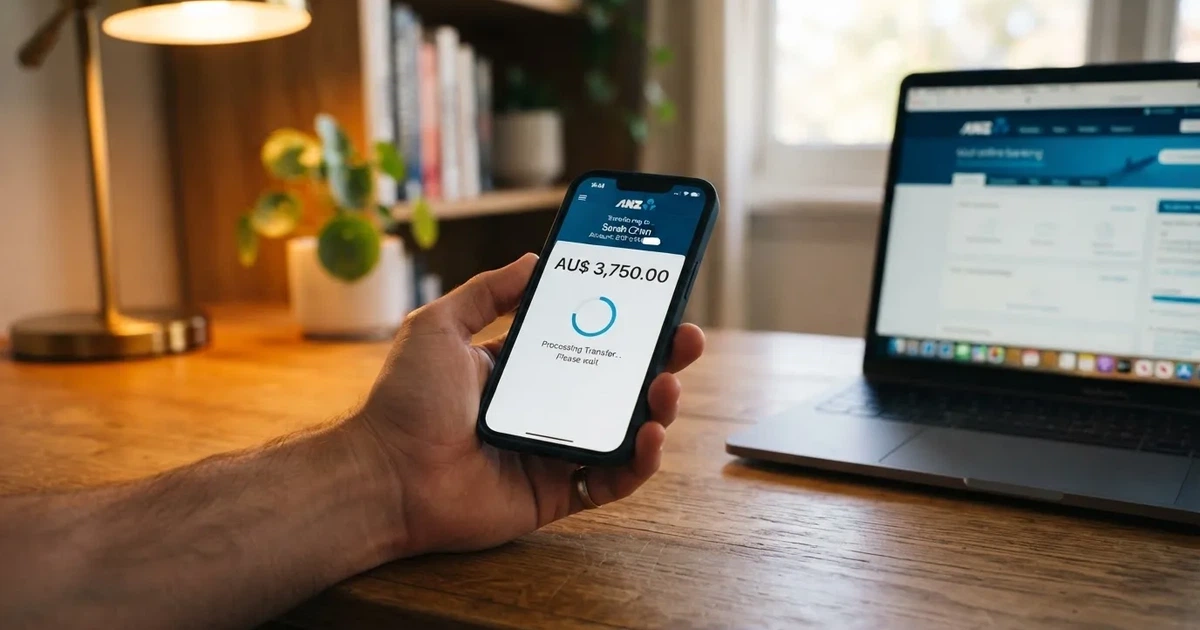
A PayID pokies no-deposit bonus combines two things Australians already know separately: PayID, the near-instant bank transfer identifier run by Australian Payments Plus on the New Payments Platform, and the no-deposit bonus, a marketing staple of offshore online casinos. Searchers who type the combined phrase want both at once. What they usually get is an affiliate page that describes an offer no Australian-licensed operator is allowed to make.
That is the spine of this page. It walks through what PayID is, what a no-deposit bonus claim typically looks like and why those two things meet at a point the Interactive Gambling Act 2001 already occupies. The offshore casino operators most commonly paired with these claims appear in their own right — not as a ranking, but because the ACMA has issued formal warnings over each of them for offering prohibited services to Australians. The page closes with the practical consequence: what the PayID angle changes, what it does not change, and where the reader’s actual leverage sits.
Table of Contents
- How PayID Works as a Payment Method
- Why a PayID Pokies No-Deposit Bonus Cannot Be Sourced From an Australian-Licensed Operator
- What the ACMA Has Actually Done
- The Blocking Rate Since 2019
- The Brand-by-Brand Picture
- What a PayID No-Deposit Bonus Offer Looks Like in the Wild
- Responsible Gambling and What an Australian Player Actually Has
- Settlement Times as a Background Fact
- The Interactive Gambling Amendment (Gambling Reform) Bill 2026
- Tax and the Recreational Player
- What the Page Is Not
- What the Reader Should Carry Away
- Frequently Asked Questions
How PayID Works as a Payment Method
PayID is built into online banking at more than 100 Australian financial institutions. A customer registers an easy-to-remember identifier — a mobile number, an email address, an ABN or an Organisation Identifier — and links it to a bank account. To receive money, the customer only hands over that identifier; the sender’s bank uses it to look up the correct BSB and account number through the New Payments Platform.

The mechanism sits on the NPP, which the Reserve Bank of Australia launched in February 2018 to let Australian households, businesses and government agencies make simply-addressed, near real-time payments around the clock. By April 2025 there were more than 25 million registered PayIDs in Australia, and the Reserve Bank separately runs the Fast Settlement Service that closes out NPP payments individually, close to real time, 24 hours a day. When paired with Osko — the NPP’s consumer brand — an account-to-account transfer between participating banks lands in under a minute, weekends included.
Three properties of PayID matter for any page that compares payment methods at gambling sites:
- The payer sees the name of the recipient before sending. AP+ describes this as the check that protects against mistaken and scam payments.
- PayID does not move funds outside the Australian banking system. The sender’s bank settles to the recipient’s bank through NPP rails; no card network sits between them.
- PayID is a routing layer, not an account or a wallet. The actual funds move from and to Australian bank accounts, and the receiving bank still applies its own transaction rules.
What the bank sees when the transfer is to a gambling merchant
Westpac’s gambling block runs at card level — it refuses authorisation on transactions registered under the merchant category code for Betting and Casino Gambling on eligible credit and debit cards. ANZ’s gambling transaction block, activated through the ANZ app, blocks gambling transactions made through a digital wallet such as Apple Pay on an eligible card as well, not only the physical card. ANZ adds a 48-hour cooling-off period before a customer can remove the block, and warns that some non-gambling transactions might be blocked in error.
PayID sits one rail above these card-level controls, which is why the bank-side mechanics matter. If a customer pays through PayID, the bank does not see a merchant category code — it sees a transfer to another account. That removes one layer of friction for the gambling site, and it removes one layer of protection for the customer. The name-of-recipient check still fires, but a gambling operator with an Australian business account presents as a regular counterparty on that screen.
PayID versus cards and digital wallets in the Australian context
The Interactive Gambling Act 2001, as amended in 2023, prohibits Australian-licensed online wagering services from accepting credit cards or other credit-related products as payment. PayID is a bank transfer, not a credit product, so the prohibition does not bite on it directly. A digital wallet like Apple Pay sits on top of whatever card the wallet holds, and Apple’s own pages make clear that any surcharge on an Apple Pay transaction comes from the merchant’s card-processing fees rather than from Apple, and that transaction limits and PIN requirements are set by the card issuer or the merchant rather than by Apple itself.
By the end of 2025 Apple Pay, Google Pay and Samsung Pay collectively accounted for around 45 per cent of all card payments in Australia by number. That is a useful reminder that the card-or-wallet split inside “PayID” pages is not really a choice about technology — it is a choice about which set of bank controls is going to see the transaction.
Why a PayID Pokies No-Deposit Bonus Cannot Be Sourced From an Australian-Licensed Operator
No state or territory in Australia licenses an online casino product. The Interactive Gambling Act 2001, strengthened by the Interactive Gambling Amendment Act 2017, makes it an offence to provide online casino games, online pokies or in-play betting to a person physically in Australia. Wagering on races and sport placed before the event, lotteries and keno can be licensed — in practice largely through the Northern Territory Racing and Wagering Commission, which regulates 52 of Australia’s online bookmakers including Sportsbet, Bet365 and Ladbrokes and operates with no full-time staff and one monthly meeting in Darwin. Casino games are not on that list.
This is what a PayID pokies no-deposit bonus offer looks like in regulatory terms: it is a marketing claim about an Australian bank transfer identifier being used to claim a no-deposit casino bonus from a site that, by the IGA’s own structure, cannot lawfully offer either the casino product or the bonus to a person in Australia. The PayID angle is a payment-method description, not a licence. It does not create a category of operator that is permitted to take Australian play.
What is permitted for a licensed wagering service is the payment mix: debit card, bank transfer, PayID or Osko, and BPAY. Credit cards, credit-related products and digital currency are banned as payment for licensed wagering since 11 June 2024, with penalties up to A$247,500 for operators. A site that asks an Australian for a credit card or a crypto deposit is, on that single fact, operating outside the Australian rules — independently of what the bonus terms say.
The legal frame that follows has a specific consequence for the page’s subject. The combined claim — PayID plus pokies plus no-deposit bonus — does not exist as a regulated product. It is two legitimate Australian elements (PayID, pokies as a category) attached to a prohibited offer (online casino to Australians). The legal status is set by the third element.
What the ACMA Has Actually Done
The ACMA investigates, issues formal warnings and directs Australian internet service providers to block illegal sites. It does not prosecute the individual player — the IGA targets the provider. Its register is therefore the cleanest public record of which offshore operators have crossed the line for Australian consumers.
The cumulative picture
According to the ACMA as reported in June 2026, a total of 1,751 illegal gambling and affiliate marketing websites had been blocked since the first blocking request in November 2019, and more than 230 unlicensed gambling services had left the Australian market since enforcement was strengthened in 2017. H2 Gambling Capital’s 2025 report estimates that Australians lose about A$3.9 billion a year to illegal gambling sites, and that the share of gambling going through legal channels fell from 74 per cent in 2021 to 64 per cent.
The most recent blocking round
In a round reported on 26 June 2026 the ACMA asked Australian internet service providers to block 12 more illegal gambling websites: 7Signs, ChromaBet, Donbet, Duospin, Freshbet, Slots Gem, Jacks Club, Lucky Start, Pointsbetz.com, Spinrise, Vinyl Casino and Wildsino. Each name on that list is an offshore casino that had been operating in Australia and was removed from Australian reach at the network layer.
What a formal warning means in practice
A formal warning under the IGA is published on the ACMA register with the operator’s legal name and the date. It records that the ACMA has formed the view that the named service has been providing a prohibited interactive gambling service to customers in Australia. The warning is not a prosecution and it does not, by itself, trigger blocking — but it is the documented step that precedes one. Several of the warnings below sit on operators whose earlier behaviour the ACMA had already noted, which is why the dates carry that repeated-actor shape.
The table below compares the brands most commonly paired with PayID pokies no-deposit bonus claims, by what the ACMA itself has done about each. The order follows the ACMA’s own record rather than any commercial ranking.
| Brand | ACMA action and date | Operator named by the ACMA | Subject support |
|---|---|---|---|
| RocketPlay | Formal warning, March 2026; earlier warning to Dama N.V., May 2022 | Pulsup Ltd (Rocketplay.com.au) | — |
| Level Up Casino | Formal warning, May 2022 | Dama N.V. | — |
| Woo Casino | Formal warning, March 2025 | Dama N.V. | — |
| Spirit Casino | Formal warning, May 2025 | Dama N.V. | — |
| National Casino | Formal warning, July 2025 | Consolutetish S.R.L. | — |
| Bizzo Casino | Formal warning, July 2025; earlier warning, 2022 | Consolutetish S.R.L.; earlier TechSolutions | — |
| Ignition Casino | Formal warning, July 2025 | Bamboo Media | — |
| Instant Casino | Formal warning, February 2025 | EOD Code SRL | — |
| Jackbit | Formal warning, April 2026 | Ryker B.V. | — |
| Casino Intense | Formal warning, April 2025 | Sterplay Holding Ltd | — |
| Sky Crown | Formal warning, September 2022 | Hollycorn N.V. | — |
A blank Subject support cell carries a specific meaning here: nothing in the consulted material records either a PayID claim or a no-deposit bonus claim in connection with that brand, so the page makes no assertion about either. To attach the offer to the brand anyway would be to invent the connection the public record does not carry.
The warnings the page treats in their own right
The ACMA warned Hollycorn N.V. regarding Sky Crown and Blue Leo in September 2022. Earlier, in May 2022, the ACMA warned Dama N.V. for Bambet, Dazard, Level Up, Rocketplay, Wild Tornado, and Cobra Casinos. Dama N.V. later appeared again regarding Woo Casino in March 2025 and Spirit Casino in May 2025. In July 2025, Bamboo Media received a warning over Ignition Casino, while Consolutetish S.R.L. was warned regarding National Casino and Bizzo Casino. Note that Bizzo Casino previously received a 2022 warning under TechSolutions (CY) Group Limited and TechSolutions Group N.V.
In February 2025 the ACMA issued a formal warning to EOD Code SRL over Instant Casino. In April 2025 the ACMA issued a formal warning to Sterplay Holding Ltd over Casino Intense. In April 2026 the ACMA issued a formal warning to Ryker B.V. over Jackbit and CasinOK. In March 2026 the ACMA issued a formal warning to Pulsup Ltd over Rocketplay.com.au.
This is what consequence looks like at the regulator layer: an operator that does not leave the Australian market returns, eventually, under another name.
The Blocking Rate Since 2019
The cumulative number of blocked sites — 1,751 since the first blocking request in November 2019 — sits beside the most recent round’s 12 names. The arithmetic is not subtle: divide 1,751 by the months from November 2019 to June 2026, and the running rate sits in a band of roughly 22 to 24 sites blocked per month, with the early years lighter and the recent rounds heavier. The band illustrates the nature of ACMA’s enforcement: it is not a single dramatic action but a steady monthly pull, and a reader who assumes “blocked once” means “settled” is missing the reality.
Two conditions bound that band. First, the figure counts sites blocked, not operators — one operator with several brands can produce several rows on the list, and a single brand that reappears under a new corporate vehicle can produce more than one. Second, the figure counts both gambling sites and affiliate marketing sites that promoted them, so a reader who weighs only the casino names under-counts the actual surface the ACMA is removing.
Where the consequence lands for a player
The blocking rate is the speed at which the regulator can remove an offshore casino from Australian reach at the network layer. A withdrawal that has been approved before a blocking request lands at the customer’s bank as a regular PayID transfer. A withdrawal that has not been approved by the time the request goes out may never be approved. There is no Australian complaints body that sits between an offshore operator and a player whose balance is stranded by a block, because the operator was already outside the Australian system. The blocking rate is therefore also the rate at which stranded balances accumulate.
The Brand-by-Brand Picture
Each brand below is presented on what the public record carries about it, with the ACMA action stated in full and the PayID and no-deposit bonus claim handled in line with what the consulted material supports. No bonus terms are repeated, because the only sources for them were affiliate marketing pages.
RocketPlay
The ACMA issued a formal warning over Rocketplay.com.au to Pulsup Ltd in March 2026. The same brand sat inside an earlier Dama N.V. warning in May 2022. RocketPlay is one of the brands that turns up most often in PayID-themed affiliate pages, and the ACMA record names the operator precisely because the warning is the regulator’s documented response to that visibility.
What RocketPlay’s profile tells a reader is that the brand has survived a corporate change — Dama N.V. in 2022, Pulsup Ltd by 2026 — and continued to be visible to Australian consumers. The 2026 warning is the more recent action, and the gap between 2022 and 2026 is the period during which an Australian-facing operation persisted under a new operator.
Level Up Casino
In May 2022, the ACMA warned Dama N.V. for Level Up Casino, alongside Bambet, Dazard, Rocketplay, Wild Tornado, and Cobra Casinos. Level Up Casino appears in passing within Westpac’s published materials, but the reviewed documents provide no specific terms, so no PayID or no-deposit bonus claims are asserted for it.
What the absence does is leave the comparison honest. Some brands in the table sit beside PayID claims on affiliate pages; Level Up Casino does not have that record in the consulted material, and saying so plainly is more useful to a reader than copying an affiliate assertion.
Woo Casino
The ACMA warned Dama N.V. over Woo Casino in March 2025 — the second Dama N.V. warning on the table, following the May 2022 batch. This operator had been warned once already, then returned to ACMA attention through a different brand. No PayID or no-deposit bonus claims appear in the material reviewed for Woo Casino.
Woo Casino’s profile is the clearest example of an operator that does not settle its Australian-customer conduct after a warning. A reader weighing Woo Casino against a brand that has only appeared once should weigh that pattern.
Spirit Casino
In May 2025, the ACMA warned Dama N.V. regarding Spirit Casino, marking the third such action on this table. This brand shares an operator record with Woo Casino and Level Up Casino, providing a clear comparison for readers examining the Dama N.V. regulator history. We have identified zero references to PayID or bonus claims without deposits for this brand in our research.
National Casino
The ACMA issued a formal warning to Consolutetish S.R.L. over National Casino in July 2025. The consulted material carries references to National Casino on AUSTRAC’s published register and on Wikipedia, but no specific PayID or no-deposit bonus terms. The page treats the brand on its ACMA action and its operator record, without attaching an offer.
A reader comparing National Casino to Bizzo Casino should note that both names sit under Consolutetish S.R.L. in the same July 2025 warning — the same operator, the same round, two brands.
Bizzo Casino
The ACMA warned Consolutetish S.R.L. regarding Bizzo Casino in July 2025. This brand previously received a 2022 formal warning under different corporate entities—TechSolutions (CY) Group Limited and TechSolutions Group N.V. No PayID or no-deposit bonus claims appear in the reviewed material for Bizzo Casino.
The pattern is the same shape as the Dama N.V. brands: a brand surfaces, is warned, is warned again under a different operator. A reader weighing a “second-time warned” brand against a first-time one should treat that as a real distinction.
Ignition Casino
In July 2025, the ACMA warned Bamboo Media over Ignition Casino. As the only Bamboo Media entry on this table, its operator-wide patterns remain limited. Any claims involving banking identifiers or introductory offers remain absent from the documentation reviewed for this casino.
Instant Casino
The ACMA issued a formal warning to EOD Code SRL over Instant Casino in February 2025. The consulted material records references to Instant Casino on the EcoPayz website and on PayID.com.au — but those are listing appearances rather than terms-of-offer assertions, so the page treats the brand on its ACMA action and lists only what the public listings actually say.
A reader who sees Instant Casino advertised on a page that pairs it with a PayID offer should weigh the ACMA warning as the relevant fact, with the listing appearances as context rather than endorsement.
Jackbit
The ACMA warned Ryker B.V. regarding Jackbit and CasinOK in April 2026. These brands share a Ryker B.V. warning, similar to the operator-pair patterns seen with Dama N.V. and Consolutetish S.R.L. Research on this operator yielded no verified links to the specific promotional combinations requested.
Casino Intense
The ACMA issued a formal warning to Sterplay Holding Ltd over Casino Intense in April 2025. The consulted material carries references to Casino Intense on AUSTRAC’s published register, on ITNews and on NAB’s published materials, but no PayID or no-deposit bonus terms. Casino Intense is therefore the brand with the largest non-ACMA public footprint on the table, and that footprint is what distinguishes it from the others.
The shape of Casino Intense’s record is what a reader comparing options should pay attention to: an ACMA warning, plus three independent listings, with no specific bonus terms surfaced.
Sky Crown
The ACMA warned Hollycorn N.V. over Sky Crown and Blue Leo in September 2022. As the earliest warning on the table and the only Hollycorn N.V. listing, its operator-wide patterns are limited. The reviewed material lists no PayID or no-deposit bonus claims for Sky Crown.
The gap between Sky Crown’s September 2022 warning and the most recent round in June 2026 is the longest on the table. A reader weighing the recency of regulatory action should weigh that gap as a real signal.
What a PayID No-Deposit Bonus Offer Looks Like in the Wild
Affiliate pages that pair PayID with no-deposit pokies bonuses tend to describe three claims: a free spin or bonus credit allocation, a wagering multiplier that must be cleared before withdrawal, and a maximum cashout ceiling on what can be withdrawn from winnings earned on the bonus. Where the consulted material carried no figures, the page does not invent them. What the page can usefully say is what the legal frame does to those three claims.
A free spin allocation is a marketing promise. It has no value to a player until a spin has actually played and a return has actually accrued. The return is governed by the slot’s own mathematics — its RTP, its volatility, and the random outcome of the spin — and an affiliate page that promises a free spin and does not name a title has not promised anything specific.
A wagering multiplier — typically expressed as a multiple of the bonus or the bonus-plus-deposit — is the mechanic that converts bonus credit into withdrawable cash. The player has to turn the bonus amount over a stated number of times before the casino will release the resulting balance. A no-deposit bonus still carries a wagering multiple on the affiliate pages that name it, even when no deposit is required to claim. The arithmetic of how long that takes depends on the slot’s house edge, the stake per spin and the spin rate, all of which the affiliate page usually does not state.
A maximum cashout ceiling caps how much of a bonus-derived win a player can actually withdraw, regardless of what the bonus-derived balance reaches. Affiliate pages that name a maximum cashout usually attach it to a specific bonus offer on a specific brand. Where the consulted material carried no figure, the page does not. Where it did, the figure is the brand’s own ceiling.
Why PayID enters the picture
The PayID angle is a payment-method claim. It says nothing about whether the bonus exists, whether the bonus terms are enforceable against an Australian player, or whether a withdrawal will actually move. PayID makes the deposit side of the equation fast — a bank-to-bank transfer in under a minute, weekends included — but the bonus offer sits on the casino side of that transfer, and the casino is the entity that decides what gets paid out.
What the PayID name-check is for
PayID will never contact a customer directly. Emails or text messages claiming to be from PayID are a scam, and PayID never asks anyone to send money in order to receive money or to upgrade an account. AP+ defines scambling as slang for illegal online gambling platforms advertised on social media and messaging apps that trick people into gambling on a scam website, and tells anyone who thinks they have been scambled to contact their financial institution. AP+ warns directly about gambling: if a customer is asked to transfer funds to a PayID on an illegal gambling site, it is almost certainly a scambling website.
That warning is the cleanest summary of what the PayID angle changes. The PayID identifier is a payment-method feature that makes a transfer faster and lets the payer see the recipient’s name. It does not, by being present, validate the casino on the other end of the transfer.
Responsible Gambling and What an Australian Player Actually Has
A player with an offshore casino has no Australian consumer protection. The Interactive Gambling Act 2001 targets the provider, not the player — an Australian is not prosecuted for placing a bet with an unlicensed site — but the corollary is that an unlicensed site gives no Australian complaints body, no Australian recourse if a withdrawal is refused, and no guarantee that a balance on the site at the moment of an ACMA blocking request can still be withdrawn.
The minimum age for any Australian-licensed wagering or gambling activity is 18. Licensed wagering services are connected to BetStop, the National Self-Exclusion Register that has been live since August 2023. BetStop binds Australian-licensed online and phone wagering services, which is the licensed bookmaker market, not the offshore casino market. An offshore casino is not connected to BetStop, and a self-exclusion registered with BetStop does not reach it.
The National Gambling Helpline at 1800 858 858 is free, available 24 hours a day and offers chat through Gambling Help Online. The number is the right one to call, or to give to someone whose play has moved offshore and outside the Australian support frame.
What a self-exclusion does and does not cover
BetStop is a binding exclusion from Australian-licensed wagering operators. It is not a binding exclusion from offshore casinos. A punter who has registered with BetStop and then plays at an offshore casino is outside the protection the registration was meant to provide, and that is a consequence worth surfacing clearly: the safety net a player thinks they have built is, in this corner of the market, a net that does not extend.
What a bank-side block does and does not cover
Westpac’s card-level gambling block, ANZ’s card-and-wallet gambling block, and similar controls at the other major Australian banks are designed to refuse authorisation on transactions registered under the gambling merchant category code. PayID transfers do not pass through that code, so a bank-side block on cards does not catch a PayID transfer to a casino. A player who has asked their bank to block gambling transactions has taken the strongest step their bank offers, and that step is real — it does not extend to PayID by default. The two systems are independent.
Settlement Times as a Background Fact
PayID transfers between participating Australian banks arrive in under a minute, 24 hours a day including weekends. Osko is the consumer brand on the same rails. When a player transfers to a casino through PayID, the speed is the speed of the bank transfer; once the funds have arrived at the casino, the casino’s own processing time takes over before a withdrawal can move back the other way.
The settlement figure that affiliate pages usually quote is the casino’s own claim about how long a withdrawal takes once approved. Where the consulted material carried no figure, the page does not name one. Where it did, the figure is what the casino itself publishes, and the casino is the source — not an Australian regulator, not an independent test, not a player review.
A PayID withdrawal, on the Australian banking side, would settle in under a minute if the casino released it. The casino’s processing time is the variable, and it is set by the casino rather than by the payment rail. That is the order in which a reader should read a PayID settlement claim: the speed of the rail is real, the speed of the casino is the casino’s own promise, and the two are not the same.
The Interactive Gambling Amendment (Gambling Reform) Bill 2026
The Interactive Gambling Amendment (Gambling Reform) Bill 2026 passed Parliament on 19 August 2026. Its advertising and inducement measures commence on 1 January 2027 — law with a start date, not yet in force on a 2026 page.
The page treats the Bill as a forward indicator rather than a current rule. The substantive content of the IGA as it applies to a 2026 search — the prohibition on providing online casino games and online pokies to a person in Australia — is unchanged by the Bill’s passage. What the Bill adds is a tighter advertising and inducement frame that comes into force from the start of 2027.
What changes for a reader from January 2027
The advertising and inducement measures will tighten what an Australian-facing casino can communicate. The exact provisions are not the page’s topic here — what matters is that the frame a 2026 reader is operating under is the pre-Bill frame, and any 2026 marketing claim should be read against the 2026 rules rather than the 2027 ones. The page flags this so a reader returning to the topic in 2027 has the right handhold.
Tax and the Recreational Player
Gambling winnings of a recreational player in Australia are not assessable income under section 6-5 of the ITAA 1997, and losses are not deductible, unless the person carries on a business of gambling. The page states this as the general rule, with the usual caveat that the Australian Taxation Office is the right body to confirm a specific position. A reader who has accumulated a balance at an offshore casino is no different from a reader who has accumulated a balance at a licensed Australian wagering service on this point: recreational winnings are not taxable, recreational losses are not deductible.
The model only applies to a recreational player. A professional gambler — someone carrying on a business of gambling — sits outside the model and the ATO’s published guidance is what applies.
What the Page Is Not
The page does not rank the eleven ACMA-warned brands. It does not recommend any of them, and it does not recommend against any specific one on grounds the consulted material does not support. The ACMA action is the public record; the comparison the page makes is between those actions, not between the brands as products a reader should pick from.
The page does not describe specific bonus terms for any brand on the table, because the only sources for those terms are affiliate marketing pages, and the consulted material did not carry specific figures from independent sources. Where a brand sits beside a PayID claim on an affiliate page, the page does not repeat the claim as the brand’s own fact; where the consulted material carries nothing, the page says so plainly.
The page does not propose a path by which an Australian can lawfully accept a PayID pokies no-deposit bonus offer, because no such path exists under the current IGA framework. The legal frame is the legal frame; the page describes it rather than working around it.
What the Reader Should Carry Away
A PayID pokies no-deposit bonus is a marketing combination of a legitimate Australian payment method, a popular game category, and an offer no Australian-licensed operator is permitted to make. The PayID angle is a payment-method description, not a licence, and it does not validate the casino on the other end of the transfer. AP+ itself warns that being asked to transfer funds to a PayID on an illegal gambling site is almost certainly a scambling website.
The ACMA’s cumulative action — 1,751 sites blocked since November 2019, with the recent rounds running at roughly 22 to 24 sites per month — describes a steady monthly pull rather than a single dramatic enforcement. The brand-by-brand record on the table is what that pull has actually produced: warnings to operators that have come back under new names, warnings to operators that have come back under the same name, and warnings to operators that were warned once and are now being warned again.
A reader who is comparing options should weigh recency — the most recent warning in the ACMA record — and recurrence — an operator that has been warned more than once. PayID itself is a fast, name-checked bank transfer. The casino on the other end is what determines whether the bonus is real, whether the wagering terms are clear, and whether a withdrawal will actually move. Those three things are not features of PayID.
Frequently Asked Questions
Does pairing “PayID” with a no-deposit bonus claim mean anything different to an ordinary no-deposit pokies offer?
No. The PayID part of the claim describes the payment rail — a near-instant Australian bank transfer through the New Payments Platform — and does not change the offer’s legal position. A no-deposit pokies bonus from any operator that targets Australians remains outside the Interactive Gambling Act 2001, regardless of the payment method attached to it. PayID does not license the casino.
How fast would a PayID withdrawal move if a no-deposit bonus win were ever actually paid out?
The PayID rail itself settles in under a minute, twenty-four hours a day. The variable is the casino’s own processing time, which is what the casino publishes and what the player cannot independently verify. A fast rail on the sending and receiving end does not change how long the casino holds the request before approving it.
Is a PayID no-deposit bonus offer from an offshore pokies site something an Australian can lawfully accept?
No. The Interactive Gambling Act 2001 prohibits providing online casino games, online pokies or in-play betting to a person in Australia, and no state or territory licenses online casino games. The payment method attached to an offer does not change that prohibition. The IGA targets the provider rather than the player, but the player has no Australian consumer protection if the operator refuses a withdrawal or is blocked at the network layer.
What is the usual cap on withdrawing winnings from a PayID pokies no-deposit bonus?
The cap is the casino’s own — usually expressed as a maximum cashout ceiling on bonus-derived winnings. The figure is brand- and offer-specific and is published by the casino itself. Where a specific affiliate page does not state a figure, the page does not invent one. The cap is enforced by the casino, not by PayID and not by an Australian regulator.
Why would a site need PayID at all if the bonus itself requires no deposit?
PayID is the deposit rail — the method by which a player tops up the account before any bonus-derived withdrawal can be moved. A no-deposit bonus can still require a deposit before a withdrawal is processed, and PayID is the rail that gets the deposit from the player’s bank to the casino in under a minute. The PayID angle is also a marketing claim: the offer page advertises the speed of the rail as if it were a feature of the bonus, when in practice it is a feature of the payment method.
What should someone check before assuming two “payid pokies no deposit bonus” pages describe the same offer?
The operator’s legal name, the ACMA register, the wagering multiplier attached to the bonus, the maximum cashout ceiling, and whether a deposit is required before a withdrawal is processed. Two affiliate pages that name the same brand can describe materially different terms; the brand name alone is not enough to conclude the offers are the same. The Australian Payments Plus warning that being asked to transfer to a PayID on an illegal gambling site is almost certainly a scambling website applies across all of them.