
Pay by phone casinos Australia 2026: how the deposit method works, and where it lands in Australian law
The phone-bill deposit sits in an odd place. The mechanism is real — a payment rail run by Boku and a handful of other carrier-billing processors, used in tens of countries, sitting inside mobile network operator billing systems. The Australian setting around it is also real, and less forgiving: no state or territory licenses an online casino to take a bet from an Australian, which means every site offering “pay by phone” deposits to an Australian is doing so from offshore, on a licence issued somewhere else. This page works through what that combination produces: which paths actually exist for a player who wants to deposit from a phone, what each path claims, and where the law and the operator’s own terms leave the player standing.
Current as of 1 November 2026, licence claims and operator identities verified against the ACMA’s published formal-warning register.
Table of Contents
- How phone-bill deposits actually clear
- What it looks like on a phone
- Titles the pages tend to spotlight
- What the offshore landscape looks like in 2026
- What the wider offshore landscape looks like
- What an Australian reader is actually choosing between
- The legal frame around an offshore casino deposit
- What the licensed product does not include, and why that matters
- Keeping the deposit method in perspective
- A closer look at the eleven brands
- What a phone-bill deposit really buys, and what it does not
- Carrying the picture forward
- Frequently asked questions
How phone-bill deposits actually clear
A carrier-billing deposit is, technically, a direct charge to a mobile phone account. The casino does not see a card number or a bank account; it sees a confirmation from a payment processor, who in turn bills the player’s mobile account. Boku, the main carrier-billing processor, describes its network as 200-plus local payment methods across 40-plus markets, with payment licences held in more than 40 countries, and says it operates in over 90 countries. It listed on the London Stock Exchange’s AIM market on 20 November 2017 through a £125 million IPO, traded under the ticker BOKU, and crossed $1 billion in annual payment volume the same year. Other processors named in the carrier-billing category include Fonix, Bango, Fortumo and Google Pay.

In practice the flow looks like this. A player enters a deposit amount at the casino cashier — usually within a per-transaction cap that sits somewhere between A$10 and A$50, depending on the network and the merchant — types in a mobile number, receives a one-time PIN by SMS, and confirms. The amount lands on the next mobile bill, or against prepaid credit, and the casino credits the player’s account almost immediately. There is no card entry, no app to download for the deposit itself, and no bank transfer to wait for. Settlement is instant in the gaming-account sense. The settlement of the underlying charge happens on the operator’s billing cycle, which is why carrier billing is the rail pitched to players who want to move small amounts without touching a bank account.
That speed is also the rail’s whole pitch. It is convenience, not protection. A phone-bill deposit does not change who holds the licence, where the licence was issued, or what happens to the balance when an offshore operator decides it does not want to pay out.
What it looks like on a phone
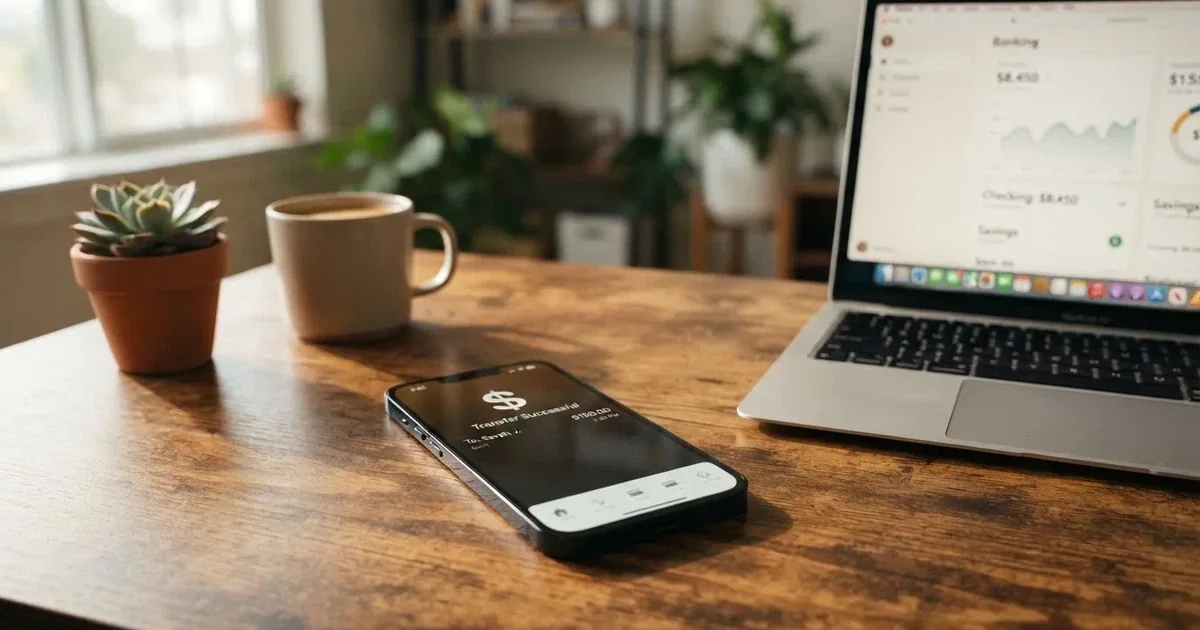
Carrier billing was designed for the mobile web, and the player experience is built around that. The deposit flow runs in a mobile browser without redirecting to a banking app, and the same PIN confirmation works on any phone with a SIM — feature phones included. That is why “pay by mobile phone bill” and “pay by phone bill” are used interchangeably across marketing copy; the merchant sees the same processor either way, and the player’s account is debited against the same mobile bill.
For an Australian reader, two practical consequences follow.
First, the rail does not route through the Australian banking system. A phone-bill deposit is not a bank transfer and is not a PayID. It is a charge billed by a mobile network operator, then settled between that operator and the carrier-billing processor under the processor’s licence in another country. The debit appears on the mobile account; nothing about it goes through the New Payments Platform or Australian Payments Plus.
Second, the speed that makes the rail attractive to offshore casinos is also what makes it invisible to Australian bank-side controls. Westpac’s gambling block works at card level — it refuses authorisation of transactions registered under the merchant category code “Betting/Casino Gambling” on eligible personal credit and debit cards. ANZ’s gambling block, activated in the ANZ app, also blocks gambling transactions made through a digital wallet such as Apple Pay on an eligible card. Carrier billing sits outside both: there is no card to decline, no card-present merchant category code to match, and no entry point in the bank’s transaction stream where a “block gambling” toggle can stop it. The block cannot see the charge.
Where the rail ends and the casino begins
A carrier-billing deposit gets money onto a casino account. It does not change what the casino is. The licensed product sold over a licensed rail is still licensed, and an unlicensed product sold over any rail — phone bill included — is still unlicensed. Australian-licensed online wagering services cannot accept credit cards or credit-related products under the Interactive Gambling Act 2001 as amended in 2023, a restriction that also constrains gambling use of linked digital wallets like Apple Pay, but no Australian-licensed wagering service uses carrier billing in the first place. The phone-bill deposit, as offered offshore, exists precisely because the licensed Australian channels do not offer it and the offshore channels do.
Titles the pages tend to spotlight
Carrier billing, where it is offered, is sold as a deposit rail rather than a game. The slot underneath is whatever the casino has loaded. The titles that recur across sites pitching “pay by phone bill slots” tend to be mainstream video slots with low minimum stakes — the kind of product where the per-spin cost sits comfortably inside a A$10 to A$50 phone-bill deposit cap. Two things are worth flagging about that pattern.
It is the casino, not the rail, that sets the spin price. A A$30 phone-bill deposit converts to roughly 30 spins at A$1 a spin, or 300 spins at 10c a spin, depending on the title. There is no “phone-bill slot” — there is a slot, plus a deposit button.
A landline phone-bill deposit option, where offered, is functionally the same rail billed to a different number. The casino sees the same processor confirmation; the bill lands on the landline account. The pages that lean on “pay by landline phone bill” for online slot deposits are mostly recycling copy from processor marketing material; the rail was built for mobile and most processors now treat landline as legacy.
What the offshore landscape looks like in 2026
Eleven brands sit behind the headlines on this topic, and the ACMA itself has issued a formal warning over each of them for offering prohibited interactive gambling services to Australians. The list below is not a ranking. It is the ACMA’s own list, transcribed.
| Brand | ACMA action and date | Operator named by the ACMA | Phone-bill deposit support | Notes for an Australian reader |
|---|---|---|---|---|
| RocketPlay | Formal warning, March 2026 (Pulsup Ltd); earlier Dama N.V., May 2022 | Pulsup Ltd; Dama N.V. | No data | Wagering on casino games cannot be licensed in Australia; the offshore Curaçao licence does not authorise an Australian player. |
| Level Up Casino | Formal warning, May 2022 | Dama N.V. | Listings describe Boku-style rails only | Listed by Westpac’s merchant categories under betting/casino gambling; a Westpac gambling block will not reach a phone-bill charge, but the merchant code on the casino’s own card rails will. |
| Woo Casino | Formal warning, March 2025 | Dama N.V. | No data | Same operator group as several other brands on the ACMA’s register. |
| Spirit Casino | Formal warning, May 2025 | Dama N.V. | No data | Same operator group. |
| National Casino | Formal warning, July 2025 | Consolutetish S.R.L. | Listings describe carrier-billing only | AUSTRAC’s threshold-transaction reporting rule applies to physical cash only; ordinary electronic transfers are not subject to it regardless of amount — that is the rule, not a carve-out for casinos. |
| Bizzo Casino | Formal warning, July 2025 (Consolutetish S.R.L.); earlier 2022 (TechSolutions) | Consolutetish S.R.L.; TechSolutions Group | No data | Repeated warning to two operators, two years apart, for the same conduct. |
| Ignition Casino | Formal warning, July 2025 | Bamboo Media | No data | — |
| Instant Casino | Formal warning, February 2025 | EOD Code SRL | Listings describe ecoPayz and PayID rails | PayID shows the account holder name before a transfer is sent; AP+ warns that being asked to transfer to a PayID on an illegal gambling site is almost certainly a scam site. |
| Jackbit | Formal warning, April 2026 | Ryker B.V. | No data | One of two brands warned against in the same month. |
| Casino Intense | Formal warning, April 2025 | Sterplay Holding Ltd | Listings describe AUSTRAC, IT News and NAB references only | NAB’s consumer-facing gambling block tools operate on card rails; a phone-bill deposit again bypasses them. |
| Sky Crown | Formal warning, September 2022 | Hollycorn N.V. | No data | The 2022 warning named Sky Crown alongside Blue Leo; the same warning covers both. |
Payment Rails for Australian Wagering
| Payment Rail | Best For | Typical Australian Availability |
|---|---|---|
| Carrier Billing | Small, instant deposits | Offshore only |
| Bank Transfer (Osko) | Fast, secure transfers | Licensed wagering |
| Debit Card | Standard betting | Licensed wagering |
What the wider offshore landscape looks like
The eleven brands above are the ones the ACMA has acted on. The wider number is larger, and growing. As of the ACMA round reported on 26 June 2026, a total of 1,751 illegal gambling and affiliate marketing websites had been blocked since the first blocking request in November 2019, and more than 230 unlicensed gambling services had left the Australian market since enforcement was strengthened in 2017. The June 2026 round alone asked Australian ISPs to block another 12 sites: 7Signs, ChromaBet, Donbet, Duospin, Freshbet, Slots Gem, Jacks Club, Lucky Start, Pointsbetz, Spinrise, Vinyl Casino and Wildsino. H2 Gambling Capital’s 2025 report estimates that Australians lose about A$3.9 billion a year to illegal gambling sites, and that the share of gambling going through legal channels fell from 74% in 2021 to 64%.
The arithmetic on the blocking register runs at a steady cadence. From the first blocking request in November 2019 to the June 2026 figure, the ACMA’s blocked-sites count moved from zero to 1,751 across roughly 79 months. That works out to an average blocking rate of about 22 sites per month over the lifetime of the regime, with year-on-year variation driven by enforcement rounds rather than steady tick-over. The band the figure should be quoted inside is wide enough to carry the lumpy months — somewhere between roughly 15 and 30 new blocks a month across the regime’s life, with occasional single rounds adding a dozen at once. The number is the ACMA’s own; the rate is arithmetic over that number.
What an Australian reader is actually choosing between
The choice a player faces is not really between operators — every operator offering phone-bill deposits to an Australian is offering them from offshore, on a licence that does not authorise Australian play. The real choice is between three paths, each with its own cost.
Path one is the licensed Australian channels. Online wagering is licensed in Australia for racing and sport only, with the Northern Territory Racing and Wagering Commission regulating 52 online bookmakers — including Sportsbet, Bet365 and Ladbrokes — for tax reasons; the commission has no full-time staff and meets once a month in Darwin. Licensed bookmakers cannot legally offer online casino games or online pokies, so this path closes off the product this article covers. What it opens up is a regulated environment: BetStop, the National Self-Exclusion Register, is live since August 2023 and binds Australian-licensed services. A licensed bookmaker accepts debit card, bank transfer, PayID via Osko, or BPAY; settlement to a PayID shows the recipient name before the transfer is sent, and Osko bank transfers between participating banks arrive in under a minute, 24/7. This is the only path the Interactive Gambling Act 2001 makes lawful for an Australian resident.
Path two is the offshore casino offering phone-bill deposits. The product is what this article names; the legal frame around it is what the next section covers. A phone-bill deposit here is fast and does not need a bank account, but the casino is unlicensed in Australia, the balance sits under an offshore operator’s terms, and the ACMA can ask ISPs to block the site while a balance is on it.
Path three is not playing at all, or playing somewhere the law does not put the player at the wrong end of the consumer-protection balance. The licensed Australian channels carry BetStop and a banking ombudsman; the offshore channels carry neither.
Which path suits which reader
A reader who wants to bet on a horse race or a football match has a clean licensed route through a Northern Territory-licensed bookmaker, with bank-side gambling blocks available if they want them. A reader who wants to play online pokies has no licensed route, because no Australian licence covers that product; the choice collapses to offshore or to not playing. A reader who wants to deposit from a phone bill is asking specifically for a rail that licensed Australian wagering does not use, which means the question itself routes them toward an offshore site. That routing is what the next section picks up.
The legal frame around an offshore casino deposit
Online casino games and online pokies cannot be licensed anywhere in Australia. The Interactive Gambling Act 2001 (IGA), strengthened by the Interactive Gambling Amendment Act 2017, makes it an offence to provide these products to a person in Australia; no state or territory licenses them. What is licensable is wagering on races and sport placed before the event, lotteries and keno. The minimum age is 18.
Enforcement runs through the ACMA. The ACMA investigates, issues formal warnings, and directs ISPs to block illegal sites. The individual player is not prosecuted — the IGA targets the provider — but an offshore site gives no Australian consumer protection, no complaints body and no recourse if a withdrawal is refused, and it can be blocked with a balance still on it. The 1,751-site blocking total and the 230-plus services that have left the Australian market are the visible edge of that enforcement. The hidden edge is the balance an Australian holds at a site the ACMA has just asked ISPs to block.
BetStop, the National Self-Exclusion Register, is live since August 2023, and binds only Australian-licensed online and phone wagering services. An offshore casino is not connected to it. A self-excluded Australian who opens an offshore account is self-excluding from a set that does not include the site they want to play at.
On payments, credit cards, credit-related products and digital currency are banned as payment for licensed online wagering since 11 June 2024, with penalties of up to $247,500 for operators that take them. The legal deposit routes for licensed wagering are debit card, bank transfer, PayID/Osko and BPAY. A site asking an Australian for a credit card or a crypto deposit is operating outside the Australian rules on licensed wagering; a site asking an Australian for a phone-bill deposit is operating outside the Australian rules on licensed wagering entirely, because no licensed wagering service offers phone-bill deposits.
The Interactive Gambling Amendment (Gambling Reform) Bill 2026 passed Parliament on 19 August 2026; its advertising and inducement measures commence 1 January 2027 — law with a start date, not yet in force on a 2026 page. The future tightening is on the marketing, not the underlying prohibition.
Tax is the one corner of the frame that is forgiving. Gambling winnings of a recreational player are not assessable income under section 6-5 of the ITAA 1997, and losses are not deductible. The “check with the ATO” caveat is real only when the gambling crosses into carrying on a business of gambling — that is a model, not a routine outcome, and the ATO sets the line.
What the licensed product does not include, and why that matters
The licensed Australian wagering market is built around pre-event betting on races and sport. A punter can back a horse, lay a multi, place a same-game multi on an NRL match, or take a fixed-odds price before the bounce. They cannot sit at a digital blackjack table, cannot spin a digital pokie reel, and cannot play a live dealer game streamed from a studio overseas. The Interactive Gambling Act carves that line in, and the carve is what sends players looking for the products the licensing frame does not cover — which is the demand the offshore phone-bill casinos are built to catch.
There is a version of the choice that runs in the other direction. A reader who treats gambling as occasional entertainment on a licensed product has a regulated environment, a complaints body, and a self-exclusion register they can actually enrol in. A reader who wants a casino product has chosen to step outside that environment, and the phone-bill deposit makes the step easier. The convenience of the rail and the absence of the licence are not two separate facts; they are the same fact read from two sides.
Keeping the deposit method in perspective
A phone-bill deposit is a small charge on a mobile bill, often between A$10 and A$50, often settled within seconds. It does not look like a gambling transaction on a bank statement, because it never reaches the bank statement. For a reader who is trying to control their gambling spend, that invisibility cuts both ways: it removes a friction that bank-side gambling blocks put in place, and it removes a record a player might otherwise see at month-end. The Westpac and ANZ gambling blocks both work at the card-rail level, which means neither can see a carrier-billing charge to decline it. ANZ’s block warns explicitly that not all gambling transactions will be blocked and some non-gambling transactions might be blocked in error; that warning applies to the card rails the bank can see, and a phone-bill deposit sits outside even that.
BetStop is the right starting point for any Australian who wants to step back from gambling, and it works only because it binds Australian-licensed services. The National Gambling Helpline on 1800 858 858 is free, 24/7, with chat at Gambling Help Online. Both are the right next call for a reader who has reached the bottom of an offshore site and found the balance stuck, and for a reader who is still at the top of the page deciding whether to start.
A closer look at the eleven brands
The eleven brands below are the ACMA’s own list, in the order the regulator published its actions. Each one is described on what research and the ACMA register carry — formal-warning date, operator name, what the operator’s own materials and merchant listings say about phone-bill support — and on what those facts mean for an Australian reader. None is recommended; each is named because the ACMA has formally warned over it.
RocketPlay
RocketPlay was the subject of a formal ACMA warning in March 2026, naming Pulsup Ltd as the operator of RocketPlay. An earlier warning in May 2022 named Dama N.V. over a wider set of brands that included RocketPlay. The site carries a Curaçao licence, which is the standard offshore wrapper; that licence does not authorise Australian players, and the ACMA’s warning is the regulator’s notice that the operator is offering prohibited interactive gambling services to Australians. Research carries no data on whether the site offers a phone-bill deposit rail. The verdict for an Australian reader is the same as for any other brand on this list: the licence is offshore, the prohibition is domestic, and the ACMA has twice moved against this operator.
Level Up Casino
Level Up Casino was named in the May 2022 ACMA warning to Dama N.V. The site, like the rest of Dama N.V.’s portfolio, runs on a Curaçao wrapper. Merchant-category listings name Boku-style carrier-billing rails among the deposit options, but the listings are exactly that — third-party categorisations of what a merchant offers, not a statement from Level Up that an Australian phone number will clear. The card rails the site does use will run into Westpac’s gambling block at merchant-code level; the phone-bill rail, if used, will not.
Woo Casino
Woo Casino was the subject of a March 2025 ACMA warning to Dama N.V. Woo is one of three brands on this list — alongside Spirit Casino and a wider Dama N.V. portfolio — where the same operator group has attracted repeated regulator attention across multiple brands. The pattern is worth noticing: a fresh brand is not a fresh licence, and a fresh warning over a different brand name is sometimes the same warning over the same operator’s next launch.
Spirit Casino
Spirit Casino was named in the May 2025 ACMA warning to Dama N.V., two months after the Woo Casino warning. The Dama N.V. group is the most frequently warned operator in this register, and Spirit sits alongside Woo as a same-group re-entry.
National Casino
National Casino was named in the July 2025 ACMA warning to Consolutetish S.R.L., alongside Bizzo Casino. The deposit rail the site markets includes carrier-billing options per third-party listings, though no Australian-issued statement confirms support for Australian phone numbers. AUSTRAC’s threshold-transaction-reporting rule applies to physical cash only and does not apply to ordinary electronic transfers regardless of amount; this is the regulatory baseline, not a casino-specific carve-out, and it sits behind every bank transfer an Australian might make to an offshore site.
Bizzo Casino
Bizzo Casino was named in the July 2025 ACMA warning to Consolutetish S.R.L., and in an earlier 2022 ACMA warning to TechSolutions (CY) Group Limited and TechSolutions Group N.V. Two operators, two warnings, three years apart, the same brand and the same conduct. A repeated warning is itself a finding: the operator changed its corporate wrapper and kept offering the same product to Australians.
Ignition Casino
Ignition Casino was named in the July 2025 ACMA warning to Bamboo Media. The site is pitched primarily at the United States market and has run Australian-facing material intermittently; the ACMA warning is the regulator’s note that an Australian-facing presence is prohibited regardless of which market the marketing copy is written for.
Instant Casino
Instant Casino was the subject of a February 2025 ACMA warning to EOD Code SRL. Third-party merchant listings describe the deposit rail as including ecoPayz and PayID; ecoPayz is an e-wallet and PayID is an Australian instant-transfer system. AP+ warns that being asked to transfer money to a PayID on an illegal gambling site almost certainly means a scam site — the warning is the industry’s own, not the regulator’s, and it sits across any instant-transfer rail an offshore casino offers to Australians.
Jackbit
Jackbit was named in the April 2026 ACMA warning to Ryker B.V., alongside CasinOK. Research carries no data on the deposit rails the site offers. The warning is the regulator’s, dated within the last twelve months, and the brand is one of the more recent additions to the list.
Casino Intense
Casino Intense was named in the April 2025 ACMA warning to Sterplay Holding Ltd. Third-party merchant references mention AUSTRAC, IT News and NAB as the sources for the merchant categorisation; the categorisation is the listing’s, not Casino Intense’s statement about an Australian player’s options. NAB’s consumer-facing gambling block operates on card rails and would not see a phone-bill charge.
Sky Crown
Sky Crown was named in the September 2022 ACMA warning to Hollycorn N.V., which covered both Sky Crown and Blue Leo. The 2022 warning is older than most on the list, and the ACMA has not refreshed it; the warning remains in force as a published regulator action until the regulator takes it down or replaces it. The brand is a useful reminder that “no recent warning” is not the same as “no warning”, and that the regulator’s register is cumulative.
What a phone-bill deposit really buys, and what it does not
A phone-bill deposit buys speed and discretion on the deposit. The credit is in the casino account within seconds. The merchant name on the mobile bill is a payment processor’s name, not the casino’s. A bank statement will not show a gambling transaction, because no bank is in the loop.
What it does not buy is any of the protections an Australian consumer gets from a licensed wagering service. There is no Australian consumer law that applies to the offshore operator. There is no Australian complaints body. There is no BetStop enrolment the offshore site is bound by. There is no Banking Ombudsman or AUSTRAC supervision of the merchant that settles the deposit. The phone-bill rail is licensed in 40-plus countries under Boku’s licences; none of those licences is an Australian one. None of the operator licences the casino displays is an Australian one either.
The “discretion” point needs to be read carefully. A player who is keeping gambling transactions out of their bank’s view is also keeping those transactions out of any tool the bank offers to limit gambling spend. Westpac’s card-level gambling block, ANZ’s app-based gambling block that also catches Apple Pay on an eligible card, NAB’s consumer-facing gambling block — none of these will see a phone-bill charge. That is a feature from the casino’s marketing perspective, and a risk from the player’s. For a reader who is trying to control their gambling, the rail that hides the transaction from their bank is the same rail that hides it from the block the bank offers to set.
Carrying the picture forward
The picture this page is left with is one of a payment rail that does exactly what it says, attached to a product the law does not authorise. The rail is fast, the deposit cap is small, the merchant name is discreet, and the offshore licence is what every offshore licence on this register is — a licence from a regulator that does not oversee the offer to Australians. The ACMA’s enforcement record is the visible edge of that mismatch: 1,751 sites blocked since November 2019, formal warnings over every operator named on this page, repeated warnings where the same operator group has tried again under a new name.
For an Australian reader, the choice the reader faces comes down to which costs they are willing to pay. The licensed path costs the reader the product — no online casino, no online pokies — and gives them the protections. The offshore path costs the reader the protections and gives them the product. The phone-bill deposit does not change which side of that trade the reader is on; it only makes the offshore side easier to step onto.
Frequently asked questions
How does paying by phone bill actually work as a deposit method at a casino?
A carrier-billing deposit is a direct charge to a mobile phone account, processed by a payment processor like Boku on the back of a confirmation SMS. The player enters a mobile number, confirms a one-time PIN, and the amount lands on the next mobile bill, with the casino credited almost immediately. The deposit is normally capped between about A$10 and A$50 per transaction, depending on the network and merchant.
Does carrier billing make a casino any more legitimate for Australian players?
No. The payment rail is licensed in 40-plus countries, but no Australian state or territory licenses an online casino. The offshore licence a casino displays is the same offshore licence it would display on any other deposit method. A phone-bill deposit changes how the money moves, not who is licensed to take it, and the ACMA’s enforcement record covers the operator regardless of which rail the player used to fund the account.
Is depositing via a mobile phone bill to an offshore casino something an Australian resident can lawfully do?
Australian law targets the provider, not the individual player, under the Interactive Gambling Act 2001 as strengthened in 2017. No Australian resident is prosecuted for depositing, but the deposit funds an unlicensed service, the balance sits under an offshore operator’s terms, and the site can be blocked with the balance still on it. The licensed Australian wagering market does not offer online casino games or pokies, which is why the offshore path exists at all.
What is the difference between “pay by phone bill” and “pay by mobile phone” as far as the casino is concerned?
None, at the merchant level. Both phrases route to the same carrier-billing processor, confirm through the same one-time PIN flow, and bill against the same mobile account. The marketing copy varies; the deposit does not.
Why would a landline phone-bill payment option even be offered for online slots?
The rail was originally built for mobile, and most processors now treat landline as a legacy option. Pages that lean on “pay by landline phone bill” for online slots are mostly recycling processor marketing copy. The deposit clears the same way; the bill lands on the landline account.
What happens if a phone-bill casino charge shows up on someone else’s mobile account?
Carrier billing charges the mobile account on file, not the person at the keyboard. A charge on a partner’s, parent’s or child’s mobile account is a billing dispute between the account holder and the mobile network operator — the casino has already received the funds and is not a party to that dispute. A player who has mistakenly entered someone else’s number, or had someone else enter theirs, has limited recourse once the money has cleared.
Current as of 1 November 2026, licence claims and operator identities verified against the ACMA’s published formal-warning register.