
Real Money Casino Table Games in Australia: What the Numbers and the Law Actually Allow in 2026
Walk into Crown Melbourne, Crown Sydney, The Star Sydney, The Star Gold Coast, Brisbane’s Queen’s Wharf or Treasury Brisbane, sit down at a blackjack or roulette table, and you are doing something the law recognises: playing a real-money casino table game in a premises licensed by a state or territory casino regulator, on rules the regulator has approved. Open a laptop, visit a site whose URL ends in .com rather than .au, and the picture inverts. Online casino games, including the table games on this page, cannot be licensed anywhere in Australia under the Interactive Gambling Act 2001. Every offshore site offering them to an Australian player is operating outside the regime that gives you recourse if a withdrawal is refused, a bonus is voided or a balance vanishes when the site is blocked.
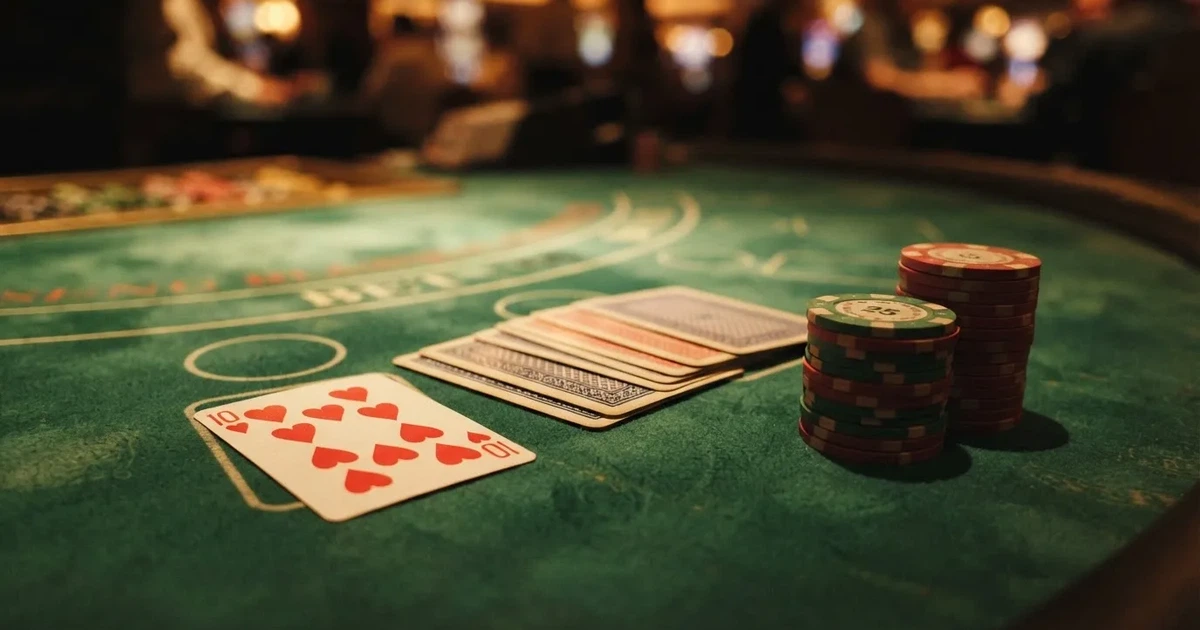
This page compares those two paths honestly. It surveys the major table games, blackjack, roulette, baccarat, craps and a few close relatives, gives the house edges from Wizard of Odds (18 September 2026), points to the licensed Australian venues where you can sit down and play for real money, and lists the offshore brands the Australian Communications and Media Authority (ACMA) has named in formal warnings over the past four years. Where the ACMA has acted, the brand is named and the date is given. No bonus code is printed here, because the only sources for such codes are the affiliate marketing pages that fund the offshore market in the first place.
Current as of 31 October 2026, checked against the ACMA register of formal warnings and blockings.
Table of Contents
- The starting picture: licensed venues versus offshore sites
- What “table games” actually covers
- House edges, drawn honestly
- Blackjack: the game and its rules
- Roulette: the wheel and the two forms
- Baccarat: the simplest serious game
- Craps: the one game where the player picks the bet
- Crypto and the offshore angle
- Where the ACMA has acted, and what that means
- The brands the ACMA has formally warned
- What the table tells a reader
- Player protection: BetStop, the helpline, and what the offshore market cannot offer
- The reform on the calendar
- The path that holds up
- Frequently Asked Questions
The starting picture: licensed venues versus offshore sites
Australians who want to play real-money table games have, in 2026, two distinct channels. The first is the licensed casino floor: a handful of integrated resort and standalone casinos in every mainland state, plus the Australian Capital Territory, all governed by state-level casino control legislation and supervised by a casino-specific regulator. The second is the offshore online market: thousands of brands operating from Curaçao, Anjouan or elsewhere, accepting Australian deposits in fiat or cryptocurrency, and offering versions of the same games under house rules.

The two channels sit on opposite sides of the Interactive Gambling Act 2001. The IGA makes it an offence to provide online casino games, online pokies or in-play betting to a person physically in Australia, with strengthened penalties added by the Interactive Gambling Amendment Act 2017. No state or territory issues a licence for an online casino offering table games. What is licensable is wagering on races and sport placed before the event, lotteries and keno, and that is the activity the Northern Territory Racing and Wagering Commission (NTRWC) regulates through 52 online bookmakers including Sportsbet, Bet365 and Ladbrokes, with the commission itself running on a skeleton staff and a monthly meeting in Darwin. The state casino regulators — the VGCCC in Victoria, Liquor & Gaming NSW (acting under delegation from the NSW Independent Casino Commission since 5 September 2022) under the Casino Control Act 1992, the Queensland Office of Liquor and Gaming Regulation, and their equivalents elsewhere — cover the brick-and-mortar floors and have no jurisdiction over a website hosted overseas.
The practical consequence: a payout dispute at Crown Melbourne goes to the VGCCC and the Victorian Casino and Gambling Control framework, with mediation and an enforceable ruling. A payout dispute at an offshore site goes nowhere an Australian player can enforce. The site can be blocked while a balance is still sitting on it, and the player has no Australian complaints body to approach. The IGA targets the provider, not the individual punter, but the structural protection a player takes for granted on a licensed floor does not extend to a single offshore brand.
What “table games” actually covers
A real-money casino table game, as the term is used on licensed floors and in the offshore market alike, is a game played against the house on a felt or digital layout, with a dealer or a fixed drawing routine, where the house edge is published and the rules are stable across sessions. Slots and video poker are not table games. Live-dealer streams from offshore studios are table games under their rules, even when they are broadcast to a laptop rather than played across a felt.
The core list, as it appears on every major Australian casino floor and on the menus of every offshore operator carrying a “table games” tab, breaks into four families. Blackjack covers the dealer-versus-player contest and its many rule variants. Roulette covers the wheel-based game in its European (single zero) and American (double zero) forms. Baccarat covers the player-and-banker contest under fixed drawing rules, known as Punto Banco in its modern form. Craps covers the dice game built on the Pass line, Don’t Pass and the layered side bets that sit on top of it. Adjacent games — Casino War, Three Card Poker, Caribbean Stud, Pai Gow, Sic Bo — extend the list but rarely change its shape.
What separates table games from slots is that the player can, in theory, choose which wagers to place, which cards to take and which to discard, and which side bets to add or skip. The published odds assume a player who plays with the available information: basic strategy in blackjack, the Banker bet only in baccarat, the Pass line with full odds in craps, the even-money outside bets in roulette. The house edge figures in the next sections assume that baseline.
House edges, drawn honestly
The single most useful number on any table game is its house edge: the percentage of every dollar wagered that the game keeps over a very large number of decisions. The figures below come from Wizard of Odds (18 September 2026) and the relevant Wikipedia entries cross-checked against it.
Blackjack sits at the bottom of the table. Under liberal Las Vegas Strip rules (dealer stands on soft 17, double on any two cards, double after split, resplit aces, late surrender), the house edge is about 0.28%. Under Atlantic City rules, it rises to roughly 0.43%. Players who follow basic strategy lose on average less than 1% of their action over the long run, which is why blackjack draws the mathematically inclined crowd more reliably than any other table game.
Baccarat sits next. In the eight-deck shoe variant that dominates modern play, the Banker bet carries a 1.06% house edge, the Player bet 1.24%, and the Tie bet runs 14.36% at the standard 8-to-1 payout or 4.85% at a 9-to-1 payout. The Wikipedia entry on baccarat confirms both figures. Baccarat’s simplicity is what keeps the edge this low: there are no decisions after the wager. The Punter either backs Banker, Player or Tie, and the fixed drawing rule does the rest.
Roulette sits above both. Single-zero (European) roulette runs a 2.70% house edge on every wager except the five-number combination, which carries a higher figure. Double-zero (American) roulette runs 5.26% on almost every wager, the worst edge of any mainstream table game short of keno, because that second zero doubles the casino’s structural advantage on every spin.
Craps spans a wide range because the player picks the bet. The Pass line runs 1.41%, and layering full odds behind it brings the combined edge close to zero. The side bets are a different story: 5.56% on the Field bet, 16.67% on Any 7, 11.11% on Hard 4 or Hard 10. A craps player who sticks to the Pass line and takes the maximum odds is among the closest to an even-money gambler a casino allows.
Keno sits at the top of the spread, with house edges running between 25% and 29% depending on the draw size and the paytable. Keno is the table game’s outlier — closer to a lottery than to blackjack — and any page comparing the four serious table games will put it last for a reason.
A reader picking one of these games by the math alone has a short list. Blackjack with basic strategy, baccarat on the Banker bet, craps on the Pass line with full odds, European roulette. American roulette and any side bet in craps are the bets that give the house the most room. Keno is the bet that gives it the most room of all.
Blackjack: the game and its rules
The first written reference to a blackjack-style game appears in Miguel de Cervantes’ Rinconete y Cortadillo, written around 1601-1602 in Spain, with the game documented in Castile from the early seventeenth century. Formal rules for the English version, vingt-un, were published in Britain in 1800, and the game was renamed “blackjack” around 1899, with the Klondike Gold Rush of 1896-99 credited with giving it its modern name.
In blackjack, number cards count as their number, jack/queen/king count as 10 and an ace counts as 1 or 11. A starting two-card total of 21, an ace plus a ten-valued card, is called a “blackjack” or “natural” and is the strongest hand. The dealer must keep drawing cards until reaching a total of 17 or higher, though some rule sets require the dealer to also hit on a “soft 17”, an ace counted as 11. Liberal rules on the player’s side of the table (double on any two, double after split, resplit aces, late surrender) push the house edge down to the 0.28% figure cited above. Harsher rules (no doubling after split, no surrender, dealer hits soft 17) push it up.
The established casino variants on a typical menu include Spanish 21 (played without 10s but with liberal player-favourable rules), Double Exposure Blackjack (both of the dealer’s cards dealt face-up), Blackjack Switch (players can swap cards between two hands) and Super Fun 21 (allows up to four splits). Each variant shifts the edge by its own amount, and a player who treats “blackjack” as one game gets a different expected return at each table.
The depth of basic strategy is what makes blackjack a serious proposition. A player who deviates from the published strategy chart on a single hand gives back more than the chart saves on a hundred correct hands. The chart itself is not large (around 200 decisions across all possible player hands versus dealer up-cards), and most Australian casino floors hand one out on request. The offshore live-dealer studios do not.
Roulette: the wheel and the two forms
Roulette originated in eighteenth-century France and has been played in close to its present form since about 1796 in Paris, with the wheel often traced to a gaming wheel invented in 1720 combined with the Italian game Biribi. The American form adds a second zero, the European form does not, and that single structural difference is the reason the two wheels carry different edges.
European roulette has 37 pockets, numbered 0-36. The house edge on every wager except the line covering 0, 1, 2 and 3 is 2.70%. American roulette has 38 pockets, numbered 0, 00 and 1-36. The house edge on every wager except the line covering 0, 00, 1, 2 and 3 is 5.26%. The five-number combination in American roulette is worse still, at 7.89%. Outside bets pay 1:1, and inside bets pay more, with a straight-up number paying 35:1.
A reader choosing a roulette table should treat the wheel as the deciding feature, not the layout. European wheels are the default on the major Australian casino floors and on most offshore European-studio tables. American wheels appear on some offshore American-studio tables. The difference in edge (2.70% versus 5.26%) is the largest single structural gap between two mainstream table games played with the same equipment.
Baccarat: the simplest serious game
Baccarat is the game where the casino banks both sides of the table under fixed drawing rules, and the player either backs Banker, Player or Tie. The most-played variant worldwide, Punto Banco, developed in Havana during the 1940s and has since displaced the older chemin de fer and baccarat banque versions in most casinos. Chemin de fer, named for the railway because it plays faster than the original, remains available in a handful of high-limit rooms but is no longer the default.
Cards 2 through 9 count at face value, 10/J/Q/K count as zero and aces count as one, with hand totals taken modulo 10. Punto banco is dealt from a shoe of six or eight decks. The Banker bet carries a 1.06% house edge, the Player bet 1.24%, and the Tie bet 14.36% at the standard 8-to-1 payout or 4.85% at a 9-to-1 payout. Baccarat’s origins are disputed: some accounts place the game in nineteenth-century France, others say it was introduced from Italy at the end of the fifteenth century during the reign of King Charles VIII, with David Parlett identifying Macao as the immediate precursor. The Havana origin of Punto Banco is settled.
The Banker bet is the mathematically correct one. The 5% commission on Banker wins (which holds the edge below the Player bet’s 1.24%) is the cost of that lower number. A reader who backs the Tie bet, however tempting the 8-to-1 payout looks, pays the house a third of every dollar wagered over the long run. Crown Melbourne offers three baccarat variants, Traditional Baccarat, Crown Baccarat and 2 to 1 Baccarat, all approved by the VGCCC. The Star Sydney offers Punto Banco as its standard baccarat table.
Craps: the one game where the player picks the bet
Craps developed in the United States as a simplification of the European game Hazard, which Bernard de Marigny brought from London to New Orleans around 1805. The simplified American version had spread throughout the country by the 1910s. Australian casino floors offer craps on a smaller scale than the United States, and the version played here is the same Pass-line-with-odds structure as in any American casino.
The Pass line runs 1.41%. Layering “free odds” behind the Pass line — additional wagers that pay true odds, with no house edge — brings the combined edge close to zero. The Don’t Pass line runs 1.36% (slightly better than the Pass line, though most players avoid it because it wins when the table loses). The side bets are where the house edge climbs: 5.56% on the Field bet, 16.67% on Any 7, 11.11% on Hard 4 or Hard 10.
A craps player who restricts wagers to the Pass line and the maximum odds behind it is, mathematically, the closest thing to an even-money gambler on the floor. A craps player who lights up the proposition bets in the centre of the layout is, mathematically, funding the casino’s best margin on the table. The skill is not in throwing dice (the shooter has no advantage on the outcome) but in selecting which bets the shooter is rolling for.
Crypto and the offshore angle
The crypto table-games market — bitcoin casino table games, crypto casino table games, and the dedicated crypto-only operators — runs on the same RNG and live-dealer content as any offshore fiat casino, with the difference sitting entirely in the payment rail. A deposit in BTC, ETH, USDT or another coin reaches the operator’s wallet faster than a card deposit clears the card network, and a withdrawal returns the same way. The rules under which the blackjack, roulette or baccarat runs are identical to the rules on the same operator’s fiat site.
What does not change is the licensing position. A crypto casino licensed in Curaçao or Anjouan is no more available to an Australian player than a fiat casino licensed in the same place. The IGA does not distinguish by currency. The ACMA’s enforcement does not distinguish by currency. A bitcoin casino table game played from an Australian IP address sits under the same prohibition as a credit-card casino table game played from the same address.
The marketing claim most often attached to the crypto angle is “anonymous play”. Bitcoin and most altcoins are pseudonymous, not anonymous: every transaction is recorded on a public ledger, and the wallet holding the balance is identifiable once it touches a regulated exchange. The casino operator, the payment processor behind it and the chain analyst firms that follow the funds see more of a crypto player’s deposits and withdrawals than a fiat player shows to a bank. A reader who chose crypto for the anonymity gets the opposite of what the marketing promised.
A practical point on payment rails: credit cards, credit-related products and digital currency are banned as payment for licensed online wagering in Australia since 11 June 2024, with penalties up to A$247,500 for operators that breach the ban. The ban applies to licensed wagering — the race and sport bookmakers — and not to offshore casino sites, because offshore sites are not part of the licensed regime. A site asking an Australian for a credit card or a crypto deposit is operating outside the Australian rules, and the deposit is not protected by any Australian consumer framework.
Where the ACMA has acted, and what that means
The ACMA’s enforcement under the Interactive Gambling Act takes three visible forms. The authority investigates complaints, issues formal warnings to operators it identifies as offering prohibited services to Australians, and directs Australian internet service providers to block identified sites. The block list is cumulative: a site blocked once stays blocked. The warning list is published and dated, which makes it the most useful public record of which offshore brands have been formally named.
According to the ACMA as reported in June 2026, a total of 1,751 illegal gambling and affiliate marketing websites had been blocked since the first blocking request in November 2019, and more than 230 unlicensed gambling services had left the Australian market since enforcement was strengthened in 2017. In a round reported on 26 June 2026, the ACMA asked Australian ISPs to block twelve more: 7Signs, ChromaBet, Donbet, Duospin, Freshbet, Slots Gem, Jacks Club, Lucky Start, Pointsbetz, Spinrise, Vinyl Casino and Wildsino. The blocking rate over the period from November 2019 to June 2026 works out to roughly 27 sites per month on average, though the actual distribution is uneven, with several large rounds in 2024-2026.
The blocking-rate figure is one way to read the enforcement picture. Over the 80 months from the first blocking request in November 2019 to June 2026, 1,751 sites have been blocked, an average of around 21.9 sites per month. Read against the figure of 230+ unlicensed services that have left the market since 2017, the picture is one of a regulator that does not have to block every site to drive operators out: a formal warning is often enough to make a brand either withdraw voluntarily or shift its marketing away from Australia. The pace has picked up — the June 2026 round alone blocked twelve, against an early-period average of fewer than ten a month — but the underlying claim is that blocking plus warning together has reduced the supply of prohibited services.
The block rate is a band, not a single figure. The early years of enforcement (2017-2021) saw fewer monthly blocks because the ACMA was building its investigative pipeline. The 2022-2026 window saw the bulk of the 1,751 total, with monthly averages running higher. A reader who treats “27 sites a month” as the standing rate overstates the early period and understates the recent one. The honest read is that the ACMA is averaging somewhere between 20 and 35 sites blocked per month across the 80-month window, with the recent months at the higher end of that band.
The formal warnings are the part the table below records. Each entry names the brand, the operator behind it (which is often a company registered in Curaçao, Cyprus or elsewhere and not the brand name itself), the date the ACMA published the warning and any earlier warnings that touched the same brand. The table is not a recommendation. Every brand listed is one the ACMA itself has formally warned for offering prohibited services to Australians.
The brands the ACMA has formally warned
| Brand | ACMA action and date | Operator named by the ACMA | Subject support |
|---|---|---|---|
| RocketPlay | March 2026 (Pulsup Ltd); earlier May 2022 (Dama N.V.) | Pulsup Ltd; Dama N.V. | — |
| Level Up Casino | May 2022 | Dama N.V. | listings-only (BGaming) |
| Woo Casino | March 2025 | Dama N.V. | — |
| Spirit Casino | May 2025 | Dama N.V. | — |
| National Casino | July 2025 | Consolutetish S.R.L. | listings-only (en.wikipedia.org) |
| Bizzo Casino | July 2025; earlier 2022 (TechSolutions) | Consolutetish S.R.L.; TechSolutions (CY) Group Ltd / TechSolutions Group N.V. | — |
| Ignition Casino | July 2025 | Bamboo Media | — |
| Instant Casino | February 2025 | EOD Code SRL | — |
| Jackbit | April 2026 | Ryker B.V. | — |
| Casino Intense | April 2025 | Sterplay Holding Ltd | listings-only (ABC, ACMA, Crown Melbourne) |
| Sky Crown | September 2022 (publication date) | Hollycorn N.V. | — |
The eleven brands above are the ones for which the ACMA has published a formal warning with a named operator and a date. Several of them sit under the same operator group: Dama N.V. accounts for RocketPlay, Level Up Casino, Woo Casino and Spirit Casino, with the 2022 warning covering six brands in one action and the 2025 warnings adding two more. Consolutetish S.R.L. accounts for National Casino and Bizzo Casino, with Bizzo Casino already warned once before under TechSolutions in 2022. Hollycorn N.V. covers Sky Crown and Blue Leo.
The pattern in the table is what matters. A formal warning is not a one-off event — it is the regulator’s way of putting an operator on notice that continued offering to Australians will lead to ISP-level blocking. The next step in the sequence is a blocking request. The next after that is the brand’s exit, voluntary or forced, from the Australian market. Each of the eleven brands above sits somewhere on that sequence, and the date column shows how recently the ACMA has had to take action.
RocketPlay — Pulsup Ltd, March 2026, and Dama N.V., May 2022
RocketPlay is the brand the ACMA named most recently: a March 2026 formal warning to Pulsup Ltd over RocketPlay, sitting on top of the May 2022 warning that covered Rocketplay alongside five other Dama N.V. brands. The 2022 warning covered Bambet, Dazard, Level Up, Rocketplay, Wild Tornado and Cobra Casinos, all of which shared the same Dama N.V. operating company and Curaçao licence. The 2026 warning indicates the brand re-entered the Australian market under a different corporate front (Pulsup Ltd), a common pattern when an operator decides the warning has cooled off and re-launches targeting the same player pool.
The two-step sequence (warn in 2022, rebrand and reappear in 2026) is the textbook pattern for an offshore brand that wants to keep Australian players on its books without changing its game library, its payment infrastructure or its bonus structure. The substantive offering to the player is unchanged. The corporate front is new, and so is the URL.
Level Up Casino — Dama N.V., May 2022
Level Up Casino was named in the May 2022 Dama N.V. warning alongside the five other Dama N.V. brands in that round. The brand’s game catalogue, as listed on BGaming, is the standard offshore mix: slots, table games and live-dealer tables. Whether the brand has continued to target Australian players since 2022 is not on the public record; the ACMA warning is dated, and no follow-up warning or blocking request has been published for Level Up Casino specifically in the research window.
A reader comparing Level Up Casino to the other Dama N.V. brands should treat them as the same product under different labels. The May 2022 warning covered them together for a reason.
Woo Casino — Dama N.V., March 2025
Woo Casino is the first Dama N.V. brand to be re-warned after the May 2022 round. The March 2025 warning covers Woo Casino specifically. The two-step pattern (warn in 2022, re-warn in 2025) suggests the brand either re-targeted Australia after a cooling-off period, or was already targeting Australia and the ACMA’s action against the wider Dama N.V. group had not been enough to pull Woo Casino off the Australian market. Either way, the 2025 warning is a fresh entry in the public record.
Spirit Casino — Dama N.V., May 2025
Spirit Casino was warned in May 2025, two months after the Woo Casino warning. The Dama N.V. group is the most prominent repeat operator in the ACMA’s published warnings, accounting for four of the eleven brands in the table above and the largest single cluster of warnings in 2022 and 2025. A reader who came across a Spirit Casino affiliate link in 2026 is looking at a brand the ACMA warned in the same calendar year.
National Casino — Consolutetish S.R.L., July 2025
National Casino is one of two Consolutetish S.R.L. brands warned in the July 2025 round, alongside Bizzo Casino. The Wikipedia entry on National Casino lists the brand among the better-known Curaçao-licensed operators, which makes the warning the more visible: a brand with an established public profile is the one an Australian player is most likely to encounter by search.
Bizzo Casino — Consolutetish S.R.L., July 2025; TechSolutions, 2022
Bizzo Casino carries the longest warning history in the table. The 2022 warning went to TechSolutions (CY) Group Limited and TechSolutions Group N.V., the operator behind Bizzo Casino at that point. The July 2025 warning went to Consolutetish S.R.L., the new operator front. The sequence is the same two-step pattern: warn under the original corporate structure, wait, re-warn under the new one. A reader who treats the brand as a different entity from the operator is missing the point — the brand is the durable object, and the operator is the name that gets replaced when the warning needs to be reissued.
Ignition Casino — Bamboo Media, July 2025
Ignition Casino was warned in the same July 2025 round as National Casino and Bizzo Casino. The operator is Bamboo Media, a separate corporate front from Consolutetish S.R.L. The brand’s standard market position (US-facing, Australia-facing) is the typical offshore profile: a Curaçao licence, a Curaçao-registered company, an offshore payment infrastructure and no Australian licence of any kind.
Instant Casino — EOD Code SRL, February 2025
Instant Casino was warned in February 2025, the earliest of the 2025 warnings in the table. The operator is EOD Code SRL. The brand has been a visible presence in the affiliate marketing pages over the period, and the warning was the ACMA’s first formal action against it.
Jackbit — Ryker B.V., April 2026
Jackbit is one of the two brands warned in April 2026 alongside CasinOK, both under Ryker B.V. The April 2026 warning is the most recent in the table. Jackbit positions itself as a crypto-first casino with a Curaçao licence, and the warning covers the Australian-facing offer. The crypto angle does not change the licensing position; it changes only the payment rail.
Casino Intense — Sterplay Holding Ltd, April 2025
Casino Intense was warned in April 2025. The listings-only entry in the table reflects the small public footprint of the brand outside the ACMA’s own publications. The brand appears in the regulator’s own records and in limited third-party reporting; it does not have the same Wikipedia profile as the larger Dama N.V. or Consolutetish S.R.L. brands. A reader who has come across Casino Intense through an affiliate link is looking at a brand with a confirmed ACMA warning but a thin public profile.
Sky Crown — Hollycorn N.V., September 2022
Sky Crown is the oldest warning in the table, published in September 2022, and covers the brand alongside Blue Leo under Hollycorn N.V. The Hollycorn N.V. group is one of the more visible Curaçao-licensed operator groups, with a portfolio of brands across the offshore market. The September 2022 warning is the formal record of Sky Crown and Blue Leo’s Australian-facing operations.
What the table tells a reader
The table is not a recommendation. It is a record. A reader who consults it before opening an account at any of the eleven brands is reading the ACMA’s own publication of why those brands are not licensable in Australia.
The repetition across the operator column is the substantive finding. Four of the eleven brands sit under Dama N.V. Two of them sit under Consolutetish S.R.L. (with Bizzo Casino also warned under TechSolutions in 2022). The rest sit under separate operators. The clustering under Dama N.V. is what makes the table a picture of an enforcement landscape rather than a list of unrelated brands: one operating group accounts for over a third of the entries.
A reader who wants to compare offshore offers is looking at a market in which the same game library is sold under multiple brand names by the same operator group, with the ACMA’s warnings clustered on a smaller set of operators than the number of brands would suggest. The brand-level diversity in offshore marketing does not map to operator-level diversity in offshore ownership.
Player protection: BetStop, the helpline, and what the offshore market cannot offer
Australians who gamble online have a national self-exclusion tool in BetStop, the National Self-Exclusion Register, live since August 2023. A player can register for a minimum exclusion period of three months and have it extended indefinitely, and the exclusion binds every Australian-licensed online and phone wagering service. The licensed bookmakers, the 52 NTRWC-regulated brands and the state-lottery products all respect a BetStop registration.
An offshore casino is not bound by BetStop. A player who self-excludes at a licensed bookmaker can still open an account at an offshore site, deposit in fiat or crypto, and play table games without the Australian self-exclusion framework touching the new account. The structural gap is the one that matters most for a reader comparing the two channels: self-exclusion works on the licensed channel and does not work on the offshore channel.
The National Gambling Helpline is 1800 858 858, free, available 24/7, with chat support at Gambling Help Online. The helpline and chat service are the right first contact for a player whose gambling is causing financial, family or work problems, whether the gambling is on a licensed floor, a licensed bookmaker or an offshore site. The services are funded to support Australians regardless of where they gamble.
A reader comparing the two channels on player protection should note the asymmetry. On a licensed casino floor, the regulator can compel the operator to honour a self-exclusion, intervene in a payout dispute and refer a problem gambler to the helpline. On an offshore site, none of those levers reach the operator, and the player is the one carrying the entire load of self-management.
The reform on the calendar
The Interactive Gambling Amendment (Gambling Reform) Bill 2026 passed Parliament on 19 August 2026. Its advertising and inducement measures commence 1 January 2027. The bill is law with a start date, and is not yet in force on a 2026 page. A reader in 2026 reading about the bill is reading about an instrument whose key provisions will apply to advertising and inducements around prohibited services from the start of 2026+1, and to other matters on dates the bill itself sets.
The practical effect for a reader choosing between a licensed casino floor and an offshore site is unchanged in the 2026 calendar year. The licensed path remains the only one the IGA permits for real-money table games in Australia. The reform adds further restrictions on how prohibited services can be marketed to Australians from January 2027, and the ACMA’s enforcement posture is the one to watch over the next year.
The path that holds up
A reader who wants to play real-money casino table games in Australia has one path the law recognises: the licensed casino floors in Melbourne, Sydney, the Gold Coast, Brisbane, Perth, Adelaide, Hobart, Darwin and Canberra, operating under state-level casino control legislation and approved by the relevant state regulator. Every table game on those floors has rules the regulator has approved, every payout dispute has a regulator to escalate to and every problem-gambling concern has a helpline that picks up the phone.
The offshore path is faster to reach and easier to deposit with, and the games run on rules the player can read. The licensing position is what disqualifies it: no offshore site is licensable in Australia for online casino table games, and no offshore site gives an Australian player the recourse the IGA was written to provide. The eleven brands in the ACMA’s warning record are the ones the regulator has had to name in public. There are more, and the blocking rounds of 2024-2026 are catching them.
The arithmetic on the games themselves is honest whichever path the reader chooses. Blackjack with basic strategy, baccarat on the Banker bet, craps on the Pass line with full odds, European roulette — these are the bets with the lowest house edges and the clearest rule sets. The other bets, the side bets, the Tie bet, the American wheel and the proposition bets in the centre of the craps layout, are the bets that give the house the most room. The math is the math.
Frequently Asked Questions
How does the house edge on blackjack compare with roulette or craps at a typical casino?
Under liberal Las Vegas Strip rules, blackjack runs about 0.28%, which is the lowest of the four major table games. Baccarat on the Banker bet runs 1.06%. The craps Pass line runs 1.41%. European roulette runs 2.70%, and American roulette 5.26%. The side bets on craps run far higher: 16.67% on Any 7, 11.11% on Hard 4 or Hard 10, and 5.56% on the Field. Keno sits at 25%-29% depending on the draw and the paytable. The figures assume optimal player decisions on the bets where decisions matter.
Are live-dealer table games treated any differently under Australian law compared with RNG-based ones?
No. The Interactive Gambling Act 2001 prohibits providing online casino games, including table games, to a person in Australia. The medium (live video stream from a studio, computer-generated RNG outcome, or felt on a casino floor viewed through a window) does not change the classification. The IGA targets the provider, not the technology, and the ACMA’s enforcement treats live-dealer and RNG offerings as the same prohibited service when offered offshore to an Australian player.
What’s the difference between American and European roulette in terms of odds for the player?
The European wheel has 37 pockets, numbered 0 through 36, and the house edge is 2.70% on every wager except the line covering 0, 1, 2 and 3. The American wheel adds a second zero, giving 38 pockets, and the house edge rises to 5.26% on every wager except the line covering 0, 00, 1, 2 and 3. The single structural difference (one zero versus two) is what produces the gap. The Australian casino floors and most European-studio offshore tables run the single-zero wheel; some American-studio offshore tables run the double-zero wheel.
Do crypto casino table games use the same rules as a standard online table game, just with a different currency?
The game rules are the same. The same RNG-tested blackjack, roulette, baccarat and craps engines run on the fiat and crypto sites of the same offshore operator. What differs is the payment rail: BTC, ETH, USDT or another coin reaches the operator’s wallet faster than a card deposit clears the card network, and the withdrawal returns the same way. The licensing position is unchanged: a crypto casino licensed in Curaçao or Anjouan is no more available to an Australian player than a fiat casino licensed in the same place.
Where can someone actually play real-money table games legally near them in Australia?
On the licensed casino floors in the relevant state or territory: Crown Melbourne and Crown Sydney in New South Wales (Crown Sydney operates under the NSW casino framework), The Star Sydney and The Star Gold Coast, Treasury Brisbane and Queen’s Wharf Brisbane, Crown Perth, Adelaide Casino, Wrest Point and the Country Club Tasmania in Tasmania, and Skycity Darwin in the Northern Territory. Each floor operates under state-level casino control legislation and is supervised by the relevant state regulator: the VGCCC in Victoria, Liquor & Gaming NSW in New South Wales, the Queensland Office of Liquor and Gaming Regulation, and their equivalents elsewhere.
What should a beginner know about baccarat’s banker bet before sitting down at a table?
The Banker bet carries a 1.06% house edge in eight-deck Punto Banco, which is the lowest of the three wagers available (the Player bet runs 1.24%, the Tie bet runs 14.36% at the standard 8-to-1 payout or 4.85% at 9-to-1). The lower edge on the Banker bet comes at the cost of a 5% commission on Banker wins. The bet is the right default for a beginner: the rules are fixed (the casino banks both hands and draws by rule), the edge is the lowest on the table, and the Tie bet, however tempting the payout looks, is the bet to avoid.