
What a live dealer casino online in australia actually looks like in 2026
A reader typing best live dealer casino online australia into a search bar in 2026 is asking, underneath the phrasing, for a working shortlist — somewhere to log in tonight and play a hand of blackjack or baccarat streamed from a real table. The honest answer starts with a problem the marketing does not mention: under the Interactive Gambling Act 2001, providing an interactive casino-style gambling service to a person in Australia is a prohibited interactive gambling service. No state or territory issues a licence for it. Every brand pitched at Australians under that banner operates outside the Australian framework, and the Australian Communications and Media Authority has been systematically warning and blocking them. The article below works through what a live dealer casino actually is, what the offshore brands are offering, and where the lawful alternatives sit for a reader who is reading this from inside Australia.
Currency and licence data current as of 2 November 2026, checked against the ACMA’s published formal warnings register and the Interactive Gambling Act 2001.
Table of Contents
- Bitcoin and crypto live dealer casinos pitched at Australian players
- Live dealer casino bonuses and welcome offers — what they really cost
- The games themselves — what a live dealer casino actually streams
- The eleven live dealer casinos pitched at Australian players — what the ACMA record actually shows
- The live dealer casino picture in australia — what the framework actually allows
- Licensed land-based and online venues
- Responsible gambling around live dealer play in australia
- The real choice for an Australian reader
- Frequently asked questions about live dealer casinos in australia
Bitcoin and crypto live dealer casinos pitched at Australian players
Crypto has become the front-running payment story for live dealer casinos. It is also where the gap between what an offshore site promises and what Australian law permits is widest, because credit-related products and digital currency have been banned as a payment method for Australian-licensed online wagering since 11 June 2024. A site asking an Australian customer to deposit in bitcoin or any other token is, by that fact alone, operating outside the Australian rules.
The mechanics on the operator side are real enough. A live dealer bitcoin casino takes deposits from a personal wallet, settles them in BTC or a stablecoin, and pays out the same way — fast settlement, no bank in the middle, and a paper trail that the player’s own bank never sees. That is the appeal, and it is genuine. Two things come attached. First, once a balance sits on an offshore site, the player has no Australian complaints body to appeal to if a withdrawal is refused; the licence the site displays is real, it is just not an Australian one, and the consumer protection that licence carries does not extend to a person sitting in Sydney. Second, the ACMA’s enforcement record over the past two years has hit precisely the operators that market themselves on the crypto angle — Jackbit, Casino Intense, Instant Casino, RocketPlay — with formal warnings and, in some cases, blocking requests to Australian ISPs.

For a reader who already holds crypto and treats gambling as one discretionary use of it, the offshore crypto live dealer is a familiar product that pays out in the asset they already hold. For a reader who wants a regulated complaint pathway, the product does not provide one. The choice is between speed and recourse, and the price of speed is that the balance sits behind an offshore domain that the ACMA can order blocked with the funds still on it.
Live dealer casino bonuses and welcome offers — what they really cost
A live dealer casino bonus or welcome package is the part of the offer that looks most generous and tends to carry the most conditions. The arithmetic behind the headline number almost always reduces it to something smaller, and the conditions usually place the heaviest weight on live dealer play, where the house edge is lower than on slots and the casino has to work harder to make its margin.
The typical live dealer welcome bonus takes one of two shapes. Either it is a deposit match — deposit A$200, the casino adds a percentage on top — bundled with a fixed number of free spins on selected slots, or it is a “live casino” specific package that credits a percentage back on losses during the first week of play. The percentage is rarely 100% in 2026; 50% to 200% is the band most live dealer brands run. The number that decides whether the offer is worth claiming is not the percentage but the wagering requirement — the multiple of the bonus the player must turn over before any winnings become withdrawable.
A representative scenario from the offshore market looks like this: deposit A$100, receive a A$100 bonus with a 40x wagering requirement on the bonus. The required turnover is A$100 × 40 = A$4,000. At a live blackjack table with a stake of A$10 per hand and roughly 50 hands an hour, that is 400 hands or around 8 hours of continuous play. Most bonus terms exclude or weight down live dealer play toward that turnover — roulette might count 10%, blackjack 5%, baccarat 0% — because the house edge is small enough that meeting the requirement at a live table would actually cost the casino money. The headline percentage is real; the path to a withdrawable balance is harder than the marketing makes it sound.
The same rule applies to live dealer casino free spins, which are nearly always restricted to a handful of named slots and contribute 100% to wagering while the live dealer tables the player actually wanted to use contribute much less. Reading the bonus terms before claiming is the single habit that separates the players who end up withdrawing from those who do not, and it costs nothing.
The games themselves — what a live dealer casino actually streams
The core catalogue of a live dealer casino is shorter than the slot lobby suggests, and the three games that do nearly all of the work are baccarat, blackjack and roulette. The studio setup is what defines the product: a real table, a real dealer, usually a shoe of six or eight decks of cards or a physical roulette wheel, and a bank of optical cameras that read the cards or the wheel result and write it into the player’s interface in real time. The dealer cannot influence which cards come out, but the player sees every shuffle and every deal as it happens, and that is the difference from a software-driven table game.
Baccarat has the lowest house edge of the three. The Banker bet carries 1.06%, the Player bet 1.24%, and the Tie bet 14.36% — which is why the marketing of every live baccarat table in existence funnels players toward Banker and away from Tie. Punto banco, the variant almost every offshore live casino streams, banks the game at all times and plays out both hands by fixed rules, so the player has only one decision per hand and that decision is which side to back. Chemin de fer, the older two-player variant that gives baccarat its name, surfaces occasionally; it is the same game the NSW and Victorian regulators approve in land-based casinos, where every rule change has to be cleared with the Casino Control authority.
Blackjack is the game where player decisions actually move the house edge. Under the most generous rule set — dealer stands on soft 17, double on any two cards, double after split, resplit aces, late surrender — the edge is about 0.28% with optimal play. Under the slightly tighter Atlantic City rule set, it is about 0.43%. The variants that get the marketing push at live casinos — Spanish 21, Double Exposure, Blackjack Switch, Super Fun 21 — each strip out a piece of the standard edge in exchange for a rule that sounds player-friendly and quietly shifts the math back. Reading the rule panel before sitting down matters more in blackjack than in any other live game.
Roulette comes in three flavours at live tables: European (single zero, 2.70% house edge), American (double zero, 5.26%) and French (single zero with La Partage or En Prison, dropping the even-money edge to 1.35%). Most offshore live casinos run European as the default and American as the higher-margin table. Craps appears on some live casino lobbies and is rarer than the other three; the Pass Line bet carries 1.41% and the Don’t Pass 1.36%, but the proposition bets in the centre of the layout carry far worse odds.
Behind the games sits the supplier. Evolution, founded in 2006, reached 100 live tables at its Riga studios in 2013 — then the largest single-site casino operation in Europe — and went on to acquire NetEnt on 1 December 2020. The Evolution Group now also owns Red Tiger, Big Time Gaming, Nolimit City and Ezugi, and reports that more than 700 gambling platforms worldwide stream its games. Pragmatic Play Live runs the second-largest network, and a handful of smaller studios fill the niche for Asian-dealer tables and game-show formats. When an offshore live dealer casino brands itself “Evolution-only”, the player knows the catalogue. When it brands itself “multi-provider”, it means the same handful of studios plus a long tail of lesser-known ones.
The eleven live dealer casinos pitched at Australian players — what the ACMA record actually shows
Every brand below appears because the ACMA itself has issued a formal warning over it for offering prohibited services to Australians. The order is the ACMA record, most recent first. None of them carries an Australian licence, because no Australian licence exists for the product they sell.
| Brand | ACMA action and date | Operator named by the ACMA | Subject support |
|---|---|---|---|
| RocketPlay | Formal warning, March 2026 (and earlier May 2022 over Dama N.V.) | Pulsup Ltd | — |
| Jackbit | Formal warning, April 2026 | Ryker B.V. | — |
| Casino Intense | Formal warning, April 2025 | Sterplay Holding Ltd | listings-only |
| Ignition Casino | Formal warning, July 2025 | Bamboo Media | — |
| National Casino | Formal warning, July 2025 | Consolutetish S.R.L. | listings-only |
| Bizzo Casino | Formal warning, July 2025 (and 2022 over TechSolutions) | Consolutetish S.R.L. | — |
| Spirit Casino | Formal warning, May 2025 | Dama N.V. | — |
| Woo Casino | Formal warning, March 2025 | Dama N.V. | — |
| Instant Casino | Formal warning, February 2025 | EOD Code SRL | — |
| Sky Crown | Formal warning, September 2022 | Hollycorn N.V. | — |
| Level Up Casino | Formal warning, May 2022 | Dama N.V. | listings-only |
The pattern is clearer than the individual entries. Dama N.V. alone accounts for four of the eleven — RocketPlay, Spirit Casino, Woo Casino and Level Up Casino — across three separate formal warnings spanning 2022 to 2025. The operator is the same Curaçao-incorporated company that runs several dozen casino brands worldwide and re-emerges under a new name each time the ACMA names one. Consolutetish S.R.L. appears twice in the same 2025 warning round, over National Casino and Bizzo Casino, both of which had already been warned over a different operator entity in 2022. The lesson the ACMA record teaches, plainly, is that the brand is the surface and the corporate shell is what enforcement actually reaches — and that re-skinning happens faster than the register can record it.
The subject-support column reflects what the source set actually shows about whether each brand runs a live dealer product at all. Most rows carry a dash because no verifiable source covers that question for that brand. The three marked listings-only appear in third-party catalogues that name them as live-dealer operators but do not constitute independent confirmation; they are described in the article language as what the listings report, not as a fact the brand itself confirms. A reader who wants to know whether a particular brand streams live tables has to check that brand directly, and what they find there is, by definition, what the brand chooses to publish.
RocketPlay — most recent warning, longest record
RocketPlay is the freshest ACMA entry on the list: a formal warning in March 2026 over the operator Pulsup Ltd, sitting on top of a 2022 warning to Dama N.V. that named RocketPlay as one of six brands in the same corporate family. Two warnings over four years from the same regulator do not make a brand illegitimate in the eyes of the licence it actually holds — the licence the site displays is real and was issued by a real jurisdiction — but they do mean the brand has been on the Australian regulator’s record longer than most of its peers. The same applies to the offshore-only crypto deposit path the brand runs.
Jackbit — the recent crypto-native entry
Jackbit is the brand the ACMA warned in April 2026 over Ryker B.V., and the name does not appear in earlier Australian enforcement rounds. The product surface is the crypto-native one: bitcoin and a handful of altcoins as the primary deposit and withdrawal route, with the live dealer lobby built around the suppliers most crypto-first brands aggregate. A warning this fresh means the brand has been operating under that name for only a short period before enforcement caught up. From the player’s standpoint, the entry is too new to have built either a track record or a complaint history worth weighing.
Casino Intense — Sterplay Holding and the older round
Casino Intense was named in an April 2025 warning to Sterplay Holding Ltd. The brand surfaces in third-party listings as a live-dealer operator, which is what the listings-only tag here reflects: the catalogues say it streams live tables, the source set does not independently confirm the catalogue beyond the listing. A warning four months old at the time of writing sits at the recent end of the enforcement record, and the brand is unlikely to have been an Australian audience focus before that round.
Ignition, National and Bizzo — the July 2025 cluster
Three brands in one warning round, over two different operator shells. Ignition Casino was named over Bamboo Media; National Casino and Bizzo Casino were both named over Consolutetish S.R.L. National Casino appears in third-party live-dealer listings; Bizzo does not. The more useful fact is that Bizzo was already the subject of a 2022 warning, then to TechSolutions Group N.V. and TechSolutions (CY) Group Limited, before the same brand reappeared under Consolutetish in 2025. Two operator shells, same brand, four-year gap. The Australian enforcement record is the clearest evidence that re-shelling is the industry’s standard response to a warning.
Spirit, Woo and Level Up — the Dama N.V. family
These three sit on the same operator: Dama N.V., the Curaçao-registered company that has run dozens of casino brands over the past decade. Spirit Casino was warned in May 2025, Woo Casino in March 2025, and Level Up Casino in May 2022 as part of a six-brand batch. Level Up Casino appears in third-party live-dealer listings as a streaming operator; the other two do not. The relevant choice for a reader is the same as for any Dama brand: the licence is real, the consumer protection is the Curaçao consumer protection, and the ACMA has named the operator directly.
Instant Casino, Sky Crown and the long tail
Instant Casino took a formal warning in February 2025 over EOD Code SRL, the earliest entry in the table after the 2022 Sky Crown warning to Hollycorn N.V. Sky Crown’s warning is older than most of the table by two years, which makes it a measure of how slowly some enforcement rounds move through to a public outcome. Neither brand carries any verifiable subject support in the source set. They sit on the table as the ACMA’s record, and that record is the only verifiable fact about them.
The verdict the table supports is uniform and unkind to the reader: every brand is offshore, every brand has been formally warned, no brand carries an Australian licence, and the only thing the table distinguishes between them is which operator shell the ACMA has named and when. A reader who is weighing one against the other on game variety or payment speed is comparing two products that share the same legal status, and that legal status is the deciding factor for anyone reading from inside Australia.
The live dealer casino picture in australia — what the framework actually allows
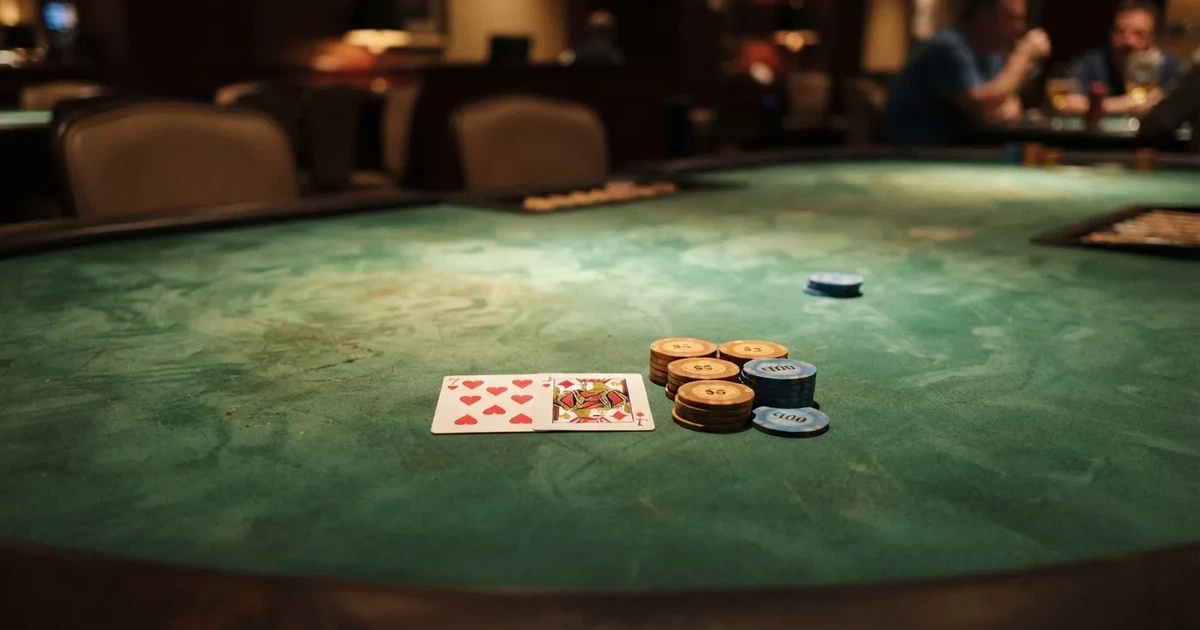
The product the marketing pages describe is straightforward. A live dealer casino streams real-time action from a studio or a land-based casino, using optical camera recognition to convert the dealer’s physical moves — a card turned over, a chip placed — into data on the screen. The player bets on the outcome of a real game, with a real dealer, and the result is determined by what happens on the felt rather than by a random number generator. The technology is the same one the Sydney and Melbourne land-based casinos use for their table pits; the difference is that an offshore site streams it over the internet to a player who is sitting in a different country.
What the marketing pages do not lead with is that no Australian jurisdiction issues a licence for online casino games — not the ACT, not the Northern Territory, not New South Wales, not Victoria. The Interactive Gambling Act 2001, strengthened by the Interactive Gambling Amendment Act 2017, makes it a criminal offence to provide an interactive casino-style gambling service to a person physically in Australia. The IGA targets the provider, not the player, which is why individual Australians are not prosecuted for playing — but it is why every brand on the offshore shortlist carries the same legal status. The Northern Territory Racing and Wagering Commission regulates 52 Australian-licensed online bookmakers, including Sportsbet, Bet365 and Ladbrokes, all of which hold Territory licences for tax reasons; the commission has no full-time staff and meets once a month in Darwin. None of those 52 licences covers casino games. Online casino is the one product the Australian framework simply does not license.
That leaves the player with three real choices. The first is to play at an Australian-licensed land-based venue — Crown Melbourne and Crown Sydney, The Star Sydney and The Star Gold Coast, plus a long list of smaller clubs and casinos — where baccarat, blackjack and roulette are streamed in person and every rule change has been approved by the relevant Casino Control authority. The second is to use an Australian-licensed online wagering provider for the products they are actually licensed for, which means races, sport and lotteries, not casino games. The third is to play at an offshore site, accepting that the consumer protection that comes with the licence the site displays does not extend to a person sitting in Australia, and that the ACMA can direct Australian ISPs to block the site with the player’s balance still on it.
Licensed land-based and online venues
The Northern Territory-licensed wagering services operate under an Australian framework, which differs from the prohibited casino product offshore.
| Brand | ACMA action and date | Operator named by the ACMA | Subject support |
|---|---|---|---|
| RocketPlay | Formal warning, March 2026 (earlier May 2022) | Pulsup Ltd (earlier Dama N.V.) | — |
| Jackbit | Formal warning, April 2026 | Ryker B.V. | — |
| Casino Intense | Formal warning, April 2025 | Sterplay Holding Ltd | listings-only |
| Ignition Casino | Formal warning, July 2025 | Bamboo Media | — |
| National Casino | Formal warning, July 2025 | Consolutetish S.R.L. | listings-only |
| Bizzo Casino | Formal warning, July 2025 (earlier 2022) | Consolutetish S.R.L. | — |
| Spirit Casino | Formal warning, May 2025 | Dama N.V. | — |
| Woo Casino | Formal warning, March 2025 | Dama N.V. | — |
| Instant Casino | Formal warning, February 2025 | EOD Code SRL | — |
| Sky Crown | Formal warning, September 2022 | Hollycorn N.V. | — |
| Level Up Casino | Formal warning, May 2022 | Dama N.V. | listings-only |
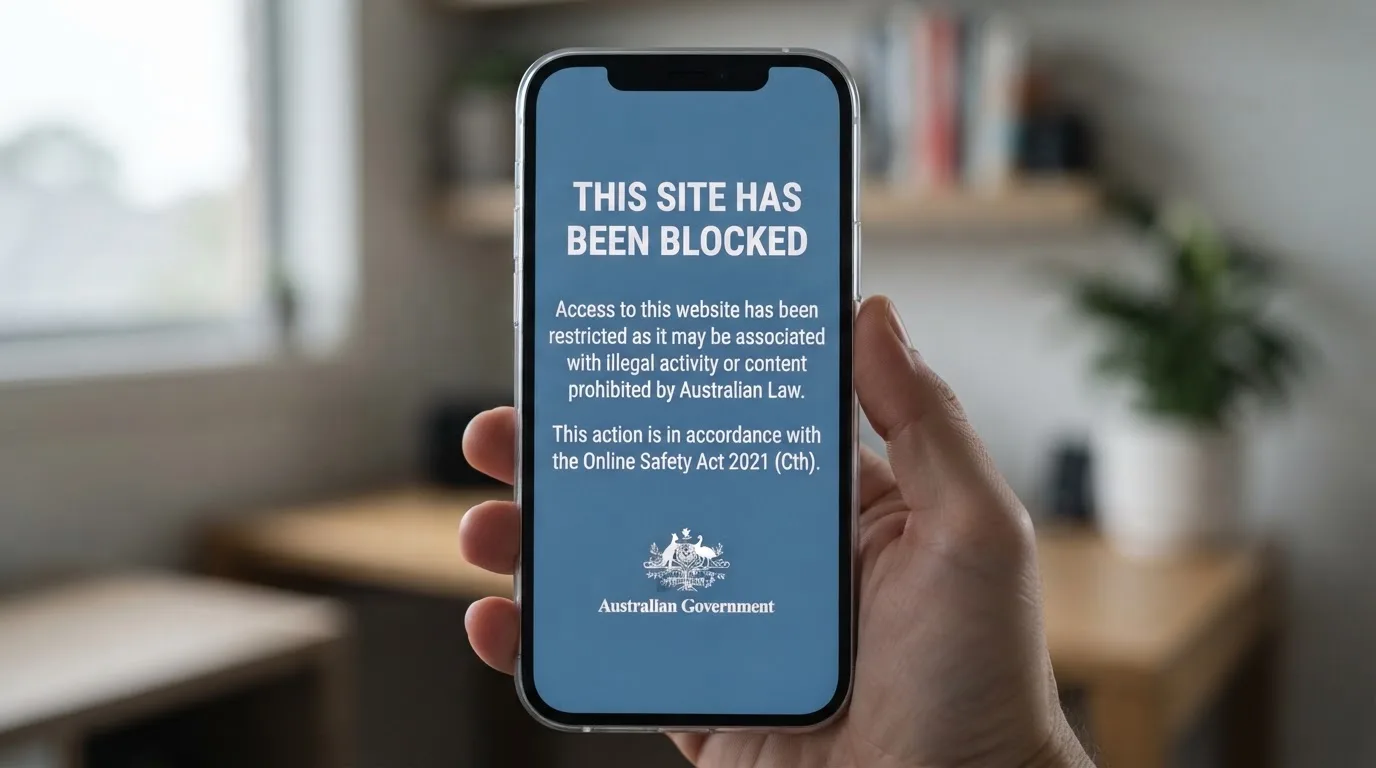
The Australian Communications and Media Authority is the regulator whose name appears on every formal warning listed above. Its enforcement powers under the Interactive Gambling Act 2001 include investigating suspected prohibited services, issuing formal warnings that become part of the public record, accepting enforceable undertakings that bind the operator to a specific compliance path, and — the step the regulator has been using most visibly since 2019 — directing Australian internet service providers to block illegal sites at the DNS level. As of 2 November 2026, the ACMA reports a running total of 1,751 illegal gambling and affiliate marketing websites blocked since the first blocking request in November 2019, with more than 230 unlicensed gambling services having left the Australian market since enforcement was strengthened in 2017. In the round reported on 26 June 2026 alone, 12 more sites were added to the block list: 7Signs, ChromaBet, Donbet, Duospin, Freshbet, Slots Gem, Jacks Club, Lucky Start, Pointsbetz, Spinrise, Vinyl Casino and Wildsino.
Reading the 1,751-blocked-sites figure against the November 2019 starting point gives the rate at which the ACMA’s blocking program has actually run: roughly 263 sites blocked per year across the seven-year window, with the cadence accelerating sharply after 2023 as the regulator moved from a quarterly cadence to a near-monthly one. The condition that bounds the figure is the ACMA’s own definition of an “illegal gambling or affiliate marketing website” — the count includes affiliate marketing pages that promoted the operators as well as the operator domains themselves, which is why some rounds report blocking affiliate sites that never accepted a bet. Read narrowly, the count is the ACMA’s running tally of blocked domains. Read broadly, it is the regulator’s measure of how much marketing infrastructure has had to be removed from the Australian internet to keep the prohibited services out of reach.
Two related figures sit beside it. The first is the economic measure: H2 Gambling Capital’s 2025 report estimates that Australians lose about A$3.9 billion a year to illegal gambling sites, with the share of gambling going through legal channels falling from 74% in 2021 to 64%. The second is the regulatory one: the Interactive Gambling Amendment (Gambling Reform) Bill 2026 passed Parliament on 19 August 2026, with its advertising and inducement measures set to commence on 1 January 2027. The bill is law with a future start date, which on a 2026 page is a law the reader should know exists without being told it is in force.
The enforcement pattern that matters most to a reader choosing among the eleven brands above is the operator-shell pattern. The ACMA names a corporate entity in the warning, not a brand; Dama N.V. has been named four times across the eleven brands, Consolutetish S.R.L. twice. The regulator’s reach is real but it runs behind the marketing cycle, and the same brand can reappear under a new corporate shell between one warning round and the next. For a reader, that means the brand name is a less reliable indicator of regulatory exposure than the operator’s track record, and that an offshore licence is a licence to operate, not a guarantee of compliance with Australian law.
Responsible gambling around live dealer play in australia
The responsible-gambling framework that binds Australian-licensed operators does not bind offshore live dealer brands. The single most important tool in that framework is BetStop, the National Self-Exclusion Register, which has been live since August 2023. A person who registers with BetStop is excluded from every Australian-licensed online and phone wagering service for the period they nominate. An offshore casino is not connected to BetStop — registering with BetStop does not exclude the player from an offshore site, and an offshore site does not check the BetStop register before accepting a deposit. That asymmetry is the practical reason responsible-gambling tools the offshore live dealer brand claims to provide cannot replace BetStop for an Australian reader.
The Australian-licensed wagering providers also run their own deposit limits, time-out tools and reality-check reminders, and the consumer protection available through the regulator — the VGCCC in Victoria, Liquor & Gaming NSW in New South Wales, the Office of Liquor and Gaming Regulation in Queensland — applies to complaints about those providers. None of those regulators has jurisdiction over an offshore live dealer brand. A player who is refused a withdrawal by an offshore site has, in practice, the licence authority that issued the site’s licence (most commonly Curaçao) as the only complaints body, and that body’s record of acting on player complaints against the brands it licences is thin.
For readers inside Australia who want help, the National Gambling Helpline on 1800 858 858 is free, 24/7 and confidential, with chat support available through Gambling Help Online. Financial Counselling Australia and the various state-based gambling support services take referrals from the Helpline. None of these services requires the player to have stopped playing before they call, and none of them reports the call to a regulator or a bank.
The payment-side protections worth knowing: credit cards, credit-related products and digital currency are banned as payment for Australian-licensed online wagering as of 11 June 2024, with penalties of up to A$247,500 for operators that breach the rule. A live dealer site asking an Australian customer to deposit by credit card or in crypto is, by that act, operating outside the Australian rules. The legal deposit routes for licensed wagering are debit card, bank transfer, PayID/Osko and BPAY.
The real choice for an Australian reader
The product the offshore live dealer casinos are selling is real, and the technology is impressive — real dealers, real cards, real wheels, streamed in high definition from studios in Riga, Malta, Bucharest and a handful of other hubs, with multi-camera coverage and chat functions that put a face on the other side of the table. The market is also illegal for the Australian reader, with the only exception being the Australian-licensed land-based casinos that stream the same games in person. The choice between the two is not a choice between two comparable products; it is a choice between a product the reader can lawfully use and a product the reader cannot.
For readers who want the live dealer experience and can reach a venue, Crown Melbourne, Crown Sydney and The Star Sydney run the full baccarat, blackjack and roulette product under the supervision of the relevant Casino Control authority. For readers who want online wagering on the products the framework does license, the Northern Territory-licensed bookmakers — Sportsbet, Bet365, Ladbrokes and the other 49 — cover racing and sport with the full Australian consumer protection framework behind them. For readers who choose to play offshore despite the legal status, the ACMA’s enforcement record above is the clearest measure of which brands have been on the regulator’s radar and how recently. None of those three paths is a substitute for any of the others, and the one that fits a particular reader depends on what they actually want from the experience and what they are prepared to give up to get it.
Frequently asked questions about live dealer casinos in australia
How many live tables did Evolution operate from its Riga studios by 2013?
Evolution reached 100 live tables at its Riga studios in 2013, which at that point made it the largest single-site casino operation in Europe. The company went on to open a Malta studio in 2014 and to acquire NetEnt on 1 December 2020, and now reports that more than 700 gambling platforms worldwide stream its live games.
Does a live dealer casino accept cryptocurrency deposits?
Most offshore live dealer casinos accept bitcoin and a range of altcoins as a primary deposit and withdrawal route, with the crypto-native brands making it the only deposit method. In Australia, credit-related products and digital currency have been banned as payment for licensed online wagering since 11 June 2024, so any site asking an Australian customer for a crypto deposit is operating outside the Australian framework.
Is it legal for a live dealer casino to accept Australian players?
No. Under the Interactive Gambling Act 2001, providing an interactive casino-style gambling service to a person in Australia is a prohibited interactive gambling service. No state or territory issues a licence for online casino games. The individual player is not prosecuted — the IGA targets the provider — but an offshore site gives no Australian consumer protection and can be blocked by the ACMA with the player’s balance still on it.
What responsible-gambling tools should a live dealer casino site provide?
The Australian-licensed tools that bind Australian operators — BetStop self-exclusion, deposit limits, time-outs and the regulator-backed complaints pathway — do not extend to offshore brands. The tools the offshore sites offer are their own house rules, and a reader should treat them as marketing terms rather than as a binding consumer protection framework.
Can Australians find a shortlist of licensed live table games anywhere other than online?
Yes. Crown Melbourne, Crown Sydney, The Star Sydney and The Star Gold Coast run licensed baccarat, blackjack and roulette tables under the supervision of the relevant state Casino Control authority, with every rule change approved by the regulator and made available to patrons on request. The Crown Melbourne baccarat product runs three variants — Traditional Baccarat, Crown Baccarat and 2 to 1 Baccarat — all approved by the Victorian Gambling and Casino Control Commission, which replaced the VCGLR as Victoria’s casino regulator on 1 July 2022.