
Under-1-hour casino withdrawals in Australia: what the claim actually means
An Australian punter typing “under 1 hour withdrawal casino” into a search bar usually wants a fast answer to a simple question: how soon can the money actually be in a bank account. The honest answer is short. The infrastructure that does it — Osko, PayID, the New Payments Platform — exists and runs at sub-minute speed, but the operators that advertise “under 1 hour withdrawals” to Australians are not the ones Australian banks process payments for. They sit outside the Interactive Gambling Act 2001, which is why the ACMA has spent the last several years issuing formal warnings over them one by one.

This page walks through what the claim involves end to end: the rail that makes near-instant settlement possible at all, the offshore operators that market “instant withdrawal casino” promises, the legal frame the ACMA enforces against them, and the eleven specific brands the regulator has formally warned since 2022. The angle throughout is what follows from the facts — what the marketing claim actually costs a player who tries to rely on it, and where the consequences surface.
Data current as of 31 October 2026, cross-checked against the Australian Communications and Media Authority’s formal warning register.
Table of Contents
- What “under 1 hour withdrawal casino” actually means as a claim
- Legality and regulation: the Australian frame around the claim
- Responsible gambling context around fast-payout claims
- Payments and payout speed: what the claim actually depends on
- Regulatory action: brands the ACMA has formally warned
- The blocking rate, as a band
- What an Australian player is actually choosing between
- Verdict on the page’s subject
- Frequently asked questions about under-1-hour withdrawal casinos in Australia
What “under 1 hour withdrawal casino” actually means as a claim
Most offshore casino sites that use this language mean something narrower than the words suggest. They mean their own internal processing — the time between the player clicking “withdraw” and the casino queue releasing the payment — clears in under an hour, when the queue is empty and the account is already verified. They do not mean the money reaches the player’s bank in that hour, because they don’t control that leg of the journey. The two stages are different, and conflating them is what makes the marketing word “instant” do work the underlying system can’t back up.

A real sub-one-hour outcome needs three things to line up. The casino has to release the withdrawal in minutes rather than the 24-to-72-hour window most offshore sites default to. The payment rail has to move money in minutes rather than days — in Australia, that’s Osko via PayID or BSB-and-account. The receiving bank has to credit the deposit without holding it. Two of those three are technical and one is contractual. The contractual one is the one an offshore casino can’t really promise, because the moment the AUD leaves the operator’s payment processor it sits inside the Australian banking system on its own rules, not the casino’s.
The distinction matters because players read “under 1 hour” as a single event, when in practice it’s two: a casino-side queue and a bank-side settlement. A site advertising “instant withdrawal casino Australia” can compress the first; it cannot guarantee the second.
The infrastructure that makes it possible
The Australian rails that do move money at near-real-time are not gambling products. They are general payments infrastructure that a casino can sit on top of, the same way any merchant can.
- Osko, run by Australian Payments Plus (AP+), settles a bank transfer between participating Australian banks in under a minute, 24/7, weekends included. The transfer addresses to a BSB and account number or to a PayID — the rail is the same either way.
- PayID lets a payer address money using a phone number, email or ABN instead of a BSB and account number, with the recipient’s registered name shown before the transfer is sent. Over 100 Australian financial institutions offer PayID-based instant transfers today.
- The New Payments Platform, the backbone under both, became live to the public on 13 February 2018 and is owned by a non-profit whose thirteen shareholders include the Reserve Bank of Australia and the major banks. By April 2025 more than 25 million PayID identifiers had been registered on it.
What this means in plain terms: an Australian bank-to-bank transfer at a participating institution can complete in seconds, with no business hours and no weekend pause. The platform’s monthly outage target sits at no more than two minutes. A payout that lands on this rail inside the casino’s own processing window can credibly reach the player in under an hour, and at participating banks in well under one.
Why the offshore casino pitch is so different from the bank-side reality
The offshore pitch tends to lead with the rail and bury the operator. “Instant AUD withdrawals via PayID” sounds like the casino built a real-time pipeline into Australian banking. What it actually means is that the casino’s payment processor is set up to push AUD over Osko to Australian bank accounts. The bottleneck is then upstream of the rail, not downstream: the casino’s own approval queue, its KYC re-checks, its anti-fraud holds, and the very small matter of whether the site is licensed to take Australian deposits in the first place.
Two Australian-context rails that are not in the pitch, and shouldn’t be, are credit cards and crypto. The Interactive Gambling Act 2001, as amended in 2023, prohibits Australian-licensed online wagering services from accepting credit cards or credit-related products — a rule that constrains linked digital wallets like Apple Pay. A site asking an Australian punter for a credit card deposit is operating outside the Australian rules from the deposit screen onwards. Crypto is also outside the legal deposit routes the IGA recognises for licensed wagering. So a “fast payout” site that takes credit cards or USDT is telling you, at the deposit step, that it isn’t on the Australian rules at all.
Legality and regulation: the Australian frame around the claim
The legal frame is what turns an interesting technical question into a serious one for an Australian reader. The Interactive Gambling Act 2001, as tightened by the Interactive Gambling Amendment Act 2017, makes it an offence to provide online casino games, online pokies or in-play betting to a person physically in Australia. No state or territory licenses them. What is licensed is wagering on races and sport placed before the event, lotteries and keno — and that licensing happens, in practice, through the Northern Territory Racing and Wagering Commission (NTRWC), which regulates 52 of Australia’s online bookmakers and has no full-time staff.
That is the structural answer to why offshore sites cannot, in any honest reading of Australian law, hold themselves out as licensed casino operators to Australians. They can display any Curacao, Anjouan or Costa Rica certificate they like — none of those frameworks authorises the provision of prohibited interactive gambling services to Australians. The licence on the footer is real in its own jurisdiction and irrelevant in this one.
The role of the ACMA
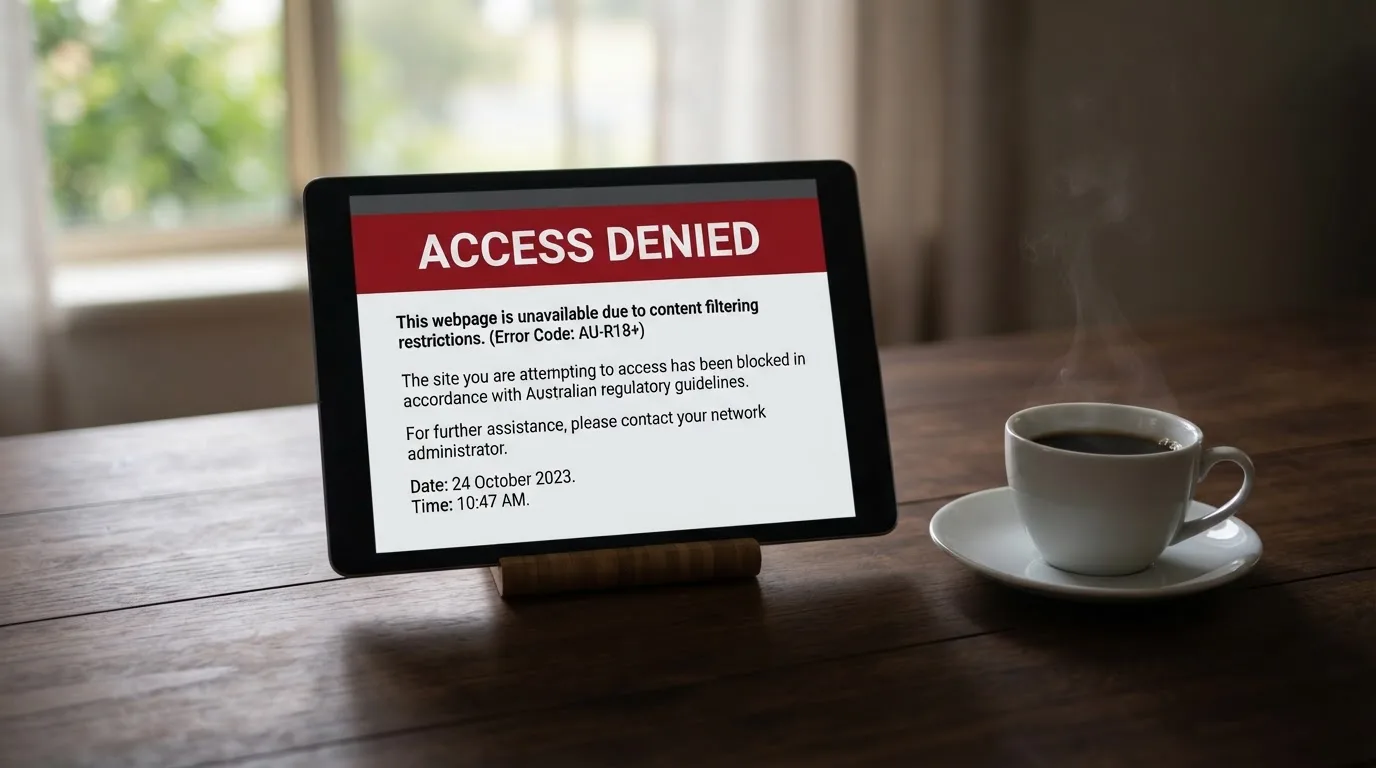
The Australian Communications and Media Authority investigates, issues formal warnings, and directs Australian internet service providers to block illegal sites. Two consequences follow from how it works. First, the individual player is not prosecuted — the IGA targets the provider, not the punter. Second, an offshore site gives the player no Australian consumer protection, no complaints body, and no recourse if a withdrawal is refused. If the ACMA moves against a site mid-session, a balance can be left on the wrong side of a block.
The numbers are large enough to make the regime concrete. As reported in June 2026, a total of 1,751 illegal gambling and affiliate marketing websites had been blocked since the first blocking request in November 2019, and more than 230 unlicensed gambling services had left the Australian market since enforcement was strengthened in 2017. A single June 2026 round alone asked ISPs to block 12 more: 7Signs, ChromaBet, Donbet, Duospin, Freshbet, Slots Gem, Jacks Club, Lucky Start, Pointsbetz, Spinrise, Vinyl Casino and Wildsino.
A separate 2025 figure from H2 Gambling Capital estimates that Australians lose about A$3.9 billion a year to illegal gambling sites, and that the share of gambling going through legal channels fell from 74% in 2021 to 64%. Both numbers move together. The market share of legal channels dropped by ten percentage points in four years, while the dollar value of the offshore segment grew.
What “under 1 hour” means against this frame
Read against the IGA, the offshore pitch becomes harder to parse. A site promising “under 1 hour withdrawal Australia” is making a promise it cannot legally back with an Australian-licensed product. The promise has to be made through an Australian-licensed product to be enforceable through any Australian channel — and Australian-licensed products are not casinos.
What this leaves the Australian punter is a choice that isn’t really a choice. The licensed bookmakers that take Australian customers take them for racing, sport, lotteries and keno, not casino games and not pokies. The offshore casinos that offer casino games and pokies to Australians do not come with Australian consumer protection. An “under 1 hour” promise from an offshore casino is, in practice, a speed claim about a product the operator has no Australian licence to provide.
Responsible gambling context around fast-payout claims
The point of the responsible gambling section on a page like this isn’t a box-tick — it’s that the structure of fast-payout marketing targets people who are already in a vulnerable spot. A punter who has just taken a loss and is staring at the withdrawal screen is exactly the person a “your funds in 60 seconds” message is built for. Knowing where to step away, and where to escalate, is part of the same picture as understanding what the claim is worth.
BetStop and what it does and doesn’t bind
BetStop, the National Self-Exclusion Register, went live in August 2023. It binds Australian-licensed online and phone wagering services — meaning licensed bookmakers, racing and sports operators that take Australian customers under the IGA framework. An offshore casino is not connected to it. Excluding yourself through BetStop closes the legal door. It does not close the offshore one. The two systems don’t speak to each other.
This is the practical limit of the register for a punter who plays offshore. BetStop can stop a relapse through the licensed channels. If the punter is also playing offshore casinos, the exclusion does nothing on those sites, and the offshore sites don’t see it.
Bank-side gambling blocks
Australian banks have been building parallel rails. The shape is consistent across the majors: a gambling block applied at card level that refuses authorisation of transactions registered under the merchant category code “Betting/Casino Gambling” on eligible cards.
- Westpac’s gambling block refuses authorisation on eligible personal credit and debit cards at merchant category code level.
- ANZ’s block, activated in the app, blocks gambling transactions made through a digital wallet such as Apple Pay on an eligible card, not just the physical card. Once turned on, removing the block requires a 48-hour waiting period, and the bank warns that not all gambling transactions will be blocked and some non-gambling transactions might be blocked in error.
- Commonwealth Bank lets customers apply a gambling lock via the CommBank app to eligible cards, automatically blocking most gambling transactions, though it cannot guarantee all gambling-related purchases will be stopped.
A consequence worth naming: with Apple Pay, Google Pay and Samsung Pay collectively accounting for around 45% of all card payments in Australia by number at end-2025, a card-level gambling block has to reach the wallet, not just the plastic. ANZ’s approach is the right shape. Apple Pay itself doesn’t charge fees and doesn’t impose transaction limits — those are set by the issuer or merchant. So the question isn’t whether Apple Pay works at a casino; the question is whether the bank has wired its block through the tokenised card.
The other consequence is more obvious. Banks will sometimes decline transactions on gambling sites regardless of the player’s intent, because the block operates at MCC level. A punter who has been declined by their own bank and then told by an offshore support agent to “try a different card” is being led toward credit, which the IGA already blocks at the licensed end, or toward payment methods that don’t have a gambling block at all.
Help services
National Gambling Helpline: 1800 858 858, free, 24/7, with chat at Gambling Help Online. These are the routes to use if a fast-payout pitch has become a reason to keep playing rather than a way to cash out.
Payments and payout speed: what the claim actually depends on
The “instant withdrawal casino Australia” pitch can be unpacked against four rails. Each has different mechanics, and the choice of rail is what decides whether the marketing word survives contact with the receiving bank.
Osko and PayID
Osko is the rail; PayID is the addressing layer on top of it. Together they handle bank-to-bank transfers between participating Australian banks in under a minute, 24/7, weekends included, addressed to a BSB and account number or to a PayID. The recipient’s name appears before the payer confirms, which is the only safety net in the system: AP+ warns that being asked to transfer money to a PayID on an illegal gambling site almost certainly means a scam site. That is worth keeping in mind. An offshore casino asking an Australian player to deposit to a PayID that doesn’t show the operator’s name is asking the player to use the safety net to confirm the player shouldn’t be there.
In raw terms the rail is the fastest in Australian retail banking. Over 100 Australian financial institutions offer PayID-based instant transfers. The transfer addresses to a phone number, email or ABN. A withdrawal that goes out over Osko from an operator’s payment processor can complete at the receiving bank in seconds.
Bank transfer (BSB and account number)
A standard BSB-and-account-number transfer, where the receiving institution is not on the New Payments Platform or the payer doesn’t trigger the Osko service, takes longer — typically same-day for cleared funds, with holds possible on first transactions or first payees. This is the slow path that most offshore “withdrawal time” promises quietly refer to when conditions don’t favour Osko.
Card withdrawals (Visa, Mastercard, American Express)
Cards are the rail most players default to for deposits, and the slowest for withdrawals. Card withdrawals back to Visa or Mastercard typically take 1–3 business days once the casino releases the payment, sometimes longer. American Express is structurally different — it issues cards and processes transactions itself as a three-party scheme rather than the four-party structure Visa and Mastercard run. The Reserve Bank of Australia’s July 2025 review on card surcharges proposed removing surcharges on eftpos, Mastercard and Visa transactions and explicitly left American Express outside the scope. None of that affects withdrawal speed, but it tells you Amex is treated as a separate network even by the central bank.
The IGA also constrains card use for licensed wagering: credit cards and credit-related products cannot be used to fund licensed online wagering, a rule that constrains linked digital wallets like Apple Pay. An offshore casino that accepts credit cards is, again, operating outside the Australian rules from the deposit step.
BPAY
BPAY is a bill-payment service in online banking — the payer enters the Biller Code and Customer Reference Number printed on the bill. It launched on 18 November 1997, is available in the online banking of over 140 banks and financial institutions, and is offered by over 95,000 businesses. It is run by Australian Payments Plus. It is a deposit rail in the sense that a casino can present itself as a biller and accept BPAY payments, but it isn’t a real-time withdrawal rail. It moves money in batch windows, not continuously. Useful as background, not as a fast-payout answer.
Crypto and the offshore pitch
Crypto is the rail most “instant withdrawal” offshore pitches lead with, and it’s the rail that disqualifies a site from the Australian legal frame. Crypto deposits and withdrawals are not part of the IGA’s recognised deposit routes for licensed wagering. A site that makes crypto its headline payout method is telling an Australian customer, by the deposit screen, that the site isn’t on the Australian rules at all. The speed claim may be real. The licensing claim underneath isn’t.
AUSTRAC and what doesn’t apply
AUSTRAC’s threshold-transaction-report rule, which requires reporting of transfers of A$10,000 or more, applies only to physical cash. Ordinary electronic bank transfers are not subject to the per-transaction reporting requirement, regardless of the amount sent. This is sometimes raised as a concern around large casino withdrawals. The concern doesn’t survive contact with the actual rule. The reporting threshold is on cash, not on bank transfers, and the threshold applies to the reporting entity, not the individual punter.
Regulatory action: brands the ACMA has formally warned
This list is not a ranking. It isn’t a recommendation. Each brand is here because the ACMA itself issued a formal warning over it for offering prohibited interactive gambling services to Australians. The point of putting them side by side is to show how the regulator’s pattern looks over time — eleven brands, four operators behind them at the corporate level, and a clear pipeline from 2022 through 2026.
Every entry below carries a verdict on what the brand means to a reader who finds it marketed to them as an “under 1 hour withdrawal casino Australia”. The verdicts are blunt because the data is blunt: each operator has been formally warned by the ACMA, and the warnings are public.
| Brand | ACMA action and date | Operator named by the ACMA | Subject support |
|---|---|---|---|
| RocketPlay | March 2026 (Pulsup Ltd); earlier May 2022 (Dama N.V.) | Pulsup Ltd | — |
| Level Up Casino | May 2022 | Dama N.V. | — |
| Woo Casino | March 2025 | Dama N.V. | — |
| Spirit Casino | May 2025 | Dama N.V. | — |
| National Casino | July 2025 | Consolutetish S.R.L. | — |
| Bizzo Casino | July 2025 (Consolutetish S.R.L.); earlier 2022 (TechSolutions) | Consolutetish S.R.L. | — |
| Ignition Casino | July 2025 | Bamboo Media | — |
| Instant Casino | February 2025 | EOD Code SRL | — |
| Jackbit | April 2026 | Ryker B.V. | — |
| Casino Intense | April 2025 | Sterplay Holding Ltd | — |
| Sky Crown | September 2022 | Hollycorn N.V. | — |
The table above is a record of regulatory action, not a comparison of payout speed or bonus terms. No bonus terms are given because the only sources for them are affiliate marketing pages, and a reader who has read this far knows what those pages are for.
RocketPlay
The ACMA issued a formal warning to Pulsup Ltd over RocketPlay website in March 2026, adding RocketPlay to a list that already included it under a 2022 warning to Dama N.V. The same operator, the same product, a fresh round of enforcement — the structure is the same one the regulator has been running since 2017. A punter who finds RocketPlay marketed as an instant withdrawal casino Australia is being marketed to by a brand the ACMA has warned twice in four years. The first warning didn’t change the offering; the second is the regulator making clear that the first one didn’t.
Level Up Casino
Level Up sits in the May 2022 Dama N.V. warning batch alongside Bambet, Dazard, Rocketplay, Wild Tornado and Cobra Casinos. The single warning covered six brands at once — the corporate-aggregation pattern is consistent: one offshore operator, multiple casino skins, one piece of correspondence from the ACMA. A punter who arrives at Level Up through an “instant AUD withdrawals” page is being pointed at one of the six. None of the six are licensed for Australian customers.
Woo Casino
Dama N.V. returned to the ACMA register in March 2025 with a separate warning covering Woo Casino, followed a month later by Spirit Casino in May 2025. The interval between the 2022 batch and the 2025 individual warnings is the gap in which Dama N.V. was supposed to have changed course. Two more warnings later, it hasn’t. Woo is still sold as an instant-withdrawal casino brand; the ACMA still doesn’t recognise it as anything other than a prohibited interactive gambling service.
Spirit Casino
Spirit Casino was named alongside Woo Casino in the Dama N.V. follow-up round of 2025. The marketing claim doesn’t change because the underlying operator has been warned twice by the ACMA; the marketing doesn’t have to change because the regulator’s enforcement operates on the corporate entity, not the brand. A new skin under a known operator is the cheapest way an offshore casino can re-enter the Australian-facing market after a warning.
National Casino
National Casino was named in the July 2025 warning to Consolutetish S.R.L., which covered it alongside Bizzo Casino. The interesting structural point is that Bizzo had already been the subject of a 2022 warning to TechSolutions (CY) Group Limited and TechSolutions Group N.V. — meaning the same brand has cycled through three operators in front of the ACMA. National is newer to the regulator’s register but sits under the same enforcement regime.
Bizzo Casino
Bizzo’s warning history is the clearest illustration of the corporate-rotation problem. TechSolutions (CY) Group Limited and TechSolutions Group N.V. were warned in 2022; Consolutetish S.R.L. was warned in 2025. The brand outlived the operator. A punter looking at Bizzo as an “instant AUD withdrawal” option today is looking at a brand the ACMA has formally warned twice through two different parent companies. The site still advertises the same speed. The underlying licence status hasn’t changed.
Ignition Casino
Bamboo Media was warned by the ACMA in July 2025 over Ignition Casino. Ignition has historically been marketed to Australian players through poker and casino skin offerings. The warning is the first ACMA action against this operator over this brand, which doesn’t make the underlying situation different from any of the others — it just means Bamboo Media is newer to the regulator’s list.
Instant Casino
EOD Code SRL was warned by the ACMA in February 2025 over Instant Casino. The brand name itself encodes the marketing pitch the regulator is acting against. “Instant” is the word the rest of the offshore market builds its “under 1 hour withdrawal casino” pages around. A punter reading that pitch on a brand the ACMA has formally warned over is reading the regulator’s case against the marketing claim in real time.
Jackbit
Ryker B.V. was warned by the ACMA in April 2026 over Jackbit and CasinOK. Jackbit is one of the most aggressively marketed crypto-led “instant withdrawal” brands aimed at Australian-facing traffic. The ACMA warning is recent and specific. The marketing claim hasn’t changed; the regulatory position has only hardened.
Casino Intense
Sterplay Holding Ltd was warned by the ACMA in April 2025 over Casino Intense. The brand sits in the same marketing cohort as the others: speed-led, AUD-led, KYC-light on the way in, with the ACMA action sitting downstream of the deposit screen.
Sky Crown
Hollycorn N.V. was warned by the ACMA over Sky Crown and Blue Leo in September 2022. This is the oldest of the eleven warnings on the list, and the only one issued before the IGA’s credit-card ban took effect. The pattern since then has been more frequent, not less — the ACMA’s enforcement tempo has increased, not slowed, as the offshore market has grown.
The blocking rate, as a band
The blocking rate is the single arithmetic that frames the regulator’s work. As reported in June 2026, a total of 1,751 illegal gambling and affiliate marketing websites had been blocked since the first blocking request in November 2019 — a span of roughly six and a half years. The arithmetic on that gives a band rather than a point: between about 270 and 290 sites blocked per year on average, with the lower bound assuming a roughly even pace from November 2019 to mid-2026 and the upper bound accounting for the heavier 2024–2026 rounds. That is the cadence the ACMA is operating at: the regulator is asking ISPs to block roughly two to three illegal gambling sites every three days, on a sustained basis, and the rate is the regulator’s baseline. A punter looking at any of the eleven brands above is looking at a name that, if it hasn’t yet been added to a blocking request, sits inside a queue where the regulator is working through roughly the same number of names per month.
The condition on the band is the same one that limits the figure itself: the count is sites formally requested to be blocked, not sites that have been found to operate against Australians. Many more sites offer prohibited services than the ACMA has the bandwidth to add to a blocking request in any given round. The 1,751 figure is the size of the cohort the regulator has gotten to, not the size of the cohort that’s out there.
What an Australian player is actually choosing between
The marketing word “instant” does real work on a punter reading an offshore casino page. It signals speed, control, modernity — the opposite of the slow, regulated, KYC-heavy licensed bookmaker experience. None of those signals survive contact with the regulatory facts the ACMA’s warning register makes plain.
The honest comparison for an Australian reader isn’t between offshore “instant withdrawal casino” brands. It is between offshore casino products and the licensed Australian wagering product. The licensed product does not offer casino games or pokies at all — and that is the structural fact the offshore pitch is built to make a punter forget. What the licensed product does offer is consumer protection: an Australian complaints body, a withdrawal right the regulator will enforce, and a connection to BetStop for self-exclusion. The offshore product offers none of those things. What it offers, instead, is the “under 1 hour withdrawal” claim — and the claim is the marketing word built on top of a rail the licensed product can also use, minus the licence.
The most expensive misunderstanding a punter can take away from a fast-payout page is that speed equals safety. Speed at an offshore site equals an unverified claim against an unenforceable contract. The same PayID rail sits underneath licensed wagering. The licensed product moves money over Osko in seconds when it wants to — the difference is the regulatory layer around the operator, not the layer around the payment.
Verdict on the page’s subject
The “under 1 hour withdrawal casino Australia” claim is, at root, a payment-rail claim wrapped in a marketing word. The rail is real. The rail is Osko via PayID, available to over 100 Australian financial institutions, settling in under a minute, 24/7. The marketing word is “instant” and “under 1 hour”, and those words sit on top of operators that have no Australian licence to provide casino games and pokies. The ACMA has formally warned eleven of the brands most prominently associated with the pitch, and the regulator’s blocking rate of roughly 270–290 sites per year is the scale of the cohort the warning register comes from.
The Australian punter who reads this page should walk away with three things. First, the technical answer to how an Australian bank transfer clears in under a minute — it’s Osko, on the New Payments Platform, and it works for any merchant that uses it, including licensed bookmakers. Second, the legal answer to who can offer casino games to Australians — nobody, under the Interactive Gambling Act 2001, no state or territory, and offshore operators displaying foreign licences don’t change that. Third, the practical answer to what the ACMA’s warning register shows — eleven brands, four corporate parents behind them, warnings running from September 2022 through April 2026, and the pace increasing rather than slowing.
The “under 1 hour withdrawal casino Australia” offer is real as a rail and impossible as a licensed Australian casino product. That contradiction is the whole page.
Frequently asked questions about under-1-hour withdrawal casinos in Australia
What would actually have to happen behind the scenes for a casino withdrawal to clear in under an hour?
Three things have to line up: the casino has to release the withdrawal from its own queue in minutes, the payment has to go over a real-time Australian rail (Osko via PayID or BSB-and-account), and the receiving bank has to credit the deposit without a hold. The first is contractual and the other two are technical. An offshore casino can compress the first; it can’t enforce the others.
Does an “under 1 hour” withdrawal claim apply to every payment method a casino offers, or only some?
Only some. The claim typically applies to the rail the casino’s processor has wired up for instant payouts — usually Osko/PayID in the Australian context, occasionally crypto. Card withdrawals back to Visa or Mastercard usually take 1–3 business days once the casino releases the payment, and American Express is a separate three-party network that doesn’t move faster just because the casino says so. BPAY is a batch rail, not real-time. Crypto isn’t a recognised Australian deposit route at all.
Is a sub-one-hour withdrawal promise from an offshore casino something Australians can hold the site to?
No. The Interactive Gambling Act 2001 makes it an offence to provide online casino games and online pokies to a person in Australia, and no state or territory licenses them. An offshore casino displaying a Curacao or Anjouan certificate isn’t licensed in Australia, and the Australian regulator can’t enforce a withdrawal promise against it. If the ACMA moves against the site mid-session, the balance can be left on the wrong side of a block.
How does an under-1-hour claim compare with the real settlement time Australian banks describe for Osko transfers?
Osko settles a transfer between participating Australian banks in under a minute, 24/7, weekends included — that’s the rail the claim is built on top of. A casino-side “under 1 hour” promise is much slower than the rail underneath it. The bottleneck is the casino’s own queue, not the bank transfer. A licensed Australian wagering operator can use the same rail; an offshore casino can use it too, but it doesn’t have the Australian regulatory cover around it.
What’s the difference between an “under 1 hour withdrawal” casino and a “same day payout” casino as claims?
“Under 1 hour” claims a specific window for the casino’s processing and assumes the receiving bank is on a real-time rail. “Same day payout” claims only that the payment will leave the casino on the same business day, with the bank-side leg taking as long as the receiving institution takes. The first is a tighter promise on a narrower set of rails; the second is a softer promise that holds for more payment methods. Both are marketing words. Neither changes the licensing position.
What might still delay a withdrawal even at a site advertising under-1-hour processing?
The casino’s KYC re-check is the most common cause, especially on first withdrawals or after a deposit-method change. Anti-fraud holds can add hours. Bonus-wagering checks can block the queue until requirements are met. Currency conversion sits between AUD and whatever the casino’s processing wallet holds. And the ACMA can add the site to a blocking request while the withdrawal is in flight, in which case the player’s bank may decline to credit a transfer from a flagged merchant.