
The fast-payout promise in Australia, and the legal floor it sits on
A fast payout sounds like a single thing — a casino that puts your winnings in your bank account while the feeling of the win is still warm. In Australia in 2026 it is two things, and the difference matters more than any settlement window. There is a set of licensed Australian wagering services where a fast payout is a real product you can claim. And there is a much louder set of offshore online casinos that advertise fast payouts to Australian players but cannot lawfully offer casino games to anyone in Australia at all. The page below is built around that gap: what a payout actually takes, which operators the Australian Communications and Media Authority has acted against for the very product the search implies, and what an Australian reader who wants fast, lawful play is genuinely pointed toward.
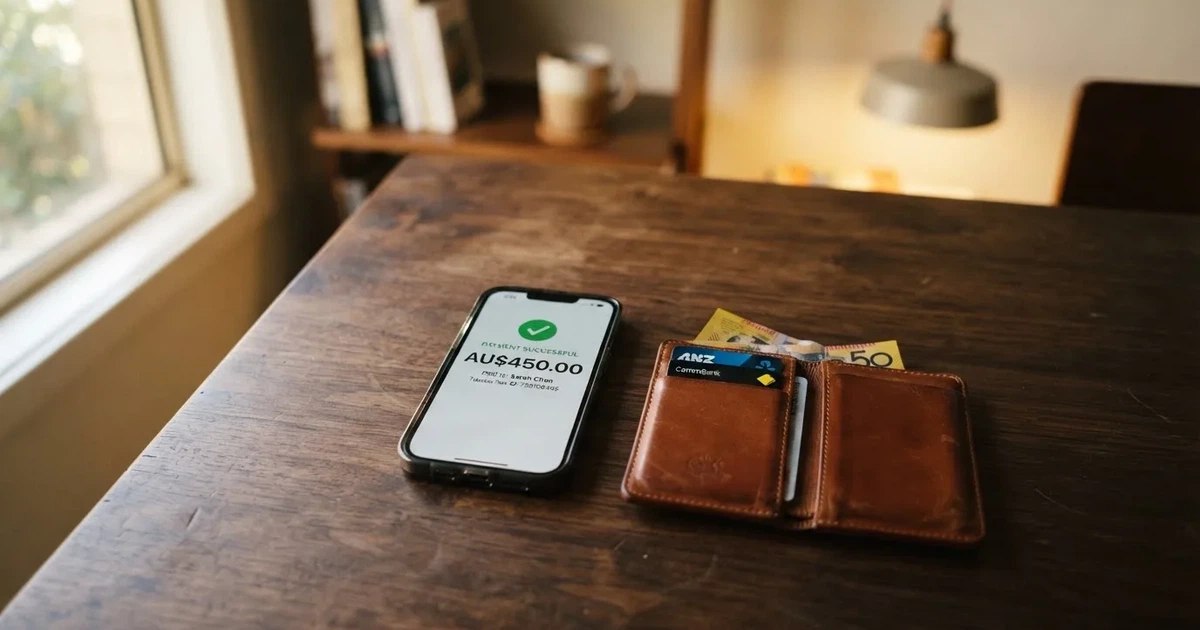
Data current as of 29 October 2026, checked against the ACMA’s published formal-warning register, the Reserve Bank of Australia’s payment-reform releases, and the public pages of Australian Payments Plus.
Table of Contents
- The settlement side: how Australian money actually moves
- The legal ceiling on what can be offered
- What offshore “fast payout” actually delivers to an Australian reader
- The brand-by-brand record: what the ACMA has warned
- What a lawful fast payout looks like in Australia in 2026
- Crypto and the offshore fast-payout promise
- The reader’s actual decision
- Where the data stops
- Frequently asked questions
The settlement side: how Australian money actually moves
What “fast” can mean in the Australian banking system
Australian payments are not slow by accident; they have been rebuilt in the last decade around a single platform that does most of the work. The New Payments Platform went live on 13 February 2018, owned by New Payments Platform Australia Ltd — a non-profit whose 13 shareholders include the Reserve Bank of Australia and the country’s major banks. In September 2021 the ACCC authorised the merger of NPP Australia with BPAY and eftpos under one holding entity, Australian Payments Plus (AP+). The whole system is contractually held to a tight reliability target: participants must keep monthly platform outages to no more than two minutes.

That platform carries two products that matter for any “fast payout” promise aimed at an Australian bank account.
Osko by AP+ settles a transfer between participating banks in under a minute, around the clock, weekends included. The transfer works whether it is addressed to a BSB and account number or to a PayID — a nickname for an account that resolves to a real one at the receiving bank. More than 25 million PayIDs had been registered by April 2025, and PayID-based instant transfers are available at over 100 Australian financial institutions. The point of paying to a PayID is that the sender sees the name of the account holder before the transfer goes out. AP+ itself warns that being asked to send money to a PayID on an illegal gambling site almost certainly means a scam site, because the visible-name check is precisely the control that licensed operators have to use cleanly.
BPAY is the second rail. It has been in Australian online banking since 1997, is offered through over 140 banks and financial institutions, and is used by more than 95,000 businesses. The payer enters the Biller Code and the Customer Reference Number from the bill. BPAY is owned equally, through Cardlink Services Limited, by ANZ, Commonwealth Bank, National Australia Bank and Westpac. Crucially, BPAY is run by the same operator — Australian Payments Plus — that runs PayID and Osko, so a deposit or a refund that goes through BPAY lands on the same plumbing as an Osko transfer.
Together those two products set the ceiling on what a payout to an Australian account can physically be. The bank-to-bank leg of a withdrawal can be under sixty seconds. Whatever delay a player sees above that comes from the operator’s side — its internal “pending” window, its weekend staffing, its decision to pay in a currency that has to be converted first.
Cards, wallets and the credit ban that reshapes deposits
The same machinery that delivers a fast payout also constrains how money is allowed to get in. Under amendments to the Interactive Gambling Act 2001 that took effect in 2023, Australian-licensed online wagering services cannot accept credit cards or credit-related products. The credit ban in practice extends to digital wallets linked to a credit instrument — Apple Pay, Google Pay and Samsung Pay — when the underlying funding source is a credit card. By the end of 2025, those three wallets together accounted for around 45% of all card payments in Australia by number, so the rule has reach. Surcharges are a separate question: the Reserve Bank of Australia’s July 2025 review proposes removing surcharges only on eftpos, Mastercard and Visa, and explicitly leaves American Express outside any surcharge ban.
American Express sits outside the conventional four-party card model. It was founded in 1850 as a freight-forwarding company, became a card issuer later, and launched its first charge card on 1 October 1958. As a three-party scheme, Amex issues cards and processes transactions itself, which is part of why the Reserve Bank treats its pricing as a different problem from Visa and Mastercard.
None of this is academic for a payout. A withdrawal that goes through a card network takes longer than a PayID or Osko transfer because the settlement path is different. A digital wallet withdrawal is, in practice, a card-network withdrawal. So a casino that promises a fast payout while paying only into a card will look slow against the bank-to-bank ceiling the NPP sets, even before any operator delay is counted.
Where the Australian banks put their own blocks
Australian banks have layered their own controls on top of the network rules, and these matter because they sit between any payout and the account it tries to land in.
Westpac’s gambling block works at card level: it refuses authorisation of transactions registered under the merchant category code “Betting/Casino Gambling” on eligible personal credit and debit cards. ANZ’s equivalent, activated in the ANZ app, blocks gambling transactions made through a digital wallet such as Apple Pay on an eligible card, not just the physical card. Once ANZ’s block is on, removing it again carries a 48-hour cooling-off, and the bank warns that not all gambling transactions will be blocked, and that some non-gambling transactions might be blocked in error. Commonwealth Bank’s gambling lock in the CommBank app works the same way: most gambling transactions are blocked automatically, with the same caveat that no block is complete.
The implication for any operator promising a fast payout to an Australian bank account is straightforward. The deposit is the part the bank can stop, not the payout. A withdrawal that lands as an Osko or PayID transfer into a debit card account is not a card-network transaction and so falls outside the merchant-code block. A withdrawal that the casino pushes back through the same card the deposit came in on can be refused, regardless of how fast the casino claims to be.
The legal ceiling on what can be offered
What the Interactive Gambling Act actually prohibits
The Interactive Gambling Act 2001, strengthened by the Interactive Gambling Amendment Act 2017, makes it an offence to provide online casino games, online pokies or in-play betting to a person in Australia. No state or territory licenses those products. What can be licensed is wagering on races and sport placed before the event, lotteries, and keno — in practice licensed by the Northern Territory Racing and Wagering Commission, which regulates 52 of Australia’s online bookmakers including Sportsbet, Bet365 and Ladbrokes. The commission has no full-time staff and meets once a month in Darwin. The IGA targets the provider, not the individual player. An Australian who plays at an offshore casino is not personally at risk of prosecution under the Act; the offshore operator is.
That structural point shapes every line below. The ACMA investigates, issues formal warnings, and directs Australian internet service providers to block illegal sites. The cumulative effect, as of June 2026, was 1,751 illegal gambling and affiliate marketing websites blocked since the first blocking request in November 2019, and more than 230 unlicensed gambling services had left the Australian market since enforcement was strengthened in 2017. The June 2026 round alone added 12 more: 7Signs, ChromaBet, Donbet, Duospin, Freshbet, Slots Gem, Jacks Club, Lucky Start, Pointsbetz, Spinrise, Vinyl Casino and Wildsino.
The H2 Gambling Capital 2025 estimate puts Australian losses to illegal gambling sites at roughly A$3.9 billion a year, and tracks the legal share of gambling spend falling from 74% in 2021 to 64%. The two figures read together: as the legal channel shrinks, the offshore channel grows, and the offshore channel is precisely the one that cannot offer a payout into an Australian bank account without the bank-side controls biting.
The 2026 reform: law with a date that has not arrived yet
The Interactive Gambling Amendment (Gambling Reform) Bill 2026 passed Parliament on 19 August 2026. Its advertising and inducement measures commence 1 January 2027. That matters to a page written in 2026 because the bill is enacted but not in force: a careful reader should not be told that something the bill prohibits is currently prohibited. The credit-card ban and the formal-warning regime are.
What the ACMA has actually acted on
The ACMA’s formal-warning register is the most concrete record of which offshore operators have been told to stop offering prohibited services to Australians. The record is current, and it is the one list a page of this kind can lean on without invention. The brands below are not recommended. They are listed because the ACMA itself named them, and because each is attached to an offshore gambling search result.
In March 2026 the ACMA warned Pulsup Ltd over RocketPlay. Dama N.V. received a warning in May 2022 covering six brands — Bambet, Dazard, Level Up, Rocketplay, Wild Tornado and Cobra Casinos — and was warned again in March 2025 over Woo Casino and in May 2025 over Spirit Casino. In July 2025 the ACMA warned Bamboo Media over Ignition Casino and Consolutetish S.R.L. over National Casino and Bizzo Casino; Bizzo had already been the subject of a 2022 warning to TechSolutions (CY) Group Limited and TechSolutions Group N.V. February 2025 brought a warning to EOD Code SRL over Instant Casino. April 2026 produced a warning to Ryker B.V. over Jackbit and CasinOK. April 2025 produced one to Sterplay Holding Ltd over Casino Intense. The Hollycorn N.V. warning over Sky Crown and Blue Leo sits in the register as a September 2022 PDF.
What offshore “fast payout” actually delivers to an Australian reader
The mismatch the marketing cannot name
Every offshore casino that promises a fast payout to Australia is promising a product inside a country where it has no licence and no enforcement backstop. The payout window it advertises — “instant”, “under an hour”, “same day” — describes how quickly its own treasury pushes a transaction onto the bank rail, not how quickly that rail carries it. The bank rail does its part in under a minute when the destination is PayID or Osko. What the offshore operator cannot do, and what the marketing never says, is guarantee that the receiving bank will not flag the transaction, block it, or return it under its own gambling controls. The same bank-side controls that stop the deposit at the merchant-code level can stop the payout on the way in.
That is the asymmetry a fast-payout claim rests on, and it is the part of the offer the comparison table on the ACMA record does not show.
Why a withdrawal is the most fragile moment
The Interactive Gambling Act is silent on withdrawals from offshore operators. The bank’s own controls are not. A withdrawal to a debit card is a card transaction; the merchant-code block can catch it. A withdrawal through Apple Pay funded by a credit card can be caught twice — once by the credit ban, once by the merchant code. A withdrawal to a PayID or Osko identifier is not a card transaction and tends to pass the merchant-code filter, which is one reason Australian-facing offshore casinos have shifted to PayID as a deposit route. AP+ has publicly warned that a PayID on an illegal gambling site is almost certainly a scam site — which is a separate signal from the operator’s marketing claim of speed.
This is the practical shape of an offshore fast payout: the leg inside the casino can be fast; the leg into the Australian account depends on the bank, the rail, the merchant code and the operator’s status on the ACMA’s register. The same offer, on a different week, can be minutes or never.
The blocking-rate calculation: how fast the ACMA has been shutting the door
The regulator’s blocking pace is a clear measure of enforcement intensity, and the total of blocked sites since the regime started gives a sense of the scale.
The first blocking request went out in November 2019. By the end of June 2026, 1,751 illegal gambling and affiliate marketing websites had been blocked in total. That is 80 months of activity. Divide the cumulative count by the months, and the running average is roughly 22 blocked sites per month — a band that runs from around 19 to 25 depending on whether one rounds up or down on the partial-month count. That figure is an average, not a forecast: monthly totals have varied, with rounds such as the 12-site June 2026 batch sitting above the long-run mean. The condition is the ACMA continuing to receive complaints and the ISPs continuing to action requests; the rate is a measure of enforcement velocity, not a guarantee.
The brand-by-brand record: what the ACMA has warned
The 11 brands below are listed because the ACMA has issued a formal warning naming the operator. None is licensed in Australia; none is recommended. Where the operator set in §6 of the research marks a subject key as listings-only (sources), the note is written from those listings; where it is no-data, the subject is not attached to the brand at all. The machine tokens themselves never appear.
RocketPlay
The ACMA warned Pulsup Ltd over RocketPlay in March 2026. The same brand had been caught up in the May 2022 warning to Dama N.V. across six casino names. Operator behind the current URL is not an Australian entity; the displayed licence is not an Australian one, and cannot be, because online casino games cannot be licensed anywhere in Australia. Public listings note RocketPlay’s presence on affiliate comparison pages without offering terms. The relevant comparison is the one above the headline: an offshore casino whose Australian-facing brand has been warned twice in four years is not a low-risk venue for a fast payout that depends on the bank rail not closing.
Level Up Casino
Dama N.V. was warned by the ACMA in May 2022, and Level Up was one of the six brands named in that warning. The product on offer at the time — online casino games to Australian customers — is the same product the operator would still be offering today, since the prohibition has not changed. Public listings reference Level Up on Westpac’s gambling-block page as a recognised gambling merchant, which means the bank-side merchant-code filter treats it as gambling. A fast payout into a Westpac card account will hit that filter.
Woo Casino
Dama N.V. received a fresh formal warning over Woo Casino in March 2025, on top of the May 2022 batch. No subject support data is available beyond the ACMA’s own publication. The repeated warning is the standout fact: the same operator group, the same product, the same prohibition, and the regulator has had to write twice.
Spirit Casino
The same operator group, Dama N.V., picked up a further formal warning in May 2025 — this time specifically over Spirit Casino. The brand is a sibling of Woo Casino in everything but name. The ACMA publication remains the sole reliable source on the operator.
National Casino
Consolutetish S.R.L. was warned by the ACMA in July 2025 over National Casino. Public listings place National Casino on the ACMA’s own register, on AUSTRAC’s threshold-transaction-report guidance page, and on BetStop’s consumer-facing register. Each of those listings is a separate signal: AUSTRAC’s guidance treats casino-style transfers as a category the financial-crimes regulator watches; BetStop’s inclusion confirms the brand is recognised as an interactive gambling service for self-exclusion purposes, even though BetStop’s binding force runs only against Australian-licensed operators.
Bizzo Casino
The same July 2025 warning to Consolutetish S.R.L. named Bizzo Casino alongside National Casino, and Bizzo had already been the subject of a 2022 formal warning to TechSolutions (CY) Group Limited and TechSolutions Group N.V. Public listings reference Bizzo on affiliate comparison pages. Two warnings across three operators, with overlapping corporate names, is not a coincidence the regulator flags in error.
Ignition Casino
Bamboo Media was warned by the ACMA in July 2025 over Ignition Casino. Public details remain limited to the regulatory action. The product on offer to Australian players — online casino games — is the prohibited category regardless of which licensee the offshore site displays.
Instant Casino
EOD Code SRL received a formal warning in February 2025 over Instant Casino. Public listings place Instant Casino alongside EcoPayz and PayID on payments-related comparison pages. The PayID listing is the sharper signal: an offshore casino that asks an Australian for a PayID deposit is sitting inside the warning AP+ has publicly issued about PayIDs on illegal gambling sites.
Jackbit
Ryker B.V. was warned by the ACMA in April 2026 over Jackbit and CasinOK. No subject support data is on the public record. A brand new to the warning register, and the warning sits in the most recent reporting window, which means the operator is being told to stop in the current cycle rather than as a holdover from earlier enforcement.
Casino Intense
Sterplay Holding Ltd was warned in April 2025 over Casino Intense. Public listings reference Casino Intense on AUSTRAC’s threshold-transaction-report guidance, on BetStop’s consumer-facing register, and on affiliate comparison pages. The combination of those three listings — financial-crimes guidance, self-exclusion register, and affiliate marketing — is what an offshore brand’s online footprint looks like once it has been on the ACMA’s radar for more than a year.
Sky Crown
Hollycorn N.V. was the subject of an ACMA formal warning over Sky Crown and Blue Leo, published in September 2022. The PDF sits in the public record. No subject support data is on the public record beyond that. The warning predates the 2024 credit-card ban, so the marketing claims the brand makes about payment methods today are not constrained by any rule the regulator has enforced against this specific operator since.
How the ACMA register lines up
The table below maps each brand to the ACMA action that named it, the operator behind the warning, and where the public listings pick the brand up. Where the research did not return data on a subject key for a given operator, the cell stays empty.
| Brand | ACMA action and date | Operator named by the ACMA | Subject support |
|---|---|---|---|
| RocketPlay | March 2026 | Pulsup Ltd (RocketPlay) | Listings: Gambling Insider |
| Level Up Casino | May 2022 | Dama N.V. | Listings: Westpac |
| Woo Casino | March 2025 | Dama N.V. | — |
| Spirit Casino | May 2025 | Dama N.V. | — |
| National Casino | July 2025 | Consolutetish S.R.L. | Listings: acma.gov.au, austrac.gov.au, betstop.gov.au |
| Bizzo Casino | July 2025; earlier 2022 | Consolutetish S.R.L.; TechSolutions | Listings: Gambling Insider |
| Ignition Casino | July 2025 | Bamboo Media | — |
| Instant Casino | February 2025 | EOD Code SRL | Listings: EcoPayz, PayID |
| Jackbit | April 2026 | Ryker B.V. | — |
| Casino Intense | April 2025 | Sterplay Holding Ltd | Listings: austrac.gov.au, betstop.gov.au, Gambling Insider |
| Sky Crown | September 2022 | Hollycorn N.V. | — |
The repeat names matter more than the columns. Dama N.V. appears four times across four years. Consolutetish S.R.L. and its predecessor TechSolutions appear twice for one brand and once for another. The regulator’s record is not a one-off list of strangers — it is a small set of operator groups cycling through fresh brand names.
What a lawful fast payout looks like in Australia in 2026
The licensed products that actually pay out
The licensed alternatives to offshore online casinos are land-based casinos, licensed pokies venues, and licensed wagering — the racing and sports betting that the Northern Territory Racing and Wagering Commission, and similar state-level bodies, do license. The licensed wagering operators can offer fast payouts through PayID and Osko, because their deposits and withdrawals sit on the same Australian bank rails as any other merchant. The fastest payout a licensed wagering operator can offer into an Australian bank account is the same ceiling the NPP sets for everyone: under a minute, 24/7, addressed to a BSB and account number or to a PayID.
What they cannot offer is online casino games. A player who wants pokies, blackjack or roulette for real money in Australia goes to a licensed venue. There is no online version of that product.
BetStop, the National Self-Exclusion Register, and what it actually binds
BetStop, the National Self-Exclusion Register, has been live since August 2023. Its scope is Australian-licensed online and phone wagering services. An offshore casino is not connected to it. Registering with BetStop does not stop an offshore casino from accepting a deposit or sending a marketing email, because the offshore casino has no integration with the register and no obligation to honour it. What BetStop does do, and does well, is stop the licensed Australian wagering services from offering the registered person any product at all, for the duration of the exclusion.
For a reader who is comparing fast-payout offers and wondering which one is safer, the boundary is the same as the legal boundary: licensed wagering sits inside BetStop’s protection, offshore casino does not. The fast-payout claim is the same on both sides of that line. The consumer-protection claim is not.
The National Gambling Helpline and the practical help available
The National Gambling Helpline is 1800 858 858 — free, 24/7, with online chat through Gambling Help Online. It is for any Australian whose gambling, licensed or otherwise, has become a problem. It does not adjudicate fast-payout complaints and does not pursue offshore operators on a player’s behalf. It is the one number on this page that connects to actual Australian help, and it sits alongside the section above because the rest of the page is a description of a market in which help is often what the reader most needs.
Crypto and the offshore fast-payout promise
Why crypto does not change the underlying problem
A crypto fast-payout casino is, in legal terms, the same offshore casino as any other. The IGA prohibits the offering of online casino games to a person in Australia regardless of the payment rail. Under the same 2023 amendments that banned credit cards from licensed wagering, digital currency is also excluded as a payment method for Australian-licensed wagering. The exclusion is the reason a licensed Australian wagering operator will not accept a Bitcoin deposit; it is also the reason an Australian-facing offshore casino’s “Bitcoin accepted” badge is a marker for an offshore product, not a feature of a fast payout.
What crypto does change is the rail. A Bitcoin or USDT payout can settle in minutes on its own chain, and that settlement is independent of the Australian bank rail. What it does not change is the rest of the picture: the offshore operator is still prohibited from offering its product to Australians; the ACMA can still direct ISPs to block the site; the operator’s balance can still be held inside a product with no Australian consumer protection.
Where the bank rail catches up
The argument for crypto fast payouts is that they bypass the Australian banks. The bank-side controls are exactly that — bank-side controls. A crypto payout that converts to Australian dollars and lands through Osko or PayID will pass through the same receiving-bank checks any other transfer does. A crypto payout that stays in crypto and never enters the Australian banking system is also a payout the player has no Australian recourse over if it goes wrong. Neither side of that trade is a fast payout in the sense the marketing implies.
The reader’s actual decision
The shape of the choice, for an Australian reader who wants to play online and wants their winnings quickly, comes down to three positions.
A reader who wants online casino games and accepts that the only lawful route in Australia is a licensed venue will not find an online fast payout at all. The licensed route — pubs, clubs, land-based casinos — is the lawful product, and it is also the one that pays out at the cashier window, instantly, in cash.
A reader who wants sports or racing betting with a fast payout into an Australian bank account has a real shortlist: the licensed wagering operators, paying out through PayID or Osko, with the ACMA’s consumer protections behind them. The credit-card ban constrains the deposit; the bank rail sets the ceiling on the withdrawal. That ceiling is under a minute.
A reader who wants the offshore casino product with a fast payout has, in 2026, the ACMA’s formal-warning register as the cleanest description of who is offering it. Eleven brands sit on the register above; several are repeat names. A fast payout is a product the operator can advertise; a payout that actually lands is a separate question, and the bank-side controls, the ACMA’s blocking power and the absence of any Australian consumer backstop all bear on the answer.
Where the data stops
The figures on this page are the ones a reader can act on, and the gaps are the ones a reader should know about.
The ACMA’s blocking total — 1,751 sites as of June 2026, since November 2019 — is the ACMA’s own cumulative count, updated through the regulator’s published enforcement record. The H2 Gambling Capital A$3.9 billion annual loss figure is a 2025 third-party estimate, and the legal-share decline from 74% in 2021 to 64% is from the same source. The New Payments Platform statistics — 25 million PayIDs by April 2025, 100-plus participating institutions, two-minute monthly outage ceiling, the 2018 launch and the 2021 AP+ merger — are from AP+ and from Wikipedia’s cited primary sources. The credit-card ban, the digital-wallet reach, and the bank-side gambling blocks are from the public pages of Westpac, ANZ, Commonwealth Bank and the Reserve Bank. The brand-level ACMA actions are from the ACMA’s formal-warning register.
What the public record does not carry is the per-brand fast-payout window an offshore casino claims on its own marketing page. Those numbers are not in the research because the only sources for them are affiliate marketing pages, and a comparison page that quotes them is doing the marketing’s work. The 11 brands above are listed because the ACMA named them. What each of them promises to a player who lands on the site is not on this page, because the ACMA’s record is the only one that matters for the decision the page is asking the reader to make.
Frequently asked questions
How long does a casino payout actually take into an Australian bank account?
It depends on the rail. A PayID or Osko transfer between participating Australian banks settles in under a minute, 24/7. A card-network withdrawal is slower, because it goes through a different settlement path. A licensed Australian wagering operator paying out through PayID sits at the ceiling; an offshore casino paying out through a card sits below it, and depends on bank-side merchant-code filters that may refuse the transaction.
Does Osko really arrive in under a minute between Australian banks?
Yes, for transfers between participating banks addressed to a BSB and account number or to a PayID, around the clock including weekends. The ceiling is set by Australian Payments Plus, the operator of Osko, PayID and BPAY.
Is it legal for an offshore casino to offer fast payouts to Australian players?
No. The Interactive Gambling Act 2001 makes it an offence to provide online casino games, online pokies or in-play betting to a person in Australia. The ACMA enforces that prohibition through formal warnings and through directing ISPs to block illegal sites. The player is not the target of the Act; the offshore operator is.
Does a fast-payout claim make an offshore casino any safer to use?
No. The ACMA’s formal-warning register names operators regardless of the speed they advertise. A bank-side gambling block on Westpac, ANZ or Commonwealth Bank cards can refuse a withdrawal regardless of how fast the casino claims to be. The fastest payout a player can rely on is one on a licensed rail.
What is the quickest way to get winnings into an Australian bank account?
A PayID or Osko transfer, because it sits on the New Payments Platform and settles in under a minute. That ceiling applies to any sender, licensed or not; the licensed wagering operators have the consumer protections that make the ceiling usable.