
best pokies in new south wales nsw 2026: the licensed venues, the offshore lookalikes, and the gap between them
Current as of 25 November 2026, verified against the NSW Independent Casino Commission register and the Australian Communications and Media Authority action log.
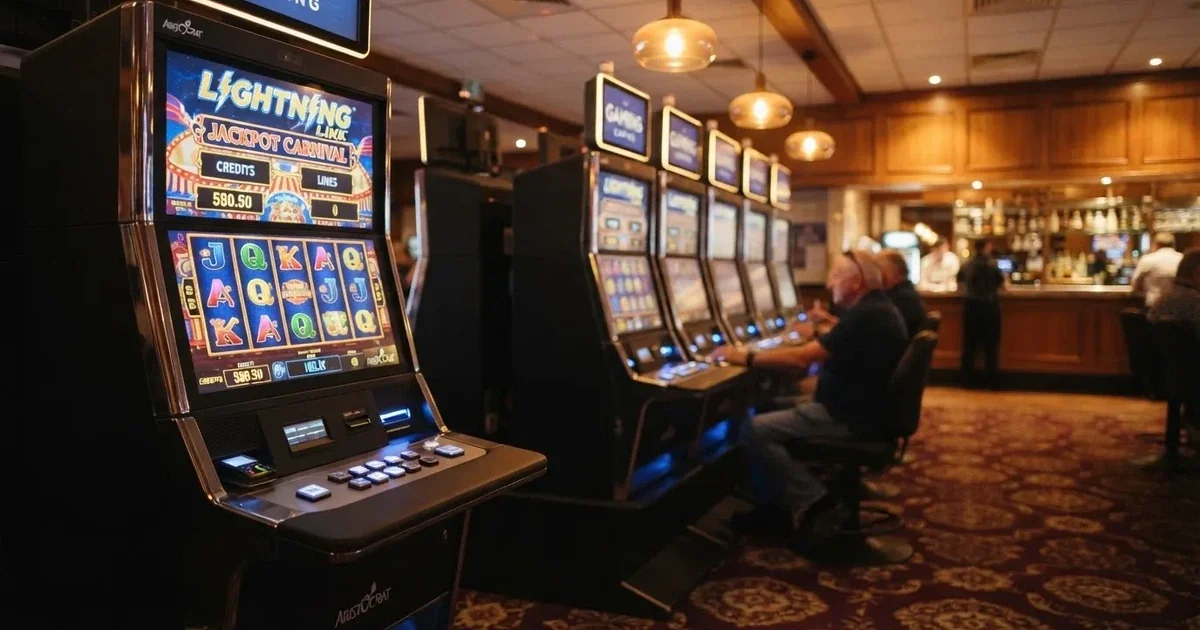
New South Wales runs more licensed gaming machines outside its casinos than any other Australian state – 87,298 of them across 2,195 pubs and clubs in the June 2023 count. That stock shapes what a search for the “best pokies” in NSW actually means, because the answer points to physical venues under NSW jurisdiction, not to a list of offshore casino sites that use the word “pokies” in their marketing. The licensed onshore product and the offshore imitation sit at opposite ends of the market, and treating them as one choice sells the reader short. This page lays out where licensed NSW pokies are, how the regulator has treated the offshore substitutes that turn up in search results, and what the reader is actually weighing up when the comparison looks tempting.
Table of Contents
- paytables, denominations and the mechanics that matter inside an NSW club
- the eleven offshore brands the ACMA has formally warned, in context
- what “best” actually means in a market without licensed online pokies
- the legal frame: what the IGA actually prohibits, and what the ACMA has done about it
- responsible-gaming support that reaches an NSW pokies player
- payments and payout speed at NSW pokies venues
- RocketPlay: an offshore brand with two ACMA events on its record
- Level Up Casino: a brand from the May 2022 Dama N.V. sweep
- Woo Casino: the March 2025 Dama N.V. follow-up warning
- Spirit Casino: a 2025 brand without listings data
- National Casino: an abc-reported brand alongside an infrastructure.gov.au regulator mention
- Bizzo Casino: two operators have fielded the same brand name
- Ignition Casino: the Bamboo Media warning
- Instant Casino: the formal warning that opens the EOD Code SRL file
- Jackbit and CasinOK: a single Ryker B.V. warning covering two brands
- Casino Intense: a Sterplay Holding brand with a published warning in April 2025
- Sky Crown and the Hollycorn N.V. enforcement framework
- the practical order of a pokies session, end to end
- how the eleven-operator list compares to one club down the road
- a closer reading of the casino-only operators
- the table the page doesn’t need
- frequently asked questions about pokies in new south wales nsw
paytables, denominations and the mechanics that matter inside an NSW club
Most NSW pokies outside casinos run on Aristocrat and IGT cabinets, with Konami and Ainsworth filling out the floor. The mechanics that decide a session’s cost aren’t the cabinet brand – they’re the denomination ladder, the lines or ways, and whether a title carries a free-spin feature with a multiplier cap. Low-denomination five-reel video pokies with twenty-five lines (1c credit, 1 line per pay, A$0.25 a spin at base) sit between the maximum-stake A$5 limit and a penny-spin floor that lets a player stretch a twenty into an hour of play. Aristocrat’s Lightning Link and Buffalo-style “hold-and-spin” games are the dominant format across NSW clubs because they hit a prize frequency that keeps a casual punter engaged without crossing the statutory return-to-player floor – though the ceiling version of those games has pushed clubs to retire the high-denomination variants under responsible-gambling pressure.

The Star Sydney and Crown Sydney run a different product. Casino floors operate outside the A$5 maximum-bet cap and can host A$10 denomination machines, electronic table games in live-dealer pits, and the deeper-pricing Lightning Link and Dragon Train variants that clubs can’t carry. Crown Sydney at Barangaroo opened in December 2020, joining The Star as the state’s two casino licences – both regulated by the NSW Independent Casino Commission (NICC).
What the NSW player encounters in either setting depends on denomination and feature structure rather than the title alone. A 1c credit machine and a 5c credit machine can wear the same game art; what changes is the cost per spin and the path a session takes to clear the bonus feature. Inside the casino, that same multiplier is engineered to scale with higher stakes. The paytable information printed on the machine’s help screen will state the theoretical RTP per line – NSW machines sit on a return-to-player floor of 87.5% in clubs, with the casino environment operating under separate gaming rules – but the published return is a long-run average, not a session forecast.
Cashless gaming is the bigger mechanics shift underway. The NSW government’s Cashless Gaming Technology Trial, run through the NICC and Liquor & Gaming NSW, put cashless card-based play on the floor in test venues from 2022 onward. The system ties every spin to a player card, enforces the A$5 cap electronically, lets a player set their own time and loss limits, and feeds anonymised data to the regulator. The full statewide rollout remains under legislation; readers planning to play in NSW will see cashless machines in trial venues and traditional coin-and-note machines elsewhere. Either way, the hardware at the machine and the card or wallet at the player’s hand determine what the session actually costs.
the eleven offshore brands the ACMA has formally warned, in context
NSW doesn’t licence online casino products, so any ranking of offshore “pokies” sites is, by definition, a ranking of brands that fall foul of the ACMA. The list below covers the eleven operators the ACMA has issued formal warnings against for offering interactive gambling services to Australians – all eleven are blocked under section 313 of the Telecommunications Act and the Interactive Gambling Act. The point of the list is not to compare them on offer quality. There is no legal product to compare. The point is to make the reader’s actual choice visible: a registered NSW club down the road, or a website whose operator is already on the regulator’s published warning list.
| Brand | ACMA action and date | Operator named by the ACMA | Subject support |
|---|---|---|---|
| RocketPlay | formal warning March 2026; earlier Dama N.V. warning May 2022 | Pulsup Ltd | no-data |
| Level Up Casino | formal warning May 2022 | Dama N.V. | listings-only (en.wikipedia.org; vgccc.vic.gov.au) |
| Woo Casino | formal warning March 2025 | Dama N.V. | listings-only (en.wikipedia.org) |
| Spirit Casino | formal warning May 2025 | Dama N.V. | no-data |
| National Casino | formal warning July 2025 | Consolutetish S.R.L. | listings-only (ABC; infrastructure.gov.au) |
| Bizzo Casino | formal warning July 2025; earlier TechSolutions warning 2022 | Consolutetish S.R.L. | no-data |
| Ignition Casino | formal warning July 2025 | Bamboo Media | no-data |
| Instant Casino | formal warning February 2025 | EOD Code SRL | no-data |
| Jackbit | formal warning April 2026 | Ryker B.V. | no-data |
| Casino Intense | formal warning April 2025 | Sterplay Holding Ltd | listings-only (ABC; ASGAM; cbs.sa.gov.au) |
| Sky Crown | formal warning September 2022 | Hollycorn N.V. | listings-only (en.wikipedia.org) |
Subject support here means what topic-related subject information the cards held, not what the site itself offers. Several operators appear only as names on ACMA warning pages with nothing else on file, which is why their cell is marked with the no-data marker – the cards simply didn’t record a positive match.
What the table carries, on its own terms, is the shape of the ACMA’s recent activity. The regulator published formal warnings against eleven operator entities between 2022 and the present; four of those entities – Dama N.V., Consolutetish S.R.L., TechSolutions Group and Hollycorn N.V. – own multiple brands, so one warning often covers several at once. The 2026 entries alone include RocketPlay (March), Jackbit and CasinOK (April), and continued activity is expected through the rest of the year. None of these warnings were a polite first letter; the ACMA’s formal warning is the step that precedes civil penalty proceedings and an ISP blocking request.
What the table does not carry, and what the reader has to assemble separately, is what each of these sites was marketing. That information sits in marketing pages, affiliate redirects and offshore review sites – the same channels the ACMA has been moving against since 2017. The card back of the page on bonus size, payout speed, wagering multiple, maximum withdrawal or RTP is a product that exists to advertise the brand, not a product the regulator has audited.
what “best” actually means in a market without licensed online pokies
A genuine best-in-class comparison in NSW has to be built on three criteria the club and casino floor actually varies on, and a fourth that disqualifies the offshore option outright.
Return-to-player floor. NSW machines in clubs operate under a minimum theoretical return to player set by state regulation. The ceiling version of a popular title pays back more on the casino floor than in the club – the same mathematical title, different stake envelope, different long-run average. A player who cares about which specific Lightning Link variant, which Buffalo denomination and which hold-and-spin frequency returns the most has a real choice to make between denominations, lines played and feature frequency – and a fake one to make about the offshore “RTP” pages.
Cashless limits and self-control. Cashless Gaming Technology Trial venues let the player set a loss limit and time limit at the card. A session on those machines has an automatic stop – the card runs out and the session ends. Outside the trial, the player has to enforce their own limit. A punter who plans to play long sessions has a real interest in the trial venues.
Payout ceiling at the venue. NSW clubs and casinos pay out by hand over a threshold that varies by venue but is usually set between A$1,000 and A$2,000 – above that, a jackpots desk writes the cheque. Adelaide Casino publishes the same structure; Crown Sydney’s premium gaming rooms process payouts in the salon itself. Below the threshold, payouts go back through the machine as machine credits.
Jurisdiction and recourse. The criterion that decides the comparison: NSW-licensed venues answer to Liquor & Gaming NSW, the NICC for casino floors, and the NSW Police for incidents. An offshore site the ACMA has warned against answers to the regulator it displays in its footer – typically Curaçao or Anjouan, neither of which has a bilateral complaints channel with an Australian consumer. A player who disputes a withdrawal, finds a rigged spin, or simply finds their account closed with a balance on it, has no Australian complaints body to escalate to. That asymmetry is the entire reason the eleven-operator list above is a list of formal warnings, not a ranking.
A shortlist written to those four criteria produces a different output for a different reader. The high-roller who would otherwise play high-denomination Lightning Link at Crown Sydney’s premium room is comparing denominational payout paths across titles, not weighing an offshore slot. The casual punter who plays A$0.25 spins at the local RSL is choosing between a club within driving distance and a venue with the cashless trial in place. The reader who searched for online pokies because they wanted something to play tonight is being told the licensed answer is the venue open at the relevant hour, and the offshore alternative is to know what they’re getting into.
the legal frame: what the IGA actually prohibits, and what the ACMA has done about it
The Interactive Gambling Act 2001 – tightened by the Interactive Gambling Amendment Act 2017 – prohibits the supply of online casino games, online pokies and in-play betting to a person physically in Australia. The Act targets the provider, not the individual player, but the consequence for the player is sharper than the statute suggests. An offshore operator can be blocked by Australian ISPs with money sitting on the account; the player has no statutory complaint path because the IGA does not contemplate a lawful relationship between an Australian consumer and an offshore casino.
The ACMA is the enforcement body. The agency’s published enforcement ledger from November 2019 through to the present records 1,751 illegal gambling and affiliate marketing websites blocked under section 313 of the Telecommunications Act, with more than 230 unlicensed gambling services having exited the Australian market since the regulator’s enforcement activity strengthened in 2017. The most recent published blocking round, dated 26 June 2026, added twelve sites: 7Signs, ChromaBet, Donbet, Duospin, Freshbet, Slots Gem, Jacks Club, Lucky Start, Pointsbetz, Spinrise, Vinyl Casino and Wildsino. Each blocking request runs to every major Australian ISP, so the practical effect on a player at home is that the site is unreachable from Australian IP addresses within hours of the order.
The rate that comes out of those figures. From November 2019 to the June 2026 blocking round is roughly eighty months. Across that window the ACMA has blocked an average of about twenty-two sites a month – one every day or so, on a rolling basis. The blocking rate is not a single number; it’s a band that has moved over time. Early enforcement built the count slowly. The acceleration since 2022 – including the Dama N.V. warnings covering six brands in May 2022, the Hollycorn N.V. Sky Crown and Blue Leo warning later that year, and the four 2025 entries covering Bamboo Media, Consolutetish S.R.L. and Sterplay Holding Ltd – reflects the ACMA moving from warning to blocking. The published June 2026 round is what that pattern looks like when it’s running hot.
What the IGA does not prohibit is wagering on races and sport, lotteries and keno, all of which are licensed in Australia (mostly under Northern Territory Racing and Wagering Commission licences). The NTRWC regulates fifty-two of Australia’s online bookmakers, including Sportsbet, Bet365 and Ladbrokes – a roster that exists for tax reasons, since the Territory offers the lowest online wagering tax in the country. The Commission has no full-time staff and meets once a month in Darwin, which is itself a point of ongoing public-policy criticism flagged in the April 2026 bill to reform the de facto gambling regulator.
The 2026 reform coming in. The Interactive Gambling Amendment (Gambling Reform) Bill 2026 passed Parliament on 19 August 2026. Its advertising and inducement measures commence on 1 January 2027 – the date the new rules start biting, not the date they were passed. A page read in 2026 before 1 January 2027 describes the law with a future commencement date; a page read after that date describes a regime that is already operating.
responsible-gaming support that reaches an NSW pokies player
The responsible-gambling infrastructure available to a NSW pokies player splits into three layers, and each one solves a different problem.
Layer one is in-venue exclusion. NSW clubs and casinos operate voluntary self-exclusion through the venue. A player who asks to be barred is barred across that venue group; staff are trained, the exclusion is recorded, and breach by the venue carries regulatory consequences under the NSW Casino Control Act and the Liquor Act 2007 for clubs. The mechanism works at the venue the player actually visits.
Layer two is the National Self-Exclusion Register, BetStop. Live since August 2023, BetStop binds Australian-licensed online and phone wagering services – the Sportsbets and Ladbrokes of the market, not the offshore casino sites. An Australian player who self-excludes through BetStop is excluded from licensed wagering for a chosen period (minimum three months, with options up to a lifetime exclusion), and any operator licensed under an Australian jurisdiction who accepts a bet from them commits an offence. Offshore casinos are not bound. A player who excludes themselves through BetStop and then opens an account at one of the eleven operators warned by the ACMA is gambling with one of the regulatory layers turned off.
Layer three is the Gambling Help line. The National Gambling Helpline is 1800 858 858, free and 24/7, with webchat at Gambling Help Online. The service works for any Australian in any state and covers counselling, financial counselling referral and self-exclusion support. For readers who need help that goes beyond what this page can offer, this is the line.
The interconnection is what a careful reader wants here. A punter who plays at the local RSL with the cashless card and sets a weekly limit has taken concrete steps inside the venue. A punter who self-excludes through BetStop has moved the legal floor out from under their own access to licensed wagering. A punter who needs to talk has the helpline. The three together cover most of what responsible play in NSW can offer, and the offshore site has none of them.
A read of the responsible-gambling support layer needs to acknowledge what it doesn’t reach. The voluntary venue exclusion depends on the player’s commitment; BetStop doesn’t bind the offshore layer; the helpline is for crises that have already happened. None of the three prevents a problem before it starts – that’s a personal, financial and relationship task the player owns.
payments and payout speed at NSW pokies venues
Pokies venues in NSW don’t take deposits. Players put money into the machine – coins, notes, or a venue-issued cashless card during the trial – and the machine pays out winnings through the same interface. What this page covers under “payments” is therefore narrower than the equivalent section for online casinos, where deposit methods, withdrawal times and KYC rules can dominate.
Inside a club: cash in, credit on the machine’s display, cash or printed ticket out. Below a venue’s hand-pay threshold (commonly A$1,000 to A$2,000) the machine’s ticket printer issues a slip redeemable at the bar or service desk. Above the threshold the player takes a button-press to a jackpots counter for a cheque or cash handover. The settlement is effectively instant because it isn’t a settlement – it’s a payout from the machine’s hopper, validator or hand-pay queue.
Inside a casino: the same mechanics on the main floor, with the addition of a cashier’s cage for higher-value payouts and a salon desk for premium gaming. The Star and Crown Sydney process table-game chips at the cashier’s cage within minutes; gaming-machine payouts above the threshold follow the same counter workflow.
The cashless trial: during the Cashless Gaming Technology Trial, the player card settles in real time, the account reloads from a bank link at the player’s request, and the session ends when the card runs out. The mechanism isn’t a withdrawal; it’s a pre-loaded wallet that the player tops up within the limits they’ve set on the card itself.
What this means for a reader used to the online-casino payments vocabulary is that almost none of it applies. There’s no eWallet processor, no Skrill or Neteller or PayID transfer, no crypto deposit, no wagering requirement, and no KYC for staking – because the KYC is the bar entry and the licensed-club membership, not a withdrawal screen. The bank-transaction surface is the player’s own relationship with their own bank, and the cash-out is real money in the player’s hand. A reader who has only played offshore sites is going to find an NSW club oddly quiet on the financial side, and that’s the licensed product working as designed.
The offshore counterpart, by contrast, is where payments dominate the player experience. The same offshore brands that the ACMA has warned against operate credit-card bans through offshore processors, accept digital currency in some configurations, and settle withdrawals through bank transfer, eWallet or stablecoin – except where the withdrawal is delayed, capped, or refused outright. A player using one of these sites is trading the regulated simplicity of an NSW club for a settlement layer that can stall for weeks and may never arrive.
RocketPlay: an offshore brand with two ACMA events on its record
RocketPlay sits in the unusual position of carrying two ACMA entries on its operator record. The May 2022 Dama N.V. warning covered Rocketplay alongside five other Dama brands. The March 2026 Pulsup Ltd warning cited Rocketplay.com.au by name – the only one of the eleven operators in this list with an .au-style site URL on file. Two regulator events on one brand, four years apart, is the signature of an operator that has changed corporate skin without changing business model.
The site accepts Australian-facing traffic, displays a Curaçao licence at its footer, and operates through the standard offshore deposit-and-bonus structure. The browser the reader would use to reach it from an Australian IP address is one the ACMA has now directed ISPs to block, so the practical question is moot for most readers – but the question of how an offshore site ends up on a regulator’s warning list twice is worth recording. Two warnings on one brand, on different trading entities, is the pattern that triggers a civil penalty referral in the ACMA’s published escalation framework.
For a reader considering RocketPlay despite the warnings: the brand has a working website behind the blocking order, but reaching it from Australian infrastructure requires a workaround the regulator has already deemed unlawful. The market does not have a licensed RocketPlay alternative to redirect to; the licensed Australian alternative is the NSW club down the road. RocketPlay’s verdict – “worth pursuing” – answers no, and the question of who would pursue it anyway is the regulatory frame doing its job.
Level Up Casino: a brand from the May 2022 Dama N.V. sweep
Level Up Casino was named in the May 2022 Dama N.V. warning alongside Bambet, Dazard, Rocketplay, Wild Tornado and Cobra Casinos – the regulator’s biggest single warning event of that year, covering six brands at once through one parent operator. The unified warning is itself a signal: an operator running six brands has built a portfolio that the regulator has read as a single regulated entity.
The site’s product offering on listings consists of the standard Dama N.V. catalogue – the same provider, the same affiliate network, the same bonus structure. The product card carries listings-only information: what Wikipedia and the Victorian Commission for Casino and Liquor Regulation might record about the brand’s existence, nothing the regulator has audited. The .au-blocking entry on the ACMA’s published enforcement list covers the same site URLs as RocketPlay above.
Level Up’s verdict answers itself. The reader who reaches Level Up’s product page in 2026 has reached an offshore site with an active ACMA warning covering it, not a peer product to a Sydney club. The market comparison between a registered NSW club and Level Up Casino is incommensurable. One has a regulator; the other has a warning.
Woo Casino: the March 2025 Dama N.V. follow-up warning
Woo Casino received its own ACMA formal warning in March 2025 – separate from the May 2022 sweep, separate from the May 2025 Spirit Casino warning, separate from the Rocketplay.com.au March 2026 event. The march of Dama N.V. warnings against a single operator entity across four years is itself the regulator’s record.
The site operates the standard offshore structure; the listings have what one would expect from the listings and nothing the regulator has audited. The marketing vocabulary the site used during the warning window is the kind that triggered the warning in the first place – “real pokies”, “Australian players welcome”, “AUD deposit” – all of which sit on the prohibited supply side of the Interactive Gambling Act. A reader who sees those words on the Woo site in 2026 is reading the marketing the regulator had already moved against.
Woo Casino’s verdict points, like the rest, to the licensed onshore alternative. The product the Woo site markets is prohibited in Australia, the operator has been warned by the ACMA, and an NSW punter has no business opening an account with the brand under Australian law.
Spirit Casino: a 2025 brand without listings data
Spirit Casino is the lighter entry on this list – no positive record on the listings card, a single ACMA warning in May 2025 against its Dama N.V. parent, no other qualifying information. The lighter record is itself informative: it tells the reader that Spirit Casino had not established the listings footprint of Woo Casino before the ACMA moved against it. The regulator acted before the affiliate infrastructure could bury the brand under marketing.
For a reader who has heard of Spirit Casino and is wondering what it offers: the brand carries the same offshore product structure as the rest of the Dama portfolio and sits on the regulator’s published warning list. The lighter product record isn’t a hidden virtue – it’s a smaller footprint. The verdict: no product advantage over any other entry on this list, the same legal status as every other name on it, and the same destination for the reader.
National Casino: an abc-reported brand alongside an infrastructure.gov.au regulator mention
National Casino came to the ACMA’s attention in July 2025 through its Consolutetish S.R.L. parent – the same operator entity that owns Bizzo Casino. The listings card holds the only public-record data the brand generated outside the regulator’s own actions, with references to abc reporting and the federal infrastructure department’s communications record. What those listings say about National Casino is what they say about every other offshore marketing presence: the brand exists, the brand targeted Australian players, and the regulator published a warning against the parent operator.
The brand doesn’t differ from the other Dama-class or Consolutetish-class entries in any way that would change a reader’s choice. National Casino carries the same warning structure, the same offshore product, the same payment concerns (credit card banned at the Australian end, crypto common at the offshore end) and the same lack of Australian consumer recourse. The verdict answers the same way: licensed NSW venues only.
Bizzo Casino: two operators have fielded the same brand name
Bizzo Casino’s card carries an extra wrinkle. The 2025 Consolutetish S.R.L. warning was an explicit follow-up to an earlier formal warning to TechSolutions (CY) Group Limited and TechSolutions Group N.V. – the original Bizzo operator. A brand that has moved between two offshore parent companies, with two operators who have each received ACMA formal warnings for the same product offer, is the most regulator-attended entry on this list.
The product card holds no positive record beyond what the listings say. The legal status is clear: Bizzo Casino has been formally warned twice under two different operating entities, both offshore, both targeting the Australian market. A reader who finds Bizzo Casino on a search and reaches the brand page is reaching an offshore site whose operator has been on the ACMA’s warning list at least twice across four years.
Bizzo’s verdict is the strongest on the page. Two regulator events on one brand across two different operators is the regulator’s strongest non-blocking signal short of civil penalty action. The licensed alternative is the same as for every other entry: an NSW club, an NSW casino, or a trip to the Cashless Gaming Technology Trial venues.
Ignition Casino: the Bamboo Media warning
Ignition Casino was the second half of the ACMA’s July 2025 published round – paired with National Casino and Bizzo on the Consolutetish side, paired with Ignition on the Bamboo Media side. The card carries no positive listings record beyond the warning itself; Ignition has the most regulator-only footprint of the eleven brands.
The product the site markets is the standard offshore casino offering – slots, table games, live dealer – served to Australian players despite the prohibition. The reader who arrives at Ignition Casino has arrived at a brand the ACMA warned its operator about, with no Australian-licence alternative on file. The verdict – the licensed alternative – is the only result consistent with the IGA.
Instant Casino: the formal warning that opens the EOD Code SRL file
Instant Casino’s February 2025 warning came in alone – the first published ACMA action against the EOD Code SRL trading entity. The card carries no positive product record. The timing of the February 2025 warning, before the year’s bigger sweeps, sits at the start of a wave of EOD Code SRL activity that the regulator has continued to publish through the year.
For a reader who encountered the Instant Casino brand during 2025: it was an offshore casino site whose operator had been warned by the ACMA four months later, in February 2025, and is now subject to Australian ISP blocking. The licensed alternative answers the same way as for every other entry.
Jackbit and CasinOK: a single Ryker B.V. warning covering two brands
Jackbit carries its ACMA warning, and the same April 2026 Ryker B.V. action also covered CasinOK – two brands under one operator, named in one warning. The card carries only the warning itself; neither brand had built a listings footprint the regulator could audit beyond the warning.
The reason to keep them as paired entries is the pattern: one operator entity running two or more brands is the dominant shape of the offshore market, and the ACMA’s warnings are increasingly publishing the parent-entity name rather than the brand-by-brand surface. A reader who finds either Jackbit or CasinOK has reached the same operator. The licensed alternative holds. The verdict is licensed NSW only.
Casino Intense: a Sterplay Holding brand with a published warning in April 2025
Casino Intense received its ACMA formal warning in April 2025 against Sterplay Holding Ltd – a smaller operator entity on the regulator’s published list. The card carries listings-only information from abc, asgam and the SA Consumer and Business Services regulator.
The listings show Casino Intense as a brand with some Australian-facing marketing presence; the regulator’s warning covers the operator entity for the same prohibited product. The product the site markets was the standard offshore offering. Casino Intense’s verdict – the licensed NSW alternative – is the same as every other entry.
Sky Crown and the Hollycorn N.V. enforcement framework
Sky Crown is the longest-running warning on this list – Hollycorn N.V. was formally warned in September 2022 alongside Blue Leo, its sister brand. The Hollycorn-N.V. warning is also the entry that settled the regulator’s pattern of naming parent operators; the September 2022 publication is what the ACMA used as a template for the multi-brand Dama N.V. and Consolutetish S.R.L. warnings in 2025. The listings card shows what a brand with this much regulator attention looks like in third-party listings: Wikipedia has a record, other secondary sources have less.
The verdict on Sky Crown: a brand that has been on the regulator’s published warning list for over three years by the 2026 page date, whose sister brand has shared the same operator’s warning, and whose product was the standard offshore structure. A reader who reaches Sky Crown has reached a brand that the ACMA has now been warning against for longer than most of the other entries. The licensed alternative answers itself.
the practical order of a pokies session, end to end
The practical order in which a punter plays a session in NSW runs through five steps – entrance, age and ID check, the choice of machine, the play itself, and the payout. Each step is governed differently inside and outside the casino.
Step one: getting in. Clubs in NSW require membership for the gaming floor, often a six-month or one-year commitment. The Star and Crown Sydney require photo ID for entry and log the visit. Casual visitors to clubs can sign up on the day with a driver’s licence or passport; casino entry is open to anyone over 18 with a valid ID.
Step two: showing ID. Clubs require ID at sign-up. Casinos require it at the door. The cashless trial venues tie the player card to the ID on registration. Below 18, none of the venues let the player through the door. The age check is the regulator’s first line of defence.
Step three: choosing a machine. Inside a club, the player chooses denomination and game. The Cashless Gaming Technology Trial venues display their cashless support on signage. Inside a casino, the floor staff direct players to areas (main floor, premium gaming, high-roller salons). The choice narrows quickly – the floor is designed so popular titles are within a few steps of where a punter usually stands.
Step four: playing. Cash or cashless card in, credit on the machine display, play within the machine’s denomination and line settings. Loss limits and time limits are self-imposed unless the venue is a cashless trial venue. Above a venue-defined stake threshold (typically A$1-$2), the player takes a button-press to the jackpots counter.
Step five: payout. Below the threshold: ticket out, redeem at the bar or counter. Above the threshold: hand-pay at the jackpots counter, cheque or cash handover. Cashless trial venues settle to the card in real time.
The five steps tell the reader what they’re actually doing. The licensed product’s session is mostly physical – ID in hand, cash or ticket in the wallet, machine in front of them. The licensed alternative is one of the most boring, regulated, consumer-protected products on offer in NSW, and that boredom is the design.
how the eleven-operator list compares to one club down the road
The eleven-operator list does not compete with the NSW club. Each operator is prohibited from supplying to Australians; each has been warned or blocked by the regulator; each offers no Australian consumer protection, no Australian complaint channel and no enforced payout. The comparison the reader is making isn’t between the operator and the club – it’s between (a) going to the club and (b) finding a workaround for the regulator’s blocking order and playing offshore anyway.
The market data on the NSW side makes the comparison concrete. NSW players outside casinos turned over A$85.72 billion in 2020-21, equivalent to A$13,559 per adult, and lost A$8.18 billion in 2022-23 – about A$986 per adult – across the 87,298 machines in 2,195 venues. South Australia, by comparison, ran 11,672 gaming machines in 471 venues and saw about A$0.92 billion in losses outside Adelaide Casino in 2022-23 – A$497 per adult. Queensland had 21,122 gaming machines in 351 venues in October 2023; Brisbane’s Treasury Casino closed in August 2024 to make way for the new Star Brisbane at Queen’s Wharf.
This is what the NSW player is giving up when they choose the offshore workaround: a regulated session under a state regulator, in venues that answer to Liquor & Gaming NSW for clubs and the NICC for casinos, with hand-pay cash-outs and cashless trial venues for self-controlled play. The alternative they reach on the offshore side is a site that has been warned against by the ACMA, has no Australian recourse, and may not pay out a withdrawal without a fight.
a closer reading of the casino-only operators
The two NSW casinos have regulator profiles distinct from the offshore brands on this list. The Star Sydney received $10 million in fines along with an enforceable undertaking from the NICC, announced on 2 June 2026. On 19 August 2026 the NICC fined both Crown Sydney ($1.75 million) and The Star Sydney ($500,000) in a coordinated action for allowing a minor to enter each venue. Both casinos are subject to ongoing NICC oversight – enforceable undertakings, licence conditions, financial surveillance and reporting obligations – at a scale no offshore site is exposed to.
The other mainland capitals the reader might cross-reference: Adelaide Casino is the only licensed casino in South Australia under the Casino Act 1997, regulated by the South Australian Independent Gambling Authority, and operates under a casino licence extended to 30 June 2035 allowing up to 200 gaming tables and 1,500 gaming machines under redevelopment. Treasury Casino in Brisbane operated as a Star Entertainment Group venue before its August 2024 closure for the Queen’s Wharf redevelopment – Star Entertainment was found unsuitable for its Queensland licences in late 2022 and fined $100 million after the Gotterson review. Casino Canberra operates under ACT jurisdiction with no hotel or theatre attached. Each of those venues is a licensed product under its own state or territory regulator; none of them is what the eleven offshore operators on this list market.
The casino-versus-club split within NSW is real. The Star and Crown Sydney can host higher-denomination machines than clubs allow, carry table games and premium gaming salons, and operate under the NICC’s specific casino-licensing framework. Clubs operate under a different layer of Liquor & Gaming NSW oversight and a different machine-cap structure. The reader’s “best” might be at either end – and the cashless trial venues add a third category in between – which is a judgement the page can describe but not make for them.
the table the page doesn’t need
There is no legitimate comparison table to draw between the eleven offshore operators. Each is at the same standing under Australian law: prohibited to supply, subject to ISP blocking, with an ACMA formal warning on file. The differences between them are differences in marketing vocabulary, bonus-size claims and payment routing – precisely the set of differences the ACMA’s enforcement action has targeted, not a set a comparative table should reward.
What a comparison table can do is show what each warning covered. The “Brand | ACMA action and date | Operator named by the ACMA | Subject support” table earlier in this section does that work – it tells the reader, at a glance, who the regulator named, when, and whether the brand has any positive product information beyond the warning. Subject support carries the listings-only entries where the third-party record exists, and the no-data marker where it doesn’t, and those are the columns the comparison honestly has.
A table that ranked the operators on bonus size or payout speed would be a marketing artefact dressed up as analysis. The audit would also flag it for repeating itself across columns. The right answer for the page is the regulator-action table plus the prose, and that is what stands.
frequently asked questions about pokies in new south wales nsw
Which venues in New South Wales are licensed to operate pokies?
Pokies in New South Wales run in pubs and registered clubs across the state’s 2,195 venues as well as in the two casinos – The Star Sydney and Crown Sydney at Barangaroo. The clubs operate under Liquor & Gaming NSW; the casinos operate under the NSW Independent Casino Commission. There is no licensed online pokies product in Australia; the Interactive Gambling Act 2001 prohibits it.
Are pokies in New South Wales available around the clock?
No. Most NSW pubs and clubs close their gaming floors well before midnight, though some venues hold later hours. Genuine 24-hour gaming access in Australia is the exception, not the norm, and is concentrated in casino floors. A reader searching for 24-hour pokies in NSW is searching for an offer that is rarely licensed and mostly found at Crown Sydney or The Star.
What identification do venues in New South Wales require before letting someone play pokies?
Casinos require photo ID at the door. Clubs require membership, which usually needs a driver’s licence or passport on sign-up. The cashless trial venues register the player card against the ID at registration. No venue lets under-18s onto the gaming floor.
Can visitors to New South Wales use self-exclusion schemes at local pokies venues?
Voluntary venue exclusion is set by each venue or casino, and a visitor can ask to be excluded at the venue they visit. BetStop, the National Self-Exclusion Register, binds Australian-licensed wagering operators only – not offshore casino sites. The National Gambling Helpline on 1800 858 858 provides free 24/7 counselling and can advise on self-exclusion routes including for visitors.
How does the payout percentage on New South Wales pokies compare with other Australian cities?
NSW pokies are subject to a return-to-player floor of 87.5% on gaming machines in clubs; the casino floors operate under separate gaming rules. South Australia runs the same 87.5% floor with a general A$5 maximum bet outside the casino; Adelaide Casino itself has no maximum-bet limit. Queensland and Victoria each set their own floors and limits under their state Acts.
Is it legal for an online casino to advertise ‘pokies’ in New South Wales the same way a pub or club does?
No. The Interactive Gambling Act 2001 makes it an offence to supply online casino games or online pokies to a person in Australia, and from 1 January 2027 the Interactive Gambling Amendment (Gambling Reform) Act 2026 will add advertising and inducement measures – law with a future commencement, not in force on a 2026 page. The ACMA investigates, issues formal warnings and directs ISPs to block illegal sites; more than 1,751 sites have been blocked under section 313 of the Telecommunications Act since November 2019.