
Choosing a Casino in Tasmania in 2026: The Licensed Venues, the Online Reality and What the ACMA Has Been Doing
Current as of 25 November 2026 · verified against the ACMA’s published formal warnings and blocking notices.

Tasmania has two licensed casinos, both run by Federal Group, both in places a visitor can reach without a connecting flight. The honest answer to “best casino in Tasmania” depends on what the reader means by best — closest to the airport, the bigger gaming floor, the rooftop bar, the accommodation deal. This page lays out the two venues side by side, the games each runs, the practicalities of getting in, and the separate question that often sits behind the search: whether Australians can play at an online casino instead. They cannot, under the Interactive Gambling Act 2001, and the Australian Communications and Media Authority has been steadily making that prohibition visible. The page closes with the brands the ACMA has named in formal warnings since 2022 and what those warnings actually mean for a player sitting in Hobart or Launceston.
Table of Contents
- The Two Casinos Tasmania Actually Licences
- What the Gaming Floor Actually Carries
- Accommodation, Bars and Where to Eat
- Age, Entry and Practicalities
- The Online Question — and Why the ACMA Names the Brands It Names
- The Brands the ACMA Has Named — and What That Means for a Reader
- What the Warning List Tells a Reader
- What the Interactive Gambling Act Actually Does to a Player
- Responsible Gambling — What Actually Works for a Tasmanian Reader
- How Long the ACMA’s Blocking Record Has Been Running
- How This Page Compares the Options
- Frequently Asked Questions
The Two Casinos Tasmania Actually Licences
Tasmania runs on a duopoly. Wrest Point Hotel Casino in Sandy Bay, on the Derwent River just south of Hobart’s CBD, opened on 10 February 1973 and was Australia’s first legal casino. Country Club Casino in Launceston followed in 1982, set on a rural site about ten minutes’ drive from the city centre. Both have been held since their opening by Federal Group, a Tasmanian family-owned operator that started life as the Federal Coffee Palace Company Limited in Melbourne in 1885 and that has held the state’s casino licences in one form or another for more than half a century. The Farrell family’s majority stake in the holding company dates to 1989, and the group was privatised the following year.
For most readers the choice between the two comes down to geography and taste. Wrest Point is the original, the waterfront venue, the one with the well-known rooftop bar that turns up in tourism writing about Hobart. Country Club is the larger resort, a Georgian-style property modelled on the stately homes of the American South, with its own 18-hole golf course across the road and the kind of grounds that suit a couple of nights rather than a single evening.
A reader weighing up “best” on this pair is really weighing up three things: which city the reader is staying in or flying into, whether the trip includes a partner or family who will want something beyond the gaming floor, and whether the rooftop bar at Wrest Point matters more than the resort grounds at Country Club. None of these has a single right answer.
What the Gaming Floor Actually Carries
Both venues run the standard Australian casino product: baccarat, blackjack, roulette and craps on the table side; poker machines on the electronic side. Tasmania’s two casinos were also among the earliest venues in Australia to take wagers on automated table-game terminals, and both still carry a deeper electronic table-game range than most pubs and clubs in the state.

What separates the two is the catalogue’s depth rather than its shape. Wrest Point concentrates its gaming on a single floor inside the main hotel tower, with the bars, restaurants and the rooftop sitting one lift ride away. Country Club spreads its floor across a larger pavilion-style room and connects directly to its hotel, conference centre and golf course, so the practical experience of a visit reads as “resort with a casino” rather than “hotel with a gaming floor”. A punter who wants everything under one roof will find Country Club the more contained option. A punter who wants the gaming to sit alongside Hobart’s waterfront restaurants and the Saturday market will find Wrest Point the easier pivot.
It is worth being straight about a point that often confuses visitors: “pokies” in Australian English means slot machines, and the term covers both the reel-style games and the video-style games that dominate Australian gaming floors. Both Wrest Point and Country Club run several hundred pokies each, with the bulk of them set to returns that the venue does not publish in detail. A reader who wants a specific RTP for a specific title will not find one on the casino’s own pages, because Australian casinos have not historically published per-title return rates the way some online catalogues do. The figure to remember, for the Tasmanian market as a whole, is that Australian gaming machines return on average in the high eighties to low nineties per cent of turnover over the long run — an industry range rather than a per-machine guarantee.
Accommodation, Bars and Where to Eat
Accommodation sits inside both venues. Wrest Point runs two hotel towers — the main Wrest Point tower and the shorter, motel-style accommodation that was added in the 1990s — and most of the rooms look out over the Derwent or across to the city. The rooftop bar on the main tower, the Point Revolving Restaurant and a handful of ground-floor bars and restaurants fill out the food and drink side. The complex is a ten-minute drive from Hobart Airport and a similar distance from the CBD, so a visitor without a car can manage it by taxi or rideshare but not comfortably on foot from the centre of town.
Country Club’s accommodation reads as the resort’s centre of gravity. The hotel wing is larger, the rooms are set around the Georgian-styled main building, and the grounds carry an 18-hole golf course, a tennis court, a health club and several restaurants. The complex sits on Country Club Avenue in Prospect Vale, roughly a ten-minute drive from Launceston Airport and a short drive from the centre of town; the rural setting is the point rather than a side note, and the casino was designed to feel like a country estate.
Both venues carry multiple bars and restaurants on site. Wrest Point has more variety because it has had longer to build up the floor, and the rooftop bar remains the headline venue for non-gaming visitors. Country Club’s food offering is more contained but leans toward the resort market — longer breakfasts, formal dinners, conference catering — which is what its visitor mix demands.
For a reader asking about hotels within walking distance: there is no real walking distance to either casino. Both are set on grounds a visitor reaches by car, taxi or a short rideshare. The accommodation question is really a question of whether to stay on site or stay in the city and travel in, and for most readers the on-site option wins because the casino’s closing time is later than most central hotels are willing to let their guests come and go.
Age, Entry and Practicalities
The minimum age to enter either casino is 18. Identification is checked at the door; a driver’s licence, a passport or a Proof of Age card is accepted. Both venues operate a self-exclusion scheme, and a person who has self-excluded from one Federal Group venue is excluded from both.
The Tasmanian Liquor and Gaming Commission oversees both licences. Under the state’s cashless gaming card reform, hotel and club poker machines began mandatory carded play from December 2025, with default loss limits of A$100 per day, A$500 per month and A$5,000 per year, raisable only after a minimum 24-hour wait. No casino rollout date had been set for that carded-play regime as of September 2024, which means the casino floors still run on cash and card on the gaming side for the moment. A reader planning a visit should check the venue’s current rules before travelling, because the Tasmanian Commission’s position on casino rollout has shifted several times since 2024.
Dress codes have loosened across Australian casinos over the past decade. Wrest Point and Country Club both accept smart casual in the main gaming areas; the more formal restaurants still expect a collar or equivalent, but the gaming floor itself has not required jacket-and-tie for years. Smoking is restricted to designated outdoor areas at both venues.
The Online Question — and Why the ACMA Names the Brands It Names
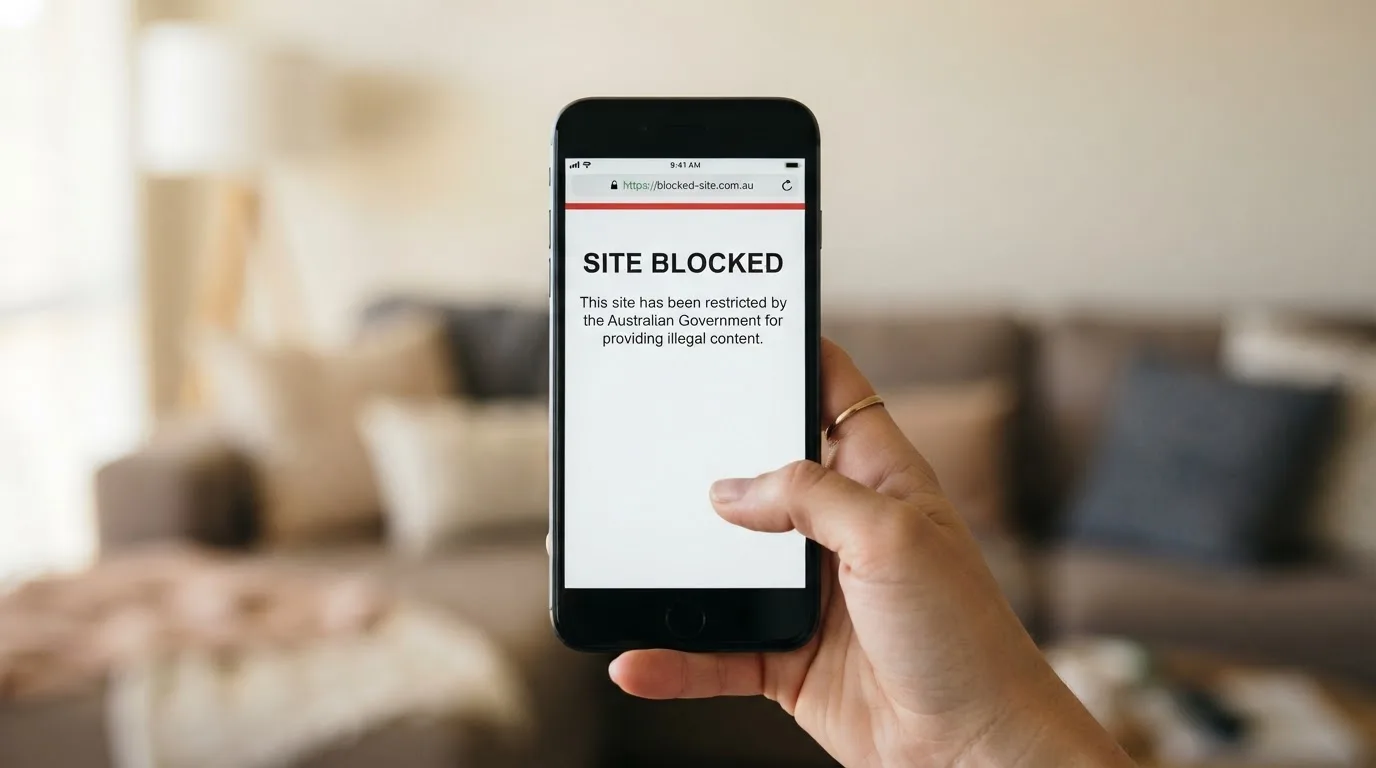
A meaningful share of the searches behind this page come from readers who would rather not travel to Wrest Point or Country Club at all and who are looking for an online casino they can play at from home. The honest answer is that no Australian jurisdiction issues a licence for online casino games, online pokies or in-play betting, and the Interactive Gambling Act 2001, as strengthened by the Interactive Gambling Amendment Act 2017, makes it an offence to provide those services to a person physically in Australia. The ACMA investigates, issues formal warnings and asks Australian internet service providers to block illegal sites.
What is licensable in Australia is wagering on races and on sporting events placed before the event, lotteries and keno. In practice the bulk of licensed online bookmakers — Sportsbet, Bet365 and Ladbrokes among them — hold their Australian licences from the Northern Territory Racing and Wagering Commission for tax reasons. That commission has no full-time staff and meets once a month in Darwin, which has become its own political story in 2026, but it is the body that holds the licence file for most of the wagering brands an Australian reader will have heard of. None of those licences covers online casino games.
The ACMA’s published blocking record gives a sense of the scale of enforcement. As of June 2026, a total of 1,751 illegal gambling and affiliate marketing websites had been blocked since the first blocking request in November 2019, and more than 230 unlicensed gambling services had left the Australian market since enforcement was strengthened in 2017. A single round reported on 26 June 2026 added 12 more: 7Signs, ChromaBet, Donbet, Duospin, Freshbet, Slots Gem, Jacks Club, Lucky Start, Pointsbetz.com, Spinrise, Vinyl Casino and Wildsino. The blocking is cumulative, not a one-off; the ACMA has been working through its list in batches for the better part of six years.
The H2 Gambling Capital estimate for 2025 puts Australians’ losses to illegal gambling sites at about A$3.9 billion a year, with the share of gambling going through legal channels falling from 74% in 2021 to 64%. The trend line in that figure is the part to watch: legal channels losing share to illegal ones despite the ACMA’s blocking programme is the gap that the enforcement record describes but does not close.
The Brands the ACMA Has Named — and What That Means for a Reader
The list that follows is not a ranking and not a recommendation. Each brand is included because the ACMA itself issued a formal warning over it for offering prohibited services to Australians. The list runs in the order set out below. The page makes no claim about any of these brands beyond what the ACMA has published, and an offshore licence the site displays does not change that: online casino games cannot be licensed anywhere in Australia, whatever licence the site carries.
RocketPlay
The ACMA issued a formal warning to Pulsup Ltd over Rocketplay.com.au in March 2026. An earlier warning, in May 2022, named Dama N.V. as the operator behind Rocketplay along with five other brands (Bambet, Dazard, Level Up, Wild Tornado and Cobra Casinos). The site has cycled operators; the ACMA’s warning has held. For a Tasmanian reader, the practical question is not whether Rocketplay is safe in the abstract — it is licensed by a regulator somewhere overseas — but whether it can be reached at all from inside Australia. The ACMA’s blocking programme covers exactly this kind of site.
Level Up Casino
The ACMA named Dama N.V. as the operator behind Level Up Casino in its May 2022 warning. Public listings report the brand as operating under a Curaçao licence structure, and Dama N.V. has been a recurrent subject of ACMA action since. The same warning that named Level Up also named Bambet, Dazard, Rocketplay, Wild Tornado and Cobra Casinos — six brands sharing one operator at one point in time. The fact that they appeared together is itself the point: when the ACMA names an operator, the warning reaches every brand that operator runs.
Woo Casino
Dama N.V. drew another formal warning in March 2025, this time specifically over Woo Casino. The brand had been on the market for several years by then and had moved between operators; the May 2022 warning had named Dama N.V. over a different set of brands. The recurrence of the operator name is the signal: the ACMA has acted against Dama N.V. for the same kind of conduct across multiple brands and across multiple years, and the March 2025 warning is the most recent published action against the company.
Spirit Casino
Dama N.V. received a third published warning in May 2025, covering Spirit Casino. The pattern across the three warnings — May 2022, March 2025, May 2025 — is that the ACMA has treated the operator as a continuing presence rather than a one-off offender, and the brands the operator runs have shifted around that continuity.
National Casino
Consolutetish S.R.L. drew a formal warning in July 2025 over National Casino. The brand had been on the market for several years; the warning sits alongside the same operator’s July 2025 warning over Bizzo Casino and a 2022 warning that named TechSolutions (CY) Group Limited and TechSolutions Group N.V. over Bizzo in its earlier guise. The ACMA’s record on National Casino is shorter than its record on Bizzo, but the operator overlap with Bizzo is the part to register.
Bizzo Casino
Consolutetish S.R.L. drew a formal warning in July 2025, building on the 2022 warning to TechSolutions (CY) Group Limited and TechSolutions Group N.V. Two operators, two warnings, one brand — that is the Bizzo Casino file as the ACMA has published it. For a reader who has seen the brand advertised through an Australian-facing affiliate site, the file is the answer to “is this legitimate here”.
Ignition Casino
Bamboo Media drew a formal warning in July 2025 over Ignition Casino. The brand has a longer history in some offshore markets than in Australia; the ACMA’s action is recent.
Instant Casino
EOD Code SRL drew a formal warning in February 2025 over Instant Casino. The brand had been operating into Australia for some time before the warning was issued.
Jackbit
Ryker B.V. drew a formal warning in April 2026, covering both Jackbit and CasinOK. Two brands, one operator, one warning — the same pattern that has run through the rest of the ACMA’s published record.
Casino Intense
Sterplay Holding Ltd drew a formal warning in April 2025. Public listings of the brand’s licence history show it has moved between operators; the ACMA’s action names the operator that was running it at the time.
Sky Crown
Hollycorn N.V. drew a formal warning, published in September 2022, covering Sky Crown and Blue Leo casino services. Public listings report the operator as running several other brands as well; the ACMA’s action names the two specific services.
What the Warning List Tells a Reader
The list above describes one thing: brands the ACMA has named in formal warnings since 2022. It does not describe the brands’ games, their payouts, their bonus structures or their odds. The reason for that narrowness is the only one that matters — none of those details can be checked from Australia, because the ACMA’s enforcement is to block the sites, and because an offshore site that refuses a withdrawal has no Australian complaints body behind it. The page does not recommend any of these brands, and the absence of a recommendation is the editorial position.
The blocking rate the ACMA has achieved, measured against its own starting point, is the figure that summarises this side of the market. Taking the running total of 1,751 blocked sites reported in June 2026 against the date of the first blocking request in November 2019 gives roughly 270 blocked sites per year over the six and a half years the programme has been running — a band that runs from the higher single-block months, where a single round has added twelve or more, down to quieter stretches where the regulator has focused on the operator-level actions. The point of the figure is not the exact average; it is that the ACMA’s enforcement is continuous rather than event-driven, and a site that has been named in a formal warning is more likely than not to be on the next blocking list. The reader sitting in Tasmania who finds one of these brands in their inbox or through an affiliate site is looking at a service the Australian regulator has already told, in writing, to stop offering to Australians.
What the Interactive Gambling Act Actually Does to a Player
The IGA targets the provider, not the individual player. An Australian punter who opens an account with an offshore casino is not personally prosecuted. What the punter loses is the Australian consumer protection that comes with a locally licensed service — there is no Australian complaints body to take a dispute to, no Australian regulator to compel a payout, and no Australian court with a straightforward path to a remedy. The ACMA’s blocking programme is the practical limit on what enforcement can do: a site can be blocked with a balance still sitting on the player’s account, and that balance has no clear route home.
There is a separate, narrower point on age. The minimum age for any gambling activity in Australia is 18, and that floor applies regardless of whether the venue is local or offshore. An Australian-facing offshore casino that does not check age at the door is operating below the Australian standard, not above it.
Responsible Gambling — What Actually Works for a Tasmanian Reader
The two systems that matter for a Tasmanian reader are both Australian and both work without the offshore site being involved. BetStop, the National Self-Exclusion Register, has been live since August 2023 and binds Australian-licensed online and phone wagering services — an offshore casino is not connected to it, so registering with BetStop will not exclude a reader from one of the brands in the warning list above. For Tasmanian-specific help, Gambling Helpline Tasmania runs the free 24-hour phone line 1800 858 858 through Anglicare Tasmania’s Gamblers Help Service, with in-person counsellors based in Hobart, Launceston, Devonport and Burnie. The helpline can also help arrange a venue self-exclusion at Wrest Point or Country Club, which is the lever that actually moves a person’s access to the two licensed venues.
The venue-level self-exclusion is the lever most readers do not know about. Both Wrest Point and Country Club run their own exclusion schemes, and a person who has self-excluded from one is excluded from both. The exclusion runs for a minimum period that the reader chooses at registration — typically six months, twelve months or longer — and a person who turns up during the exclusion is asked to leave. Federal Group, which runs both venues, has run exclusion schemes since well before BetStop existed, and the in-venue staff are the practical route for a reader who wants to act on a decision they have already made.
The other piece worth knowing is that Tasmania’s poker-machine landscape is shifting. Under the state’s cashless gaming card reform, hotel and club poker machines have been on mandatory carded play since December 2025, with default loss limits of A$100 per day, A$500 per month and A$5,000 per year, and any raise on those limits requires a minimum 24-hour wait. The casino floor sits outside that rollout for now, but the Tasmanian Liquor and Gaming Commission’s longer-term direction is clear: a player who is already using a carded system at the pub will find the casino moving to a similar structure over the next few years. A reader who is planning a budget around a casino visit should expect those limits to start applying on the casino floor as well.
How Long the ACMA’s Blocking Record Has Been Running
The arithmetic on the blocking rate sits here because it answers the question the warning list raises: how seriously should a Tasmanian reader take an offshore brand’s offer to take their business? The ACMA’s first blocking request went to Australian internet service providers in November 2019. The published running total of 1,751 blocked sites in June 2026 — just over six and a half years later — gives a band of roughly 250 to 280 blocks per year on average, with the actual monthly rate running from short, intense rounds (the June 2026 round alone added 12) to longer quiet stretches where the regulator focused on operator-level action through formal warnings. The conclusion that fits the band is that the ACMA’s programme is steady rather than occasional, and that a brand named in a formal warning is more likely than not to be added to the blocking list in a later round. A reader who has been approached by any of the brands in the warning table above is being approached by a service the Australian regulator has, in writing, told to stop offering to Australians.
How This Page Compares the Options
The two venues are not directly comparable on most of the dimensions a reader cares about. Wrest Point is older, smaller as a resort and better located for a Hobart-based trip; Country Club is newer, larger as a resort and built around a longer stay. The rooftop bar at Wrest Point is the headline non-gaming venue in Tasmanian tourism writing; Country Club’s golf course is its equivalent. Neither is the better choice for every reader. The right comparison is “which one fits the trip”, and the trip is the part only the reader can decide.
For the online question, the comparison is shorter. There is no Australian-licensed online casino. There is no Australian regulator that has approved an online casino. There is no Australian complaints body for an offshore dispute. The ACMA’s published record is the practical answer: every brand on the warning table is a service the regulator has told to stop offering to Australians, and the running block list of 1,751 sites is the regulator’s way of making that instruction stick. A reader who wants to play from home in Hobart or Launceston has two licensed venues within driving distance and no legal alternative online; a reader who wants to play online will be playing outside the Australian framework regardless of which brand they pick.
Frequently Asked Questions
What is the name of the main casino in Tasmania?
Tasmania has two licensed casinos rather than one: Wrest Point Hotel Casino in Hobart’s Sandy Bay, Australia’s first legal casino and the older of the pair, and Country Club Casino in Launceston, which opened in 1982. Both are run by Federal Group. Wrest Point is usually described as the main casino because it has been operating since 1973 and sits in the state’s capital, but Country Club is the larger venue and the one a reader heading to northern Tasmania will reach first.
Where is the casino in Tasmania located?
Wrest Point sits at 410 Sandy Bay Road, Sandy Bay, on the Derwent River about ten minutes’ drive south of Hobart’s CBD. Country Club Casino sits at Country Club Avenue, Prospect Vale, on the rural fringe of Launceston about ten minutes’ drive from the city centre and the airport. Neither is reachable on foot from its city’s main accommodation strip, so a car, taxi or rideshare is the practical way in.
What is the minimum age to enter the casino in Tasmania?
The minimum age is 18. Identification — a driver’s licence, passport or Proof of Age card — is checked at the door of both Wrest Point and Country Club, and a person who is under 18 or cannot produce identification will not be admitted. The same minimum applies across all Australian gambling venues, licensed or otherwise.
Does the casino in Tasmania offer table games such as blackjack and baccarat?
Yes. Both Wrest Point and Country Club run the standard Australian casino table range: baccarat, blackjack, roulette and craps, alongside a larger electronic gaming floor of several hundred poker machines. The depth of the table-game catalogue varies between the two venues but the shape is the same, and a reader who wants table play rather than pokies will find tables running on both floors throughout the evening.
Are there hotels within walking distance of the casino in Tasmania?
No, not in the strict sense. Wrest Point’s accommodation is on site, and Country Club’s is on site, but neither casino is within walking distance of a separate city-centre hotel strip. The practical choice is to stay on site or stay in the CBD and travel in by car or rideshare; for most readers the on-site option wins because the venues trade later than the central hotels are willing to let their guests come and go.
Can Australians legally play at an online casino instead of visiting the casino in Tasmania?
No. The Interactive Gambling Act 2001, as strengthened by the Interactive Gambling Amendment Act 2017, prohibits offering online casino games, online pokies and in-play betting to a person in Australia, and no Australian state or territory issues a licence for those services. The ACMA enforces the prohibition by issuing formal warnings and by asking Australian internet service providers to block illegal sites. Offshore brands that accept Australian players are operating outside the Australian framework regardless of any overseas licence they display.