Choosing where to play in Brisbane, and what the law lets you through
 Available in US
Two paths sit in front of a player in Brisbane in 2026, and they do not lead to the same kind of place. One is the licensed casino at Queen’s Wharf, with table games, pokies, restaurants and a hotel under the same roof. The other is the offshore online casino: a website running under a Curaçao or Anjouan licence, taking Australian deposits, and waiting on the ACMA’s enforcement list. Search results mix the two because the topic blends them, but the law treats them very differently. The Interactive Gambling Act 2001 makes it an offence to provide online casino games to anyone in Australia, no state or territory issues a licence for it, and the regulator’s running blocking list has now passed 1,750 websites. The casino in the river city is one venue, with one operator, on one licence. This page lays out what each option is, what it costs, and what an Australian punter should know before either.
Currency and licence checks were last verified against the ACMA register and the Queensland Office of Liquor and Gaming Regulation on 24 September 2026.
Table of Contents
- Games on the floor at the Brisbane casino
- The shortlist: where each option stands in 2026
- The fundamentals of the search
- What the law actually says about online casinos for Australians
- The role of the Northern Territory regulator
- Responsible gambling and player wellbeing
- The physical casino in Brisbane, in detail
- Offshore sites and the practical experience of using them
- How this page ranks what it ranks
- The casino and the city
- What the next year looks like
- Frequently asked questions
Games on the floor at the Brisbane casino
The Brisbane casino’s game mix follows the standard Australian high-end format. The main gaming floor runs the three big table games — blackjack, roulette and baccarat — plus a craps table. Pokies, called gaming machines under Queensland law, fill most of the floor in sheer unit count. Queensland had 21,122 gaming machines operating across 351 venues in October 2023, so the casino’s pokies count sits inside a much larger state pool rather than apart from it. Side rooms hold the higher-limit tables and a poker lounge for cash games.
Baccarat is the table with the smallest house edge on the floor if the player sticks to the banker bet, where the edge sits at roughly 1.06%. Blackjack depends on the rule sheet — surrender, dealer standing on soft 17, double after split — and varies between about 0.35% and 0.75% on a friendly sheet. Roulette, American double-zero, runs to about 5.26%. Craps varies by bet from a tight pass-line figure to anything up to a 13.9% proposition bet. Pokies return-to-player sits between the venue and the machine, and Queensland publishes a minimum of 85% for clubs and hotels but does not impose a public floor on casino machines.
The headline number a punter should hold onto is the contrast between baccarat’s banker edge and the worst proposition on the craps layout. Both are legal bets at the same casino on the same night. The catalogue does not flatten that gap. Picking the table is the single biggest decision a player makes on the floor.
What a night at the tables actually costs
A short session at the tables looks nothing like a long one. Take a low-stake player, A$10 a hand on blackjack at a 0.5% house edge, fifty hands an hour. The expected loss over an hour sits at around A$25. Stretch the same session to four hours and the figure moves past A$100, even with no change in stake size. The maths is the same at every legal table in the building: time at the felt is the variable the player controls and the one that compounds. A player who treats a table visit as a fixed-budget event, with a stop-loss and a stop-time, leaves with whatever variance gave them. A player who stays because the next shoe feels due leaves with the edge, and the edge always wins in the end.
Pokies work differently and the floor coverage reflects it. Spin frequency is faster, sessions tend to run longer than table players expect, and the return-to-player on any single machine is published somewhere between 85% and 92% depending on the title and the configuration. The casino does not advertise the figure on the cabinet. A player who wants to know it has to ask staff or look the title up in Queensland’s published gaming-machine evaluations before sitting down.
Live tables, side bets and what the casino does not advertise
Beyond the standard tables, the Brisbane casino runs mini-baccarat for crowded floors, rapid roulette with electronic terminals at the back, and a poker room running Texas Hold’em and Omaha. Side bets sit on most table layouts — perfect pairs in blackjack, the dragon in baccarat — and they look like small wagers with big payouts. Their house edge is not small. Perfect pairs runs around 10.6% on most rule sets. Dragon runs around 2.7% on the largest payout and over 9% on the rest. These are the bets a marketing brochure leads with and a serious punter leaves alone. They are not why the floor is profitable for the operator, but they are why the floor is profitable.
The casino runs electronic terminals for roulette and sic bo alongside the live tables. The payouts match the live game but the spin rate is faster, which compresses the time between bets. A player who steps onto an electronic terminal without setting a stop-time will run through a bankroll quicker than at a live table. The machine does not care. The mathematics is the same.
The shortlist: where each option stands in 2026
Online casino games cannot be licensed anywhere in Australia, so a “best casino in Brisbane” list written about online sites is a list of unlicensed offshore operators. Some of those operators appear below because the ACMA itself issued formal warnings over them, naming the parent company and the Australian-facing domain. The list is not a recommendation. It is a record. Every entry has been the subject of ACMA action, and the law treats online casino games as a prohibited service for anyone in Australia.
What follows is one row per brand, in the order the ACMA’s own warnings ran, with the action the regulator took, the company the regulator named, and what — if anything — the site’s own pages say about supporting Australian customers. Where the site says nothing about Australia, the cell carries the dash that means no-data. Where it does, the entry is what those pages claim, not what the regulator endorses.
Comparing the offshore brands the ACMA has acted against
| Brand | ACMA action and date | Operator named by the ACMA | Australian player support |
|---|---|---|---|
| RocketPlay | Formal warning, March 2026 | Pulsup Ltd | — |
| Level Up Casino | Formal warning, May 2022 | Dama N.V. | Listings show Australian-facing pages and AUD accounts |
| Woo Casino | Formal warning, March 2025 | Dama N.V. | Listings show AUD accounts |
| Spirit Casino | Formal warning, May 2025 | Dama N.V. | — |
| National Casino | Formal warning, July 2025 | Consolutetish S.R.L. | Listings show AUD accounts |
| Bizzo Casino | Formal warning, July 2025; earlier 2022 | Consolutetish S.R.L. (2025); TechSolutions (2022) | — |
| Ignition Casino | Formal warning, July 2025 | Bamboo Media | — |
| Instant Casino | Formal warning, February 2025 | EOD Code SRL | — |
| Jackbit | Formal warning, April 2026 | Ryker B.V. | — |
| Casino Intense | Formal warning, April 2025 | Sterplay Holding Ltd | Listings show AUD accounts |
| Sky Crown | Formal warning, September 2022 | Hollycorn N.V. | Listings show AUD accounts |
The picture the table paints is the regulator’s own. Eleven brands, nine parent companies, four years of warnings. The numbers are not the spread of a competitive market — they are the spread of a category that the Australian law treats as prohibited, repeated under different names as parent companies absorb warnings and relaunch.
The columns the table does not carry say as much as the columns it does. None of these operators holds an Australian licence. None can advertise legally in Australian media under the inducement rules that come into force on 1 January 2027. None connects to BetStop, the National Self-Exclusion Register, because BetStop binds only Australian-licensed services. None accepts a debit card through the PayID or BPAY rails the Australian wagering operators use. A player who wants any of those things has to walk into the Queen’s Wharf casino instead.
The fundamentals of the search
The phrase “best casino in Brisbane” gets asked for a reason, and the reason is usually that someone wants to find a place to play and is not sure whether the answer is online or on the river. The honest answer sits in two pieces.
The first piece is that Brisbane has one licensed casino, and one only. The Star Brisbane opened at the Queen’s Wharf precinct on 29 August 2024, replacing the old Treasury Casino, which closed on 25 August 2024 after almost thirty years in the heritage Treasury Building. The new venue sits on the north bank of the Brisbane River, between the Victoria Bridge and the Go Between Bridge, a few minutes’ walk from the central business district. The development was a joint project between Star Entertainment Group and Hong Kong-based Chow Tai Fook Enterprises, with the total precinct budget reported at A$3.6 billion.
The second piece is that no Australian jurisdiction issues a licence for an online casino. The Interactive Gambling Act 2001 makes the provision of online casino games, online pokies and in-play betting an offence. What is licensable is wagering on races and sporting events placed before the event, lotteries and keno. A website offering slots, blackjack or roulette to a player in Brisbane is offering a prohibited service, regardless of what licence it holds overseas.
The practical consequence is a binary choice with very different consumer protections. The licensed casino is regulated by the Queensland Office of Liquor and Gaming Regulation, operates under Queensland responsible-gaming rules, accepts complaints through the state’s channels, and offers self-exclusion through the venue itself. An offshore site offers none of those. If a withdrawal stalls, the player has no Australian body to take it to. If a balance sits on a site that gets blocked, the site is still offshore. The Interactive Gambling Act targets the provider, not the player, but the absence of consumer protection is the player’s problem.
Where the casino sits and what is around it
The Star Brisbane is at 1 William Street, Brisbane City, in the Queen’s Wharf precinct. The precinct sits between the Brisbane River and William Street, occupying a stretch of the north bank that was previously government office space and parking. The casino’s main gaming floor and premium gaming rooms opened in the first stage on 29 August 2024, with the broader retail, dining and entertainment components staged across the following months.
Several hotels sit within a short walk of the venue. The Sofitel Brisbane Central is roughly ten minutes on foot. The Hyatt Regency Brisbane, the Four Points by Sheraton Brisbane, the Brisbane Marriott Hotel and the Hilton Brisbane all sit within the CBD core, none more than fifteen minutes away on foot. The Treasury Hotel, which was attached to the old Treasury Casino, closed with the casino itself in August 2024. A replacement hotel is part of the Queen’s Wharf precinct itself.
Dining at the precinct is concentrated in a precinct-level strip of restaurants and bars — a black-and-white signage scheme on the precinct’s own materials — and the casino’s premium gaming rooms attach to their own hospitality offering. The Treasury’s old six-restaurant, five-bar layout has been retired with the closure. Outside the precinct, Eagle Street Pier sits a short walk north along the river and carries several of the city’s higher-end restaurants. The Brisbane Powerhouse, South Bank and the cultural precinct at the south bank of the river sit a short walk across the Victoria Bridge.
How the casino compares to its interstate peers
The licensed Australian casino market has six venues. The Crown Melbourne sits at Southbank and operates under Victorian law. The Crown Perth sits at Burswood on the Swan River and operates under Western Australian law. The Star Gold Coast sits at Broadbeach on the Gold Coast and operates alongside the Star Brisbane under the Star Entertainment Group licence. The Star Sydney sits at Pyrmont under New South Wales law. Adelaide Casino, commercially branded SkyCity Adelaide for stretches of its history, sits in the heritage-listed Adelaide railway station building under South Australian law.
The Star Brisbane’s distinguishing feature in 2026 is the licence cloud that has sat over Star Entertainment Group since late 2022. The Queensland Government, acting on an independent review by former Court of Appeal judge Robert Gotterson, found the group unsuitable to hold its Queensland casino licences after concluding it had misled regulators and failed anti-money-laundering duties. Star was fined $100 million on 9 December 2022, and a 90-day suspension of the Treasury Brisbane and Star Gold Coast licences was deferred to 1 December 2023 to allow remediation. The new venue opened under ongoing regulatory scrutiny. The casino continues to operate, but it operates under conditions the regulator continues to review.
Adelaide Casino, for comparison, sits in a different position. It is the sole licensed casino in South Australia under the Casino Act 1997, regulated by the state’s Independent Gambling Authority and Liquor and Gambling Commissioner. The table-game monopoly was extended to 30 June 2035 under a licence formalised on 11 October 2013. South Australian gaming-machine losses outside the casino totalled about A$0.92 billion in 2022-23, roughly A$497 per adult, a per-adult loss figure that puts the state in the middle of the national range.
What the law actually says about online casinos for Australians
The Interactive Gambling Act 2001, strengthened by the Interactive Gambling Amendment Act 2017, makes it an offence to provide online casino games, online pokies or in-play betting to a person physically in Australia. The Act does not make it an offence for the player to use such a service. The enforcement target is the provider, and the enforcement tools sit with the Australian Communications and Media Authority — the ACMA.
The ACMA’s enforcement record is the public face of how the prohibition works. As of June 2026, the regulator reported that a total of 1,751 illegal gambling and affiliate marketing websites had been blocked since the first blocking request in November 2019, and more than 230 unlicensed gambling services had left the Australian market since enforcement was strengthened in 2017. In a single round reported on 26 June 2026 the regulator asked Australian internet service providers to block 12 more illegal gambling websites, naming 7Signs, ChromaBet, Donbet, Duospin, Freshbet, Slots Gem, Jacks Club, Lucky Start, Pointsbetz.com, Spinrise, Vinyl Casino and Wildsino.
The arithmetic behind that record provides useful context. Take the running total of blocked sites — 1,751 — and the date of the first blocking request, November 2019. The blocking pace, averaged across roughly six and a half years, sits at around 270 sites per year, or roughly 22 per month. That is the order of magnitude at which the regulator is currently clearing the list. Some months carry no new blocks, others carry a dozen or more. The figure should be read as a band, not a single number: enforcement follows investigations, and investigations follow complaints and intelligence, and the rhythm of those inputs is uneven. A reader who sees a fresh block in the news is seeing one round from a process that has been running since 2019 at broadly this rate.
How the regulator reaches an offshore site
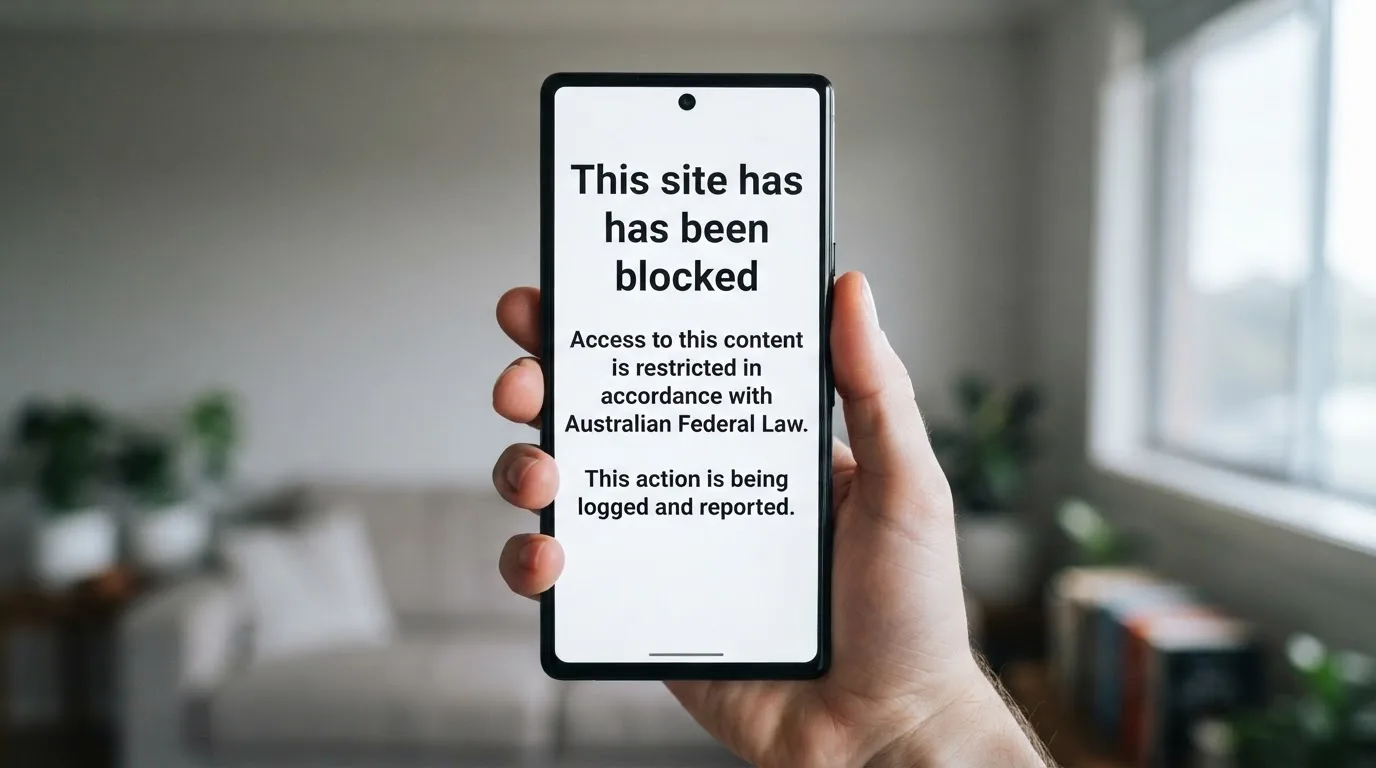
The ACMA’s process runs through three steps. First, an investigation, often triggered by a complaint or by the regulator’s own monitoring of the market, establishes that a service is offering a prohibited interactive gambling service to Australians. Second, the regulator issues a formal warning, naming the operator and the brand, and publishes it on the ACMA website. Third, if the service does not voluntarily withdraw from the Australian market, the regulator asks Australian internet service providers to block the domain.
A formal warning is not a blocking. It is a published notice. The brand is named, the parent company is named, the date is recorded, and the regulator notes what the brand offers. Many of the brands in the table above — RocketPlay, Woo Casino, National Casino, Jackbit — appear on the formal-warnings page as part of a chain of warnings against the same parent companies. Dama N.V., the parent of RocketPlay’s earlier incarnation, appears across multiple brands on the same warning. The list of warnings on the ACMA website is a who’s who of offshore casino groups.
The financial side of enforcement is asymmetric. The Australian rules apply to the provider. A player in Brisbane who places a deposit at one of these sites is not committing an offence. The player is, however, dealing with a provider that has no Australian licence, no Australian complaints body, and no obligation to honour a withdrawal. The Interactive Gambling Amendment (Gambling Reform) Bill 2026 passed Parliament on 19 August 2026, and its advertising and inducement measures commence on 1 January 2027. The law is not yet in force in 2026.
Why an Australian licence on the wall does not change the analysis
A common feature of the offshore sites is the display of an offshore licence — usually Curaçao, sometimes Anjouan, occasionally Malta. None of those licences carries Australian consumer-protection weight. The Interactive Gambling Act does not recognise them for online casino games. What an Australian player buys with a deposit at one of these sites is access to a service whose operator has been told, in writing, by the ACMA, that what it is doing is prohibited.
The parent companies on the warning list sit in clusters. Dama N.V., the parent behind RocketPlay (in its earlier incarnation), Level Up Casino, Woo Casino and Spirit Casino, has been warned four times since 2022. Consolutetish S.R.L. carries two brands on the most recent warning. Ryker B.V. carries two on its 2026 warning. Hollycorn N.V. carries two on a single warning. The pattern suggests a small number of operators cycling through brands faster than the regulator can block them.
The size of the offshore market the regulator is up against
H2 Gambling Capital’s 2025 report estimates that Australians lose about A$3.9 billion a year to illegal gambling sites, and that the share of gambling going through legal channels fell from 74% in 2021 to 64%. The figure is an estimate from a commercial gambling data provider, not an audited figure, and it covers all forms of illegal online gambling, not only casino games. The direction it points — that the illegal share is rising as legal wagers grow more slowly — is the one that has driven the Interactive Gambling Amendment Bill through Parliament.
A reader who wants to think about the comparison in dollars per adult can take the A$3.9 billion against an adult Australian population of roughly 20 million and reach a figure of around A$195 per adult per year. That is the order of magnitude of the money that is leaving the Australian licensed system for offshore operators. It is also the figure that the licensed operators, the state regulators and the federal government have been working to reduce.
The role of the Northern Territory regulator
A reader looking at the online wagering market in Australia — the licensed side, with Sportsbet, Bet365 and Ladbrokes — will meet the Northern Territory Racing and Wagering Commission more often than the Queensland or New South Wales regulators. The NTRWC regulates 52 of Australia’s online bookmakers, who are licensed in the Territory for tax reasons rather than because the operators are based there. The commission has no full-time staff and meets once a month in Darwin.
That arrangement has been under pressure. A bill introduced in April 2026, reported on the ABC, would reform the commission to give it a permanent secretariat and clearer enforcement powers. The current structure relies on a part-time chair and a small number of meetings a year to oversee 52 wagering operators with billions of dollars in annual turnover. The casino games that are prohibited in Australia do not pass through this regulator at all — they are not licensed anywhere — but the licensed wagering side does, and the difference between the two is the regulatory backbone of the distinction the law draws.
The distinction matters for the punter because the licensed wagering operators are subject to Australian credit-card and crypto bans (in force since 11 June 2024, with penalties up to $247,500 for operators), to BetStop self-exclusion, and to the inducement rules that take effect on 1 January 2027. An offshore casino is not. The licensed wagering operator offers fewer products than an offshore casino — no slots, no live blackjack, no roulette — but it offers Australian consumer protection. A reader weighing one against the other is weighing two different product sets, not the same one in two regulatory settings.
Responsible gambling and player wellbeing
The Queen’s Wharf Brisbane casino operates under Queensland responsible-gaming rules, including mandatory break periods, mandatory pre-commitment on electronic gaming machines in Queensland from December 2023 onwards, and on-floor exclusion managed through the venue. Self-exclusion from the venue itself is processed through the casino’s responsible-gambling team and runs for periods of six months, one year, two years or life. The casino also trains staff in identifying problem-gambling behaviour on the floor.

The national tool for online wagering is BetStop, the National Self-Exclusion Register, launched by the ACMA on 21 August 2023. BetStop binds Australian-licensed online and telephone wagering services. It does not bind an offshore casino, because no offshore casino is Australian-licensed. It also does not bind in-venue gambling, which means a player who wants to self-exclude from the casino in Brisbane uses the venue’s own process rather than BetStop.
A reader considering self-exclusion should know what each register covers and what it does not. BetStop blocks the punter from logging in or placing a bet with any Australian-licensed online or phone wagering operator, for a chosen period. The casino’s own self-exclusion blocks entry to the casino floor for the same period. The two registers do not talk to each other. A player who self-excludes from the casino is not self-excluded online, and a player who registers with BetStop is not excluded from the casino. The combination, when it is wanted, has to be set up by the punter through both channels.
The help line that is open around the clock
The national Gambling Helpline on 1800 858 858 is free, 24 hours a day, and runs from the national counselling provider funded by state and territory gambling-harm-prevention funds. The ACT’s equivalent, the ACT Gambling Support Service, runs the same number for ACT residents and offers face-to-face as well as telephone and online counselling. In Queensland, Gambling Help Queensland runs its own line, and face-to-face counselling is available through several community organisations.
A reader who has reached the point of looking for a helpline has reached the point where the rest of this page stops being useful. The rest of this page is about how to choose a place to play. The help line is about whether to play at all. The two conversations are different. The help line treats the second one as the more important.
The physical casino in Brisbane, in detail
The Star Brisbane is the only licensed casino operating in Brisbane in 2026. It opened in staged form at the Queen’s Wharf precinct on 29 August 2024, replacing the Treasury Casino, which had operated in the heritage Treasury Building since April 1995 and closed on 25 August 2024. The Treasury at its peak held a three-level gaming emporium of 80 gaming tables and over 1,300 gaming machines, plus a hotel, six restaurants, five bars and a nightclub. The new venue is structured differently: the casino is one component of a multi-use precinct that includes residential apartments, retail, dining, a hotel and public spaces.
The licence position and what it means for a visitor
The Star Brisbane operates under Star Entertainment Group’s Queensland casino licence. The licence was the subject of the Gotterson review in late 2022, which found the group unsuitable to hold the licence on anti-money-laundering and disclosure grounds. The Queensland Government fined the group $100 million on 9 December 2022 and deferred a 90-day suspension of the Treasury Brisbane and Star Gold Coast licences to 1 December 2023. The remediation period was followed by the closure of Treasury Casino and the opening of the new venue.
The licence condition is not a closure order. The casino continues to operate. The condition is the regulatory overlay under which it operates — heightened reporting, ongoing suitability review, and the standing possibility of further sanctions if remediation is judged incomplete. A visitor walks into a venue that is licensed and operating, with the regulator watching it more closely than the regulator watches most venues.
The dining and entertainment offerings at the precinct
The Queen’s Wharf precinct opened as a multi-use site with several bars and restaurants at precinct level, alongside the casino. The Star Brisbane’s own hospitality offering sits alongside the casino’s premium gaming rooms. The Treasury Casino’s old six-restaurant, five-bar and nightclub layout closed with the venue. Outside the precinct, the Brisbane CBD and South Bank carry a full range of dining options within walking distance.
For a visitor who is not gambling, the precinct carries a strip of public-facing venues — cafés, restaurants, bars — that the casino does not require entry to access. The precinct’s design aims at making the casino one component of a broader entertainment district, rather than the sole attraction. A partner who does not want to set foot on the gaming floor has somewhere to sit while a punter plays.
What a visitor needs to know before going
Entry to the casino floor requires photo identification. The minimum age is 18. Queensland’s responsible-gaming rules apply, including the venue’s own pre-commitment system on electronic gaming machines and the option to enter a venue-level self-exclusion. Dress standards at the casino’s premium rooms are higher than on the main floor, and the casino publishes its standards on its own pages. Parking is available at the precinct. Public transport connections run via the CBD bus and rail network, with the nearest CityCat ferry stops at North Quay and South Bank.
A reader who is not sure whether to go at all is the right person to call the Gambling Helpline on 1800 858 858 first. A reader who has decided to go is the right person to set a budget, a stop-loss and a stop-time before leaving home, and to take a photo ID plus a payment method that does not include a credit card — the venue does not accept credit for gambling under the in-venue rules that mirror the online ban.
Offshore sites and the practical experience of using them
A reader who is weighing the licensed casino against an offshore site should weigh the practical experience as well as the legal position. The legal position is that the offshore site is offering a prohibited service. The practical experience is what happens when the punter deposits, plays and tries to withdraw.
The deposit side is usually friction-free. Offshore casinos accept a wide range of payment methods, including cryptocurrencies, e-wallets and, in many cases, credit cards. The Australian ban on credit cards and crypto for online wagering does not apply to an offshore operator. The punter can move money in without an Australian bank interfering.
The withdrawal side is where the consumer protection gap shows up. A licensed Australian wagering operator is required to process withdrawals back to the original deposit method, within a stated timeframe, and to a verifiable Australian bank account. An offshore casino has no such requirement. Withdrawals can take days, weeks or longer, can require additional documentation that was not requested at deposit, can be capped at a maximum per week, and can be refused on the operator’s terms if a bonus was in play. A punter whose withdrawal is refused has no Australian complaints body to take it to. The Interactive Gambling Act targets the provider, but the provider is offshore.
A site that the ACMA has named in a formal warning is one that the regulator has examined and found to be offering prohibited services. The punter’s experience on the site is the experience the regulator has warned the punter about. The two are the same thing.
What the regulator’s record shows about site behaviour
The cluster of parent companies on the formal-warnings page is the regulator’s own map of the offshore market. Dama N.V. appears across multiple brands and dates. Hollycorn N.V. appears across a separate cluster. Consolutetish S.R.L. carries two brands on a single warning. The pattern is consistent with a small number of operators cycling through brands faster than the regulator can block them — a brand is warned, voluntarily withdraws from the Australian market on paper, and reappears under a new name.
The blocking rate is the order of magnitude at which the regulator clears the list. Across roughly six and a half years since November 2019, the ACMA has asked Australian internet service providers to block around 1,751 illegal gambling and affiliate marketing websites. The average runs at about 270 sites per year, or roughly 22 per month. A reader who sees a fresh block in the news has seen one round from a process that runs at this kind of rate — uneven across months, but steady across years.
What an offshore site does well
The same record explains why offshore sites are popular. They offer a wider game catalogue than the licensed Australian wagering operators, because the licensed operators do not offer casino games at all. They offer bonuses and inducements that the licensed operators are about to be banned from offering under the inducement rules taking effect on 1 January 2027. They offer payment methods — including crypto — that Australian rules now ban for licensed wagering. The product set is, from the punter’s perspective, more permissive.
The price of the permissiveness is the absence of Australian consumer protection. The punter is trading Australian recourse for a wider catalogue. Whether that trade is worth it is a decision the punter makes with their own money. The role of the regulator’s record is to make sure the punter makes it with their eyes open.
How this page ranks what it ranks
The plan behind this page set out to compare options for a player in Brisbane, and the comparison turns on what the law allows. The licensed casino is the only option the law allows. The offshore online casino is the option the law prohibits. A ranking that puts them in the same league, scored on the same dimensions, misrepresents the legal landscape. The comparison this page draws is therefore a comparison of one licensed option against a regulator-led record of prohibited options.
The first shelf — games on the floor at the licensed casino — is the shelf that answers the question most readers actually came with. What games does the Brisbane casino run, what do the rules look like, and what does a session cost in expected value. The second shelf — the shortlist of offshore sites — is the shelf that names what the ACMA itself has named. The third shelf — the fundamentals of the search — is the shelf that puts the two side by side and explains why the law treats them differently. The fourth shelf — the legal frame — is the shelf that puts the regulator’s record in numbers. The fifth shelf — responsible gambling — is the shelf that names the help available to a punter who has decided not to play at all. The sixth shelf — the physical casino in detail — is the shelf that takes a reader who has decided to go through the visit end to end.
A reader who wants to skip to the verdict can do so. The verdict is in the comparison, and the comparison is on the page. The licensed casino is the only option the law allows. Every offshore site that offers online casino games to a player in Australia is offering a prohibited service. The regulator has named the brands. The punter decides.
The casino and the city
Brisbane is a city of around 2.5 million people in the greater metropolitan area, sitting on the Brisbane River, with the central business district on the north bank and South Bank, the cultural precinct, on the south bank. The Queen’s Wharf precinct sits at the north bank, between the river and William Street, a few minutes’ walk from the central business district and from the cultural precinct across the Victoria Bridge.
The casino’s location in the CBD is the reason the page mentions the surrounding hotels and restaurants. A visitor who is staying in Brisbane for a few days and wants to play at the casino has the CBD’s hotel stock within walking distance. The Treasury Hotel, which was attached to the old Treasury Casino, closed in August 2024. The Queen’s Wharf precinct carries its own hotel offering, alongside residential apartments and serviced apartments that have come online in stages. The CBD’s other hotels — the Sofitel Brisbane Central, the Hyatt Regency Brisbane, the Hilton Brisbane, the Brisbane Marriott Hotel, the Four Points by Sheraton — sit within walking distance.
Dining in the CBD is concentrated at Eagle Street Pier, on the north bank a short walk east of the precinct, and at the South Bank parklands across the river. The casino’s premium rooms attach to their own hospitality offering. The Treasury’s old six-restaurant, five-bar and nightclub layout closed with the venue; the new precinct’s dining is structured differently, with precinct-level venues that the casino does not require entry to access.
A visitor who is not gambling can take a river ferry from North Quay to South Bank, walk the cultural precinct, eat at Eagle Street Pier, and never set foot on the casino floor. The Queen’s Wharf precinct’s design is meant to make that possible. Whether the casino succeeds in being one component of a broader entertainment district rather than the sole attraction is a question for the precinct’s longer operation.
What the next year looks like
The Interactive Gambling Amendment (Gambling Reform) Bill 2026 passed Parliament on 19 August 2026. Its advertising and inducement measures commence on 1 January 2027. In 2026, the year before commencement, the licensed Australian wagering operators will be preparing for the change. The offshore operators, which are not subject to Australian law, will not.
The legal landscape in 2026 is the landscape the law set in 2017 and has updated since. Online casino games are prohibited. The ACMA is enforcing the prohibition. The blocking list is past 1,750 websites. The licensed Australian wagering operators are subject to credit-card and crypto bans, to BetStop self-exclusion, and to advertising rules that are about to tighten. The licensed Australian casinos are subject to state-level regulation, with the Brisbane casino under heightened oversight as a result of the 2022 Gotterson review.
A reader who has decided to play in Brisbane has one option. A reader who has decided not to play at all has the Gambling Helpline on 1800 858 858, free, 24/7. A reader who is somewhere between the two has the rest of this page.
Frequently asked questions
What is the name of the main casino in Brisbane?
The Star Brisbane is the only licensed casino operating in Brisbane in 2026. It opened at the Queen’s Wharf precinct on 29 August 2024, replacing the Treasury Casino, which had operated in the heritage Treasury Building since April 1995 and closed on 25 August 2024.
Where is the Star Brisbane located?
The Star Brisbane sits at 1 William Street, Brisbane City, in the Queen’s Wharf precinct on the north bank of the Brisbane River, between the Victoria Bridge and the Go Between Bridge. It is a short walk from the central business district and from the South Bank cultural precinct across the river.
What is the minimum age to enter the casino?
The minimum age is 18 across all Australian licensed casinos, including the Star Brisbane. Photo identification is required at the door, and the venue operates under Queensland’s responsible-gaming rules, including venue-level self-exclusion and pre-commitment on electronic gaming machines.
Does the casino offer table games such as blackjack and baccarat?
Yes. The Star Brisbane runs blackjack, roulette, baccarat and craps on the main gaming floor, with poker running in a dedicated room. The Treasury Casino’s old layout of 80 gaming tables and over 1,300 gaming machines closed with the venue in August 2024; the new venue is structured differently, as one component of a multi-use precinct.
Are there hotels within walking distance of the casino?
Yes. The Sofitel Brisbane Central, the Hyatt Regency Brisbane, the Hilton Brisbane, the Brisbane Marriott Hotel and the Four Points by Sheraton Brisbane all sit within the CBD core, none more than fifteen minutes’ walk from the casino. The Queen’s Wharf precinct itself carries hotel and residential offerings that opened in stages from 2024 onwards.
Can Australians legally play at an online casino instead of visiting the casino in Brisbane?
No. The Interactive Gambling Act 2001 makes it an offence to provide online casino games to anyone in Australia, and no Australian jurisdiction issues a licence for it. The ACMA enforces the prohibition by issuing formal warnings, blocking domains and naming parent companies. Offshore sites accepting Australian players are offering a prohibited service, and players using them have no Australian consumer-protection recourse.
Written by the editors at Casino Payments Hub.