
Safe online casino Australia: how to read the marketing when the licence is offshore
“25 November 2026 · ACMA formal-warning register, igamingbusiness blocking-round coverage and bank card-issuer gambling-block pages, all checked against the published sources.”

“Safe” is the word offshore casino marketing reaches for first. Australians searching for a safe online casino in 2026 are reading that word the way it appears on the landing page: capitalised, in a green tick, beside a licence number that ends in a jurisdiction that does not regulate interactive gambling for Australians. The page below is about what sits behind that word — what an offshore licence actually covers, what the Australian Communications and Media Authority does about it, what an Australian-licensed bookmaker is required to do that an offshore casino is not, and which practical safeguards still work even before a player decides to step away. Eleven offshore brands the ACMA itself has acted against are walked through at the close, not as recommendations, and never as a place to play.
The starting position is uncomfortable. Australia does not licence online casino games, online pokies or in-play betting anywhere in the country. The Interactive Gambling Act 2001 makes the supply of those products to a person in Australia an offence, and no state or territory issues a licence for them. Any site that markets online pokies or live-dealer tables to Australians is operating outside the Australian framework by definition, even if it carries a Curaçao, Kahnawake or Anjouan seal on its footer. The seal is real; what it does not do is extend to Australians, because the Australian Act is aimed at the supply of those products, not at the player. The player is not prosecuted. The site is, and the Australian Communications and Media Authority has been steadily making that point for years.
The number worth keeping in mind sits at the top of the most recent published round: as reported in June 2026, the ACMA has asked Australian internet service providers to block 1,751 illegal gambling and affiliate marketing websites since the first blocking request in November 2019, and more than 230 unlicensed gambling services have left the Australian market since enforcement was strengthened in 2017. Those are not rounding numbers. They are the working output of a regulator that has spent almost a decade building a list, and the rate has not slowed.
Table of Contents
- Wellbeing before everything else: the responsible-gaming shelf
- How to tell whether an online casino claiming to be “safe” is licensed anywhere reputable
- Legality, plainly: the IGA, the ACMA’s tools and what each does
- The offshore “safe online casino” landscape in 2026
- The ACMA’s blocking rate, expressed as a band
- How a regulated Australian operator’s safety record actually differs from offshore marketing
- What someone who has been playing at an offshore casino and wants to stop should do
- Payment rails and what each does for an Australian reader
- Free support services worth keeping on a phone
- What the ACMA’s blocking pipeline looks like from outside
- Closing: what the marketing leaves out
- Frequently asked questions
Wellbeing before everything else: the responsible-gaming shelf
This shelf sits first on the page on purpose. The most useful thing a reader searching for a safe online casino can do in 2026 is not to read another review of an offshore brand. It is to set up the safeguards that work regardless of where they end up playing, or whether they keep playing at all. The two layers worth knowing about are the safeguards an Australian-licensed operator is required to provide — and which an offshore site is not — and the personal tools any Australian can switch on today through their own bank or phone.

Safeguards only an Australian-licensed operator must provide
BetStop, the National Self-Exclusion Register, has been live since August 2023. A registered exclusion binds every Australian-licensed online and phone wagering service, and the operator is required to close the account, refund the balance and stop marketing. The critical word is Australian-licensed. BetStop cannot exclude a player from an offshore casino, because no offshore casino participates in the scheme — and the moment a player signs up at one, the protection stops at the door of every Australian bookmaker but does not extend to the offshore site they have just opened. That is the practical shape of the gap between the licensed market and the offshore one.
The other safeguard is the credit-card ban. Since 11 June 2024, Australian-licensed online wagering services have not been permitted to accept payment by credit card or any other credit-related product, with penalties of up to A$247,500 for operators who do. The same restriction constrains the use of digital wallets that draw on a credit line, including Apple Pay when the underlying card is a credit card. What the rule does, in plain terms, is take one of the most damaging instruments in a gambling problem — credit-fuelled loss-chasing — off the table for the licensed market. An offshore casino is not subject to that ban, which is why many of them still ask for a credit card or a crypto deposit on the cashier page.
Safeguards any Australian can switch on personally
The Australian banks that have built gambling blocks into their apps do not wait for the player to be a customer of a licensed operator. Westpac’s gambling block works at the card level: when it is on, the issuing bank refuses authorisation of any transaction flagged with the merchant category code for betting and casino gambling on an eligible personal credit or debit card. ANZ’s block, activated in the ANZ app, extends the same refusal to transactions that go through a digital wallet such as Apple Pay loaded on an eligible card, not only the physical card. Commonwealth Bank offers a comparable lock on eligible cards through the CommBank app. The pattern is the same in each case: the bank refuses the transaction at the network, regardless of the brand at the other end.
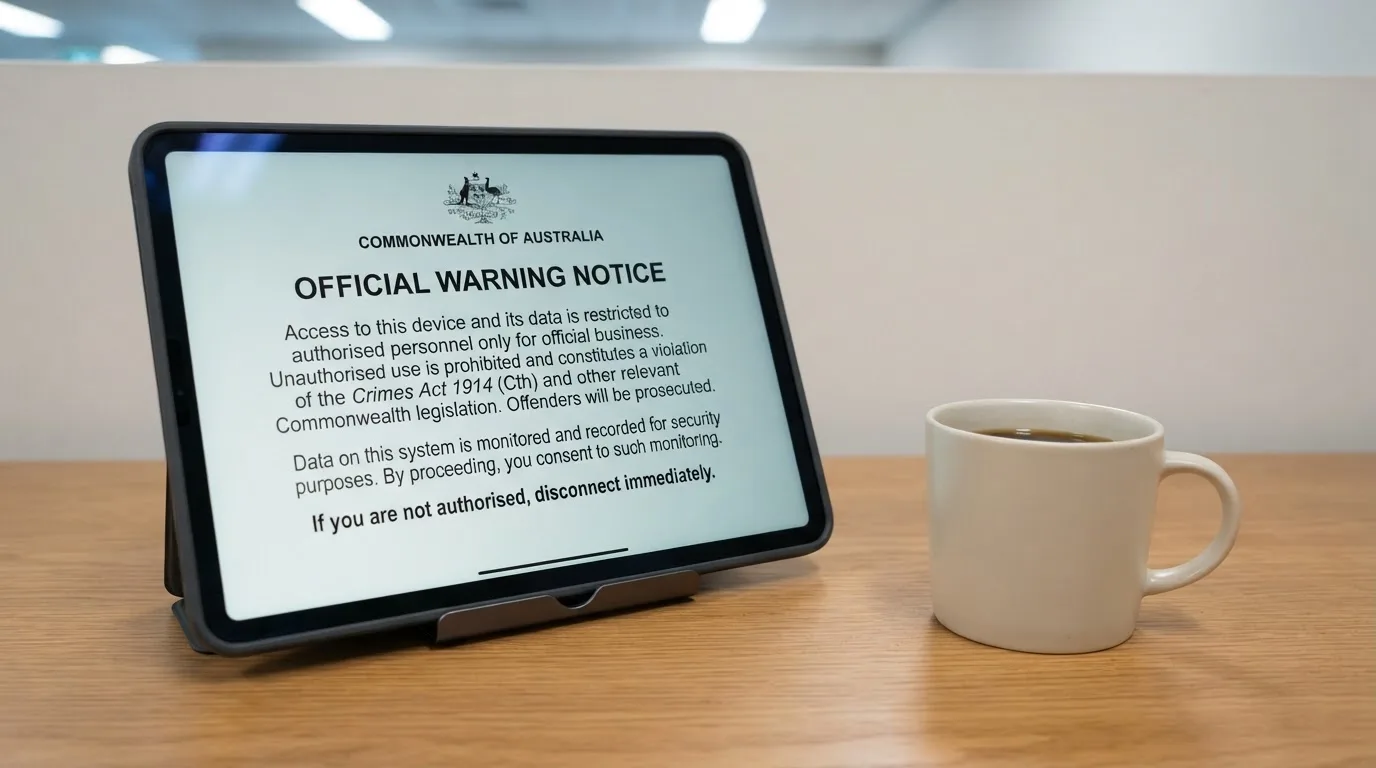
Two honest limitations come with these blocks, and the banks publish them themselves. ANZ states plainly that turning the block back off requires a 48-hour waiting period — a small built-in delay that stops a panicking impulse at 2 a.m. — and that the block may stop some non-gambling transactions in error and may miss some gambling transactions. Commonwealth Bank uses similar language. The point is not that the block is perfect; it is that even an imperfect block removes most of the credit-card and debit-card attack surface, and for the card-based deposit routes the offshore casinos prefer it removes most of them too. For anyone reading this page who has noticed their own play creeping, the most consequential minute of the week is the one spent switching on the block, not the one spent comparing welcome offers.
The free counselling side is just as important. The National Gambling Helpline on 1800 858 858 is free, 24/7 and runs chat and callback through Gambling Help Online. It is not a gambling operator and it is not a regulator; it is a counselling service. The number is the same whether the player is locked out of an Australian-licensed account, deep into an offshore session, or simply uneasy about how often the cashier is open.
The PayID question, named plainly
Search volume tells me a lot of the readers who land on this page typed something like “is PayID safe for casino deposits”. The answer needs the same directness. PayID itself is a layer of Australia’s New Payments Platform: by April 2025 more than 25 million PayID identifiers had been registered, and the platform’s owner brings together the Reserve Bank of Australia and the major banks. With Osko, a transfer between participating banks arrives in under a minute, 24/7, to a BSB and account number or to a PayID. The infrastructure is solid, regulated, Australian.
What PayID does not do is license the receiver of the payment. Australian Payments Plus, which runs PayID, warns that being asked to transfer money to a PayID on an illegal gambling site almost certainly means a scam site. The transaction is fast and the receipt is real; the casino at the other end is still an offshore operator the ACMA has acted against or could act against. Paying with PayID to a licensed Australian wagering service is fine. Paying with PayID to an offshore casino is faster than a card, not safer than a card, because the safety in this market is set by who holds the licence, not by how the money moves.
How to tell whether an online casino claiming to be “safe” is licensed anywhere reputable
The shelf above already showed what an Australian-licensed operator has to provide. The next shelf walks through what an offshore operator does instead. The signs are not subtle; they are just scattered across the footer, the terms page and the cashier, and a player who knows what to look for sees the same pattern on every offshore site.
The licence badge that does not reach Australia
Every offshore casino displays a regulatory seal. The honest ones name the regulator and the licence number; the rest display a logo and a generic claim. The reading to do is short. Take the licence at face value: a Curaçao licence is a real sub-licence issued to a real operator, but it does not extend to Australians, because the Interactive Gambling Act 2001 forbids the supply of online casino games to a person in Australia regardless of what the offshore regulator permits. Kahnawake, Anjouan and the various Malta seals operate the same way for Australians. The seal is not a lie; it just is not for this market.
What follows is straightforward. An offshore casino that asks an Australian for a deposit and accepts it is acting against the Australian Act. The player is not the target. The regulator’s target is the operator, and the regulator is the ACMA, and the ACMA’s standard tool is the formal warning, followed by an ISPs-blocking request, followed by delisting from search results where possible. The licence number on the footer does not save the operator from any of those steps; the Australian Act overrides it.
The other things in the footer
A serious offshore casino hides nothing in its footer; an unsafe one hides the same things every other unsafe one hides. The four to look for are: a registered address that does not resolve to a building, an “About” page with stock photography, a payments page that lists cryptocurrencies ahead of anything Australian and a dispute process that resolves to a regulator that has no power over an Australian player. None of these is decisive on its own. Two of them on the same site should be enough.
The payment page is the most telling. A licensed Australian bookmaker accepts debit card, bank transfer, PayID, Osko and BPAY, and nothing else. A site that wants a credit card, a crypto wallet and a third-party e-wallet before it will let an Australian deposit has chosen those rails for a reason — they sit outside the Australian credit-card ban and outside the traceable Australian banking system. That is a description of the operator, not a recommendation.
Where the regulator’s own record sits
The ACMA publishes every formal warning it issues against an offshore operator that has been supplying prohibited services to Australians, and it publishes the warning notice on its own site. The register is searchable by brand name and by operator name. Every brand on this page, including the eleven walked through below, has a formal warning notice on that register. Reading the register directly is a better use of ten minutes than reading another review of any of them.
For a quick benchmark, the published record is long. Dama N.V. has been the subject of multiple ACMA warnings covering six casino brands in May 2022, and further warnings over Woo Casino in March 2025 and Spirit Casino in May 2025. Bamboo Media was warned over Ignition Casino in July 2025, alongside Consolutetish S.R.L. over National Casino and Bizzo Casino — the latter also warned once before in 2022 under a different corporate owner. EOD Code SRL was warned over Instant Casino in February 2025, Sterplay Holding Ltd over Casino Intense in April 2025, Hollycorn N.V. over Sky Crown and Blue Leo in September 2022, Ryker B.V. over Jackbit and CasinOK in April 2026, and Pulsup Ltd over RocketPlay in March 2026. Each entry has a date and a corporate name. The dates matter; the names matter because Dama N.V., Consolutetish S.R.L. and others have been warned more than once under different brand banners.
The H2 Gambling Capital 2025 estimate, cited by industry reporting, puts Australians’ annual losses to illegal gambling sites at roughly A$3.9 billion, with the share of gambling flowing through legal channels falling from 74 per cent in 2021 to 64 per cent. That is not a number an offshore casino puts on its landing page; it is the number a regulator sees.
Legality, plainly: the IGA, the ACMA’s tools and what each does
The Interactive Gambling Act 2001, strengthened by the Interactive Gambling Amendment Act 2017, makes the supply of online casino games, online pokies and in-play betting to a person in Australia an offence. What is licensable is wagering on races and sport placed before the event, lotteries and keno, and in practice that wagering is licensed by the Northern Territory, which regulates 52 of Australia’s online bookmakers — including Sportsbet, Bet365 and Ladbrokes — for tax reasons; the commission itself has no full-time staff and meets once a month in Darwin. The minimum age is 18. Nothing about the framework is hidden; it is just spread across the Act and the regulator’s published guidance.
What the ACMA actually does
The Australian Communications and Media Authority has three working tools in the offshore space, and it uses them in order. The first is a formal warning: a published notice naming the operator, the corporate entity and the prohibited service, sent to the operator and posted on the ACMA’s site. The second is a request to Australian internet service providers to block the offending domain at the DNS or network level; that request goes to the ISPs and produces the user-facing block pages Australians see. The third is a referral to international partners where the operator is registered in a jurisdiction that has its own regulator, which is most of them. None of those tools is a raid. They are administrative and they accumulate. The cumulative output, as reported in June 2026, is 1,751 blocked sites and more than 230 operators that have withdrawn from the Australian market rather than face the next round.
The June 2026 round itself illustrates the scale. The ACMA asked Australian ISPs to block 12 more sites in a single announcement: 7Signs, ChromaBet, Donbet, Duospin, Freshbet, Slots Gem, Jacks Club, Lucky Start, Pointsbetz, Spinrise, Vinyl Casino and Wildsino. The names will be unfamiliar to most readers; that is the point. The offshore pipeline is deep and turns over quickly, and the regulator’s published blocking list is the working record of how deep and how fast.
What an Australian player is and is not at risk of
The IGA targets the supplier, not the player. No Australian reader of this page has been prosecuted for using an offshore casino; that is not how the Act works. The risk that matters sits on the player side and is practical, not criminal. There is no Australian consumer protection, no complaints body and no recourse if a withdrawal is refused. There is no BetStop coverage, no Australian-licensed credit-card ban and no Australian-licensed deposit limit. There is a balance on an account that can be made inaccessible by an ISPs-blocking request without notice, because the block is applied to the domain, not to the player.
That is the shape of the offshore “safe” claim. The site is safe in the sense that the games run and the cashier clears. It is not safe in the sense the word carries for an Australian reader, which is the licensed protections above it.
Reform with a start date
The Interactive Gambling Amendment (Gambling Reform) Bill 2026 passed Parliament on 19 August 2026. Its advertising and inducement measures commence on 1 January 2027. That is law with a start date rather than law already in force, and the 2026 page reads it as such. The practical effect on a reader today is to signal where the next round of enforcement will land — inducements are the marketing hooks offshore sites use to draw Australians in — but it does not change anything about playing at an offshore casino on the day this page is read.
Tax: only what is worth saying in one paragraph
Gambling winnings of a recreational player are not assessable income in Australia, and losses are not deductible, unless the person is carrying on a business of gambling. The honest version for a reader: most Australians who play at an offshore casino will not owe tax on winnings and will not be able to deduct losses. The honest version for the few who do this professionally: the ATO is the right place to check, and this page is not that place.
The offshore “safe online casino” landscape in 2026
What an Australian actually meets when they search for a safe online casino in 2026 is a marketing funnel that begins with a search result and ends on a cashier. The funnel is short and the brands inside it overlap. The eleven brands walked through below are the brands the ACMA itself has named in a formal warning, and they are walked through because the regulator has already done the work of identifying them — not because they belong on any shortlist. Each entry names the ACMA action, the date and the operator entity, and each entry carries the same plain conclusion: online casino games cannot be licensed for Australians anywhere, regardless of what licence the site displays.
How the ACMA action register reads at a glance
The table below walks through the brands in the order the ACMA first published a formal warning over them for the supply of prohibited interactive gambling services to Australians. Two columns the plan asked for and the operator cards deliver. The fifth column — whether the brand itself has a published relationship with the payment, counselling or regulator entities named in research — is included as the plan’s fifth matter; the entries reflect what the public sources actually carry, and nothing else.
| Brand | ACMA action and date | Operator named by the ACMA | Subject support |
|---|---|---|---|
| Sky Crown | Formal warning under the Interactive Gambling Act 2001, September 2022 | Hollycorn N.V. | No published support record |
| Blue Leo | Formal warning under the Interactive Gambling Act 2001, September 2022 | Hollycorn N.V. | No published support record |
| RocketPlay | Formal warning under the Interactive Gambling Act 2001, March 2026 (earlier May 2022) | Pulsup Ltd; earlier Dama N.V. | Industry listings only |
| Level Up Casino | Formal warning under the Interactive Gambling Act 2001, May 2022 | Dama N.V. | Industry listings only |
| Casino Intense | Formal warning under the Interactive Gambling Act 2001, April 2025 | Sterplay Holding Ltd | AUSTRAC, BetStop, industry listings |
| Instant Casino | Formal warning under the Interactive Gambling Act 2001, February 2025 | EOD Code SRL | EcoPayz, PayID listings only |
| Woo Casino | Formal warning under the Interactive Gambling Act 2001, March 2025 | Dama N.V. | No published support record |
| Spirit Casino | Formal warning under the Interactive Gambling Act 2001, May 2025 | Dama N.V. | No published support record |
| Ignition Casino | Formal warning under the Interactive Gambling Act 2001, July 2025 | Bamboo Media | No published support record |
| National Casino | Formal warning under the Interactive Gambling Act 2001, July 2025 | Consolutetish S.R.L. | AUSTRAC, BetStop, ACMA listings |
| Bizzo Casino | Formal warning under the Interactive Gambling Act 2001, July 2025 (earlier 2022) | Consolutetish S.R.L.; earlier TechSolutions | Industry listings only |
| Jackbit | Formal warning under the Interactive Gambling Act 2001, April 2026 | Ryker B.V. | No published support record |
The same row recurs under different brand banners because the corporate entities behind them have been warned more than once. Dama N.V. appears against three of the entries above. Consolutetish S.R.L. appears against two. The lesson is not that any one brand is uniquely bad; it is that offshore corporate groups move brands quickly when one of them has been named, and the ACMA’s register is the only place that tracks the chain. Reading the register directly is a better use of the same five minutes.
RocketPlay — warned twice, in two different ownerships
RocketPlay was first named in a Dama N.V. warning in May 2022, and then named again in March 2026 under Pulsup Ltd at RocketPlay at the more specifically Australian-looking domain. The change of operator name on the formal warning is the change of ownership at the corporate level; the site is the same product in the same market. The published record, from the ACMA’s own register, is two formal warnings over the same brand under two different owners in less than four years. The Australian-facing domain is the more interesting of the two because it tells the offshore operator knew exactly which country it was chasing.
Level Up Casino — Dama N.V.’s May 2022 cohort
Level Up Casino was one of six Dama N.V. brands in the May 2022 cohort that also included Bambet, Dazard, Wild Tornado and Cobra Casinos. Reading the cohort as a cohort is the useful move: a single corporate entity running six different banner brands is not running six different businesses, and the ACMA warning over one is the ACMA warning over all of them in substance, even where the formal warning names a subset.
Woo Casino — Dama N.V., March 2025
Woo Casino was added to the Dama N.V. register in March 2025. The intervening three years between the May 2022 cohort and the March 2025 warning did not produce a different operating model; they produced the same operating model under an additional brand. The ACMA’s March 2025 notice names Dama N.V. directly, which is the working form of the warning over Woo Casino and the wider Dama N.V. stable at that date.
Spirit Casino — Dama N.V., May 2025
Spirit Casino was the second Dama N.V. brand added in 2025, warned in May. Two new Dama N.V. brands in three months. The ACMA’s blocking request list moves faster than the regulator’s own press releases do, and the formal-warning register is where the cumulative picture becomes visible.
National Casino — Consolutetish S.R.L., July 2025
National Casino was one of two Consolutetish S.R.L. brands named in the July 2025 round. The published record on National Casino carries support listings through AUSTRAC, BetStop and the ACMA register itself, which is the cleanest signal of an Australian-facing product: an offshore casino that surfaces on the AUSTRAC threshold-transaction-report guidance or on the BetStop exclusion register is, by definition, surfacing on Australian-facing infrastructure it cannot be licensed to use.
Bizzo Casino — warned twice under two different owners
Bizzo Casino was first named in a 2022 warning under TechSolutions (CY) Group Limited and TechSolutions Group N.V., and was named again in July 2025 under Consolutetish S.R.L. Two warnings, two corporate owners, one brand. The 2022 warning came before the August 2023 launch of BetStop; the 2025 warning came after. The shift in ownership did not move the brand closer to an Australian licence, because there is no Australian licence to move closer to.
Ignition Casino — Bamboo Media, July 2025
Ignition Casino was named in the same July 2025 round under Bamboo Media. Bamboo Media is a smaller operator than the Dama N.V. or Consolutetish S.R.L. groups, and the warning is the first formal action on record against the corporate entity.
Instant Casino — EOD Code SRL, February 2025
Instant Casino was named in a February 2025 warning under EOD Code SRL. The published record carries listings for the brand with PayID and EcoPayz, both of which are real Australian-facing payment rails. An offshore casino that lists PayID at the cashier is, like National Casino, surfacing on Australian-facing infrastructure it is not licensed to use. The speed of an Osko transfer is the only speed advantage PayID offers; the regulatory status of the receiver is unchanged.
Jackbit — Ryker B.V., April 2026
Jackbit was named in an April 2026 warning under Ryker B.V., together with the related CasinOK brand. April 2026 is the most recent of the formal warnings covered in the research bank and the one that places the ACMA’s pace in the round covered by this page. The blocking-rate calculation below uses the published June 2026 round as the upper bound of the period.
Casino Intense — Sterplay Holding Ltd, April 2025
Casino Intense was named in an April 2025 warning under Sterplay Holding Ltd. The brand’s published record carries AUSTRAC and BetStop listings alongside industry directories, which is the same Australian-facing footprint as National Casino. The pattern repeats.
Sky Crown and Blue Leo — Hollycorn N.V., September 2022
Sky Crown and Blue Leo were named in a single Hollycorn N.V. warning in September 2022. They sit at the older end of the register and they sit together: two brands, one corporate entity, one warning. They are walked through together because the ACMA named them together and the reader should see them together.
The ACMA’s blocking rate, expressed as a band
The published figures allow a working rate. As of June 2026, the ACMA has asked Australian ISPs to block 1,751 illegal gambling and affiliate marketing websites since the first blocking request in November 2019. That is the running total. The condition under which the rate is meaningful is that the count includes affiliate marketing sites, which are not themselves casinos but which carry Australians from search results to cashier pages. Holding the condition explicit matters, because a reader who sees “1,751 casinos blocked” and “1,751 sites blocked including affiliate marketing” has read two different numbers from the same data.
The arithmetic is short. 1,751 blocked sites across the roughly six and a half years between November 2019 and June 2026 works out to a long-run average of roughly 270 sites per year, or just over five per week. That is the rate at which the regulator’s published blocking list has grown over the whole period. The most recent published round, of 12 sites in a single June 2026 announcement, sits well inside that average. It is neither an outlier nor a slowdown.
The honest version is a band, because the published data only carries the cumulative total and the dates of the first and most recent round. The lower bound is the long-run average of about 270 sites per year; the upper bound is the most recent annual round, which is in the same order of magnitude; the precise annual figure for 2026 itself is not yet published. The reader should hold “several hundred illegal gambling and affiliate sites a year, every year since 2019” rather than any single number, because that is what the published record actually supports.
The same band tells the reader what an offshore “safe casino” funnel looks like over time. New domains replace blocked ones faster than the regulator can name them, and the formal-warning register is the visible front of a pipeline that runs much wider behind it. H2 Gambling Capital’s 2025 estimate of A$3.9 billion a year in losses to illegal sites, with the legal-channel share falling from 74 per cent to 64 per cent between 2021 and 2025, is the size of the pipeline at the receiving end.
How a regulated Australian operator’s safety record actually differs from offshore marketing
The contrast is not subtle. It is structural, and naming each of its pieces is the useful move.
An Australian-licensed wagering operator is connected to BetStop, the National Self-Exclusion Register, and a registered exclusion is binding across the whole Australian-licensed market. An offshore casino is not. An Australian-licensed operator cannot accept a credit card or a credit-related product, and the same restriction reaches digital wallets loaded on credit. An offshore casino can. An Australian-licensed operator can be referred to an Australian complaints body and an Australian disputes process; an offshore casino resolves to a regulator that does not cover Australians. An Australian-licensed operator’s marketing is regulated under the inducement provisions that commence on 1 January 2027; an offshore casino’s marketing of welcome bonuses and reload offers to Australians has no Australian regulator attached to it. An Australian-licensed operator is on the register that AUSTRAC supervises for threshold-transaction-report compliance; an offshore casino is not, and an ordinary electronic bank transfer under A$10,000 is not subject to the threshold-transaction-report rule regardless.
The differences are not a list of preferences. They are the working difference between the market the IGA built and the market it cannot reach.
What someone who has been playing at an offshore casino and wants to stop should do
The first step is the bank block. Switching on the gambling block at Westpac, ANZ or Commonwealth Bank — or at whichever Australian issuer holds the cards most often used — removes most of the card-based attack surface, including Apple Pay on a credit card and most debit-card attempts. ANZ’s 48-hour cool-off before the block can be turned off again is, in this case, a feature.
The second step is BetStop, for the Australian-licensed bookmakers that have been used alongside the offshore casino. BetStop cannot reach an offshore casino, but it can close the Australian side of the play.
The third step is the National Gambling Helpline on 1800 858 858, free, 24/7, with chat and callback through Gambling Help Online. Counselling is the next step after the practical safeguards, and the order matters: bank block first, BetStop second, counselling third, because the bank block and BetStop work tonight and the counselling relationship builds over weeks.
The fourth step, for anyone who has a balance on an offshore account that is now blocked: there is no Australian recourse. The ACMA’s ISPs-blocking request removes access at the network level; the player does not see their balance again. The lesson is not that an Australian should not play at an offshore casino; the lesson is that an Australian who plays at an offshore casino has, by definition, no Australian recourse when the casino is blocked.
Payment rails and what each does for an Australian reader
The payment page is the most concrete diagnostic on any offshore casino. An Australian-licensed wagering operator accepts debit card, bank transfer, PayID, Osko and BPAY. An offshore casino will typically add credit card, cryptocurrency and one or two e-wallets. The shape of the cashier is the shape of the operator’s regulatory distance from Australia, and a reader who wants to see it does not need to read the terms page. The cashier is enough.
PayID sits at the centre of the Australian rails. With Osko, an Australian bank transfer between participating banks arrives in under a minute, 24/7 including weekends, addressed to a BSB and account number or to a PayID. The transfer shows the recipient’s name before the money is sent, which is one of the few safeguards built into the rail itself. The receiver matters more than the rail, and the receiver at an offshore casino is still an offshore operator. PayID cannot be a safety claim for the offshore space; it is a fast and traceable Australian payment rail whose existence does not change who the ACMA warns.
BPAY is the older Australian bill-payment rail, in operation since 1997 and offered through more than 140 banks and financial institutions. It runs through Australian Payments Plus, the same operator as PayID and Osko. BPAY’s payer enters a Biller Code and a Customer Reference Number, which is the bill-payer model rather than the wallet-to-account model. The point for the reader is that the licensed-market deposit routes are all Australian, all fast and all regulated; the offshore-market deposit routes are not, and the offshore casino that asks an Australian to deposit through a crypto wallet or a credit card has chosen those rails deliberately.
American Express sits in a curious position. The card was launched on 1 October 1958 and operates a three-party model that issues cards and processes transactions itself, unlike Visa and Mastercard’s four-party network. The Reserve Bank of Australia’s July 2025 review proposes removing surcharges only on eftpos, Mastercard and Visa, leaving American Express outside the proposed ban. The practical effect is that an Amex deposit at an offshore casino will be both fee-laden and outside any future Australian surcharge-cap regime, which is the kind of small detail that adds up to the larger picture: the offshore cashier page is built around payment rails that are deliberately outside Australian rules.
Free support services worth keeping on a phone
The National Gambling Helpline on 1800 858 858 is the headline number. It is free, 24/7, and it routes to Gambling Help Online, which runs chat and callback in addition to the voice line. State-level services sit alongside it: Victoria has its own Gambler’s Help line, New South Wales runs GambleAware, Queensland runs Gambling Help Queensland, and each state has its own face-to-face counselling network. None of these services is a gambling operator; all of them are free; all of them are useful regardless of whether the player is at an Australian-licensed bookmaker or an offshore casino.
For someone who is reading this page because they have already noticed their own play creeping, the practical first step is still the bank block. The counselling line is the next step, and the order is the point. The bank block works tonight; the counselling relationship builds the picture the player needs to make the longer-term decision; the offshore casino can be left open in a tab for as long as the player needs to step away from it, and the practical decision to step away does not need an audience.
What the ACMA’s blocking pipeline looks like from outside
The blocking pipeline has four steps. First, the ACMA investigates an offshore site on the basis of complaints, intelligence or its own monitoring. Second, it issues a formal warning to the operator and publishes the warning notice. Third, where the warning is not heeded, it asks Australian ISPs to block the domain. Fourth, the operator either withdraws from the Australian market or spins up a new domain and starts again. More than 230 unlicensed gambling services have left the Australian market since 2017. The number is real, but it includes services that withdrew in anticipation of a warning as well as services that withdrew after one.
The blocking-rate band above is the working throughput of this pipeline. The H2 Gambling Capital estimate is the working size of the offshore market the pipeline is built against. The two figures do not contradict each other; the second is the demand the first is built to absorb.
Closing: what the marketing leaves out
“Safe” is the word offshore casino marketing reaches for first because it works on the reader it is written for. The reader is an Australian who wants to play, who has heard that some casinos are safer than others, and who has not yet read the Interactive Gambling Act. The reader is offered a licence badge, a list of payment methods and a welcome bonus. The reader is not offered BetStop, the credit-card ban, the AUSTRAC regime, the IGA’s prohibition on supply, the ACMA’s formal-warning register or the H2 Gambling Capital estimate. The reader is not offered the cumulative blocking count or the rate at which new domains replace blocked ones.
The page above is the rest of the offer. An Australian who reads it and decides to play at an Australian-licensed bookmaker instead is using the safeguards the IGA built. An Australian who reads it and decides to play at an offshore casino has at least made the decision with the regulator’s record on the table. An Australian who reads it and decides to step away from both has used the bank block and the helpline, and the rest of the market will still be there if they decide to come back.
Frequently asked questions
How do I tell that an “online casino claiming to be ‘safe’” is not actually licensed anywhere reputable?
The fastest test is the cashier. An Australian-licensed operator accepts debit card, bank transfer, PayID, Osko and BPAY, and nothing else; an offshore site asking for a credit card, a crypto wallet or a third-party e-wallet has chosen rails outside Australian rules. The licence badge in the footer is real, but a Curaçao or Anjouan seal does not extend to Australians, because the Interactive Gambling Act 2001 forbids the supply of online casino games to a person in Australia regardless of what the offshore regulator permits.
Is a PayID deposit any safer than a card deposit at an offshore casino?
PayID is fast and traceable, with the recipient’s name shown before the transfer is sent, and it runs through Australian Payments Plus with more than 25 million registered identifiers. The receiver is what matters. Paying to a PayID at a licensed Australian wagering service is fine; paying to a PayID at an offshore casino is faster than a card, not safer than a card, because the safety in this market is set by who holds the licence.
Is it legal for an Australian to use an offshore online casino that markets itself as ‘safe’?
The Interactive Gambling Act 2001 prohibits the supply of prohibited interactive gambling services to a person in Australia. The Act targets the operator, not the player. The practical exposure sits on the player side: no Australian consumer protection, no complaints body, no recourse on a refused withdrawal, no BetStop coverage, and a balance that can be made inaccessible by an ISPs-blocking request without notice.
What should someone do if they have been playing at an offshore casino and want to stop?
Switch on the gambling block at the card issuer first — Westpac, ANZ and Commonwealth Bank all offer one through their apps. Register with BetStop for the Australian-licensed bookmakers, which BetStop can reach even where the offshore casino is unreachable. Call the National Gambling Helpline on 1800 858 858 for free, 24/7 counselling, with chat and callback through Gambling Help Online.
How does a genuinely regulated gambling operator’s safety record differ from an offshore casino’s own marketing claims?
An Australian-licensed wagering operator is bound by BetStop, the credit-card ban, the AUSTRAC threshold-transaction-report regime and Australian inducement rules from 1 January 2027. An offshore casino is bound by none of those, which is the difference between “safe” as the word is used on the landing page and “safe” as the word is used in the IGA.
What free support services exist in Australia for someone concerned about their own online casino use?
The National Gambling Helpline on 1800 858 858 is free, 24/7, with chat and callback through Gambling Help Online. State-level services include Gambler’s Help in Victoria, GambleAware in New South Wales and Gambling Help Queensland. None of them is a gambling operator; all are free; all take calls from people playing at offshore casinos as well as Australian-licensed bookmakers.