
Offshore casinos for Australian players in 2026: what the law actually says, and where it leaves you
Anyone searching for the best offshore casinos for Australian players in 2026 is, in practice, searching for something that does not legally exist in Australia. Online casino games and online pokies cannot be licensed for Australian residents under the Interactive Gambling Act 2001; no state or territory issues the licence that would let one. So this page does not hand over a working shortlist, because a “best of” list written for Australian readers would itself be a recommendation to break the law they sit under. What it does is lay out the gap between that search and what is on offer: the enforcement record the Australian Communications and Media Authority has built since 2017, the small set of lawful alternatives that do exist for someone in Australia, and the tools — most of them already installed in their phone — that a punter can use to take control of the activity. The eleven names below are not a ranking. They are the operators the ACMA itself has issued formal warnings over, because they offered prohibited services to Australians, and they are here so a reader can see who has actually been on the wrong end of that action.
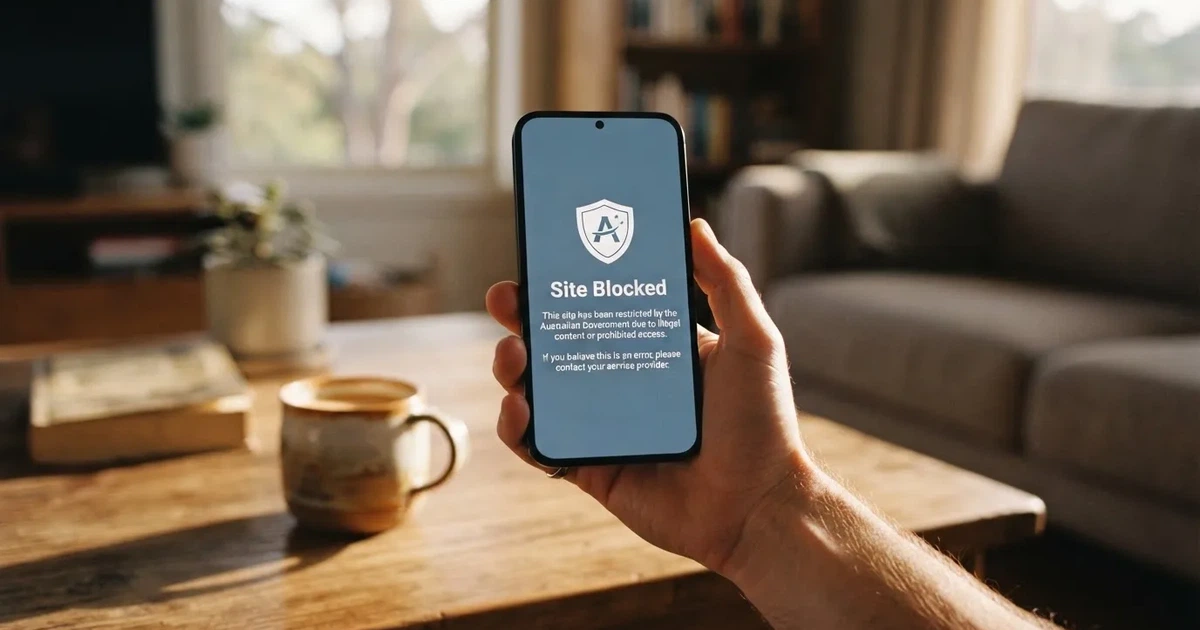
Current as of 8 November 2026, checked against the ACMA’s blocking and warning register.
Table of Contents
- Responsible play in Australia: what is actually available to a person here
- The eleven operators the ACMA has warned, and what that record looks like
- Why no Australian jurisdiction can license an offshore casino
- Enforcement: how the ACMA has been acting against offshore casinos
- What the lawful market looks like for someone in Australia
- Payment rails: what works, what gets blocked, what disappears
- Why BetStop does not cover offshore casinos
- Tax, winnings and what an offshore payout actually means
- A 2026 reform note worth being precise about
- What to take from this page
- Frequently asked questions
Responsible play in Australia: what is actually available to a person here
BetStop and the limits of national self-exclusion
BetStop, the National Self-Exclusion Register, has been live since August 2023 and is the closest thing Australia has to a single switch that takes a punter out of the licensed market. Registration is free, can be done online in around five minutes, and the minimum exclusion period is three months, with longer options up to a permanent ban. Once a person is on the register, every Australian-licensed online and phone wagering provider is required to refuse their bets, close their marketing channels and stop sending them bonus offers. That obligation binds roughly 100 licensed wagering and lottery operators around the country. The catch — and the one that matters for anyone considering an offshore site — is the word “licensed”. BetStop is enforced against Australian-licensed services. An offshore casino is not connected to it and is under no obligation to honour an exclusion, which is one of the reasons offshore play sits outside the entire Australian player-protection framework rather than alongside it.

Gambling blocks on Australian debit and credit cards
The other switch worth knowing about is the one Australian banks already offer in their apps. ANZ, Commonwealth Bank and Westpac all let a customer apply a gambling block to eligible cards through the banking app, with ANZ and CBA covering most personal credit and debit cards and Westpac operating at merchant-category-code level, refusing any transaction tagged as Betting/Casino Gambling on eligible cards. ANZ’s block also covers gambling transactions routed through a digital wallet such as Apple Pay on the same card, not just the physical card itself, which closes the obvious workaround. Turning the ANZ block off requires a 48-hour cooling-off period once it is on. None of these banks promises a complete block: Westpac and Commonwealth Bank both state openly that some gambling transactions might still get through and some non-gambling ones might be blocked in error. That is honest about the limits of merchant-category routing; it is not the same as a guarantee.
The credit-card ban and what it leaves open
Since 11 June 2024, Australian-licensed wagering services have not been allowed to accept payment by credit card or any other credit-related product, with penalties for providers up to A$247,500 per offence. The rule closes off a route that was a substantial driver of harm in the years before the ban, because it physically prevented people from gambling on borrowed money. What the rule does not do is reach an offshore operator sitting in Curaçao or Cyprus. Such a site will typically accept credit cards, debit cards, crypto, e-wallets and a handful of vouchers, and the Australian prohibition stops at the border. A player in Australia using any of those methods is not committing an offence under the Interactive Gambling Act — the IGA targets the provider, not the individual — but they have stepped outside every consumer-protection regime their own country built. There is no Australian complaints body to take a dispute to, no Australian regulator to chase a refused withdrawal, and no Australian court to enforce a judgement against an offshore company that simply stops replying.
The 24-hour helpline and what to do with it
The National Gambling Helpline on 1800 858 858 is free, runs around the clock and is staffed by counsellors who understand the Australian regulatory landscape. The online counterpart, Gambling Help Online, offers webchat and self-help tools and connects callers to face-to-face counselling in their state or territory. For a person who has been playing offshore and wants to stop, those are the first numbers to call, and they do not require the caller to have registered with BetStop first. The counselling is confidential and free, and it is the one piece of the Australian player-protection system that works regardless of where the gambling was actually happening.
The eleven operators the ACMA has warned, and what that record looks like
Why this is a warning list and not a ranking
Eleven operators sit in this section because each has been the subject of a formal warning from the ACMA for offering prohibited interactive gambling services to people in Australia. The list below is built from those warnings and nothing else — no affiliate rankings, no bonus terms, no welcome packages. The only “specifications” that matter here are the ones the regulator has put on the record: who runs the site, when the warning was issued, and what the ACMA’s published action covers. Anything else about these brands comes from marketing pages and listing sites whose interest in telling the truth about an operator the regulator has warned is, at best, mixed.
| Brand | ACMA action and date | Operator named by the ACMA | Where the brand surfaces elsewhere |
|---|---|---|---|
| RocketPlay | Formal warning, March 2026 | Pulsup Ltd | Gamblinginsider listings |
| Level Up Casino | Formal warning, May 2022 | Dama N.V. | Westpac gambling-block page |
| Woo Casino | Formal warning, March 2025 | Dama N.V. | — |
| Spirit Casino | Formal warning, May 2025 | Dama N.V. | — |
| National Casino | Formal warning, July 2025 | Consolutetish S.R.L. | ACMA register, AUSTRAC, BetStop |
| Bizzo Casino | Formal warning, July 2025; earlier 2022 | Consolutetish S.R.L.; earlier TechSolutions | Gamblinginsider listings |
| Ignition Casino | Formal warning, July 2025 | Bamboo Media | — |
| Instant Casino | Formal warning, February 2025 | EOD Code SRL | EcoPayz, PayID listings |
| Jackbit | Formal warning, April 2026 | Ryker B.V. | — |
| Casino Intense | Formal warning, April 2025 | Sterplay Holding Ltd | AUSTRAC, BetStop, Gamblinginsider |
| Sky Crown | Formal warning, September 2022 | Hollycorn N.V. | — |
The table is central to this analysis, but it is not the whole story. What the rows underneath it show, taken together, is the shape of the offshore market as it actually operates in Australia: a small number of operating companies re-using the same brands under different parent names, with the same enforcement problem following them across rebrandings. The Dama N.V. cluster alone has produced six of the eleven formal warnings, plus the two most recent of that subset. Read that as one operator in six hats, not six independent businesses.
RocketPlay
RocketPlay is the most recent name on the list: the ACMA issued a formal warning to Pulsup Ltd over the RocketPlay brand in March 2026, the same period in which the ACMA’s published blocking round was running. Earlier, the same brand had already been named in the May 2022 round of warnings that targeted six Dama N.V. casino brands. That earlier action is what licensing pages tend to leave out — they show the current parent company and stop. For a person looking up RocketPlay, the public record says it has now been warned twice, under two different parents, and that the most recent warning is the one that matters. Gamblinginsider’s directory lists it as a casino brand and nothing more; there is no Australian consumer-protection case to be made for it.
Level Up Casino
Level Up Casino is a Dama N.V. brand and was named in the same May 2022 batch as RocketPlay. The Westpac gambling-block page lists Level Up Casino alongside other offshore casino names as examples of merchants whose transactions the bank’s merchant-category-code filter is designed to refuse. That is the brand’s claim to relevance on this page: a major Australian bank treats it, by name, as a casino-gambling merchant for blocking purposes. It is a quiet kind of verdict, but it is the one that matters at the point a person tries to deposit.
Woo Casino
Woo Casino sits in the same Dama N.V. stable as Level Up, but its warning is more recent. The ACMA issued a formal warning over Woo Casino in March 2025, after the May 2022 batch had already covered its sibling brands. The gap between the two actions is the interesting part: three years is long enough for a brand to re-position itself in marketing and short enough that the underlying operator has not changed. Woo Casino is what the offshore market looks like when a parent company decides the earlier warning is a cost of doing business and carries on.
Spirit Casino
Spirit Casino was the second Dama N.V. brand warned in 2025, with the ACMA’s formal warning issued in May 2025. Reading the Dama N.V. cluster together — Bambet, Dazard, Level Up, Rocketplay, Wild Tornado and Cobra Casinos in May 2022, Woo Casino in March 2025, Spirit Casino in May 2025 — the same operator has accumulated three warnings over a four-year span. That is not a flaky regulator catching up with an unlucky brand; the ACMA’s consistent enforcement clearly signals that it sees no change in the operator’s conduct.
National Casino
National Casino sits under Consolutetish S.R.L., and the ACMA issued a formal warning over it in July 2025. The same July 2025 batch also covered Bizzo Casino under the same parent, and the ACMA’s action against TechSolutions in 2022 had already covered Bizzo under a different parent. National Casino’s listings in the ACMA register itself, the AUSTRAC materials and the BetStop pages make it one of the more “official-looking” entries in the table, in the sense that it surfaces across multiple Australian regulatory artefacts — but the regulatory artefacts all point in the same direction, which is that an Australian consumer dealing with it has no domestic recourse.
Bizzo Casino
Bizzo Casino has the longest paper trail in the table. The ACMA issued a formal warning to TechSolutions (CY) Group Limited and TechSolutions Group N.V. over Bizzo Casino in 2022, then issued a fresh formal warning to Consolutetish S.R.L. over Bizzo Casino in July 2025. Two warnings, two parents, one brand. Gamblinginsider still lists Bizzo as a casino brand. The interesting question for a reader is not whether the brand has changed hands; it is whether anything material about how it offers services to Australians has changed hands with it. The regulator’s repeated interventions serve as a clear indication of its position on the matter.
Ignition Casino
Ignition Casino is named in the same July 2025 batch as National Casino and Bizzo Casino, but under a different parent: Bamboo Media. The ACMA issued a formal warning to Bamboo Media over Ignition Casino in July 2025, alongside the Consolutetish S.R.L. action. Ignition Casino’s marketing has tended to position itself around poker and casino gaming for an international audience; the Australian angle is that the ACMA has now formally recorded its view that the offering reaches Australian residents in a way that engages the Interactive Gambling Act. There is no domestic listing surface for the brand, which means the ACMA action is effectively the only Australian-regulatory reference point.
Instant Casino
Instant Casino is the EOD Code SRL brand, and the ACMA issued a formal warning over it in February 2025. It is one of the more prominent “instant” branding plays in the offshore market — the marketing emphasises rapid registration and rapid withdrawal — and the regulatory record on it is that the ACMA has formally recorded its view that offering casino games to Australians is not a problem that fast onboarding fixes. EcoPayz and PayID both surface Instant Casino in their merchant materials, which is itself a data point about how the brand has positioned itself in payments infrastructure.
Jackbit
Jackbit is the most recent of the eleven: the ACMA issued a formal warning to Ryker B.V. over Jackbit and CasinOK in April 2026. Jackbit markets itself primarily around crypto and sports, and the ACMA action lands squarely on its casino offering rather than the sports side. There is no Australian listing surface for the brand beyond the regulator’s own action, which is the cleanest possible signal that the only Australian reference point for Jackbit is the one that says it is prohibited here.
Casino Intense
Casino Intense sits under Sterplay Holding Ltd and was the subject of an ACMA formal warning in April 2025. AUSTRAC, BetStop and Gamblinginsider all carry the brand name, which makes Casino Intense one of the better-trafficked entries on this list across the Australian-relevant material that exists — but again, the three Australian-angled listings all point to the same conclusion, which is that the brand sits outside the Australian licensing and self-exclusion system.
Sky Crown
Sky Crown is the Hollycorn N.V. brand on the list, and the ACMA’s formal warning over it dates to September 2022. The Hollycorn action covered Sky Crown and Blue Leo together, which is the same parent operating the same kind of service under two brand names. The September 2022 date makes Sky Crown one of the older entries in the table, but it has not gone away: the brand continues to operate, the parent continues to operate other brands, and Hollycorn’s appearance on this list reads as a marker of how durable the offshore casino offering has been across the period the ACMA has been building this register.
What the eleven together actually amount to
Read the rows as a single record and a clear picture emerges. Of the eleven formal warnings, four are dated 2025 or 2026, which is the period the ACMA’s blocking activity has intensified. Six of the eleven sit with two parents — Dama N.V. and Consolutetish S.R.L. — under which the same brands have been re-warned. Three are dated 2022 or earlier, which is the period the ACMA’s enforcement was still ramping up. None of the eleven has an Australian licence, because none of them can have one. None is connected to BetStop, because the register binds Australian-licensed services only. These eleven warnings form the ACMA’s definitive register of operators that have targeted Australians with prohibited services in 2026.
Why no Australian jurisdiction can license an offshore casino
The Interactive Gambling Act 2001 and what it actually prohibits
The Interactive Gambling Act 2001, as tightened by the Interactive Gambling Amendment Act 2017, makes it an offence for a provider to supply online casino games, online pokies or in-play betting to a person who is physically in Australia. The offence is the provider’s, not the player’s — the Act targets the company offering the service, not the individual clicking through. What is licensable in Australia is wagering on racing and sport placed before the event, lotteries and keno. In practice, the bulk of online sports bookmakers — Sportsbet, Bet365, Ladbrokes and the rest — are licensed by the Northern Territory Racing and Wagering Commission, which regulates 52 of the country’s online bookmakers from Darwin. That commission has no full-time staff and meets once a month, which is a fact that has produced its own reform debate, but it is also the licensing body for the licensed half of the Australian online market, and there is no separate Australian licence for online casino games anywhere on the system.
What the offshore licence that an offshore casino shows actually means
An offshore casino will display a licence — typically Curaçao, occasionally Malta, sometimes Anjouan — and that licence is real in the sense that some regulator somewhere has issued it. What it is not is an Australian licence. The Curaçao regime does not require the operator to honour Australian consumer law, does not give an Australian player recourse to a Curaçao-based dispute body at any sensible cost, and does not commit the operator to the responsible-gambling standards BetStop enforces. A licence displayed at the bottom of a homepage is a marketing artefact; it is not an answer to the question of whether the offering is lawful in Australia, which it is not.
The credit-card ban as it actually applies to offshore sites
The credit-card ban that came into force on 11 June 2024 binds Australian-licensed wagering services, with penalties for providers up to A$247,500 per offence. An offshore casino is not an Australian-licensed service and is not bound by the rule. From a player’s point of view, that means an offshore site will typically accept credit cards, debit cards, e-wallets and cryptocurrency, none of which the Australian credit-card ban touches at the source. The point of the ban from the Australian side is to stop licensed operators offering credit-funded gambling; the point of an offshore site is to be the place licensed operators cannot be. The two are designed around each other, and a player choosing between them is choosing between two different regimes with very different levels of consumer protection.
Enforcement: how the ACMA has been acting against offshore casinos
The blocking record since 2017
The ACMA began directing Australian internet service providers to block illegal gambling websites after enforcement was strengthened in 2017. By the ACMA’s own published figure, reported in June 2026, a total of 1,751 illegal gambling and affiliate-marketing websites had been blocked since the first blocking request in November 2019. Over the same period, more than 230 unlicensed gambling services had left the Australian market — pulled out, blocked, or otherwise stopped operating here. The blocking register is the operational record; the exits are the cumulative effect. A person in Australia trying to reach one of these sites today is, depending on their ISP, likely to find it already blocked at the DNS level, and the blocking list is the thing that has actually moved over the last nine years.
The June 2026 blocking round
The round reported on 26 June 2026 added another 12 websites to the blocking register: 7Signs, ChromaBet, Donbet, Duospin, Freshbet, Slots Gem, Jacks Club, Lucky Start, Pointsbetz, Spinrise, Vinyl Casino and Wildsino. Twelve sites in one round is a useful illustration of the pace at which the market replenishes itself. Each name on that list is a brand a reader is likely to come across in an affiliate review somewhere, and each is now on the Australian end of an ISP-level block. The blocking-rate arithmetic that follows uses the published 1,751 figure and the November 2019 first-blocking date; a reader who wants to do the same calculation against the next published round can rerun it against the new totals.
How the blocking rate actually moves
Using the ACMA’s own figures — 1,751 sites blocked since the first blocking request in November 2019, with the most recent reported round running into June 2026 — the underlying pace works out at a band in the order of 250 to 300 sites blocked per year across the years since enforcement was strengthened in 2017, with the most recent round landing at twelve sites in a single published batch. The exact figure moves with each round; what does not move is the relationship between blocking and the rate at which new brands appear. The blocking-rate band is the cumulative effect of a regulator playing a long game against an industry whose incentive is to keep launching new domains, and the arithmetic above shows how that game has actually been scoring over the period the register exists.
Formal warnings and what they actually do
A formal warning under the Interactive Gambling Act is the ACMA’s first formal step against a provider. It puts the operator on notice that the ACMA considers its offering to engage the Act, and it is published on the regulator’s website with the operator’s name and the date. The warning itself does not block the site; what it does is create the published record on which later blocking and civil penalty action can rest. The eleven brands in the table above are the ones for which that record exists; the rate at which the ACMA adds to it has been steady enough that a reader looking at the table in early 2026 is looking at a snapshot of an enforcement pattern that is still being added to.
What the lawful market looks like for someone in Australia
Licensed sports and racing wagering
The lawful Australian market for online wagering is racing and sport, placed before the event. Operators like Sportsbet, Bet365 and Ladbrokes are licensed by the Northern Territory Racing and Wagering Commission and are subject to the Australian credit-card ban, the BetStop exclusion register, the Australian Consumer Law and the responsible-gambling code that the licensed industry has signed up to. Deposits are debit card, bank transfer, PayID, Osko and BPAY. Withdrawals go back through the same rails. The product is narrower than the offshore offering — there are no online pokies, no online roulette, no online blackjack — but it is the product that sits inside the Australian regulatory system rather than outside it.
Pokies and casino gaming at licensed venues
For pokies and casino games, the lawful venue in Australia is a licensed club, hotel or casino. Every state and territory has its own regulator and its own mix of licensed venues; the Crown complex in Melbourne, The Star in Sydney, the Treasury casino in Brisbane and the Adelaide Casino are the largest of the land-based operators, and there is a long tail of licensed clubs and hotels that operate poker machines under state-level machine-limits and self-exclusion schemes. These are physical venues with physical regulations; they are not online, but they are the legal answer to the question of where pokies can be played by someone in Australia.
Lottery and keno
Lotteries and keno are licensed separately in each state and territory — the Lott operates the national Tatts, Powerball and Oz Lotto draws, and state-based operators run keno in venues and online where licensed. These are the only casino-adjacent products that can lawfully be offered online to Australians, and the same consumer protections apply as for licensed sports and racing: Australian Consumer Law, the credit-card ban, the responsible-gambling code, and BetStop exclusion for any online channel offered.
Payment rails: what works, what gets blocked, what disappears
PayID, Osko and the New Payments Platform
PayID is the addressing layer that sits on top of Australia’s New Payments Platform. A PayID can be a mobile number, an email address or an ABN, and paying to one shows the name of the account holder before the transfer is sent — a feature that the operator of the platform itself points out makes a request to transfer to a PayID on an illegal gambling site a strong signal of a scam site. Over 100 Australian financial institutions offer PayID-based instant transfers, and more than 25 million PayID identifiers had been registered on the platform as of April 2025. Osko, the instant-transfer layer that sits underneath, gets a bank-to-bank transfer between participating banks to the recipient in under a minute, 24/7, including weekends and public holidays. The NPP itself is owned by Australian Payments Plus, a non-profit whose 13 shareholders include the Reserve Bank of Australia and the major banks, and the platform’s monthly outages are required to be kept under two minutes. The platform is the most reliable real-time payments infrastructure in Australia, and it is one that BetStop-affected accounts can still transact through for any non-gambling purpose.
BPAY and bill payments
BPAY has been running since November 1997 and is the bill-payment layer that sits inside the online banking of over 140 Australian financial institutions. A BPAY payment is keyed by a Biller Code and a Customer Reference Number, both of which are printed on the bill itself. It is the same rail that licensed Australian wagering operators use to take deposits from customers who prefer not to use a card, and it is the rail that licensed utilities, insurers and government agencies use to take payments generally. From an offshore-casino point of view, BPAY is a closed lane: an offshore site is not a BPAY biller, and there is no path through which an Australian customer can BPAY their way onto an offshore casino’s deposit page.
Apple Pay, Google Pay and the digital-wallet layer
Apple Pay, Google Pay and Samsung Pay together accounted for around 45% of all card payments in Australia by number at the end of 2025. Apple does not charge consumer fees for using Apple Pay; any surcharge on a transaction comes from the merchant’s own processing costs. Limits and PIN requirements on Apple Pay transactions are set by the card issuer or the merchant, not by Apple itself. The relevant point for a person playing offshore is that the Australian credit-card ban does not just close off cards; it constrains gambling use of linked digital wallets. ANZ’s gambling block, activated in the ANZ app, blocks gambling transactions made through Apple Pay on the eligible card, not just the physical card. The digital-wallet layer inherits the rules of the card underneath it, and that is the way the bank-side controls work.
What the Australian deposit rails mean at the offshore end
An offshore casino does not run on PayID, Osko or BPAY. The deposit page on an offshore site will offer Visa, Mastercard, sometimes American Express, an e-wallet or two, and increasingly a handful of cryptocurrencies. None of those routes is a closed lane the way BPAY is. The transaction gets to the offshore merchant through a card network or a crypto rail, and the question of whether the transaction goes through at the bank end is a question of whether the bank’s gambling block — ANZ’s, CBA’s, Westpac’s — is on. With no block, the transaction will generally go through. With a block on, it is the bank, not the regulator, that has done the closing. The architecture is consistent with the credit-card ban: it keeps the licensed rails clean and lets the offshore market run on the rails the ban does not reach.
Why BetStop does not cover offshore casinos
BetStop’s authority runs from the Interactive Gambling Act 2001 and the National Self-Exclusion Register, and its enforcement power binds every Australian-licensed online and phone wagering service. Roughly 100 licensed wagering and lottery operators are connected to the register, and exclusion under BetStop is binding on each of them. An offshore casino is not an Australian-licensed service and is not connected to the register. The exclusion has no mechanism that would force an offshore operator to honour it, and the offshore operator has no incentive to do so. For a person who has registered with BetStop, the practical effect is that they cannot bet with any licensed Australian operator for the duration of their exclusion, but they can still create an account with an offshore casino. The exclusion closes the lawful door and leaves the unlawful door open, which is the reverse of what the registration is trying to achieve for someone in active harm.
Tax, winnings and what an offshore payout actually means
For a recreational gambler in Australia, gambling winnings are not assessable income and gambling losses are not deductible. That sits in section 6-5 of the Income Tax Assessment Act 1997 and is the position the ATO takes for a person who is not carrying on a business of gambling. The position changes for someone who is carrying on a business of gambling, and the line between recreational play and business play is the kind of thing a person with significant winnings should check with the ATO directly rather than work out themselves. For most readers of this page, the tax side of an offshore payout is the same as the tax side of a domestic payout: there is no tax to pay on the win, and there is no deduction for the loss.
A 2026 reform note worth being precise about
The Interactive Gambling Amendment (Gambling Reform) Bill 2026 passed Parliament on 19 August 2026. Its advertising and inducement measures commence on 1 January 2027. That is law with a start date; it is not yet in force on a page read in 2026, and the page should not describe it as if it were. The bill targets the marketing and inducement side of the licensed Australian wagering industry, and the start date is what determines whether a measure has legal effect in any given week. Read in 2026, it is an incoming reform that licensed operators are preparing for, not a rule they have yet to comply with.
What to take from this page
The best offshore casino for Australian players in 2026 is not a brand. It is a recognition that the search itself is looking for a category that the Interactive Gambling Act 2001 has closed off. The eleven operators in the table above are the ACMA’s published record of who has been offering that category to Australians in recent years; the blocking register is the operational record of who has been stopped from doing so; the credit-card ban is the rule that closes off the licensed payment rail. What is open to a person in Australia is licensed sports and racing wagering under the Northern Territory Racing and Wagering Commission, licensed pokies and casino gaming in physical venues, licensed lottery and keno, BetStop for self-exclusion, the 1800 858 858 helpline for support, and the gambling blocks already available in the apps of ANZ, CBA and Westpac for anyone who wants to take a step before any of those systems kicks in.

The page is honest about the gap because the gap is real. A reader who arrived looking for a brand to play at offshore has been pointed at the regulator’s own record of what offshore play looks like, and a reader who arrived looking for help has been pointed at the help lines and the self-exclusion register that actually work. Neither reader has been handed a recommendation that would put them on the wrong side of Australian law.
Frequently asked questions
What makes a casino offshore rather than Australian-licensed?
An offshore casino is one that holds a licence from a regulator outside Australia — typically Curaçao, Malta or Anjouan — and offers online casino games or pokies to people who are physically in Australia. No Australian state or territory issues a licence for online casino games or online pokies, so any casino offering those products to an Australian player is, by definition, offshore. The licence displayed at the bottom of an offshore casino’s homepage is real, but it is not an Australian licence and does not bring the operator under Australian consumer law.
Does the ACMA block offshore casino websites for Australian users?
Yes. The ACMA has been directing Australian internet service providers to block illegal gambling and affiliate-marketing websites since 2017, and the cumulative blocking total reached 1,751 sites as reported in June 2026. The blocking happens at the ISP level, which means a person trying to reach one of the listed sites from a typical Australian home or mobile connection will generally find it unreachable through normal means. New blocks are added in published rounds, with twelve sites added in the round reported on 26 June 2026 alone.
Is it legal for an offshore online casino to accept Australian players?
No. Under the Interactive Gambling Act 2001, as strengthened in 2017, it is an offence for a provider to supply online casino games, online pokies or in-play betting to a person in Australia. The offence is the provider’s, not the individual player’s — the Act targets the company offering the service, not the person clicking through — but the prohibition is the reason no Australian regulator issues a licence for that product. An offshore casino offering those products to an Australian player is breaking Australian law at the provider end, and an Australian player using the site is dealing with a provider that has no Australian consumer-protection obligations.
What enforcement action has the ACMA taken against offshore casino operators?
The ACMA’s enforcement record splits into two streams. The first is formal warnings, which put named operators on notice that the regulator considers their offering to engage the Interactive Gambling Act; the eleven operators in the table on this page are the ones for whom such warnings are on the public record, dated from 2022 through to April 2026. The second is ISP-level blocking, which the ACMA directs once a site has been assessed as illegal; the published blocking total reached 1,751 websites as of June 2026. More than 230 unlicensed gambling services have left the Australian market across the same period.
Why doesn’t BetStop cover offshore online casino sites?
BetStop is the National Self-Exclusion Register, and the obligation it enforces binds Australian-licensed online and phone wagering services. Roughly 100 of those operators are connected to the register, and any of them must refuse the bets, marketing and bonuses of a registered person for the duration of the exclusion. An offshore casino is not an Australian-licensed service and is not connected to the register. The exclusion does not reach it, and the offshore operator has no Australian-law incentive to honour the registration voluntarily. That is why registering with BetStop closes the lawful door while leaving the unlawful one open, and it is why a person registering with BetStop is usually advised to combine the registration with bank-side gambling blocks.
What should someone do instead of chasing a new offshore casino after a bad experience?
Three steps, in roughly this order. The first is to call the National Gambling Helpline on 1800 858 858, free and 24/7, or to start a webchat at Gambling Help Online, where a counsellor can talk through what happened and connect the caller to face-to-face support in their state. The second is to register with BetStop if the person is not already on it; the minimum exclusion period is three months and the registration is free. The third is to switch on a gambling block in the app of ANZ, CBA or Westpac, which closes off the bank side of the next attempted deposit before it gets to the merchant. None of those steps reaches an offshore casino that is already operating outside the Australian regime, and that is the case for combining them rather than choosing one.