
RTG casinos in Australia: where the ACMA has acted, and what’s actually licensed
Every casino listed below as an “RTG casino Australia” is, by Australian law, an unlawful offer. The Interactive Gambling Act 2001 prohibits online casino games and online pokies from being supplied to anyone in Australia, and that rule has not been relaxed by the page’s framing of the market. What follows is the picture an Australian runs into when typing a search like this one: offshore sites carrying Real Time Gaming software, formal warnings issued by the regulator over many of them, and a licensed land-based market in the states and territories that runs to a different set of rules entirely. Some of those RTG-titled sites have already been blocked at the ISP layer; the rest stay reachable because the blocking list updates in rounds and because offshore operators rebrand when one domain falls.
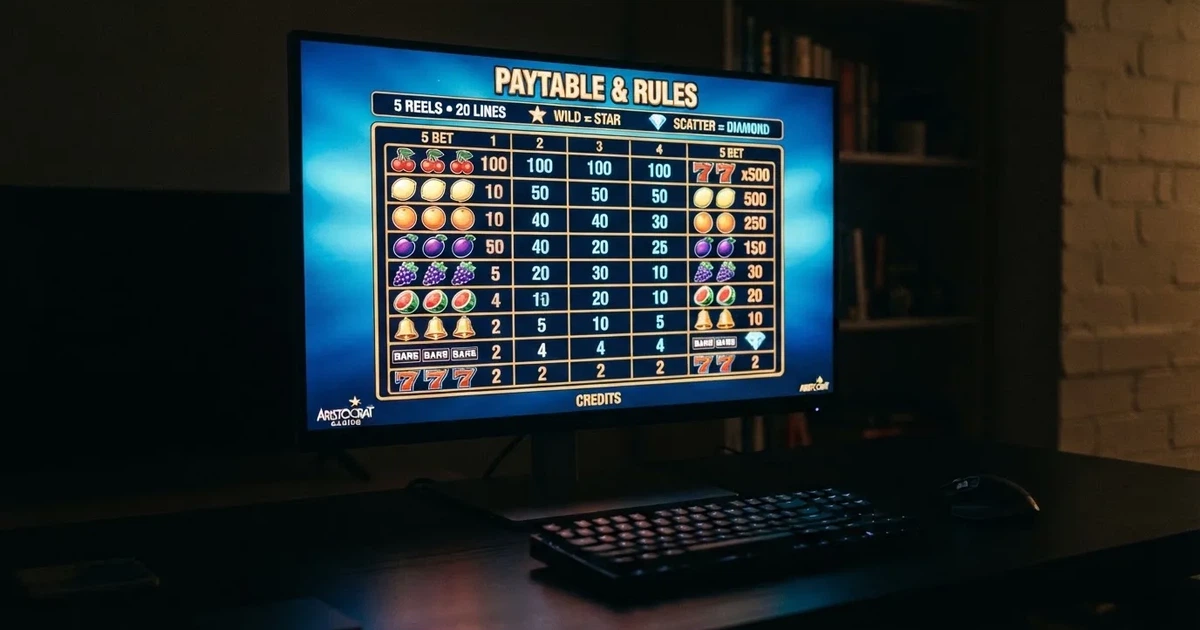
Data current as of 8 November 2026 against the Australian Communications and Media Authority’s published register of formal warnings and blocking requests.
Table of Contents
- What RTG actually is, and why the offshore sites cluster around it
- The legal frame: what the IGA actually prohibits
- The Northern Territory licensing picture — and why it surprises people
- Responsible gambling supports that apply — and where they stop
- The RTG-style mechanics worth knowing about
- How a comparison of “RTG casinos” actually gets built — and why it shouldn’t be
- The brands the ACMA has formally warned
- The blocking-rate picture: how fast the ACMA is catching up
- How to check whether any RTG-style site reaches an Australian reader
- What this means for someone looking at an offshore RTG offer today
- Frequently asked questions about RTG casinos in Australia
What RTG actually is, and why the offshore sites cluster around it
Real Time Gaming is a long-running slot studio, founded in Atlanta in 1998 and moved to Heredia, Costa Rica, between 2007 and 2008. Hastings International, a Curaçao-registered company, acquired the developer in January 2007. The studio’s products — slot machines, video poker, a handful of table games — get distributed through offshore casino brands rather than directly to players, which is why an Australian searching for “RTG casino” lands on domain names registered in Curaçao and run from places like Cyprus, Costa Rica or, increasingly, a shell office in an EU state.

The economics that push offshore sites toward RTG are simple. The studio does not allow operators to alter payout settings on its slot and video poker games, which removes one of the historical grifts in the white-label casino business (operators quietly turning down RTP). It also caps progressive jackpots at roughly A$50,000 per game, which is not a marketing line — it is the reason payout screenshots involving RTG software tend to top out in the tens of thousands rather than the millions. Together those two design choices make RTG software attractively “clean” for a regulator-facing operator that wants to point at a third-party audit and not at its own house.
That same history is also the reason the offshore RTG ecosystem keeps reappearing in the ACMA’s warning list. Real Time Gaming was the software stack on Ozwin Casino, an Australian-facing brand later blocked by the regulator under the Interactive Gambling Act. Caribbean 21, an RTG table game, was removed from the studio’s portfolio entirely after a 2004 incident in which a player turned a A$1,000 deposit into roughly A$1.3 million at the Hampton Casino; the game ended up capped at a maximum bet of A$5 before withdrawal. The names of the players and the operators change, but the integration between RTG and the offshore white-label market has not.
The legal frame: what the IGA actually prohibits
The product at the centre of a search like “RTG casinos Australia” is illegal to supply, regardless of who the offshore licence says it is. The Interactive Gambling Act 2001, as tightened by the Interactive Gambling Amendment Act 2017, makes it an offence to provide online casino games, online pokies, or in-play betting to a person physically in Australia. No state or territory in Australia licenses an online casino product — not New South Wales, not Victoria, not the Northern Territory. What is licensable is wagering on racing and sporting events placed before the event, lotteries and keno, and online lotteries under tightly drawn state rules. Everything else, “RTG casino” included, sits outside the licensing perimeter.
Enforcement runs through the Australian Communications and Media Authority. The ACMA investigates complaints, issues formal warnings under section 254 of the Act, and can direct Australian internet service providers to block illegal services. The most recent blocking round, reported on 26 June 2026, asked ISPs to block another twelve domains — 7Signs, ChromaBet, Donbet, Duospin, Freshbet, Slots Gem, Jacks Club, Lucky Start, Pointsbetz, Spinrise, Vinyl Casino and Wildsino. The same reporting round, citing H2 Gambling Capital’s 2025 figures, put total blocks since November 2019 at 1,751 websites and counted more than 230 unlicensed services that have left the Australian market since enforcement was strengthened in 2017. H2 also estimated that Australians lose about A$3.9 billion a year to illegal gambling sites, and that the share of gambling going through legal channels fell from 74% in 2021 to 64%.
The prosecution risk sits with the operator, not the player. The IGA targets the provider. An individual Australian punter does not face charges for opening an account on an offshore site, but they also pick up none of the protections a licensed product carries: no Australian complaint body if a withdrawal stalls, no requirement that the operator hold player funds in a segregated account, no recourse if a domain disappears overnight with the balance still on it. Several of the brands in the warning list below have been blocked once and re-emerged under a new name on the same RTG-style platform.
Payment rules that have closed off the easy routes
Since 11 June 2024, credit cards, credit-related products and digital currency have been banned as payment for licensed online wagering in Australia, with penalties up to A$247,500 for operators that breach the rule. The licensed deposit routes that survive are debit cards, bank transfer, PayID/Osko and BPAY. An RTG-styled site asking an Australian for a credit card or a crypto deposit is operating outside the Australian rules whether or not the marketing page claims to be licensed elsewhere. The credit-card and crypto bans do not, on their own, block an offshore site from accepting those methods — they make the offshore site and the licensed system sit in different payment universes, and they make a payment-method red flag a usable warning sign.
A 2026 reform that changes the advertising landscape
The Interactive Gambling Amendment (Gambling Reform) Bill 2026 passed Parliament on 19 August 2026. Its advertising and inducement measures commence on 1 January 2027, which makes the law a “passed, not yet in force” item on a 2026 page. Once it takes effect, the offshore RTG-style brand that advertises bonuses to Australian email inboxes will have even less cover than it does today. Between now and then the ACMA enforcement line above is what holds.
The Northern Territory licensing picture — and why it surprises people
| Feature | Licensed Venue (Pub/Club) | Offshore Site |
|---|---|---|
| Regulatory body | State/Territory Regulator | None |
| Minimum age | 18 | None |
| Complaint handling | State regulator | None |
| Responsible gaming | State self-exclusion | None |
Australia’s online wagering licences sit, surprisingly for many readers, in the Northern Territory. The Northern Territory Racing and Wagering Commission regulates 52 of the country’s online bookmakers — Sportsbet, Bet365 and Ladbrokes among them — under a licensing regime driven by Territory tax policy rather than by population. The commission runs without full-time staff and meets once a month in Darwin; its remit covers wagering services only, not casino products. The patch of territory licensing that does exist is wagering-shaped: pre-event betting, racing, sports. Not pokies, not blackjack, not a single RTG slot.
What this means for a search like “RTG casino Australia” is concrete: the licensed Australian online market does not include any product this page describes. The licensed venues that run RTG-style games — Clubs, hotels and casinos in New South Wales, Victoria, Queensland and elsewhere — do so on physical gaming floors under state-level regulation. The Queensland Office of Liquor and Gaming Regulation, Liquor & Gaming NSW, the Victorian Commission for Gambling and Casino Supervision and Casino Tasmania each maintain their own rules over machine numbers, return-to-player settings, opening hours and self-exclusion. An Australian in Sydney or Brisbane who wants to play a Real Time Gaming-style machine plays it on a licensed pub or club floor under state rules, or does not legally play it at all.
Responsible gambling supports that apply — and where they stop
The Australian responsible-gambling infrastructure is built around the licensed wagering and land-based environments, and that shows in what it covers.
BetStop, the National Self-Exclusion Register, has been live since August 2023 and binds every Australian-licensed online and phone wagering service. An Australian who wants to be excluded from placing bets across the licensed bookmakers registers once and the exclusion flows through to every operator. Offshore casinos and RTG-style sites are not connected to BetStop, so the register’s reach stops at the perimeter of the licensed market.
For a player who needs immediate support, the National Gambling Helpline runs 24/7 on 1800 858 858, free from any Australian phone. Chat is available through Gambling Help Online. State and territory counselling services — including BreakEven in the Northern Territory, GambleAware NSW and the various Victorian, Queensland and Western Australian face-to-face counsellors — take referrals from the national line. Each state and territory also runs its own self-exclusion register for land-based venues, the rules of which differ.
For an Australian specifically looking at offshore RTG-styled casinos, three habits cover most of what can be covered. First, treat any promotion arriving from an offshore domain as advertising that the IGA already prohibits — the regulation has not slowed the email flow. Second, recognise that placing a debit card or a PayID transfer to an offshore site routes a deposit outside the protections of Australian payment law. Third, recognise that the same offshore site that can be reached today may be on a blocking list tomorrow, and that the regulator cannot return a balance it never had. A reader who would rather not have those risks to manage is looking at licensed wagering, state-regulated pub and club play, or a simple decision to step back.
The RTG-style mechanics worth knowing about
A reader comparing “RTG casino” offers benefits from knowing what the studio’s products actually look like under the hood, because the marketing language is mostly interchangeable with any other modern slot studio. Several facts about RTG software recur across the offshore sites that carry it.
The studio does not give operators a payout-setting dial. Operators cannot quietly reduce an RTG slot’s RTP the way some white-label studios allowed a decade ago. That makes the published paytable on any RTG game a closer-to-truth read than it would be on a more permissive platform. The same structural choice is also why offshore RTG sites run slightly more homogenously than, say, an aggregation-heavy Pragmatic Play site — almost every brand offers the same handful of high-profile RTG titles, and the only meaningful differences between sites sit in the bonus terms rather than in the underlying math.
The progressive jackpot ceiling matters. RTG caps progressive jackpots at roughly A$50,000 per game, which is unusual by current standards — most modern studios let progressive pools grow into six- or seven-figure territory. For a player, the cap means a top payout exists but is bounded; for a regulator, the cap means an RTG-style site’s largest single liability is itself capped, which is the language the studio uses when describing its risk-management design.
Some of the same sites also carry non-RTG content. National Casino, for instance, lists Betsoft, Pragmatic Play and other providers alongside its RTG catalogue; Betsoft’s slot The Slotfather (live since December 2012) carries a published RTP of 95.69% and a medium-volatility hit rate of 8.17%, and Good Girl Bad Girl 2 carries a published 96.22% RTP, very high volatility and a 15.59% hit rate. Where the underlying studio changes, so do the math and the volatility classification, and the published numbers are the only numbers the reader has. The same applies to 1spin4win, a 2021-founded studio that runs more than 190 HTML5 slots over a Curaçao licence and claims more than 1,000 operator partnerships; its games are common inside RTG-style aggregations.
Other Australian-facing software stacks run in the same offshore market. Aristocrat Leisure, headquartered in North Ryde, is Australia’s largest gambling-machine manufacturer and the second-largest slot maker worldwide behind International Game Technology. Its regulated real-money online arm, Aristocrat Interactive, formed in April 2024 by merging Aristocrat’s Anaxi unit with the freshly acquired NeoGames group (Aspire Global, BtoBet, Pariplay), operates in licensed jurisdictions outside Australia — there is no “Aristocrat casino Australia” online. The 2024 acquisition of NeoGames closed at roughly US$1 billion; Aristocrat’s 2025 revenue was A$6.30 billion across its full business.
How a comparison of “RTG casinos” actually gets built — and why it shouldn’t be
The sort list any reader might be after — top 10, top 11, “the best RTG casinos Australia” — does not exist in any honest sense. The selection criteria used by affiliate marketing sites that produce such lists are typically: deposit size offered, wagering multiple, max cashout cap, payment-method range and licensing display. All five are marketing-shaped criteria. They rank operators by how aggressively they pursue new sign-ups, not by whether the operator is a lawful option for someone in Australia.
A list built on those criteria also makes claims about operators that the ACMA’s enforcement record actively contradicts. Every brand in the next section carries a published ACMA formal warning because the regulator judged it to be offering prohibited interactive gambling services to Australians. The same brands appear near the top of marketing shortlists, sorted by the size of their welcome package. The two views are not compatible; one of them will be wrong by design.
For readers who want a comparison that does anything useful, the comparison is with the licensed Australian wagering market on one side and the state-regulated pub and club floor on the other. Twelve offshore sites sit one click away today and will sit behind a block notice in a year’s time; a Tabcorp or Ladbrokes account does not, and a poker machine in a Sydney club is governed by the rules of the state that issued the venue’s licence. That is the comparison that does some work.
The brands the ACMA has formally warned
| Brand | ACMA action and date | Operator named by the ACMA | Subject support |
|---|---|---|---|
| RocketPlay | March 2026 | Pulsup Ltd | No data |
| Level Up Casino | May 2022 | Dama N.V. | Listings-only |
| Woo Casino | March 2025 | Dama N.V. | No data |
| Spirit Casino | May 2025 | Dama N.V. | No data |
| National Casino | July 2025 | Consolutetish S.R.L. | Listings-only |
| Bizzo Casino | July 2025 | Consolutetish S.R.L. | No data |
| Ignition Casino | July 2025 | Bamboo Media | No data |
| Instant Casino | February 2025 | EOD Code SRL | No data |
| Jackbit | April 2026 | Ryker B.V. | No data |
| Casino Intense | April 2025 | Sterplay Holding Ltd | Listings-only |
| Sky Crown | September 2022 | Hollycorn N.V. | No data |
The eleven operators below were each the subject of an ACMA formal warning under the Interactive Gambling Act 2001. The warning is a statement by the regulator that the named operator was offering prohibited interactive gambling services to people in Australia. None of these brands is reviewed in the sense of “here is what we think of playing there.” They are reviewed in the sense of “the regulator has told the public this product is unlawful.” Subject support — that is, whether research showed the operator actually running Real Time Gaming titles — is sparse across the set, because RTG is one provider among many on most aggregations, and the listing pages that name a studio on a casino site are the only place this kind of cross-reference tends to appear at all. Where the cross-reference exists, the write-up says so; where it does not, the write-up does not assert it.
For each operator: the ACMA-published operator name and date are the headline fact. The recurring line — that online casino games cannot be licensed anywhere in Australia, whatever licence the site displays — is the legal frame and stands as the same sentence, because the legal frame is the same for every operator on the list.
RocketPlay — warned twice, spanning operator and period
The ACMA issued a formal warning to Pulsup Ltd over RocketPlay in March 2026. The same domain was earlier the subject of a 2022 formal warning to Dama N.V., covering six brands — Bambet, Dazard, Level Up, Rocketplay, Wild Tornado and Cobra Casino. The double warning matters because Rocketplay has run across two different licensed entities in two different reporting periods, which is the typical reorganisation a blocked or warned offshore operator performs to keep accepting Australian sign-ups. Subject support was not confirmed in the research set. The verdict: a brand whose two operator entities sit inside an active ACMA warning cycle has nothing for an Australian to gain by signing up, and the option the page offers instead is licensed wagering or a state-regulated machine floor.
Level Up Casino — one of the 2022 sextet
Dama N.V. was the licensed entity named by the ACMA in the May 2022 formal warning that covered Level Up alongside Bambet, Dazard, Rocketplay, Wild Tornado and Cobra Casino. Across the Dama group the same RTG-style aggregation tends to reappear — the Wazdan listings directories cover Level Up as part of that white-label set. None of that changes what an Australian is signing up to. The verdict: same prohibition, same offshore-counterparty risk, same absence of BetStop coverage, same reason to pick the licensed alternative.
Woo Casino — March 2025 warning, same operator
The ACMA issued a further formal warning to Dama N.V. over Woo Casino in March 2025, six months before the same operator received a separate warning over Spirit Casino. The two warnings together place the same Dama N.V. across multiple offshore brands in the same year; the studio-level subject support is not confirmed for Woo Casino specifically. The verdict: a Dama-flagged brand whose appearance on the ACMA’s list is recent enough to be a “this year” item, and where the prohibition applies regardless.
Spirit Casino — May 2025, sibling warning
Spirit Casino received the formal warning from Dama N.V. in May 2025, three months after Woo Casino. The two warnings stand together as evidence of one parent company running an unlicensed-to-Australia product line across multiple brands. Subject support on the studio front is not confirmed. The verdict: a brand whose recent warning is recent enough to be the regulator’s current focus, and where the prohibition stands.
National Casino — operator shift from 2022 to 2025
The ACMA named Consolutetish S.R.L. in the July 2025 formal warning covering National Casino and Bizzo Casino. National Casino’s subject support appears in studio listings at Betsoft and Pragmatic Play rather than Real Time Gaming specifically. The picture is the one most RTG-style aggregations actually look like: the platform runs a small handful of studios, RTG among them, and names the studio on listings pages rather than promoting RTG as the brand. The verdict: an offshore operation whose studio list mixes multiple providers and whose ACMA position is clear.
Bizzo Casino — warned twice, in two different companies’ hands
Bizzo Casino was named in the July 2025 warning to Consolutetish S.R.L. and had been the subject of an earlier 2022 warning to TechSolutions (CY) Group Limited and TechSolutions Group N.V. Like Rocketplay, it is a brand whose licensed operator changed between ACMA actions — a pattern that fits an offshore operator’s habit of moving the licence on top of the same product. Subject support on the RTG side is not confirmed. The verdict: brand whose long ACMA history is itself a reason not to engage, and whose prohibition stands either way.
Ignition Casino — July 2025, Bamboo Media
The ACMA named Bamboo Media in the July 2025 warning covering Ignition Casino. Subject support on the RTG side is not confirmed; Ignition’s stack in the wider market tends to mix providers under one roof, with RTG as the studio of origin rather than as a marketed feature. The verdict: a regulator-warned brand where the prohibition applies and where Australia-licensed wagering is the alternative.
Instant Casino — EOD Code SRL, February 2025
The ACMA issued a formal warning to EOD Code SRL over Instant Casino in February 2025. Subject support on the RTG side is not confirmed. The verdict: a recently warned offshore brand whose lawful alternative is the licensed wagering or state-regulated venue channels.
Jackbit — April 2026, paired with CasinOK
Ryker B.V. received the ACMA’s April 2026 formal warning covering Jackbit and CasinOK. Subject support is not confirmed. April 2026 is the most recent formal warning in this set, and the implication is the same as for any other brand: an offshore offering whose prohibition stands under the IGA. The verdict: a current-month item on the regulator’s list.
Casino Intense — April 2025
Sterplay Holding Ltd was named in the ACMA’s April 2025 formal warning covering Casino Intense. Subject support is partly confirmed through 1spin4win listings referencing the brand, alongside general studio indices. The casino’s aggregation includes 1spin4win and other providers. The verdict: an offshore brand whose subject support crosses provider lines but whose IGA-prohibited status is settled.
Sky Crown — Hollycorn N.V., September 2022
The ACMA’s formal warning to Hollycorn N.V. covered Sky Crown and Blue Leo and was published in September 2022. Sky Crown is named in the warning the regulator published as a PDF. Subject support is not confirmed on the RTG side specifically. The verdict: a longer-standing item on the ACMA’s list and where the prohibition applies.
The blocking-rate picture: how fast the ACMA is catching up
A page about “RTG casinos Australia” that listed eleven formal warnings without putting a number on the pace of blocking would describe the regulator’s response but not its weight. The arithmetic the research carries supports a band estimate.
The first ACMA blocking request was in November 2019. By the round reported on 26 June 2026, the running total of blocked sites reached 1,751. From November 2019 to June 2026 is roughly six and a half years — closer to 80 months — and 1,751 sites over that period works out to an average of roughly 22 sites blocked per month, or just under one site blocked every 36 to 40 hours across that window. That is the long-run average; the actual round-by-round cadence is uneven. The June 2026 round itself blocked 12 sites, and that twelve is in the typical one-off-round range; some rounds are larger, some smaller.
The right way to read the figure is a band: the regulator’s long-run clearing rate is in the order of about 20 to 25 sites per month, on average, with individual rounds varying. What that number means for an Australian weighing whether to sign up to one of the brands above is that the brand may sit behind an ISP block notice weeks or months from now. What it means for the operator side is that the tax on being warned is a domain change plus a fresh licence number on the splash page. The blocking does not just stop Australians playing — it shifts which Australian, which Australian device, and which named-brand page the search for an RTG casino actually lands on.
What the trend says in plain words
The cumulative blocking total in the research materials had reached 1,751 by 26 June 2026, with eleven more sites formally warned in the twelve months to April 2026 across this set. H2 Gambling Capital’s 2025 figure of A$3.9 billion in losses to illegal sites puts dollar-scale on what the regulator is trying to redirect. The legal-channel share falling from 74% to 64% between 2021 and 2025 is the trend the same source identifies; the IGA enforcement is what the regulator is doing about it. None of that puts a price on signing up today; it puts a probability on a site in this set being unavailable next month, which is the relevant comparison.
How to check whether any RTG-style site reaches an Australian reader
The reader’s actual question, underneath the “best RTG casinos Australia” search, is usually one of three: is this brand licensed anywhere in Australia (no online casino is), does this specific site appear on the ACMA’s warning list (the warning list is the public-record answer), and is there a state-regulated version of the same kind of game available through a venue near me (sometimes yes, through a pub or club).
The ACMA’s formal-warning page is the public source of truth for the second. The registers list operator entity, date of warning and the brand name; the blocking-page register lists domains. Both are open to the public and updated as new warnings or new blocking rounds are issued. Brand names change between rounds; the domain in a particular promotion is the one to look up.
For the licensed alternative: the Northern Territory Racing and Wagering Commission’s online register lists current wagering licence holders. Clubs NSW, the Queensland Community Gaming Office and the Victorian Commission for Gambling and Casino Supervision each publish their own state-level venue and machine registers. None of those venues offer online RTG slots — but the licensed and lawful version of “I want to play something like this” sits at the licensed wagering operator for racing and sport, and at the state-licensed pub, club or casino for gaming machines.
What this means for someone looking at an offshore RTG offer today
The arithmetic in the research already adds up. The regulator has warned the brand, the payment method is off the licensed rails, the recourse if a withdrawal stalls does not exist in Australia, and the site itself may be on a blocking list before the bonus clears. Across the eleven brands in this set, those constraints are not unique — they describe the entire offshore RTG-facing market for Australia. The selection problem the page set out with — which of the eleven is the “best” — has the same answer for all of them: none of them, because each sits inside a product category that the IGA prohibits and the ACMA enforces.
For an Australian reader who arrived looking for the highest-paying RTG slot, the licensed venue equivalent is on a state-regulated pub, club or casino floor. For an Australian reader who arrived looking to play at a regulated online casino for real money, the regulated real-money online casino offering within Australia does not exist, and no offshore licence changes that. For a reader who arrived curious about a marketing email mentioning RTG, the first move is to look the brand up on the ACMA’s register; the second is to recognise that the bonus on offer is paid by an operator the regulator has already named.
Frequently asked questions about RTG casinos in Australia
Is RTG legally available to players in Australia?
No. The Interactive Gambling Act 2001 prohibits the supply of online casino games, including Real Time Gaming slots, to anyone in Australia. Offshore licences from Curaçao or elsewhere do not change this, because the IGA targets the act of supplying the product to a person in Australia, not the operator’s home jurisdiction. Every brand this page lists sits inside that prohibition.
What kinds of games does RTG make?
Real Time Gaming produces online slots, video poker and a small range of table games. The studio does not allow operators to adjust payout settings on its games, and it caps progressive jackpots at roughly A$50,000 per game. Its 2004 Caribbean 21 game was capped at a A$5 maximum bet and later removed from the portfolio entirely after a well-publicised large win. Subject support — listings of RTG titles on each operator — is sparse across this set, because RTG is one studio among several in the typical offshore aggregation.
Are RTG games offered at land-based venues in Australia?
Not under the RTG brand. Australian pubs, clubs and casinos operate gaming machines regulated by state and territory authorities (Liquor & Gaming NSW, the Queensland Office of Liquor and Gaming Regulation, the Victorian Commission for Gambling and Casino Supervision, Casino Tasmania and others). Aristocrat Leisure, the country’s largest gambling-machine manufacturer, builds machines that share a mechanical lineage with other slot studios, but the licensed venue games are not branded “RTG.”
How can Australians check whether an RTG title is fair before ever considering play?
The first check is whether the operator is on the ACMA’s formal-warning register at all. If it is, the game is part of an unlawful offer and the question of fairness is downstream of legality. For a licensed venue, the state regulator’s responsible-gambling pages list the return-to-player ranges and venue-level rules that apply. Neither pathway produces a per-spin fairness certificate; both produce a regulator-facing record that an operator can be held against.
Why do offshore sites keep advertising RTG games to Australian visitors?
The studio’s history with Australian-facing brands is long — Ozwin Casino was an Australian-facing RTG site the ACMA eventually blocked. The economics of offshore aggregation favour a small set of studios with stable payout settings, which is what RTG has historically supplied. Bonus-driven marketing is the standard promotional model offshore, and ACMA enforcement moves in rounds, so an offshore operator can run advertising between one blocking round and the next. The 2026 reform legislation, when it commences in January 2027, will tighten the advertising and inducement side, but on a 2026 page that is a future-law item.
What should an Australian do if they see an RTG game promoted by an unlicensed site?
Treat the promotion as a marker that the operator sits outside Australian law. Reporting the site to the ACMA is open to the public and feeds into the next blocking round. If the reader is concerned about their own gambling habits, the National Gambling Helpline on 1800 858 858 is free, 24/7, with chat at Gambling Help Online. BetStop, the National Self-Exclusion Register, applies to Australian-licensed wagering services and does not extend to offshore RTG sites, which is itself a reason the licensed perimeter is the safer side of the line.