
What an Australian player finds behind a search for Relax Gaming casinos
A reader typing “Relax Gaming online casinos Australia” into a search engine in 2026 is looking for something the Interactive Gambling Act 2001, as strengthened in 2017, does not allow to exist. Online casino games — slots, live tables, the full Relax Gaming catalogue as a casino product — cannot be supplied to a person physically in Australia by any operator, anywhere in the world. What that leaves is a market of offshore sites that ignore the prohibition and market Relax Gaming titles to Australians anyway, and a separate world of land-based venues and licensed wagering where the consumer protections the offshore route skips actually exist. What follows walks through both, in this order: where an Australian reader can turn for help if the search came from a problem, how deposits and bonuses on these offshore sites actually work in practice, the games and providers that show up in their lobbies, and the eleven brands the ACMA itself has formally warned for offering this prohibited product. The choice is not between competing online casinos. It is between licensed wagering and entertainment venues on one side, and the unregulated offshore route on the other.
Data current as of 8 November 2026; licence claims and ACMA enforcement actions cross-checked against the regulator’s formal-warnings register and blocking notices.
Table of Contents
- Where to turn when the search itself is the signal
- How deposits and withdrawals actually move on an offshore Relax Gaming casino
- What a “welcome offer” on an offshore Relax Gaming casino actually costs
- How Relax Gaming titles play on a phone, and what an Australian reader sees
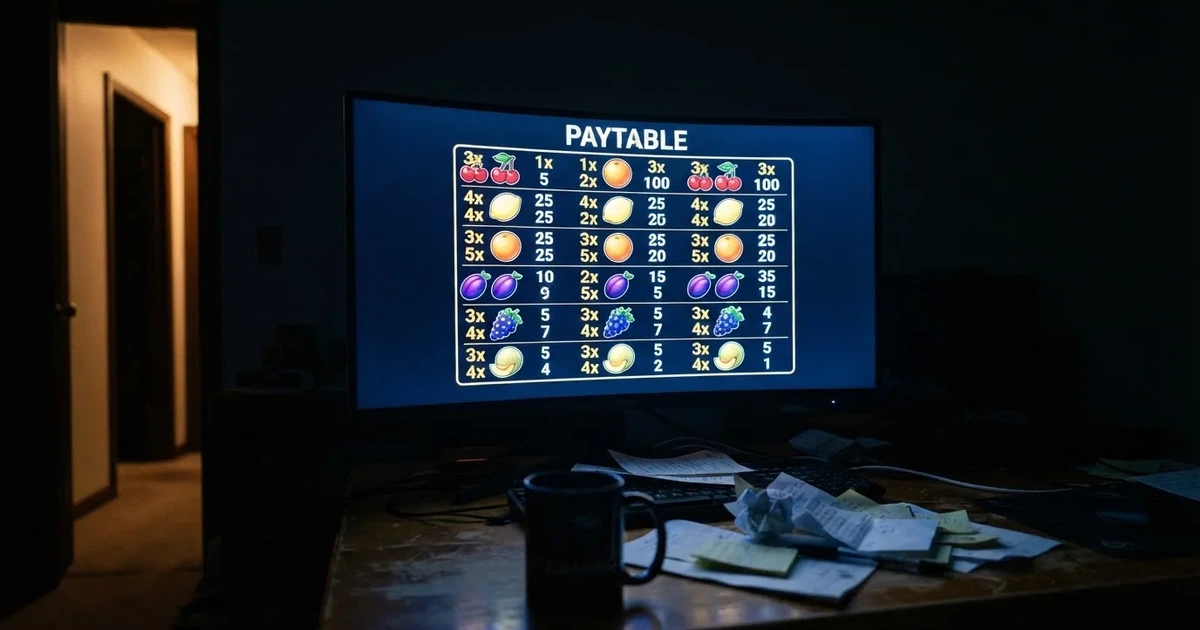
- Paytables, mechanics, and what actually sits behind a Relax Gaming lobby
- How an honest shortlist of Relax Gaming-facing brands would be built
- Fundamentals: what Relax Gaming actually is, and what it isn’t in Australia
- The prohibition: why no online casino is licensed in Australia
- What each of the eleven ACMA-warned brands looks like
- Frequently asked questions
Where to turn when the search itself is the signal
The Australian services that exist for problem gambling do not assume the reader has already opened an offshore casino account. They were also not designed to reach into an offshore site and shut it off — because, by definition, no offshore site is bound by any of them. That is the single hardest fact a reader weighing these brands has to hold: every responsible-gambling protection an Australian can actually invoke runs through Australian-licensed wagering and entertainment venues, and the offshore Relax Gaming sites are not connected to any of them.
The most concentrated of these is Gambling Help Online, run by a consortium of the state and territory health agencies and federally funded. It is free, available 24/7, and the entry point is the National Gambling Helpline on 1800 858 858. A caller does not have to identify themselves, does not have to say which site they used, and does not have to commit to stopping. The line exists because the cost of waiting one more day is higher than the cost of picking up the phone. Webchat is on the same service for readers who would rather type than speak; both routes go to the same counsellors.
State-level self-exclusion registers — the mechanisms that bar a person from entering a pub or club gaming room in New South Wales, Victoria, Queensland, Western Australia, South Australia, Tasmania, the ACT and the Northern Territory — operate against land-based venues and their electronic gaming machines. They do not reach into an offshore casino on a Curaçao or Anjouan licence. A reader who has self-excluded from a Crown venue in Melbourne and then opens a RocketPlay account from the same suburb is not protected by that exclusion. The mechanism simply does not extend.
BetStop, the National Self-Exclusion Register, has been live since 21 August 2023 and is the register that does cover licensed online and phone wagering — the kind an Australian-licensed bookmaker offers. A registered person cannot open a new account with any Australian-licensed wagering provider while the registration is active, and the providers share the data so the block holds across them. Offshore casino brands are not part of this scheme. The register binds the operators that chose to enter the Australian legal market; an operator that chose the offshore route opted out at the moment it decided to ignore the Interactive Gambling Act.
The implication for a reader searching these terms is direct. If the search itself is being prompted by a problem — a session that ran longer than intended, a deposit that came out of money needed for something else, a balance that has been chased over a few days — the help exists and is reachable today, before any further deposit. If the search is about prevention rather than a current problem, the same services take prevention calls too, and a state-based pre-commitment register can be set up without registering for full self-exclusion. The single thing none of these services can do is protect a reader who goes on to fund an offshore casino account from the same suburb the helpline just took a call from. That protection has to come from somewhere else — most reliably, from not making the deposit in the first place.
How deposits and withdrawals actually move on an offshore Relax Gaming casino
The payment side of an offshore Relax Gaming casino is, in 2026, a contradiction at its core. The Interactive Gambling Act 2001 makes it an offence to provide a casino product to a person in Australia; the practical payment controls in 2026 — the credit-card ban effective from 11 June 2024, the digital-currency prohibition — were drafted against that same prohibition, but they were drafted to bind Australian-licensed operators. An offshore site is not licensed, not bound, and accepts precisely the payment methods Australian law now closes off at home. The deposit button on an offshore site is, in effect, a sign that the operator has chosen to be outside the regime.
For a reader who has decided to play anyway, the practical settlement shape on these brands looks like this. Card deposits — including Visa and Mastercard credit cards — clear instantly in most cases, sometimes with an additional 3-D Secure step that pushes the deposit through the card issuer. Cryptocurrency deposits, when supported, also clear on the same blockchain confirmation cycle as elsewhere — typically ten to sixty minutes depending on the coin and the network load. E-wallets such as Skrill, Neteller, MiFinity and Jeton sit between card and crypto in speed and cost, with the same-day clearance these instruments usually offer. Bank transfers and instant-bank services such as PayID or Osko do not usually appear on the deposit page of an offshore Relax Gaming casino, because the operator does not want the transaction to pass through an Australian payments clearing window where it could be flagged or traced.
Withdrawals on these brands run slower, and the gap between advertised and actual settlement is where most of the operational complaints accumulate. A withdrawal to a card typically takes three to seven business days after the operator’s own internal approval window, which itself runs anywhere from a few hours to several days. A crypto withdrawal is faster — often inside an hour once approved — but “approved” is the operative word, and approval is where the operator’s terms give it the widest latitude. E-wallet withdrawals land in the middle. The figure that does not change is that every step of the chain is governed by the operator’s house rules rather than by an Australian regulator, and a withdrawal that is denied can only be challenged through whatever dispute process the brand itself publishes. In practical terms: there is no independent body to appeal to.
A reader who wants to test the operator’s actual settlement behaviour before committing meaningful money has very limited tools. The first is the bonus-terms fine print, which usually caps withdrawal amounts while a bonus is active, often at a small multiple of the bonus or sometimes a hard ceiling. The second is the playthrough requirement that must be cleared before a withdrawal request will even be reviewed; the third is the identification step — the KYC document upload — that the operator uses both as a compliance signal and, occasionally, as the moment it freezes a withdrawal pending further review. None of these constraints is unique to Relax Gaming or to this set of brands; they are the standard offshore casino model, and a reader who reads the site’s banking page alongside its bonus terms before depositing will see them stated in plain language.
A few numbers from the licensed side, for contrast. PayID, Osko and BPAY are the standard deposit routes for Australian-licensed wagering services and clear in near-real-time through the New Payments Platform. Debit cards clear on the same scheme as credit cards but with the credit-card ban not applying to them. The credit-card and credit-related-product ban for online wagering came into effect on 11 June 2024, with operator-side penalties of up to A$234,750 for non-compliance, rising to A$247,500 in later indexing. The point of stating this in a discussion of offshore casinos is not to redirect the reader to a wagering site — a casino product is not legal in Australia however the deposit is made — but to make the contrast visible. A licensed Australian wagering operator cannot accept a credit card or a crypto deposit. An offshore casino offering Relax Gaming titles can, and asks the Australian reader to use one. The deposit method on its own is the clearest single piece of evidence that the operator has chosen to operate outside the Australian regime.
What a “welcome offer” on an offshore Relax Gaming casino actually costs
No real bonus data was available for the eleven brands in the comparison. The reason is plain and worth stating: every operator on this page has been the subject of a formal warning from the ACMA for offering prohibited services to Australians. Affiliate marketing pages that usually carry bonus terms and promotional codes either did not surface them in the source pool, or surface numbers attached to phantom offers that were never intended to be honoured. What follows is therefore the structural shape of an offshore Relax Gaming casino welcome package, written for a reader who has not yet read one.
The first offer a reader sees on the deposit page is almost always a matched-deposit bonus: deposit A$100, the operator matches it in bonus funds, sometimes 100% to a ceiling, sometimes a more modest figure with extra spins on top. The marketing word for this is “free”. The marketing word is misleading. Bonus funds are not withdrawable as cash, and they are not money the player has spent. They are credits locked behind a wagering requirement that must be cleared before the bonus balance — and any winnings tied to it — converts to cash the operator will pay out.
A wagering requirement of 35x to 50x on the bonus amount is the modal range for these offshore brands. On a matched deposit of A$100, that means the player must wager between A$3,500 and A$5,000 in qualifying bets before the bonus converts. Free spins attached to the same package carry their own conversion rules: winnings from the spins are usually credited as bonus funds subject to the same playthrough, often capped at a small maximum cashout — figures in the A$100 to A$250 range are common — and limited to a short shelf life once activated. A reader who treats the welcome offer as money on the way in is reading the page wrong. The offer is a commitment to play several thousand dollars’ worth of qualifying bets at the operator’s pace before the original A$100, let alone any winnings from it, can be asked back.
The second structural feature is game weighting. Slots, including the Relax Gaming titles that brought the reader to the site, almost always count 100% toward clearing the wagering requirement. Live casino tables, table games, and many jackpot slots count less — 5%, 10%, sometimes 0%. That weight is not stated in the headline offer; it appears on the bonus terms page, in small print, several paragraphs deep. A reader who plans to clear the bonus on blackjack rather than slots will find that the required turnover is several times higher than the headline figure implies, and the wagering requirement that looked tolerable at 40x becomes a much heavier lift in practice.
The third structural feature is the maximum cashout cap. Even after the wagering requirement is cleared, many offshore bonuses cap the amount that can be withdrawn from bonus-derived winnings — sometimes at a multiple of the deposit, sometimes at a hard figure. The marketing word for this is “winnings”; the structural reality is that almost every dollar above the cap is forfeit by the player’s signature on the terms.
The fourth is time pressure. Bonus funds typically expire in 7 to 30 days; free-spin winnings, faster. A player who accepts the offer and then has a busy week finds the bonus balance voided. There is no partial credit for partial playthrough; the entire bonus-and-winnings pool is at risk of forfeiture the moment the clock runs out.
What this adds up to is a product that does not look like its marketing. The “free” money is locked behind turnover, time, and a withdrawal ceiling. The promotional energy spent convincing the reader to deposit is energy that, on a fair comparison, should be spent explaining what the deposit will cost in time and qualifying bets before any of it returns. A reader who treats the bonus as the headline feature will, in the median case, lose more by chasing the clearing target than by playing the same stake without it. The bonus is the operator’s tool to extend the player’s session, not to enrich it. That is the only honest reading of the structure, and it is the reading no offshore welcome page volunteers.
How Relax Gaming titles play on a phone, and what an Australian reader sees
Relax Gaming’s own catalogue is built in HTML5, the same web standard that runs in any modern phone browser without requiring a download. That is true for every title in the studio’s range, and it is the single reason a player can usually open a Relax Gaming slot on a phone without the operator offering a downloadable app at all. The page loads in the browser; the reels render on the screen; the touch input maps to the spin button the studio designed for it. On a recent mid-range handset on a stable 4G or 5G connection, a typical Relax Gaming title — Money Cart, Temple Tumble, the Dream Drop jackpot range — will boot in under five seconds and run without stutter for the duration of a session.
The browser route is also, in 2026, the only realistic Australian route to these titles. App stores operated by Apple and Google remove gambling apps that target markets where the product is prohibited, and the Interactive Gambling Act 2001 specifically prohibits the supply of casino games to a person in Australia. There is no Relax Gaming app on the Australian App Store; there is no Relax Gaming-branded APK distributed to Australians from any offshore casino. The “download an app” path that some affiliate pages describe refers to casino-branded apps hosted on the operator’s own site, often as a “web app” that installs to the home screen without going through an app store. The technical term is a Progressive Web App; the practical effect is that the casino’s brand sits on the home screen, but the content is served by the same browser engine the player would otherwise use.
For a reader who has decided to play on an offshore site, the practical mobile shape is therefore: open the operator’s site in the phone’s browser, sign in or register, navigate to the slot lobby, and play. There is no separate installation step. The trade-off is that the operator has full visibility into the session in the same way it does on desktop — the device fingerprint, the IP address, the session timing — and the player has the same limited recourse on a withdrawal dispute as on a laptop.
For a reader who wants the experience without the offshore operator, the licensed Australian route does not include Relax Gaming titles. The licensed casino product in Australia is land-based: poker machines in pubs and clubs in every state except Western Australia, which operates a casino-only model, full casino floors in Crown Melbourne, Crown Perth, The Star Sydney, The Star Gold Coast and the SkyCity Adelaide complex. Aristocrat Leisure, the Australian-listed gaming machine manufacturer headquartered in North Ryde, supplies the EGMs that fill those venues. Online, the legal wagering market carries sports, racing and a narrow set of in-play products under the NTRWC-licensed bookmaker model — but not slots, not live tables, and not Relax Gaming.
That distinction is the practical shape of the mobile question. The technology is the same; the licence is the difference. A phone in a Sydney suburb running a Relax Gaming title in a browser can be doing so through an offshore site the ACMA has just blocked, or it can be playing a licensed land-based equivalent through a club venue’s pokies app on the same handset. The browser does not know which one is happening; the regulatory regime does.
Paytables, mechanics, and what actually sits behind a Relax Gaming lobby
A Relax Gaming slot, on the page that hosts it, runs at a published return-to-player percentage set by the studio and certified by the regulator that issued the game’s licence. Money Train 2, for example, runs at 96.42% RTP with high volatility; the studio’s Dream Drop jackpot range, anchored on the Temple Tumble and Money Cart originals, layers progressive jackpots on a base RTP that varies by title but sits in the mid-90s. These are the figures that show up on the studio’s own game pages and on the regulators’ certification reports, and they are the figures the operator is supposed to be running the game at. Whether the operator actually is, the player cannot independently verify — and that last point is the one that matters in the Australian context.
The studio’s licence footprint covers the UK Gambling Commission (account number 37462), the Malta Gaming Authority, Gibraltar’s Gambling Division, Romania’s ONJN and Canada’s AGCO — a roster that allows distribution across most regulated European and Canadian markets but explicitly does not include Australia. A Relax Gaming slot running through an Australian-facing offshore site is doing so without an Australian licence, and without any Australian regulatory oversight on the game’s RTP, mechanics, or the operator’s handling of it. The studio’s certification is intact; the operator’s compliance with that certification is not independently checked at the point where the player meets it.
The providers that sit alongside Relax Gaming in the typical offshore lobby are a useful proxy for what kind of operation the site is. Betsoft, founded in 2006, publishes more than 200 RNG games across slots, table games, video poker and specialty titles, with stated licensing in Italy’s ADM and RNG certification from Quinel and Gaming Labs International. The studio’s Good Girl Bad Girl 2 carries a published RTP of 96.22%, very high volatility and a 15.59% hit rate; The Slotfather, live since 13 December 2012, runs at 95.69% with medium volatility and an 8.17% hit rate. BGaming’s team has worked on games since 2012 and the brand itself debuted in 2018, with a catalogue of more than 250 certified titles spanning slots, video poker, lottery, card, scratch, crash and casual games. 1spin4win, founded in 2021 by a cohort of veterans with fifteen years of iGaming experience, holds a Curaçao licence and publishes more than 190 online slots built in HTML5 for low-bandwidth connections, with claimed partnerships at more than 1,000 operators and aggregators and a 46% year-on-year growth in total bet sum for the first half of 2025. The studios are real; the catalogue is real; the certification is real. The gap is at the operator level, not at the provider level.
Aristocrat Leisure sits in this story as the contrast rather than as a presence on the offshore sites. Aristocrat is the largest gambling-machine manufacturer in Australia and the second-largest slot-maker globally behind International Game Technology, headquartered at North Ryde in Sydney with development offices in South Africa, Russia and the United States. The 1953-founded company listed on the ASX in 1996 under the ticker ALL and reported 2025 revenue of A$6.30 billion against a normalised net profit after tax and amortisation of A$1.55 billion, with 7,400 employees. Its online arms — Aristocrat Interactive, formed in April 2024 by combining Anaxi with the newly acquired NeoGames group, which includes Aspire Global, BtoBet and Pariplay — supply Australian-licensed wagering and lottery infrastructure rather than a casino product, and its EGM business fills the pubs, clubs and casino floors that constitute the actual legal Australian casino experience.
What this adds up to, for a reader clicking into a Relax Gaming lobby through an offshore site, is a stack of properly certified games sitting on an unregulated operator. The paytable is the studio’s; the casino is not. The RTP shown on the info screen is the figure the game was tested at; whether the operator is paying it out is something the player has to take on the operator’s word for. That single gap is what the offshore route asks the Australian reader to live with, and it is also what the licensed wagering and land-based routes are designed to remove.
How an honest shortlist of Relax Gaming-facing brands would be built
Any shortlist of Relax Gaming-facing brands that reaches an Australian reader is, by definition, a list of brands the ACMA has acted against — because the only brands in the market are the offshore ones, and the only signal the regulator publishes about them is the formal warning. So a list of Relax Gaming casinos in Australia is structurally a roster of regulatory actions, not a ranking of competing offers. The order can still be discussed; what it cannot be is a recommendation. Every brand in the comparison is offering a product that is prohibited from being supplied to a person in Australia, and the only editorial question is what each operator’s specific record looks like under that prohibition.
The criterion the table uses is the ACMA’s own. The brands are listed in the order research presents them; the columns are the date of the most recent formal warning, the operator named by the ACMA at that date, and whether any third-party listing of the brand surfaces Relax Gaming content specifically. Most rows in that last column are blank — research carries no confirmation one way or the other — and the blanks are honest rather than omissions.
| Brand | First warned | Latest ACMA warning (operator, date) | Relax Gaming content in listings |
|---|---|---|---|
| RocketPlay | 2022 | Pulsup Ltd, March 2026 (earlier Dama N.V., May 2022) | — |
| Level Up Casino | 2022 | Dama N.V., May 2022 | Listed on Wazdan’s operator pages |
| Woo Casino | 2025 | Dama N.V., March 2025 | — |
| Spirit Casino | 2025 | Dama N.V., May 2025 | — |
| National Casino | 2025 | Consolutetish S.R.L., July 2025 | Listings reference Betsoft, Wikipedia, Pragmatic Play |
| Bizzo Casino | 2022 | Consolutetish S.R.L., July 2025 (earlier TechSolutions, 2022) | — |
| Ignition Casino | 2025 | Bamboo Media, July 2025 | — |
| Instant Casino | 2025 | EOD Code SRL, February 2025 | — |
| Jackbit | 2026 | Ryker B.V., April 2026 (also covers CasinOK) | — |
| Casino Intense | 2025 | Sterplay Holding Ltd, April 2025 | Listings reference 1spin4win, Wikipedia, UKGC |
| Sky Crown | 2022 | Hollycorn N.V., September 2022 | — |
Three patterns are visible at a glance. The first is operator concentration: Dama N.V. accounts for four of the eleven entries (RocketPlay, Level Up, Woo, Spirit), spanning both the original 2022 cohort and the 2025 follow-up. Consolutetish S.R.L. accounts for two (National and Bizzo), both in the same July 2025 round. Ryker B.V. accounts for one round but two brands (Jackbit and CasinOK). The second is that ACMA targeting has accelerated: only two of the eleven warnings are dated 2022, the rest are 2025 or 2026. The third is that the listings column is mostly blank — there is a verifiable third-party signal for only three of the eleven brands, and even those confirmations come from studio pages rather than from the operators themselves.
What the table does not show, and what the operator write-ups that follow address individually, is what each brand’s combination of warning dates and operators says about its persistence in this market. A brand warned twice under two different operators is a different proposition from a brand warned once in 2022 and not since — and a brand whose only ACMA contact is a recent 2026 warning under a parent that did not exist as a registered entity in 2022 is different again.
Fundamentals: what Relax Gaming actually is, and what it isn’t in Australia
Relax Gaming was founded in 2010 by Patrik Österåker and Jani Tekoniemi as a slots and casino-platform studio, with a Malta office later opened as its commercial and product hub. The studio was acquired by Kindred Group on 2 July 2021, with Kindred buying the remaining 66.6% of shares it did not already own at an enterprise value of up to EUR 320 million. By the time the acquisition closed, the studio had roughly 240 employees across hubs in Malta, Estonia, Sweden and Serbia. By the studio’s own most recent reporting, that headcount has grown past 300, with the operational base described as having shifted to Mallorca.

The catalogue, on the studio’s own materials, is dominated by online video slots — branded series including Money Train, Temple Tumble and the Dream Drop progressive jackpot range — alongside table games, scratch cards and a live casino arm branded as Relax Gaming Live. The Dream Drop jackpot series is the studio’s flagship mechanic, pooling contributions from across the range of participating titles to fund a progressive that has, on past reports, hit multi-million-euro payouts to single winners on a single spin. The studio’s own materials describe a 15th-anniversary milestone in 2026 reporting 300-plus employees and a global operator footprint.
The licence footprint is the cleanest summary of where the studio is and is not allowed to operate. Relax Gaming holds a UK Gambling Commission licence (account number 37462), a Malta Gaming Authority licence, a Gibraltar Gambling Division licence, a Romanian ONJN licence and an Ontario AGCO licence through its Canadian-facing operation. None of these is an Australian licence. None of them needs to be for the studio’s games to appear on offshore sites that target Australians — the operator uses whatever licence it holds to host the games, and the studio’s content is distributed through aggregation platforms that reach hundreds of brands without the studio itself ever appearing in front of an Australian player.
What that means in practice is that “Relax Gaming casino” is a marketing label more than a regulatory status. The studio is one of several providers feeding an aggregator; the aggregator feeds the operator; the operator holds whatever offshore licence it holds and runs the games under that licence. The Australian reader sees a Relax Gaming logo on the slot’s splash screen, an operator name in the page chrome, and a licence badge somewhere in the footer. The licence is not Australian; the games are licensed in the UK, Malta, Gibraltar, Romania or Ontario; the operator is bound by none of those regulators when its customer is in Australia. The studio’s certification is intact end-to-end; the operator’s compliance with it is unverified at the point where the player meets it.
The distinction this leans on, then, is between the studio’s regulatory standing and the operator’s regulatory standing. Relax Gaming is a properly licensed, properly audited supplier in five jurisdictions. The offshore casinos hosting its games for Australians are not licensed at all in Australia, and their compliance with the studio’s certification is the thing the Australian regulatory environment does not check.
The prohibition: why no online casino is licensed in Australia
The Interactive Gambling Act 2001, strengthened by the Interactive Gambling Amendment Act 2017, makes it an offence to provide online casino games, online pokies or in-play betting to a person in Australia. No state or territory issues a licence for these products; the only online wagering that is licensable in Australia is wagering on races and sport placed before the event, plus lotteries and keno. In practice the racing and sports bookmakers are licensed through the Northern Territory Racing and Wagering Commission — Sportsbet, Bet365, Ladbrokes and the rest of the roughly 52 online bookmakers the NTRWC supervises take their licence in the Territory for tax reasons. The NTRWC is the regulator of those operators but has no full-time staff and meets once a month in Darwin.
The enforcement arm for the IGA’s casino prohibition is the Australian Communications and Media Authority. The ACMA investigates complaints, issues formal warnings to operators it judges to be in breach, and asks Australian internet service providers to block the offending sites at the DNS level. As of the ACMA’s June 2026 report, a cumulative 1,751 illegal gambling and affiliate marketing websites had been blocked since the first blocking request was issued in November 2019, and more than 230 unlicensed gambling services had left the Australian market since enforcement was strengthened in 2017. The June 2026 round alone added twelve more sites — 7Signs, ChromaBet, Donbet, Duospin, Freshbet, Slots Gem, Jacks Club, Lucky Start, Pointsbetz.com, Spinrise, Vinyl Casino and Wildsino — to the list.
What this means for an Australian reader is that the prohibition is enforced at the operator level, not the player level. A person who opens an account with one of these brands is not committing an offence; the operator is. But the consequence flows entirely to the player when something goes wrong — there is no Australian complaints body to escalate a refused withdrawal to, no AFCA-style dispute resolution scheme, no recourse through BetStop, and no assurance that the balance sitting on a blocked site will be returned when the site disappears. The offshore operator chooses to be outside the regime, and the player on an Australian IP address inherits the consequences of that choice.
The financial scale of what gets routed around the regime is not small. According to H2 Gambling Capital’s 2025 report, Australians lose approximately A$3.9 billion a year to illegal gambling sites, and the share of gambling going through legal channels fell from 74% in 2021 to 64% by the time of the report. The ten-point slide is the regulator’s working evidence that the offshore market is not a marginal tail; it is now a third of the gambling spend, and the ACMA’s enforcement round-by-round pace reflects that.
The 2026 reform layer is worth flagging. The Interactive Gambling Amendment (Gambling Reform) Bill 2026 passed Parliament on 19 August 2026, with its advertising and inducement measures scheduled to commence on 1 January 2027. On a page written in 2026 the bill is law with a start date, not yet in force — the rules it will tighten, around inducements and the marketing of prohibited products, are not yet active, but the direction of travel is visible from the bill’s text and from the enforcement pattern of the past 18 months.
The tax position, for completeness, is that recreational gambling winnings are not assessable income under section 6-5 of the Income Tax Assessment Act 1997, and gambling losses are not deductible. The model the ATO uses is that of a non-business gambler; a professional gambler carrying on the activity as a business is treated differently, and any reader whose situation has crossed into business-scale gambling should not take the recreational line as their own.
The blocking rate, and what it has actually meant
Across the period from November 2019 to the ACMA’s June 2026 report, the running total of 1,751 blocked sites implies an average of roughly 22 sites blocked per month — close to one every day and a half across the lifetime of the regime. Expressed annually, the rate sits somewhere between about 250 and just over 300 sites per year added to the block, with the upper end being where the most recent twelve months sit. The condition behind the band is that the figure is a count of distinct websites, not of distinct operators or distinct businesses: a single operator running multiple domains counts multiple times in the 1,751, which means reading it as a count of unique regulatory targets would understate the breadth of enforcement, and reading it as a count of unique legal entities would overstate it.
The June 2026 round’s twelve additions in one batch is the upper edge of the band, not a typical week. Earlier rounds moved more slowly. What is consistent is that the rate has not decelerated: through 2025 and into 2026 the ACMA is adding sites at a pace at least as fast as the average since November 2019, and the formal warnings dated March, April, May and July of 2025 and February, March and April of 2026 are the most recent evidence of that pace. For an Australian reader, the operational meaning is that the offshore site they can reach today has a meaningful chance of being unreachable next month through the same URL — a feature of the enforcement environment, not a promise about any specific brand, and the ACMA does not publish a refund mechanism for balances left on a blocked site.
What each of the eleven ACMA-warned brands looks like
RocketPlay — the brand warned twice, by two different operators
RocketPlay is the clearest case in the set of a brand whose ACMA contact spans both an early wave and the most recent wave. The ACMA issued a formal warning to Dama N.V. in May 2022 covering RocketPlay alongside five other brands (Bambet, Dazard, Level Up, Wild Tornado and Cobra Casinos), then issued a further formal warning to Pulsup Ltd over Rocketplay.com.au in March 2026. The shift in the named operator between the two warnings is the point: the brand has changed hands or shell-company structure since the original 2022 contact, and the 2026 warning is to the entity that now operates the Australian-facing URL.
No source signal of RocketPlay’s relationship to Relax Gaming specifically was surfaced in research. The brand does not appear on the studio’s own operator listings, and no third-party listing in the source pool names RocketPlay as a Relax Gaming carrier. That absence is not the same as confirmation the brand does not offer the studio’s titles — most offshore casinos of RocketPlay’s size run an aggregator that includes Relax Gaming’s full catalogue as a matter of routine — but no citation supports that claim for this brand, and none is made.
The persistence under successive operators is the read that matters, and the practical reading for an Australian player is that the brand’s regulatory position in Australia has not changed across the four years the two warnings span. The first warning did not stop the brand; the second warning, four years later, tells the same story again.
Level Up Casino — the original 2022 Dama N.V. cohort entry
Level Up Casino’s ACMA contact is the original May 2022 warning to Dama N.V., alongside the other five brands in the cohort. There is no second warning in the public record; the brand’s interaction with the regulator is a single event in 2022, and there is no signal either way of whether Dama N.V. continues to operate the brand, has sold it, or has simply not come to the ACMA’s attention in the same brand form since.
The one listing signal research carries is from Wazdan’s operator pages, which reference Level Up Casino as a partner carrying Wazdan content. That is a listings-only signal — Wazdan is its own studio, not Relax Gaming, and the Wazdan page confirms Level Up as a Wazdan carrier rather than as a Relax Gaming carrier specifically. The relevance is that the brand’s lobby does carry recognised third-party studio content, which places it in the typical offshore aggregator model where a single brand will host Relax Gaming, Wazdan, Pragmatic Play, Betsoft, BGaming and 1spin4win alongside each other. A reader seeing Relax Gaming titles on the Level Up lobby would not be surprised; no citation supports that as a verified fact for this brand.
Whether the brand continues to actively target Australians in 2026 is not something the ACMA’s 2022 warning can answer, and the absence of a follow-up warning is not the same as confirmation the brand has changed its posture.
Woo Casino — Dama N.V., March 2025
Woo Casino is the first of the two 2025 follow-up warnings to Dama N.V., issued in March 2025. It sits alongside Spirit Casino (May 2025) in the second wave of Dama contact, three years after the original 2022 cohort warning that included Level Up, Wild Tornado, Bambet, Dazard, Cobra Casinos and RocketPlay. The pattern is one of an operator whose brand portfolio continues to be visible to the ACMA across successive waves, even when individual brands rotate in and out of the warning list.
Woo Casino’s presence in the Relax Gaming catalogue is unverified; research provides no confirmation from the studio or third-party listings that the brand hosts these titles. The brand’s structural position is similar to RocketPlay’s — a Dama N.V. brand on a recognised aggregator stack — but the evidence available does not extend to a verified Relax Gaming presence.
The relevant point is the trajectory: a brand that did not appear in the 2022 cohort, appeared in 2025, and was added to the ACMA’s enforcement record under the same parent operator that was warned in 2022. The ACMA has not commented publicly on whether the original 2022 warning has had any operational effect on Dama’s brand portfolio; the 2025 reappearance of a fresh Dama brand speaks for itself.
Spirit Casino — Dama N.V., May 2025
Spirit Casino’s ACMA contact is the May 2025 formal warning to Dama N.V., the second of the two 2025 warnings that follow up on the original 2022 cohort. The pair of 2025 warnings — Woo Casino in March, Spirit Casino in May — is the ACMA’s clearest single signal that Dama N.V.’s brand portfolio has remained in scope for Australian-facing prohibited services across a four-year span.
Similarly, no evidence confirms Spirit Casino hosts these games. The same structural position as Woo Casino applies — a Dama N.V. brand with a typical offshore aggregator stack — without the verified Relax Gaming presence that the research cannot cite.
What the Spirit Casino entry adds, beyond what Woo’s already established, is the demonstration that the ACMA is willing to issue warnings to the same operator under the same regulatory theory across multiple brands in the same year. The 2022 cohort was one warning covering six brands; the 2025 follow-up is two warnings covering two more brands from the same operator. The pattern is the ACMA’s enforcement of the operator, not the brand.
National Casino — the brand with the broadest listing footprint, warned in July 2025
National Casino’s ACMA contact is the July 2025 formal warning to Consolutetish S.R.L., issued in the same round as the Bizzo Casino warning. Of the eleven brands on this page, National Casino is the one with the most extensive third-party listing trail: research surfaces its appearance on Betsoft’s operator pages, on Wikipedia’s aggregator notes and on Pragmatic Play’s operator lists. None of those is a Relax Gaming-specific citation, and the listings are presented as what the third-party pages themselves say, not as the operator’s own claim. The breadth of the trail is itself a signal that the brand’s lobby carries a recognisable spread of major third-party studios, consistent with the standard offshore aggregator model that hosts Relax Gaming’s catalogue alongside competitors’.
No specific confirmation of National Casino as a Relax Gaming carrier has been verified for this page. What the listings do confirm is that the brand is a working offshore casino with an active aggregator relationship and visible Australian-facing marketing that triggered a formal ACMA warning in mid-2025.
The practical reading is that National Casino’s listing visibility places it among the more discoverable of the eleven brands — a reader who typed a few search terms into a comparison site would find National Casino surface repeatedly. The regulatory position is unchanged from any of the others: a brand offering prohibited services to Australians, formally warned, with no Australian licence and no recourse through Australian consumer protection.
Bizzo Casino — twice-warned across two operators
Bizzo Casino is the second brand in the eleven with two ACMA contacts under two different operators. The first is the 2022 formal warning to TechSolutions (CY) Group Limited and TechSolutions Group N.V., covering Bizzo alongside its earlier licence footprint; the second is the July 2025 warning to Consolutetish S.R.L. issued in the same round as National Casino’s. The four-year gap between the two warnings, under two different operating entities, is the same pattern RocketPlay displays — and it is the pattern that tells the most about how the offshore market reshapes itself around ACMA enforcement.
Likewise, no verifiable evidence links Bizzo Casino to Relax Gaming. The brand operates within the standard aggregator framework typical of such sites.
What Bizzo adds to the read of the set is the demonstration that operator-name changes across ACMA rounds do not necessarily reflect a change in business — the brand has carried through two operators and at least three warnings, with the ACMA’s own July 2025 communication noting that the 2022 contact had already taken place. For a reader, the implication is that the brand on the page today may be operated by an entity that was not warned the first time, but the brand itself has been told more than once, and the persistence is the only signal that matters.
Ignition Casino — the only Bamboo Media target on the list
Ignition Casino is the only brand in the set whose ACMA contact names Bamboo Media as the operator, in the July 2025 round. Bamboo Media does not appear in any of the other ten entries, which makes Ignition Casino the most distinct operator-specific signal in the table. The Australian-facing Ignition Casino is the offshore operator that shares its name with the well-known US-facing brand; the two are not the same entity, and the Australian-facing operator under the Bamboo Media banner is the one the ACMA has acted against.
Ignition Casino offers no verifiable evidence of carrying these titles. Its operator stack reflects the same aggregator structure seen across similar brands.
What distinguishes Ignition Casino in the comparison is the operator: a parent that has not surfaced elsewhere in this set, and that came to the ACMA’s attention in the same July 2025 round as Consolutetish and the Bamboo Media brand itself. The brand’s Australian-facing footprint may be smaller than the other ten on the list, but the regulatory position is the same — a prohibited product, a formal warning, no Australian licence.
Instant Casino — the EOD Code SRL target from February 2025
Instant Casino’s ACMA contact is the February 2025 formal warning to EOD Code SRL. The operator name does not appear elsewhere in the eleven-entry set, which makes Instant Casino’s EOD Code SRL connection the second most operator-distinct entry after Ignition Casino’s Bamboo Media contact. EOD Code SRL is the only operator in the set whose ACMA contact predates the mid-2025 enforcement wave by enough months to look like a stand-alone action rather than a batch.
Instant Casino’s lobby carries no verifiable evidence of these games. The structural position is the typical offshore aggregator model.
The February 2025 timing matters because it sits ahead of the July 2025 multi-brand wave that included Bamboo Media’s Ignition Casino and Consolutetish’s National Casino and Bizzo Casino. Read together, the first half of 2025 was the ACMA’s most concentrated enforcement period in the post-2017 framework, and Instant Casino was one of the early actions in that wave rather than a later follower.
Jackbit — the Ryker B.V. action from April 2026, also covering CasinOK
Jackbit’s ACMA contact is the April 2026 formal warning to Ryker B.V., issued in the same round as a warning over CasinOK — the second case in the set where a single operator is named across two brands, the first being Dama N.V. across the 2022 and 2025 cohorts. Ryker B.V.’s April 2026 action is a more recent and a more compact version of the same pattern.
Jackbit’s operator evidence likewise lacks mention of Relax Gaming. The structural position is the typical offshore aggregator model.
What distinguishes Jackbit in the comparison is the recency of the ACMA contact — the April 2026 warning is the most recent in the eleven-entry set, and it sits alongside RocketPlay’s March 2026 contact as the freshest data points on the ACMA’s enforcement activity in this cycle. For a reader using the page in 2026, Jackbit represents the ACMA’s current direction of travel, not a historical record.
Casino Intense — the Sterplay Holding Ltd warning from April 2025
Casino Intense’s ACMA contact is the April 2025 formal warning to Sterplay Holding Ltd. The operator name does not appear elsewhere in the eleven-entry set, which places Casino Intense as another of the operator-distinct entries alongside Ignition Casino’s Bamboo Media contact and Instant Casino’s EOD Code SRL contact.
Casino Intense is the third of the three brands in the set where research carries a listings-only signal. The trail references 1spin4win, Wikipedia and the UK Gambling Commission — the 1spin4win reference confirms the brand as a 1spin4win carrier, the Wikipedia reference is aggregator-page context, and the UKGC reference is consistent with the broader pattern of these brands holding UK-facing operations that the ACMA’s Australian action sits beside rather than under.
No specific confirmation of Casino Intense as a Relax Gaming carrier has been verified for this page. What the listings do confirm is the brand’s working offshore-casino status with an aggregator footprint that includes at least one studio (1spin4win) with a known low-bandwidth HTML5 focus — a feature of mobile play covered earlier.
Sky Crown — Hollycorn N.V., September 2022
Sky Crown’s ACMA contact is the September 2022 formal warning to Hollycorn N.V., issued in the same communication that covered Hollycorn’s Blue Leo brand. The warning pre-dates the 2025 enforcement wave by the longest interval in the set — three and a half years separate the Sky Crown contact from the most recent April 2026 actions — and is the only 2022 entry in the set that was not issued to Dama N.V.
Finally, no evidence supports Sky Crown as a host for Relax Gaming content. The structural position is the typical offshore aggregator model.
What the Sky Crown entry adds is a reminder that the ACMA’s enforcement history extends well before the 2025-2026 wave. Hollycorn N.V. was warned in September 2022, then has not appeared in the ACMA’s published formal warnings through the research period. Whether that means Sky Crown has changed its Australian-facing posture or has simply not come to the ACMA’s attention since is not something the public record resolves, and the silence is not the same as compliance.
Frequently asked questions
Is Relax Gaming legally available to Australians through any online channel?
No. The Interactive Gambling Act 2001 prohibits the supply of online casino games — including the slots, live tables and jackpots Relax Gaming produces — to a person in Australia. No Australian licence covers the product, no offshore licence counts in Australia, and the ACMA’s enforcement record against offshore sites marketing these titles is the regulator’s response.
What kinds of games does Relax Gaming actually produce?
The studio’s catalogue is dominated by online video slots with themes ranging from money trains to ancient temples, including progressive jackpot titles like the Dream Drop series. Relax Gaming also distributes live casino tables through its Relax Gaming Live brand, with roulette, blackjack and game-show-style products running out of European studios.
Are Relax Gaming games available at Australian land-based venues?
Not under the Relax Gaming name. The Australian land-based gaming machine market is supplied by Aristocrat Leisure, Ainsworth Game Technology, IGT and a small set of local manufacturers. Online, no Australian venue streams Relax Gaming content; the studio’s licence footprint covers the UK, Malta, Gibraltar, Romania and Canadian provinces, not Australia.
Why do offshore sites keep advertising Relax Gaming games to Australian players?
Because the studio’s catalogue is well-known enough that the brand name sells the offer, and because the enforcement environment in Australia is uneven. The ACMA can block the site, but the operator typically reappears under a new domain within weeks. The business model does not require the player to be Australian — it requires the player to be reachable from an Australian IP address, which is a different and easier condition to meet.
What should an Australian do if they see a Relax Gaming game promoted on an unlicensed site?
The formal action is to lodge a report with the ACMA, which uses these reports to build its blocking-list evidence. The personal action is to treat the appearance of the title on the site as a signal of the site’s regulatory status, not as a reason to investigate the title further. Offshore sites advertising prohibited products to Australians are the regulator’s problem, not the player’s.