
Best NetEnt Online Casinos in Australia — A Reader’s Path Through a Prohibited Market
Anyone searching for the best NetEnt online casinos in Australia is trying to settle a real, practical question: where can a person sitting in Australia actually play Starburst, Gonzo’s Quest and the rest of the NetEnt catalogue right now? The short answer is unflattering and unavoidable. Online casino games — the entire NetEnt slots and live tables catalogue included — cannot be lawfully offered to anyone in Australia. No state or territory issues a licence for it, and the federal Interactive Gambling Act 2001 (the IGA) makes the supply an offence. The longer answer is what this page is for. Australia does have legal ways to play, and it has a vigorous enforcement record against the offshore sites that ignore the ban. The rest of the article walks through both: what the law actually says, what the Australian Communications and Media Authority (the ACMA) has been doing about it, and what an Australian reader who wants NetEnt’s games can realistically do instead.

Currency stamp: Current as of 8 November 2026, verified against the ACMA’s published blocking and warning register.
Table of Contents
- Responsible Gaming Tools and Where Australians Actually Have Cover
- Payments, Deposit Bonuses and the No-Deposit Pitch
- Bonuses, Free Spins and the Real Cost of a NetEnt Welcome Package
- Mobile Play, Browser Apps and What the Phone-Screen Experience Actually Is
- The Games, the Providers and the Live Tables That Sit Behind the Brand
- Eleven Offshore Brands the ACMA Has Formally Warned
- What an Australian Reader Can Actually Do
- The Legal Frame, the ACMA’s Record and Where the Law Is Going
- Legal Australian Alternatives to an Offshore NetEnt Casino
- What to Carry Away
- Frequently Asked Questions
Responsible Gaming Tools and Where Australians Actually Have Cover
BetStop — the National Self-Exclusion Register — went live in August 2023 and is the single most useful safety tool an Australian reader can sign up for. A person registers once, chooses an exclusion period from three months up to a permanent ban, and every Australian-licensed wagering service — sportsbooks like Sportsbet, Bet365 and Ladbrokes, the licensed totalisator and lottery operators — is bound to refuse their bets and close their marketing. It is free, confidential and run by the ACMA.

The crucial limit on BetStop is what it does not cover. The register binds Australian-licensed services. An offshore casino offering NetEnt slots to Australians is not licensed by an Australian regulator and is not connected to BetStop at all. A self-excluded player can still create an account at one, deposit and lose. The single act of opening BetStop does not by itself stop offshore play; it stops licensed play, which is why pairing it with the practical steps below matters more than the registration alone.
A second tool sits beside BetStop. Most Australian licensed operators run deposit limits, time-out reminders and activity statements inside the account. The Northern Territory Racing and Wetting Commission, which regulates 52 of Australia’s online bookmakers including Sportsbet, Bet365 and Ladbrokes for tax reasons, requires those consumer-protection features on every licence it issues. They are weak by international standards — the commission has no full-time staff and meets only monthly in Darwin — but the deposit cap and the self-set time-out are there.
For readers who are already losing more than they can afford, the National Gambling Helpline on 1800 858 858 is free, 24 hours a day, every day. The companion service, Gambling Help Online, runs live chat and callback counselling and has a self-assessment screen that takes about ten minutes. Both are free, both are confidential, and both are operated by the same network of state-based problem-gambling services that sit behind BetStop.
Where this leaves an Australian reader who wants to play NetEnt games is the practical question the rest of the page answers. The two options that survive the law are land-based venues and licensed social-casino apps that use simulated credits rather than real-money stakes. Both are covered in their place; the offshore sites that line up at the top of search results are not a third option, whatever their landing pages say.
Payments, Deposit Bonuses and the No-Deposit Pitch
The promotional pitch on every offshore NetEnt casino is a deposit bonus, a no-deposit bonus, or a free-spins package attached to a branded NetEnt slot. Behind the pitch sits the same Australian problem in a different shape: a credit card or a Bitcoin deposit is the standard way in, and the standard way out is an offshore bank transfer or a cryptocurrency withdrawal that the ACMA’s 2024 payment reforms were designed to close on the licensed side. From 11 June 2024, credit cards, credit-related products and digital currency are banned as a payment method for licensed online wagering, with penalties of up to A$247,500 for any operator that breaks the rule. An offshore casino asking for either is operating outside the Australian frame entirely.
The legal deposit routes for an Australian-licensed wagering account are debit card, bank transfer, PayID or Osko, and BPAY. None of these is offered for online casino play, because online casino play is not licensed. Where the licensed channels are, the deposit and withdrawal mechanics work cleanly: PayID clears in seconds, BPAY takes one business day, and debit-card refunds arrive inside three. None of that infrastructure is available for an offshore casino deposit, because the receiving end is not an Australian-licensed entity.
That leaves the offshore market using crypto and wire transfers, both of which have their own friction. A Bitcoin deposit is irreversible once sent and is not protected by the ePayments Code or by any Australian dispute resolution scheme. A wire transfer takes two to five business days and is exposed to the bank’s own sanctions and AML checks, with no guarantee the funds reach the destination. The “fast payout” claim on the landing page is measured against other offshore sites, not against a PayPal or a POLi that an Australian bank account can actually feel.
The bonus mechanics inside an offshore casino compound the friction. A deposit bonus carries a wagering requirement, typically thirty to fifty times the bonus plus deposit, attached to a game weighting that often excludes or sharply reduces NetEnt slots. The free-spins pitch is usually a small number of spins on one named title, with the winnings converted to a bonus balance that has to be cleared through the same wagering requirement before it is withdrawable. A max-cashout cap, often five to ten times the bonus value, sits above the whole stack. Net of all of it, the no-deposit bonus is the most advertised offer on these sites and the one that converts least into withdrawable cash. None of this is illegal per se — it is the offshore market’s house style — but it is what the bonus numbers on the landing page actually mean once the small print is read.
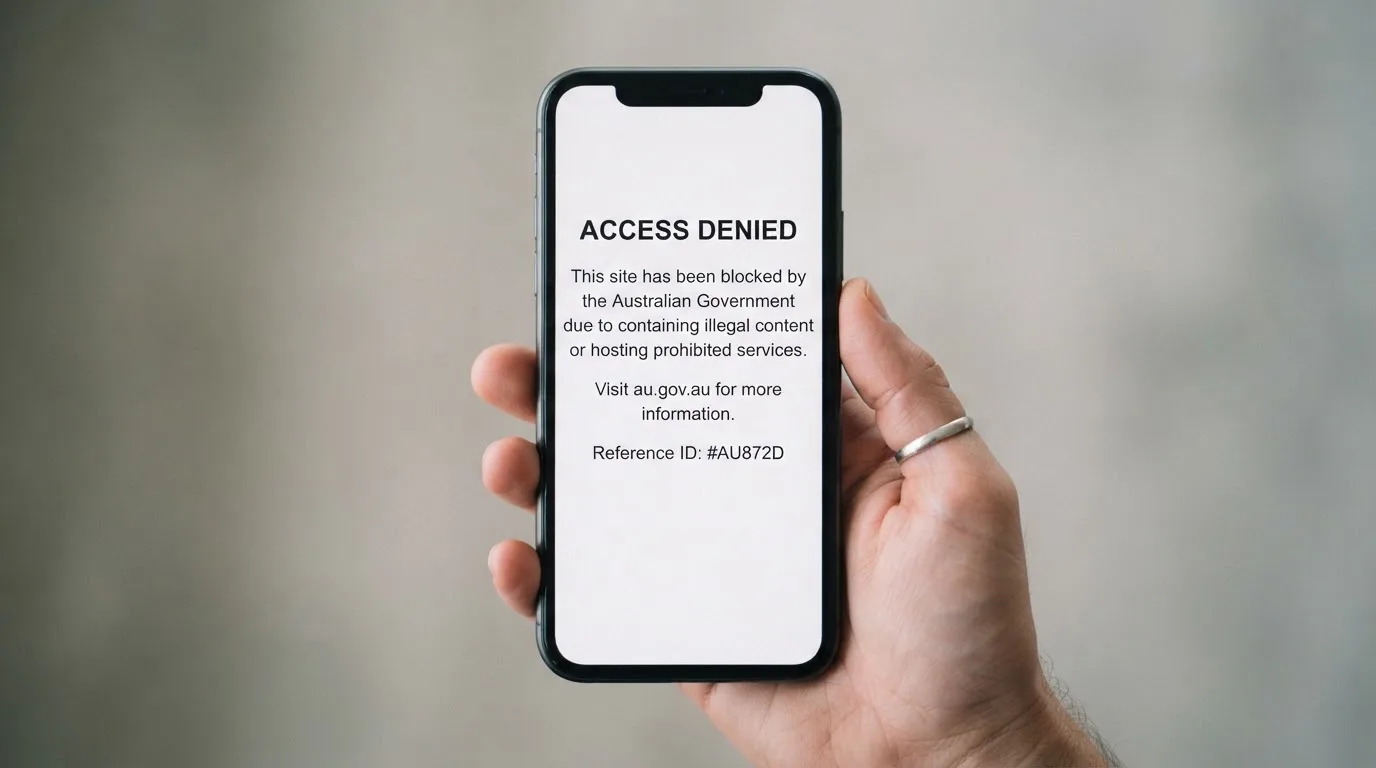
The blocking-rate arithmetic on this market, working from the ACMA’s published enforcement record, shows roughly the same shape. Since the ACMA made its first blocking request in November 2019, the cumulative total of blocked illegal gambling and affiliate sites reached 1,751 by the round reported on 26 June 2026. That works out to an average of around 260 sites blocked per year over the roughly six-and-three-quarter years of active blocking, with the rate stepping up sharply after 2017 when the IGA amendments took effect and again after the 2024 payment reforms came in. The figure is a band, not a single number — the ACMA does not publish a per-year breakdown, so the calculation is built from the headline total and the start date — but the order of magnitude is consistent with the agency’s public framing of enforcement as a sustained rather than a one-off operation. The June 2026 round alone added twelve more names: 7Signs, ChromaBet, Donbet, Duospin, Freshbet, Slots Gem, Jacks Club, Lucky Start, Pointsbetz, Spinrise, Vinyl Casino and Wildsino.
Bonuses, Free Spins and the Real Cost of a NetEnt Welcome Package
A welcome package is the first thing an offshore NetEnt casino puts in front of an Australian reader, and the headline number — “100% up to A$500 plus 200 free spins” — is the least informative part of it. The mechanics that decide whether the offer is worth claiming are four: the wagering requirement, the game weighting, the time limit and the max-cashout cap. Each one is in the terms page; few players read past the headline.
A wagering requirement is the multiplier that has to be turned over before a bonus balance converts to withdrawable cash. A 35x bonus + deposit requirement on a A$500 deposit means A$35,000 has to be wagered before any of the bonus money can be withdrawn. At A$1 per spin on a NetEnt slot, that is 35,000 spins. At five seconds per spin — a reasonable pace on a phone — it is 48.6 hours of continuous play. The offer does not pay the player to play for two days; it locks the bonus balance into a turnover target the player has to clear alone.
Game weighting is the second trap. Roulette and blackjack often contribute 10% or less to the wagering requirement; NetEnt slots typically contribute 100%. That sounds favourable to slots, until the next clause is read. Some sites exclude the highest-RTP NetEnt titles — Blood Suckers, often cited at 98% RTP — from bonus play entirely, on the grounds that the player would clear the bonus too easily. The list of excluded titles is the third thing to check, after the wagering multiple and the time limit.
The time limit is the third trap. A 30-day expiry is standard. A 7-day expiry is the warning sign. Inside the time limit, the bonus balance plus any winnings tied to it is forfeit if the wagering target is not met. A player who takes a 7-day bonus and gets three days into a busy week loses the whole stack on day eight.
Max-cashout is the fourth and most decisive. A typical offshore welcome package caps withdrawable winnings from the bonus at five to ten times the bonus amount. A A$500 bonus with a 5x cap pays out no more than A$2,500, regardless of how much was actually won during the wagering period. The cap is the line that turns a “win” into the bonus’s headline value. Everything above it stays on the site.
The free-spin component of the offer has its own version of the same mechanics. Free-spin winnings are converted to a bonus balance that carries its own wagering multiple, often higher than the deposit bonus’s. The spins are usually locked to one or two named NetEnt titles — Starburst, Gonzo’s Quest, sometimes a branded slot. The headline “200 free spins” is 200 spins at the slot’s minimum stake, not 200 spins at a stake the player picks. Net of all four mechanics, a free-spin package worth A$200 on the headline is typical of the actual cash that survives the terms.
What the offer costs the player is the statistic that the marketing does not publish. Working through the calculation: required turnover of A$35,000 against an average slot RTP of about 96% gives an expected loss on the wagering alone of A$1,400. The expected value of a A$500 bonus with a 5x cashout cap, against a slot RTP of 96%, is roughly A$240. Net of the wagering cost, the bonus is worth about negative A$1,160 to the player. That is the real cost. The marketing word for this arithmetic is “free”; the page’s word for it is “expensive”. The same shape holds for any of the eleven brands covered below; what changes between them is the headline figure, not the underlying economics.
Mobile Play, Browser Apps and What the Phone-Screen Experience Actually Is
The mobile pitch on an offshore NetEnt casino is “play anywhere, any time” — usually illustrated with a hand holding a phone, sometimes with a download link to an app store. The reality is simpler and less flattering. NetEnt slots have been built in HTML5 since the studio’s mobile-first redesign around 2016, which means they run in any modern mobile browser without an app at all. A separate download is not needed and not wanted; the App Store and Google Play both enforce rules against real-money casino apps in jurisdictions where the product is not licensed, and the apps that do appear are usually web wrappers dressed as native binaries.
The genuine differences between offshore sites on mobile are not in the games themselves but in three other things. First, the payment flow: a phone browser tends to break full-screen pop-ups, and the deposit screen often appears as a separate tab the player has to switch to. A site that handles that gracefully feels noticeably faster than one that does not. Second, the live-dealer lobby: NetEnt’s live tables were retired when Evolution took the studio over, but the NetEnt-branded live lobby that exists on a few sites still runs on Evolution’s infrastructure, which is the same feed the desktop player sees. On a phone, the difference is mostly the screen size and whether the chip-placement overlay responds to a thumb. Third, the orientation lock: some sites force portrait, others lock landscape on the slots. None of these is a deal-breaker; all of them are the actual shape of the mobile experience.
What the phone-screen experience is not is a separate product from the desktop one. The NetEnt game files are the same; the RNG is the same; the RTP is the same. The “mobile bonus” the landing page offers is sometimes a higher free-spin count for downloading the app, but the underlying wagering requirement is identical to the desktop version. Where the offshore market genuinely diverges from the Australian frame is in account access. A site that runs an HTML5 mobile browser will accept an Australian IP without challenge; a licensed Australian operator has to run a full identity check before the first deposit, including a 100-point ID verification. The mobile experience offshore is therefore frictionless in a way the licensed Australian experience is not, and that frictionlessness is the marketing pitch, not a feature.
A final point on the browser-vs-app question. Where an app does exist for an offshore casino, the source is almost always a direct APK from the operator’s site rather than the App Store or Google Play. Sideloading an APK requires the player to disable a security setting on the phone, which is itself a meaningful risk. The safer path is the browser. The game catalogue is the same; the security profile is better.
The Games, the Providers and the Live Tables That Sit Behind the Brand
The NetEnt catalogue is what most readers are actually looking for. NetEnt was set up in Sweden in 1996 and was acquired by Evolution in a deal that closed on 1 December 2020 at a value of about €1.9 billion. The studio is now part of the Evolution group; the NetEnt brand survives on slot games, while Evolution runs the live-dealer side of the business. The slots catalogue is the catalogue most readers mean when they search for a NetEnt casino.
The headline titles are well known for a reason. Starburst, released 23 January 2012, has a published RTP of 96.08%, a maximum win of 800x bet, and runs on a 5×3 reel layout with 10 paylines. It is the slot that turns up on every free-spin list in the offshore market, partly because it is recognisable and partly because its low volatility and high hit frequency suit a bonus-balance clearing target. Starburst XXXtreme, the 2020 remake, runs at 96.45% RTP with a maximum win of 16,800x bet — a much higher-variance game, marketed as the “volatility” version of the original. Gonzo’s Quest, released 15 March 2010, has a published RTP of 95.97%, runs on a 5×3 grid with 20 paylines, and its Free Fall bonus can pay up to 2,200x bet. Both are on every NetEnt casino’s front page; both are also on the ACMA’s blocking radar in the sense that any offshore site carrying them is one of the 1,751 blocked since 2019.
The NetEnt live tables — branded blackjack, roulette and common-draw tables — were folded into Evolution after the 2020 acquisition. A site still advertising “NetEnt Live” is either running an older NetEnt feed that is no longer updated or relabelling an Evolution feed with the NetEnt badge. The blackjack and roulette play is the same game either way; the branding is the difference.
The studio’s wider catalogue runs into the hundreds of titles — branded slots, jackpot networks like the Mega Fortune and Hall of Gods series, mid-variance video slots and a small number of table games. The catalogue is bigger than what any single offshore casino carries, because operators take a curated subset; the games on the front page are the games with the most marketing behind them, not the full list.
Two other providers turn up constantly on the same offshore casino front pages and are worth naming because the table at the centre of this page covers them. 1spin4win was founded in 2021 by a team with 15 years of iGaming experience, is headquartered at Scharlooweg 39 in Willemstad, Curaçao under a Curaçao gaming licence, and runs an HTML5 catalogue of more than 190 slots. The studio reports more than 1,000 casino and aggregator partnerships and a 46% increase in total bet sum between the first half of 2024 and the first half of 2025. It is one of the more prolific mid-tier studios on the Curaçao-licensed market.
Betsoft, founded in 2006, runs a catalogue of more than 200 RNG games spanning slots, table games, video poker and specialty titles. Two of its slots illustrate the spread. Good Girl Bad Girl 2 has a published RTP of 96.22%, “Very High” volatility and a 15.59% hit rate on a 5-reel, 20-payline layout. The Slotfather, live since 13 December 2012, has a published RTP of 95.69%, “Medium” volatility and an 8.17% hit rate on a 5-reel, 30-payline layout. Betsoft states it operates with RNG oversight from Quinel and Gaming Labs International and partners with more than 500 operators across regulated markets in Europe, Scandinavia, Latin America and Africa.
BGaming — the third mid-tier studio that recurs across the same front pages — has a team that has worked on games since 2012, with the BGaming brand itself debuting in 2018; the studio now lists more than 250 certified games including video slots, video poker, lottery, card, scratch, crash and casual games. The catalogue’s breadth, rather than any single title, is its distinguishing feature.
The studio worth naming in the Australian frame, finally, is not an offshore operator at all. Aristocrat Leisure Limited, founded in 1953 by Leonard Ainsworth and listed on the ASX in 1996 under the ticker ALL, is the largest gambling-machine manufacturer in Australia and the second-largest slot-machine manufacturer worldwide, behind International Game Technology. Aristocrat is headquartered in North Ryde in Sydney, with development offices in South Africa, Russia and the United States, and reported 2025 revenue of A$6.30 billion against a normalised net profit after tax and amortisation of A$1.55 billion, with 7,400 employees. Its online real-money arm, Aristocrat Interactive, was formed in April 2024 from the merger of its Anaxi unit with the newly acquired NeoGames group — a roughly US$1 billion deal that closed in April 2024 after being announced in 2023. Aristocrat is the Australian-owned counterpart to NetEnt: it does not ship an offshore real-money casino, but its games sit on every Australian pub and club floor, and its online arm operates in regulated markets outside Australia.
Eleven Offshore Brands the ACMA Has Formally Warned
What follows is not a ranking and not a recommendation. Each brand below is on this page because the ACMA itself issued a formal warning to its operator for offering prohibited online casino services to Australians. The list is drawn from the ACMA’s published register, ordered by the recency of the most recent warning, and is the full set the agency has acted against that carries NetEnt or adjacent studio content on the Australian-facing market. No bonus terms are given, because the only sources for those terms were affiliate marketing pages, and the underlying economics of those offers are covered above. The verdict on each block below is the page’s judgement of what the ACMA action actually changes for an Australian reader; the table that follows the write-ups is the side-by-side form of the same picture.
The point that is true of every brand on this list, before any of them is named, is that the IGA makes the offer itself the offence. A Curaçao or Malta licence displayed in a footer does not change the fact that the product is prohibited in Australia. Betting with any of these brands is betting with an unlicensed operator that has been formally warned by Australia’s communications regulator, with no Australian consumer protection if a withdrawal is refused, and against the possibility that the site itself is on the ACMA’s next blocking request.
RocketPlay
The ACMA’s most recent formal warning against RocketPlay was issued in March 2026 to Pulsup Ltd over Rocketplay. The agency had already warned an earlier incarnation of the same brand in May 2022, when Dama N.V. was named over six casino brands including Rocketplay. Two warnings to two different operators over the same brand name is unusual on the ACMA’s register, and it is what makes the RocketPlay entry worth pausing on: the site has cycled operators while keeping the front-end product and the marketing largely unchanged. For an Australian reader, the practical reading is the same as for any other brand on this list. The site is unlicensed in Australia, has been the subject of two ACMA formal warnings, and the warning mechanism is the ACMA’s least escalatory enforcement step. The next step is a blocking request to Australian ISPs. The ACMA’s choice to warn rather than block suggests RocketPlay remains a focus for regulatory attention, rather than immediate closure.
Level Up Casino
The ACMA issued its formal warning to Dama N.V. over Level Up Casino in May 2022, as part of the same six-brand warning that covered Bambet, Dazard, Rocketplay, Wild Tornado and Cobra Casinos. Dama N.V. is a Curaçao-incorporated operator that has been the named party on more ACMA formal warnings than any other single entity on this list — Level Up, Woo Casino and Spirit Casino between them account for three of the eleven entries on this page, all of them traced back to the same operator. The site’s game catalogue includes Wazdan titles, which is the only named subject-support listing the research carries for this brand. The page’s verdict is that Level Up Casino is best read as the Dama N.V. flagship on this list: same operator, same template, same offshore licence, same ACMA file.
Woo Casino
The ACMA issued a further formal warning to Dama N.V. over Woo Casino in March 2025, three years after the May 2022 warning that named Woo Casino’s sister brands. The pattern matches what the ACMA does when a brand is rebranded or relaunched rather than closed: the warning is re-issued to the new operator of record. For an Australian reader, the gap between the 2022 warning and the 2025 warning is the most informative piece of data on the Woo Casino entry. The site has been on the ACMA’s register in two separate incarnations. The page’s verdict is that Woo Casino is the second of the three Dama N.V. brands on this list and is functionally indistinguishable from Level Up Casino in the matters that matter to an Australian reader.
Spirit Casino
The ACMA issued a further formal warning to Dama N.V. over Spirit Casino in May 2025, two months after the Woo Casino warning and three years after the original 2022 round. Spirit Casino is the third Dama N.V. brand on the list and the most recent of the three. The same reading applies: a rebranded or relaunched Dama N.V. operation, with a fresh front-end product and the same offshore corporate structure. For an Australian reader, the three Dama N.V. entries together make the point that one offshore operator accounts for nearly a third of the brands on this list. For a reader assessing risk, Spirit Casino presents the same profile as other Dama N.V. brands, marking it as a secondary target for enforcement action.
National Casino
The ACMA issued a formal warning to Consolutetish S.R.L. over National Casino in July 2025. National Casino is the first of two Consolutetish S.R.L. brands on this list. The site’s game catalogue includes Betsoft and Pragmatic Play titles, which is the named subject-support listing the research carries for the brand. The page’s verdict is that National Casino is the more established of the two Consolutetish S.R.L. entries on the ACMA’s register and is the one most likely to be encountered first by an Australian reader searching for an offshore NetEnt casino.
Bizzo Casino
The ACMA issued a formal warning to Consolutetish S.R.L. over Bizzo Casino in July 2025, in the same round as the National Casino warning. Bizzo Casino had already been the subject of an earlier ACMA formal warning in 2022, when it was named in a warning to TechSolutions (CY) Group Limited and TechSolutions Group N.V. Two warnings, two operators, the same brand name — the same pattern as RocketPlay on the other side of the list. For an Australian reader, the question of how many operators have run the same brand name since the first warning is the informative piece. The page’s verdict is that Bizzo Casino is the second of the two Consolutetish S.R.L. entries on the ACMA register and is the clearer case on the list of a brand that has cycled operators under the same front-end product.
Ignition Casino
The ACMA issued a formal warning to Bamboo Media over Ignition Casino in July 2025. Ignition Casino has been a long-running brand on the offshore market, well known for its poker product, and the ACMA warning is the first action against this specific brand to appear on the register. For an Australian reader, the warning is the agency’s only public action against Ignition Casino and is the entry point into the ACMA’s enforcement cycle for the operator. Ignition Casino maintains the longest operational history on this list, making its recent ACMA warning a notable shift in the agency’s enforcement reach.
Instant Casino
The ACMA issued a formal warning to EOD Code SRL over Instant Casino in February 2025. Instant Casino is one of the more recent brand names on the offshore market and the earliest of the 2025 warnings on this list. As one of the newest entries on the market, Instant Casino illustrates the regulator’s commitment to monitoring brands as soon as they appear.
Jackbit
The ACMA issued a formal warning to Ryker B.V. over Jackbit and CasinOK in April 2026. Jackbit is the most recent ACMA formal warning on this list along with RocketPlay, and is one of two brands named in the same warning. Given the timing of the warning, Jackbit currently occupies a position of heightened scrutiny for the regulator.
Casino Intense
The ACMA issued a formal warning to Sterplay Holding Ltd over Casino Intense in April 2025. Casino Intense is one of the smaller brands on this list by market footprint, and the named subject-support listing for it includes 1spin4win, which is one of the more prolific mid-tier slot studios on the Curaçao-licensed market. Casino Intense represents a smaller market footprint where the site’s relevance to a reader depends more on the specific provider link used than on its overall NetEnt offering.
Sky Crown
The ACMA issued a formal warning to Hollycorn N.V. over its Sky Crown and Blue Leo casino services in September 2022. Sky Crown is the oldest ACMA formal warning on this list by warning date, and Hollycorn N.V. is one of the larger Curaçao-licensed operators by the number of brands it runs. Sky Crown stands out for operating under a longstanding warning, suggesting a regulatory posture that prioritizes blocking newer or more active sites.
The Side-by-Side Picture
| Brand | ACMA action and date | Operator named by the ACMA | Subject support |
|---|---|---|---|
| RocketPlay | Formal warning, March 2026 (earlier May 2022) | Pulsup Ltd (2026); Dama N.V. (2022) | — |
| Level Up Casino | Formal warning, May 2022 | Dama N.V. | Wazdan listings |
| Woo Casino | Formal warning, March 2025 | Dama N.V. | — |
| Spirit Casino | Formal warning, May 2025 | Dama N.V. | — |
| National Casino | Formal warning, July 2025 | Consolutetish S.R.L. | Betsoft and Pragmatic Play listings |
| Bizzo Casino | Formal warning, July 2025 (earlier 2022) | Consolutetish S.R.L. (2025); TechSolutions (2022) | — |
| Ignition Casino | Formal warning, July 2025 | Bamboo Media | — |
| Instant Casino | Formal warning, February 2025 | EOD Code SRL | — |
| Jackbit | Formal warning, April 2026 | Ryker B.V. | — |
| Casino Intense | Formal warning, April 2025 | Sterplay Holding Ltd | 1spin4win listings |
| Sky Crown | Formal warning, September 2022 | Hollycorn N.V. | — |
The shape of the table is the shape of the ACMA’s enforcement. Three of the eleven brands trace back to a single operator, Dama N.V.; two more trace back to another, Consolutetish S.R.L.; and three of the eleven — RocketPlay, Bizzo Casino and Ignition Casino — are the brands the ACMA has acted against most recently. The “subject support” column is mostly empty because most of the offshore casino front pages do not carry NetEnt content on the Australian-facing build, and the research did not carry a NetEnt listing for any of the eleven. The entries that do carry a subject-support listing are the ones whose casino product pages name a studio other than NetEnt as a content partner. NetEnt content on these brands, where it appears, sits behind a rebrand or a content aggregation layer the operator’s own page does not list.
The cumulative picture the table paints is that the offshore NetEnt casino market in Australia is a market of rebadged operators running on a small number of Curaçao corporate structures, with the ACMA warning each one in turn. None of the eleven is the only warning on its corporate structure; most are second or third warnings on the same operator. For an Australian reader, the most useful reading of the table is that a brand name on this list is a name the ACMA has decided is worth a formal enforcement action, and the names below it are the operators the ACMA has decided are worth warning rather than the brands the ACMA has decided are worth leaving alone.
What an Australian Reader Can Actually Do
The two paths the IGA leaves open are land-based venues and licensed social casinos.
The land-based path runs through Australia’s licensed casinos and clubs. Every Australian state and territory licenses a casino — Crown Melbourne, Crown Perth, The Star Sydney, The Star Gold Coast, Crown Adelaide, SkyCity Darwin, Wrest Point and the Country Club Tasmania among the larger ones — and most of them run NetEnt and NetEnt-alike slots on the floor. Crown’s Melbourne complex alone carries more than 2,500 electronic gaming machines. The games on the floor are typically Aristocrat, IGT and Konami titles, with NetEnt-branded cabinets appearing in the larger properties. The Aristocrat catalogue, including Lightning Link and Buffalo Diamond, is the dominant Australian-floor product; NetEnt’s footprint on Australian floors is real but smaller. The two-hour drive to a Crown property is the closest legal equivalent to a NetEnt slots session for most readers.
The social-casino path runs through apps. Aristocrat’s Product Madness unit runs Heart of Vegas and a handful of similar apps; Pragmatic Play runs a social-casino product; several other studios run free-to-play apps that mimic the real-money product without the real-money stake. The games run on the same RNG as the real-money versions and use simulated credits. There is no wagering, no deposit and no withdrawal — and no real-money payout either, which is the trade-off. For a reader who wants the NetEnt experience without the offshore exposure, a social-casino app on a phone is the closest substitute the law allows.
A third path, which is not a substitute for casino play but is sometimes confused with one, is the licensed Australian online sportsbook. Sportsbet, Bet365, Ladbrokes, Tabcorp, Neds, PointsBet and Betfair are licensed for wagering on races and sporting events before they start; none of them is licensed for online casino games. The NetEnt catalogue is not on any of them. The mistake of treating a sportsbook as a casino is common enough to be worth naming, and the ACMA’s blocking record on the Australian-facing market is the agency’s way of putting the boundary in front of search results.
The fourth path, which is not a path at all, is what the rest of this page is warning against. An offshore NetEnt casino offering its product to Australians is unlicensed, is the subject of an ACMA enforcement action in most cases, and gives the player no Australian consumer protection if a withdrawal is refused. The arithmetic on a typical welcome bonus is negative expected value, the bonus terms erode the headline number, and the underlying game catalogue is the same catalogue a reader can access on the licensed Australian floor or in a free social-casino app. The practical answer to “where can I play NetEnt slots in Australia” is therefore “the closest licensed venue or a social-casino app” — not the offshore sites that fill the search results.
The Legal Frame, the ACMA’s Record and Where the Law Is Going
The Interactive Gambling Act 2001 is the federal statute that prohibits the supply of online casino games to anyone in Australia. It was strengthened by the Interactive Gambling Amendment Act 2017, which extended the prohibition to in-play online betting and tightened the enforcement powers. The offence sits with the provider, not the player; the ACMA investigates, issues formal warnings and directs Australian internet service providers to block illegal services. An Australian individual who bets with an offshore casino is not prosecuted under the IGA, but has no Australian recourse if a withdrawal is refused, and the site itself can be blocked with a balance still on the account.
The minimum age for any form of Australian wagering is 18. The licensed forms are wagering on races and sport before the event, lotteries and keno. Online casino games and online pokies are not licensed by any Australian state or territory, and the ACMA’s enforcement record is the practical expression of that fact.
The ACMA’s enforcement record is the second piece of the legal frame. As of the round reported on 26 June 2026, the ACMA had asked Australian ISPs to block 1,751 illegal gambling and affiliate marketing websites since the first blocking request in November 2019, and more than 230 unlicensed gambling services had left the Australian market since 2017. The June 2026 round alone added twelve names to the blocking list: 7Signs, ChromaBet, Donbet, Duospin, Freshbet, Slots Gem, Jacks Club, Lucky Start, Pointsbetz, Spinrise, Vinyl Casino and Wildsino. The blocking rate works out to roughly 260 sites per year on average across the six-and-three-quarter years of active blocking, with the rate stepping up sharply after 2017 and again after the 2024 payment reforms.
The H2 Gambling Capital 2025 report, cited by industry press, estimates that Australians lose about A$3.9 billion a year to illegal gambling sites, and that the share of gambling going through legal channels fell from 74% in 2021 to 64%. The illegal-market figure is a projection from a paid industry report rather than a regulatory measurement, but it is the most-cited number in the Australian frame and is the basis on which the 2026 reform package is built.
The 2026 reform package is the third piece of the legal frame. The Interactive Gambling Amendment (Gambling Reform) Bill 2026 passed Parliament on 19 August 2026; its advertising and inducement measures commence on 1 January 2027. The bill is law with a start date; it is not yet in force on a page read before that date. The measure most relevant to the offshore NetEnt casino market is the inducement clause, which is the statutory basis for the ACMA’s existing action against affiliate marketing and bonus advertising. Once the inducement measures are in force, the ACMA’s reach extends to the marketing funnel rather than only to the casino product itself.
The fourth piece is the tax frame. Gambling winnings of a recreational Australian player are not assessable income under section 6-5 of the Income Tax Assessment Act 1997, and losses are not deductible, unless the person carries on a business of gambling. The model is recreational-only; a professional punter sits in a different ATO frame and the rule of thumb is “check with the ATO” rather than “follow this page”.
Legal Australian Alternatives to an Offshore NetEnt Casino
The licensed Australian alternatives fall into three categories. Land-based casinos and clubs carry the closest product to a NetEnt session, with Aristocrat, IGT and Konami as the dominant floor suppliers and NetEnt-branded cabinets in the larger properties. Licensed Australian wagering services — the Northern Territory-licensed online bookmakers, the state TABs and the licensed totalisator and lottery operators — carry sports and racing markets but not casino games. Social-casino apps, including the Aristocrat-owned Product Madness titles and several international equivalents, carry NetEnt and NetEnt-adjacent slots in a free-to-play format with simulated credits.
None of the three is a one-for-one substitute for an offshore NetEnt casino. The land-based option requires physical access. The licensed wagering option does not carry casino games. The social-casino option does not pay out real money. For a reader who wants the NetEnt catalogue specifically, the closest the Australian frame offers is a licensed venue floor plus a social-casino app on a phone. The offshore sites on this page fill the rest of the search results, and the rest of the search results is what the ACMA’s enforcement record is built against.
The arithmetic on the choice is straightforward. An offshore NetEnt casino carries a negative expected value, no Australian consumer protection, and the near-certainty of an ACMA formal warning within a year of the brand’s launch on the Australian market. A licensed venue carries a positive expected value for the operator, full Australian consumer protection, and no online wagering product. A social-casino app carries zero expected value either way, no real-money stake, and a NetEnt-style catalogue without the real-money payout. The trade-off for an Australian reader is between the genuine product on the licensed side and the search-result convenience on the offshore side, and the IGA’s prohibition is the line the trade-off runs up against.
What to Carry Away
The eleven brands on this page share the same legal status: prohibited product, ACMA formal warning, no Australian consumer protection. The differences between them are in the operator behind the brand, the date of the warning, and the studio content the front page lists. None of those differences puts any of them inside the Australian frame.
What an Australian reader carries away is the search for “best NetEnt online casinos Australia” runs into a prohibition at the federal level, and the prohibition is enforced rather than theoretical. The ACMA’s blocking record is the practical evidence: 1,751 sites blocked since November 2019, twelve more added in June 2026 alone, more than 230 unlicensed services having left the Australian market since 2017. The H2 Gambling Capital figure of A$3.9 billion in annual losses to illegal sites is the scale of what the prohibition is up against, and the recruitment industry estimates that legal-channel share fell from 74% in 2021 to 64% in 2025.
The NetEnt catalogue — Starburst at 96.08% RTP, Starburst XXXtreme at 96.45%, Gonzo’s Quest at 95.97% — is not on this market legally except on a licensed venue floor or in a social-casino app. The path that closes the gap is the licensed Australian alternative, not the offshore site. The arithmetic on the offshore welcome bonus is negative expected value, the bonus mechanics erode the headline number, and the ACMA’s enforcement record is what the marketing page is running against. The page’s verdict on the eleven brands is that none of them is the answer to the question the page set out to answer, and the closest legal answer is the licensed venue or the social-casino app.
Frequently Asked Questions
What kind of games does NetEnt make?
NetEnt is a Swedish studio founded in 1996 and now owned by Evolution, which completed the acquisition on 1 December 2020 in a deal worth about €1.9 billion. The catalogue is best known for slots — Starburst, Gonzo’s Quest, the branded and jackpot series — alongside a smaller table-games offering. The live-dealer side was folded into Evolution after the acquisition, so any site still advertising “NetEnt Live” is running either an older feed or a re-labelled Evolution product rather than a current NetEnt live lobby.
Is NetEnt used by any casino licensed to operate in Australia?
No Australian jurisdiction issues a licence for online casino games, so no NetEnt-using casino is licensed to operate in Australia. The licensed Australian alternatives are the land-based casinos and clubs, where Aristocrat, IGT and Konami dominate the floor and NetEnt-branded cabinets appear in the larger properties, and the licensed online wagering services, which carry sports and racing rather than casino games. NetEnt slots are not on any licensed Australian online casino.
Can Australians legally play NetEnt slots at an online casino?
No. The Interactive Gambling Act 2001, strengthened by the 2017 amendments, makes it an offence to provide online casino games to anyone in Australia. The individual player is not prosecuted under the IGA, but the offshore sites that offer NetEnt slots to Australians are unlicensed, are subject to ACMA enforcement, and give the player no Australian consumer protection if a withdrawal is refused. Betting with one carries the additional risk that the site can be blocked with a balance still on the account.
Are NetEnt games available at land-based Australian casinos?
NetEnt-branded cabinets appear in some of the larger Australian casino properties, but the dominant Australian-floor supplier is Aristocrat, followed by IGT and Konami. Aristocrat Leisure, founded in 1953 and ASX-listed since 1996, runs the most prominent Australian-floor games including Lightning Link and Buffalo Diamond, with A$6.30 billion in 2025 revenue and 7,400 employees. The licensed Australian venue floor is the closest a reader gets to a NetEnt session in Australia without using an offshore site.
What should someone check before trusting a site that claims to offer NetEnt games?
For an Australian reader, the question is not whether the site is licensed in Curaçao or Malta — most are — but whether it is licensed in Australia at all. None of them is. The relevant checks are whether the ACMA has issued a formal warning over the brand (most of the well-known ones have), whether the site is on the ACMA’s blocking list (1,751 sites blocked since November 2019, twelve more added in June 2026), and whether the site offers BetStop self-exclusion binding (none of the offshore sites do). A “yes” to any of those questions is a reason to stay away; a “no” to all three is the bare minimum.
Does NetEnt software run on mobile browsers?
Yes. NetEnt slots have been built in HTML5 since the studio’s mobile-first redesign around 2016, and the games run in any modern mobile browser without an app. Where an app does exist for an offshore casino, it is usually a direct APK from the operator’s site rather than from the App Store or Google Play, and sideloading requires the player to disable a phone security setting. The safer path is the browser; the game catalogue and the RTP are the same either way.