
What “Booongo casino” means in Australia, and why the answer is shorter than the search suggests
The search assumes that this page can offer a ranked shortlist of local sites running the studio’s slot catalogue. The shortlist does not exist, because every site that runs Booongo content for real money in Australia is doing so outside Australian law. The page that follows walks through what that means in practice: what Booongo actually is, what the law prohibits, who the regulator has already named, and what kind of background reading the offers and games section can responsibly give.
Current as of 8 November 2026, licence and blocking claims verified against the Australian Communications and Media Authority’s published register.
Table of Contents
- Responsible gambling comes before any operator choice
- How money moves through offshore sites, and why the speed claim is usually a fiction
- What a Booongo “bonus” actually costs the player who claims it
- Mobile play and the app question that does not have a local answer
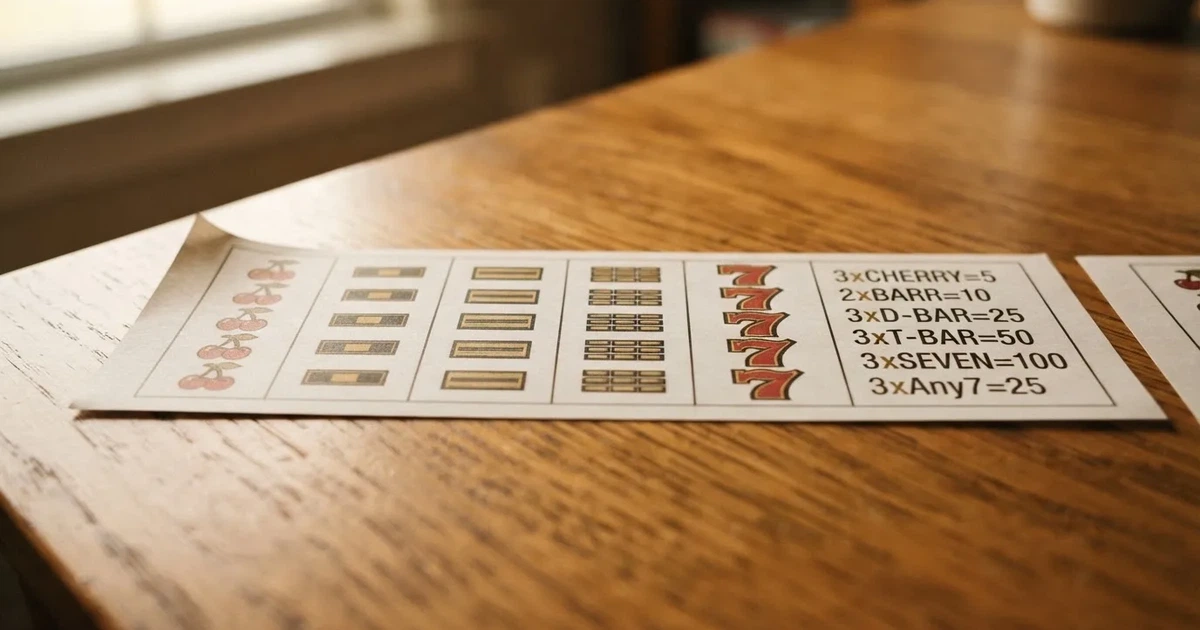
- What a Booongo slot actually shows on its paytable
- How Booongo connects to the wider slot-studio landscape
- The eleven brands the ACMA has acted against, and what that record says
- Payment Methods in Australia
- The eleven brands the ACMA has acted against, and what that record says (2)
- The legal frame that makes every brand on this page what it is
- The honest framing for a reader who arrived here with a shortlist in mind
- Frequently Asked Questions
Responsible gambling comes before any operator choice
The reason this page spends a section on responsible gambling before naming a single brand is that the subject itself sits inside a market where every site offering it is unlicensed in Australia. The risk profile is not the same as picking between licensed Australian bookmakers. A punter who already plays offshore accepts a different safety net, and a punter who has not yet started is choosing that net now, before a deposit.

The headline tool for anyone thinking about online wagering in Australia is BetStop, the National Self-Exclusion Register, which has been live since August 2023. BetStop binds every Australian-licensed online and phone wagering service to honour a registered exclusion. An offshore casino is not on that list, and does not have to honour it. Self-excluding through BetStop will block licensed bookmakers and stop their marketing, but it does not reach a Curaçao-licensed site operating outside the regime. That gap is the practical reason the register is not the whole answer.
The 24-hour help line is the National Gambling Helpline on 1800 858 858, free and confidential, with chat and email available through Gambling Help Online. The helpline is the line to call when the question stops being “which site” and becomes “how do I stop”. It is also the line to call before that question arrives, if the punter already sees the pattern forming.
A short, plain rule belongs here. Set a hard limit on time and money before logging in. Keep a written record of deposits and withdrawals. Read every term before claiming any offer, especially the kind that says “wagering requirement” without naming the multiple. If a session has gone past two hours, that is a session to walk away from, not to extend.
How money moves through offshore sites, and why the speed claim is usually a fiction
The money side of Booongo-powered play is informational on this page, because there is no Australian-licensed product to bank into. What follows describes how the offshore model works in general terms, so the reader knows what is being compared before any site name appears on the page.
Deposits at offshore casinos typically travel through one of three rails: a debit card processed through an offshore acquirer, a cryptocurrency transfer, or an e-wallet routed through an intermediary. Crypto is the rail most offshore sites push hardest for, partly because it settles faster from the punter’s side, and partly because it sits outside the consumer protection regime a debit card would normally attract. Since 11 June 2024, credit cards, credit-related products and digital currency have been banned as payment for licensed online wagering in Australia, with penalties up to A$247,500 for operators. A site asking an Australian for a credit card or a crypto deposit is operating outside the Australian rules, which is the same statement as the prohibition itself.
Withdrawals are where offshore sites diverge the most, and where the marketing tends to overstate. The headline figure on a payments page is usually a “processing time”, which is the gap between the punter requesting a payout and the site releasing it. That figure does not include the bank transfer that follows, which on Australian bank rails typically takes one to three business days for PayID and Osko, and one to five for BPAY. A site advertising a “same-day withdrawal” has solved the first half of the problem, not the second, and the second is the half the punter actually feels.
The relevant consumer-protection point is that an offshore operator is not subject to Australian dispute resolution. If a withdrawal is refused, the bonus terms are read differently after the fact, or the account is closed with a balance still on it, the only routes are the operator’s own complaints process and whatever regulator issued its licence in its home jurisdiction. An Australian punter has no local ombudsman to escalate to, no Australian Consumer Law to fall back on, and no guarantee that the offshore regulator will act. The block can come mid-session: the ACMA directs Australian ISPs to block illegal sites, and a balance sitting in an offshore account at that moment is a balance the punter may struggle to recover.
What a Booongo “bonus” actually costs the player who claims it
Bonuses and free spins exist on the offshore sites that carry Booongo titles, and the subject matters enough to a reader who has searched for it to deserve its own section. The framing is the same as the payments section above: this is background on what the offer is, not an instruction to claim one. No specific offer from any of the eleven brands on this page is recommended, because none of those brands is licensed in Australia and the offer terms were carried only by affiliate marketing pages that have no incentive to state them honestly.
A welcome package at an offshore casino typically layers three things: a matched deposit, expressed as a percentage of the first deposit up to a ceiling; a batch of free spins, attached to a specific slot title; and sometimes a no-deposit offer for account creation alone. Each layer carries a wagering requirement, which is a multiplier the punter must turn the bonus amount over before any winnings become withdrawable. A 100% match up to A$500 with a 40x wagering requirement on the bonus means A$500 of bonus needs A$20,000 of turnover before the bonus-related winnings clear. That figure is the real cost of the offer, and it is the figure the marketing page usually buries.
Free spins have their own calculation. A batch of 100 free spins at A$0.20 per spin on a title with a 96% return to player generates about A$0.80 of expected loss per spin, or roughly A$80 across the batch. The winnings, treated as bonus money, then carry their own wagering multiple. The headline number on the offer is the spin count, not the expected value after the playthrough.
A no-deposit bonus sounds like the only free lunch in the space, but it carries the same structure: a small credit on signup, a wagering requirement attached, and almost always a maximum cashout ceiling that caps what the punter can ever withdraw from it. The ceiling is what makes the offer feel cheap to give away. A A$10 no-deposit credit with a 50x wagering requirement and a A$50 maximum cashout is, in practice, a free trial of the site’s software rather than a genuine head start.
A bonus code or promo code sits in the same category. The code itself is not the offer; the offer is the wagering requirement, the maximum cashout, the eligible games and the expiry window. A reader who arrives at a site chasing a code has already lost the comparison, because the comparison is what the code is attached to.
Mobile play and the app question that does not have a local answer
Mobile is where offshore casinos compete hardest, because most of their audience plays from a phone. The page describes what a mobile-friendly version of an offshore casino typically involves, again as background only, without naming any app to install.
The technical layer is HTML5, which is the same standard every modern slot studio builds to and which runs inside any mobile browser without a native app. A reader who lands on an offshore casino from a phone is usually playing inside a browser tab wrapped in a web view, not inside a downloaded application. The difference matters for two reasons: a downloaded app from an offshore site is not subject to the Australian app-store checks that licensed products go through, and a browser-based session leaves a clearer paper trail, which is sometimes the only record a punter has of what was deposited and what was returned.
The other mobile-side point is data usage. A typical Booongo slot in HTML5 weighs between 2 and 8 megabytes on first load, and uses roughly 50 to 150 kilobytes per spin over a mobile network. A session of 200 spins on a 4G connection sits in the 15-to-30-megabyte range. Players on a metered plan or a low-data SIM will feel that figure, and the casino’s own loading time on a weak signal is the first thing that breaks down.
Notifications are the third mobile-side concern. A downloaded app can send push notifications, which the punter has to actively opt out of inside the phone’s settings. The opt-out is in the phone, not on the casino’s site, and the casino has no way to send push notifications from a browser tab. A reader who has installed an app from an offshore casino is the reader most likely to be re-engaged by it after a quiet week, which is the exact pattern BetStop is designed to interrupt on the licensed side.
What a Booongo slot actually shows on its paytable
Booongo, the studio, is a slot provider whose games are integrated into offshore casino platforms. The page sets out what a paytable generally shows so the reader knows the vocabulary before a brand name appears, without pointing to a real machine or site offering it.
A paytable lists the symbol values, the win lines, the bonus mechanics and the theoretical return to player. The theoretical return is the percentage of stake the slot returns across a large number of spins, expressed as RTP. A 96% RTP slot returns A$96 of every A$100 staked across millions of spins, which is a statistical average and not a guarantee for any individual session. The slot keeps the remaining A$4 as the house edge, which is the figure a punter pays for the entertainment.
A typical Booongo slot from the studio’s catalogue carries a 5-reel, 3-row layout with between 20 and 50 paylines, a free-spins feature triggered by three or more scatter symbols, and one or two bonus mechanics layered on top. The mechanics vary by title: hold-and-win, expanding wilds, cascading reels and progressive jackpots are all patterns the studio has used. The volatility rating — low, medium or high — describes how the slot distributes its returns. A high-volatility slot pays out rarely and in larger amounts; a low-volatility slot pays out often and in smaller amounts. The RTP does not move with volatility: a 96% RTP slot can be either high or low volatility, and the difference is in the shape of the distribution, not the average.
Hit rate is the third number worth knowing. A 15% hit rate means roughly one in every seven spins returns some payout, however small. A 30% hit rate means roughly one in three. Hit rate and RTP describe different things: hit rate is frequency, RTP is the size of the average return relative to stake. A slot with a high hit rate and a low RTP returns often in tiny amounts; a slot with a low hit rate and a high RTP returns rarely in large amounts.
A reader sitting at a paytable should be able to read four numbers: the RTP, the volatility class, the hit rate, and the maximum exposure on a single spin. The maximum exposure is the upper bound of what one spin can pay out, usually expressed as a multiple of stake (a 5,000x maximum exposure pays A$5,000 on a A$1 spin). The maximum exposure is the headline number, and the RTP is the honest one.
How Booongo connects to the wider slot-studio landscape
Booongo’s restructuring in 2021 produced a regulated-market successor, 3 Oaks Gaming, which was granted a remote operating licence by the UK Gambling Commission on 9 February 2024 under licence number 063055-R-338209-005. The company operates from Douglas, Isle of Man, under Green Rock Ltd. Following the UK licence, the UK Gambling Commission certified more than 50 of 3 Oaks Gaming’s slot titles, including 3 Pots of Egypt, Storm of Olympus, 777 Fruity Classic and Hawaii Riches. The studio received a recognition notice from the Malta Gaming Authority on 4 August 2025, letting it offer titles such as Sun of Egypt 4, Coin UP: Lightning and 3 Hot Chillies to MGA-licensed operators, on the back of earlier market approvals in the UK, Portugal and Romania.
The wider studio field includes several Australian-facing providers whose scale is worth a paragraph. Aristocrat Leisure, founded in 1953 and ASX-listed since 1996 under the ticker ALL, is the largest gambling-machine manufacturer in Australia and the second-largest slot-machine manufacturer worldwide behind International Game Technology. Its 2025 revenue was A$6.30 billion on a normalised net profit after tax and amortisation of A$1.55 billion, with 7,400 employees. Aristocrat Interactive, formed in April 2024 by combining the Anaxi unit with the newly acquired NeoGames group, is the regulated online arm. NeoGames came with Aspire Global, BtoBet and Pariplay, and the acquisition cost roughly US$1 billion.
The smaller studio side is where Booongo-class providers sit. 1spin4win, founded in 2021 by a group of professionals with 15 years of iGaming experience, is headquartered at Scharlooweg 39 in Willemstad, Curaçao, holds a Curaçao gaming licence, and reports more than 190 online slots in its portfolio, more than 1,000 partnerships with online casinos and aggregators, and 46% growth in total bet sum in the first half of 2025 against the first half of 2024. BGaming, operated by Stable Games Ltd of Valletta, Malta, holds an MGA Critical Gaming Supply Licence (MGA/B2B/785/2020) issued 18 March 2021. Betsoft, founded in 2006, runs a catalogue of more than 200 RNG games and partners with more than 500 operators in regulated markets across Europe, Scandinavia, Latin America and Africa.
Booongo is a small-to-mid studio within a field of similar providers, most of which supply the same offshore casinos. The brand recognition that users associate with “Booongo” is the recognition of a studio name on a casino’s game list, not the recognition of a quality standard. A punter who insists on a specific studio has narrowed the choice of site without narrowing the regulatory risk, because the sites running Booongo content are the same sites running every other small studio.
The eleven brands the ACMA has acted against, and what that record says
The brands below are not a ranking and not a recommendation. Each is listed because the Australian Communications and Media Authority has issued a formal warning over it for offering prohibited services to Australians. The table that follows puts them in the order the regulator’s own register carries them, which is the only order a reader comparing them on the legal dimension should use.
Payment Methods in Australia
| Payment Method | Status in Australia |
|---|---|
| Debit Card | Legal for licensed wagering |
| Bank Transfer | Legal for licensed wagering |
| PayID/Osko | Legal for licensed wagering |
| BPAY | Legal for licensed wagering |
| Credit Card | Banned for licensed wagering |
| Cryptocurrency | Banned for licensed wagering |
The eleven brands the ACMA has acted against, and what that record says (2)
| Brand | ACMA action and date | Operator named by the ACMA | Subject support |
|---|---|---|---|
| RocketPlay | Formal warning, March 2026 | Pulsup Ltd | No data |
| Level Up Casino | Formal warning, May 2022 | Dama N.V. | Wazdan content |
| Woo Casino | Formal warning, March 2025 | Dama N.V. | No data |
| Spirit Casino | Formal warning, May 2025 | Dama N.V. | No data |
| National Casino | Formal warning, July 2025 | Consolutetish S.R.L. | Betsoft, Pragmatic Play |
| Bizzo Casino | Formal warning, July 2025; earlier 2022 under TechSolutions | Consolutetish S.R.L.; TechSolutions (CY) Group Ltd and TechSolutions Group N.V. | No data |
| Ignition Casino | Formal warning, July 2025 | Bamboo Media | No data |
| Instant Casino | Formal warning, February 2025 | EOD Code SRL | No data |
| Jackbit | Formal warning, April 2026 | Ryker B.V. | No data |
| Casino Intense | Formal warning, April 2025 | Sterplay Holding Ltd | 1spin4win content |
| Sky Crown | Formal warning, September 2022 | Hollycorn N.V. | No data |
The pattern in the table is clear. Dama N.V. is the operator behind four of the eleven brands, and three of those warnings landed in 2022. The recurrence of the same operator under different brand names is the clearest signal the regulator has sent about how the offshore market is structured: a single corporate entity runs several customer-facing sites, gets warned, and continues to launch new ones. Consolutetish S.R.L. takes the same pattern with National Casino and Bizzo Casino in 2025.
The “subject support” column tracks how each brand relates to the studio search. Three of the eleven have a listing record of carrying the kind of content a reader searching for “Booongo” would recognise — Level Up Casino via Wazdan, National Casino via Betsoft and Pragmatic Play, Casino Intense via 1spin4win and other studios. The remaining eight carry no listing record on the brand itself. None of the eleven has been confirmed by an independent source as carrying Booongo content specifically, which is what a punter searching for this studio is actually trying to find. The honest answer is that the promise — a shortlist of Australian-facing Booongo casinos — does not exist on a list the regulator has already covered.
What the blocking record adds to the picture
The blocking record is the page’s prescribed calculation, because it is the arithmetic the regulator itself runs. As of June 2026, the ACMA reports that 1,751 illegal gambling and affiliate marketing websites had been blocked since the first blocking request in November 2019, and more than 230 unlicensed gambling services had left the Australian market since enforcement was strengthened in 2017.
The arithmetic the page carries is the blocking rate across the running window. From the first blocking request in November 2019 to the June 2026 register, the period runs roughly 79 to 80 months. The running total of 1,751 blocked sites, divided across that window, gives a blocking rate somewhere between 21 and 22 sites per month on average. The figure is an average: some months see a single round of blocks covering a dozen sites at once, others see nothing for weeks at a stretch. The June 2026 round alone asked Australian ISPs to block 12 more: 7Signs, ChromaBet, Donbet, Duospin, Freshbet, Slots Gem, Jacks Club, Lucky Start, Pointsbetz, Spinrise, Vinyl Casino and Wildsino.
The honest read of the rate is the condition that sits beside it. A blocking rate of roughly 21 sites per month describes how fast the regulator is clearing the visible end of the market, not how fast new sites are appearing. The two figures move in the same direction at the moment a round is published, and they move apart in the gaps between rounds. The page states the rate as a band rather than a single figure, because the period from the first blocking request to the register snapshot is not a clean month count and the average is meaningful only as a band.
H2 Gambling Capital’s 2025 estimate is the cost side of the same picture. Australians lose about A$3.9 billion a year to illegal gambling sites, and the share of gambling going through legal channels fell from 74% in 2021 to 64%. The illegal share is rising while the blocking rate holds steady, which is the contradiction the regulator’s record does not resolve on its own.
The legal frame that makes every brand on this page what it is
The Interactive Gambling Act 2001, strengthened by the Interactive Gambling Amendment Act 2017, makes it an offence to provide online casino games, online pokies or in-play betting to a person in Australia. No state or territory issues a licence for those products. What is licensable is wagering on races and sport placed before the event, lotteries and keno. In practice that wagering is licensed by the Northern Territory, where the Northern Territory Racing and Wagering Commission regulates 52 of Australia’s online bookmakers — Sportsbet, Bet365 and Ladbrokes among them — for tax reasons. The commission has no full-time staff and meets once a month in Darwin, which is the structural detail behind the recurring questions about how the Territory’s regime is run.
Enforcement sits with the ACMA. The ACMA investigates, issues formal warnings, and directs Australian internet service providers to block illegal sites. The individual player is not prosecuted: the IGA targets the provider. An offshore site gives no Australian consumer protection, no complaints body and no recourse if a withdrawal is refused, and it can be blocked with a balance still on it. The 2026 reform is the Interactive Gambling Amendment (Gambling Reform) Bill 2026, which passed Parliament on 19 August 2026 and whose advertising and inducement measures commence on 1 January 2027. It is law with a start date, not yet in force on a page dated 2026.
The payment side of the regime is the most concrete change a reader will feel. Since 11 June 2024, credit cards, credit-related products and digital currency are banned as payment for licensed online wagering in Australia. Legal deposit routes for licensed wagering are debit card, bank transfer, PayID/Osko and BPAY. A site asking an Australian for a credit card or a crypto deposit is operating outside the Australian rules, which is the same statement as the prohibition on the product itself.
The tax side is a short note for readers who wonder about winnings. Gambling winnings of a recreational player are not assessable income under section 6-5 of the ITAA 1997, and losses are not deductible, unless the person carries on a business of gambling. The note is a pointer to the ATO, not a tax ruling.
The honest framing for a reader who arrived here with a shortlist in mind
The subject of this page is the choice a reader has when searching for “best Booongo online casinos Australia 2026”, and that choice is narrower than the search suggests. The licensed Australian market does not carry online casino games or online pokies, which is the category every Booongo title sits inside. The offshore market carries the games and is the market the reader is implicitly comparing, but it is a market in which the Australian regulator has already named the brands and is actively blocking the routes.
A reader who arrived here looking for a shortlist to deposit into has arrived at a page that does not offer one, because no honest shortlist exists. The reader, on the same day, can use the licensed Australian wagering market for sports and racing with full consumer protection, can register with BetStop if the question of offshore play has already gone past casual, and can call 1800 858 858 if the next step is to stop. Those are the three options the page can offer, and they are the options the search results do not name.
The arithmetic at the heart of the page is the cost. A reader who deposits A$200 into an offshore casino expecting to recover anything close to it is betting against a house edge the slot’s RTP already prices in, against a wagering requirement the bonus terms multiply, against a withdrawal process the offshore site controls unilaterally, and against a regulator that can block the site before the balance is recovered. The expected loss is the figure the page can name from its calculation, and the figure is the same on every brand on the table above because the structural disadvantage is the same on every brand. The brand is not the variable; the legal frame is.
Frequently Asked Questions
Are online casinos legal in Australia?
No, online casinos and online slots are prohibited in Australia under the Interactive Gambling Act 2001. No state or territory licenses these products; licensed options are limited to pre-event sports and racing wagering, lotteries, and keno, regulated primarily by the Northern Territory.
What is BetStop?
BetStop is the National Self-Exclusion Register, live since August 2023. It allows players to voluntarily exclude themselves from all licensed Australian wagering services. However, this register does not apply to unlicensed offshore sites, so they are not required to honour self-exclusion requests.
Can I use credit cards in online casinos?
Since 11 June 2024, the use of credit cards and credit-related products, as well as digital currency, is banned for all licensed online wagering in Australia. Any offshore site requesting these payment methods is operating outside Australian rules and offers no consumer protection.
Where can I get help for gambling issues?
If you need support, you can contact the National Gambling Helpline at 1800 858 858. It is available 24/7, free, and confidential. Further assistance, including chat support, is provided by Gambling Help Online for those who need to manage their gambling habits.
What happens if a site is blocked while I have funds?
This is a primary risk of offshore play. Because these operators function outside Australian jurisdiction, there is no local ombudsman or consumer protection body to assist. If the ACMA directs an ISP to block a site, you may permanently lose access to your account and balance.