
Pokies tips and tricks in Australia: the part the marketing copy skips
Anyone searching for pokies tips and tricks lands in a particular corner of the internet. Pages with names like that promise a method, a sequence of bets, a “trick” that supposedly bends the math in the player’s favour. Most are written by people who have never seen a regulator’s compliance file. A few are written by people who have — and those tend to be blunt about what a tip can and cannot do. This article belongs to the second camp. It walks through how a modern poker machine actually decides what lands on the reels, what bet size does to the arithmetic rather than to the odds, why a strategy article that promises a “system” is selling something the machine cannot deliver, and where the legal frame sits around all of it for a person in Australia.
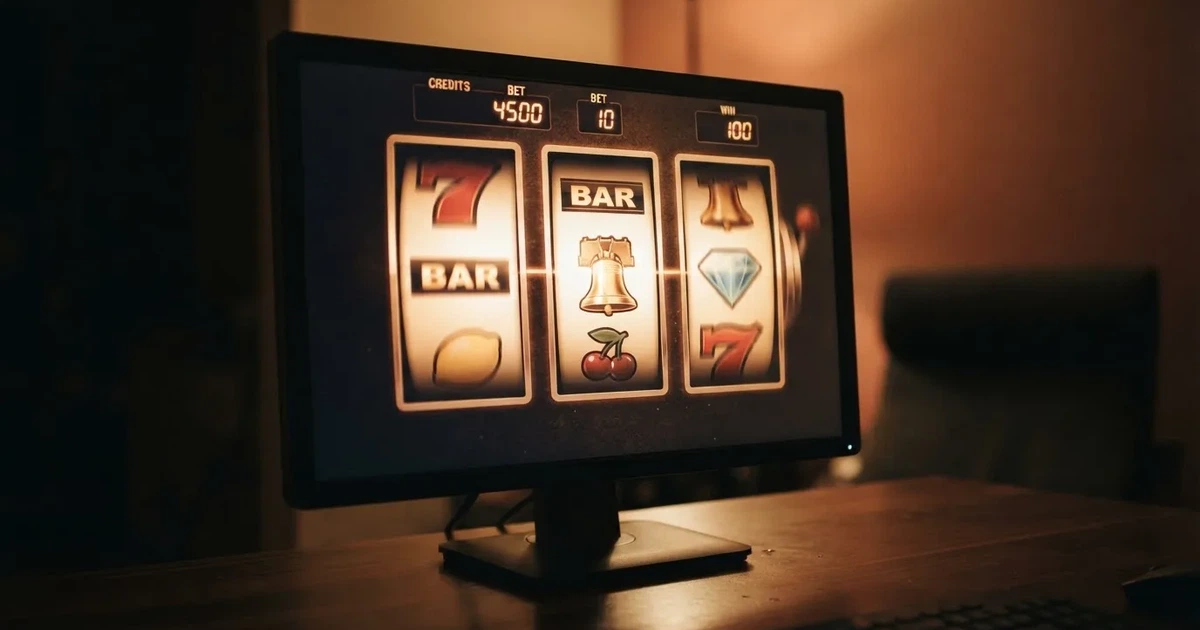
The data is current as of 8 November 2026, and the licence and blocking claims were checked against the ACMA register and the published formal-warning notices.
Table of Contents
- How a “tip” page usually tries to sell the idea
- The strategies that look like strategies
- Dragon Link and the title-specific question
- The legal frame for Australians
- The land-based alternative, and what it actually offers
- Australian context: scale, regulation, and what the numbers actually mean
- The brands the ACMA has warned
- The calculation: how fast the ACMA has been moving
- What this page is for
- Frequently asked questions
How a “tip” page usually tries to sell the idea
A typical article on this subject runs through a list of “tricks”. Slow down your play. Bet max so the bonus features unlock. Quit while you’re ahead. Switch machines after a losing streak. Time your session to the time of day. Some add bankroll management at the end, as if a budgeting framework could rescue the rest. The advice is usually presented as if each tip changes something inside the machine — as if the random number generator, the paytable, or the return-to-player setting bends a little because the player did a particular thing.

None of it does. The mechanism behind a modern pokie is a random number generator (RNG) that picks outcomes from a fixed virtual reel strip on every spin, with the return-to-player percentage and the volatility already baked into that strip by the game’s mathematics. The RNG does not know how long you have been playing, what you bet on the last spin, how many spins have passed since the last feature, or whether the machine is “due”. Each spin is independent. The house edge is the house edge. A tip that asks the player to alter their pattern does not alter the program that decides which symbol stops where.
That is the first thing to say about any “trick” article, and most of them leave it out. They sell the appearance of control in a game that is built, deliberately, to make the player feel in control. The rest of this page pulls the trick apart where it can and shows where the legal frame kicks in around the operators that host these games for Australians.
What an RNG actually decides
A random number generator on a licensed poker machine is a piece of software (or a hardware device on older machines) that produces a number from a vast range, many billions of possible values, on every spin. That number is mapped to a position on a virtual reel strip, which determines which symbol combination lands on the payline. The mapping is set at the time the game is mathematically configured, and the configuration has to be approved by the state or territory regulator before the game goes onto a club or casino floor in Australia. Once approved, the RNG runs the same way for every spin, every player, every bet size.
The result of any single spin has no memory of the spin before it. There is no streak to break and no streak to ride. A machine that has not paid a feature in two hours is exactly as likely to pay one on the next spin as it was on the first spin of the session — the chance is the same number, derived from the symbol distribution on the reel strip and the probability table the regulator approved. Anyone who tells you otherwise is selling reassurance, not information.
This is also why “hot” and “cold” machines are a fiction. A machine does not have a temperature. It has a configuration, and the configuration is fixed.
Why the paytable matters more than the trick
If a player is going to read anything about a game before sitting down to it, the paytable is the document that carries actual information. It lists what each symbol combination pays, what triggers the bonus feature, what the maximum payout is, and what the theoretical return-to-player percentage is. In an Australian club or casino, that return is set above a legal floor that varies by jurisdiction: 85 per cent in New South Wales, the Northern Territory, Queensland and most of Victoria, 87 per cent in the ACT and Tasmania (87 per cent at Crown Melbourne), 87.5 per cent in South Australia, and 90 per cent in Western Australia. The paytable on the machine is required to state the figure. It is the single number on the machine a player can read, and it is the one most “tips” articles refuse to engage with.
A higher RTP does not change volatility. Two games at 87 per cent can pay very differently across a session: one might return small wins frequently, the other might sit quiet for long stretches and then pay a large feature. The volatility profile is in the game’s design, not on a sticker the player chooses. That is also part of the paytable document, and it is the second thing to read after the percentage.
The strategies that look like strategies
A handful of strategies recur across strategy articles because they survive long enough to be copied. Each one is worth pulling apart, because the marketing language around them obscures the simple arithmetic underneath.
Bet size and the odds
The most common claim is that bet size influences outcomes — bet bigger to “unlock” features, or bet smaller to stretch a bankroll. The first half of that claim is sometimes literally true: many games do scale the size of bonus features by bet size, so a dollar-a-spin player wins less in a feature than a five-dollar-a-spin player. But the player’s chance of hitting the feature is the same at every bet size within the game’s allowed range. What changes is the size of the prize, not the probability of getting it. The “trick” is a description of how the paytable scales, not a strategy that shifts the odds.
The second half — bet smaller to stretch the bankroll — is a bankroll statement, not a strategy. Smaller bets mean more spins per dollar and a longer session, but the same expected loss per dollar over the long run. A player who bets a tenth of the maximum will sit at the machine for ten times as long and lose roughly the same amount, give or take the variance of a session. That is not a way to win. It is a way to play for longer.
“Quit while you’re ahead”
This is the closest a tips article comes to genuine advice, and it is the one most often delivered without the framing it needs. Quitting while ahead is not a strategy that beats the house edge; it is a strategy that limits the amount of the house edge a player actually pays in a single session. The math does not stop. The player stops, and that is what saves them. A punter who treats “quit while you’re ahead” as a session rule rather than a system has done something useful — they have set a personal limit. A punter who treats it as a way to walk away with profit on most nights is going to be disappointed, because variance does not care what they decided at the start.
A budget, a session length, and a stop-loss are not tricks. They are the rules a person sets for themselves before they sit down, and they are the only rules a pokies session actually responds to.
Switching machines after a losing streak
A losing streak on one machine is exactly as likely as a losing streak on the next. Switching does not change the math, and on a floor of identical games configured to the same RTP it changes nothing at all. The only case where switching is rational is when two games have different paytables — the player moves from a 87 per cent game to a 90 per cent game and accepts that the difference is small. Even that is not a “trick” — it is a comparison.
Time of day, day of week, machine position
There is no evidence, and no mechanism, for any of these. The RNG runs the same program at 10 a.m. as it does at 10 p.m. A machine near the door pays the same theoretical rate as a machine in the back corner. These are folkloric explanations for variance, not features of the machine.
Dragon Link and the title-specific question
A fair number of strategy articles single out a single title — usually Dragon Link — and present tips for that game as if they were different in kind from general pokies advice. They are not. Dragon Link, made by Aristocrat, runs the same RNG architecture as any other modern video pokie. What changes is the game’s bonus mechanic: a “hold and spin” feature where landing six or more orb symbols locks them in place and awards respins, with the feature ending when three consecutive respins fail to add a new orb. The tips for that game are usually about bet sizing within the feature (the orbs pay multiples of the line bet) and about which denomination to play.
That advice is genuine in the narrow sense that a player who bets more per line will see larger numbers when the feature fires. But the trigger probability is the same on every denomination within the game’s stated range. A tip that recommends a specific bet for Dragon Link is recommending a bankroll choice, not a strategy that changes the odds.
Dragon Link is also one of the titles that comes up most often in search queries for this subject, alongside Buffalo and Lightning Link. Those three titles dominate “how to win” articles because they are widely available in Australian venues and because their bonus features produce the kind of visible, dramatic payouts that make for good screenshots. They are not different in any way that affects the math.
The legal frame for Australians
The legal status of online pokies for Australians is the part most “tips and tricks” pages skip, because the frame cuts against the article’s pitch. No state or territory licenses online casino games or online pokies for people in Australia. The Interactive Gambling Act 2001, strengthened by the Interactive Gambling Amendment Act 2017, makes it an offence to provide online casino games to a person physically in Australia. Bookmakers and wagering services licensed by the Northern Territory Racing and Wagering Commission can offer pre-event betting on races and sport; they cannot offer online casino games, online pokies, or in-play betting. The minimum age for any legal gambling is 18.
What this means for a punter looking at a “tips and tricks” page that links to an offshore casino is straightforward. The site offering the tips is, in nearly every case, an offshore operator with no Australian licence and no Australian consumer protection. The Australian Communications and Media Authority investigates, issues formal warnings, and directs Australian ISPs to block these sites. The individual player is not prosecuted under the IGA — the law targets the provider — but a player using an offshore site has no Australian complaints body, no recourse if a withdrawal is refused, and a real chance that the site gets blocked with a balance still sitting on it.
What the ACMA has actually done
The ACMA has been issuing formal warnings and directing blocks since 2017. As of a round reported in June 2026, a total of 1,751 illegal gambling and affiliate marketing websites had been blocked since the first blocking request in November 2019, and more than 230 unlicensed gambling services had left the Australian market since the 2017 enforcement strengthening. In that same June 2026 round the ACMA asked ISPs to block another twelve sites: 7Signs, ChromaBet, Donbet, Duospin, Freshbet, Slots Gem, Jacks Club, Lucky Start, Pointsbetz.com, Spinrise, Vinyl Casino and Wildsino. The pattern is not a one-off crackdown. It is a standing programme that has been running for nearly a decade and shows no sign of stopping.
The formal-warning register is a separate track. The ACMA issues a formal warning to an operator it identifies as offering prohibited services to Australians, and the operator is given a chance to stop before further action. Recent warnings that have touched pokies-style or casino-style offerings include Rocketplay (Pulsup Ltd, March 2026), Dama N.V. over Woo Casino (March 2025) and Spirit Casino (May 2025), Bamboo Media over Ignition Casino (July 2025), Consolutetish S.R.L. over National Casino and Bizzo Casino (July 2025), EOD Code SRL over Instant Casino (February 2025), Ryker B.V. over Jackbit and CasinOK (April 2026), Sterplay Holding Ltd over Casino Intense (April 2025), and Hollycorn N.V. over Sky Crown and Blue Leo (September 2022). The earlier May 2022 warning to Dama N.V. covered Bambet, Dazard, Level Up, Rocketplay, Wild Tornado and Cobra Casinos. The Bizzo Casino name has been the subject of warnings twice — once to TechSolutions (CY) Group Limited and TechSolutions Group N.V. in 2022, and again to Consolutetish S.R.L. in 2025 — which is itself a useful illustration of how rebrands and operator changes do not make a site legal for Australians.
What the offshore numbers say
H2 Gambling Capital’s 2025 estimate puts the annual loss by Australians to illegal gambling sites at about A$3.9 billion. The same estimate puts the share of gambling going through legal channels at 64 per cent, down from 74 per cent in 2021. Those are headline numbers and they should be treated as estimates rather than audited figures, but the direction is unambiguous. The legal channel is shrinking as a share of the total, and the illegal channel is growing. Tips articles that link to offshore sites are participating in that shift.
Player protection that does and does not apply
BetStop, the National Self-Exclusion Register, has been live since August 2023 and binds Australian-licensed online and phone wagering services. It does not bind an offshore casino, because an offshore casino is not connected to it. A player who has self-excluded through BetStop and then opens an account with an offshore operator has excluded themselves from exactly the places they were trying to avoid.
For help, the National Gambling Helpline on 1800 858 858 is free, 24/7, with chat available through Gambling Help Online. These services are for Australians who want support, and they are independent of any operator named on this page.
Payments tell the story
A payment-method ban has been in force since 11 June 2024: credit cards, credit-related products, and digital currency are banned as payment for licensed online wagering. The legal deposit routes for a licensed Australian wagering service are debit card, bank transfer, PayID and Osko, and BPAY. An offshore site asking an Australian for a credit card or a crypto deposit is operating outside the Australian rules. The payment screen a player lands on is, in practice, the fastest way to tell whether a site is inside the law or outside it.
The Interactive Gambling Amendment (Gambling Reform) Bill 2026 passed Parliament on 19 August 2026 and brings advertising and inducement measures into force on 1 January 2027. It is law with a start date, not yet in force on a 2026 page, but the direction of travel is set.
The land-based alternative, and what it actually offers
The land-based alternative is real. Pokies — electronic gaming machines — operate in clubs, pubs and casinos in every Australian state and territory except for the WA pub and club sector, where they have been banned since Crown Perth opened in 1985. As of October 2023, Queensland had 21,122 gaming machines in 351 venues; Victoria had 26,380 outside Crown Casino across 488 venues, under a 30,000-machine statewide cap; New South Wales had 87,298 machines outside casinos across 2,195 venues in June 2023, with player losses of A$8.18 billion in 2022–23.
These machines are licensed, regulated, and configured to the return-to-player floors noted earlier. A player at a licensed venue in Australia has a regulated game in front of them, an approved paytable on the machine, and access to the state complaints and self-exclusion machinery. None of that is true of an offshore site. The trade-off is that the games are the same mathematics the offshore site uses — a 90 per cent WA machine still has a 10 per cent house edge — but the consumer frame around the play is Australian.
For a punter who wants to test bankroll management or session rules in a live setting without crossing the legal line, the licensed venue is the legal way to do it. Tasmania was planning nation-leading mandatory pre-commitment cards for its poker machines, with implementation delayed to late 2025; the reform exists, and the timeline has slipped, and that is itself an indication of how slowly these systems roll out.
Australian context: scale, regulation, and what the numbers actually mean
The size of the Australian pokes market is hard to overstate. In 2020–21, Australians bet almost A$150 billion through gaming machines and lost A$12.18 billion on them. Australia has about 3 per cent of the world’s pub and club poker machines with 0.3 per cent of the global population, which gives the per-capita rate a stark shape. Western Australia banned poker machines in pubs and clubs when Crown Perth opened in 1985; Crown Perth’s own machine count has since grown from about 200 in 1985 to roughly 2,500, all approved by the state’s Gaming and Wagering Commission, which is what one expert described to the ABC as “the most addictive form of gambling” sitting inside the only legal venue in the state. Tasmania ran under a Federal Group monopoly from 1968 until legislation passed in November 2021 ended that monopoly and moved oversight of the machines to the Tasmanian Liquor and Gaming Commission.
These are the shape of the market a strategy article sits inside. The legal floor is set per jurisdiction, the regulator approves the games and the paytables, and the consumer frame is real, if imperfect. None of it changes the math on the machine. It does change what a player can do if something goes wrong.
The brands the ACMA has warned
What follows is not a ranking. These are operators the ACMA has issued formal warnings over for offering prohibited online casino services to Australians. They appear here because the regulator has named them, and because they are the names a person reading “tips and tricks” pages is most likely to encounter. None of them are places an Australian can legally play online pokies, whatever licence badge the homepage displays. The legal status is the same on every one.
| Brand | ACMA action and date | Operator named by the ACMA | Subject support |
|---|---|---|---|
| RocketPlay | Formal warning under the Interactive Gambling Act 2001, March 2026 | Pulsup Ltd | — |
| Level Up Casino | Formal warning under the Interactive Gambling Act 2001, May 2022 | Dama N.V. | — |
| Woo Casino | Formal warning under the Interactive Gambling Act 2001, March 2025 | Dama N.V. | — |
| Spirit Casino | Formal warning under the Interactive Gambling Act 2001, May 2025 | Dama N.V. | — |
| National Casino | Formal warning under the Interactive Gambling Act 2001, July 2025 | Consolutetish S.R.L. | — |
| Bizzo Casino | Formal warning under the Interactive Gambling Act 2001, July 2025 (and 2022) | Consolutetish S.R.L. (and TechSolutions, 2022) | — |
| Ignition Casino | Formal warning under the Interactive Gambling Act 2001, July 2025 | Bamboo Media | — |
| Instant Casino | Formal warning under the Interactive Gambling Act 2001, February 2025 | EOD Code SRL | — |
| Jackbit | Formal warning under the Interactive Gambling Act 2001, April 2026 | Ryker B.V. | — |
| Casino Intense | Formal warning under the Interactive Gambling Act 2001, April 2025 | Sterplay Holding Ltd | — |
| Sky Crown | Formal warning under the Interactive Gambling Act 2001, September 2022 | Hollycorn N.V. | — |
The column on subject support — that is, what these brands say they offer in pokies tips and tricks material — is mostly a blank line on purpose. The pages that market these brands to Australians do so through affiliate content that the ACMA has been moving against, and the substance of what those pages claim is what this article is built to question. A punter who lands on one of these sites through a tips article is, in almost every case, being routed toward a site the regulator has already included in its blocking programme.
RocketPlay
The ACMA issued a formal warning to Pulsup Ltd over Rocketplay.com.au in March 2026, and an earlier Dama N.V. warning from May 2022 had already covered Rocketplay among other brands. A player reaching the site through a tips article is being routed toward a service the ACMA has named twice. The brand’s main proposition is the standard offshore-pokies bundle: a long list of slots, deposit bonuses, and a “tips” blog. The pitch is exactly the one this article pulls apart. The regulator’s view is on the record.
Level Up Casino
A Dama N.V. brand, named in the May 2022 ACMA formal warning alongside Bambet, Dazard, Rocketplay, Wild Tornado and Cobra Casinos. Dama N.V. is one of the most-warned operator groups in the ACMA register — Woo Casino and Spirit Casino, both covered in 2025, are also Dama N.V. brands. The pattern is what matters here, more than any single brand. When a tips article recommends a “Dama N.V. casino”, it is recommending one of a handful of brands the ACMA has named more than once.
Woo Casino
Dama N.V. again, this time on a March 2025 formal warning. Woo Casino is one of the brands most often cited in affiliate “tips and tricks” articles targeting Australian search traffic. The ACMA’s position is on the record, and the operator’s response to a warning has historically been limited to disclaimers at the foot of the page about restricting access from certain countries. That disclaimer is not a licence, and it does not address the IGA.
Spirit Casino
Also Dama N.V., May 2025. Spirit Casino sits in the same operator group as Woo Casino and the May 2022 cohort. A reader who lands here through a tips article is being routed into a service the regulator has named twice within a four-year window.
National Casino
Consolutetish S.R.L. is the operator the ACMA named in the July 2025 warning over National Casino and Bizzo Casino. National Casino is also one of the brands whose affiliate marketing the ACMA has acted against in the broader blocking programme. The same observation applies: the regulator has named the operator, and the site continues to appear in search results for Australian pokies queries.
Bizzo Casino
Two warnings, two operators: TechSolutions (CY) Group Limited and TechSolutions Group N.V. in 2022, Consolutetish S.R.L. in 2025. That is two distinct corporate entities the ACMA has named in connection with the same brand, which is itself an indication of how much operator structure can change under a single trading name. A punter reading a tips article that recommends Bizzo is reading a recommendation of a brand the regulator has flagged twice.
Ignition Casino
Bamboo Media is the operator the ACMA named in the July 2025 warning. Ignition Casino has historically marketed itself to Australian traffic through affiliate content targeting the same “tips and tricks” queries. The ACMA’s action sits on top of that, and the brand remains on affiliate lists as of writing.
Instant Casino
EOD Code SRL, February 2025. Instant Casino is one of the more aggressively marketed brands in this category, with affiliate content that targets Australian pokies search terms directly. The ACMA’s formal warning is the regulator’s answer to that marketing.
Jackbit
Ryker B.V., April 2026. Jackbit was named in the same warning as CasinOK, and the warning is recent enough to be in the current ACMA register. A reader reaching a tips article that links to Jackbit is entering a brand that is effectively under formal ACMA sanction.
Casino Intense
Sterplay Holding Ltd, April 2025. Casino Intense is another brand that recurs in affiliate “tips” content for Australian traffic. The warning is on the record.
Sky Crown
Hollycorn N.V., September 2022 — an older warning, but still on the ACMA register. Sky Crown was named alongside Blue Leo in that warning, and the brand remains on affiliate lists. The age of the warning does not weaken it; an IGA breach from 2022 is still an IGA breach in 2026.
The calculation: how fast the ACMA has been moving
The blocking programme gives a number that is worth setting out, because it tells the reader how quickly the frame around these sites is tightening. Between November 2019 and the June 2026 round, the ACMA directed ISPs to block 1,751 illegal gambling and affiliate marketing websites. That is roughly a band in the order of two hundred and fifty to three hundred blocks per year across the run of the programme, and it is a rate that has not slowed. In a single round in June 2026, twelve sites were added. The shape of the programme is steady enforcement rather than occasional sweeps, and the direction of travel is set by the 2026 amendment bill, which adds advertising and inducement measures on top of the existing framework.
State the result as a band, not a single figure: across the lifetime of the ACMA blocking programme since November 2019, the average pace of site removals sits in the order of two hundred and fifty to three hundred per year, with individual rounds adding a dozen sites at a time and more than 230 unlicensed services having left the Australian market entirely since 2017. The condition is the assumption that the ACMA’s published blocking total of 1,751 is distributed evenly across the roughly six-and-a-half years since the first blocking request. It is not — the round sizes have varied — but the band captures the average pace a reader can use to think about how fast this space is being cleared.
What this page is for
This page is for the Australian punter who has read a “tips and tricks” article and wants to know what is on the other side of it. It is not a route to an offshore casino, and it is not a promotion for any of the brands in the ACMA table. It is a description of what an RNG actually decides, what bet size does, why a system cannot change the math, and where the law sits around the operators that host these games.
For a person who wants to play pokies inside the law, the path is a licensed Australian venue, a budget set in advance, a session length set in advance, and an awareness of the support services available if the play stops being fun. The National Gambling Helpline is 1800 858 858, free, 24/7, with chat at Gambling Help Online. BetStop is the national self-exclusion register for licensed wagering. These are the resources that sit on the legal side of the line, and they are the ones that work for Australians.
Frequently asked questions
Do any genuine tips or tricks change the odds on a pokies machine?
No. A modern poker machine’s outcome is decided by a random number generator that picks from a fixed virtual reel strip on every spin. Each spin is independent of the ones before and after it. No betting pattern, no timing trick, and no “hot or cold” reading changes the program that decides the outcome. The only numbers a player can actually move are the size of the bets and the length of the session — bankroll decisions, not odds decisions.
What’s different about tips for Dragon Link compared with pokies generally?
Nothing in the math. Dragon Link, like other modern video pokies, uses a random number generator with a fixed symbol distribution and a fixed return-to-player setting. The game’s distinctive feature is its hold-and-spin bonus mechanic, which is scaled by bet size, so a higher line bet produces a larger feature payout when the feature fires. The trigger probability is the same at every bet size. Tips aimed at Dragon Link are bankroll advice dressed up as strategy.
Is there a legal way for an Australian to try out pokies strategies?
Yes, at licensed land-based venues. Pokies are regulated state by state in Australia, with return-to-player floors ranging from 85 to 90 per cent depending on the jurisdiction. A player at a licensed club, pub, or casino is using a regulated game, can read the paytable on the machine, and has access to Australian complaints and self-exclusion processes. Online pokies are prohibited for Australians under the Interactive Gambling Act 2001.
How does bet size affect the odds on a typical pokies machine?
It doesn’t, on the odds themselves. A larger bet does not increase the probability of hitting a bonus feature or a winning combination. What it does change is the size of the payout when a feature does fire, because most games scale their bonus awards by the line bet. The expected loss per dollar wagered is the same across the game’s allowed bet range; a smaller bet means more spins per dollar and a longer session, not better odds.
What do “tips to win pokies” articles usually get wrong about RNGs?
They treat the machine as if it has a memory and a mood. They claim a machine is “due” for a payout, that a losing streak makes a win more likely, that switching machines resets the math, or that bet size changes the chance of triggering a feature. None of that is how a regulated random number generator works. Each spin is an independent draw from the same probability distribution, and the distribution does not change with what the player did on the spin before. Articles that promise otherwise are selling reassurance, not information.
Why do so many pokies tips pages mention Dragon Link specifically?
Because Dragon Link is one of the most widely installed titles in Australian venues and produces dramatic, visible bonus payouts that make for good screenshots and good search-engine copy. The title also has a high-volatility bonus feature that produces long quiet stretches between large wins, which the tips pages read as a “pattern” rather than as variance. The attention Dragon Link gets is a marketing artefact, not a sign that the title is mathematically different from other modern pokies.