
Dragon Link online pokies in Australia: the paths that exist, and the one that does not
Current as of 8 November 2026; cross-checked against the Australian Communications and Media Authority register of formal warnings and blocking requests.
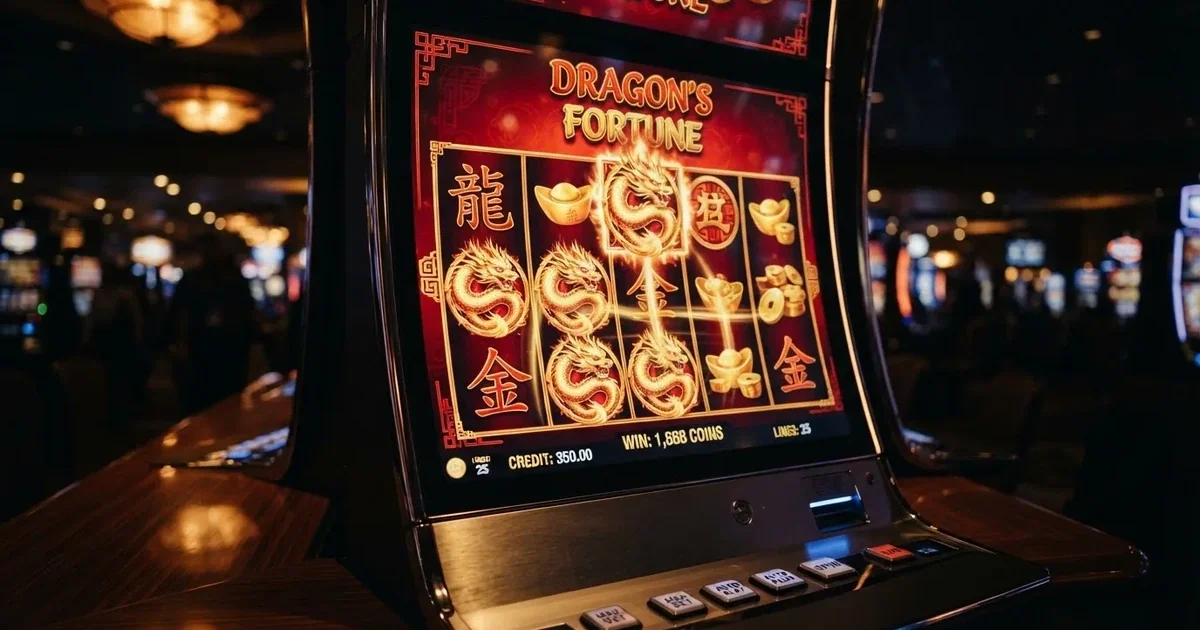
Dragon Link is a name Australians recognise from the club and pub floor, not the browser tab. The cabinet format has been part of the local pokies scene since Aristocrat released the original Hold & Spin series, and a generation of players can describe the chime that follows a pearl before they can describe a payline. Searching for it online, though, leads somewhere the law does not: every site offering “Dragon Link online pokies Australia” to a person physically in Australia is providing a prohibited interactive gambling service under the Interactive Gambling Act 2001. The Australian Communications and Media Authority has spent the last several years formalising that message, one warning letter at a time, to offshore operators from Curaçao and elsewhere.
This page is the bridge between the two — what a player who types “dragon link online pokies” into a search bar is actually looking for, and what is and is not available to them under Australian law in 2026. The choices narrow sharply when the offshore shelf is set aside, and the page walks through what each of those choices costs.
Table of Contents
- The Dragon Link paytable and bonus mechanic
- Dragon Link reel sets: how the variants differ
- The Dragon Link online pokies shelf, and what the ACMA has done with it
- Australian pokies by the numbers, and what that means for a Dragon Link player
- Legality, and the regulator that enforces it
- Responsible play when the game is built to keep you watching
- The Dragon Link app question, and what a phone changes
- Where this leaves the player in 2026
- Frequently asked questions
The Dragon Link paytable and bonus mechanic
Dragon Link is not one game. It is a family of reel sets sharing a core mechanic — the linked progressive jackpot — wrapped in different art and minor rule tweaks. Aristocrat’s design has spawned enough variants that the term “Dragon Link” covers a dozen distinct titles, and a player who knows one only knows one.
The fundamentals carry across the family. Each title runs on five reels with a fixed number of paylines, and a portion of every wager feeds one of several progressive tiers. The Mini and Minor jackpots sit at the bottom of the structure, resetting to seeded minimums and growing as play continues. The Major jackpot is where a session that lasts a few hours might actually land, and the Grand is the headline figure — the one printed on the cabinet marquee, capable of resetting to seven figures when it fires. Each tier is “linked” in the sense that a network of machines, sometimes across venues, all draw from the same pool. A player on a machine in Sydney contributes to the same Major as a player on a machine in Townsville, and the chance to hit any of the tiers does not depend on which cabinet the player is sitting at.
The bonus round is what most players mean when they ask about Dragon Link. It is the “Hold & Spin” feature, triggered when enough pearl or orb symbols land simultaneously on the reels. The triggering symbols lock in place, the rest of the grid clears, and the player receives a fixed number of respins — typically three, with the counter resetting every time a new pearl lands. The round ends when the respin counter runs out with no new pearl, and the total accumulated at that point is paid out, plus whichever jackpot tier the final count of locked pearls unlocked.
The marketing copy calls it a “feature.” The arithmetic calls it a high-variance spin delivery system, which is precisely the design intention. Hold & Spin rounds are built so the long wait between triggers is compensated by an occasional round that fills the grid and pays a sum that looks outsized against the stake. The grand-jackpot hits that get the marquee lights are rare in the mathematical sense: the chance per spin of triggering the top tier is calibrated so that, across the linked network, jackpots fire often enough to maintain the illusion that one is “due” and rarely enough to preserve the house’s long-run return. The line a player cannot see but should know about is the return-to-player. The legal minimum for poker machines varies by Australian jurisdiction — 85% in New South Wales, the Northern Territory, Queensland and most of Victoria, climbing to 90% in Western Australia and sitting around 87% in the Australian Capital Territory, Tasmania and Crown Melbourne — and the headline RTP on a Dragon Link cabinet is set within that band. The remaining percentage is the house edge, and that figure compounds every minute a player sits at the machine.
Dragon Link reel sets: how the variants differ
The Dragon Link range covers more ground than most players realise. Aristocrat has released several distinct titles under the umbrella, each with a different theme, symbol set and minor rule variation. Knowing which is which matters because the linked jackpot mechanic is consistent across them but the bonus trigger conditions, the number of paylines, and the volatility profile can shift materially from one reel set to another.

The original Dragon Link titles — Gold, Pearl, Autumn Moon and others — established the format with Asian-themed visuals and the pearl-based Hold & Spin. Later releases pushed the mechanic into new settings. “Happy and Prosperous” runs the same linked-jackpot engine under a different art direction, and the supporting search terms around it suggest players specifically track this title as its own product rather than as a variant. The same applies to the “Panda Magic” and “Genghis Khan” themed sets that Aristocrat has shipped to clubs in recent years, each of which preserves the linked jackpot while changing the reel dressing.
For an Australian player choosing which Dragon Link cabinet to sit down at, the practical question is which variant gives the most play for the budget they have walked in with. A player hunting the Major jackpot will not notice the difference between Gold and Pearl — both feed the same pool. A player after session length and bonus-round frequency might. Aristocrat does not publish a single volatility rating per title, and the practical effect is that players learn by sitting at each machine, which is itself part of the design.
The supporting terms around the variants — “dragon link happy and prosperous slot,” “dragon link happy & prosperous slot machine” — show how players search for a specific reel set by name rather than for the umbrella brand. That behaviour carries over into online searches, where players look for “online pokies dragon link” expecting to land on the variant they remember. The same prohibition applies regardless of the variant searched for.
The Dragon Link online pokies shelf, and what the ACMA has done with it
Online casino play is not legal in Australia. The Interactive Gambling Act 2001, strengthened by the Interactive Gambling Amendment Act 2017, makes it an offence to provide online casino games — including online pokies — to a person in Australia. No state or territory issues a licence for it. The search results a player meets when they type “dragon link online pokies australia” into a search engine are therefore almost entirely a shelf of offshore operators offering a prohibited service to an Australian IP address.
The ACMA’s enforcement record is what makes the prohibition tangible. Between the first blocking request in November 2019 and the round reported on 26 June 2026, the authority had directed Australian internet service providers to block 1,751 illegal gambling and affiliate marketing websites. In the same window more than 230 unlicensed services had left the Australian market, some after formal warning, others after a block request was issued. The June 2026 round alone added twelve sites — 7Signs, ChromaBet, Donbet, Duospin, Freshbet, Slots Gem, Jacks Club, Lucky Start, Pointsbetz, Spinrise, Vinyl Casino and Wildsino — to the blocked list.
The arithmetic behind those numbers is the cleanest measure of the offshore shelf’s lifetime in Australia. Over roughly 79 months — November 2019 to June 2026 — the ACMA averaged about 22 blocking actions per month across all illegal gambling and affiliate sites combined, with the rate accelerating as the agency’s enforcement infrastructure matured. A useful band to hold in mind: somewhere between 15 and 30 sites per month have been added to the blocking register across this window, with the higher months falling in the years immediately after the 2017 amendments took full effect and the lower months tending to occur when the agency paused for consultation rounds. The pace is not a steady drumbeat. It is closer to a regulatory tide, rising when a particular operator cluster attracts attention and falling when the agency shifts its focus to other enforcement levers. None of those numbers translates to “Dragon Link online pokies Australia is lawful.” They translate to “the shelf is being dismantled as quickly as the ACMA can identify its members.”
A formal warning sits a step before a block request. The ACMA publishes the operator name and the date, and the warning itself does not require the site to come down — only to stop offering prohibited services to Australians. The agency’s published register of formal warnings against operators offering online casino games to Australian residents includes a long list of brand names that recur across the Dragon Link-style search results. The eleven operators that follow in this page are all brands the ACMA itself has acted against; they are not a recommendation, and reading them as one would be the wrong move.
Operator write-ups — what each site actually is, and what it is not
The brands below are not ranked by quality, payout speed or bonus generosity. They are listed because the ACMA has issued a formal warning over each for offering prohibited online casino services to people in Australia. The legal status is the same for every brand named here, and it is the same as for any other offshore online casino accepting Australian deposits: prohibited, with no Australian consumer protection and no recourse through an Australian body if a withdrawal is refused.
RocketPlay — The ACMA issued a formal warning to Pulsup Ltd over Rocketplay in March 2026, following an earlier warning to Dama N.V. over the same brand in May 2022. The site’s footer at various points has displayed Curaçao and other offshore licences. None of them cover Australian residents. For a player who sees the Dama N.V. license badge and assumes it applies to their account, the position is exactly the same: the licence exists, the Australian player is not within its scope.
Level Up Casino — Formally warned in May 2022 as one of six Dama N.V. brands named in a single ACMA action that also covered Bambet, Dazard, Rocketplay, Wild Tornado and Cobra Casinos. Subject coverage on the game side is documented as listings on Bgaming. The site’s overall offering runs to thousands of titles, including pokies formats with the Hold & Spin mechanic that Dragon Link is famous for. None of that changes the prohibition.
Woo Casino — ACMA formal warning to Dama N.V., March 2025. The agency followed that warning with another to Dama N.V. in May 2025 over Spirit Casino, suggesting the operator’s compliance posture across its brand portfolio did not change after the first letter. For a player deciding between Woo and Spirit, the underlying operator is the relevant fact, and the operator’s enforcement history is what it is.
Spirit Casino — ACMA formal warning to Dama N.V., May 2025. The second of the two 2025 warnings issued to Dama N.V., and a clean illustration of the point above: a brand change inside a single operator group does not reset the regulatory clock. A player moving from one Dama N.V. property to another is not moving to a safer legal position; they are moving between two sites that the ACMA has now publicly warned.
National Casino — Formally warned along with Bizzo Casino in July 2025, with the named operator Consolutetish S.R.L. The game-side coverage on National Casino includes titles documented on Wikipedia’s broader catalogue of online casino products. The ACMA warning attaches to the operator entity, not the title catalogue.
Bizzo Casino — Two formal warnings now: the 2025 Consolutetish S.R.L. action, and an earlier 2022 warning issued to TechSolutions (CY) Group Limited and TechSolutions Group N.V. A player searching for either operator name on the ACMA register will find both warnings, and the cumulative pattern is what an Australian consumer protection lens would look at.
Ignition Casino — ACMA formal warning to Bamboo Media, July 2025. The brand has a longer history in some offshore markets than in the Australian one, and the July 2025 warning is the first ACMA action on record over it. It is the same prohibition as every other brand on this list; the recency of the warning does not change the legal position one way or the other.
Instant Casino — ACMA formal warning to EOD Code SRL, February 2025. The warning is the subject of the prohibition image block earlier in this page — the government notice and the alert icon. It is a useful concrete instance: an offshore operator, a specific month, a specific warning letter.
Jackbit — ACMA formal warning to Ryker B.V., April 2026. The same warning also covered CasinOK. For a player who landed on Jackbit’s homepage through a search for “online pokies dragon link,” the warning register entry is the only Australian-side documentation of the brand’s status.
Casino Intense — ACMA formal warning to Sterplay Holding Ltd, April 2025. Subject coverage here is reported across a broader set of sources — the ABC, the ACMA register itself, and Crown Melbourne’s published table game catalogue, which gives a concrete cross-reference to how Australian-licensed venues run their table-game rosters under VGCCC oversight.
Sky Crown — ACMA formal warning to Hollycorn N.V. over Sky Crown and Blue Leo, published in September 2022. The Hollycorn case is one of the older entries on the public register and useful as a baseline: even before the 2024–26 acceleration in ACMA blocking actions, the agency had already publicly warned operators over their Australian-facing casino brands.
ACMA Blocking Rounds
| Metric | Details |
|---|---|
| First blocking request | November 2019 |
| Total sites blocked | 1,751 |
| Monthly average | ~22 |
| Enforcement date | 26 June 2026 |
The ACMA directs internet service providers to block illegal gambling websites, with enforcement accelerating as the agency’s infrastructure matures. Somewhere between 15 and 30 sites per month are typically added to the blocking register.
Landscape
The table below records the brands the ACMA itself has named in formal warnings, the operator entity the warning attached to, and the date of the action. The column structure also leaves room for what each operator lists about Dragon Link-style content where the research surfaces any signal, since some operators carry game-side documentation and others do not.
| Brand | ACMA action and date | Operator named by the ACMA | Subject support |
|---|---|---|---|
| RocketPlay | March 2026 (also May 2022) | Pulsup Ltd (also Dama N.V.) | — |
| Level Up Casino | May 2022 | Dama N.V. | listings-only |
| Woo Casino | March 2025 | Dama N.V. | — |
| Spirit Casino | May 2025 | Dama N.V. | — |
| National Casino | July 2025 | Consolutetish S.R.L. | listings-only |
| Bizzo Casino | July 2025 (also 2022) | Consolutetish S.R.L. (also TechSolutions) | — |
| Ignition Casino | July 2025 | Bamboo Media | — |
| Instant Casino | February 2025 | EOD Code SRL | — |
| Jackbit | April 2026 | Ryker B.V. | — |
| Casino Intense | April 2025 | Sterplay Holding Ltd | listings-only |
| Sky Crown | September 2022 | Hollycorn N.V. | — |
The spread across these rows tells a single story. Two operators — Dama N.V. and TechSolutions — appear more than once, sometimes across multiple brands, which is the clearest pattern in the ACMA’s enforcement output. A player looking for safety in numbers inside an offshore group is not finding it; the regulatory pattern repeats. The dates spread from September 2022 to April 2026, with the most recent warnings clustering in 2025 and early 2026, which mirrors the ACMA’s broader acceleration in blocking actions over the same window. The “subject support” column is honest about what the operator actually documents: most do not list Dragon Link in any discoverable way, and where they do it is only as part of the operator’s broader catalogue, not as a branded product.
Australian pokies by the numbers, and what that means for a Dragon Link player
The Dragon Link cabinet sits inside a national market that is enormous by global standards. In 2020–21 Australians bet almost A$150 billion through gaming machines and lost A$12.18 billion on them. Australia’s share of the world’s pub and club poker machines is far larger than its 0.3% share of the global population — roughly 3% of the world’s machines sit in Australian clubs and pubs, which is the figure the pokies industry itself does not dispute. The image at the top of this page carries that contrast: A$150 billion in turnover against a national population share that would not justify a fraction of the machine count.
The state-by-state breakdown makes the geography clearer. New South Wales alone had 87,298 gaming machines outside casinos across 2,195 venues in June 2023, with player losses of A$8.18 billion in 2022–23 — more than half the national machine-loss figure concentrated in a single state. Queensland had 21,122 gaming machines operating in 351 venues in October 2023, and Victoria had 26,380 outside Crown Casino in 488 venues during 2021–22, under a 30,000-machine statewide limit. Western Australia’s situation is structurally different: the state banned poker machines in pubs and clubs when Crown Perth opened in 1985, and the casino’s own machine count has grown from about 200 in 1985 to roughly 2,500, all approved by the state’s Gaming and Wagering Commission.
The regulatory architecture that produces these numbers is state-by-state, with one federal overlay. The Interactive Gambling Act 2001 prohibits online casino games nationally. The land-based machines are licensed state by state, and each jurisdiction sets its own design rules, return-to-player floors, and venue caps. The legal minimum return-to-player varies by jurisdiction: 85% in New South Wales, the Northern Territory, Queensland and most of Victoria; 87% at Crown Melbourne under its specific approval; 87% in the Australian Capital Territory and Tasmania; 87.5% in South Australia; and 90% in Western Australia. Tasmania moved to end the Federal Group’s monopoly on poker machine licences in November 2021, transferring oversight to the Tasmanian Liquor and Gaming Commission, and the state had been planning nation-leading mandatory pre-commitment cards for its machines, though implementation of that reform slipped to late 2025.
For a player sitting at a Dragon Link cabinet in any of these venues, the takeaway is that the RTP figure on the machine’s help screen sits inside the state-set band and the rest is house edge. The choice between jurisdictions matters more for the wallet than for the gameplay. A Dragon Link session in Western Australia is happening inside Crown Perth, with the casino’s own machine count; a session in New South Wales is happening across thousands of machines in clubs and pubs that, collectively, generated over A$8 billion in losses in a single financial year.
Legality, and the regulator that enforces it
The legal frame for a Dragon Link search is the Interactive Gambling Act 2001, amended in 2017 to clarify that online casino games — including online pokies — are prohibited interactive gambling services when supplied to a person in Australia. The amendments also gave the ACMA explicit power to issue formal warnings, request internet service providers to block sites, and refer matters for civil penalty proceedings. The minimum age for any gambling activity in Australia is 18.
What is licensable under the IGA is wagering on races and sport placed before the event, lotteries, and keno. In practice the Northern Territory Racing and Wagering Commission (NTRWC) regulates 52 of Australia’s online bookmakers — Sportsbet, Bet365, Ladbrokes among them — because the Territory’s licensing regime is more accommodating than the states’ and most operators register there for tax reasons. The NTRWC has no full-time staff and meets once a month in Darwin, which is a useful detail to hold in mind when assessing how seriously the regulatory supervision of those licences runs day to day. The licence is real. The regulator’s footprint is what it is.
A practical consequence is the payment rail. Since 11 June 2024 credit cards, credit-related products and digital currency have been banned as payment for licensed online wagering, with penalties up to A$247,500 for operators that breach the rule. Legal deposit routes for licensed wagering are debit card, bank transfer, PayID/Osko and BPAY. An offshore casino asking an Australian for a credit card deposit or a crypto transfer is operating outside the Australian rules regardless of what licence it carries in another jurisdiction. For a player choosing to deposit at an offshore site anyway, the credit-card ban does not apply; the offshore site takes what its processor takes. The protection the ban gives a player — that their licensed Australian wagering account cannot be drawn down by credit — does not extend across the border.
The Interactive Gambling Amendment (Gambling Reform) Bill 2026 passed Parliament on 19 August 2026. Its advertising and inducement measures commence 1 January 2027, which means the law is on the books but not yet in force on a 2026 page. The provisions cover inducements to use prohibited services and the kind of bonus advertising that has historically surrounded online casino marketing in Australia. The dates matter: a reader in 2026 should know that the new rules are coming but cannot yet rely on them for current enforcement.
Tax is a quieter concern but a real one. Gambling winnings of a recreational player are not assessable income under section 6-5 of the ITAA 1997, and losses are not deductible unless the person carries on a business of gambling. A recreational player who hits a Major jackpot on a Dragon Link cabinet does not owe tax on it; a recreational player who has claimed thousands of dollars in losses against other income at tax time has a problem with the ATO.
Responsible play when the game is built to keep you watching
The Hold & Spin mechanic is engineered to extend a session. The locked-symbol, respin-counter structure produces a long tail of near-miss outcomes, and the linked jackpot creates a shared pool that players on different machines are all contributing to and watching. A player who has been at a Dragon Link cabinet for ninety minutes is not having a typical slot-machine experience; they are inside a design that specifically rewards persistence. That is the part of the game the marketing copy does not explain.
Two practical protections sit outside the cabinet. The first is BetStop, the National Self-Exclusion Register, which went live in August 2023. BetStop binds every Australian-licensed online and phone wagering service — the same set that uses the Northern Territory’s licensing framework — and a person registered with BetStop is excluded from opening new accounts and from being contacted by those operators for marketing. The limitation is the one the IGA imposes: BetStop does not bind offshore operators. An Australian who has self-excluded through BetStop and then opens an account at an offshore casino is not breaking the Australian self-exclusion rule, because the offshore casino was never a BetStop participant. They are, however, undoing the protection the registration was meant to give them.
The second is the National Gambling Helpline on 1800 858 858, free and 24/7, with chat support available through Gambling Help Online. The helpline is funded independently of the operators it counsels on, and it is the right number to call before the offshore casino deposit is made rather than after. Tasmania’s delayed mandatory pre-commitment card programme is the most ambitious Australian attempt to build a budget mechanism directly into the machine, and while it is not yet in force, the design idea — that a player sets a limit before they sit down — is the one a player can adopt for themselves today.
The linked jackpot has a second psychological hook beyond the long-tail mechanic. A player on a machine in a small club is contributing to the same Major as a player at a casino floor, and the marquee figures — Major at A$50,000, Grand at A$1.2 million — are visible from across the room. The shared pool is a designed feature, not a quirk of the system, and it is what gives the Dragon Link cabinet its distinctive atmosphere. A player who recognises the design knows to set a budget before walking through the door, and to treat the budget as the boundary of the session rather than the jackpot tier as its target.
The Dragon Link app question, and what a phone changes
A search for “dragon link pokies app” or “dragon link casino app” lands on the same prohibition as the desktop search. The medium is not the legal question; the supply of an online casino game to a person in Australia is. The Interactive Gambling Act 2001 applies to websites, applications, and any other channel that delivers a prohibited interactive gambling service to an Australian end user. An app that promises Dragon Link on a phone is offering the same unlicensed activity as a desktop site. The packaging — an icon on a home screen, a download from an app store, a swipe-to-launch interface — does not change the legal position.
What an app does change is the friction. A desktop site requires a player to type a URL or follow a search link. An app installs itself on the home screen, sends notifications, and offers biometric login. The behavioural cost of returning to the site drops, and the player’s own self-monitoring becomes harder. For a person who has registered with BetStop, this is the difference between a deliberate, friction-laden search and a one-tap return. For a person who has not, the app is a more efficient funnel for the same activity.
The supporting search terms — “dragon link happy and prosperous slot,” “dragon link happy & prosperous slot machine” — show how players search for specific Dragon Link reel sets within the app context. The legal answer is unchanged. The app may be a polished wrapper, but the contents are still a prohibited interactive gambling service when offered to an Australian resident, and the ACMA’s enforcement record against operators extends to their mobile channels as much as to their desktop properties.
A useful rule of thumb: an app that markets itself as “Dragon Link” or any of its variants to an Australian user is one the ACMA register is the right place to check. The register publishes operator names, warning dates, and the brands covered, and it does not distinguish between desktop and mobile supply. The agency’s view is that the prohibition covers both.
Where this leaves the player in 2026
The paths narrow. A player searching for Dragon Link online pokies in Australia in 2026 has three realistic choices, and the order matters. The first is the licensed land-based venue: a club, pub or casino in their state or territory, with a Dragon Link cabinet in the gaming floor. The RTP on that machine sits inside the state-set band, the design rules are regulator-approved, and the player has the protections of the state-level gambling regulator. The second is the Northern Territory-licensed online wagering account: useful for sports and race betting, not for Dragon Link or any other online pokie. The third is the offshore online casino: prohibited, with no Australian consumer protection, no recourse through an Australian body if a withdrawal is refused, and an ACMA blocking request likely in its future. The credit-card and crypto deposit restrictions do not protect a player at an offshore site; they only narrow the deposit options at Australian-licensed wagering accounts.
The operators named earlier in this page are the second and third paths’ overlap — offshore casinos with Australian-facing marketing. The ACMA’s formal warnings against them are public, dated, and attached to specific operator entities. A player who reaches one of those sites through a search engine result should treat the warning register as the first thing to read, before the deposit page. The register is not a sales pitch and it is not a marketing disclaimer; it is the agency’s own documentation of the prohibition that applies to that brand.
Dragon Link itself is a sound piece of cabinet design and the experience of sitting at one — the hold-and-spin anticipation, the shared-pool marquee, the four-tier progressive structure — is part of the reason it has been a fixture in Australian clubs and pubs for the better part of two decades. The online equivalent of that experience is not available to an Australian resident lawfully, and the ACMA’s enforcement output across 2022–2026 shows the regulator’s view is not going to soften. For a player who wants the game, the venue is the path.
Frequently asked questions
Is it legal to play Dragon Link online pokies for real money in Australia?
No. The Interactive Gambling Act 2001 prohibits the supply of online casino games, including online pokies, to a person in Australia. No state or territory issues a licence for online casino games, so any site offering Dragon Link for real-money play to an Australian resident is supplying a prohibited interactive gambling service, regardless of the offshore licence it displays in its footer.
What triggers the bonus round on a Dragon Link machine?
The Hold & Spin bonus round triggers when enough pearl or orb symbols land simultaneously across the reels, typically six. The triggering symbols lock in place, the rest of the grid clears, and the player receives a fixed number of respins — usually three — with the counter resetting each time a new pearl lands. The round ends when the respin counter runs out with no new pearl, and the accumulated total plus any jackpot tier unlocked by the final locked-pearl count is paid out.
Is Dragon Link available at regulated land-based venues in Australia?
Yes. Dragon Link cabinets are licensed for land-based venues state by state, with each jurisdiction setting its own design rules and return-to-player floor. The minimum legal RTP for poker machines is 85% in New South Wales, the Northern Territory, Queensland and most of Victoria, climbing to 90% in Western Australia and sitting at 87% in the Australian Capital Territory, Tasmania and Crown Melbourne. The linked jackpot structure is a feature of the cabinet design, not a function of the legal status.
How does a linked jackpot on Dragon Link differ from a standalone jackpot?
A standalone jackpot pools contributions from a single machine; a linked jackpot pools contributions from a network of machines, often across multiple venues, and each tier — Mini, Minor, Major, Grand — is fed by every cabinet on the network. The trade-off is that a linked jackpot grows faster and reaches larger headline figures, because the contribution base is wider, and the chance to hit any tier on any individual spin is calibrated against the wider network rather than the player’s own machine.
Does a Dragon Link app on a phone offer a different game to the desktop version?
No. The Interactive Gambling Act 2001 covers the supply of prohibited interactive gambling services through any channel, including applications. An app promising Dragon Link to an Australian user is offering the same prohibited service as a desktop site, and the ACMA’s enforcement record against offshore operators covers both mobile and desktop supply without distinction. The packaging changes the friction; it does not change the law.