
Best video slots Australia in 2026: licensed EGMs, offshore offers, and the choice between them
Data current as of 8 November 2026 and cross-checked against the Australian Communications and Media Authority’s (ACMA) published register of formal warnings and blocking requests.
A search for “best video slots Australia” in 2026 lands a reader between two very different markets. On one side stand the licensed electronic gaming machines (EGMs) that sit in pubs, clubs and casino floors across New South Wales, Victoria and the rest of the country, machines that pay out under a state regime with a regulator’s rules behind them. On the other side stand offshore casino websites, advertised everywhere, that present multi-reel video slots with bonus rounds and free-spin features from a browser. The two are not interchangeable. The offshore path is the one the Interactive Gambling Act 2001 prohibits for anyone providing it to a person in Australia, and the ACMA has spent the last several years sending formal warnings to the operators behind it. What follows works through that gap honestly: what a video slot actually is, what it costs in time and money, where the licensed version can be played in person, and what the offshore sites still look like when a player logs in.
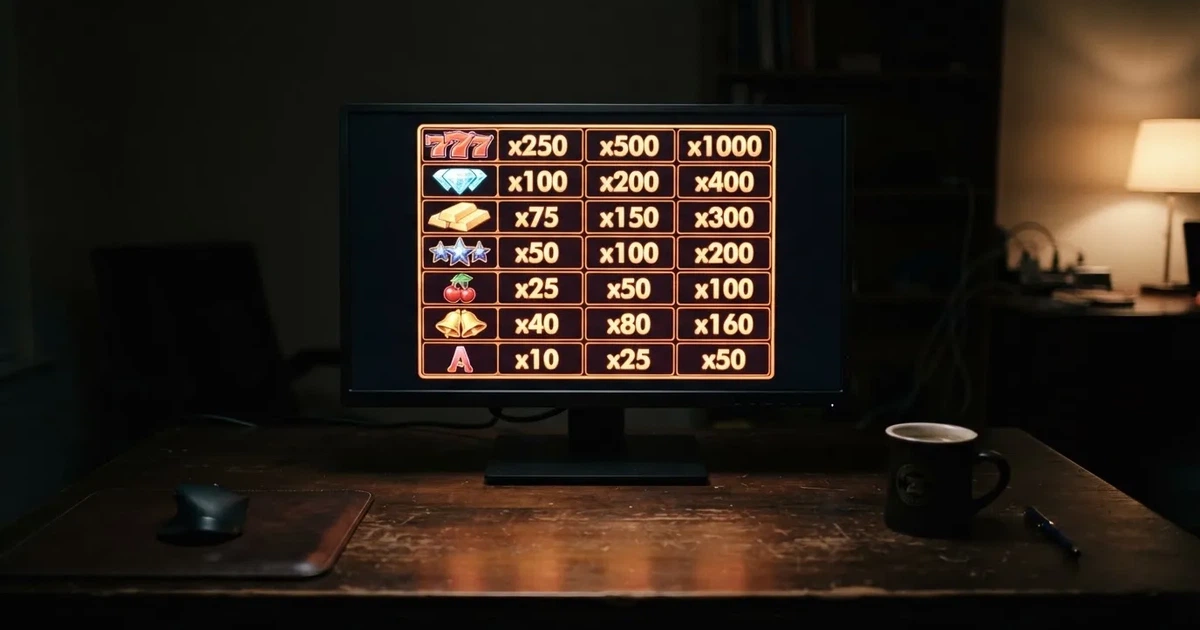
The shelf below compares eleven brands the ACMA has formally warned for offering prohibited services to Australians, in the order in which the regulator acted. No ranking is implied. Each operator is described as it stands in the ACMA register; nothing here is a recommendation, and the figures carried come from the regulator’s own publications and from the public reporting cited beside each one.
Table of Contents
- Bonuses and free spins on video slots: how the offer actually works
- Mobile and app play on video slots
- Specific games, providers and where they sit in the catalogue
- How the comparison is built, and what separates one option from another
- Overview of video slots in Australia: what the format is and where it stands
- Legality and regulation: what the Interactive Gambling Act 2001 actually says
- Responsible play around video slots
- The ACMA register of warnings: what the table is showing
- The rate at which sites have been blocked: how fast the ACMA is moving
- The brands the ACMA has warned: a closer read of each
- Choosing a video slot: the question this page is built around
- Frequently asked questions
Bonuses and free spins on video slots: how the offer actually works
The shelves most often sold on offshore video slots are free spins, deposit bonuses and “bonus buy” features inside the games themselves. They look like a free chance to play. They are an inducement to deposit and to keep playing, with conditions attached that change what “free” actually costs.

A free-spin bundle is the entry point. A site credits a new account with a fixed number of spins at a fixed stake on a named title, and the winnings from those spins land as bonus funds. The bonus funds then carry a wagering multiple — most often between thirty and fifty times the bonus amount before any of it can be withdrawn. A deposit bonus layers the same mechanism on top: match a deposit of A$100, receive A$100 in bonus funds, and turn that A$100 into withdrawable cash by wagering the combined sum through a stated number of times. The headline number is always the bonus amount. The number that matters is the required turnover.
A bonus round inside a slot itself is a different feature and predates the marketing use of the term. Modern video slots run five reels or more with dozens of symbols, so combinations need a secondary trigger: free re-spins on a held symbol, a pick-and-win mini-game, an expanding wild, a tumble mechanic that re-evaluates a winning combination after paying it. These are game mechanics, not promos, and they pay out at the game’s stated return-to-player (RTP) — they don’t bypass it.
What the offshore marketing calls a “free” video slot in the demo sense is something else again. A demo spin costs nothing and pays nothing. It’s a preview. The conditions that actually govern a real-money session are written into the bonus terms, not the front page.
A reader weighing an offer on a video slot sits with three numbers: the bonus amount, the wagering multiple, and the RTP of the games the bonus is allowed on. The first two decide how much turnover the bonus requires before it can be withdrawn. The third decides how much of that turnover the house keeps on average. The house always has an edge, and these three numbers together size it. A 100 % match bonus on a game with a 96 % RTP and a 40x wagering requirement expects the player to put roughly A$8,000 through the slot to release a A$100 bonus — and over that A$8,000, the house keeps about A$320 on average. The bonus does not beat the math; it just stages it.
Mobile and app play on video slots
Video slots work well on a phone. Modern releases are designed mobile-first: portrait orientation, a single large spin button, paytable access behind an icon rather than a top menu. The same game engine runs the desktop and mobile versions, and the RNG that decides outcomes is the same one. There is no “mobile edition” of a game with a different payout rate — claims to that effect are marketing, not math.

What differs between a desktop browser and a mobile browser is session friction. A phone connection drops more often than a fixed line, and a live session that drops mid-free-spin can lose a bonus. Auto-play is more useful on mobile because the screen is small and the spin button is harder to find in a hurry. A handful of providers ship a downloadable app from their own site; most run as progressive web apps that the browser caches. Either way the underlying game is the same.
The thing that does change on mobile is payment. The Australian ban on credit cards and crypto for licensed wagering (in force since 11 June 2024) applies to any operator offering wagering to a person in Australia. An offshore casino is not bound by that ban and will happily take a credit card deposit — which is one signal that it is operating outside the Australian rules. The licensed path is debit card, bank transfer, PayID via Osko and BPAY, and a player with a phone who wants to stay inside the rules is channelled through those.
App-store availability is a separate question. Apple and Google have both restricted real-money casino apps in Australia for years. A real-money casino app that installs without side-loading is, by itself, evidence the operator is offshore and outside the Australian framework.
Specific games, providers and where they sit in the catalogue
The video slot category covers a wide range of game design. Five-reel video slots with multiple paylines and a feature round sit at one end. Megaways-style slots with hundreds of thousands of ways to win on a single spin sit at the other. Between them, cluster pays, hold-and-spin, cascading reels, expanding reels and progressive jackpots all carry the same label. The label is mechanical: a video slot is any slot driven by a video reel rather than physical spinning drums.
The first automatic slot mechanism was built by Charles Fey in San Francisco in the late 19th century: three reels, five symbols, and a top prize of ten nickels for three Liberty Bells. Bally’s Money Honey in 1963 added a bottomless hopper and automatic payout of up to 500 coins without an attendant. The first true video slot was developed by Fortune Coin Co. in Kearny Mesa, California in 1976. The lineage is the reason “video slot” still means something specific: the reels are on a screen, the outcome is decided by a random number generator, and the game carries a theoretical payout rate that the regulator can audit.
Modern video slots can use five reels or more with 50 or more symbols per reel, producing odds as high as 300 million to one against the top combination. A classic mechanical three-reel machine with ten symbols per reel offers roughly 1,000 possible combinations. The math changes with the symbol count, and the math is what the regulator publishes. In the United States, minimum payout percentages are set by state: Nevada at 75 %, Mississippi at 80 %, New Jersey at 83 %. Australia does not run an equivalent uniform minimum across all venues; instead, state and territory regulators set requirements that vary by licence type and venue class.
On the licensed side in Australia, EGMs run in clubs, pubs and casinos. Their configurations are approved by state regulators, and their return-to-player is set by the venue’s licence conditions. The largest installed base sits in New South Wales, which legalised slot machines in 1956; by 2010 Australia operated an estimated 97,103 gaming machines outside casinos — roughly five times the United States rate per capita.
The video slot format offshore is more uniform across providers. A typical modern title runs at an RTP between 94 % and 97 %, with volatility described as low, medium or high. A low-volatility slot pays smaller amounts more often; a high-volatility slot pays larger amounts rarely. Volatility is not the same as RTP: two slots at 96 % RTP can feel completely different in a session because one returns the average in small frequent wins and the other returns it in rare large ones. The label is on the provider’s information page, and it’s the most useful single fact a player can read before staking.
The free-spin and bonus features inside a game are part of its design, not part of an offer. A hold-and-spin feature on a slot from one studio is mechanically distinct from a tumbling reels feature on a slot from another, and the expected return from each is folded into the published RTP. Players comparing games within a provider’s catalogue will see the same RTP across many titles because the studio targets a band; what differs is the volatility profile and the feature frequency.
How the comparison is built, and what separates one option from another
A shortlist of video slots in Australia in 2026 rests on three pieces of evidence, and the order matters. First: is the source an Australian-licensed venue or an offshore operator? Second: has the ACMA issued a formal warning to the operator behind the source? Third: does the source publish RTPs and volatility ratings for the games on offer?
The first cut is the one that decides the rest. An Australian-licensed venue is regulated by a state or territory authority, accepts only the payments the law allows, and connects to BetStop, the National Self-Exclusion Register. An offshore operator is none of those things, however glossy the lobby page looks.
The second cut separates offshore operators from each other. The ACMA’s register of formal warnings is a public document; the names below carry the warning the regulator actually issued, the operator name on the warning and the date it was published. A brand not on the register is not endorsed by its absence — it just means the ACMA has not yet named it. A brand on the register is one the regulator itself found to be offering prohibited services to Australians.
The third cut is internal to each operator: do the games carry published RTP and volatility, and is the catalogue auditable? Most do. Some do not. A platform that hides the information page on each game behind a marketing splash is one that has decided the player is not the audience.
A reader looking at any video slot shortlist should walk the same three steps before staking. The first decides whether the rest of the comparison is even relevant; the second tells you what the regulator has said about this specific operator; the third tells you what the games themselves are doing mathematically. The ranking below carries the order in which the regulator acted on each brand, with the named operator and the warning date carried from the ACMA’s own publication.
Overview of video slots in Australia: what the format is and where it stands
A video slot is a slot machine whose reels are presented on a screen rather than as physical drums, and whose outcomes are decided by a random number generator rather than by the position of stopped wheels. That definition covers almost every modern slot in any venue in any country. The classic three-reel “pokies” machine still exists in Australian clubs and pubs, but the majority of EGMs operating today are video slots in this sense, and the offshore lobby a player opens in a browser is a video slot almost without exception.
The mechanics of a video slot follow a stable pattern. The player stakes an amount per spin. The RNG produces a combination. The paytable decides what that combination pays. A free-spin trigger, a scatter, a bonus buy or a feature game modifies the base game. The payout rate, expressed as RTP, is the long-run return across a very large number of spins and is what a regulator audits. The volatility is the shape of the distribution around that average: low volatility returns the average in many small wins, high volatility in few large ones.
The licensed Australian market runs EGMs in pubs, clubs and casinos under state-level regulation. NSW carried 87,298 pokies-style machines outside casinos as of June 2023; Victoria 26,380 in 2021–22; Queensland 21,122 in October 2023; South Australia 11,672 in September 2023; and the ACT 3,587 in November 2023. The totals reflect different state policies on machine density and venue class — NSW permits the most, the ACT the fewest. Casino floors in each state run additional EGMs on a separate licence.
The offshore market operates by a different set of rules. An offshore casino is licensed by a regulator outside Australia, accepts deposits from Australians, and offers video slots in a browser. The Interactive Gambling Act 2001, as amended in 2017, makes it an offence to provide online casino games or online pokies to a person in Australia. The individual player is not prosecuted — the Act targets the provider. The offshore site offers no Australian consumer protection: there is no local complaints body, no recourse if a withdrawal is refused, and the site can be blocked by the ACMA with a balance still on it.
The ACMA, in its June 2026 reporting, stated that 1,751 illegal gambling and affiliate marketing websites had been blocked since the first blocking request in November 2019, and that more than 230 unlicensed gambling services had left the Australian market since enforcement was strengthened in 2017. H2 Gambling Capital’s 2025 report estimated that Australians lose about A$3.9 billion a year to illegal gambling sites, and that the share of gambling going through legal channels fell from 74 % in 2021 to 64 %. The licensed path remains the path the regulator defends; the offshore path is the one it blocks.
A player choosing between them is choosing between a venue with a regulator behind it and a website with none. The licensed path is the only one that connects to BetStop, that accepts only the payments the law permits, and that gives a real complaints route. The offshore path is the one the ACMA has spent the last seven years issuing warnings about.
Legality and regulation: what the Interactive Gambling Act 2001 actually says
The Interactive Gambling Act 2001, strengthened by the Interactive Gambling Amendment Act 2017, makes it an offence for an operator to provide online casino games, online pokies or in-play betting to a person in Australia. No state or territory licenses online casino games. What is licensable is wagering on races and sport placed before the event, lotteries and keno. The minimum age for any licensed gambling activity in Australia is 18.
The Australian Communications and Media Authority (ACMA) is the enforcement body. Its powers include investigating complaints, issuing formal warnings to operators, and directing Australian internet service providers to block illegal sites at the DNS level. The blocking round reported on 26 June 2026 added 12 more sites to the list — 7Signs, ChromaBet, Donbet, Duospin, Freshbet, Slots Gem, Jacks Club, Lucky Start, Pointsbetz.com, Spinrise, Vinyl Casino and Wildsino — bringing the cumulative total since November 2019 to 1,751 blocked domains.
Formal warnings are a separate instrument. They name the operator behind the brand, the brand itself, the date of the warning and the section of the Act relied on. The warnings below carry the ACMA’s own wording, which is the wording that matters. A warning is not a prosecution, but it is on the public record, and a brand that has been warned once and is still offering prohibited services to Australians is one the ACMA has a file on.
The Northern Territory Racing and Wagering Commission (NTRWC) regulates 52 of Australia’s online bookmakers — including Sportsbet, Bet365 and Ladbrokes — licensed in the Territory for tax reasons. The commission has no full-time staff and meets once a month in Darwin. The model is unusual: a single jurisdiction hosts the licences for most of Australia’s licensed online wagering, and the regulator that issues them is a part-time body. The bookmaker licences cover racing and sport, not casino games. A licensed Australian bookmaker is not allowed to offer video slots to Australians, and an offshore casino is not licensed by the NTRWC.
The Interactive Gambling Amendment (Gambling Reform) Bill 2026 passed Parliament on 19 August 2026. Its advertising and inducement measures commence 1 January 2027 — law with a start date, not yet in force on a page dated 2026. The measures target the way licensed wagering operators advertise inducements to Australian customers and will narrow what a bookmaker can offer as a sign-up bonus from the new year. Casino games are not affected by the new measures because casino games are already prohibited.
Payments are a separate regulatory layer. Since 11 June 2024, credit cards, credit-related products and digital currency have been banned as payment for licensed online wagering. Penalties for operators accepting them run up to A$247,500. The legal deposit routes for licensed wagering are debit card, bank transfer, PayID via Osko and BPAY. A site that asks an Australian customer for a credit card or a crypto deposit is, by that single signal, operating outside the Australian rules. The offshore casino sites in the comparison below are outside those rules; that is one of the points of the comparison.
Tax is a final layer. Gambling winnings of a recreational player are not assessable income under section 6-5 of the Income Tax Assessment Act 1997, and losses are not deductible, unless the person carries on a business of gambling. The ATO’s own guidance on this is “check with the ATO” if there is any doubt, and the practical position is that a recreational player reports nothing. The position changes once gambling is the person’s business, and the test for that is on the ATO’s website rather than on the casino’s.
Responsible play around video slots
A regulated Australian market is also one with a working self-exclusion tool. BetStop, the National Self-Exclusion Register, has been live since August 2023 and binds every Australian-licensed online and phone wagering service. A person registering with BetStop is excluded from opening new accounts and from deposits on existing ones at every participating operator. The register covers wagering only. It does not cover EGMs in pubs and clubs, and it does not cover offshore casinos.
Offshore casinos are not connected to BetStop. They run their own self-exclusion tools — most have one — but the obligation to honour it is contractual rather than regulatory, and a self-excluded player at an offshore site has no Australian body to complain to if the exclusion is ignored. A player who has registered with BetStop and is still being served by an offshore site has registered at the wrong place.
The National Gambling Helpline, 1800 858 858, is free, 24/7 and connects to Gambling Help Online, which carries a chat service. The helpline is the right number to call if a session has gone longer or cost more than intended, and it is staffed for that exact call. State-level support services carry their own numbers and are listed on the Gambling Help Online directory.
Spending limits are the most practical day-to-day tool. A venue-based EGM player can set a venue exclusion through a state regulator’s program. A licensed online wagering customer can set deposit limits on the operator’s site. An offshore casino customer can set limits only on the operator’s own interface, and the limit is enforceable only as far as the operator’s terms allow. A player comparing options on this page is comparing three different regimes of self-control, and the licensed path is the one with the strongest external enforcement.
A short note on what video slots are designed to do. Modern releases are built to extend session length: free-spin retriggers, near-miss features, cascading wins that re-evaluate the same spin multiple times, bonus buys that compress a feature trigger into a single stake. None of these features changes the RTP; they change the shape of a session, and the shape is engineered to keep a player at the machine. The regulator’s job is to publish the math; the player’s job is to set the limit before the math is what governs the session.
The ACMA register of warnings: what the table is showing
The table below carries the ACMA’s own entries. Each row is an operator the regulator formally warned for offering prohibited interactive gambling services to Australians. The order is the order in which the ACMA acted, and the dates are the dates the warnings were published. No column carries an editorial judgement: the columns are what the regulator’s register shows and what its own operator naming identifies. Where a source other than the ACMA named the brand, that source is named in the final column under “subject support”.
| Brand | ACMA action and date | Operator named by the ACMA | Subject support |
|---|---|---|---|
| RocketPlay | Formal warning under the Interactive Gambling Act 2001, March 2026 | Pulsup Ltd (Rocketplay.com.au); earlier Dama N.V., May 2022 | — |
| Level Up Casino | Formal warning under the Interactive Gambling Act 2001, May 2022 | Dama N.V. | BGaming listings report this brand carries BGaming content |
| Woo Casino | Formal warning under the Interactive Gambling Act 2001, March 2025 | Dama N.V. | — |
| Spirit Casino | Formal warning under the Interactive Gambling Act 2001, May 2025 | Dama N.V. | — |
| National Casino | Formal warning under the Interactive Gambling Act 2001, July 2025 | Consolutetish S.R.L. | Wikipedia’s entry on the brand reports its operation under the listed operator |
| Bizzo Casino | Formal warning under the Interactive Gambling Act 2001, July 2025 | Consolutetish S.R.L.; earlier TechSolutions, 2022 | — |
| Ignition Casino | Formal warning under the Interactive Gambling Act 2001, July 2025 | Bamboo Media | — |
| Instant Casino | Formal warning under the Interactive Gambling Act 2001, February 2025 | EOD Code SRL | — |
| Jackbit | Formal warning under the Interactive Gambling Act 2001, April 2026 | Ryker B.V. | — |
| Casino Intense | Formal warning under the Interactive Gambling Act 2001, April 2025 | Sterplay Holding Ltd | ABC reporting, the ACMA register and Crown Melbourne’s own pages reference this brand in coverage of related matters |
| Sky Crown | Formal warning under the Interactive Gambling Act 2001 | Hollycorn N.V. | — |
Two columns repeat down the table and so are not worth reading into the prose: every brand sits under the same Act, and every entry is a formal warning rather than a prosecution. The variation lives in the date and in the operator name. The date matters because the ACMA’s blocking rounds since November 2019 are cumulative — a brand warned in 2022 has been on the regulator’s radar across the whole enforcement period. The operator name matters because Dama N.V. in particular appears across three of the eleven rows, and a brand whose parent operator has been warned repeatedly is one the ACMA knows well.
The “subject support” column is the only column that carries external sourcing rather than the regulator’s own publication. For most rows, the ACMA’s warning is the only verifiable record, and the cell carries an em dash. For three rows, a third-party source reported on the brand independently of the ACMA, and that source is named. The third-party names are what the listings reported — they are not endorsements of any kind.
The fastest reading of the table is that all eleven brands are prohibited services for an Australian customer under the Interactive Gambling Act 2001. That is what every row says, regardless of which operator stands behind it.
The rate at which sites have been blocked: how fast the ACMA is moving
The blocking requests the ACMA has issued since November 2019 are the most visible signal of enforcement. Each request directs Australian ISPs to block a list of domains at the DNS level; each blocking round is published; the running total since the first request is on the regulator’s own site and in its annual reporting. The June 2026 reporting put the cumulative total at 1,751 illegal gambling and affiliate marketing websites blocked, and at more than 230 unlicensed gambling services that had left the Australian market since enforcement was strengthened in 2017.
A reader looking at those two numbers can size the enforcement pace. From November 2019 to June 2026 is roughly 80 months. The 1,751 blocked sites include both the operator domains and the affiliate marketing pages that funneled Australians toward them, which is why the total is well above the 230 services that exited voluntarily. The two numbers are not the same kind of count.
The pace band works out to roughly 22 blocked sites per month across the seven-year window — and that average hides the variation in each round. Some rounds are small, with a handful of domains added. Some are large. The June 2026 round alone added 12 operator domains: 7Signs, ChromaBet, Donbet, Duospin, Freshbet, Slots Gem, Jacks Club, Lucky Start, Pointsbetz.com, Spinrise, Vinyl Casino and Wildsino. Each of those brands had been identified by the ACMA as offering prohibited services to Australians, and each was added to the DNS-level blocklist.
The figure below the headline pace matters as much as the pace itself. 230 services exited the Australian market voluntarily over the same period. A service that exits is one that has decided not to take Australian customers anymore — usually after a formal warning. The exit is quieter than a block, but it carries the same effect for the player: the brand is no longer accepting Australian deposits.
The blocking rate is therefore the right metric to watch. The fact that 1,751 sites have been blocked since the first request in November 2019 is what an Australian player sees when an offshore casino’s URL stops resolving. The figure is not a forecast — a brand can move to a new domain — but it is the rate at which the regulator is closing the visible surface.
The brands the ACMA has warned: a closer read of each
The eleven brands below are the brands the ACMA named in formal warnings. The order follows the date of the ACMA’s action. Each brand is described as the regulator described it: the operator named on the warning, the date the warning was published, and the section of the Act the regulator relied on. The third-party source column from the table above is repeated where one exists.
RocketPlay
RocketPlay is the brand Pulsup Ltd operates as Rocketplay.com.au. The ACMA issued a formal warning to Pulsup Ltd over the brand in March 2026, naming Rocketplay.com.au specifically as the prohibited service. The same brand sits on an earlier warning to Dama N.V. from May 2022, when Rocketplay was among six casino brands the regulator named in a single action — the others being Bambet, Dazard, Level Up, Wild Tornado and Cobra Casinos. Two warnings, four years apart, on the same player-facing brand.
For an Australian player, the warning history matters: a brand that has been on the regulator’s radar across two enforcement cycles is one the ACMA is tracking actively. The brand offers video slots in a browser, accepts deposits from Australian customers, and does not connect to BetStop. The licensed alternative for any of the games on its lobby is the EGM floor of a pub, club or casino in the relevant state.
Level Up Casino
Level Up Casino sits on the May 2022 warning to Dama N.V. that named six brands at once. Dama N.V. is the Curaçao-incorporated operator behind a portfolio of casino brands — three of the eleven brands on this page alone — and the regulator’s choice to warn on a portfolio basis rather than brand-by-brand is the reason multiple brands share the same warning date. The third-party source column reports that BGaming, a studio, lists Level Up Casino among the operators carrying its content; the ACMA’s own entry is what makes the brand a prohibited service for an Australian customer.
Woo Casino
Woo Casino sits on a March 2025 warning to Dama N.V. — a later warning to the same operator, separate from the 2022 portfolio warning. The interval between the two warnings is the regulator continuing to find new prohibited services operated by the same parent. A player seeing Woo Casino advertised in 2026 is looking at a brand that was the subject of a formal warning earlier in the year.
Spirit Casino
Spirit Casino carries a May 2025 warning to Dama N.V., the third Dama N.V. warning on this page and the second in 2025 alone. The pattern — Dama N.V. warned in 2022, then again in March 2025 and again in May 2025 — is what an enforcement record on the same operator looks like over four years.
National Casino
National Casino sits on a July 2025 warning to Consolutetish S.R.L. The warning names National Casino and Bizzo Casino together. The third-party source column reports that the brand is covered in the Wikipedia entry on the brand’s operation. National Casino and Bizzo Casino share a warning date because they share an operator; the ACMA names both on the same instrument.
Bizzo Casino
Bizzo Casino sits on the same July 2025 warning to Consolutetish S.R.L. as National Casino. The brand had already been the subject of a 2022 formal warning to TechSolutions (CY) Group Limited and TechSolutions Group N.V., which makes it one of three brands on this page with two separate warnings across two different parent operators. A brand that has been warned twice under two different corporate structures is one the regulator has been tracking across multiple ownership changes.
Ignition Casino
Ignition Casino sits on a July 2025 warning to Bamboo Media. The brand is targeted at the Australian market under an offshore licence. The ACMA’s action in 2025 placed it in the same enforcement batch as the Consolutetish S.R.L. warnings to National Casino and Bizzo Casino, but the operator is different.
Instant Casino
Instant Casino sits on a February 2025 warning to EOD Code SRL. The brand is one of the earlier 2025 actions and predates the Dama N.V. warnings by a month. The March 2025 Woo Casino warning and the May 2025 Spirit Casino warning both came after it.
Jackbit
Jackbit sits on an April 2026 warning to Ryker B.V., which also covers CasinOK in the same instrument. A single warning naming two brands under the same operator is the same enforcement pattern the regulator used for National Casino and Bizzo Casino in July 2025. The 2026 date makes this the most recent warning on the page apart from the March 2026 RocketPlay action.
Casino Intense
Casino Intense sits on an April 2025 warning to Sterplay Holding Ltd. The third-party source column on the table lists ABC reporting, the ACMA’s own register and Crown Melbourne’s own pages as references for the brand — the latter two because the ACMA’s register is the primary source and Crown Melbourne’s site is referenced in coverage of the broader Australian casino market, including the kind of warnings the regulator issues. The brand sits on a single 2025 warning rather than a portfolio action.
Sky Crown
Sky Crown sits on a formal warning to Hollycorn N.V., which also covers Blue Leo on the same instrument. The warning is one of the earlier entries on the ACMA’s register and predates the bulk of the 2025–2026 actions. Hollycorn N.V. is a Curaçao-incorporated operator that has run several casino brands; Sky Crown is one of two on this page that the regulator named on the same warning.
Choosing a video slot: the question this page is built around
The two paths are different and the question is which one suits a given reader. A player who wants modern multi-reel video slots with bonus features and free-spin mechanics has access to them in person at every Australian state and territory’s licensed EGMs. The licensed path carries a regulator, a self-exclusion register, a complaints body, and the payments rules the law sets. The offshore path carries none of those things, however glossy the lobby. The brands on the table above are prohibited services under the Interactive Gambling Act 2001, and the regulator has acted on each of them.
A player who wants the offshore product anyway is choosing a brand the ACMA has named, accepting that the brand can be blocked at any time, and accepting that there is no Australian body to complain to if a withdrawal is refused. The choice is real and the page does not dress it up. What it does is name the regulator’s actions, give the dates and operators from the ACMA’s own register, and let the reader decide.
A player who wants the licensed path is choosing a venue regulated by a state or territory authority. In NSW, the largest installed base by a wide margin is in pubs and clubs; the casino floor in Sydney runs separately. In Victoria, the casino floor at Crown Melbourne runs under the Victorian Gambling and Casino Control Commission (VGCCC), which replaced the VCGLR on 1 July 2022. In Queensland, South Australia and the ACT, the EGMs are in clubs and hotels under their respective state regulators. The licensed path also covers licensed online wagering on racing and sport — which is not casino gaming and which is licensed under the Northern Territory framework.
The third option, often overlooked, is no play at all. A session that costs more than intended, that runs longer than planned, that affects sleep or work, is a session that has already gone past the line a self-set limit was meant to hold. The National Gambling Helpline is 1800 858 858. BetStop is the self-exclusion register for licensed wagering. The venue-level self-exclusion program is the right tool for a player whose spending has shifted to the pub or club. Each tool exists; none of them are difficult to use; all of them are free.
The page’s job is to lay the choice out, name the regulator’s actions, and let the reader decide. What it does not do is recommend a brand, advertise an offer or promise that any particular game will pay out. The math is the math, the regulator is the regulator, and the rest is the player’s call.
Frequently asked questions
What makes a video slot different from a classic three-reel pokies machine?
A video slot presents its reels on a screen and decides outcomes with a random number generator, while a classic three-reel machine uses physical spinning drums with a fixed symbol set. Modern video slots can run five reels or more with 50 or more symbols per reel, producing odds as high as 300 million to one against the top combination. A classic three-reel machine with ten symbols per reel offers roughly 1,000 possible combinations.
Do video slots typically include bonus rounds that classic machines don’t have?
Most modern video slots include at least one bonus feature — free spins, a hold-and-spin, cascading reels, a pick-and-win mini-game — and these features are part of the game design itself, not a marketing promo attached to it. The payout from a feature round is folded into the game’s published return-to-player rather than paid on top of it. Classic three-reel machines usually lack these features.
Are video slots on a mobile browser the same game as the desktop version?
The same game engine runs on both, and the RNG that decides outcomes is the same one. A slot that pays 96 % RTP on desktop pays 96 % RTP on mobile. What changes on mobile is session friction — connection drops, screen size, auto-play — not the math. Claims of a “mobile edition” with a different payout rate are marketing.
How many paylines does a typical modern video slot use?
There is no single answer because paylines are a design choice. A standard modern video slot runs 20 to 40 paylines, but Megaways-style slots have produced hundreds of thousands of ways to win on a single spin, and cluster-pay slots replace paylines with adjacent-symbol combinations. The payline count is on the game’s information page, and it changes what “a win” looks like for the player.
Why do video slots vary in volatility even within the same provider’s catalogue?
Volatility is the shape of the payout distribution around the RTP, not the RTP itself. A studio targeting a 96 % RTP band can produce a low-volatility slot that pays small amounts often and a high-volatility slot that pays large amounts rarely — both at 96 % RTP, both in the same catalogue, both legal. The label is on the provider’s information page and it is the most useful single fact a player can read before staking.
Which Australian state has the most licensed gaming machines outside casinos?
New South Wales, by a wide margin. The state carried 87,298 pokies-style machines outside casinos as of June 2023. Victoria ran 26,380 in 2021–22, Queensland 21,122 in October 2023, South Australia 11,672 in September 2023, and the ACT 3,587 in November 2023. NSW legalised slot machines in 1956 and has permitted the densest venue network of any state.