
Best RTP Slots in Australia 2026: The Figure, the Offshore Gap, and Where the Reckoning Lands
A return-to-player figure is the single most quoted number on any slot lobby page, and on a page like this it is also the most easily misused. An RTP of 96% sounds like an offer. It is a long-run average across millions of simulated spins, the casino’s edge built into the math, and a statistic that says nothing about the next session, the next hundred spins, or the next player. Australian readers run into two different kinds of slot at the same time — licensed pokies in clubs and casinos, governed by state machine standards, and offshore online casinos that quote an RTP figure on every game tile but operate under no Australian licence. Both quote the number; only one is answerable to an Australian regulator. The page that follows works through what the figure is, where it can and cannot be found, why the offshore sites that brandish it have ended up on a warning register, and what the consequences look like for the player on either side.
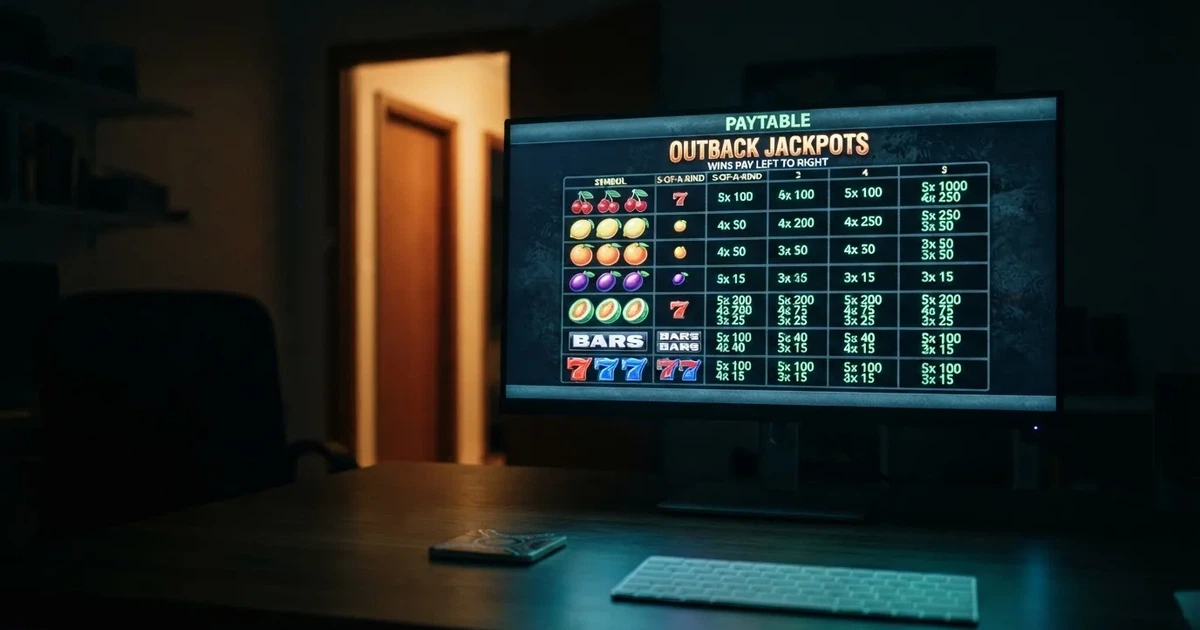
Data current as of 8 November 2026, checked against the ACMA register of formal warnings and blocking actions.
Table of Contents
- What RTP actually is, and what it isn’t
- The Australian legal frame: what’s licensed and what isn’t
- The ACMA’s enforcement record, and the consequence that follows
- Responsible gambling: where Australian players actually have cover
- What licensed pokies look like, and why the offshore number is hard to compare
- Why two slots with the same theme can carry different RTP figures
- How this ranking is built, and what it does and does not rank
- The blocking-rate picture
- How a reader should read the table above
- Where this leaves the player
- Frequently Asked Questions
What RTP actually is, and what it isn’t
RTP — return to player — is the share of every dollar wagered that a slot is mathematically programmed to return across its full population of outcomes. A slot programmed at 96% keeps, on average, 4 cents of every dollar played across millions of spins.
| Game type | House edge (typical) |
|---|---|
| Baccarat (Banker bet) | 1.06% |
| Baccarat (Player bet) | 1.24% |
| Blackjack (Optimal play) | 0.28% |
| Craps (Pass/Come bet) | 1.41% |
The “average” is the operative word: it is not a per-session figure, it is not a guarantee, and it is not the operator’s promise to the next player in line. A player who sits down for an hour can be ahead or behind that average by a margin that has nothing to do with the programmed number.

The arithmetic is straightforward and the consequence is not. If a slot is played a million times at A$1 per spin, the expected return is A$960,000 against A$1,000,000 wagered. Distributed across a million spins, the loss per spin is four cents. Concentrated into a session of several hundred spins, the same average has not had room to express itself. The two figures describe the same machine.
This is why the marketing copy around high-RTP slots tends to flatten a statistical property into an implied promise. The number is honest; the way it is usually framed is not. A 96% slot does not “give back 96%” to the person playing it tonight. It returns, on average, that share to the entire universe of players over the life of the game, and a single player’s actual return can sit anywhere on a very wide distribution around it.
Three points sit underneath the figure and rarely travel with it:
- RTP is calculated against a theoretical bet, not against the bets a particular player makes. Side bets, max-coin jackpots that require a higher wager to enter, and feature rounds that trigger only at certain stake levels all sit outside the headline number unless the operator states otherwise.
- RTP is set by the game’s design and disclosed by the operator. The figure is not independently audited at the moment of play — it is verified at the moment of certification, before the game ships, by testing houses such as eCOGRA, GLI or iTech Labs. After certification, an operator can in principle offer a lower-RTP configuration of the same game; whether they do is a function of jurisdiction rules, not player choice.
- RTP says nothing about volatility. Two slots can share a 96% RTP and behave very differently. A high-volatility game pays out rarely and in larger sums, returning the average over longer stretches. A low-volatility game returns the average sooner but in smaller pieces. The expected loss per spin is similar; the lived experience of a session is not.
For Australian players reading offshore sites, an extra layer sits on top. The offshore operator publishes the figure; no Australian regulator stands behind it. If the operator changes the configuration, pays out slowly, or refuses a withdrawal, the player’s only recourse is the operator’s own complaint process and the licence held in whatever jurisdiction the operator is registered in. The figure on the lobby page is unaffected by any of that. It is a number from a different regime than the one the player sits in.
The Australian legal frame: what’s licensed and what isn’t
Online casino games — and that includes online slots, online pokies, online baccarat, online blackjack, and online craps — cannot be licensed in Australia. The Interactive Gambling Act 2001, strengthened by the Interactive Gambling Amendment Act 2017, makes it an offence for a provider to offer these games to a person physically located in Australia. No state or territory licensing authority issues an online casino licence. What is licensed in Australia is wagering on racing and sporting events placed before the event, lotteries, and keno. Bookmakers such as Sportsbet, Bet365 and Ladbrokes are licensed for those products, and most are licensed in the Northern Territory through the Northern Territory Racing and Wagering Commission — a body with no full-time staff that meets once a month in Darwin.
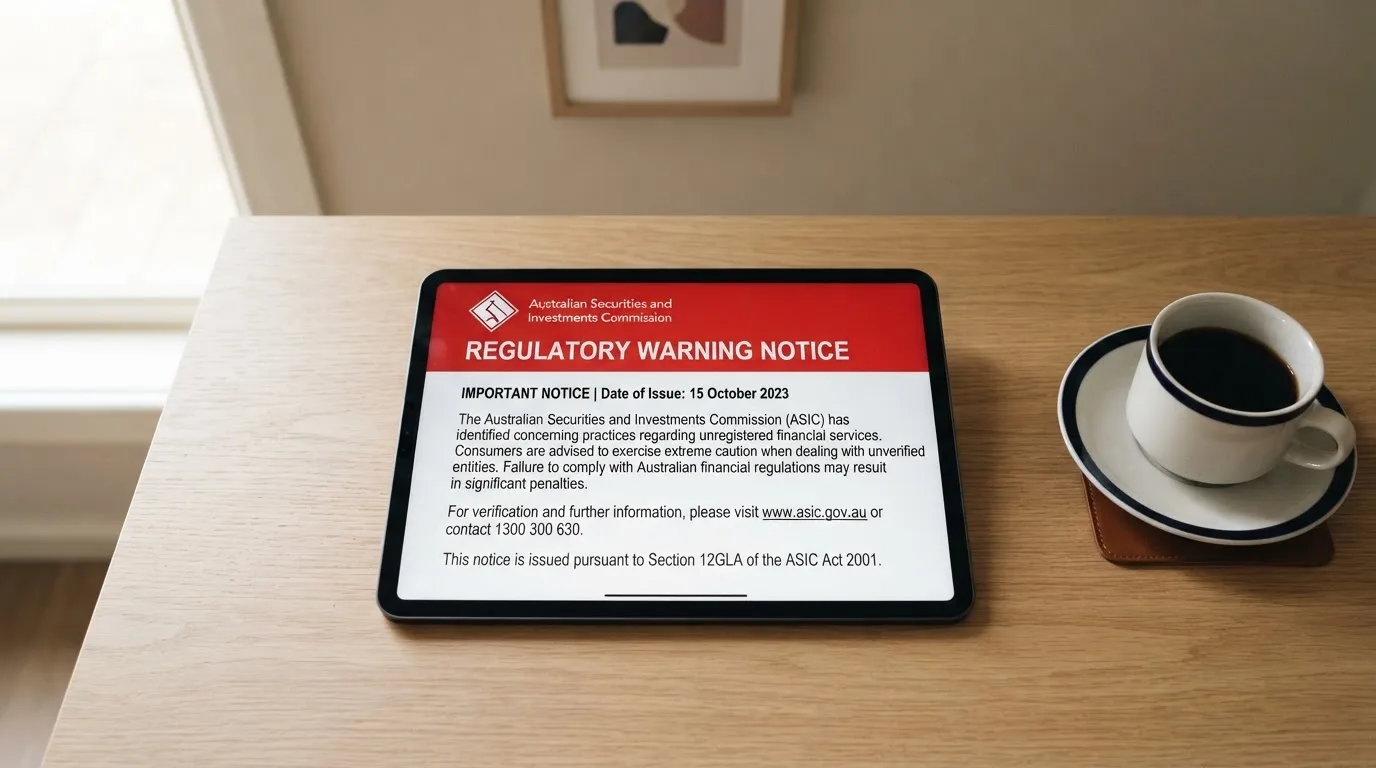
The player is not the target of the law. The Interactive Gambling Act 2001 aims at the provider, not at the Australian sitting at home with a laptop. An individual who opens an account with an offshore casino commits no offence under it. The practical consequence lands elsewhere: the offshore operator has no Australian consumer protection, no Australian complaints body, and no Australian obligation to pay out. If the operator decides to delay a withdrawal indefinitely, or to close the account after a big win, the player has whatever the operator’s own terms say and whatever the licence held in Curacao, Malta or another jurisdiction offers. An offshore site can also be blocked while a balance sits on it — the money does not follow the block.
A reader searching for high-RTP online slots in Australia is, by definition, looking at the prohibited product. The licensed Australian product is the poker machine, or pokie, in a club, pub or casino. Pokies are governed by state machine standards that set minimum return-to-player percentages, by independent monitoring of every machine on the floor, and by jurisdictional control over what games can be released. NSW, Victoria, Queensland, South Australia and the ACT each maintain their own regime, and the numbers that come out of those regimes are the closest thing Australia has to a verified RTP figure for a slot.
The two products do not meet in the middle. A 96% online slot operated offshore has no analogue in the licensed Australian market; a pokie in a Sydney club has no offshore counterpart that the player can reach from inside Australia without crossing the legal line.
The ACMA’s enforcement record, and the consequence that follows
The Australian Communications and Media Authority enforces the Interactive Gambling Act 2001 on the provider side. Its two main tools are the formal warning — a published notice that names the operator and the service, intended to push the provider out of the Australian market — and the blocking request, in which the ACMA asks Australian internet service providers to make named domains unreachable from Australia. The consequence of either action lands first on the operator and, downstream, on the player who has an account open with it.
The agency’s record, accumulated across roughly seven years, is the single most concrete data set on the offshore high-RTP slot market in Australia. As of June 2026 the ACMA reported that a total of 1,751 illegal gambling and affiliate websites had been blocked since the first blocking request was issued in November 2019. More than 230 unlicensed gambling services had exited the Australian market since 2017. H2 Gambling Capital’s 2025 report estimated that Australians lose around A$3.9 billion a year to illegal gambling sites, and that the share of gambling going through legal channels fell from 74% in 2021 to 64%.
A blocking request is not symbolic. When the ACMA names twelve sites in a single round — as it did in the June 2026 list, which included 7Signs, ChromaBet, Donbet, Duospin, Freshbet, Slots Gem, Jacks Club, Lucky Start, Pointsbetz, Spinrise, Vinyl Casino and Wildsino — those domains stop resolving inside Australia within days. Players who had open sessions on those sites lose access with their balances and history attached. The next session has to be on a site the ACMA has not yet named, which is not a category a reader can rely on.
The formal warnings track the same market at the brand level. They are slower than blocking requests, but they are more durable: each warning names the operator entity behind a service and serves as the public record of an Australian regulator telling that entity to stop. The agency’s warning register is the cleanest cross-reference a player has for whether a site is in good standing with Australian law. It is also, by construction, a list of sites that have been told to stop and have, in many cases, kept operating under new brand names. A warning once is a warning on the record. A warning twice means the operator has cycled through brand names or shell companies and the ACMA has tracked the new entity.
The blocking-rate figure is the cleanest single number the ACMA’s work produces. From the first blocking request in November 2019 to the June 2026 total of 1,751 sites, the agency has added roughly one new blocked site for every calendar day of work — a band that runs from the high hundreds to the low hundreds annually, depending on how the rounds cluster. The condition on the figure matters: it counts sites and affiliate pages blocked, not services run, and it captures the scale of the visible market rather than the activity behind it.
Responsible gambling: where Australian players actually have cover
Australian player protection sits inside the licensed wagering system, not outside it. BetStop — the National Self-Exclusion Register — has been live since August 2023 and binds every Australian-licensed online and phone wagering service. A player who registers with BetStop is excluded from every licensed Australian bookmaker at once. An offshore casino is not connected to BetStop and does not honour its exclusions. The same gap runs through every other Australian protection: complaints bodies, deposit limits set by regulation, advertising standards, and the credit-card and crypto ban on payment for licensed wagering.
The national helpline is 1800 858 858, free and available 24 hours a day, with chat support at Gambling Help Online. State-level self-exclusion registers sit alongside it for venues — separate from BetStop and separate from anything an offshore site touches. For a player who has moved money onto an offshore slot site and wants to step back, the practical route starts with BetStop for licensed wagering, the state register for venues, and the helpline for immediate support. The offshore balance is its own problem and resolves through the offshore operator’s own terms.
The 11 June 2024 ban on credit cards, credit-related products and digital currency as payment for licensed online wagering — penalties of up to A$247,500 for operators who breach it — is the cleanest indicator of where the regulatory perimeter sits. A licensed Australian bookmaker will not take a credit card or a crypto deposit. An offshore casino will, because no Australian rule applies to it. The presence of those payment options on a deposit screen is, by itself, evidence that the site sits outside the Australian regime.
What licensed pokies look like, and why the offshore number is hard to compare
Australian states publish machine counts, and those counts are the most defensible Australian slot statistics. As of the dates published through 2023, New South Wales operated 87,298 pokies-style machines outside casinos, Victoria 26,380, Queensland 21,122, South Australia 11,672, and the ACT 3,587. New South Wales has roughly five times the per-capita machine density of the United States by one commonly cited estimate. The numbers are big, the regimes are state-specific, and they describe the licensed market. They do not describe the offshore online market, where there is no comparable count because no Australian body measures it.
The licensed machines carry a regulated return-to-player floor that varies by state. The actual published RTP figures for individual pokies in Australian venues are available to players on request — ClubsNSW, for example, makes its Return to Player figures available on the venue’s website — and the regulator’s testing process sits behind each machine before it is deployed. The figure on a NSW pokie machine is state-verified; the figure on an offshore online slot is operator-published. The same percentage covers two very different regimes.
The technology behind the machines, on either side, is more similar than the legal frame. The mechanical three-reel machine developed by Charles Fey in San Francisco in the late 19th century gave way to Bally’s Money Honey in 1963 — the first bottomless hopper, with automatic payout up to 500 coins — and then to the video slot developed by Fortune Coin Co. in Kearny Mesa in 1976. Modern video slots use five or more reels and 50 or more symbols per reel, producing odds against the top combination that can run into hundreds of millions to one. A classic three-reel machine had roughly a thousand possible combinations. The licensed Australian pokie and the offshore online slot both sit somewhere on that spectrum. The licensed Australian pokie does so under state regulator supervision; the offshore online slot does so under none.
For US readers who arrive at this page via comparative searches, the scale of the regulatory floor differs. Nevada sets a 75% minimum, Mississippi 80%, New Jersey 83% — all figures on the floor the operator must clear. Australian state machines carry different floors again, set by each jurisdiction. The 96% to 98% band that offshore slot sites advertise sits at the upper end of what state regimes tolerate. It is not forbidden anywhere; it is simply not available to an Australian player through any Australian-licensed channel.
Why two slots with the same theme can carry different RTP figures
The same branded game — a slot built around a familiar film, a TV franchise, a recognisable character — can sit on a casino lobby under one RTP figure and on another lobby under a lower one. The reason is configuration. A slot is built with multiple RTP settings, and the operator chooses which one to ship. A 96% and a 92% version of the same game are the same artwork, the same reel set, the same feature triggers, and the same expected life of the title; they are different mathematics underneath.
The auditor certifies the configuration the operator sends to market, not the brand. Once the game is live, an operator can in principle move the configuration — though in regulated markets this is tightly controlled and in some jurisdictions impossible without a fresh submission. The offshore online market has no such constraint in practice. A player who sees a high RTP on a slot’s information page is seeing whatever the operator chose to publish; another operator on the same title may have chosen differently.
Two slots with the same theme can also differ for a simpler reason: they may not be the same slot at all. Some branded titles exist in multiple versions — a “deluxe” edition, a “megaways” rebuild, a higher-volatility variant — and the RTP figure on each version is set independently. The themed wrapper is the same; the math is not.
How this ranking is built, and what it does and does not rank
The eleven brands that follow are not ranked by RTP, payout speed, bonus size, or player experience. They are listed because the Australian Communications and Media Authority has issued a formal warning over each of them for offering prohibited interactive gambling services to Australians. Each one sits inside the offshore market that the Interactive Gambling Act 2001 makes it an offence to provide. Each one carries an RTP figure on its lobby page that no Australian regulator has audited.
The page’s own value is not in the order — RocketPlay first or Sky Crown last is not a recommendation — but in the consistency. Eleven different brands, eleven different operating companies, eleven different licence jurisdictions, one consistent regulatory verdict: the ACMA has told each of them to stop, and a player using any of them is using a service the regulator considers illegal in Australia. The fact that this is the shape of the offshore high-RTP slot market in Australia — a list of brands the regulator has acted against, growing over time — is the information the list conveys.
What the list does not rank:
- RTP. None of the operators has submitted its RTP figures to an Australian body. The figures on the operators’ own pages have not been independently verified for the Australian player.
- Withdrawal speed. Withdrawal times are operator-published and have not been measured by an Australian complaints body.
- Game selection breadth. The game libraries on offshore sites are wide and overlap heavily; any comparative count is a snapshot.
- Bonus generosity. Bonus terms are not verified against Australian rules; the comparison has no Australian baseline.
A reader looking for a “best high-RTP slot site in Australia” is, by the legal frame, looking at prohibited product. The ranking that follows is the ranking of who the ACMA has acted against, in the order the ACMA’s own warnings and the underlying entities give. It is the page’s honest answer to the search.
The ACMA action landscape across the eleven brands
The eleven brands, the formal warning the ACMA has issued, the operating entity named in that warning, and the date of publication are the substance of what an Australian player can verify about these sites. The table is the audit trail of the regulator’s enforcement record, not a consumer comparison. Where a brand surfaces on listings pages in research — for example, on a software provider’s game-distribution list — that is what research carries, and the table reflects it accordingly.
| Brand | ACMA action | Operator named by the ACMA | Subject support |
|---|---|---|---|
| RocketPlay | Formal warning, March 2026 (Pulsup Ltd); earlier Dama N.V., May 2022 | Pulsup Ltd; Dama N.V. | — |
| Level Up Casino | Formal warning, May 2022 | Dama N.V. | listings-only |
| Woo Casino | Formal warning, March 2025 | Dama N.V. | — |
| Spirit Casino | Formal warning, May 2025 | Dama N.V. | — |
| National Casino | Formal warning, July 2025 | Consolutetish S.R.L. | listings-only |
| Bizzo Casino | Formal warning, July 2025 (Consolutetish S.R.L.); earlier 2022 (TechSolutions) | Consolutetish S.R.L.; TechSolutions (CY) Group Limited; TechSolutions Group N.V. | — |
| Ignition Casino | Formal warning, July 2025 | Bamboo Media | — |
| Instant Casino | Formal warning, February 2025 | EOD Code SRL | — |
| Jackbit | Formal warning, April 2026 | Ryker B.V. | — |
| Casino Intense | Formal warning, April 2025 | Sterplay Holding Ltd | listings-only |
| Sky Crown | Formal warning, September 2022 | Hollycorn N.V. | — |
The cells marked listings-only reflect what third-party listings pages report; they are not the operator’s own statement and the ACMA has not affirmed a relationship. Em-dash cells reflect no data on subject support that the inputs carry, which is itself a useful signal: where the ACMA has acted and a brand has no listings footprint the research consulted, the brand is harder to verify from outside.
The Dama N.V. cluster — RocketPlay, Level Up, Woo, Spirit — is the most visible pattern in the table. One operator entity, four brand names, formal warnings spanning 2022 through 2025. The same is true of TechSolutions and Consolutetish S.R.L., which surface around Bizzo Casino across two different warnings two and a half years apart. Shell companies and brand rotations are how the offshore market responds to enforcement, and the warning register is what catches the rotation after the fact.
1. RocketPlay — first on the regulator’s record
RocketPlay is the brand the ACMA returned to in March 2026, when it issued a formal warning to Pulsup Ltd over RocketPlay. The agency had already warned Dama N.V. over RocketPlay in May 2022, alongside five other brands. The same brand under two different operating entities, four years apart, is the rotation pattern the warning register catches. For a player, the consequence is that the brand name on the lobby page is not the entity the regulator acted against — the regulator’s record names Pulsup Ltd as the operator behind RocketPlay in 2026, which is a different company from the 2022 Dama N.V. The product — an online casino with high-RTP slot titles advertised on the lobby — is the same.
What this brand delivers on its own terms is an offshore casino offering slot titles with RTP figures in the 95% to 97% band across the lobby, deposit options that include credit card and crypto (both outside Australian rules for licensed wagering), and a Curaçao-registered operator. What the ACMA’s record delivers is a brand the regulator has told, twice, to stop offering prohibited services to Australians. The verdict the regulator’s record makes is the more durable of the two. For a player, the verdict’s weight is not in the figure on the slot’s paytable — the paytable’s number is what every offshore slot advertises — it is in the absence of any Australian cover behind the balance.
2. Level Up Casino — the Dama N.V. cluster’s longest-standing brand
Level Up Casino sits in the same Dama N.V. cluster as RocketPlay, with a May 2022 formal warning that named it alongside Bambet, Dazard, Rocketplay, Wild Tornado and Cobra Casinos. The 2022 warning is the older of the entries in the table, and the brand has continued to surface in the offshore market since. Listings-only coverage on a software provider’s distribution page is the most research carries on the brand’s current footprint; the ACMA’s record is what the page can verify.
For a player, the consequence of the Dama N.V. cluster is that a single enforcement action covers multiple brands and the cluster persists. The brand name on the lobby is not the entity the regulator acted against; the regulator’s record names Dama N.V. as the operator behind Level Up Casino in 2022. For a player who treats the warning register as a directory of brands to avoid, Level Up has sat on it since 2022. The number of years a brand has been on the register is not, by itself, a quality signal — but it is a durability signal. The brand is still operating because the offshore market allows it to.
3. Woo Casino — Dama N.V. returns
Woo Casino is the second Dama N.V. brand to receive a formal warning after 2022, with the ACMA acting in March 2025. The pattern repeats: same operator entity, new brand name. The interval between the 2022 warning over the wider Dama N.V. cluster and the 2025 warning over Woo is just under three years, long enough for the brand to build an Australian-facing player base and short enough that the operating entity has not changed. The ACMA’s record names Dama N.V. as the operator behind Woo Casino.
The consequence for a player is identical to the consequence on the rest of the Dama N.V. cluster. The offshore casino offers slots with RTP figures in the high-90s, accepts deposits via credit card and crypto, and operates under a Curaçao registration that gives an Australian player no Australian recourse. The regulator’s verdict is the only Australian-side data on the brand, and it sits in the warning register.
4. Spirit Casino — the same operator, a year later
Spirit Casino received its formal warning in May 2025, two months after Woo Casino and from the same operator entity. The Dama N.V. cluster expands across two more brand names inside a single calendar year. By the time a player has reached the fourth brand in the cluster, the pattern is plain: Dama N.V. rotates brands through the offshore market, the ACMA tracks the rotation through formal warnings, and the Australian player base moves with the brand name on the lobby.
The regulator’s verdict is consistent: the ACMA has told Dama N.V. to stop, repeatedly, over a brand portfolio that has grown across 2022 through 2025. The fact that the warning pattern continues is itself the signal — the regulator has not accepted the operator’s withdrawal from the Australian market.
5. National Casino — a new operator, the same product
National Casino sits under Consolutetish S.R.L., which received a formal warning in July 2025. The brand had already surfaced in the Australian-facing offshore market through listings coverage; the regulator’s warning is the Australian-side record. The product — high-RTP slots on an offshore lobby — is the same. The operator entity is different from the Dama N.V. cluster, which is what makes the table worth reading: different companies, different brand names, the same regulatory verdict.
For a player, the consequence is the same. Consolutetish S.R.L. is the operator the ACMA named, and the brand name on the lobby is not the entity. The warning register does not care about the brand name. It names the operator.
6. Bizzo Casino — the warning came twice
Bizzo Casino is unusual in the table: it has surfaced in two formal warnings, separated by more than two years. In 2022 the ACMA warned TechSolutions (CY) Group Limited and TechSolutions Group N.V. over Bizzo Casino. In July 2025 the ACMA warned Consolutetish S.R.L. over National Casino and Bizzo Casino. The same brand, two different operating entities across two warnings. The rotation is the visible pattern: the brand persisted through a change of operator entity, and the ACMA’s record caught the second entity on the second warning.
A player using Bizzo Casino during the 2022 to 2025 window was on a service the ACMA had named once. A player using Bizzo Casino after the July 2025 warning is on a service the ACMA has named twice. The 2025 warning is the second regulator verdict on the same brand. The product has not changed.
7. Ignition Casino — Bamboo Media’s Australian-facing brand
Ignition Casino received its formal warning in July 2025, alongside the Consolutetish S.R.L. action over National Casino and Bizzo Casino. The operator entity named in the warning is Bamboo Media. The brand sits in a different cluster from the Dama N.V. set, and the brand is also the subject of separate US-facing marketing. The regulator’s verdict is Australian-specific: the ACMA told Bamboo Media to stop offering prohibited interactive gambling services to Australians.
For a player, the consequence is that Ignition Casino sits on the ACMA’s warning register as of July 2025, with Bamboo Media as the named operator. The brand’s US-facing presence is not the relevant fact. The relevant fact is that the regulator has acted against the operator’s Australian-facing service.
8. Instant Casino — EOD Code SRL’s offshore offering
Instant Casino received its formal warning in February 2025, with EOD Code SRL named as the operator. The brand markets slots with high RTP figures, accepts the deposit methods that licensed Australian wagering operators cannot accept, and operates under a Curaçao registration that the ACMA’s record does not recognise. The warning is one of the earlier 2025 actions and sits in the same calendar year as the Woo and Spirit Casino warnings, but under a different operator entity.
The consequence for a player is the standard one: the regulator has acted, the brand persists, the balance on the account is the player’s responsibility. The February 2025 warning is the Australian-side data point on the brand.
9. Jackbit — the most recent ACMA action in the table
Jackbit is the most recent entry in the table, with the ACMA issuing a formal warning to Ryker B.V. over Jackbit and CasinOK in April 2026. The warning covers two brand names under one operating entity, in the same pattern the Dama N.V. cluster followed across four brands. The April 2026 date is fresh at the time of writing. A player who opened an account with Jackbit in early 2026 was on a service the regulator had not yet acted against; by April the regulator had. The brand is now on the register.
The consequence is that the freshest warning is also the one with the least downstream data. Jackbit has not yet been tested by the rotation pattern the Dama N.V. cluster ran over four years. The next round of ACMA enforcement is the data point a player is waiting on, and the regulator’s record will catch it.
10. Casino Intense — Sterplay Holding’s Australian-facing brand
Casino Intense received its formal warning in April 2025, with Sterplay Holding Ltd named as the operator. The brand surfaces in listings coverage alongside the ACMA’s warning, which is the most research carries about it. The product is an offshore casino with slot titles carrying RTP figures on the lobby. The regulator’s verdict is the same: stop offering prohibited interactive gambling services to Australians.
The consequence for a player is the consequence the table carries for every row: the brand is on the warning register, the regulator’s record is the Australian-side data, and the offshore operator’s terms are the only terms that apply to the balance.
11. Sky Crown — the oldest Hollycorn N.V. warning in the table
Sky Crown sits at the bottom of the table because it carries the oldest warning from Hollycorn N.V., issued in September 2022. The same operator entity also received a warning over Blue Leo Casino. The brand has been on the register since 2022, and the regulator’s record has had the longest to accumulate data on it. The duration on the register is the signal. A brand that has been on the warning register since 2022 has had four years of regulator attention, and the brand is still operating because the offshore market allows it to.
For a player, the consequence is the longest exposure window in the table. Sky Crown’s players have had four years to move money onto the service, and the regulator’s record has had four years to catch up. The brand has not been the subject of a second warning yet, but the regulator’s first warning stands.
The blocking-rate picture
The blocking-rate calculation is the single number that quantifies the scale of the ACMA’s enforcement work. From the first blocking request in November 2019 to the June 2026 total of 1,751 websites blocked, the agency has averaged roughly one blocked site per calendar day of enforcement, with the rate varying across rounds. The 26 June 2026 round added twelve sites in one action. Other rounds add four or five. The total is the cumulative count.
The result is a band: somewhere between roughly 220 and 290 sites blocked per calendar year, depending on which years are included. The condition on the band is that it counts sites blocked and affiliate pages blocked, not distinct operator entities and not services running. A single operator can appear on the list under several brand names; the band catches each one. The figure says nothing about the activity behind the blocked sites — only about the scale of what the regulator has acted against.
The consequence of the rate is what the player feels. The agency’s daily-averaged blocking rate means that on any given day in Australia, a new offshore site is likely to have moved from accessible to blocked. The June 2026 round’s twelve sites are now unreachable from Australian IP addresses. Players who held balances on those sites at the moment of the block lost access with the balance attached. The next round will name a new set. The band on the rate is the closest thing to a forecast.
How a reader should read the table above
The table is not a consumer guide. It is the ACMA’s enforcement record against the eleven brands, in the order the operator entities and warning dates produce. The column headings are the columns the regulator’s record supplies. The em-dash cells under subject support reflect what research carries on each brand’s current footprint — where research found no listing or distribution reference, the cell is empty, because an empty cell is more honest than a guess.
A reader using the table to decide which offshore site to use is using the table for the wrong purpose. The Interactive Gambling Act 2001 applies to every brand in the table, and every brand in the table has been told to stop. The table’s purpose is to make the regulator’s record legible: who the ACMA named, when, and under what operator entity. That is the information the table carries, and the page’s verdict on every brand follows from it.
Where this leaves the player
A reader searching for high-RTP online slots in Australia is, by the legal frame, looking at a prohibited product. The licensed Australian alternative is the poker machine in a club, pub or casino, governed by state machine standards and carrying RTP figures that are state-verified. The offshore alternative carries RTP figures on the operator’s own lobby page and operates under no Australian supervision.
The path that holds up best is the licensed one. BetStop binds licensed wagering services and gives a player a single registration that excludes them from every Australian-licensed operator at once. The national helpline at 1800 858 858 is free and 24-hour. State self-exclusion registers handle venue-level exclusion. None of those tools touches an offshore casino, which is the practical consequence of choosing one.
For a player who has money on an offshore site that the ACMA has acted against, the practical steps are limited: contact the operator’s customer support first, then the operator’s licensing body if one is named on the site, then a consumer protection agency in the operator’s home jurisdiction. The Australian regulator cannot recover funds on an Australian player’s behalf. The blocking request that named the brand is not a refund mechanism; it is a denial of access.
The high-RTP figure on an offshore lobby is a real number, set by the game’s design, certified by a testing house at the moment of release, and disclosed by the operator. It is the same kind of number that sits on a licensed pokie machine in a NSW club. The difference is what sits behind it: an Australian state regulator on one side, an offshore operator with no Australian cover on the other. The figure is the same shape on both sides. The consequence of acting on it is not.
Frequently Asked Questions
How is a slot’s RTP percentage calculated over the long run?
RTP is the share of every dollar wagered that the slot’s programmed mathematics returns across the full population of spins the game produces — typically millions, in a simulation the developer runs before launch. A 96% slot keeps, on average, four cents of every dollar played; the figure is a long-run statistical average, not a per-session promise.
Does a slot’s RTP figure guarantee any result over a single session?
No. RTP is a long-run average across millions of spins; a single session of several hundred spins can sit anywhere on a wide distribution around the average. The figure describes the machine’s mathematics, not the player’s next hour.
Are RTP figures independently tested before a slot is released?
Yes — by testing houses such as eCOGRA, GLI or iTech Labs, which verify the configuration the operator submits before launch. Once the game is live, the operator can in principle ship a different configuration, and the regulator in the operator’s jurisdiction determines whether they may.
How many licensed gaming machines operate outside casinos in Queensland compared with New South Wales?
As of October 2023, Queensland operated 21,122 pokies-style machines outside casinos; New South Wales operated 87,298 as of June 2023. NSW has roughly four times the count, and a per-capita density that one widely cited estimate places at about five times that of the United States.
Why do two slots with the same theme sometimes carry different RTP figures?
Operators choose from multiple certified RTP configurations of the same game — a 96% and a 92% version share artwork, reels and features but differ in underlying mathematics. Two lobbies offering the same branded title can therefore show different figures, because each operator chose differently.
Can a player request the RTP figure for a specific licensed pokies machine in Australia?
Yes. State regimes require that the RTP be available — ClubsNSW, for example, publishes return-to-player figures on its venue websites. A player can ask the venue directly; the regulator’s testing record sits behind each machine before deployment.