
Best Progressive Jackpot Slots 2026: How the Prize Pool Grows, What It Costs, and What an Australian Player Is Actually Looking At
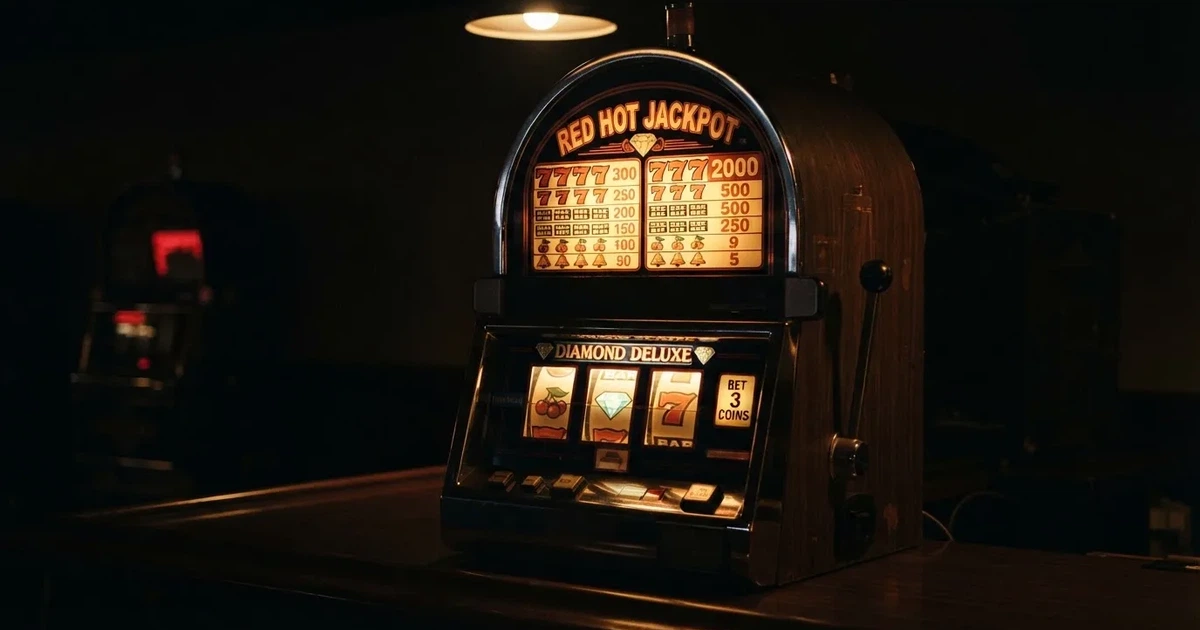
A progressive jackpot slot looks simple from the player’s seat: the headline number climbs while you spin, the reels deliver the ordinary wins or nothing at all, and somewhere in the background a meter is being fed. The consequence of that mechanism is the entire story — why the base game pays back less, why the headline figure dwarfs what a fixed jackpot ever offers, why a six-year-old record still stands, and why the online sites advertising these jackpots to Australians are running outside Australian law.
Data current as of 30 October 2026, licence claims and ACMA enforcement actions verified against the Australian Communications and Media Authority’s published register.
Table of Contents
- What a Progressive Jackpot Slot Actually Is
- The Offshore Reality: Progressive Jackpot Slots Are Prohibited Online in Australia
- Player Protection: What Actually Applies to an Offshore Site
- The Progressive Jackpot Slot Catalogue
- How Any Shortlist of Progressive Jackpot Slots Is Actually Put Together
- The Sites the ACMA Has Warned: Operator-by-Operator
- Reading the Record Numbers Without Believing Them
- Frequently Asked Questions
What a Progressive Jackpot Slot Actually Is
A progressive jackpot is a prize pool that grows with every losing wager until someone wins it, then resets to a preset minimum and starts accumulating again. That single sentence covers nearly everything that distinguishes this category from a fixed-jackpot slot.
| Progressive Type | Funding Source | Potential Jackpot Size |
|---|---|---|
| Standalone | Single machine | Low |
| Local | Linked machines (single venue) | Medium |
| Wide-Area | Network of machines (multi-venue) | Very High |
The pool is funded from a slice of the house’s profit margin on each spin, which is why a slot feeding a progressive pays back less on its non-jackpot wins than an otherwise identical fixed-jackpot game: the same percentage of each bet is being split between ordinary payouts and the climbing jackpot.

The mechanism has been around in casinos since 1986, and the first Megabucks progressive — built by International Game Technology — paid out its inaugural jackpot of A$4,988,842.17 on 1 February 1987. The category has had forty years to settle into a few stable shapes, and the shapes that survive are the ones worth understanding.
Standalone, Local, and Wide-Area Progressives
Three configurations matter, and they answer to different pressure points. A standalone progressive lives on a single machine, fed only by the bets placed on that one game — its meter climbs slowly and rarely reaches the eight-figure territory the marketing uses as wallpaper. A local progressive links machines within one venue, so the pool is fed by every connected seat in the same building and rises faster. A wide-area progressive links machines across many venues, often across multiple licensed operators, and that is the configuration that produces the nine-figure jackpots the press reports on: the record stands at €19,430,723.60, won on 27 April 2021 by a player in Belgium at Napoleon Sports & Casino on Microgaming’s Absolootly Mad: Mega Moolah.
The distinction matters because it tells the player where the headline number comes from. A wide-area progressive pools tiny contributions from thousands of spins a day across an entire network, so the climb to life-changing territory happens in weeks rather than years. A standalone progressive feeds on a single machine’s throughput and never reaches that scale. The marketing rarely says which configuration is on offer.
Must-Hit-By Jackpots: A Different Mechanism Entirely
A separate category, sometimes confused with a standard progressive, is the must-hit-by jackpot. Here the random number generator sets the exact payout amount within a preset range — say A$1,000 to A$3,000 — the moment the previous jackpot is won, and the game picks a hidden ceiling the player cannot see. Hitting the ceiling is what triggers the win, not landing a particular symbol combination. The marketing word for this is “mystery jackpot”; the consequence is that the player cannot calculate when the jackpot is statistically due, because the ceiling shifts with each reset.
Why the Base Return Sits Lower
The ordinary game inside a progressive slot is paying for two things at once: its own line wins and a contribution to the climbing jackpot. Strip the jackpot contribution out and the underlying slot’s return to player is comparable to a fixed-jackpot equivalent; leave it in and the base RTP drops to make room. The wide-area Mega Moolah games, for example, sit in the low-90s on the base game — a few percentage points below what a comparable fixed-jackpot slot from the same studio would return. The headline jackpot compensates for that shortfall only if it lands, and the probability of it landing on any given spin is the same order of magnitude as winning a major lottery.
In some progressive variants — a small number of video poker and Caribbean Stud Poker configurations — the jackpot can grow large enough to push the game’s theoretical return above 100 percent, producing a positive-expectation bet. For slot machines this break-even point is not actually calculable, because the reel layouts are not published and the contribution rate is buried in the maths. A reader who sees a progressive slot advertised as a positive-expectation play should treat the claim as marketing until a regulator-grade calculation confirms it.
What Triggers the Jackpot Round
A progressive slot usually opens a separate bonus round once a threshold condition is met — often a random trigger on any paid spin, sometimes the appearance of a bonus symbol on each of the game’s reels simultaneously, occasionally a wheel spin that lands on the jackpot segment. The trigger is rarely the main game; it is almost always a feature layered on top of the ordinary spins. A player who has never seen the feature fire is playing the slot normally and contributing to a pool that someone else, on another day, will collect.
The Offshore Reality: Progressive Jackpot Slots Are Prohibited Online in Australia
The Australian position on online casino games is unambiguous and has been since the Interactive Gambling Act 2001 was strengthened by the Interactive Gambling Amendment Act 2017. It is an offence to provide online casino games, online pokies or in-play betting to a person in Australia, and no state or territory issues a licence for them. What is licensable is wagering on races and sport placed before the event, lotteries and keno, and the bulk of that licensed online wagering is administered by the Northern Territory Racing and Wagering Commission — fifty-two online bookmakers, including Sportsbet, Bet365 and Ladbrokes, are licensed in the Territory for tax reasons. The NTRWC runs without full-time staff and meets once a month in Darwin.
A progressive jackpot slot offered as an online casino product to an Australian player is not a grey area. It is a prohibited interactive gambling service, and the operator behind it is breaking Australian law regardless of what other licence the site displays in its footer. That is the consequence the marketing never spells out.
What the ACMA Has Been Doing
The Australian Communications and Media Authority investigates, issues formal warnings, and directs Australian internet service providers to block illegal sites. By June 2026 the ACMA had asked ISPs to block 1,751 illegal gambling and affiliate marketing websites since the first blocking request in November 2019, and more than 230 unlicensed gambling services had left the Australian market since enforcement was strengthened in 2017. In the round reported on 26 June 2026 alone, twelve more sites were referred for blocking: 7Signs, ChromaBet, Donbet, Duospin, Freshbet, Slots Gem, Jacks Club, Lucky Start, Pointsbetz, Spinrise, Vinyl Casino and Wildsino.
The arithmetic the ACMA’s blocking record makes possible is the consequence that matters. Across roughly eighty months of enforcement, the rate at which the regulator has had to act is something the data itself shows.
The ACMA’s blocking record gives a rough measure of how persistent the supply side has been. Dividing the 1,751 blocked sites and affiliate pages by the months between the first blocking request in November 2019 and the June 2026 round yields a rate that sits in a band of roughly twenty-two sites per month on average — a figure that has fluctuated year to year as new operators enter and old ones are referred. The condition that makes the figure move is straightforward: every site the ACMA blocks is a site that was actively serving Australians before the referral, so the rate measures not how much illegal gambling exists at any instant but how fast the regulator has had to sweep it back.
The same enforcement record produces the spending figure the industry itself admits to. H2 Gambling Capital’s 2025 report estimates that Australians lose about A$3.9 billion a year to illegal gambling sites, and that the share of gambling going through legal channels fell from 74 percent in 2021 to 64 percent. The legal share has been losing ground, and the offshore supply has been filling the gap the licensed market does not cover.
Formal Warnings: What They Actually Are
A formal warning from the ACMA is not a fine and not a prosecution. It is a published notice that names the operator behind an offshore service and identifies the prohibited interactive gambling service that service was offering to Australians. Once a warning is published, the operator is on notice that further enforcement action will follow if the conduct continues, and the warning itself is published on the ACMA’s website as a public record.
The warnings relevant to the sites advertising progressive jackpot slots to Australians are listed below. The brands named are the ones the ACMA itself has acted against; the operator behind the brand, the date of the warning, and the prohibition are the regulator’s own framing, not the page’s.
| Brand | ACMA action and date | Operator named by the ACMA | Subject support |
|---|---|---|---|
| RocketPlay | Formal warning, March 2026 | Pulsup Ltd | — |
| RocketPlay | Earlier formal warning, May 2022 | Dama N.V. | — |
| Level Up Casino | Formal warning, May 2022 | Dama N.V. | listings only |
| Woo Casino | Formal warning, March 2025 | Dama N.V. | — |
| Spirit Casino | Formal warning, May 2025 | Dama N.V. | — |
| National Casino | Formal warning, July 2025 | Consolutetish S.R.L. | listings only |
| Bizzo Casino | Formal warning, July 2025 | Consolutetish S.R.L. | — |
| Bizzo Casino | Earlier formal warning, 2022 | TechSolutions Group | — |
| Ignition Casino | Formal warning, July 2025 | Bamboo Media | — |
| Instant Casino | Formal warning, February 2025 | EOD Code SRL | — |
| Jackbit | Formal warning, April 2026 | Ryker B.V. | — |
| Casino Intense | Formal warning, April 2025 | Sterplay Holding Ltd | listings only |
| Sky Crown | Formal warning, September 2022 | Hollycorn N.V. | — |
The table is built entirely from the ACMA’s own published register, and it records two things the marketing never surfaces: that several operators run multiple brands under one corporate parent, and that earlier warnings have not been a deterrent to re-offending. Dama N.V. has been the subject of warnings for six brands; the same operator’s brand portfolio has continued to take on new names since the first warning in 2022.
What “Subject Support” Means in This Context
The page’s brief required recording each brand’s relationship to the progressive jackpot category itself. Two of the brands — Level Up Casino and National Casino — appear as progressive-jackpot-slot listings on third-party game directories; Casino Intense appears as a venue listing in regulatory and industry coverage. For the rest of the brands, no progressive-jackpot-specific listing was found in the consulted sources, and the page records that absence rather than asserting the connection. The absence is itself information: an offshore casino can advertise progressive jackpot slots to Australians without ever appearing in a progressive-jackpot-specific directory, and the warning the ACMA publishes is the only record the regulator has chosen to keep.
The 2026 Reform: Where the Law Is Headed
The Interactive Gambling Amendment (Gambling Reform) Bill 2026 passed Parliament on 19 August 2026. Its advertising and inducement measures commence on 1 January 2027, which means a 2026 page reads the reform as law with a future start date rather than a measure already in force. The reform tightens the inducement and advertising rules around prohibited services; it does not change the underlying prohibition on online casino games. The consequence for the progressive-jackpot-slots market is that the marketing surface shrinks further from 1 January 2027 onwards, but the prohibition itself is unchanged.
Payments: The Quiet Tell
Since 11 June 2024, credit cards, credit-related products and digital currency have been banned as payment for licensed online wagering in Australia, with penalties up to A$247,500 for operators who accept them. The legal deposit routes for licensed wagering are debit card, bank transfer, PayID/Osko and BPAY. An offshore casino accepting credit cards or crypto from an Australian is not just outside the consumer protection framework — it is using a payment method the Australian rules have explicitly ruled out, and the payment screen is the quiet tell that the site does not consider itself bound by Australian law at all.
Player Protection: What Actually Applies to an Offshore Site
The Australian consumer protection framework for online gambling is built around licensed operators, and an offshore casino is not part of that framework regardless of what it claims.
BetStop and the National Self-Exclusion Register
BetStop, the National Self-Exclusion Register, has been live since August 2023 and binds Australian-licensed online and phone wagering services. A player who registers with BetStop is excluded from every licensed wagering service in the country. An offshore casino offering progressive jackpot slots to Australians is not connected to BetStop, and a BetStop registration does not block access to offshore sites. The register is the strongest self-exclusion tool Australian players have, and its scope ends at the border.
The National Gambling Helpline
The National Gambling Helpline on 1800 858 858 is free, runs 24 hours a day, and offers chat through Gambling Help Online. The helpline applies regardless of where the player has been gambling — licensed or offshore — and is the single piece of Australian player protection that does follow the player across the offshore boundary.
Tax
Gambling winnings of a recreational Australian player are not assessable income, and losses are not deductible, unless the person is carrying on a business of gambling. The Australian Taxation Office’s framing is the model rather than a guarantee; the page records it as the ATO’s position, not as a personal ruling.
What an Offshore Site Cannot Offer
An offshore casino cannot offer an Australian player a complaints body in Australia, a regulator to escalate to, or a guarantee that a balance held in the player’s account will be retrievable if the site is blocked, as no payout guarantee exists. The ACMA has blocked 1,751 sites since November 2019, and a blocked site does not refund balances — the block is a network-level instruction to Australian ISPs, and the operator behind the site is under no Australian obligation to settle with the players whose access it has cut off.
The Progressive Jackpot Slot Catalogue
The progressive jackpot slot category is dominated by a handful of wide-area networks with decades of brand recognition. Games Global, the business formerly known as Microgaming, distributes the Mega Moolah series and has recorded later wins in the series of £11.5 million and £13.5 million. The series spans Absolootly Mad: Mega Moolah, the title on which the 2021 record was won, alongside the original Mega Moolah and several branded variants.
What the Paytable Looks Like
A progressive jackpot slot’s paytable is split into two parts. The ordinary symbol combinations — the cherries, the bars, the bonus symbols — pay fixed amounts according to the table, and the base-game RTP reflects only those combinations plus the contribution rate to the progressive pool. The jackpot itself is usually displayed above the reels as a separate meter, and the meter ticks upward with each spin whether the player wins or loses. The paytable rarely shows the probability of hitting the jackpot, because the calculation requires the reel strip layouts the studios do not publish.
The contribution rate — the slice of each bet that feeds the progressive — is what the base game gives up to fund the climb. A contribution rate of five percent on a ninety-five percent base slot produces a base RTP of ninety percent and feeds the jackpot with everything above. A contribution rate of eight percent produces a base RTP of eighty-seven percent and a faster-climbing jackpot. The trade is mechanical, and the marketing almost always presents only the climbing jackpot.
Game Providers and Network Operators
The wide-area progressive networks that produce the largest jackpots are concentrated among a small number of studios. Games Global runs the Mega Moolah network. NetEnt runs the Mega Fortune and Hall of Gods networks. Playtech runs the Age of the Gods network. Each network operates across many venues, and the headline number on any one machine reflects the entire network’s throughput. The studios themselves are licensed in their home jurisdictions — the UK Gambling Commission, the Malta Gaming Authority, and a small number of other regulators — and that licence is what the offshore casino displaying the games in its footer is pointing to when it claims to be “licensed”.
Live Tables and Side Games
The progressive jackpot format extends beyond slots into a small number of live-dealer and table-game configurations. Caribbean Stud Poker, in particular, carries a progressive side bet whose jackpot can grow large enough to push the theoretical return above one hundred percent, and a handful of video poker variants carry similar side-bet progressives. The slot configuration remains the dominant market for the category, and the table-game configurations are a niche within the niche.
How Any Shortlist of Progressive Jackpot Slots Is Actually Put Together
There is no objective ranking of progressive jackpot slots because the only quantity that ranks them — the size of the headline jackpot — is reset to a seed value the moment it is won and rebuilt from there. A slot whose jackpot sits at A$18 million today may be back at A$1.5 million in two weeks if it pays out, while a slot whose jackpot sits at A$3 million today has not paid out in months and may be overdue by some unprovable definition of overdue.
What a Shortlist Can Compare
A shortlist can compare what the underlying slot offers: the base RTP after the progressive contribution is removed, the volatility band the game sits in, the bonus-round structure, the contribution rate to the jackpot, the presence or absence of a must-hit-by jackpot, the network the slot sits on, and the studio behind it. Each of these is a fixed property of the slot, and none of them fluctuates with the jackpot meter.
A shortlist can also compare the venues offering the slot: the licence the venue displays, the regulator behind that licence, the audit regime the slot is subjected to, and the jurisdiction the venue is incorporated in. The progressive slot itself does not change between venues, but the legal framework around the venue does, and for an Australian reader that framework is the relevant variable.
What a Shortlist Cannot Compare
A shortlist cannot compare the size of the jackpot at a frozen moment, because the size is reset every time the slot pays out. A shortlist cannot rank slots by “best chance to win the jackpot”, because the studios do not publish reel strip layouts or hit probabilities. A shortlist cannot tell a reader which slot will pay out next, because the random number generator does not know and does not care about the size of the previous payout.
The Australian Filter
The Australian filter narrows any shortlist to two tiers: progressive jackpot slots offered in licensed Australian venues — primarily the physical pokies in casinos and clubs — and progressive jackpot slots offered on offshore sites that the ACMA has acted against. The first tier exists within Australian consumer protection law; the second tier does not. The page’s ranking question is therefore partly a legality question: any slot offered offshore is, by definition, being offered in violation of the Interactive Gambling Act 2001, and that is information the reader needs before the comparison can start.
The Sites the ACMA Has Warned: Operator-by-Operator
Each brand below is listed because the ACMA itself issued a formal warning over it for offering prohibited interactive gambling services to Australians. The page describes the brands the regulator has acted against; it does not recommend any of them as a place to play.
RocketPlay
The ACMA issued a formal warning over Rocketplay naming Pulsup Ltd in March 2026, with an earlier warning over the same brand naming Dama N.V. in May 2022. The brand has cycled through corporate operators without leaving the ACMA’s enforcement list. The consequence for a player is straightforward: the site is on notice from the regulator that the service it offers Australians is prohibited, and any balance held with the operator sits outside Australian consumer protection.
Level Up Casino
The ACMA’s May 2022 warning over Level Up Casino named Dama N.V., the same operator named in the Rocketplay warning of the same date. The brand appears as a progressive-jackpot-slot listing on third-party game directories; no progressive-jackpot-specific claim about the venue’s own progressive offering was found in the consulted sources. The site’s progressive catalogue is what the directories record, not what the operator itself publishes.
Woo Casino
The ACMA issued a formal warning over Woo Casino naming Dama N.V. in March 2025. Dama N.V. has been the named operator across six brands the ACMA has warned — Bambet, Dazard, Level Up, Rocketplay, Wild Tornado and Cobra Casinos in May 2022, with Woo Casino and Spirit Casino added in 2025. The pattern is the regulator’s own record and speaks to the operator’s continued conduct rather than any single brand.
Spirit Casino
The ACMA issued a formal warning over Spirit Casino naming Dama N.V. in May 2025, three years after the same operator was first warned over its other brands. No progressive-jackpot-specific listing for the brand was found in the consulted sources; the warning is the regulator’s only public record of the brand’s Australian-facing conduct.
National Casino
The ACMA issued a formal warning over National Casino naming Consolutetish S.R.L. in July 2025. The brand appears as a progressive-jackpot-slot listing in third-party coverage; the listing is what the consulted sources carry, not the operator’s own claim about its progressive offering.
Bizzo Casino
The ACMA issued a formal warning over Bizzo Casino naming Consolutetish S.R.L. in July 2025, the same operator named in the National Casino warning the same month. Bizzo had already been the subject of a 2022 formal warning to TechSolutions (CY) Group Limited and TechSolutions Group N.V., making it one of the few brands on the page to have been warned under two different operator names. The cycle is the regulator’s own record.
Ignition Casino
The ACMA issued a formal warning over Ignition Casino naming Bamboo Media in July 2025. The brand has carried the same name across multiple operators in offshore markets, which makes it one of the more difficult brands to pin to a single corporate parent; the ACMA’s warning names Bamboo Media as the operator behind the Australian-facing service.
Instant Casino
The ACMA issued a formal warning over Instant Casino naming EOD Code SRL in February 2025. The brand is one of the more heavily advertised progressive-jackpot venues in offshore affiliate marketing; the ACMA’s record is the only Australian-facing public documentation of the operator behind the brand.
Jackbit
The ACMA issued a formal warning over Jackbit naming Ryker B.V. in April 2026. Jackbit was named in the same enforcement action as CasinOK, also operated by Ryker B.V., making it one of two brands the ACMA acted against in that single April 2026 round. No progressive-jackpot-specific listing for the brand was found in the consulted sources.
Casino Intense
The ACMA issued a formal warning over Casino Intense naming Sterplay Holding Ltd in April 2025. The brand appears in Australian regulatory and industry coverage as a venue listing; the listing is what the consulted sources record, not the operator’s own progressive-jackpot-specific claim.
Sky Crown
The ACMA issued a formal warning naming Hollycorn N.V. over its Sky Crown and Blue Leo casino services in September 2022. Sky Crown and Blue Leo are two brands under the same operator named in the same warning; the ACMA’s record covers both at once.
Reading the Record Numbers Without Believing Them
The €19.43 million Absolootly Mad: Mega Moolah win in April 2021 is the largest online slot jackpot ever recorded and the reference point every other jackpot is measured against. Games Global’s announcement of later Mega Moolah wins at £11.5 million and £13.5 million confirms that the network continues to produce eight-figure payouts, but the announcements are the company’s own communications and not independent verification. A reader who wants to verify a record progressive jackpot payout looks to the operator’s regulator, the game’s testing lab, and the venue’s published payout confirmation — not to the press release.
The first Megabucks payout of A$4,988,842.17 on 1 February 1987 is the historical anchor: the category has produced eight-figure payouts for nearly forty years, and the studios that run the wide-area networks have had four decades to refine the contribution rates and reset values that drive the headline numbers. The mechanic is settled; the marketing is what is new.
Frequently Asked Questions
How does a progressive jackpot slot’s prize pool actually grow between wins?
A slice of every losing wager — typically a few percent of the bet — feeds a shared prize pool that climbs until it is won. The pool is then reset to a preset seed value and the climb begins again, with the cycle repeating indefinitely until either the network is wound down or the game is retired.
What’s the difference between a standalone jackpot and a network-wide progressive jackpot?
A standalone jackpot is fed only by the bets placed on one machine, so the pool climbs slowly and rarely reaches seven figures. A network-wide progressive is fed by every connected machine across many venues and often across multiple licensed operators, which is the configuration that produces the eight- and nine-figure jackpots the press reports on.
Do licensed Australian pokies venues offer progressive jackpot machines?
Yes. Progressive jackpot machines exist in licensed Australian venues — primarily the physical pokies in casinos and clubs — and the configuration is governed by state and territory casino and gaming machine regulations. The relevant Australian prohibition is on online progressive jackpot slots as a casino product, not on the machines themselves in physical venues.
Why do progressive jackpot slots typically have a lower base return-to-player than fixed-jackpot games?
A percentage of each bet is diverted to fund the climbing jackpot, so the ordinary line wins and bonus features are paid from a smaller slice of the same bet. Strip the contribution out and the underlying slot’s RTP is comparable to a fixed-jackpot equivalent; leave it in and the base RTP drops to make room for the jackpot.
How is a record progressive jackpot payout verified?
Through the operator’s regulator, the game’s independent testing laboratory, and the venue’s published payout confirmation. A studio’s own press release is a starting point rather than a verification, and the larger the payout the more scrutiny a reader should apply before treating the figure as confirmed.
What triggers the jackpot round on a typical progressive jackpot slot?
The trigger varies by game. Most progressive slots fire a separate bonus round on a random paid spin, sometimes gated on a bonus symbol landing on each reel simultaneously. A separate category — the must-hit-by or mystery jackpot — is triggered by the random number generator selecting a payout amount that has reached a hidden ceiling rather than by a symbol combination, and the player cannot see the ceiling.