
Real money online pokies in Australia: what the market actually is
Every shortlist for “best online pokies real money Australia 2026” promises a comparison. The page cannot honestly deliver one, because the product at the top of the search does not exist as a licensed Australian offering. Online casino games — and online pokies among them — are prohibited for anyone in Australia under the Interactive Gambling Act 2001. No state or territory issues a licence for them. What the search phrase returns instead is a wall of offshore sites aimed at Australian IP addresses, almost all of them on the ACMA’s enforcement record. The honest answer to a reader typing that phrase is to lay out that gap, name what the regulator has done about it, and point to what is actually lawful: licensed pokies in pubs, clubs and casinos, and the BetStop self-exclusion register.
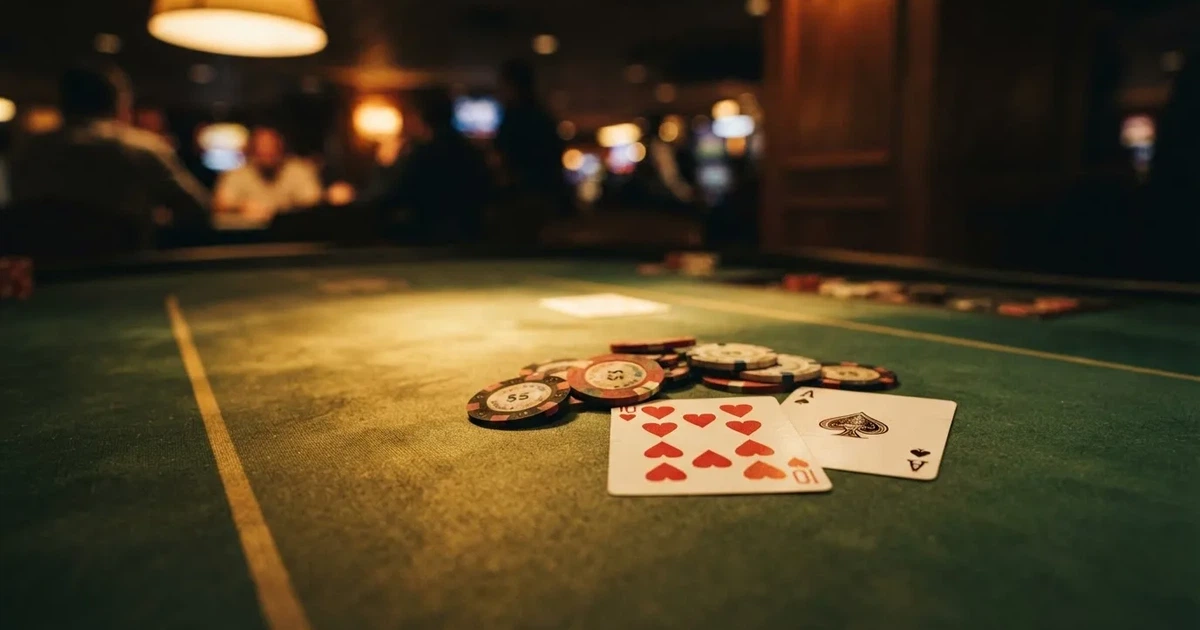
Data current as of 29 October 2026, verified against the ACMA’s formal-warning register and the Interactive Gambling Act 2001.
Table of Contents
- How money moves at Australian-licensed wagering services
- The phone-screen experience — apps and mobile browsers
- The games themselves — what an online pokie actually is
- The shortlist the ACMA has named
- How the prohibition actually works
- Player protection, for the reader who is already playing
- Frequently asked questions
How money moves at Australian-licensed wagering services
The shelf most searched in this market is “PayID pokies” — and the right place to start is the payment rail the law actually permits. PayID is the instant-transfer layer of Australia’s New Payments Platform, paired with Osko so that money sent between participating banks arrives in seconds, any time of day, with no card scheme and no interchange fee. It sits inside the licensed wagering ecosystem; it does not extend to offshore casino sites.

For a licensed Australian bookmaker taking bets on racing and sport, the deposit methods the law lets through are debit card, bank transfer, PayID/Osko and BPAY. Credit cards, credit-related products and digital currency have been banned as payment for any licensed online wagering service since 11 June 2024 — operators using them face penalties up to A$247,500. The ban closes the easy offshore deposit routes that Australian-licensed outfits once had open, and it is the clearest signal of where the regulated perimeter sits.
What this means for someone typing “PayID pokies Australia real money”: the deposit rail works at the licensed bookmaker end of the market, not at the casino end. An offshore site may show a PayID logo and ask for a PayID transfer into a personal account. That is not PayID in the regulated sense; it is a normal bank transfer rebranded to read like a real-time deposit. The funds go to a person or business the ACMA has no jurisdiction over, and the consumer protections that come with a licensed wagering relationship — a complaints body, identity-verified counterparties, responsible-gambling tools — do not apply.
Speed at the licensed end is genuinely fast. PayID through Osko settles in under a minute between major banks. A withdrawal back to the same bank account is normally same-day or next business day, depending on the operator’s internal review. None of that speed is the property of the offshore casino the marketing wants a reader to send money to.
The phone-screen experience — apps and mobile browsers
“Real money pokies app Australia” is a search that turns up apps marketed through the App Store and Google Play. The honest read of those listings is the same as the desktop read: the game underneath them is the same prohibited product. Apple and Google each apply their own regional rules to gambling apps in Australia, and most operators get around the rules by running the app as a “free-to-play” wrapper that points the player at the offshore browser site once a real-money deposit is on the table. The app icon a reader sees does not, in other words, certify that the product is licensed in Australia.
There is a separate question of which interface a player prefers, and that is worth answering on its own terms. A browser-based casino runs through any modern phone and needs no install. A native app caches graphics locally and feels faster on a weak signal. The user-experience difference between the two is real and small; the legal difference is large and identical between them. Mobile choice in this market is a question of feel, not a question of safety.
A practical note: an app that asks for a credit-card deposit, or for crypto, or for an “international” payment processor the player has never heard of, is the same product as the desktop site. The phone screen does not change what the regulator has done about it.
The games themselves — what an online pokie actually is
An online pokie is the internet version of the electronic gaming machine Australians call a “pokie” in a pub or club. A real-world pokie has a paytable, a random-number generator behind each spin, a return-to-player percentage stamped on the design and a house edge built into the math. The online version keeps all of those parts. The reels spin, the RNG decides the outcome, the symbols pay according to the paytable, and the long-run return sits somewhere below 100%.
Two companion games sit beside pokies at every offshore casino the search returns: baccarat and blackjack. Both are worth understanding because they fix a reader’s intuition about what a “casino” game is and how the house edge works.
Baccarat — a low-margin table game with a fixed banker
Baccarat is played between two hands called the Player and the Banker. The bettor wagers on which hand will be closer to nine, or on a Tie. Cards two through nine count at face value, tens and face cards count as zero, and aces count as one. Hand totals are taken modulo ten, so a seven and a six totals three, not thirteen. The casino banks the game at all times in the most-played variant, punto banco, and plays out both hands to fixed drawing rules the bettor does not control.
The house edge is unusually thin. Under standard rules it runs about 1.06% on the Banker bet, 1.24% on the Player bet and 14.36% on the Tie. The Tie is the trap; its payout looks generous and its margin is the worst of the three by a wide margin. At Crown Melbourne, baccarat is offered in three approved variants — Traditional, Crown and 2-to-1 Baccarat — under rules approved by the Victorian Gambling and Casino Control Commission, the regulator that took over from the VCGLR on 1 July 2022. The same game at an offshore site running out of Curaçao has no such approval behind it.
Blackjack — the thinnest house edge in the casino
Blackjack is the table game with the lowest house edge on the floor when the player plays optimally. With liberal Las Vegas Strip rules — dealer stands on soft seventeen, double on any two cards, double after split, resplit aces, late surrender — the edge runs about 0.28%. Under Atlantic City rules it sits closer to 0.43%. The player decides every hit, stand, double and split, which is why the edge is so thin: most of the casino games on a floor give the house a fat margin because the player cannot influence the outcome. Blackjack rewards a player who plays the basic-strategy chart.
Cards number at their number, jacks queens and kings at ten, and the ace at one or eleven. A starting two-card total of 21 is the strongest hand in the game and is called a “blackjack” or “natural.” Variants worth knowing by name: Spanish 21, played without tens but with player-favourable rules; Double Exposure, where both of the dealer’s cards are dealt face-up; Blackjack Switch, where the player swaps cards between two hands; and Super Fun 21, which allows up to four splits.
Why this matters for the offshore comparison
A reader who knows the math of these two games knows what to expect from the rest of the catalogue. The offshore pokies sit at a much wider house edge than blackjack, the table games sit in the low single digits, and the Tie bet in baccarat is the kind of trap the marketing plants in every bonus. Reading the edge on each game is the closest thing a player has to a price tag in this market.
The shortlist the ACMA has named
There is no licensed shortlist of Australian online pokies, so the honest comparison is the ACMA’s own list of brands it has acted against. Eleven brands appear below, ordered as the regulator has surfaced them. Each one is named because the ACMA itself issued a formal warning over it for offering prohibited services to Australians. This is not a ranking and not a recommendation; it is the inverse of a top-ten — a record of enforcement, side by side with the offshore brands the search results would otherwise send a reader to.
The offshore brands and what the regulator has done about each
| Brand | ACMA action and date | Operator named by the ACMA | Subject support |
|---|---|---|---|
| RocketPlay | Formal warning, March 2026 (Pulsup Ltd); earlier warning to Dama N.V., May 2022 | Pulsup Ltd / Dama N.V. | — |
| Level Up Casino | Formal warning, May 2022 | Dama N.V. | listed by BGaming as a partner |
| Woo Casino | Formal warning, March 2025 | Dama N.V. | — |
| Spirit Casino | Formal warning, May 2025 | Dama N.V. | — |
| National Casino | Formal warning, July 2025 | Consolutetish S.R.L. | listed in passing on Wikipedia |
| Bizzo Casino | Formal warning, July 2025 (Consolutetish S.R.L.); earlier warning, 2022 (TechSolutions) | Consolutetish S.R.L. / TechSolutions | — |
| Ignition Casino | Formal warning, July 2025 | Bamboo Media | — |
| Instant Casino | Formal warning, February 2025 | EOD Code SRL | — |
| Jackbit | Formal warning, April 2026 | Ryker B.V. | — |
| Casino Intense | Formal warning, April 2025 | Sterplay Holding Ltd | listed by ABC News and ACMA materials |
| Sky Crown | Formal warning, September 2022 | Hollycorn N.V. | — |
None of these brands carries an Australian licence for online casino games, because no such licence exists. The licence a brand displays on its footer is, almost without exception, a Curaçao or Anjouan licence held by an offshore holding company, and the ACMA has consistently treated those licences as irrelevant to the question of whether the service can lawfully be offered to a person in Australia.
Reading the regulator’s pattern
Two patterns jump out of the table. The first is that Dama N.V., the holding company behind RocketPlay, Woo Casino, Spirit Casino and several of the others, is the most-warned operator on the list. The ACMA’s first Dama warning covered six brands in May 2022 and it has returned to the same operator multiple times since. The second is that the warnings do not, on their own, take a site offline. Formal warnings are a step the regulator takes before asking Australian ISPs to block the domain, and the blocking list — 1,751 sites and affiliate pages since November 2019, including 12 added in the most recent round reported on 26 June 2026 — is what eventually removes a brand from a reader’s reach. The arithmetic of that rate is the page’s one piece of analysis the reader cannot get from any single fact alone.
How fast the block list is growing
The ACMA’s first request to an Australian ISP to block an illegal gambling website went out in November 2019. By the most recent published count, in June 2026, the total had reached 1,751 illegal gambling and affiliate marketing websites blocked, with more than 230 unlicensed services having left the Australian market altogether since enforcement was strengthened in 2017.
The band: roughly 250 to 290 sites blocked per year on average over the seven years since the first blocking request, with the recent reporting round adding 12 sites in a single update. That is the pace of a regulator clearing a backlog, not the pace of a regulator stamping out new entries — and the offshore market keeps producing fresh brands for it to clear. The reader-facing effect is that an offshore casino URL a reader sees in a search result today may be unreachable from an Australian ISP next month. A balance left on that site at the moment it gets blocked is, in practice, gone.
What a brand looks like in the wider market context
H2 Gambling Capital’s 2025 estimate is that Australians lose about A$3.9 billion a year to illegal gambling sites, and that the share of gambling going through legal channels has fallen from 74% in 2021 to 64%. The trend line is the point. The licensed wagering market is shrinking as a share of total Australian gambling spend, even while the regulator is blocking offshore brands at the rate set out above. A reader typing the search phrase into a search bar is hitting a market that is moving in the wrong direction for the regulator and the right direction for the offshore operators.
How the prohibition actually works
The legal frame is short and worth quoting cleanly, because everything else on this page flows from it.
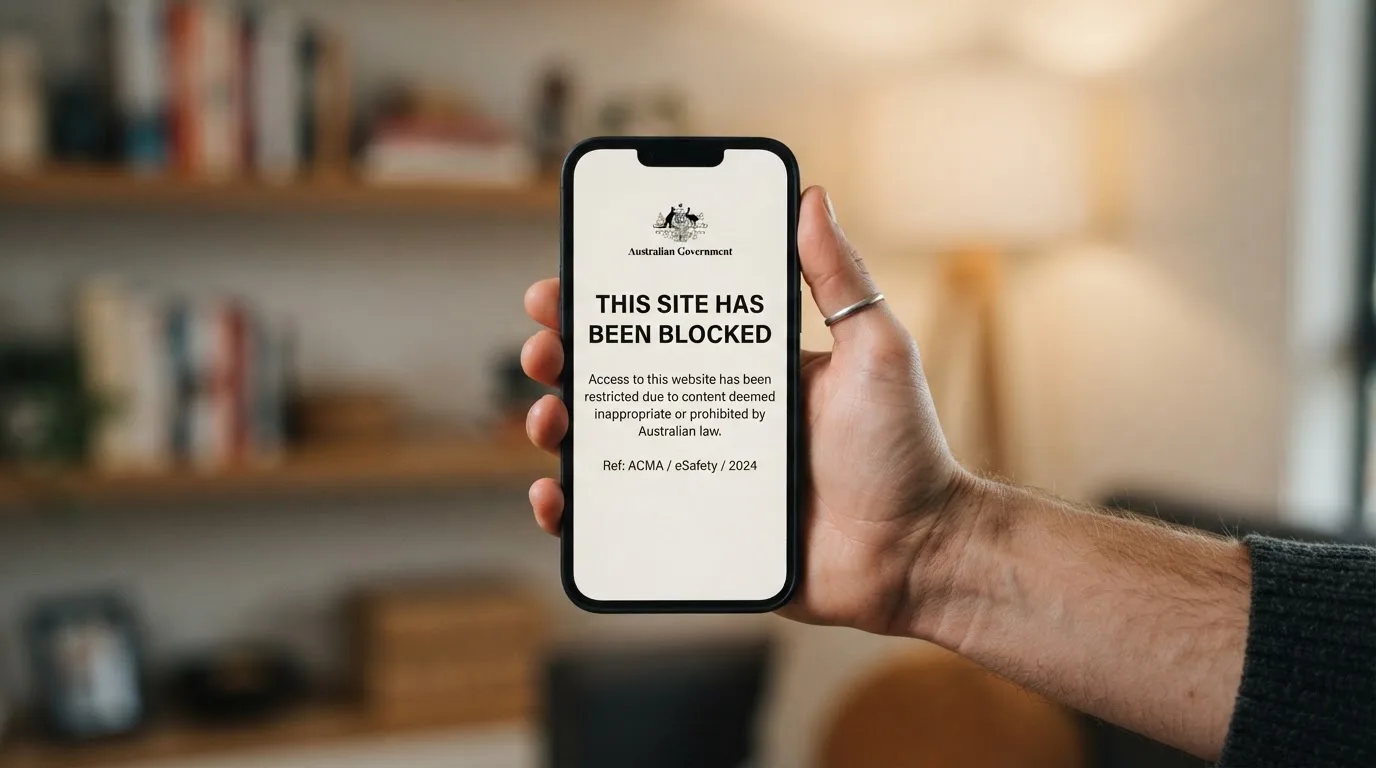
The Interactive Gambling Act 2001
The Interactive Gambling Act 2001 (the IGA), strengthened by the Interactive Gambling Amendment Act 2017, makes it an offence to provide online casino games, online pokies or in-play betting to a person who is physically in Australia. No state or territory issues a licence for any of those products. What is licensable — wagering on racing and sport placed before the event, lotteries and keno — sits in a separate legal box. The individual player is not prosecuted; the IGA targets the provider. Minimum age for any Australian gambling product is 18.
The practical effect: a casino site that says it holds a Curaçao licence, or an Anjouan licence, or a Kahnawake licence, is telling the truth about its offshore status. It is not telling the truth if it implies that licence extends to Australians. The licence does not extend to Australians, and the ACMA’s enforcement record is the proof.
The ACMA’s enforcement tools
The ACMA — the Australian Communications and Media Authority — is the regulator that administers the IGA. It has three tools it uses against offshore operators offering prohibited services to Australians. It can issue a formal warning, which is what every entry in the table above records. It can direct Australian internet service providers to block the offending domain, which is the 1,751-site list. And it can refer matters for civil penalty proceedings, which carries the A$247,500-per-breach exposure on payment-rule violations and the IGA’s own penalty regime for the rest.
The 12 domains added in the round reported on 26 June 2026 give a current snapshot of the kinds of brand the ACMA is dealing with: 7Signs, ChromaBet, Donbet, Duospin, Freshbet, Slots Gem, Jacks Club, Lucky Start, Pointsbetz, Spinrise, Vinyl Casino and Wildsino. Most of the names will be unfamiliar to an Australian reader; that is the point. They are the offshore brands the regulator is currently working through, and a reader who recognises one of them in a search result has just confirmed that the result points to a site on the block list.
The 2026 reform bill
The Interactive Gambling Amendment (Gambling Reform) Bill 2026 passed Parliament on 19 August 2026. Its advertising and inducement measures commence on 1 January 2027 — law with a start date, not yet in force on a page read in the current year. The bill’s effect on offshore pokies marketing aimed at Australian consumers is the next phase of the regulatory story; the first phase, the IGA prohibition itself, is already operative.
Where licensed wagering does sit
The Northern Territory Racing and Wagering Commission regulates 52 of Australia’s online bookmakers — including Sportsbet, Bet365 and Ladbrokes — licensed in the Territory for tax reasons. The commission has no full-time staff and meets once a month in Darwin. That is the regulator the law has given the largest licensed online wagering book in the country, and it is the regulator a reader who wants a legal Australian-licensed experience actually deals with.
Player protection, for the reader who is already playing
The responsible-gambling shelf is not optional. Anyone reading this page with a real money interest is the person this section is for, and the tools below are the ones a reader in Australia can use today.
BetStop, the National Self-Exclusion Register
BetStop went live in August 2023. It binds every Australian-licensed online and phone wagering service. A person can register a self-exclusion period — the minimum is three months, with longer options available — and every licensed operator is then required to refuse to let that person open a new account, deposit, or place a bet while the exclusion is in force. BetStop is the single most effective tool an Australian consumer has against their own licensed wagering spend.
BetStop does not bind offshore casinos. A self-excluded Australian can still reach an offshore casino site from an Australian IP address — at least until the ACMA blocks that domain — and the offshore site has no obligation to honour the exclusion. This is the limitation a reader needs to know about before relying on BetStop as a complete answer.
State-based help and the National Gambling Helpline
The National Gambling Helpline is 1800 858 858 — free, 24/7, with web chat at Gambling Help Online. Each state and territory runs its own problem-gambling programme on top of that line; for New South Wales, that is GambleAware; for Victoria, that is the Victorian Responsible Gambling Foundation; for Western Australia, that is the Department of Local Government, Sport and Cultural Industries’ problem-gambling programme. The state programmes run the face-to-face counselling that the helpline refers into.
Pre-commitment and the state-by-state machine rules
A pokie played in a pub or club in Australia is not an unregulated product. Each jurisdiction sets its own minimum return-to-player, and the variation is wider than most readers expect. New South Wales, the Northern Territory, Queensland and (generally) Victoria set the floor at 85% — Crown Melbourne is approved at 87%. The Australian Capital Territory and Tasmania set it at 87%. South Australia at 87.5%. Western Australia at 90%.
Tasmania planned nation-leading mandatory pre-commitment cards — a card a player would have to insert into the machine before playing, with pre-set loss and time limits — but the implementation was delayed until late 2025. Western Australia banned poker machines in pubs and clubs when Crown Perth opened in 1985; Crown Perth’s own machine count has since grown from about 200 in 1985 to roughly 2,500, all approved by the state’s Gaming and Wagering Commission. New South Wales had 87,298 gaming machines outside casinos across 2,195 venues in June 2023, with player losses of A$8.18 billion in 2022-23. Queensland had 21,122 machines in 351 venues in October 2023. Victoria had 26,380 outside Crown Casino in 488 venues in 2021-22, under a statewide cap of 30,000.
None of those machines is an online pokie. They are the legal Australian alternative the IGA points a reader toward.
Money and tax
A recreational player’s gambling winnings are not assessable income in Australia (section 6-5 of the ITAA 1997), and losses are not deductible, unless the person carries on a business of gambling — a model only, and one a reader should check with the ATO before assuming. The point matters for offshore sites because there is no Australian withholding at the source and no ATO reporting of offshore play. A reader is on their own with the record-keeping.
Frequently asked questions
What is the difference between a free-play pokie and a real money one?
A free-play pokie runs the same RNG-driven reels as the real-money version, with the same paytable and the same math, but no money changes hands when the reels spin and no real winnings can be cashed out. A real-money pokie converts the spin result into an actual balance change in the player’s account, and a withdrawal can be requested against winnings. The mechanics are identical; only the money side changes.
Can real money online pokies be played using PayID in Australia?
PayID works at Australian-licensed wagering services — bookmakers licensed to take bets on racing and sport before the event — where it settles instantly through Osko between participating banks. It does not work at an offshore online casino, because that casino is not a licensed Australian wagering service and the consumer protections that come with PayID through a licensed operator do not extend to it.
Is it legal for an online casino to offer real money pokies to Australians?
No. Under the Interactive Gambling Act 2001, strengthened by the Interactive Gambling Amendment Act 2017, it is an offence to provide online casino games — online pokies among them — to a person in Australia. No state or territory issues a licence for the product. The individual player is not prosecuted, but the offshore casino offering the game to Australians is breaking Australian law, and its site can be blocked.
Is there a dedicated real money pokies app for Australian players?
No licensed Australian real-money pokies app exists, because the product it would offer is prohibited. Apps marketed through the App Store and Google Play as “real money pokies Australia” are wrappers for offshore casino sites, which the ACMA has blocked at a rate of roughly 250 to 290 domains per year since the first blocking request in November 2019.
How much did Australians wager on gaming machines in 2020-21?
Australians bet almost A$150 billion through gaming machines in 2020-21 and lost A$12.18 billion on them. Australia has about 3% of the world’s pub and club poker machines with 0.3% of the global population — the world’s highest density of pokies per capita. These figures cover land-based machines, which are state-regulated; they do not include offshore online pokies, which are not licensed at all.