
How PayID Reaches an Offshore Pokies Account — and What Both Ends of the Transfer Look Like
Every “instant PayID deposit” claim pitched at an Australian player is doing two things at the same moment. It is pointing at the New Payments Platform, where an Osko transfer from a major Australian bank really does arrive at a destination account in under sixty seconds, around the clock. And it is doing that pointing from a website that no Australian regulator has licensed to offer online casino games to a person physically in Australia — under any branch of Australian law, at any level of government, since the Interactive Gambling Act 2001 was amended in 2017.
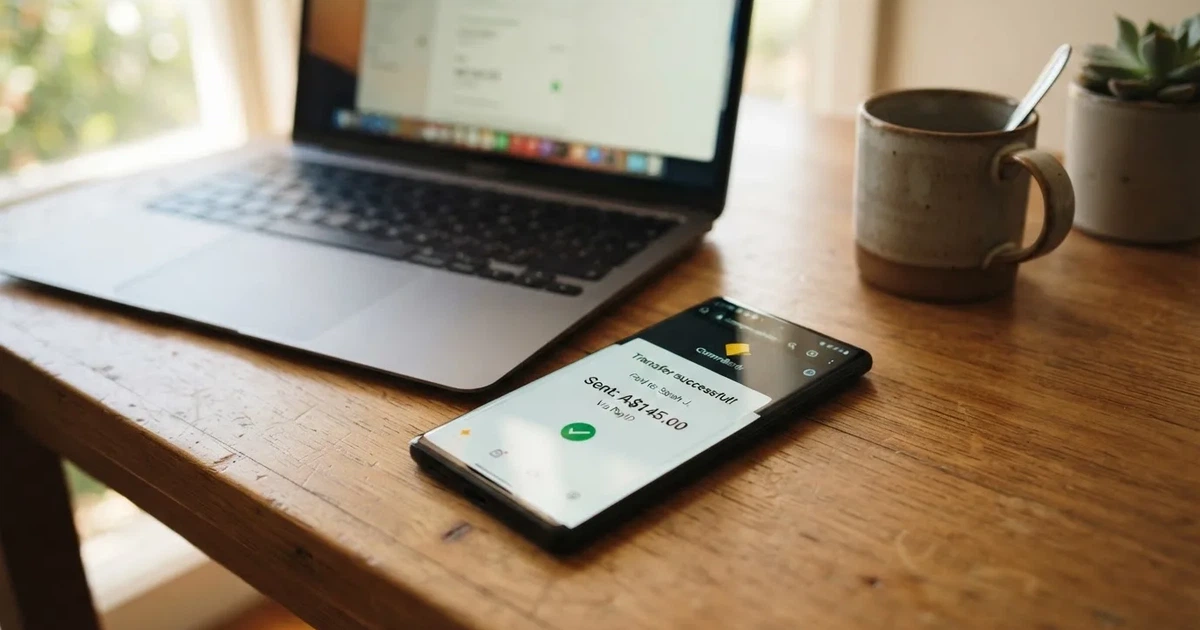
The settlement mechanism is real. The licence is not. The marketing lives in the gap between them, and the consequence of the gap falls on the player who deposits before the gap has had a chance to be explained.
This page works through what those two things together actually mean. It starts with what “online pokies PayID Australia” refers to when an Australian types the phrase into a search bar, then sets out the statute the entire offshore market is sitting outside, then the player-protection layer that exists for Australians and how an offshore site does not connect to it, then the payments mechanism the marketing borrows from, then a side-by-side look at the eleven operators the ACMA has formally warned since 2022, then each of those operators in detail, and finally the questions the material above it leaves open.
As of 29 October 2026 · licence claims verified against the Australian Communications and Media Authority’s formal-warning register.
Table of Contents
- What “Online Pokies PayID Australia” Actually Refers To
- The Legal Foundation That Shapes the Operator Set
- Where Players Should Land: Help, Self-Exclusion, and What an Offshore Site Cannot Offer
- How PayID Settlements Actually Reach an Online Pokies Site
- The Operator Landscape: How Eleven ACMA-Warned Sites Compare
- The Eleven Operators in Detail
- Frequently Asked Questions
What “Online Pokies PayID Australia” Actually Refers To
The phrase does not name a category of site. It names a deposit-method preference on a category of site that, in the Australian regulatory frame, does not legally exist.

Searches for “online pokies payid australia” return, almost exclusively, offshore casino and pokies operators — Curaçao-registered, Anjouan-registered, occasionally Kahnawake — that have configured a PayID-linked Australian bank account as a deposit rail. The marketing emphasises “instant” and “Australian” and “trusted” because PayID is genuinely fast, genuinely Australian, and the trust word is what every offshore operator wants sitting in front of its logo. The speed is a property of the New Payments Platform; the trust is being borrowed.
The reason an offshore site accepts PayID rather than a regular BSB-and-account transfer is simple and worth being precise about. PayID is the only near-real-time retail payment rail Australia has. Direct Entry still takes hours; BPAY takes a day. Osko, running over the New Payments Platform and addressed to a PayID, arrives in under a minute at any participating bank, twenty-four hours a day, weekends included. For a casino wanting a player funded and playing within the same minute, there is no other Australian rail that competes.
What makes the deposit fast is also what makes it visible. Paying to a PayID displays the name registered to that identifier before the money is sent. That confirmation is the protection that lets Australians send to a stranger’s PayID without hesitation, and it is the mechanism Australian Payments Plus points to when warning against exactly this kind of site. The warning sits on PayID’s own pages, in plain language, and the slang AP+ uses for it is “scambling” — a portmanteau of scam and gambling, applied to illegal online gambling platforms advertised on social media and messaging apps that trick people into gambling on a scam website.
The Australian banking system, in other words, has built the rail and has separately put up the sign warning against using it for this. Both are operating as designed. The offshore pokies site lives in the space where the rail works and the warning has not been read.
This is the structure behind every “instant PayID” claim on a pokies site aimed at Australians. The settlement is real, the licence is not, and the consequence of the gap is what falls out across the rest of this page — at deposit time, at withdrawal time, and at the regulator’s enforcement tempo, which is the third thing the marketing does not mention.
The Legal Foundation That Shapes the Operator Set
The reason no operator in the comparison table further down is licensed to offer online pokies to Australians — and the reason the ACMA’s formal-warning register reads like a roster of well-known offshore names — sits in one statute.
The Interactive Gambling Act 2001, strengthened by the Interactive Gambling Amendment Act 2017, makes it an offence to provide online casino games, online pokies or in-play betting to a person in Australia. The 2017 amendments gave the Australian Communications and Media Authority its current enforcement powers: formal warnings, civil penalty orders, and the ability to direct Australian internet service providers to block offending sites. No state or territory licenses online casinos. None of them ever has. The Interactive Gambling Act sits over the top of state and territory law and pre-empts it.
What is licensed, and what the Northern Territory Racing and Wagering Commission oversees in practice, is wagering on races and sport placed before the event, plus lotteries and keno. Sportsbet, Bet365 and Ladbrokes are licensed in the Northern Territory for tax reasons; the Commission has no full-time staff and meets once a month in Darwin. The regime works because the operators it covers are bookmakers, not casinos, and the bets it licenses are pre-event wagers, not spins on a slot machine.
That is the split, and it is the split every offshore licence display quietly depends on a player not noticing. Online bookmaking is licensable. Online casino is not. When an offshore operator displays a “Curaçao licence” or a “Kahnawake licence” in its footer, it is licensed somewhere — it is not licensed for Australians to play online casino games. The player is being asked to treat the foreign licence as if it answered an Australian question.
The consequences, when they arrive, arrive on three different timescales.
Immediate, at deposit time: the Australian bank on the sending end may refuse the transaction before it ever reaches the New Payments Platform. ANZ and Westpac both operate gambling transaction blocks at card level that refuse authorisation under the merchant category code “Betting/Casino Gambling”; ANZ’s block extends to digital-wallet transactions like Apple Pay on an eligible card, not just the physical card itself. Once the ANZ block is on, removing it requires a 48-hour waiting period, and the bank warns that not every gambling transaction will be blocked and that some non-gambling transactions might be blocked in error. A PayID transfer from a bank account is not a card transaction and so falls outside that card-level block — but AP+’s own scam warning, and the way PayID displays the destination name before the transfer is sent, perform an analogous function at the point of payment, and the player who reads the destination name on a “L31X5 Pty Ltd trading as…” entry and sends anyway has done the looking the system offered.
Medium-term, when the player tries to withdraw: there is no Australian complaints body. An offshore licence in Curaçao or Anjouan gives the player access to that jurisdiction’s regulator, not Australia’s. A withdrawal refused, a bonus term applied retroactively, an account closed with a balance still on it — the player has whatever consumer protection the licence jurisdiction offers, and nothing else. That is the second-order consequence: the offshore marketing uses Australian terms of art (“responsible gambling”, “fair play”) because the words borrow credibility, but the protection those words describe exists in Australia only.
Long-term, at the operator level: the ACMA’s enforcement compounds. As of June 2026, the ACMA has directed Australian ISPs to block 1,751 illegal gambling and affiliate marketing websites since the first blocking request in November 2019. More than 230 unlicensed gambling services have left the Australian market since 2017. A blocking order is not a one-off: the regulator can, and does, return to the same operator under a different brand, under a different corporate vehicle, or under a different domain. The eleven operators covered further down are not a ranked list of recommended sites. They are the operators the ACMA has formally warned since 2022, named by the regulator itself, with the date of the warning and the corporate vehicle the ACMA recorded. Every one of them is an offshore casino offering a prohibited service to Australians, regardless of the licence it displays.
H2 Gambling Capital’s 2025 estimate puts the cost of illegal gambling to Australians at around A$3.9 billion a year, with the share of gambling going through legal channels falling from 74% in 2021 to 64% — a ten-point drop in four years that the ACMA’s enforcement tempo is responding to, not the cause of. The pace of that response is the third consequence, and it is the one that turns the operator set on this page into a moving target rather than a fixed list.
Where Players Should Land: Help, Self-Exclusion, and What an Offshore Site Cannot Offer
Responsible gambling support in Australia is built for the players who use Australian-licensed services. Offshore casinos are not part of that system, and the gap is the point of this section.
BetStop — the National Self-Exclusion Register — has been live since August 2023. It binds every Australian-licensed online and phone wagering service. A person registered with BetStop cannot open an account, place a bet, or receive marketing from any operator connected to the register. The point of the register is that it covers the licensed market, all at once, without the player having to register separately with each bookmaker.
An offshore pokies site is not connected to BetStop. A player registered for self-exclusion can still deposit, still play, still receive bonus offers from an offshore operator. The exclusion stops at the licensed perimeter, and the offshore operator is outside that perimeter. That fact is not in any offshore operator’s marketing. The marketing copy talks about “responsible gambling” tools the offshore site itself offers — deposit limits, cooling-off, self-exclusion from that one site — but those tools are operator-set, operator-enforced, and revocable by the operator. They are not BetStop.
The help, where to find it, is the same regardless of where the play happened. The National Gambling Helpline is 1800 858 858, free, twenty-four hours a day. Chat is available at Gambling Help Online. Both are confidential, both are Australian, and both operate whether or not the player has ever placed a bet. The harm from offshore play does not have to be resolved by the offshore operator that caused it; the resolution path is the same Australian service, and it is one phone call away regardless of how the money got to the offshore site in the first place.
This is also where the regulator’s own terminology earns its weight. The Interactive Gambling Act defines a “prohibited interactive gambling service” — a service that supplies online casino games to a person in Australia. The eleven operators covered later on this page are all, on the ACMA’s own record, suppliers of prohibited interactive gambling services. “Prohibited” is the legal term; what it means for the player is that the operator exists outside the system that would otherwise catch a problem before it grows. An Australian-licensed operator with a player showing signs of harm can be referred into the same BetStop and helpline system. An offshore operator cannot be.
There is one further consequence worth naming explicitly. The offshore site, by definition, gives the player no Australian consumer protection. There is no AU-based dispute resolution, no AU-based complaints body, no AU-based recourse if a withdrawal is refused or a bonus term applied retroactively or an account is closed with a balance still on it. The same holds true at the moment a balance sits on a site that gets blocked: a site the ACMA has directed ISPs to block can be unreachable with the player’s money still inside it. The protection gap is not a side effect. It is the structural feature of the offshore model, and the Australian regulatory frame is built around it.
How PayID Settlements Actually Reach an Online Pokies Site
The marketing word on these sites is “instant”. The mechanism it is borrowing from is real, and it is worth being precise about, because the precision is what makes the consequence visible.
A PayID is an easy-to-remember identifier — a mobile number, an email address, an ABN, or an Organisation Identifier — linked to an Australian bank account. It is operated by Australian Payments Plus, the domestic payments provider, and is offered by more than 100 Australian financial institutions, already built into their online banking. By April 2025, more than 25 million PayIDs were registered in Australia.
PayID runs on the New Payments Platform, which launched in February 2018 and is overseen by the Reserve Bank of Australia. The RBA also owns and operates the Fast Settlement Service that settles NPP transactions individually, in close to real time, twenty-four hours a day. With Osko, the NPP’s consumer brand, a bank transfer between participating Australian banks arrives in under a minute, 24/7 including weekends, whether it is addressed to a BSB and account number or to a PayID. That is the “instant” claim in the marketing, and it is accurate as a description of how the rail behaves.
What the marketing does not say is that the rail is not what it sounds like. An Australian paying to a PayID is shown the name linked to that identifier before the transfer is sent — the check that protects against scams and mistaken payments. AP+ states the warning in plain language on its own site: “If you are asked to transfer funds to a PayID on an illegal gambling site, it is almost certainly a scambling website.” AP+ defines “scambling” as slang for illegal online gambling platforms advertised on social media and messaging apps that trick people into gambling on a scam website, and tells anyone who thinks they have been scambled to contact their financial institution. The 100-plus financial institutions offering PayID are the same institutions whose customers are being asked to send money to these sites. The system is not unaware of what it is being used for.
PayID itself never contacts a customer directly, and emails or text messages claiming to be from PayID are a scam. PayID never asks anyone to send money in order to receive money or to “upgrade” an account. The pattern that defines an offshore pokies site’s PayID deposit — being asked to send money to a stranger’s PayID in order to receive bonus credit and play casino games — matches AP+’s scam description by AP+’s own criteria.
The payment stack that surrounds PayID matters at this point too. Under the Interactive Gambling Act 2001 as amended in 2023, Australian-licensed online wagering services cannot accept credit cards or other credit-related products as payment. The same restriction shapes how PayID-linked bank transfers and digital wallets like Apple Pay can be used for wagering. By the end of 2025, Apple Pay, Google Pay and Samsung Pay transactions collectively accounted for around 45% of all card payments in Australia by number. Apple does not charge fees to consumers for using Apple Pay in stores, online or in apps; any surcharge comes from the merchant’s own card-processing fees. Apple also states that transaction limits and PIN requirements for Apple Pay purchases are set by the card issuer or merchant, not by Apple itself. The payment rails are layered, and the layer that does the regulating — card-level gambling blocks at ANZ and Westpac, credit-card prohibition at licensed operators, PayID name-checks at AP+ — is operating as designed. An offshore site sits outside all three layers.
The Reserve Bank of Australia’s July 2025 review proposes removing surcharges only on eftpos, Mastercard and Visa card transactions, explicitly leaving American Express outside the scope of the proposed surcharge ban. The detail matters only because it tells you how carefully the Australian payments regulator maps the network — and how little of that mapping touches an offshore operator with a Curaçao registration.
So the consequence of “instant PayID” is not a faster path to a licensed game. It is a faster path to an unlicensed one. The speed of the rail is the same either way, and the regulatory frame at the receiving end is precisely what is missing.
The Operator Landscape: How Eleven ACMA-Warned Sites Compare
Eleven operators sit on the ACMA’s formal-warning register as suppliers of prohibited interactive gambling services to Australians. None of them is licensed for online casino games in Australia. The table below records what the ACMA itself has published about each, in the operator’s own order on the register, with the corporate vehicle the regulator named and the date the warning was issued.
Where the same operator has been warned before — a brand that reappears under the same corporate vehicle, or a corporate vehicle that has been warned under a different brand — that earlier action is recorded in the right-hand column. The point of the table is what it does and does not show: the action is the regulator’s, the brand is the operator’s, the earlier action is whatever the regulator has on file. The comparison that follows is structural, not commercial; no operator here is being ranked against another for safety, payout speed, or player experience.
| Operator | ACMA action date | Operator named by the ACMA | Earlier ACMA action |
|---|---|---|---|
| RocketPlay | March 2026 | Pulsup Ltd | Dama N.V., May 2022 |
| Level Up Casino | May 2022 | Dama N.V. | — |
| Woo Casino | March 2025 | Dama N.V. | — |
| Spirit Casino | May 2025 | Dama N.V. | — |
| National Casino | July 2025 | Consolutetish S.R.L. | — |
| Bizzo Casino | July 2025 | Consolutetish S.R.L. | TechSolutions, 2022 |
| Ignition Casino | July 2025 | Bamboo Media | — |
| Instant Casino | February 2025 | EOD Code SRL | — |
| Jackbit | April 2026 | Ryker B.V. | — |
| Casino Intense | April 2025 | Sterplay Holding Ltd | — |
| Sky Crown | September 2022 | Hollycorn N.V. | — |
Comparison of Payment Methods
| Method | Settlement Speed | Primary Use |
|---|---|---|
| PayID/Osko | Under 60 seconds | Real-time transfers |
| Direct Entry | 1–3 business days | Regular account transfers |
| BPAY | 1 business day | Bill payments |
Two patterns emerge from the table that the ACMA’s enforcement tempo, not the marketing, made visible.
The first is corporate-vehicle recycling. Of the eleven operators, five sit under three corporate vehicles: Dama N.V. holds Level Up Casino, Woo Casino and Spirit Casino, with the ACMA’s three warnings spread across 2022, 2025 and 2025; Consolutetish S.R.L. holds National Casino and Bizzo Casino, both warned in July 2025; TechSolutions (CY) Group Limited and TechSolutions Group N.V. were warned over Bizzo Casino back in 2022, three years before Consolutetish S.R.L. was. The brand on the front of the site changes; the corporate vehicle behind it cycles through the ACMA’s register. The June 2026 blocking round alone named twelve new sites — 7Signs, ChromaBet, Donbet, Duospin, Freshbet, Slots Gem, Jacks Club, Lucky Start, Pointsbetz, Spinrise, Vinyl Casino and Wildsino — and the regulator’s pattern of action suggests more such names will follow.
The second is the speed of the escalation. The first ACMA formal warning in this set dates to September 2022 (Sky Crown, Hollycorn N.V.). The most recent dates to April 2026 (Jackbit, Ryker B.V.). Three and a half years separate the earliest from the latest, and the warning tempo has tightened noticeably across that period — single warnings in 2022 (Sky Crown, plus the May 2022 Dama N.V. action covering six brands), three in 2025 (Woo Casino, Spirit Casino, Casino Intense, plus the July 2025 round and the February 2025 Instant Casino warning), and two already in 2026 (RocketPlay and Jackbit, plus the April 2026 Ryker B.V. action and the March 2026 Pulsup action).
The blocking-rate figure that falls out of the wider enforcement record makes the tempo concrete. The ACMA’s running total of blocked sites reached 1,751 in the June 2026 round, with the first blocking request issued in November 2019. That is roughly 79 months between the first request and the June 2026 round, and an average of around 22 sites blocked per month over the full period — somewhere between 15 and 30 in any given month depending on the ACMA’s enforcement cycle, and trending upward as the regulator’s tempo has tightened. Twelve of the 1,751 were added in that single June 2026 round. The figure is not a prediction; it is the regulator’s own backlog, and the consequence for any operator in the table above is that the ACMA’s enforcement arm has demonstrated both the reach and the rhythm to come back.
That is what the comparison on this page is for. It is not a ranking. It is the ACMA’s own record, set down so that a reader comparing one of these sites to another can see what the regulator has already said about each, in the regulator’s own words, on the regulator’s own dates.
The Eleven Operators in Detail
The eleven operators covered below are described as the ACMA has described them, and on the ACMA’s own dates. Each entry sets out the regulator’s action, the corporate vehicle named, and what the same operator’s record shows in the wider register. None of them is licensed for online casino games to Australians. The judgement at the close of each entry is about the operator’s place in the regulator’s pattern, not about whether the site is worth playing at.
RocketPlay
Pulsup Ltd (Rocketplay), formal warning from the ACMA in March 2026. The same brand had already been the subject of a Dama N.V. warning in May 2022, when the ACMA’s action covered six casino brands — Bambet, Dazard, Level Up, Rocketplay, Wild Tornado and Cobra Casinos. RocketPlay is therefore a brand with two ACMA warnings to its name, four years apart, and under two different corporate vehicles.
The fact that the ACMA returned to RocketPlay under a new corporate vehicle in 2026 is the consequence worth sitting with. A blocking order and a formal warning are not the end of an operator’s Australian exposure; they are the regulator’s record of one round with it. The new corporate vehicle, the new domain, the fresh warning date — none of these reset the prior action. RocketPlay’s position in the table is not “a recently warned operator”. It is “an operator the ACMA has now warned twice”, and the second warning’s existence is itself the relevant fact.
Level Up Casino
Dama N.V., formal warning from the ACMA in May 2022 — the first of the Dama N.V. warnings in this set, and one of the earliest in the ACMA’s register against any of the eleven operators here. Dama N.V. would go on to be named in two further formal warnings in 2025, covering Woo Casino and Spirit Casino.
The consequence is structural rather than recent. Level Up Casino sits at the head of a corporate vehicle that the ACMA has returned to three times across four years, under three different brand names. The 2022 warning has not been superseded; it has been added to. A player finding any Dama N.V. brand today is finding the same operator the regulator first warned in 2022, regardless of which brand sits in front of it.
Woo Casino
Dama N.V., formal warning from the ACMA in March 2025. The second Dama N.V. warning in this set, three years after the May 2022 action. Woo Casino is the brand; Dama N.V. is the corporate vehicle the ACMA named; the date is March 2025.
The pattern Woo Casino illustrates is the one the table makes structural. A single corporate vehicle, warned once, comes back onto the register three years later under a new brand. The ACMA’s action is on the operator, not on the brand alone — and the consequence for a player is that the brand front is the part of the operation that cycles, while the corporate vehicle behind it sits on the regulator’s record for the full duration.
Spirit Casino
Dama N.V., formal warning from the ACMA in May 2025. The third Dama N.V. warning in this set, two months after Woo Casino’s. Same operator, different brand, same regulator’s response.
Spirit Casino’s position on the register closes the Dama N.V. cluster into a sequence: 2022 (Level Up Casino), 2025 (Woo Casino), 2025 (Spirit Casino). Three brands, one corporate vehicle, the ACMA returning to it across a four-year span. The point of the cluster is not the third warning itself; it is that the third warning was inevitable from the first, given the operator’s behaviour, and the regulator has demonstrated it had both the reach and the patience to issue all three.
National Casino
Consolutetish S.R.L., formal warning from the ACMA in July 2025. National Casino was warned alongside Bizzo Casino in the same July 2025 round, and both brands were named to the same corporate vehicle on the same date.
National Casino’s record is also a record of the same brand appearing under a different operator on an earlier date — there is no formal earlier warning to National Casino specifically in this set, but the ACMA’s July 2025 round was one of the year’s largest, and the regulator’s pattern in that round was to pair brands by corporate vehicle. National Casino’s consequence is the one shared across the round: the ACMA’s enforcement arm is no longer warning operators one brand at a time, and the July 2025 action was one of the clearest demonstrations of that change.
Bizzo Casino
Consolutetish S.R.L., formal warning from the ACMA in July 2025. Earlier warning over Bizzo Casino from the ACMA was issued to TechSolutions (CY) Group Limited and TechSolutions Group N.V. in 2022 — making Bizzo Casino a brand with two ACMA warnings to its name, three years apart, and under two different corporate vehicles.
Bizzo Casino’s position on the register is the cleanest illustration in this set of the corporate-vehicle recycling pattern. Same brand, two different operators named by the regulator, three years between the two warnings. The marketing side of the operation stayed constant; the legal entity behind it changed. The consequence is exactly the same as RocketPlay’s: a brand that has been warned twice has not been warned once and recovered.
Ignition Casino
Bamboo Media, formal warning from the ACMA in July 2025. Ignition Casino sits alongside National Casino and Bizzo Casino in the same July 2025 round, but under a distinct corporate vehicle — Bamboo Media, not Consolutetish S.R.L.
Ignition Casino is the brand in this set that illustrates the breadth of the July 2025 round rather than the corporate-vehicle pattern within it. Three brands, three different operators named, the same month. The ACMA’s enforcement arm in July 2025 was not picking off individual sites; it was working through a list. The consequence for any operator in the round is that the warning came as part of a coordinated action, and the regulator’s own record shows it.
Instant Casino
EOD Code SRL, formal warning from the ACMA in February 2025. The earliest warning in the 2025 cluster of this set, and the warning that sits closest in time to the moment AP+ published its plain-language “scambling” warning about illegal gambling sites using PayID deposit rails.
The coincidence of timing is the consequence. The ACMA’s warning over Instant Casino in February 2025 is the regulator’s record on one operator at one moment; AP+’s scam warning is the same regulator-adjacent body warning Australians, in plain language, about exactly the pattern Instant Casino sits inside. A player who reads both reads the same warning twice, once from the communications regulator and once from the payments operator that runs PayID.
Jackbit
Ryker B.V., formal warning from the ACMA in April 2026. The most recent ACMA formal warning in this set — issued in the same month as the ACMA’s action over CasinOK, also under Ryker B.V.
Jackbit’s position on the register is the freshest data point the ACMA has on the eleven operators covered here. The brand’s consequence is not “the newest warning” in the abstract; it is “the warning issued most recently before this page’s writing”, which means the ACMA’s enforcement tempo has not slowed and Jackbit’s brand had not been retired by its operator before the regulator returned to it.
Casino Intense
Sterplay Holding Ltd, formal warning from the ACMA in April 2025. One of three ACMA formal warnings issued in April 2025, and one of several in this set that sits under a corporate vehicle not seen elsewhere in the eleven.
Casino Intense’s position illustrates the corporate-vehicle breadth of the ACMA’s register. Sterplay Holding Ltd does not recur elsewhere in the eleven; Casino Intense’s brand does not recur elsewhere in the eleven. The operator-branded pair sits at one corner of the regulator’s enforcement map, and the consequence is that the ACMA’s action set is wider than the few corporate-vehicle clusters that dominate the headline count.
Sky Crown
Hollycorn N.V., formal warning from the ACMA in September 2022 — published as a formal warning over Sky Crown and Blue Leo, the ACMA’s own PDF record. Sky Crown is the earliest warning in this set, and it sits four years before the most recent.
The consequence of being the oldest warning on the page is not that Sky Crown has been forgotten. The warning is still on the ACMA’s register, still searchable, still the regulator’s record of one operator at one moment. Hollycorn N.V. has not been warned again in this set, but the September 2022 action has not been superseded either, and a player finding Sky Crown today is finding the same operator the regulator first warned in 2022.
Frequently Asked Questions
Why do so many pokies sites specifically advertise PayID rather than a regular bank transfer?
Because PayID is the only near-real-time retail payment rail Australia has. A direct-entry transfer from a major Australian bank still takes hours; BPAY takes a day. Osko over the New Payments Platform, addressed to a PayID, arrives in under a minute, twenty-four hours a day, weekends included. An offshore casino wanting a player funded and playing within the same minute has no Australian rail that competes with PayID for speed, so PayID is the rail the marketing emphasises — independently of any licence question.
Is a “trusted PayID pokies” site any safer than one without that label?
No. “Trusted” is a marketing word, and the underlying facts the player would use to judge trust — the regulator’s record, the licence jurisdiction, the dispute resolution path, the connection to BetStop and the National Gambling Helpline — do not change with the marketing label. Every offshore operator offering online casino games to Australians is offering a prohibited interactive gambling service, regardless of how its front page is worded. The ACMA’s formal-warning register, not the operator’s own marketing, is the public record on the operator.
Can an Australian legally use PayID to fund an offshore pokies account?
The Interactive Gambling Act 2001 targets the provider, not the individual player. There is no prosecution risk for the Australian making the deposit. The legal consequence falls on the offshore operator offering the prohibited service. The consumer-protection consequence falls on the player: no Australian complaints body, no AU-based dispute resolution, no recourse if a withdrawal is refused or a balance is stuck on a site that gets blocked. Australian Payments Plus, which runs PayID, warns in plain language that being asked to transfer to a PayID on an illegal gambling site almost certainly means a scam site.
How does an “instant PayID” claim compare with the real Osko settlement times banks describe?
The claim and the rail describe the same thing. With Osko, a transfer between participating Australian banks arrives in under a minute, twenty-four hours a day, weekends included, whether addressed to a BSB and account number or to a PayID. The Reserve Bank of Australia oversees the New Payments Platform and operates the Fast Settlement Service that settles NPP transactions individually in close to real time. The settlement is real. The marketing is borrowing the settlement’s reputation, not its regulatory frame.
What should someone check about a site before trusting its own claim to be licensed for PayID pokies?
The first check is whether the licence cited is an Australian one. No state or territory licenses online casinos, and the Interactive Gambling Act 2001 makes the supply of online casino games to a person in Australia an offence. A Curaçao or Anjouan licence is a licence somewhere, not a licence for the question being asked. The second check is the ACMA’s formal-warning register: any operator the regulator has named sits on that register, with the date and the corporate vehicle. The third is the connection to BetStop, the National Self-Exclusion Register, which binds every Australian-licensed operator and no offshore one. If a site claims to be licensed for Australians and is not on BetStop, the licence is not the Australian one.