
E-Wallets, Offshore Pokies, and the Australian Player: Where the Money Actually Goes
The phrase “e-wallet pokies Australia” describes a market that does not legally exist. No state or territory licences an online casino, an online pokie or any similar product for Australian residents, which means every site an Australian reaches through an e-wallet is operating outside the law. The e-wallet itself is legal; what it is being used to fund is not. That gap sits underneath every claim about instant deposits, fast withdrawals and “AUD wallets” a punter will meet when searching — and it is the gap this page closes, shelf by shelf, before naming the brands the regulator has acted against.
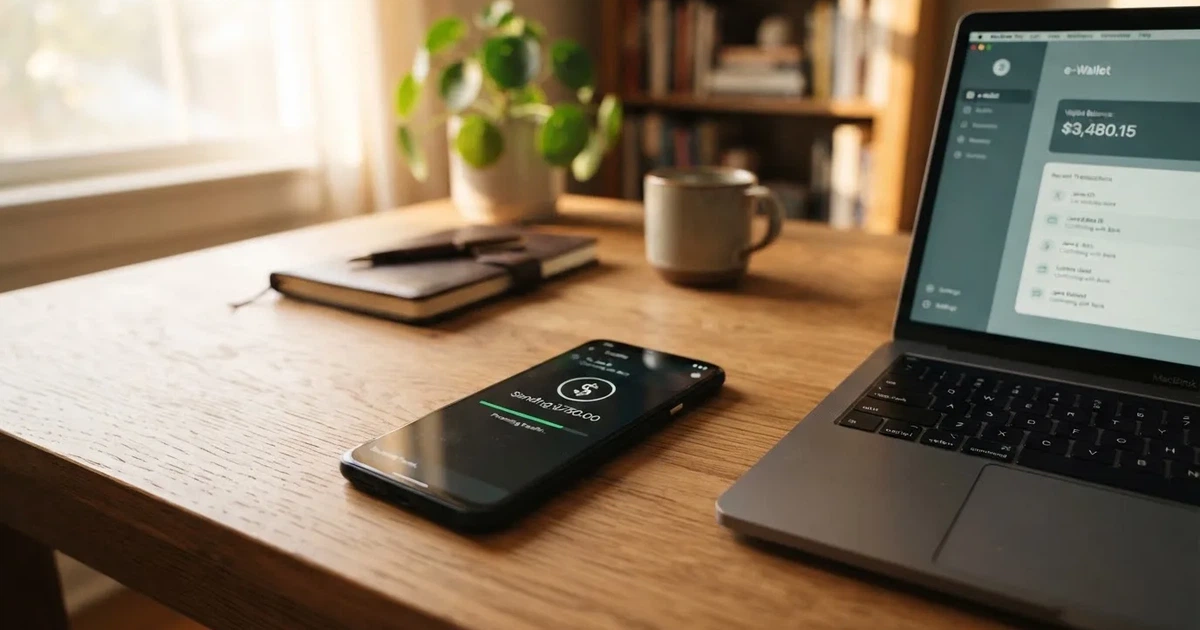
Data current as of 4 November 2026; licence claims checked against the Australian Communications and Media Authority’s register of formal warnings.
Table of Contents
- The Landscape of “Online Pokies E Wallet Australia” in Practice
- Where Online Pokies E Wallet Sites Stand Under Australian Law
- Specific Games and Providers Pages Keep Naming
- Payments, Settlement Times and What the E-Wallet Layer Actually Costs
- Responsible Gambling When the Product Cannot Be Offered Here
- Brands the ACMA Has Formally Warned
- How Quickly the Block List Has Actually Grown
- Frequently Asked Questions About E-Wallets and Offshore Pokies in Australia
The Landscape of “Online Pokies E Wallet Australia” in Practice
Online pokies sites accepting e-wallets in Australia look, at first glance, like a routine product category. A punter sees a banking page with Skrill, Neteller, MiFinity or an “ecoPayz”-style option, an AUD or USD denomination in the cashier, and a withdrawal time framed in hours rather than days. The marketing word for all of it is “convenient”. The reality is that the product on the other side of the deposit button is one no Australian operator is licensed to sell.

The Australian Communications and Media Authority’s enforcement figures, reported in June 2026, frame the scale of that mismatch. By that month, the ACMA had directed Australian internet service providers to block 1,751 illegal gambling and affiliate marketing websites since the first blocking request in November 2019, and more than 230 unlicensed gambling services had left the Australian market since enforcement was strengthened in 2017. A single round reported on the same day added twelve more domains — 7Signs, ChromaBet, Donbet, Duospin, Freshbet, Slots Gem, Jacks Club, Lucky Start, Pointsbetz, Spinrise, Vinyl Casino and Wildsino — to the block list. These are not minor operators that drifted in by accident; they are brands large enough to be running affiliate programmes and buying Australian traffic.
H2 Gambling Capital’s 2025 estimate puts the player-side cost at around A$3.9 billion a year in losses to illegal sites, and notes that the share of gambling going through legal channels in Australia fell from 74% in 2021 to 64% in that report. The number measures money, not morality: every dollar of that A$3.9 billion left the country through a payment channel that the legal Australian wagering industry cannot itself use.
What follows on this page is therefore not a comparison of competitive products. It is a description of how a product that cannot legally be sold is actually sold, paid for and — when it is paid for — disputed. The shelves below take each of those elements in turn.
Where Online Pokies E Wallet Sites Stand Under Australian Law
The legal frame for online pokies in Australia is short, and it is closed.
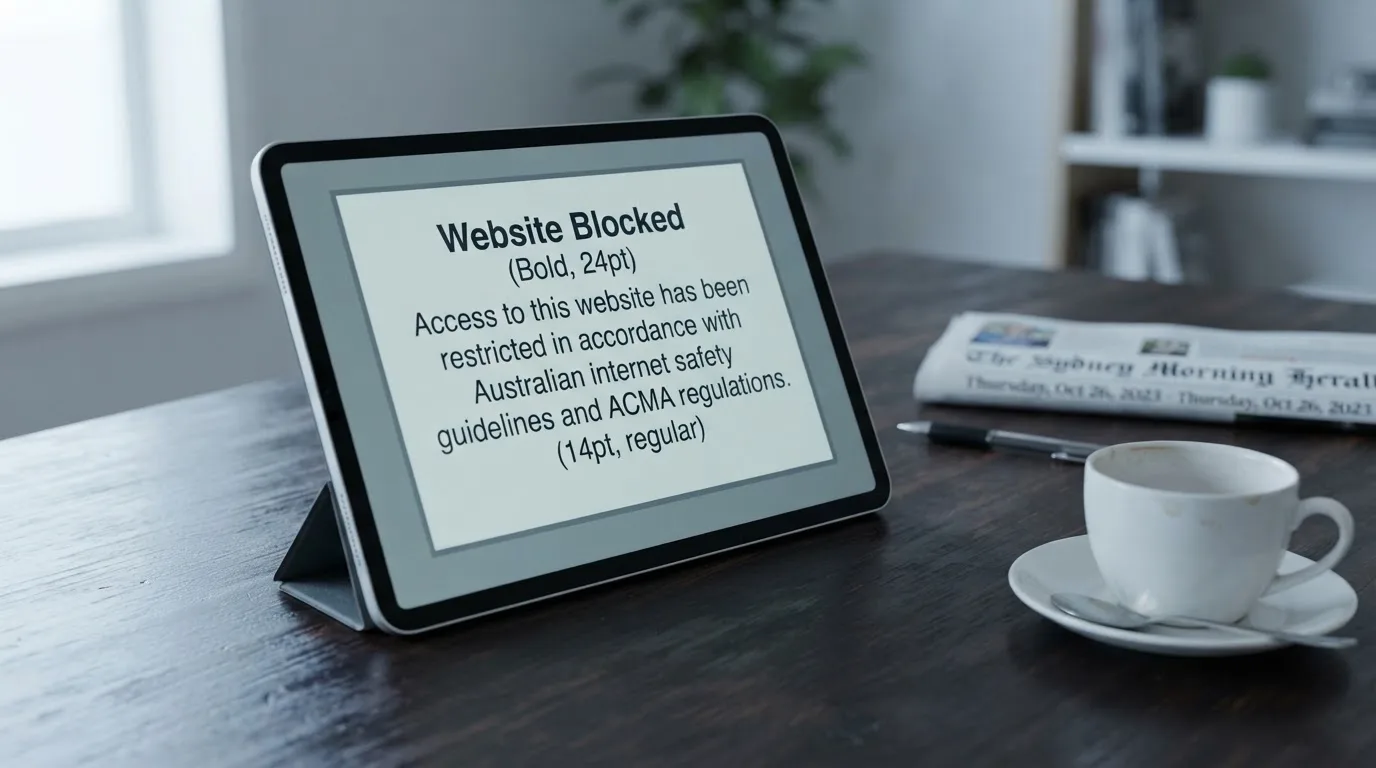
The Interactive Gambling Act 2001, strengthened by the Interactive Gambling Amendment Act 2017, makes it an offence to provide online casino games, online pokies or in-play betting to a person physically in Australia. No state or territory issues a licence for any of those products. What is licensable is wagering on racing and sporting events placed before the event, lotteries, and keno — in practice, wagering is licensed largely by the Northern Territory. The Northern Territory Racing and Wagering Commission, as an ABC report from 7 April 2026 described, regulates 52 of Australia’s online bookmakers — Sportsbet, Bet365 and Ladbrokes among them — under a commission with no full-time staff that meets once a month in Darwin. The point of that licence is tax, not consumer protection, and the product it covers is sports and racing, not casino games.
An offshore casino displaying a Curaçao or Anjouan seal is therefore licensing a product the Australian regime has already decided should not be supplied here. The seal matters to the operator’s banking partners; it does not extend any right to the Australian player. The minimum age for any wagering activity in Australia is 18.
What the ACMA Actually Does
The ACMA investigates complaints, issues formal warnings, and directs internet service providers to block illegal services. The individual player is not prosecuted — the Interactive Gambling Act targets the provider, not the customer — but the consequences for a player who opens an account are entirely one-sided:
- no Australian consumer protection applies;
- no Australian complaints body can hear a dispute;
- if the operator refuses a withdrawal, the punter has no recourse;
- if the site is added to the ACMA block list, any balance still on it may become inaccessible.
The block list itself moves faster than any one site can rebrand. Between 2017 and the June 2026 reporting, the cumulative count of services that left Australia, plus those that have been blocked, runs well into the hundreds. A site that promises “fast payouts” through Skrill today can be on the block list tomorrow; the e-wallet will not move the balance to the player faster than the regulator moves the domain off the network.
The 2026 Reform Sitting on the Starting Line
The Interactive Gambling Amendment (Gambling Reform) Bill 2026 passed Parliament on 19 August 2026. Its advertising and inducement measures commence on 1 January 2027 — a piece of law with a start date rather than a piece of law already in force. For a page dated within 2026, the relevant fact is that the reform exists and the start date exists; it is not yet the regime an offshore operator has to obey.
Payment-Route Restrictions That Already Bind
The 2024 rule that has already taken effect is more important to the e-wallet question. Australian-licensed online wagering services cannot accept payment by credit card or any other credit-related product — a ban that has been in force since 11 June 2024 and that, on a licensed site, also constrains gambling use of linked digital wallets like Apple Pay loaded onto a credit card. The deposit routes still legal on a licensed Australian wagering service are debit card, bank transfer, PayID and Osko, and BPAY.
Crypto is in the same bracket as credit: banned as a deposit method for licensed wagering. A punter asked to fund an account with a credit card or with Bitcoin at an offshore casino is being asked to use a payment the Australian regime has already ruled out. That signal travels in one direction — it confirms the site is operating outside the rules — but it does not, by itself, expose the player to prosecution. The exposure is the loss of every protection on the other side of the deposit.
Specific Games and Providers Pages Keep Naming
Searches for “e-wallet pokies” or “AUD e-wallet pokies” tend to land on pages that name individual titles as though they were Australian products. They are not. The titles are the same globally licensed releases the offshore sites carry for every market — and the e-wallet claim changes nothing about who supplies the game or where the random number generator is hosted.
A page that lists “best pokies for e-wallet play” is, in practice, listing the same handful of releases that surface in every offshore lobby: high-volatility hold-and-win and “ways” games from providers that ship into dozens of regulators at once, plus a small number of older five-reel classics that travel under any licence a casino buys. None of that is bad information; it is just information about a product the player cannot legally buy in Australia. The provider names — Pragmatic Play, Evolution for the live-dealer layer, the studios behind the Megaways™ mechanic, the hold-and-win specialists — sit behind titles, not in front of them, and they do not change the regulatory answer.
A useful filter for a player who has decided to look anyway is volatility class, which is sometimes published on a provider’s information page and almost never published per-casino. A high-volatility pokie swings harder between losing sessions and the rare big hit; a low-volatility pokie pays smaller, more frequent wins. Knowing which kind a punter prefers matters more for budget than for legality, and budget is the only Australian-controlled variable in the picture.
The live-dealer shelf — roulette, blackjack, game-show formats streamed from a studio — is supplied by a smaller set of studios, and they are the same studios supplying every offshore casino with a live tab. None of them is licensable in Australia; the live product cannot be sold here any more than the slot product can.
Why the Title List Travels Across Sites
A pokie is software. The same five reels, the same maths model, the same RTP setting is licensed to dozens of operators under a distribution deal. When a search result says a title “works well with e-wallet deposits”, the claim is that the cashier at that operator supports the e-wallet — not that the game has been modified for it. A punter who has picked a title by theme or volatility will find it on multiple offshore sites, and the e-wallet relevance is identical across them: the cashier either accepts the e-wallet or it does not.
This is also why pages that compare “the best e-wallet pokies” tend to look interchangeable. They are comparing access to a shared library, with the casino as the wrapper.
Payments, Settlement Times and What the E-Wallet Layer Actually Costs
An e-wallet is, mechanically, an extra layer between the player’s bank and the casino’s cashier. The marketing around it — “instant deposits”, “withdrawals in 24 hours” — describes what the layer does, not what the player pays for the privilege of using it.
Skrill’s Australian Fee Schedule
| Payment Type | Fee Structure | Note |
|---|---|---|
| Withdrawal to Local | 2.00% – 3.00% | Min EUR 3.50 |
| Currency Conversion | 4.49% | Applies to AUD |
| Verification | Required | For limits |
Skrill’s published Australian fee schedule, current as of 18 September 2026, charges between 2.00% and 3.00% (minimum EUR 3.50) to withdraw from the e-wallet to a local Australian method, and 4.49% on currency conversion. That is on top of whatever the casino itself charges for a withdrawal — a fixed fee per transaction, a percentage of the withdrawal, or a “no fee” claim that quietly recoups the cost in the exchange rate. An e-wallet deposit that arrives instantly is being paid for twice if the punter ever wants to spend the balance in Australian dollars: once by the casino’s cashier, once by Skrill’s outbound leg.
MiFinity and the Verification Question
MiFinity’s published terms, as of 18 September 2026, ask for verification documents before raising a user’s spending limits. The same rule applies across the regulated e-wallet space: the e-wallet is a financial-services product and is bound by anti-money-laundering obligations in its home jurisdiction. A punter who chose an e-wallet specifically to avoid identity checks is choosing the wrong product; the checks come from the wallet, not from the casino.
PayPal’s Gambling Acceptance Policy
PayPal’s Australian Acceptable Use page, current as of 18 September 2026, permits gambling payments only where the operator and the customer are located exclusively in jurisdictions where the activity is legal. An offshore casino serving Australians does not satisfy that condition, which is why PayPal is rarely an option on the cashier pages of the brands this page covers. Where PayPal does appear, the punter is using a workaround rather than a sanctioned product.
The Bank-Side Block Layer
Australian banks now offer card-level gambling blocks that close the loop the e-wallet cannot. Westpac’s block, ANZ’s, NAB’s and Commonwealth Bank’s each let a customer self-apply a refusal on transactions registered under the merchant category code for betting and casino gambling. ANZ’s block, once activated, also covers digital-wallet transactions through Apple Pay on the same card, not just the physical card, and turning the block off again triggers a 48-hour waiting period. Westpac’s page makes the merchant-category-code mechanism explicit; ANZ’s adds the warning that not every gambling transaction will be blocked and that some non-gambling transactions may be blocked in error.
The mechanism matters because it operates upstream of the e-wallet. A punter who tops up a Skrill or Neteller account from a debit card has just performed a transaction the issuing bank is now equipped to refuse. Where a bank’s gambling block is on, the e-wallet deposit is the transaction that gets declined. That is the cleanest point of friction between the player’s stated intention and the bank’s policy — and it is a friction the e-wallet’s marketing never mentions.
Apple Pay, Google Pay and the Wallet Share
Apple Pay, Google Pay and Samsung Pay together accounted for around 45% of all card payments in Australia by number at the end of 2025. Apple itself does not charge consumer fees for Apple Pay transactions; any surcharge comes from the merchant’s own card-processing costs, not from Apple. Transaction limits and PIN requirements on Apple Pay purchases are set by the issuing bank or the merchant, not by Apple. The 2023 amendment to the Interactive Gambling Act closes the gambling use of those wallets on a credit card; the bank-side gambling block closes it on a debit card for any customer who has asked the bank to.
Why an AUD Wallet Is Not a Free Lunch
A page promising an “AUD e-wallet pokies” experience is offering one of two things: either the casino’s cashier denominates deposits and withdrawals in Australian dollars, or the e-wallet holds balances in AUD. The first reduces one conversion spread; the second reduces another. Neither removes the e-wallet’s own outbound fee on the way back to a bank account. A punter who tops up in AUD, plays in AUD and withdraws back to AUD is still paying Skrill’s published schedule to move the balance out of the wallet — the convenience of staying in AUD ends at the wallet boundary.
Osko, PayID and the Domestic Alternative
Australia’s New Payments Platform, accessible to the public since 13 February 2018 and run by Australian Payments Plus, supports instant transfers under the Osko brand at over 100 Australian financial institutions. Osko transfers, addressed to a BSB and account number or to a PayID, settle in under a minute, 24/7, including weekends. More than 25 million PayID identifiers had been registered on the platform as of April 2025. Participants in the platform are required to keep monthly outages to under two minutes.
For a licensed Australian wagering service — sports and racing, not pokies — Osko and PayID are the deposit and withdrawal routes that resolve the speed problem the e-wallet is trying to solve offshore. Paying to a PayID shows the name of the account holder before the transfer is sent; Australian Payments Plus warns that being asked to transfer to a PayID on an illegal gambling site is almost certainly a scam signal.
The AUSTRAC Layer
AUSTRAC, Australia’s financial intelligence agency, requires businesses that transfer money or provide remittance-style services — a category that can include the money-transfer functions of an e-wallet — to register as a remittance service provider before operating in Australia. Providing the service unregistered is against the law. AUSTRAC’s threshold-transaction-report rule, which requires reporting of transfers of A$10,000 or more, applies only to physical cash; ordinary electronic bank transfers are not subject to that per-transaction reporting, regardless of amount. That detail is reassuring on a small balance and is the rule that explains why very large transfers attract scrutiny from the bank rather than from the casino.
Responsible Gambling When the Product Cannot Be Offered Here
The responsible-gambling shelf on a page about e-wallets and pokies in Australia is shaped by the legal frame above: the product on offer is unlicensed, and the protection regime that exists for Australian wagering does not bind it.
BetStop, the National Self-Exclusion Register, has been live since August 2023. It binds every Australian-licensed online and phone wagering service. An offshore casino is not connected to it; a self-exclusion registered with BetStop does not propagate to a Curaçao-licensed site. A punter who has put themselves on BetStop is, by definition, not the audience for an offshore casino — and a punter who has not, but who wants the same kind of barrier, will not get it from BetStop on the offshore side.
The bank-level gambling block is the lever that does reach the offshore cashier. Westpac, ANZ, NAB and Commonwealth Bank each let a customer self-apply the block; ANZ’s block extends to Apple Pay transactions on the same card. Once the block is on, the casino’s deposit request is refused at the issuing bank’s network — a friction that does not require the punter to involve the casino or the regulator. The block also has the property of being the same for every channel: the e-wallet top-up, the credit-card charge and the direct debit all hit the same merchant category code.
The 24-hour national helpline for anyone whose gambling has moved outside the boundary they wanted is 1800 858 858, free and open all day, with chat available through Gambling Help Online. The helpline is the right number regardless of which side of the regulatory line the gambling is happening on.
A practical note for anyone who has decided to step back: the offshore balance is harder to recover than a domestic one. A punter who stops play and asks the operator for a withdrawal has the same absence of recourse they would have had at any other moment. A request for a refund is not an available remedy; the operator is not within the Australian complaints system. The cleanest exit is the one that takes place before the next deposit, not after.
Brands the ACMA Has Formally Warned
Eleven brands are reviewed below. Each appears here because the Australian Communications and Media Authority has issued a formal warning over it for offering prohibited interactive gambling services to Australians. The review is not a ranking; it is a record of regulatory action, written so a punter who has already heard the brand name can see what the regulator said, when, and to which operating company.
RocketPlay
In March 2026 the ACMA issued a formal warning to Pulsup Ltd over Rocketplay. An earlier formal warning had been issued to Dama N.V. in May 2022 covering Rocketplay alongside five other Dama brands. The intervening four years did not produce an Australian licence, because no licence for the product exists; what changed is the operating entity behind the brand. On the e-wallet subject the public record carries no information; nothing about Rocketplay’s cashier is verifiable from the regulator’s side.
| Brand | ACMA action and date | Operator | Subject support |
|---|---|---|---|
| RocketPlay | March 2026; May 2022 | Pulsup Ltd; Dama N.V. | No data |
| Level Up Casino | May 2022 | Dama N.V. | Listings-only |
| Woo Casino | March 2025 | Dama N.V. | No data |
| Spirit Casino | May 2025 | Dama N.V. | No data |
| National Casino | July 2025 | Consolutetish S.R.L. | Listings-only |
| Bizzo Casino | July 2025; 2022 | Consolutetish S.R.L.; TechSolutions | No data |
| Ignition Casino | July 2025 | Bamboo Media | No data |
| Instant Casino | February 2025 | EOD Code SRL | Listings-only |
| Jackbit | April 2026 | Ryker B.V. | No data |
| Casino Intense | April 2025 | Sterplay Holding Ltd | Listings-only |
| Sky Crown | September 2022 | Hollycorn N.V. | No data |
Level Up Casino
Dama N.V. received a formal warning in May 2022 covering Level Up alongside Bambet, Dazard, Rocketplay, Wild Tornado and Cobra Casinos. The brands were named together because they were operated together; the ACMA’s action was a single formal warning listing the portfolio. Westpac’s published merchant category code policy describes how a card-level gambling block interacts with the merchant categories these brands sit under — the level at which the bank refuses the transaction, not the casino.
The verdict: a brand from a 2022 enforcement batch whose regulatory exposure has not changed since.
Woo Casino
Dama N.V. received a further formal warning in March 2025 over Woo Casino, three years after the 2022 batch. The follow-up action is the more telling of the two: a brand that was named once and then named again is one the regulator kept having to address. No operator subject data is available from the regulator’s file.
The verdict: a repeat-name on the regulator’s list, which is the shape that closes off a casino rather than the shape that opens one.
Spirit Casino
Dama N.V. received a further formal warning in May 2025 over Spirit Casino — three months after the Woo Casino action. Two warnings in quick succession to the same operator, on different brands, is a regulatory pattern: the operator has not changed its Australian-facing offering between them, and the ACMA is treating each rebrand as a fresh breach to address.
A persistent case: this operator was warned over two different brands within a three-month window.
National Casino
In July 2025 the ACMA issued a formal warning to Consolutetish S.R.L. over National Casino, alongside Bizzo Casino. AUSTRAC’s published guidance on remittance service provider registration is the regulatory layer that determines whether the money-transfer function of an e-wallet the casino accepts is being offered lawfully in Australia — and that layer does not change because the casino’s brand has changed. Wikipedia’s New Payments Platform entry describes the underlying payments infrastructure Australian consumers actually use, which National Casino is asking its customers to bypass.
The verdict: a brand where the regulator’s action crossed the operator’s brand portfolio rather than the brand alone.
Bizzo Casino
Consolutetish S.R.L. received a formal warning in July 2025 over Bizzo Casino, on top of an earlier formal warning to TechSolutions (CY) Group Limited and TechSolutions Group N.V. in 2022. Three years apart, two different operating entities, the same brand — the clearest signal in this list that rebranding does not reset the regulatory record.
Two operators, three years apart: the regulatory history here attaches to the brand, not the company.
Ignition Casino
Bamboo Media received a formal warning in July 2025 over Ignition Casino. The 2025 enforcement round also covered National Casino and Bizzo Casino; the three warnings were published together because the regulator was acting on a cluster of brands with overlapping operators, not on three unrelated services. No operator subject data is on the regulator’s file for Ignition specifically.
The verdict: part of a 2025 cluster the regulator treated as one enforcement matter.
Instant Casino
In February 2025 the ACMA issued a formal warning to EOD Code SRL over Instant Casino. ecoPayz’s published merchant acceptance framework and PayID’s own warnings about paying to illegal gambling sites are the two endpoints the casino’s cashier connects: an offshore payment system on one side, an Australian instant-payment rail on the other, and a brand in the middle the regulator has had to warn off.
The verdict: a brand whose cashier sits between a payment system and an Australian rail the regulator has already flagged.
Jackbit
In April 2026 the ACMA issued a formal warning to Ryker B.V. over Jackbit and over CasinOK in the same action. Two brands on one warning indicates one operator running two front brands to the Australian market; the regulator’s response is to name both. The April 2026 date places the action inside the most recent reporting cycle. No operator subject data is on the regulator’s file for either brand.
The verdict: a brand that is one half of a paired action the regulator took in the same month.
Casino Intense
Sterplay Holding Ltd received a formal warning in April 2025 over Casino Intense. AUSTRAC’s remittance service provider registration guidance, ITNews’ reporting on Commonwealth Bank’s digital gambling block, and NAB’s own published gambling block controls are the regulatory and banking infrastructure this brand is asking its customers to step outside — not because the casino’s own terms say so, but because the regulatory file does.
The verdict: a brand whose regulatory exposure is read against the bank-side block layer that already reaches its cashier.
Sky Crown
Hollycorn N.V. received a formal warning over Sky Crown and Blue Leo casino services. The ACMA’s formal-warning publication is a PDF from September 2022. Hollycorn is the only operator on this list that appears once across the 2022-to-2026 reporting window without a follow-up action to a different brand — which is the absence of a follow-up, not evidence of one. No operator subject data is on the regulator’s file for Sky Crown specifically.
The verdict: a brand whose regulatory record is one warning from 2022 and nothing in the four years since.
How Quickly the Block List Has Actually Grown
The arithmetic on the block list is short enough to do on one line. The first ACMA blocking request went out in November 2019; by the June 2026 reporting the cumulative total of blocked illegal gambling and affiliate marketing websites stood at 1,751. That is roughly 1,751 domains blocked over about six and a half years — an average run-rate in the low hundreds a year, but with the totals weighted toward the more recent reporting rounds and the cluster actions that added twelve or more domains at a time.
Stated as a band with its condition: at the June 2026 cumulative count, the ACMA’s block list has averaged in the region of 260 to 290 blocked domains per year since the first blocking request in November 2019, on the assumption that the 1,751 figure includes both gambling services and affiliate marketing sites rather than gambling services alone. Where the affiliate share of that total is, research does not say; the reader looking for a precise count of casino-only blocks will not find one in the public figure, and the band above is the most that figure supports.
The single round reported on 26 June 2026 alone added twelve domains: 7Signs, ChromaBet, Donbet, Duospin, Freshbet, Slots Gem, Jacks Club, Lucky Start, Pointsbetz, Spinrise, Vinyl Casino and Wildsino. Twelve in one round is not an outlier — the cluster-style action has become the regulator’s working unit. The cumulative figure, whichever exact split sits underneath it, is the number the marketing claim of “still serving Australian customers” runs against.
Frequently Asked Questions About E-Wallets and Offshore Pokies in Australia
Which e-wallets do offshore pokies sites most commonly claim to accept?
Skrill, Neteller, MiFinity, MuchBetter and ecoPayz are the names that recur across offshore cashier pages; PayPal appears on some brands where the operator is prepared to risk PayPal’s own policy, but PayPal restricts gambling payments to jurisdictions where the activity is legal, so an Australian player rarely sees PayPal as a working option. Crypto and credit cards appear as well, and those routes are either banned or restricted at the Australian end.
Does an e-wallet deposit change how quickly a pokies withdrawal actually settles compared with a bank transfer?
The e-wallet can shorten the casino-to-wallet leg of the withdrawal, sometimes to under twenty-four hours; the wallet-to-bank leg is what the player is then paying Skrill’s published 2.00% to 3.00% Australian schedule to complete. Compared with Osko, which settles bank-to-bank in under a minute, the e-wallet’s time saving on the first leg can be wiped out by the cost on the second.
Is using an e-wallet to fund an offshore pokies account something an Australian resident is permitted to do?
The Interactive Gambling Act 2001 targets the provider, not the player; no Australian has been prosecuted for funding an offshore account. The exposure sits on the other side of the transaction — no Australian consumer protection, no complaints body, no recourse if a withdrawal is refused, and the possibility that the domain is blocked while a balance remains on it.
What fees does an e-wallet typically charge on top of whatever the pokies site itself charges?
Skrill’s published Australian schedule charges 2.00% to 3.00% to withdraw to a local method, with a EUR 3.50 minimum, and 4.49% on currency conversion. MiFinity requires verification documents before raising spending limits. Other wallets publish comparable outbound fees. None of this replaces the casino’s own withdrawal terms; the two schedules stack.
How does an AUD e-wallet pokies claim differ from one that only settles in a foreign currency?
An AUD wallet removes one foreign-exchange spread on the way in and on the way back to the wallet; it does not remove Skrill’s outbound fee on the way from the wallet to a bank account. A foreign-currency wallet adds a conversion at the cashier and another at the wallet boundary, so the AUD-denominated option is the cheaper of the two — though “cheaper” here means paying one conversion rather than two, not paying none.
Why would a pokies site list several e-wallet options instead of just one?
Because each e-wallet’s coverage and fee structure differs, and because some Australian bank cards refuse some wallet top-ups. Listing several is partly marketing (more options looks like more convenience) and partly logistics (some wallets decline some customers, and a second wallet is the casino’s fallback). From the regulator’s perspective the listing is irrelevant: the product is unlicensed whichever wallet funds it.