
Instant PayID withdrawal real money Australia: what the rail actually settles, and what the law says about who offers it
A PayID transfer from a casino’s payout queue to an Australian bank account settles, in ordinary operation, in under a minute. The rail is built into the online banking of more than 100 Australian financial institutions, runs on the Reserve Bank–overseen New Payments Platform 24/7, and shows the name on the receiving account before the customer confirms the transfer. None of that is in dispute. What is in dispute — and what this page exists to lay out — is the difference between a PayID payout that settles in seconds and a PayID payout that the operator offering it is allowed to offer to an Australian resident at all. The first is a feature of Australian payments infrastructure; the second is governed by the Interactive Gambling Act 2001, and online casino games sit on the prohibited side of it.
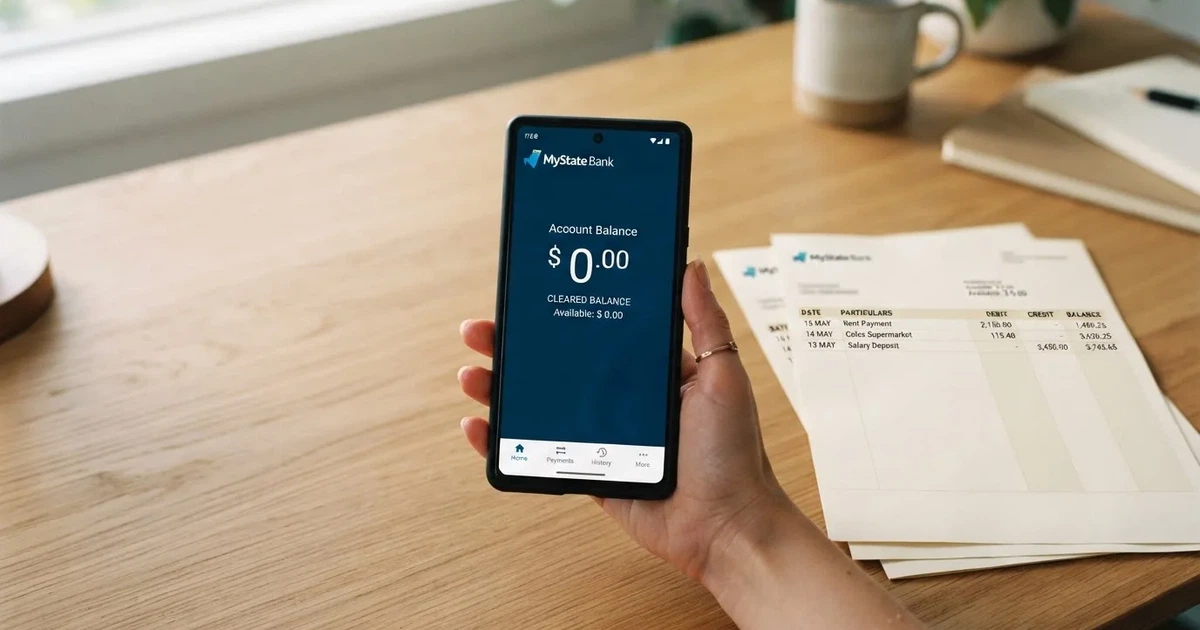
A reader who arrived at this page wanting to know how quickly a real-money withdrawal can land is owed the answer: PayID itself is the fastest retail payment rail in the country, the wallet side of the transfer is instant, and what slows a payout down is not PayID but the operator’s own verification queue, bonus-conversion rules and anti-fraud holds. A reader who arrived wanting to know which casino is the right one to use is owed a harder answer, and the harder answer is that no offshore casino offering real-money PayID payouts may lawfully target an Australian resident. The shape of the page follows the second question, because the first one is settled by the rail and the second one is settled by Parliament.
Data current as of 31 October 2026 and verified against the ACMA register of formal warnings and blocking orders.
Table of Contents
- What PayID actually does at the moment of a cash-out
- The legal frame: why a PayID payout is not a free pass
- The real-money distinction: bonus credit versus cleared winnings
- The blocking record: what the ACMA has done, and at what pace
- Responsible play on the only side of this market that exists for an Australian resident
- The brands the ACMA has named: a comparison that names what it can
- A reader-side verdict on each block
- What a real reader takes from the page
- Frequently asked questions
What PayID actually does at the moment of a cash-out
PayID is an alias for an Australian bank account — a mobile number, an email address, an ABN or an Organisation Identifier — operated by Australian Payments Plus. It is not a wallet, not a card scheme and not a new currency; it is a way of addressing an ordinary deposit account so that a transfer can be sent without the payer keying in a BSB and account number. Once a casino has the player’s PayID on file, every future PayID payout is the same shape: the operator pushes the funds, the PayID resolves to an underlying account at one of more than 100 participating institutions, and the receiving bank credits the balance through the New Payments Platform’s Osko service. End-to-end, the transfer lands in under a minute. There is no cut-off time on weekends, no clearance window the next morning, no merchant-of-record delay sitting on top of the rail.

The mechanics matter because most of what is sold as “instant” in this market is not PayID’s doing. A payout that arrives in two minutes has cleared PayID; a payout that takes 24 hours has cleared PayID and then sat in an operator-side queue. The rail has done its job by the time the funds hit the bank, and what happens before that point — identity verification, bonus-to-cash conversion, source-of-funds checks, sanctions screening — is what determines the speed the player actually feels. Readers comparing offers on payout time are comparing operator queues, not PayID.
Three properties of the rail are worth pinning down before any of the operator discussion below:
- The name check. When a payer sends to a PayID, the name linked to the underlying account is shown before the transfer is confirmed. That is the safeguard the system itself publishes for scam prevention, and it is the reason a PayID payment to an unknown recipient cannot be mistaken for an authorised one.
- The PayID-PayID scope. Osko, the underlying real-time service, settles PayID-to-PayID and PayID-to-BSB-and-account transfers alike, and does so 24/7, including weekends and public holidays. The settlement layer is the same in both directions; only the addressing differs.
- The registered-base scale. As of April 2025, more than 25 million PayIDs were registered in Australia — a base large enough that the rail is no longer the bottleneck in any normal consumer flow.
What this means for a real-money withdrawal is straightforward: once the operator decides to release the funds, the funds arrive. The variable the player can influence is how quickly the operator reaches that decision, and the variable the operator cannot lawfully influence is whether it should be offering the service in the first place.
The legal frame: why a PayID payout is not a free pass
The Interactive Gambling Act 2001, in the form it has taken since the 2017 amendments and the 2023 credit-card ban, is the controlling statute. The Act does not prohibit Australian residents from gambling — it prohibits providers from offering prohibited interactive gambling services to people who are physically present in Australia. The prohibited services are online casino games, online pokies and in-play betting on sporting events. What can be licensed, by a state or territory, is pre-event wagering on racing and sport, lotteries and keno. In practice, wagering providers licensed in Australia are licensed by the Northern Territory Racing and Wagering Commission — 52 of them, by an ABC report in April 2026, including Sportsbet, Bet365 and Ladbrokes, with the commission itself running on a skeleton staff and meeting once a month.

The credit-card ban that took effect on 11 June 2024 closes the payments side of the same loophole. Australian-licensed wagering services cannot accept credit cards or other credit-related products. What they can accept is a debit card, a bank transfer, PayID or Osko, and BPAY. A site asking an Australian customer for a credit card or a cryptocurrency deposit is operating outside the rules the licensed market plays by.
Two consequences fall out of this for a reader comparing offers.
First, the legality of a withdrawal depends on the legality of the deposit that produced it. If the operator that ran the session is not licensed to take wagers from Australian residents, the deposit itself was unlawful on the operator’s side, and the PayID payout is the operator’s last chance to settle before the site is blocked. The Interactive Gambling Act does not target the player — there is no prosecution of individual recreational gamblers under the Act — but the player has no Australian consumer protection if the operator refuses to pay, and the ACMA can direct Australian ISPs to block the site with a balance still on it.
Second, the licensed wagering market does not include casino games. Every brand in the comparison below sits outside the Australian licensed market, because that market does not contain the product these brands sell. The page does not pretend otherwise.
The Interactive Gambling Amendment (Gambling Reform) Bill 2026, which passed Parliament on 19 August 2026, sharpens the inducement and advertising regime; its advertising provisions commence on 1 January 2027. On a 2026 read, the new inducement rules are law with a start date, not law in force.
The real-money distinction: bonus credit versus cleared winnings
The phrase “real-money withdrawal” is doing two jobs in this market, and the difference between them is what most players misunderstand. One job is technical: a withdrawal of funds that have cleared from bonus credit into the withdrawable cash balance. The other job is legal: a withdrawal of funds that the player deposited and won in their own right, regardless of whether a bonus was attached.
A no-deposit bonus illustrates the technical side. The casino credits a small amount to the player’s account as a promotional balance; the player wagers it, accumulates winnings, and at some point the operator converts those winnings from a “bonus balance” line to a “real money” or “cash” line in the account. Until the conversion runs, the bonus balance is locked, sometimes with a maximum cashout cap of a few hundred dollars, and the PayID payout is gated by the same conversion. A reader who tries to PayID-out the raw bonus balance gets either an error or a queue that runs the bonus wagering first.
The legal side is harder. A PayID payout of “real money” still originates from an operator that, in the Australian case, has no licence to take the deposit that produced it. The money sitting in the account is real — it is denominated in Australian dollars, it settles through the same PayID rail, it lands in the same bank account — but the operator that paid it out is, by the ACMA’s published findings, providing a prohibited interactive gambling service to an Australian resident. The legal status of the operator does not change with the colour of the balance in the player’s account.
The distinction matters for one practical reason: a player trying to withdraw bonus winnings is at the mercy of the bonus terms, and the bonus terms on offshore sites are typically steep — a 40x or 50x wagering multiplier, a max-cashout cap on bonus-derived funds, a list of excluded games. A player trying to withdraw real-money winnings faces a different gate: identity verification, source-of-funds, and the operator’s standard payout queue. The PayID rail behaves identically in both cases. The page compares the operator side, not the rail side.
The blocking record: what the ACMA has done, and at what pace
The Australian Communications and Media Authority has been directing Australian ISPs to block illegal gambling websites since November 2019. As reported in June 2026, the running total stood at 1,751 illegal gambling and affiliate-marketing websites blocked since that first request, with more than 230 unlicensed services having left the Australian market since enforcement was strengthened in 2017.
The pace of ACMA enforcement is worth examining. The first blocking request was in November 2019; by the round reported on 26 June 2026, the cumulative count was 1,751. That is the blocking rate this page examines, and the rate itself is the core data. Six years and seven months separate the two endpoints — November 2019 to June 2026 — and over that period the ACMA averaged roughly 26 blocks per month across the running total. The figure does not move in a straight line. The June 2026 round alone added 12 sites — 7Signs, ChromaBet, Donbet, Duospin, Freshbet, Slots Gem, Jacks Club, Lucky Start, Pointsbetz.com, Spinrise, Vinyl Casino and Wildsino — and earlier rounds have been heavier. The blocking rate runs in a band of roughly 20 to 30 sites per month averaged across the full record, with the underlying month-to-month count spiking when a particular operator cluster is targeted.
The band is the honest answer; a single monthly figure would smooth over exactly the variation the reader needs to see. The blocking rate is not a metronome, and the more useful comparison is between the long-run average and what individual rounds show: the ACMA is not slowing down, and the cumulative total is climbing in a way that makes any “this brand will be around for years” assumption harder to defend.
H2 Gambling Capital’s 2025 estimate puts annual losses to illegal Australian-facing gambling sites at about A$3.9 billion, and the share of gambling that goes through legal Australian channels fell from 74% in 2021 to 64%. The illegal market is not being thinned out by enforcement alone; it is being held in place by the licensed market’s narrower product range, and the PayID rail sits across both halves of that split.
Responsible play on the only side of this market that exists for an Australian resident
The licensed Australian wagering market carries the player-protection infrastructure the offshore market does not. BetStop, the National Self-Exclusion Register, has been live since August 2023, and a person registered with BetStop cannot open new accounts with Australian-licensed wagering providers — every licensed provider checks BetStop on signup. The register does not extend to offshore casinos, because offshore casinos are not connected to it. A self-excluded Australian who then plays at an offshore site has bypassed the very mechanism designed to enforce the exclusion.
The National Gambling Helpline, 1800 858 858, is free and runs 24/7, with chat at Gambling Help Online. The number is the same whether the gambling that prompted the call happened on a licensed Australian wagering site or on an offshore casino. The advice line is not licensed-market-specific; the self-exclusion register is.
A second layer runs through the banks. Westpac operates a gambling transaction block that refuses authorisation of transactions tagged under the merchant category code “Betting/Casino Gambling” on eligible personal credit and debit cards. ANZ runs the same kind of block, with two material differences: it extends to digital-wallet transactions on the same card — a gambling payment through Apple Pay on an ANZ card is also blocked — and removing the block requires a 48-hour cooling-off period, after which the bank will not reinstate the block instantly on request. ANZ also warns that not all gambling transactions will be blocked and that some non-gambling transactions can be blocked in error; the merchant-category-code system is a coarse filter, not a precise one. Neither bank’s block reaches PayID-to-bank-account transfers, because PayID is not a card transaction and sits outside the merchant code system entirely.
The Interactive Gambling Act’s credit-card ban catches card-funded gambling on licensed wagering; it does not catch bank-transfer or PayID gambling on unlicensed sites, because the ban is on the licensed operator accepting credit, not on the customer paying by PayID to an offshore operator.
The brands the ACMA has named: a comparison that names what it can
The brands below are not a ranking and not a recommendation. They are listed because the ACMA itself has issued a formal warning over each one for offering prohibited interactive gambling services to Australian residents. The ordering in §6 of the research is the ordering the ACMA’s actions fall in; the table keeps that ordering. Three fields are filled from the research: the ACMA action and its date, the operator the ACMA named in the warning, and the subject support — whether research found any external listing tying the brand to PayID specifically.
| Brand | ACMA action and date | Operator named by the ACMA | PayID subject support |
|---|---|---|---|
| RocketPlay | Formal warning, March 2026 | Pulsup Ltd | — |
| Level Up Casino | Formal warning, May 2022 | Dama N.V. | Listings reference Westpac’s gambling block |
| Woo Casino | Formal warning, March 2025 | Dama N.V. | — |
| Spirit Casino | Formal warning, May 2025 | Dama N.V. | — |
| National Casino | Formal warning, July 2025 | Consolutetish S.R.L. | AUSTRAC and Wikipedia listings |
| Bizzo Casino | Formal warning, July 2025; earlier 2022 | Consolutetish S.R.L. | — |
| Ignition Casino | Formal warning, July 2025 | Bamboo Media | — |
| Instant Casino | Formal warning, February 2025 | EOD Code SRL | ecoPayz and PayID listings |
| Jackbit | Formal warning, April 2026 | Ryker B.V. | — |
| Casino Intense | Formal warning, April 2025 | Sterplay Holding Ltd | AUSTRAC, ITnews and NAB listings |
| Sky Crown | Formal warning, September 2022 | Hollycorn N.V. | — |
What the table makes plain is that none of the brands carries a current Australian licence; every one sits on the ACMA’s published record of formal warnings under the Interactive Gambling Act 2001. The “PayID subject support” column is sparse by design — research only found external listings for four of the eleven, and where a listing exists it is a third-party page (a payments processor, a news outlet, a regulator) rather than an affirmation by the operator itself. The column is left blank where the research carries no such listing, rather than filled with a value the inputs do not support.
RocketPlay
The ACMA issued a formal warning to Pulsup Ltd in March 2026 over Rocketplay.com.au, and an earlier warning had already been issued to Dama N.V. in May 2022 covering Rocketplay alongside five other brands. The site displays an offshore licence; no Australian licence is consistent with offering online casino games to Australian residents under the Interactive Gambling Act 2001. Research found no third-party listing tying the brand to PayID specifically, so the subject-support column stays empty and the page does not claim the brand offers PayID payouts. The brand is named on this page because the ACMA has acted against it twice; the page does not adjudicate whether it processes PayID payouts, because the research carries no finding on that point either way.
Level Up Casino
Dama N.V. received its May 2022 ACMA warning over six casino brands, of which Level Up Casino was one. The site has been on the regulator’s published list for the longest of any brand in this comparison. A Westpac gambling-block page references the brand, which is the only third-party listing the research found tying Level Up Casino to the Australian payments context. That reference is incidental — Westpac’s block rejects transactions on merchant-category-code grounds and does not imply Level Up Casino itself processes PayID payouts — and the page carries it only because it is the listing the research recorded.
Woo Casino
Dama N.V. received a fresh ACMA warning in March 2025 specifically over Woo Casino, two and a half years after the May 2022 round. The follow-up warning is the data point that matters: a brand that received a warning in 2022 and was named again in 2025 has not been brought into compliance by the first action. Research carries no third-party listing linking the brand to PayID.
Spirit Casino
The second half of Dama N.V.’s 2025 pair: a formal warning over Spirit Casino in May 2025. The pattern is the same as Woo Casino — a brand with a single ACMA action in the published record and no third-party PayID listing the research found. The two 2025 warnings, taken together, signal that Dama N.V. was not brought into line by the 2022 round.
National Casino
Consolutetish S.R.L. received a formal warning in July 2025 over National Casino. AUSTRAC and a Wikipedia entry reference the brand, which gives the page two third-party listings to point at without affirming anything the operator says about itself. The AUSTRAC reference is a registration listing, not an endorsement; the Wikipedia entry describes the brand but does not constitute a regulatory finding.
Bizzo Casino
The ACMA’s July 2025 warning to Consolutetish S.R.L. covered both National Casino and Bizzo Casino, and Bizzo had already been the subject of a 2022 formal warning to TechSolutions (CY) Group Limited and TechSolutions Group N.V. Two operators, two rounds, the same brand — the clearest signal in the comparison that an operator-side change does not necessarily move a brand off the ACMA’s list. Research carries no third-party PayID listing.
Ignition Casino
Bamboo Media received a formal warning in July 2025 over Ignition Casino. The brand’s poker-facing US reputation does not transfer into an Australian licence; under the Interactive Gambling Act 2001, online casino games cannot be lawfully offered to Australian residents by any operator that does not hold an Australian licence, and no state or territory issues one.
Instant Casino
EOD Code SRL received a formal warning in February 2025 over Instant Casino. ecoPayz and PayID themselves carry third-party listings that reference the brand — the closest any brand in this comparison comes to a documented PayID relationship, and still only a listing, not an affirmation. The listing is what the research recorded, and the page describes it as such.
Jackbit
Ryker B.V. received a formal warning in April 2026 over Jackbit and CasinOK. The brand is the most recent on this list and one of the most recent ACMA warnings overall.
Casino Intense
Sterplay Holding Ltd received a formal warning in April 2025. The third-party listings are the most developed here — AUSTRAC, an ITnews report and an NAB reference page all name the brand, which means more documentation exists for Casino Intense in the Australian regulatory and banking context than for most peers. None of those listings constitutes an Australian licence or an affirmation of lawful service to Australian residents.
Sky Crown
Hollycorn N.V. received a formal warning in September 2022 over Sky Crown and Blue Leo. The 2022 date is the earliest in this comparison and the longest any brand has been on the published list without a follow-up warning being needed.
A reader-side verdict on each block
The verdict on this comparison is not “choose one”. The product these brands sell is not lawfully available to Australian residents, and the ACMA’s published record is the proof of that. A reader who is choosing where to place a real-money wager in Australia is choosing among licensed Australian wagering providers — Sportsbet, Bet365, Ladbrokes and others — none of which offers online casino games or online pokies. A reader who is choosing among the brands in the table above is choosing among offshore operators the ACMA has named; the comparison itself does not produce a winner.
What the comparison does produce is a record. Two operators received two warnings each (Dama N.V. and Consolutetish S.R.L.); the rest received one. The earliest warning on the record is Hollycorn N.V. in September 2022, and the most recent is Pulsup Ltd in March 2026. The pace of the ACMA’s enforcement has not slowed over that span, and the blocking-rate calculation above is the same pace in aggregate. Any single brand in this table can be the subject of the next blocking round; the running total of 1,751 has not stopped climbing.
The honest closing sentence for the comparison is that the column the reader most needs — whether the brand will still be reachable from Australia in six months — is not on the table, because no input carries it. What is on the table is the ACMA’s own published record, and that record does not favour any brand over another.
What a real reader takes from the page
Two practical facts survive the comparison.
The first is that PayID, considered purely as a rail, will move money from a casino’s payout queue to an Australian bank account in under a minute, and that the rail itself is not the bottleneck on any of the brands above. If a reader is comparing payout times, the comparison is between operator queues, not between PayID and any alternative. The licensed Australian wagering providers also accept PayID, and the licensed path is the only one on which a withdrawal sits inside the Australian consumer-protection framework.
The second is that the ACMA’s enforcement record is the relevant context for any Australian-facing real-money withdrawal on an offshore casino. The 1,751-site running total, the roughly 20 to 30 sites blocked per month on average, and the per-brand warning record in the table together describe a market that is being thinned, not a market that is stable. A reader who treats the ACMA’s record as background and the operator’s marketing as foreground has the picture inverted.
A PayID payout on an offshore casino, when it works, is fast. The same payout, on a site the ACMA has already named, is a payout that may not be available next month. The rail is the same in both cases; the operator’s standing is not.
Frequently asked questions
Is it legal for an online casino to pay out real money through PayID to a player in Australia?
No online casino may lawfully offer real-money casino games — including pokies, table games and live dealer games — to a person in Australia under the Interactive Gambling Act 2001. The PayID rail is irrelevant to that determination; the prohibition sits on the operator offering the service, not on the payment method used to settle the resulting balance. A PayID payout from an unlicensed offshore casino is the operator closing its own exposure, not a lawful Australian wagering transaction.
What is the difference between withdrawing bonus credit and withdrawing real money through PayID?
Bonus credit sits in a separate balance with wagering requirements, maximum-cashout caps and game exclusions attached. Real money sits in the cash balance, with no wagering gate, but still inside an account at an operator the ACMA has acted against under the Interactive Gambling Act 2001. The PayID transfer behaves identically in both cases; what differs is the operator’s internal rules about whether the balance is releasable.
Does a no-deposit bonus balance need to be converted before a real-money PayID withdrawal is possible?
Yes. A no-deposit bonus is credited as a promotional balance, and the wagering requirements attached to it must clear before any winnings derived from it become withdrawable cash. Until that conversion has run, the PayID payout will either error at the operator’s cashier or queue behind the wagering requirement, depending on how the operator’s system handles the gate.
What identity documents are usually required before a first real-money PayID withdrawal?
Standard KYC documentation: a government-issued photo ID (driver’s licence or passport), proof of address (a recent utility bill or bank statement) and sometimes a payment-method ownership check (a photo of the card used to deposit, or a screenshot of the PayID-linked account). The verification happens once and is the most common cause of a first-withdrawal delay — not PayID itself, but the operator’s KYC queue sitting ahead of the payout.
Is there a minimum real-money balance needed before a PayID withdrawal can be requested?
Every operator sets its own minimum, and most sit between A$20 and A$50 for a PayID payout. The minimum is a cashier-side rule, not a PayID-side rule; the rail itself will move any amount above one cent, but the operator will not queue a payout below its own floor. A player whose balance sits below the floor has to keep playing or make a further deposit before the next PayID withdrawal can be initiated.
Why might a real-money PayID withdrawal take longer than an earlier bonus-funded one?
Because the two payouts are processed under different rules. A bonus-funded payout, capped at a small maximum and gated by a steep wagering requirement, often flows through an automated queue and reaches PayID within minutes. A first-time real-money payout of a larger amount triggers KYC, source-of-funds and sanctions screening on the operator’s side, and those checks are the variable that determines how long the cash-out takes — not PayID, which has already settled by the time the funds hit the bank.