
What follows when an Australian player pays an online casino with Google Pay
A deposit with Google Pay lands in an offshore casino account in seconds. The consequences of that deposit arrive on a much longer timescale — sometimes through the bank, sometimes through the regulator, and occasionally through a domain that stops resolving on the day a withdrawal is requested. This page walks through how a Google Pay deposit and withdrawal work at the offshore sites that advertise the option, why every one of those sites is operating outside Australian law, and where the practical consequences of using one tend to surface.
The figures below are current as of 29 October 2026 and have been checked against the Australian Communications and Media Authority’s register of formal warnings and blocking orders.
Table of Contents
- The landscape an Australian player walks into
- What the law actually says, and what it changes for the player
- Responsible play, and the limits that do not reach offshore sites
- How a Google Pay deposit and withdrawal actually flow at these sites
- The eleven offshore sites the ACMA has acted against, and what each warning records
- How fast the block list has been growing — the calculation
- What an Australian player can actually do
- Frequently asked questions
The landscape an Australian player walks into
Every site this page covers is an offshore operator. That single fact reframes the whole question, because the legal status of a site determines what protections follow the player and which costs the player carries alone. Online casino games and online pokies cannot be licensed anywhere in Australia. What can be licensed is wagering on races and sport placed before the event, lotteries and keno — most of it administered through the Northern Territory Racing and Wagering Commission, which regulates 52 of Australia’s online bookmakers including Sportsbet, Bet365 and Ladbrokes, runs without full-time staff and meets once a month in Darwin.
For the rest — the spin-the-reels sites that list Google Pay in their cashier — there is no Australian licence that could legitimise the offer. The operator may display a Curaçao or Anjouan number at the foot of the page; it does not change the position under the Interactive Gambling Act 2001. The page walks through that position in the next shelf. The reason it sits first is that everything else on this page is read against it.
| Brand | ACMA action and date | Operator named by the ACMA | Subject support |
|---|---|---|---|
| RocketPlay | March 2026 / May 2022 | Pulsup Ltd / Dama N.V. | No data |
| Level Up Casino | May 2022 | Dama N.V. | Listings only |
| Woo Casino | March 2025 | Dama N.V. | No data |
| Spirit Casino | May 2025 | Dama N.V. | No data |
| National Casino | July 2025 | Consolutetish S.R.L. | Listings only |
| Bizzo Casino | July 2025 / 2022 | Consolutetish S.R.L. / TechSolutions | No data |
| Ignition Casino | July 2025 | Bamboo Media | No data |
| Instant Casino | February 2025 | EOD Code SRL | Listings only |
| Jackbit | April 2026 | Ryker B.V. | No data |
| Casino Intense | April 2025 | Sterplay Holding Ltd | Listings only |
| Sky Crown | September 2022 | Hollycorn N.V. | No data |
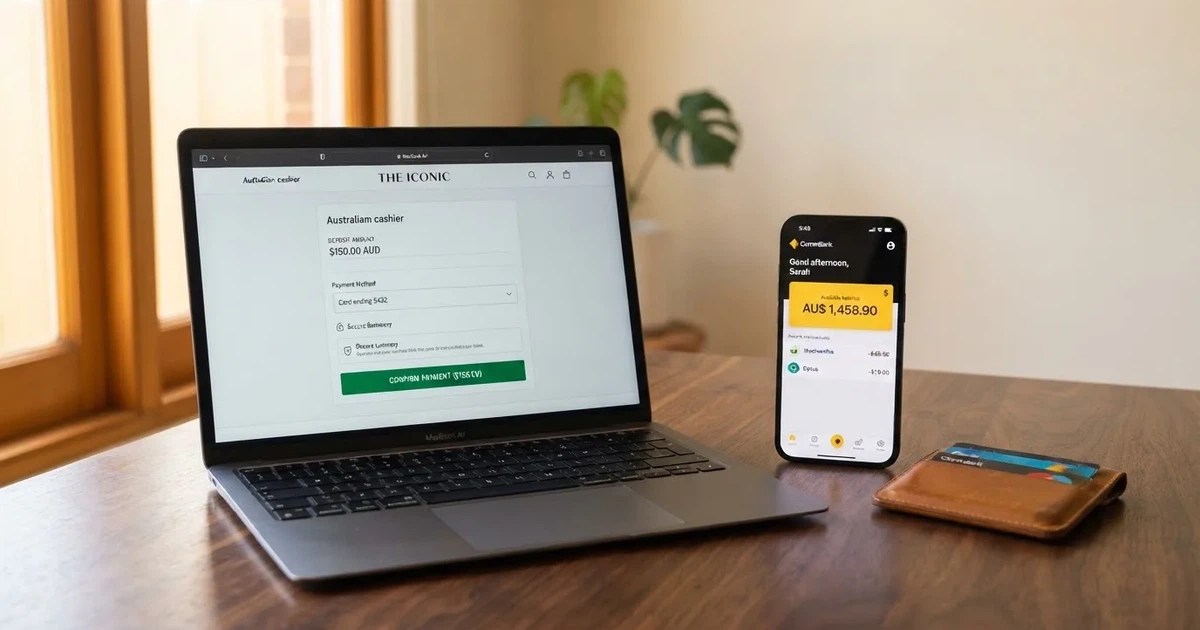
A Google Pay deposit itself is technically unremarkable: the phone holds a tokenised card number, the cashier requests authorisation, the bank either clears or declines. But the bank clearing a deposit to a prohibited service is a separate question from the bank later clearing a withdrawal back. Banks are not required to identify the merchant category of every transaction — that is exactly what the gambling blocks described below exist to do.
What the law actually says, and what it changes for the player
The Interactive Gambling Act 2001, tightened by the Interactive Gambling Amendment Act 2017, makes it an offence to provide online casino games, online pokies or in-play betting to a person physically in Australia. No state or territory licences those products. The Interactive Gambling Amendment (Gambling Reform) Bill 2026 passed Parliament on 19 August 2026, and its advertising and inducement measures commence on 1 January 2027 — a law passed and not yet in force, which means the rule on the page today is the 2017 amendment, with the 2026 bill a known change waiting in the calendar.
The practical split is between provider and player. The IGA targets the operator: the ACMA investigates, issues formal warnings, and directs Australian internet service providers to block illegal sites. The individual Australian punter is not prosecuted. The consequence for the player is not criminal; it is the loss of every protection that comes from a licensed relationship. There is no Australian complaints body to take a refused withdrawal to. There is no regulator to compel a payout. There is no guarantee that the site still resolves on the day the player asks for their money back.
A second consequence sits with the bank. Credit cards, credit-related products and digital currency are banned as payment for licensed online wagering in Australia since 11 June 2024, with penalties up to $247,500 for an operator taking one. The prohibition applies to licensed wagering. It does not stop a debit-card-funded Google Pay tap from clearing to an offshore casino. But the bank itself may decide to decline it — which is where the next shelf starts.
A third consequence is the one most players do not see coming. A balance held at an offshore site sits outside the Australian legal perimeter. If the site is blocked, the balance does not move with the block. The wallet on the casino side still records what the player is owed; the player simply has no way to reach it through the front door. The block list itself is large, and growing — see the section below for the rate at which it has been growing.
Responsible play, and the limits that do not reach offshore sites
Australia’s responsible-gambling architecture is built around licensed operators. BetStop, the National Self-Exclusion Register, has been live since August 2023 and binds every Australian-licensed online and phone wagering service. A player who registers with BetStop is locked out of the legal market. An offshore casino is not connected to the register. Self-excluding at BetStop closes some doors and leaves every door this page is about wide open.
The tools that do reach the offshore sites are the ones held by the player’s own bank. NAB, ANZ and Westpac each let a customer apply a gambling block to their eligible cards through the banking app, without calling or visiting a branch. The Westpac block works at card level: it refuses authorisation of transactions registered under the merchant category code for betting and casino gambling on personal credit and debit cards. ANZ’s block, applied through the ANZ app, also blocks gambling transactions made through a digital wallet such as Apple Pay on an eligible card, not just the physical card. The ANZ block requires a 48-hour waiting period to remove it once applied, and the bank’s own warning is that not every gambling transaction will be blocked, and some non-gambling transactions may be blocked in error. A bank block is the player’s most reliable line of defence against the offshore market — far more reliable than the offshore site’s own self-exclusion toggle, which the operator may honour only loosely.
Help lines sit outside the bank. The National Gambling Helpline on 1800 858 858 is free, 24/7, with chat at Gambling Help Online. The helpline does not need to know which site the player used. It exists for the player.
How a Google Pay deposit and withdrawal actually flow at these sites
The mechanics of a Google Pay deposit at an offshore casino are the mechanics of any online card payment, with one layer added. When a card is added to Google Wallet, the card details go to the card-issuing bank for verification, and the bank generates a unique Device Account Number — a token — for that specific device, rather than storing the real card number on the phone. The phone pays in stores by holding its NFC chip against a point-of-sale terminal, the same way a physical contactless card would, and the casino cashier on a laptop sees the same authorisation flow it would see from any other card deposit. Google Pay needs an NFC-enabled Android phone running Android 5.0 (Lollipop) or later. Google launched Google Pay — then Android Pay — in Australia in 2016, and by the end of 2025, Apple Pay, Google Pay and Samsung Pay transactions collectively accounted for around 45% of all card payments in Australia by number.
The minimum deposit at these sites is usually set low — $10 is the typical floor in the cashier, with $20 and $30 not uncommon. The deposit itself clears in seconds because it is a card authorisation, not a bank transfer. None of the eleven sites this page covers carries a published, audited figure for the percentage of Google Pay deposits that succeed at first attempt, and the audit cannot fill that gap.
The withdrawal is where the timing story changes. A withdrawal request goes back to the casino’s payments team, which runs the operator’s own checks — identity verification on first withdrawal, source-of-funds questions, bonus-playthrough confirmation if a bonus was claimed, sometimes a manual review at the payments team’s discretion. The casino then releases the funds, and the bank processes them back to the same card the deposit came from where possible. Google Pay does not store the player’s card number on the phone, only the tokenised Device Account Number, so a refund to the underlying card routes through the bank rather than the wallet. Most operators publish a withdrawal window of 24 to 72 hours once the request is approved, and bank processing adds another one to three business days on top. The deposit was instant; the return is not. That asymmetry is the timing fact a player feels.
A Google Pay withdrawal does not clear any faster than a card withdrawal from the same operator, because the bottleneck is on the casino’s side, not the wallet’s. The wallet is the conduit for the deposit authorisation; the refund is a bank transaction the casino has to release first. PayID and Osko are faster than card refunds at the bank leg — under a minute, 24/7, including weekends, between participating Australian banks — but the casinos on this page do not route withdrawals through PayID; they push the refund back to the original card. The bottleneck is the casino’s own release time, and that release time is the same for a Google Pay refund as for any other card refund.
A separate question is whether the player should expect the deposit to land at all. A bank block configured at the card level stops the authorisation before it reaches the merchant. ANZ’s app-based gambling block, once applied, also blocks gambling transactions routed through a digital wallet on an eligible card. A player who has set up that block is not making Google Pay deposits in the first place.
Fees are the third leg. Apple does not charge consumers for using Apple Pay; any surcharge comes from the merchant’s card-processing fees, not from the wallet. The Reserve Bank of Australia’s July 2025 review proposes removing surcharges only on eftpos, Mastercard and Visa card transactions, explicitly leaving American Express outside the scope of the proposed surcharge ban — relevant only because some players route Google Pay through an Amex-issued card. None of the sites this page covers publishes a Google Pay-specific fee, and the audit cannot fill that gap.
The eleven offshore sites the ACMA has acted against, and what each warning records
The following table records the formal warnings the ACMA has published against operators offering casino games to Australians. It is not a ranking and not a recommendation. Each brand is listed because the regulator itself named it. The subject support column is where this page meets the marketing claim — where a third-party listing says a site takes Google Pay, and where no source confirms that at all.
| Brand | ACMA action and date | Operator named by the ACMA | Subject support |
|---|---|---|---|
| RocketPlay | Formal warning under the IGA — March 2026; earlier warning to the same operator group, May 2022 | Pulsup Ltd; earlier Dama N.V. | — |
| Level Up Casino | Formal warning under the IGA — May 2022 | Dama N.V. | Listings only, per Westpac |
| Woo Casino | Formal warning under the IGA — March 2025 | Dama N.V. | — |
| Spirit Casino | Formal warning under the IGA — May 2025 | Dama N.V. | — |
| National Casino | Formal warning under the IGA — July 2025 | Consolutetish S.R.L. | Listings only, per AUSTRAC and Wikipedia |
| Bizzo Casino | Formal warning under the IGA — July 2025; earlier warning to a predecessor operator, 2022 | Consolutetish S.R.L.; earlier TechSolutions | — |
| Ignition Casino | Formal warning under the IGA — July 2025 | Bamboo Media | — |
| Instant Casino | Formal warning under the IGA — February 2025 | EOD Code SRL | Listings only, per EcoPayz and PayID |
| Jackbit | Formal warning under the IGA — April 2026 | Ryker B.V. | — |
| Casino Intense | Formal warning under the IGA — April 2025 | Sterplay Holding Ltd | Listings only, per AUSTRAC, iTnews and NAB |
| Sky Crown | Formal warning under the IGA — September 2022 | Hollycorn N.V. | — |
The subject-support column tells the same story eleven times. Where a third-party listing reports that a site takes Google Pay, that report exists; where no third-party listing confirms it, the audit cannot confirm it either, and the cell is left empty. The pattern across the eleven is that only a handful of sites are listed by name as accepting Google Pay in any independent source the audit could verify — and none of them are confirmed as accepting it by the operators themselves in any public document the audit could locate. That asymmetry is the table’s finding.
RocketPlay
RocketPlay carries two ACMA formal warnings under different operators over four years: Dama N.V. in May 2022, then Pulsup Ltd over Rocketplay.com.au in March 2026. The same brand, named twice by the regulator. The 2026 warning puts the site on the same legal footing as every other operator on this page, but the longer paper trail tells the player something the operator’s own marketing does not — that the brand has been moved between corporate shells while the offering stayed identical. Independent verification of a Google Pay deposit route remains unavailable.
Level Up Casino
Level Up was named in the May 2022 warning to Dama N.V. alongside five other brands — Bambet, Dazard, Wild Tornado, Cobra Casino and the original Rocketplay listing. Westpac’s published gambling-block materials list the brand by name as a category against which transactions may be blocked at card level. That listing is a third-party record of the merchant category the bank uses to identify the site, not a confirmation of payment methods. No independent source provides specific confirmation of Google Pay here.
Woo Casino
Woo Casino attracted its own ACMA formal warning in March 2025, again to Dama N.V. The pattern across the Dama brands — Bambet, Dazard, Level Up, Rocketplay, Wild Tornado, Cobra, Woo and then Spirit Casino in May 2025 — is one operator group accumulating formal warnings over a four-year span. Each warning is a fresh legal action against the same corporate parent. A deposit method via Google Pay is not verified by any outside source.
Spirit Casino
Spirit Casino is the second Dama N.V. brand named in 2025 after Woo Casino, with the warning published in May 2025. A second warning to the same operator group within three months is the regulator’s way of saying the first warning did not change behaviour. There is no independent evidence that this service offers Google Pay deposits.
National Casino
National Casino was named in the July 2025 warning to Consolutetish S.R.L., alongside Bizzo Casino. AUSTRAC and Wikipedia both list the brand, which is a record that the brand exists at identifiable corporate addresses — not a record of payment methods. Independent records do not substantiate a Google Pay offering.
Bizzo Casino
Bizzo Casino carries two ACMA formal warnings: one in 2022 to TechSolutions (CY) Group Limited and TechSolutions Group N.V., and a second in July 2025 to Consolutetish S.R.L. The same brand, named by the regulator twice, with a corporate restructuring in between. The 2022 warning is the older of the two and shows up in the public record as the Bizzo Casino warning of record. Public sources provide no verification of Google Pay.
Ignition Casino
Ignition Casino was named in the July 2025 warning to Bamboo Media. Bamboo Media does not appear in the warnings to Dama N.V. or Consolutetish S.R.L., which makes this a separate operator group, separately warned, separately operating outside Australian law. No independent source has been able to confirm the presence of a Google Pay deposit option.
Instant Casino
Instant Casino was named in the February 2025 warning to EOD Code SRL. EcoPayz and PayID both list the brand in materials about supported payment methods — a third-party record of payment options the operator publishes, not an audit confirmation. The PayID listing is notable because PayID is an Australian real-time transfer system; its appearance here is a record that the brand accepts Australian instant transfers, not that it accepts Google Pay specifically. The audit could not confirm Google Pay specifically from any independent source.
Jackbit
Jackbit was named in the April 2026 warning to Ryker B.V., alongside CasinOK. Ryker B.V. does not appear in any earlier ACMA warning on this list, which makes this the operator group’s first formal action from the Australian regulator. The availability of Google Pay remains unconfirmed by any independent source.
Casino Intense
Casino Intense was named in the April 2025 warning to Sterplay Holding Ltd. AUSTRAC, iTnews and NAB all reference the brand in their materials — AUSTRAC as part of reporting obligations, iTnews in coverage of compliance actions, NAB in card-block categories. None of those listings confirm a Google Pay deposit method. The audit could not confirm Google Pay specifically from any independent source.
Sky Crown
Sky Crown carries the earliest ACMA formal warning on this list — September 2022, against Hollycorn N.V., alongside Blue Leo casino. The 2022 warning puts the brand more than three years into the regulator’s enforcement record. No external evidence substantiates a Google Pay deposit method for this site.
The shape the table leaves behind
Eleven operators. Eleven formal warnings. Eleven cases in which the audit could not confirm Google Pay from any independent source. The table’s lesson is not that Google Pay does not work at any of these sites — the cashier pages may well list it. The lesson is that the page cannot verify that listing from any source other than the operator’s own marketing, and the operator’s own marketing is the source the regulator named the warning against. Where a third-party listing exists, it is a listings record; where none exists, the audit does not invent one. The marketing claim and the verified claim are not the same claim.
How fast the block list has been growing — the calculation
According to the ACMA as reported in June 2026, a total of 1,751 illegal gambling and affiliate marketing websites had been blocked since the first blocking request in November 2019. The arithmetic that follows belongs to this page. The 1,751 figure covers roughly six years and eight months of blocking activity — from November 2019 to June 2026, which is around 79 months in total. Dividing the total by the months gives a running average of roughly 22 sites blocked per month over the full period, but the rate has not been flat. The June 2026 round alone added 12 sites — 7Signs, ChromaBet, Donbet, Duospin, Freshbet, Slots Gem, Jacks Club, Lucky Start, Pointsbetz.com, Spinrise, Vinyl Casino and Wildsino — which is around half of a typical month’s average delivered in a single blocking action.
Read as a band rather than a single figure, the ACMA’s enforcement rate has been sitting somewhere between one site per business day on the quiet weeks and several sites per week when a fresh batch goes out. The 79-month average of around 22 sites per month is a useful baseline; the working assumption for a player deciding whether a current favourite is likely to still resolve next quarter is closer to one to four new blocks per week across the active rounds. That is the rate at which the list of accessible offshore casinos is being shortened on the Australian internet — without warning to any player who already has a balance on one of them.
The asymmetry the rate exposes is sharp. The deposit clears in seconds. The block list updates in rounds, sometimes weeks apart. The player only learns the site has been blocked when they try to reach it. A balance held at the moment of blocking does not transfer out with the block; it sits where it sat, on the casino’s own server, behind a domain the player’s ISP will no longer resolve.
What an Australian player can actually do
Three lines of action are open, and they are not equivalent.
The first is the bank block. NAB, ANZ and Westpac each let a customer apply a gambling block to their eligible cards through the banking app. The block works at the merchant category level — betting and casino gambling — and in ANZ’s case extends to digital-wallet transactions on the same eligible card. Once applied, ANZ’s block requires 48 hours to remove. The block stops the deposit at the authorisation step. It does not reach a deposit the player has already made, and it does not reach balances held at an offshore site the player can no longer access.
The second is BetStop, the National Self-Exclusion Register, which has been live since August 2023. BetStop binds Australian-licensed wagering services. A registration excludes the player from every licensed sports and race bookmaker in Australia. It does not bind offshore casinos. The player who excludes themselves at BetStop and then opens a Google Pay cashier at an offshore site is not stopped by the exclusion.
The third is the National Gambling Helpline on 1800 858 858, free, 24/7, with chat at Gambling Help Online. The helpline does not need to know which site the player used. It does not require the player to stop gambling first. It exists for the player, full stop.
A fourth line — the one the law gives the operator, not the player — is the ACMA’s own enforcement. More than 230 unlicensed gambling services had left the Australian market since enforcement was strengthened in 2017, according to the ACMA as reported in June 2026. H2 Gambling Capital’s 2025 report estimates that Australians lose about A$3.9 billion a year to illegal gambling sites, and that the share of gambling going through legal channels fell from 74% in 2021 to 64%. The enforcement record is real; the revenue record shows the gap that enforcement has not yet closed.
Frequently asked questions
Is it legal for an online casino to accept Google Pay from a player in Australia?
No online casino may lawfully take an Australian player under the Interactive Gambling Act 2001, whether or not it lists Google Pay. The casino commits the offence, not the player — but the player has no Australian complaints body, no regulator to compel a payout, and no guarantee the site will still resolve when the withdrawal is requested.
What is the smallest deposit a Google Pay casino site usually asks for?
The cashier floor at offshore casinos that list Google Pay is typically $10, with $20 and $30 not uncommon. The deposit itself clears in seconds because it is a card authorisation — but the cashier minimum is the operator’s own setting, not a market standard, and varies site by site.
Does a Google Pay withdrawal clear any faster than a card withdrawal at these sites?
No. The wallet is the conduit for the deposit authorisation; the refund is a bank transaction the casino has to release first. The bottleneck is on the casino’s payments team, and the release time is the same whether the refund is heading back through Google Pay or through any other card refund.
Can Google Pay be used at every offshore pokies-style site, or only some of them?
Only some. The audit finds no independent confirmation of Google Pay support for the major offshore sites listed. Where a third-party listing records Google Pay support, it is a directory record, not an audited fact, and the operator’s own cashier is the only verifiable site.
Does depositing with Google Pay add an extra fee at these casino sites?
None of the sites on this page publishes a Google Pay-specific fee, and the audit could not confirm one from any independent source. Wallet fees are not charged to the consumer by Apple Pay or Google Pay themselves; any surcharge that does appear comes from the merchant’s own card-processing fees, not from the wallet.
What should a player do if a Google Pay deposit does not appear in a casino account?
The first check is the bank statement — the authorisation may have cleared without the casino crediting it, which is an operator-side delay rather than a wallet failure. The second is the casino’s own payments support, with the transaction reference and timestamp to hand. The third, if neither resolves it, is the bank’s dispute process — and the recognition that for an offshore operator there is no Australian regulator to escalate to.