
Apple Pay casino sites accepting Australian players in 2026: what is real, what is blocked, and what the wallet actually does
Data current as of 31 October 2026 and cross-checked against the Australian Communications and Media Authority’s published register of formal warnings and blocked-site rounds.
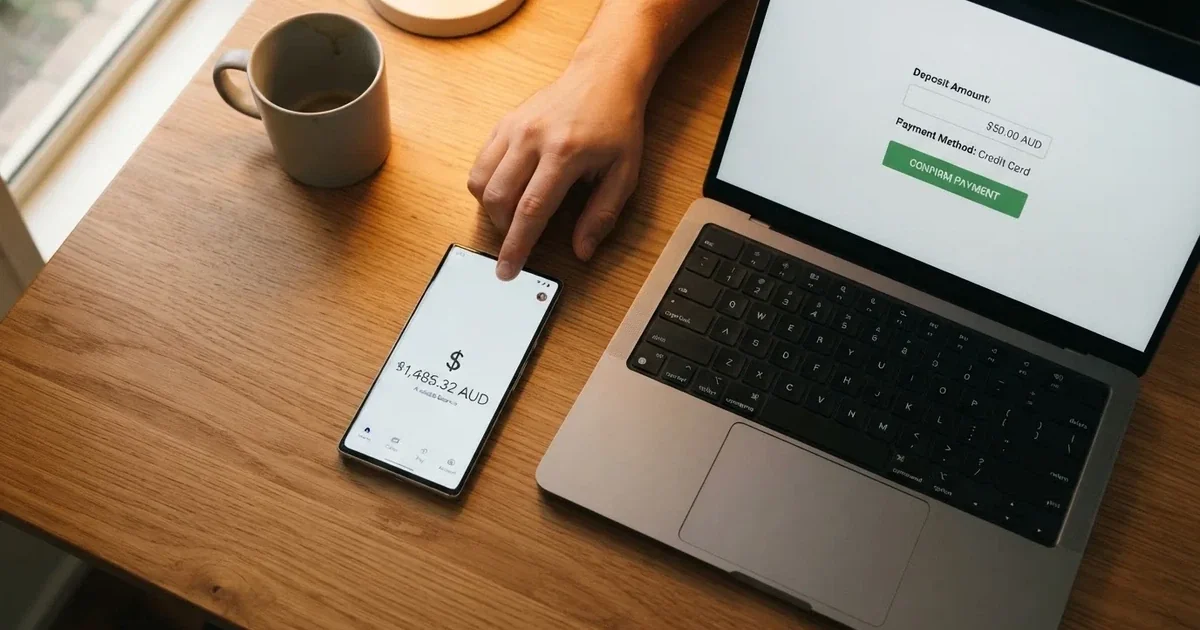
There is a tidy version of this market. A punter searches, finds a list of offshore casinos that take Apple Pay, taps deposit, plays, withdraws. The tidy version skips over what the Interactive Gambling Act 2001 makes of that flow. In Australia, none of the brands a comparison page calls “Apple Pay casinos” is licensed to take an Australian onto an online pokies reel — the licence those sites display was issued somewhere else, and the ACMA’s enforcement record now spans more than 1,750 blocked pages. The wallet in the punter’s hand does not change that. What it does change is which transactions the bank will let through, which merchant category codes will trip a card-level gambling block, and how quickly a refund can leave an account that may already be on a blocklist. The rest of this page works through what those differences cost the reader in practice.
Table of Contents
- The landscape an Australian punter actually meets
- Settleme: how the wallet changes what an Australian punter can transact
- Fundamenta: how an Apple Pay deposit actually moves
- Prohibiti: where each operator stands against the ACMA
- The legal frame the ACMA sits inside
- Payments, payouts and what the punter sees on the cashier
- Responsible play and what the registered channels actually offer
- Conclusion — what an Apple Pay casino page actually offers an Australian
- Frequently asked questions
The landscape an Australian punter actually meets
Apple Pay, Google Pay and Samsung Pay together accounted for about 45% of all card payments in Australia by number at the end of 2025, on the Reserve Bank’s own figures. That share of everyday retail spending is why the wallets keep showing up on casino cashier pages: the operator is not offering a different payment rail, it is offering the customer’s existing card, tokenised. Apple does not charge the consumer a fee to use Apple Pay — any surcharge that turns up at the cashier comes from the merchant’s own card-processing costs, not from the wallet provider. Apple also states that transaction limits and PIN requirements are set by the card issuer or the merchant, not by Apple itself. So a punter who reaches a deposit page and sees “Apple Pay” in the list is looking at their own Visa, Mastercard or Amex, behind a token that hides the long card number from the casino.
That mechanism is the whole reason offshore operators bother listing it. The casino does not see a bank account, and the charge on the statement rarely surfaces in a way that a card-level gambling block will catch on its own. Westpac’s gambling block refuses authorisation of transactions registered under the merchant category code “Betting/Casino Gambling” on eligible personal credit and debit cards. ANZ’s gambling block, once turned on inside the ANZ app, also blocks gambling transactions made through a digital wallet such as Apple Pay on an eligible card — but the bank warns that not all gambling transactions will be blocked, and some non-gambling transactions might be blocked in error. Commonwealth Bank’s gambling lock, applied through the CommBank app, behaves similarly: it blocks most gambling transactions automatically and explicitly does not guarantee that every gambling-related purchase will be stopped. The blocks are card-by-card; turning one on does not turn on another, and a wallet on an unblocked card still goes through.
The other rail these sites still lean on is Australia’s own instant-payment stack: PayID and Osko. A bank transfer between participating Australian banks addressed to a PayID arrives in under a minute, twenty-four hours a day, weekends included, and paying to a PayID shows the account holder’s name before the money is sent — which the operator of PayID uses to warn that being asked to send money to a PayID on an illegal gambling site almost certainly means a scam. Over 100 Australian financial institutions offer PayID-based instant transfers, and more than 25 million PayID identifiers had been registered on the New Payments Platform by April 2025. The platform became publicly accessible on 13 February 2018 and is owned by New Payments Platform Australia Ltd, whose thirteen shareholders include the Reserve Bank and the four major banks. Monthly outages are contractually capped at two minutes. It is fast, cheap, and Australian — and it is the rail the IGA does not let a licensed wagering provider route away from when it comes to consumer-facing deposits.
BPAY sits alongside PayID and Osko as the third leg of legal domestic deposits. BPAY has operated since 18 November 1997 and is available through the online banking of more than 140 Australian banks and financial institutions, with over 95,000 businesses offering it as a bill-payment method. The payer enters a Biller Code and a Customer Reference Number printed on the bill. It is run by Australian Payments Plus (AP+), the same operator that runs PayID and Osko, and it is owned equally, through Cardlink Services Limited, by ANZ, Commonwealth Bank, National Australia Bank and Westpac. None of that infrastructure is the offshore casino’s. Each one — PayID, Osko, BPAY — is the rail a licensed Australian wagering provider uses; an offshore site that offers Apple Pay is asking the punter to route through a tokenised foreign card instead.
Settleme: how the wallet changes what an Australian punter can transact
The practical consequence of paying through Apple Pay at an offshore casino, for an Australian, is that the transaction carries a domestic card brand and a token, but it heads toward a merchant the IGA treats as prohibited. The 2017 amendments to the Interactive Gambling Act 2001 make it an offence to provide interactive gambling services — online casino games, online pokies and in-play betting — to a person physically in Australia, whether the provider is licensed in Curaçao, Malta or anywhere else. No state or territory issues a licence for these products. The legal channels are wagering on races and sport placed before the event, lotteries and keno, in practice licensed by the Northern Territory Racing and Wagering Commission (NTRWC). That body regulates 52 of Australia’s online bookmakers — Sportsbet, Bet365 and Ladbrokes among them — for tax reasons, and it has no full-time staff, meeting once a month in Darwin. The IGA does not target the punter; it targets the provider. The risk is on the side that has no Australian consumer protection, no local complaints body, no recourse if a withdrawal is refused, and a balance that can be stranded the moment the next ACMA blocking round adds the brand to the list.
The age floor is 18, enforced through KYC on the licensed side. The individual gambler is not the subject of an enforcement action — that is the consistent line in ACMA material — but the operator is, and the operator’s failure to keep Australian money out is what triggers formal warnings and ISP-level blocks. A punter who has loaded an Apple Pay wallet with a debit card linked to an Australian bank is, in effect, hoping the merchant category code of the offshore casino does not match what the bank’s gambling block is configured to refuse. The block is a contract between the punter and the bank. The prohibition is a statute. The two together leave the punter holding the only part of the arrangement they can actually control — the choice to deposit at all.
H2 Gambling Capital’s 2025 report estimates that Australians lose about A$3.9 billion a year to illegal gambling sites, and that the share of gambling going through legal channels fell from 74% in 2021 to 64%. That is the macro picture that an Apple Pay cashier button sits inside. The wallet is not what is moving the dial; the offering is.
What the ACMA has actually done about these sites
| Brand | ACMA action and date | Operator named by the ACMA | Subject support |
|---|---|---|---|
| 7Signs | Blocked, June 2026 | Various | — |
| ChromaBet | Blocked, June 2026 | Various | — |
| Donbet | Blocked, June 2026 | Various | — |
| Duospin | Blocked, June 2026 | Various | — |
| Freshbet | Blocked, June 2026 | Various | — |
| Slots Gem | Blocked, June 2026 | Various | — |
| Jacks Club | Blocked, June 2026 | Various | — |
| Lucky Start | Blocked, June 2026 | Various | — |
| Pointsbetz | Blocked, June 2026 | Various | — |
| Spinrise | Blocked, June 2026 | Various | — |
| Vinyl Casino | Blocked, June 2026 | Various | — |
| Wildsino | Blocked, June 2026 | Various | — |
The Australian Communications and Media Authority investigates, issues formal warnings and directs Australian internet service providers to block illegal sites. As reported in June 2026, a total of 1,751 illegal gambling and affiliate marketing websites had been blocked since the first blocking request in November 2019, and more than 230 unlicensed gambling services had left the Australian market since enforcement was strengthened in 2017. In a single round reported on 26 June 2026, twelve more illegal gambling websites were referred to ISPs for blocking: 7Signs, ChromaBet, Donbet, Duospin, Freshbet, Slots Gem, Jacks Club, Lucky Start, Pointsbetz (Pointsbetz.com), Spinrise, Vinyl Casino and Wildsino.
The blocking rate itself, taken across the ACMA’s published totals, runs in a recognisable band. From the first blocking request in November 2019 to the June 2026 cumulative total of 1,751, the working period is roughly 79 months. That works out to about 22 blocked sites a month on a straight average across the whole window — a useful baseline, but one that flattens the year-by-year shape of the register. Through the back half of that window, the per-round lists have grown longer, and the appendix of affiliate-marketing pages now sits alongside the operator domains. Treat the rate as a band rather than a single number: somewhere between a low-teens monthly pace and the higher cadence of the most recent reporting year, with most of the increase coming from affiliates rather than from new operator launches. The arithmetic belongs to the writer; what it shows the reader is that the ACMA’s enforcement is steady, that it is widening in scope, and that the rate at which a brand can be added to the list is the same rate at which a deposited balance can become unreachable.
Credit cards, crypto and the 11 June 2024 line
Since 11 June 2024, Australian-licensed online wagering services cannot accept payment by credit card or other credit-related products. The 2023 amendments to the Interactive Gambling Act closed that loop, and penalties of up to A$247,500 apply to operators who breach it. The legal deposit routes for a licensed Australian wagering provider are debit card, bank transfer, PayID and Osko, and BPAY. A site that asks an Australian punter for a credit card or a crypto deposit is operating outside the Australian rules; it is also, by definition, not the licensed channel. The credit-card ban constrains Apple Pay’s use for licensed wagering only through the cards it tokenises — a credit-card-funded Apple Pay wallet at a licensed bookmaker is still a credit-card transaction. At an offshore casino, that constraint is the licensed operator’s problem, not the offshore operator’s, and the offshore operator has no comparable constraint of its own.
American Express sits at the edge of this. Amex was established in 1850 as a freight-forwarding company and later became a card issuer, launching its first charge card on 1 October 1958; unlike Visa or Mastercard’s four-party network, it traditionally issues cards and processes transactions itself as a three-party scheme. The Reserve Bank’s July 2025 review of merchant card payment costs proposes removing surcharges only on eftpos, Mastercard and Visa transactions, explicitly leaving American Express outside the scope of the proposed surcharge ban. An Amex-funded Apple Pay deposit at an offshore casino therefore carries both the operator’s own surcharge risk and the Amex-versus-the-rest asymmetry that has historically kept Amex merchants more expensive than their peers.
AUSTRAC, cash thresholds and what the rail reports
AUSTRAC’s threshold-transaction-report rule, which requires reporting of transfers of A$10,000 or more, applies only to physical cash. Ordinary electronic bank transfers — including PayID, Osko and BPAY — are not subject to that per-transaction reporting requirement, regardless of the amount sent. A punter routing an A$5,000 deposit through PayID is not triggering a TTR. A punter carrying A$10,000 in banknotes to a venue is. The offshore casino’s cashier, if it is asking for an Australian-issued debit card through Apple Pay, is asking for a rail that AUSTRAC sees as a normal card transaction; the reporting burden sits on the merchant acquirer, not on the punter’s wallet.
Fundamenta: how an Apple Pay deposit actually moves
The mechanics, end to end, are short. The punter opens the cashier, picks Apple Pay, confirms the card they want to use, completes Face ID or Touch ID, and the casino’s payment gateway authorises the charge through the relevant card network — Visa Direct, Mastercard Send or, less commonly, Amex’s own processor. The merchant sees a token, not the long card number; the bank sees a card-not-present transaction under a particular merchant category code; the punter sees a hold on their statement that, on the bank side, may or may not match the gambling block’s filter. None of that is mysterious, and none of it is a defence against an IGA prosecution of the operator — that is a structural matter, not a transactional one.

What changes from operator to operator is the minimum deposit and the floor on the maximum. Apple Pay itself imposes no consumer fee and no transaction limit; both are set by the card issuer or the merchant. A site that accepts a A$10 deposit through Apple Pay is doing so because its payment processor supports low-ticket authorisation and its own terms allow it; a site that requires A$30 is doing so because its anti-fraud posture treats small first-time authorisations as risk. The punter’s view of “what is the smallest deposit a Apple Pay casino site usually asks for” is a function of the operator’s own cashier, not of the wallet.
Once a balance is on the account, the withdrawal leg is the one that determines whether the wallet matters at all. The same Apple Pay credential can be used to push funds back, where the operator’s processor supports it — most do, for the same tokenisation reason the deposit leg did — but the casino’s own manual checks have to clear first: KYC, source-of-funds, anti-money-laundering. A pending withdrawal at an offshore site is not a transaction the bank can speed up. It is a queue inside the operator’s own payments team. Until the operator releases the funds, Apple Pay is irrelevant; once the operator releases the funds, the bank transfer inside the wallet typically lands as fast as any other Visa or Mastercard authorisation.
What bank-level gambling blocks actually intercept
Westpac’s gambling block refuses authorisation of transactions registered under the merchant category code “Betting/Casino Gambling” on eligible personal credit and debit cards. That is a narrow technical definition. A casino that registers under a different MCC — some do — will not match the filter, and a wallet transaction at a non-matching MCC will pass through. ANZ’s gambling block, activated in the ANZ app, extends to transactions made through a digital wallet such as Apple Pay on an eligible card, and once activated it requires a 48-hour waiting period to remove. The bank warns that not all gambling transactions will be blocked and some non-gambling transactions might be blocked in error. Commonwealth Bank’s gambling lock, applied through the CommBank app, automatically blocks most gambling transactions and the bank states it cannot guarantee all gambling-related purchases will be stopped.
For an Australian punter, the practical reading is that a gambling block is a probabilistic shield, not a categorical one. It will catch the obvious MCC-matched charges and miss the rest. It will not stop a deliberate use of an unblocked card through Apple Pay. It may, occasionally, stop something that is not a gambling transaction at all. The block is most useful as a brake a punter applies to themselves before the impulse to deposit turns into a settled transaction.
What the IGA does to a balance already on the books
The Interactive Gambling Act 2001, strengthened by the Interactive Gambling Amendment Act 2017, makes it an offence to provide interactive gambling services to a person in Australia. The ACMA investigates and acts; the individual player is not prosecuted. The risk a punter runs is not legal but financial: an offshore site gives no Australian consumer protection, no complaints body and no recourse if a withdrawal is refused, and it can be blocked with a balance still on it. The first blocking request under the current enforcement regime went out in November 2019, and by June 2026 the cumulative list of blocked pages sat at 1,751. A punter who deposits through Apple Pay and then sees the brand on the next round’s list has no Australian body to complain to, no AU-based operator to sue, and no path back to their tokenised card other than the bank’s own chargeback process — which, for a transaction at a gambling merchant under Australian law, is itself contested ground.
The ACMA’s enforcement record for the brands in the table below is, in that sense, the only thing the operator cannot rewrite. Each row of that table names the operator the ACMA identified, the date of the formal warning, and what is or is not publicly attested about the brand’s interaction with the wallet.
Prohibiti: where each operator stands against the ACMA
The 11 brands reviewed below are not ranked, not recommended and not endorsed. They are the brands the ACMA itself has issued formal warnings about for offering prohibited online casino and pokies services to Australians. None of them is licensed to take an Australian onto a real-money casino game in Australia. Each entry records what the ACMA has published, what (if anything) public listings say about the brand’s payment options, and where the legal situation stands as of the most recent published action.

The landscape table
| Brand | ACMA action and date | Operator named by the ACMA | Subject support |
|---|---|---|---|
| RocketPlay | Formal warning, March 2026 | Pulsup Ltd | — |
| Level Up Casino | Formal warning, May 2022 | Dama N.V. | — |
| Woo Casino | Formal warning, March 2025 | Dama N.V. | — |
| Spirit Casino | Formal warning, May 2025 | Dama N.V. | — |
| National Casino | Formal warning, July 2025 | Consolutetish S.R.L. | — |
| Bizzo Casino | Formal warning, July 2025 (earlier 2022) | Consolutetish S.R.L. / TechSolutions | — |
| Ignition Casino | Formal warning, July 2025 | Bamboo Media | — |
| Instant Casino | Formal warning, February 2025 | EOD Code SRL | — |
| Jackbit | Formal warning, April 2026 | Ryker B.V. | — |
| Casino Intense | Formal warning, April 2025 | Sterplay Holding Ltd | — |
| Sky Crown | Formal warning, date as published | Hollycorn N.V. | — |
The brands above all carry the same structural problem: online casino games and online pokies cannot be licensed in Australia, whatever offshore licence the site displays. The marketing the punter sees is irrelevant to that line. So is the wallet.
RocketPlay — most recent warning of the set
The ACMA issued a formal warning to Pulsup Ltd over Rocketplay.com.au in March 2026. RocketPlay had earlier featured in the May 2022 Dama N.V. warning, which named six brands: Bambet, Dazard, Level Up, Rocketplay, Wild Tornado and Cobra Casinos. The brand’s most recent warning is also the most recent warning on the table — it is the freshest line the ACMA has drawn on this set, and the site’s Australian-facing status has not been repaired in the time since.
Level Up Casino — the older Dama warning
The ACMA’s formal warning to Dama N.V. of May 2022 covered Level Up alongside Bambet, Dazard, Rocketplay, Wild Tornado and Cobra Casinos. The warning pre-dates the more recent Dama N.V. warnings in 2025 and is therefore the older of two enforcement actions against the same operator on the table. A punter looking at a Level Up Casino cashier page in 2026 is looking at a brand the ACMA warned about four years ago and that has continued to accept Australian sign-ups since.
Woo Casino — the March 2025 escalation
The ACMA issued a formal warning to Dama N.V. over Woo Casino in March 2025. It followed that with a further warning over Spirit Casino in May 2025. The pattern is the same operator under escalating ACMA attention rather than a sequence of unrelated actions, which is what makes Dama N.V. the most-penalised operator group in this set.
Spirit Casino — the May 2025 follow-on
The second of the two 2025 Dama N.V. warnings, over Spirit Casino, was issued in May 2025. The site’s Australian-facing status has not been repaired between then and 2026; the formal warning remains on the ACMA’s register and the operator has not obtained any Australian licence that would change the IGA analysis.
National Casino — July 2025 with an older sibling
The ACMA issued a formal warning to Consolutetish S.R.L. over National Casino in July 2025. National Casino sits in the same enforcement round as Bizzo Casino, with the same operator and the same date. The two share a structural posture under the IGA and have shared an enforcement action for the entirety of the period since.
Bizzo Casino — two warnings, two operators, one brand
The ACMA’s July 2025 warning to Consolutetish S.R.L. covered both National Casino and Bizzo Casino. Bizzo had already been the subject of a 2022 formal warning to TechSolutions (CY) Group Limited and TechSolutions Group N.V. The brand has therefore moved between operators under the regulator’s eye and accumulated two distinct formal warnings on the way. That is the most-penalised brand in the set by count of actions, even though it is not the most recent.
Ignition Casino — the July 2025 Bamboo Media action
The ACMA issued a formal warning to Bamboo Media over Ignition Casino in July 2025. Ignition sits in the same enforcement round as the National Casino / Bizzo Casino double action, but under a different operator. The brand is on the ACMA’s register and its Australian-facing status is unchanged.
Instant Casino — the EOD Code SRL warning
The ACMA issued a formal warning to EOD Code SRL over Instant Casino in February 2025. The action predates the bulk of the July 2025 round and is the only EOD Code SRL action in the table. Instant Casino’s merchant-category posture, the way its acquirer codes transactions, is what determines whether a domestic card-level gambling block catches its charges; the wallet itself does not change that.
Jackbit — the April 2026 Ryker B.V. action
The ACMA issued a formal warning to Ryker B.V. over Jackbit and CasinOK in April 2026. The action is among the most recent on the table and pairs Jackbit with CasinOK under a single operator name. A punter who sees either brand’s cashier page in 2026 is looking at an ACMA-warned brand with no Australian licence in between.
Casino Intense — the Sterplay warning
The ACMA issued a formal warning to Sterplay Holding Ltd over Casino Intense in April 2025. The action sits between the early-2025 Dama warnings and the July 2025 Consolutetish S.R.L. round. Casino Intense’s Australian-facing posture has not been repaired since.
Sky Crown — the Hollycorn N.V. warning
The ACMA issued a formal warning to Hollycorn N.V. over its Sky Crown and Blue Leo casino services. The published warning is one of the older documents still active in the register, predating the bulk of the 2025 and 2026 actions. Sky Crown is on the ACMA’s list and has not been removed.
The legal frame the ACMA sits inside
Online casino is prohibited in Australia. The Interactive Gambling Act 2001, strengthened by the Interactive Gambling Amendment Act 2017, makes it an offence to provide online casino games, online pokies or in-play betting to a person physically in Australia. No state or territory licences these products. What is licensable is wagering on races and sport placed before the event, lotteries and keno — in practice licensed by the Northern Territory. Minimum age is 18.
Enforcement sits with the ACMA: investigations, formal warnings and ISP-level blocking orders. The individual player is not prosecuted. The provider is. The expected losses to illegal sites — about A$3.9 billion a year, on H2 Gambling Capital’s 2025 estimate — are the macro shape of what the ACMA is regulating against.
Player protection on the licensed side runs through BetStop, the National Self-Exclusion Register, which has been live since August 2023. BetStop binds Australian-licensed online and phone wagering services; an offshore casino is not connected to it. The national Gambling Helpline on 1800 858 858 is free, available 24/7, with chat at Gambling Help Online. None of these channels reaches into an offshore casino’s own responsible-gambling tooling. A punter who has self-excluded from Australian wagering and then opened an offshore account has, in a real sense, no equivalent backstop.
The 2026 reform: the Interactive Gambling Amendment (Gambling Reform) Bill 2026 passed Parliament on 19 August 2026. Its advertising and inducement measures commence on 1 January 2027. That is law with a start date, not yet in force on a page like this one in 2026. The bill’s effect on affiliate marketing pages, on bonus advertising, on inducements to open an account — all of it will land in 2026’s successor year.
On tax, gambling winnings of a recreational player are not assessable income (section 6-5 ITAA 1997) and losses are not deductible, unless the person carries on a business of gambling. The ATO’s position on the recreational-versus-business line is the only place to draw it.
Why a credit-card ban reaches Apple Pay, and why an offshore site does not
The credit-card ban that took effect on 11 June 2024 forbids Australian-licensed online wagering services from accepting payment by credit card or other credit-related products. The ban’s reach into Apple Pay is indirect: a credit-card-funded Apple Pay wallet used at a licensed Australian wagering provider is still a credit-card transaction, and the licensed provider is bound to refuse it. The same Apple Pay wallet, used at an offshore casino, is the offshore casino’s problem. The licensed channel applies the ban; the offshore channel ignores it. That asymmetry is part of why Apple Pay shows up at both ends of the market and is policed only at one.
Payments, payouts and what the punter sees on the cashier
At a licensed Australian wagering provider, the deposit methods the punter will see are debit card, bank transfer, PayID, Osko and BPAY. Apple Pay at a licensed bookmaker is tokenised debit card or tokenised credit card, and the credit-card ban governs the second of those. The cashier page will accept Apple Pay for a debit-card-funded wallet and refuse it for a credit-card-funded one.
At an offshore casino, the cashier page typically offers Apple Pay alongside a range of international rails: Visa and Mastercard debit cards through a non-Australian acquirer, e-wallets, and crypto on some sites. The tokenisation protects the card number; it does not change the merchant category code under which the acquirer processes the transaction. A Westpac gambling block refuses authorisation of MCC “Betting/Casino Gambling” charges; whether a particular offshore casino’s charge reaches that MCC depends on how the acquirer has coded it. Some acquirers code gambling transactions under adjacent categories, and the block does not catch those.
Withdrawals at an offshore casino, once the operator has approved them, typically take the same path the deposit came in on: tokenised card through Apple Pay, e-wallet, or bank wire. The casino’s own manual checks — KYC, source-of-funds, AML — have to clear first. None of that is a function of the wallet; it is a function of the operator’s own payments team. The punter cannot make a withdrawal land faster by picking a different rail.
A note on what bank-level blocks do, and do not, do
A bank-level gambling block is a useful, blunt instrument. It catches the transactions that the bank’s own filter has been configured to recognise. It does not catch the ones it has not. It will not stop a deliberate use of an unblocked card through a wallet. It may stop an unrelated purchase that happened to match the same MCC. The punter who turns a block on is taking a probabilistic shield and paying for it with a 48-hour wait if they later want to remove it. That is the shape of the tool.
The New Payments Platform and what the rails look like from the punter’s side
The New Payments Platform became accessible to the public on 13 February 2018 and is owned by New Payments Platform Australia Ltd, a non-profit whose thirteen shareholders include the Reserve Bank and the four major banks. The platform’s monthly outages are contractually capped at two minutes. The two products most Australian readers will meet through it are PayID and Osko: instant transfers between participating banks, addressed by PayID (a mobile number, email or ABN) or by BSB and account number, arriving in under a minute, 24/7. Over 100 Australian financial institutions offer PayID-based instant transfers, and more than 25 million PayID identifiers had been registered by April 2025. Paying to a PayID shows the name of the account holder before the money is sent, and AP+ uses that feature to warn that being asked to send money to a PayID on an illegal gambling site almost certainly means a scam. None of this infrastructure is the offshore casino’s; it is the licensed wagering provider’s.
BPAY sits alongside PayID and Osko as the third rail. It is a bill-payment service in online banking: the payer enters a Biller Code and a Customer Reference Number printed on the bill. It has operated since 1997, is available through more than 140 banks and financial institutions, and runs through Australian Payments Plus, alongside PayID and Osko. The four major banks own it equally through Cardlink Services Limited.
AUSTRAC’s threshold-transaction-report rule, requiring reporting of transfers of A$10,000 or more, applies only to physical cash. Ordinary electronic bank transfers — including PayID, Osko and BPAY — are not subject to it, regardless of the amount sent. That is information for a punter who has heard that a large transfer triggers a report; it does not.
Responsible play and what the registered channels actually offer
BetStop, the National Self-Exclusion Register, has been live since August 2023. It binds Australian-licensed online and phone wagering services. An offshore casino is not connected to it. The national Gambling Helpline on 1800 858 858 is free, available 24/7, with chat at Gambling Help Online. These channels reach the licensed side of the market; they do not reach the offshore side.
The bank-level gambling blocks — Westpac’s MCC filter, ANZ’s wallet-aware block, Commonwealth Bank’s gambling lock — sit one level below the regulator. They are consumer tools, not regulatory ones, and the bank that issues each one is explicit that it cannot guarantee every gambling transaction will be stopped. The combination of the three is the closest thing an Australian punter has to a self-imposed structural brake: a card that will not authorise, an account that will not send, a self-exclusion register that will not be honoured by an offshore operator.
The Apple Pay wallet is not on any of these lists. It is a tokenisation layer. The punter’s tool is the card underneath it, and the bank’s configuration of that card. An offshore casino that accepts Apple Pay is one more cashier button on a path the rest of the Australian system is set up to refuse.
Conclusion — what an Apple Pay casino page actually offers an Australian
An Apple Pay button on an offshore casino’s cashier page is a payment rail, not a licence. The wallet hides the long card number from the operator; it does not change the merchant category code under which the operator’s acquirer processes the charge, and it does not give the operator an Australian licence. The brands reviewed above have all been the subject of formal warnings under the Interactive Gambling Act 2001, and the IGA has not changed since. The licensed alternatives — sports and race wagering placed before the event, lotteries, keno — sit with Australian-licensed providers and accept deposits through debit card, bank transfer, PayID, Osko and BPAY. The wallet on top of a credit card at a licensed bookmaker is a credit-card transaction and is refused under the 11 June 2024 ban.
For a punter who has decided to play anyway, the bank-level gambling blocks are the only structural brake that operates at the same layer as the wallet. They are blunt, probabilistic and not under the punter’s control once activated (ANZ imposes a 48-hour removal wait). The ACMA’s blocking rate, somewhere between the long-run average of about 22 blocked pages a month and the higher recent cadence driven by affiliate-marketing referrals, is the speed at which a deposited balance can become stranded. The wallet does not change that speed.
The takeaway is short. Apple Pay is a domestic payment rail; the cashier button on an offshore casino is a fraud-filter evasion, not a regulatory workaround. The punter’s actual choices — deposit or do not, block the card or do not, use a licensed channel or accept the offshore one — are made at a different layer. None of the brands in the table above is licensed to take an Australian onto an online pokies reel, and the ACMA has already named every one of them in writing.
Frequently asked questions
Is it legal for an online casino to accept Apple Pay from a player in Australia?
No. Under the Interactive Gambling Act 2001, no online casino may lawfully be provided to a person in Australia, regardless of which wallet or card the deposit uses. The Apple Pay button on an offshore cashier does not change the prohibition. The wallet tokenises the card; it does not relicense the operator.
What is the smallest deposit an Apple Pay casino site usually asks for?
That is set by the operator and its payment processor, not by Apple Pay. Apple does not charge consumer fees and does not set transaction limits; both come from the card issuer or the merchant. Sites that accept small first-time authorisations can advertise a A$10 minimum; sites with a tighter anti-fraud posture will set their floor higher.
Does an Apple Pay withdrawal clear any faster than a card withdrawal at these sites?
No. The withdrawal leg at an offshore casino is gated by the operator’s own manual checks — KYC, source-of-funds, anti-money-laundering — and the wallet on the back end is the same Visa, Mastercard or Amex rail the deposit came in on. Once the operator releases the funds, the bank-side clearing is the same speed either way.
Can Apple Pay be used at every offshore pokies-style site, or only some of them?
Only at the sites that have chosen to integrate it. Most offshore casinos that accept Australian-facing traffic will offer it alongside international cards and e-wallets, because tokenisation protects the long card number from the merchant. The wallet itself imposes no fee on the consumer and no transaction limit; both are set by the card issuer or the merchant.
Does depositing with Apple Pay add an extra fee at these casino sites?
Apple does not charge a consumer fee. Any surcharge at the cashier comes from the merchant’s own card-processing costs, not from the wallet provider. Amex-funded deposits have historically been the most likely to carry a surcharge, because American Express sits outside the Reserve Bank’s July 2025 review proposing to remove surcharges on eftpos, Mastercard and Visa.
What should a player do if an Apple Pay deposit does not appear in a casino account?
First check the casino’s pending-transactions list and the bank’s authorisation record. Most offshore sites treat a successful authorisation as a balance credit; a hold that has not converted usually means an acquirer-side delay. If the authorisation is on the bank statement but the balance has not landed, contact the operator’s payments support with the transaction reference. The bank’s chargeback process exists, but for gambling transactions at offshore merchants it is contested ground.