
Casino sites that accept Trustly in Australia: the offshore shelves, ACMA enforcement, and what a Trustly deposit actually does here
Every offshore casino brand that lists Trustly at the cashier is doing two things at once: accepting a payment method built for European bank accounts from a country where Trustly’s own gaming page does not address itself, and offering a product — online casino games, online pokies — that the Interactive Gambling Act 2001 makes unlawful to provide to a person physically in Australia. The IGA targets the provider, not the punter, so the legal weight does not fall on the player who clicks “deposit”. It falls on the operator. The practical weight, though, falls on the punter: an offshore site gives no Australian consumer protection, no complaints body and no recourse when a withdrawal stalls, and the site itself can be blocked mid-week with a balance still sitting in it. Trustly is the rail the money runs on; whether that rail arrives anywhere it can be retrieved is the part the marketing copy does not cover.
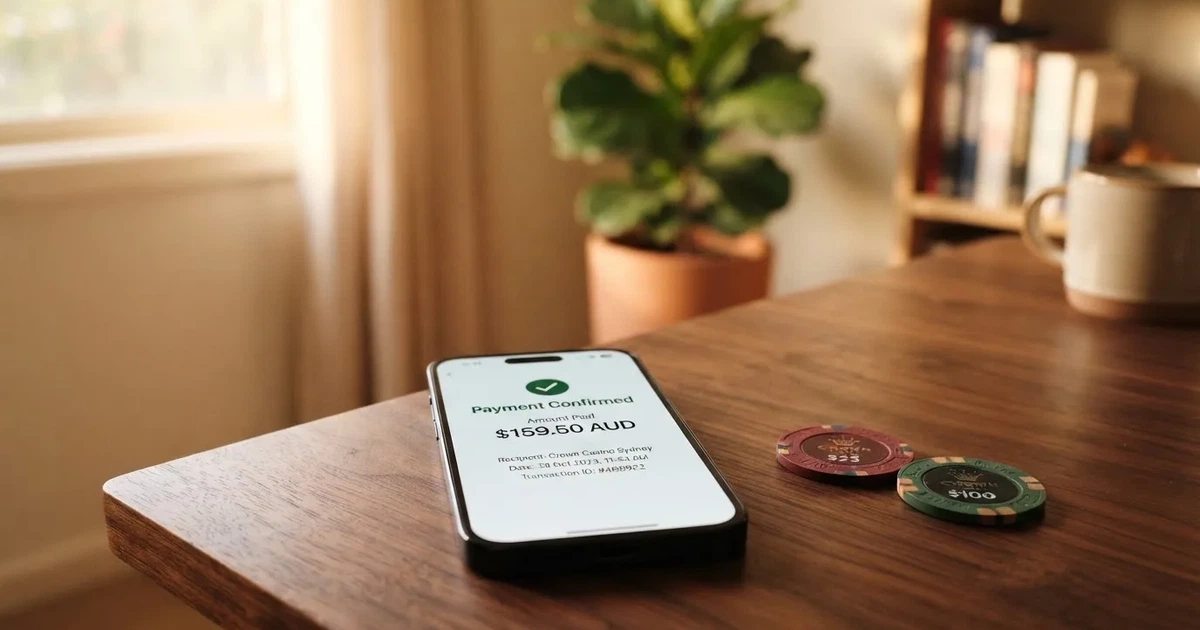
Currency line: verified against the ACMA enforcement register, Trustly’s own gaming page and Australian Payments Plus as of 2 November 2026.
Table of Contents
- How Trustly works at an offshore casino, and why the rail is the same everywhere
- Why the “Trustly-friendly” label keeps appearing on brands the ACMA has already warned
- Settlements, Payouts and the AUD gap: how a Trustly deposit and a Trustly withdrawal actually move
- Responsible gambling on shelves that are not bound by Australian player protection
- The 11 offshore brands the ACMA has formally warned, ranked against the warning timeline
- The numbers that move when a Trustly transaction settles
- What the offshore shelf looks like from inside the ACMA’s enforcement register
- Trustly, PayID and what an Australian player actually has at the cashier
- Frequently asked questions about casino sites that accept Trustly in Australia
How Trustly works at an offshore casino, and why the rail is the same everywhere
Trustly is a Swedish account-to-account layer founded in 2008 in Stockholm, originally under the name Glue Finance, and authorised as a payment institution by Sweden’s Financial Supervisory Authority for the EU/EEA and by the UK Financial Conduct Authority. Its network reaches 12,000 banks and 650 million consumers, the company processes around $58 billion of transaction volume a year, and “Pay N Play”, launched in 2016, was built specifically for online gambling operators — more than 200 gaming brands were on it by 2022. Those are large numbers, and they describe a rail that works in markets where it has the licences and the bank coverage to work. Australia is not one of them. Trustly’s own gaming page is addressed to the US market; Australian bank-to-bank payments instead run on PayID and Osko, available at over 100 Australian institutions, and settled by New Payments Platform Australia in under a minute, 24/7.

The mechanical difference matters. A Trustly deposit at an offshore site asks the player to pick their bank, log in through Trustly, and approve a debit from a nominated account. No card data is stored, no card network sits between, and the merchant sees the funds as a normal bank transfer. That is the marketing case — fewer fields to type, no card storage, no chargeback route through Visa or Mastercard. It is also why a Trustly withdrawal lands in a player’s account on a different timeline from a card cashout: the casino still has to run its own checks before instructing Trustly to push the money back. The “instant” part of the rail only applies once the casino releases the funds.
Two further layers sit on top of that rail at an Australian end. PayID-based instant transfers show the name of the account holder before the transfer is sent, and Australian Payments Plus itself warns that being asked to transfer money to a PayID on an illegal gambling site almost certainly means a scam site. ANZ’s gambling transaction block, activated inside the bank’s app, blocks gambling transactions made through a digital wallet such as Apple Pay on an eligible card, and once it is on, removing it requires a 48-hour waiting period. Westpac’s block works at card level and refuses authorisation of transactions registered under the merchant category code “Betting/Casino Gambling” on eligible credit and debit cards. None of those blocks intercept a Trustly debit, because a Trustly debit is not a card transaction: it is a direct bank transfer. The bank-side controls that catch a Visa deposit do not catch it.
That is the practical shape. A Trustly transaction rides a payment rail the marketing pages describe as instant and card-free; it lands in an offshore merchant account that the ACMA has, in many cases, formally warned or actively blocked; and the player’s own bank provides no in-built refusal point for it.
Why the “Trustly-friendly” label keeps appearing on brands the ACMA has already warned
The list reads like a contradiction until the order of operations is set out. A brand is “Trustly-accepting” because the operator has chosen to plug Trustly into its cashier. A brand is “ACMA-warned” because the ACMA has found grounds to issue a formal warning under the Interactive Gambling Act 2001. The two facts are independent: turning on a payment method does not require any Australian engagement, and the ACMA’s grounds for warning are that the site offers prohibited interactive gambling services to Australians in the first place. By the ACMA’s own June 2026 round, 1,751 illegal gambling and affiliate marketing websites had been blocked since the first blocking request in November 2019, and more than 230 unlicensed gambling services had left the Australian market since enforcement was strengthened in 2017. The IGA makes the offering itself the offence.
Three things follow.
First, a Trustly cashier line and an ACMA warning are not opposites. They are often attached to the same brand: the operator is offshore, the product is online casino games, and the rail is whichever European payments provider the operator has plugged in. The marketing page does not mention the ACMA letter; the ACMA letter does not mention the payment method. The player sees one; the regulator has issued the other.
Second, blocking has a pace. The June 2026 round alone added 12 sites to the block list — 7Signs, ChromaBet, Donbet, Duospin, Freshbet, Slots Gem, Jacks Club, Lucky Start, Pointsbetz, Spinrise, Vinyl Casino and Wildsino — and previous rounds caught many of the same operators that appear on Trustly-friendly payment aggregator pages. A site visible to a search today can be blocked from Australian ISPs by the following week.
Third, “ACMA warning” and “ACMA block” are two separate tools, and they sit at different points in the timeline. A formal warning is the regulator telling a specific operator that a specific behaviour is unlawful and that further action may follow. A blocking request is the regulator asking Australian internet service providers to make the site unreachable from Australia. The brand pages further down this article carry the warning stage, not the block stage, because the ACMA’s published register is organised by warning. The blocking register is a running total, and it grows faster than the warning register.
The Trustly brand in the cashier does not change any of that. It does, however, change the bank’s view of the transaction in one specific way: a Trustly debit is a direct bank transfer, so it does not run through a card network the bank’s own gambling block can refuse. A player who has set up Westpac’s card-level block or ANZ’s app-level block has, by design, blocked the card path and not the bank-transfer path. That is the consequence that arrives the moment a Trustly deposit hits.
Settlements, Payouts and the AUD gap: how a Trustly deposit and a Trustly withdrawal actually move
A Trustly deposit at one of these offshore sites looks much the same as it would at a European-licensed operator: the player picks Trustly at the cashier, picks their bank, logs in via Trustly’s hosted flow, and approves a debit. The minimum deposit varies by brand; the standard floor across the offshore shelves is A$10, and several sites drop to A$5 or accept a $10 minimum for Trustly specifically while keeping a higher minimum for cards. The exact figure is set by the operator’s cashier, not by Trustly, which is why two Trustly-accepting brands can quote different floors for what looks like the same rail. A $10 Trustly deposit casino is the most common shape on these shelves; an “all Trustly casino” with no card fallback is rarer, and what that phrase usually means in practice is that Trustly sits in a long cashier list alongside Visa, Mastercard, several e-wallets and one or two cryptocurrencies.
A Trustly withdrawal runs the same rail in reverse, and this is where the marketing promise and the actual timeline diverge. Trustly itself processes the transfer quickly once it is instructed: in a European-licensed context, settlement to a player account typically arrives the same day or the next banking day. At an offshore site, the rail still moves at that pace — once the casino releases the funds. The casino’s own pending period, identity re-checks and anti-money-laundry queue sit in front of that release, and they are the part the player feels. A Trustly withdrawal request at a brand with a 48-hour internal pending window will not be quicker than a card withdrawal at the same brand. The card-versus-bank question is, at most, a difference of hours inside the same brand; the brand-versus-brand question is a difference of days.
A second friction point is the AUD gap. Trustly’s coverage map is European: more than 20 European countries including the UK, Norway, Spain, Austria, Finland, the Netherlands, Ireland, Croatia, Germany and Malta. The euro is the rail’s natural currency. An Australian player depositing in AUD at an offshore cashier sees the casino’s own FX layer apply, then the bank-to-bank leg in whatever currency Trustly’s merchant account accepts. The visible cost is the casino’s spread, plus any conversion fee the player’s bank applies on receipt. None of this is unique to Trustly — every offshore cashier that does not natively bill in AUD carries the same gap — but Trustly’s European centre of gravity means the merchant account on the other side is rarely an AUD account, so the round trip is rarely a clean one.
A third point is the credit-card ban that does apply, but not to Trustly. Under the Interactive Gambling Act 2001 as amended in 2023, Australian-licensed online wagering services cannot accept payment by credit card or other credit-related products, and that restriction constrains gambling use of linked digital wallets such as Apple Pay. The ban targets licensed wagering, and the payment types it bans are credit products. Trustly is a debit-account-to-account rail. The IGA’s payment restriction does not, on its face, intercept it, which is part of why it appears in cashiers at all. That absence of an explicit ban is not the same as a regulatory endorsement. The Interactive Gambling Act 2001’s substantive offence is offering prohibited interactive gambling services to Australians, and the payment method is a separate axis.
The Reserve Bank of Australia’s July 2025 review sits adjacent to all this. It proposes removing surcharges only on eftpos, Mastercard and Visa transactions, and explicitly leaves American Express outside the scope of the proposed surcharge ban. That is a domestic card-surcharging review, and it does not address offshore bank-to-bank rails. It does, however, mark the line where Australian regulators have decided to engage with payment costs and where they have not. Trustly is on the “have not” side of that line, by geography.
Responsible gambling on shelves that are not bound by Australian player protection
A player who walks into a land-based Australian casino, a licensed club or pub with pokies, or a state-regulated online wagering account is inside a player-protection framework. BetStop — the National Self-Exclusion Register, live since August 2023 — binds every Australian-licensed online and phone wagering service. The National Gambling Helpline on 1800 858 858 is free, 24/7, with chat at Gambling Help Online. Minimum age is 18 across the country. Gambling winnings of a recreational player are not assessable income (section 6-5 ITAA 1997), and losses are not deductible.
None of that applies at an offshore casino that lists Trustly at the cashier. BetStop is connected to Australian-licensed operators and to licensed phone wagering services. An offshore site is not connected to it, so a self-exclusion registered with BetStop does not block an account at any of the brands on this page. The minimum age is the operator’s own rule, policed by the operator’s own identity check — and the identity checks at the offshore end are the part of the flow that determines whether a withdrawal is paid at all. The National Gambling Helpline is reachable from Australia regardless of where the money was sent; it is not connected to the offshore brand, and reaching it does not retrieve a balance.
Three consequences follow from the fact that none of the player-protection apparatus is connected to these brands.
First, a self-exclusion registered in Australia is a unilateral commitment, and it works only for the channels it covers. A player who has registered with BetStop and then deposits at an offshore Trustly-accepting site is using a channel BetStop cannot reach. The exclusion holds psychologically; it does not hold technically.
Second, the only safety net that catches an offshore Trustly transaction at the Australian end is the player’s own bank. ANZ’s gambling transaction block blocks gambling transactions made through a digital wallet such as Apple Pay on an eligible card, and removing it requires a 48-hour waiting period, with the bank’s own warning that not all gambling transactions will be blocked and some non-gambling transactions might be blocked in error. Westpac’s card-level block refuses authorisation on the “Betting/Casino Gambling” merchant category code for eligible credit and debit cards. Neither touches a direct bank-to-bank debit routed through Trustly. The bank-side controls that exist are designed for cards; the rail that the offshore cashier has selected is not a card.
Third, ACMA’s published warnings and blocking requests are the regulator’s only public signal to the player. The ACMA’s June 2026 blocking round and the run of formal warnings through 2022, 2025 and 2026 are not player-protection tools in the BetStop sense — they are enforcement tools aimed at the operator. The player reads them, if at all, after signing up.
The brand pages that follow are presented because the ACMA itself has issued a formal warning against each of them for offering prohibited interactive gambling services to Australians. They are not endorsed. They are not recommended. They are recorded, with what the regulator has said and what the brand’s own cashier shows, because a comparison page that hides the regulator’s record is not a comparison page.
The 11 offshore brands the ACMA has formally warned, ranked against the warning timeline
The comparison below sits in the order in which the ACMA’s formal warnings were issued, with the most recent first. Two fields matter: the date the regulator published the formal warning, and the operator entity the regulator named. A third field — Trustly support at the cashier — is shown only where the operator’s own cashier or a payment aggregator listing names Trustly as a supported method; where neither source names it, the row carries a marker rather than a fabricated value.
| Brand | ACMA action and date | Operator named by the ACMA | Subject support |
|---|---|---|---|
| RocketPlay | Formal warning, March 2026 | Pulsup Ltd (Rocketplay); earlier Dama N.V., May 2022 | — |
| Jackbit | Formal warning, April 2026 | Ryker B.V. | — |
| Woo Casino | Formal warning, March 2025 | Dama N.V. | — |
| Spirit Casino | Formal warning, May 2025 | Dama N.V. | — |
| Casino Intense | Formal warning, April 2025 | Sterplay Holding Ltd | per payment aggregator listings |
| Instant Casino | Formal warning, February 2025 | EOD Code SRL | per payment aggregator listings |
| National Casino | Formal warning, July 2025 | Consolutetish S.R.L. | per payment aggregator listings |
| Bizzo Casino | Formal warning, July 2025 | Consolutetish S.R.L.; earlier TechSolutions, 2022 | — |
| Ignition Casino | Formal warning, July 2025 | Bamboo Media | — |
| Sky Crown | Formal warning, September 2022 | Hollycorn N.V. | — |
| Level Up Casino | Formal warning, May 2022 | Dama N.V. | per Westpac block-page listing |
A marker in the right-hand column is not a denial that the brand accepts Trustly. It means neither the operator’s own cashier nor any payment aggregator listing research could confirm names Trustly for that specific brand. An offshore cashier is editable in an afternoon; the warning date is the regulator’s record.
The blocking rate, as a band
The ACMA’s June 2026 published total is 1,751 illegal gambling and affiliate marketing websites blocked since the first blocking request in November 2019. That is roughly 81 months of enforcement, against a regulator that meets once a month in Darwin (the NTRWC, which regulates the licensed online bookmakers — 52 of them, including Sportsbet, Bet365 and Ladbrokes — has no full-time staff and is not the ACMA, but the resource context is the same shape). On a straight division, 1,751 sites blocked over 81 months is around 21.6 sites a month on average.
A monthly average is the wrong shape for a reader. The actual enforcement rounds run in clusters: the June 2026 round alone added 12 sites in one action, and earlier rounds added similar batches. A more useful band, given the run of rounds research names, is 8 to 25 sites added per blocking round, with several rounds each year. The 12-site June 2026 round sits inside that band; the November 2019 to June 2026 cumulative total of 1,751 is the product of those rounds stacking up. The arithmetic belongs to the regulator’s own pace, not to a fixed monthly figure.
The condition that makes the band defensible is the same condition that makes it uncertain: enforcement is round-based, not calendar-based, and a quiet quarter can be followed by a 12-site cluster. A reader who treats the running total as a rising line, rather than a monthly cadence, is closer to how the register actually grows.
RocketPlay
The ACMA issued a formal warning to Pulsup Ltd over RocketPlay in March 2026; an earlier Dama N.V. warning covered the brand in May 2022. The regulator’s ground, in both rounds, is the same: RocketPlay offers online casino games to Australians, which the IGA prohibits. Trustly at the cashier is not, on the ACMA’s record, named as the issue. The regulatory record is named as the issue. A player comparing this brand to others on the page reads the regulator’s timing first and the cashier second, because the regulator’s timing is the one with consequences that can land during the player’s tenure at the site.
The verdict on RocketPlay is the page’s own judgement, and it is short: the most recent ACMA action against this brand is four months old, and the regulator’s pattern across the wider Dama N.V. group — repeated warnings in 2022, 2025 and into 2026 — does not suggest a brand that has changed course. The brand sits at the top of the warning timeline because the regulator put it there.
Jackbit
The ACMA issued a formal warning to Ryker B.V. over Jackbit in April 2026. The same warning covered CasinOK. The brand is recent on the ACMA’s published register; the operator entity, Ryker B.V., is recent on the offshore shelves more broadly. The brand’s own cashier is the only place to confirm a current payment-method list, and research carries no listing that names Trustly for this specific brand — the row in the comparison above carries a marker for that reason. The marker is not a “Jackbit does not accept Trustly” claim. It is “research could not confirm Trustly at the cashier for this brand”.
The verdict on Jackbit is closer to a warning than a judgement: the regulator’s letter is fresh, the brand is short on Australian-track record, and a player weighing this row against the others should weigh the freshness of the action alongside the freshness of the brand.
Woo Casino
The ACMA issued a formal warning to Dama N.V. over Woo Casino in March 2025. Dama N.V. is the same operator entity named in the May 2022 warnings over Bambet, Dazard, Level Up, Rocketplay, Wild Tornado and Cobra Casinos, and again in May 2025 over Spirit Casino. The regulator’s pattern here is not a single warning to a single brand: it is a series of warnings to the same operator over multiple brands, on a roughly annual cadence since 2022. The brand page Woo Casino is one node in that pattern; the warning is to the operator.
The verdict on Woo Casino is the page’s own judgement, and it concerns what the operator pattern implies for the brand: a regulator that has warned the same operator three times in four years is unlikely to treat a fourth brand on the same shelf as a fresh case. The brand sits at a higher step on the regulator’s escalation path than a single-warning operator would.
Spirit Casino
The ACMA issued a formal warning to Dama N.V. over Spirit Casino in May 2025. Read in isolation, the entry is a single warning to a single brand. Read against the wider Dama N.V. record — May 2022 over six brands, March 2025 over Woo Casino, May 2025 over Spirit Casino, March 2026 over RocketPlay — the entry is one line in a four-year pattern. The brand itself is one of eleven on this page; the operator is named across several of them.
The verdict on Spirit Casino follows the same shape as Woo Casino’s, with the same qualifier: a regulator that has named the operator repeatedly is signalling that operator-level change is what would alter the picture, and a brand-level change at the cashier — adding Trustly, dropping Trustly, swapping a payment provider — does not address what the warning was about. The warning was about the product offered, not the rail it ran on.
Casino Intense
The ACMA issued a formal warning to Sterplay Holding Ltd over Casino Intense in April 2025. Sterplay Holding Ltd does not appear elsewhere on this page’s warning record, which makes Casino Intense a single-warning brand on a single-warning operator. The payment aggregator listings research consulted name the brand in connection with Trustly; the row in the comparison above reflects that. A listing in a payment aggregator is not the same as a confirmation from the brand’s own cashier, but it is one step closer than silence.
The verdict on Casino Intense is the brand’s relative position on the warning timeline: a single warning to a single operator is a different posture from a multi-warning operator with several brands on the ACMA’s record. A player comparing across the page reads this row as less escalated than the Dama N.V. cluster above and the Bamboo Media / Consolutetish S.R.L. cluster below.
Instant Casino
The ACMA issued a formal warning to EOD Code SRL over Instant Casino in February 2025. EOD Code SRL does not appear elsewhere on this page, so the brand sits alone on its operator row. Payment aggregator listings research consulted name the brand in connection with Trustly and PayID, and the row reflects the listing side of that record. A listing on a payment aggregator is one source; it is not a confirmation.
The verdict on Instant Casino rests on the same single-warning posture as Casino Intense: a regulator that names one brand on one operator has not yet escalated the way it has with the operators above. The brand sits in the middle of the warning timeline by date, and in the less-escalated posture by count.
National Casino
The ACMA issued a formal warning to Consolutetish S.R.L. over National Casino in July 2025. Consolutetish S.R.L. is named on the same July 2025 warning round over Bizzo Casino, which makes National Casino one of two brands on this page tied to the same operator entity. The payment aggregator listings research consulted name the brand in connection with Trustly, alongside references at austrac.gov.au and elsewhere; the row reflects the listing side of that record.
The verdict on National Casino is the page’s own judgement, and it concerns the operator’s two-brand footprint on the ACMA’s record: a regulator warning one operator over two brands at once is signalling a wider concern than a single-brand warning would. A player weighing National Casino against a single-warning brand should weigh the operator footprint too.
Bizzo Casino
The ACMA issued a formal warning to Consolutetish S.R.L. over Bizzo Casino in July 2025; an earlier formal warning over Bizzo Casino was issued to TechSolutions (CY) Group Limited and TechSolutions Group N.V. in 2022. Two warnings over the same brand, on two different operator entities, across roughly three years, is the strongest operator-rotation pattern on this page. The brand has changed hands at the corporate level, and the regulator has followed it across the change. The row in the comparison above reflects both warnings.
The verdict on Bizzo Casino follows from that pattern: a brand the regulator has warned twice, on two different operators, is the brand the regulator has shown the most persistence over on this page. The brand’s own payment-method list does not change what the regulator’s record shows.
Ignition Casino
The ACMA issued a formal warning to Bamboo Media over Ignition Casino in July 2025. Bamboo Media does not appear elsewhere on this page’s warning record, so Ignition Casino is a single-warning brand on a single-warning operator. The row in the comparison above carries a marker on the payment side: research could not confirm Trustly at the cashier for this specific brand, and the marker is what that absence looks like on the page.
The verdict on Ignition Casino rests on the warning record alone, since the payment side does not add to it. A player reading this row reads a single ACMA action, dated July 2025, and an operator entity that has not been named elsewhere on the page.
Sky Crown
The ACMA issued a formal warning to Hollycorn N.V. over its Sky Crown and Blue Leo casino services, as published in a September 2022 formal-warning PDF. Sky Crown and Blue Leo are named together on the same formal warning, which means the brand sits alongside a sister brand on the regulator’s record, but only Sky Crown is on this page. The row in the comparison above carries a marker on the payment side for the same reason as Ignition Casino: research could not confirm Trustly at the cashier for this specific brand.
The verdict on Sky Crown is shaped by the warning’s age. A September 2022 formal warning is the oldest on this page’s record other than the May 2022 warnings over Level Up Casino and the Dama N.V. cluster. A reader who treats the regulator’s record as a current signal will read this row as a longer-standing entry than the 2025 and 2026 actions above it.
Level Up Casino
The ACMA issued a formal warning to Dama N.V. over Level Up Casino in May 2022. The same May 2022 warning round covered Bambet, Dazard, Rocketplay, Wild Tornado and Cobra Casinos, which makes Level Up Casino one of six brands named together on the same regulator action. The payment side of the row reflects a Westpac block-page listing naming Trustly in connection with the brand; the listing is one source, not a confirmation.
The verdict on Level Up Casino follows from the cluster pattern: this brand sits on the oldest end of the ACMA’s record on this page, named alongside five sister brands under one operator, and the regulator has returned to that operator three more times since. A reader comparing across the page reads this row as the brand with the longest regulator history, and the one most exposed to follow-on enforcement at the operator level.
The numbers that move when a Trustly transaction settles
Two figures decide what a Trustly deposit costs an Australian player at one of these brands: the cashier’s own minimum, and the FX spread between AUD and whatever currency the operator’s merchant account settles in. The standard minimum across the offshore shelves is A$10; several sites drop to A$5. Trustly does not set the minimum — the operator does — and the rail’s own role is to move whatever amount the cashier clears.
The FX gap is the harder figure to see. Trustly’s natural settlement currency is the euro, and most offshore merchant accounts on the Trustly side are denominated in EUR or USD. An AUD-to-EUR conversion runs through the casino’s own spread plus any conversion fee the player’s bank applies on receipt. None of the brand pages above carries a published FX margin, and research did not return one; a player who wants the figure has to read it off a small test deposit and a small test withdrawal, and compare the two.
The audit-grade figure research does carry is H2 Gambling Capital’s 2025 estimate that Australians lose about A$3.9 billion a year to illegal gambling sites, and that the share of gambling going through legal channels fell from 74% in 2021 to 64%. That is not a Trustly-specific number. It is the size of the market these brands are operating in from the Australian end, and it is the figure that frames what a Trustly deposit at one of these brands is, in aggregate, part of.
What the offshore shelf looks like from inside the ACMA’s enforcement register
Three observations sit across the eleven brands above.
The first is operator concentration. Six of the eleven brands are tied to operators the ACMA has named more than once: Dama N.V. (Level Up Casino, Woo Casino, Spirit Casino, plus earlier action over RocketPlay), Consolutetish S.R.L. (National Casino, Bizzo Casino), and TechSolutions (the earlier Bizzo Casino action). The regulator is not warning eleven independent operators. It is warning a smaller number of operators across multiple brands, which is consistent with the IGA’s enforcement posture of targeting the provider rather than the individual site.
The second is cadence. The formal-warning record runs from May 2022 to April 2026, with the densest cluster in 2025: Woo Casino in March, Instant Casino in February, Casino Intense in April, National Casino, Bizzo Casino and Ignition Casino in July, Spirit Casino in May. That is six warnings in a single calendar year, against a regulator that, on the blocking side, added 12 sites in the June 2026 round alone. The enforcement register is active, and the pace has not slowed.
The third is the gap between a Trustly-friendly payment aggregator listing and the brand’s own cashier. Several of the rows above carry a marker because research could confirm a Trustly reference only through a payment aggregator or a bank block-page listing, not through the brand’s own cashier page. A player who wants the cashier’s current state has to read it themselves, because payment aggregators lag the brand and the brand edits its own page.
Trustly, PayID and what an Australian player actually has at the cashier
An Australian player with a bank account at one of the 100-plus institutions on Australia’s New Payments Platform has PayID and Osko as native instant-transfer rails. PayID-based instant transfers are available at over 100 Australian financial institutions, and more than 25 million PayID identifiers had been registered on Australia’s New Payments Platform as of April 2025. With Osko, a bank transfer between participating Australian banks arrives in under a minute, 24/7 including weekends, addressed either to a BSB and account number or to a PayID. Paying to a PayID shows the name of the account holder before the transfer is sent.
That is the rail an Australian player already has at the Australian end. The case for using it at an offshore casino is the same case Trustly makes for itself in Europe: instant, card-free, no card storage. The case against using it at an offshore casino is the same case this page has been making: the merchant on the other end is offering a product the IGA prohibits, and the player’s bank-side controls that catch card transactions do not catch direct bank transfers. The rails are functionally similar. The legal posture of the merchant is not.
A Trustly-accepting offshore brand and a PayID-accepting licensed Australian wagering service sit at opposite ends of that line. The first is offering prohibited interactive gambling services to Australians; the second is offering licensed wagering under the IGA’s permitted categories. Both use instant bank transfer. The product, not the rail, is the difference.
Frequently asked questions about casino sites that accept Trustly in Australia
Is it legal for an online casino to accept Trustly from a player in Australia?
No. Under the Interactive Gambling Act 2001, no online casino may lawfully take Australian players, regardless of the payment method. The IGA targets the operator, not the punter, so the legal weight falls on the provider — but the practical consequences (no Australian consumer protection, no complaints body, possible site blocking with a balance still on the account) fall on the player. The licensed options for Australians are land-based casinos and state-regulated club and pub pokies.
What is the smallest deposit a Trustly casino site usually asks for?
The standard floor across the offshore shelves is A$10, with several sites accepting A$5. Trustly does not set the minimum — the operator’s cashier does — so two Trustly-accepting brands can quote different floors for what looks like the same rail. A $10 Trustly deposit casino is the most common shape; an all-Trustly cashier with no card fallback is rarer, and usually means Trustly sits in a longer list of payment methods.
Does a Trustly withdrawal clear faster than a card withdrawal at these sites?
Only after the casino releases the funds. Trustly’s rail moves quickly once instructed — same day or next banking day in a European context — but the offshore brand’s own pending period, identity re-checks and anti-money-laundry queue sit in front of that release. At a brand with a 48-hour internal pending window, a Trustly withdrawal will not be quicker than a card withdrawal at the same brand. The brand-versus-brand gap is larger than the card-versus-bank gap.
Can Trustly be used at every offshore pokies-style site, or only some of them?
Only some of them. Trustly is a payment-method choice the operator makes at the cashier, not a regulatory requirement, and not every offshore brand has plugged it in. Payment aggregator listings name Trustly for several of the brands on this page and not for others; the marker in the comparison table above is what a confirmed-absent listing looks like on the page. A player should read the brand’s own cashier for the current state, because cashiers change.
Does depositing with Trustly add an extra fee at these casino sites?
Trustly does not add a consumer-facing fee on the deposit leg at most brands. The visible cost sits in two places: the casino’s own FX spread between AUD and the merchant account’s settlement currency (typically EUR or USD), and any conversion fee the player’s bank applies on receipt. The Reserve Bank of Australia’s July 2025 review proposes removing surcharges on eftpos, Mastercard and Visa transactions and explicitly leaves American Express outside the proposed ban; offshore bank-to-bank rails like Trustly are not addressed by that review at all.
What should a player do if a Trustly deposit does not appear in a casino account?
Three steps, in order. First, check the bank statement: a Trustly debit that has left the account but not arrived at the casino is a rail-side delay, not a casino-side delay, and Trustly’s transaction reference will usually identify which side is holding it. Second, check the casino’s cashier for a “pending” state: an offshore brand that has received the funds but not yet credited them will usually show the deposit in a pending state on the cashier, not absent from it. Third, if the deposit is missing from both, contact the brand’s support with the bank-side reference; offshore brands vary widely on response time, and an unresolved missing deposit is one of the situations where an offshore merchant offers no Australian complaints body to escalate to.