
ecoPayz at Australian-facing offshore casino sites — the warnings behind the logos
ecoPayz presents itself as an online account you can open in minutes without a bank account or credit check, and manage through a free app around the clock. That is a real product, run by a real company — EcoPayz Georgia LLC, registered in Kutaisi, Georgia, under a licence issued through the Kutaisi Hualing Free Industrial Zone. It is also, on this page, the entry point through which a great deal of money moves toward casino sites the Australian regulator has told to stop. Every brand reviewed below carries a formal warning from the Australian Communications and Media Authority. The page is not a recommendation. It is a record of who has been warned, what the warning covered, and what that means for a person in Australia who would still attempt to deposit.
Verified against the ACMA’s published enforcement actions and the e-wallet’s own fees page on 31 October 2026.
Table of Contents
- How ecoPayz actually works as a payment method
- What the law actually says about offering casino games online in Australia
- Responsible gambling supports that actually reach Australian players
- Deposits and withdrawals through ecoPayz at offshore sites
- What the ACMA has actually warned each brand about
- What a player in Australia is actually choosing
- Frequently asked questions
How ecoPayz actually works as a payment method
The pitch is straightforward. ecoPayz is a stored-value e-wallet: load money in by bank transfer, card or cryptocurrency, then pay out from the balance. Conversion fees sit at a flat 5.00% whenever a transaction crosses currencies, on both the Classic and Silver account tiers. Crypto top-ups are free; other deposit methods vary — around 1% for BinancePay or community bank transfer, around 2% for instant QR or manual bank transfer. Withdrawal fees are published per country: a Turkish bank transfer is free, the same transfer from a Silver-tier account in Japan costs 2.75%.
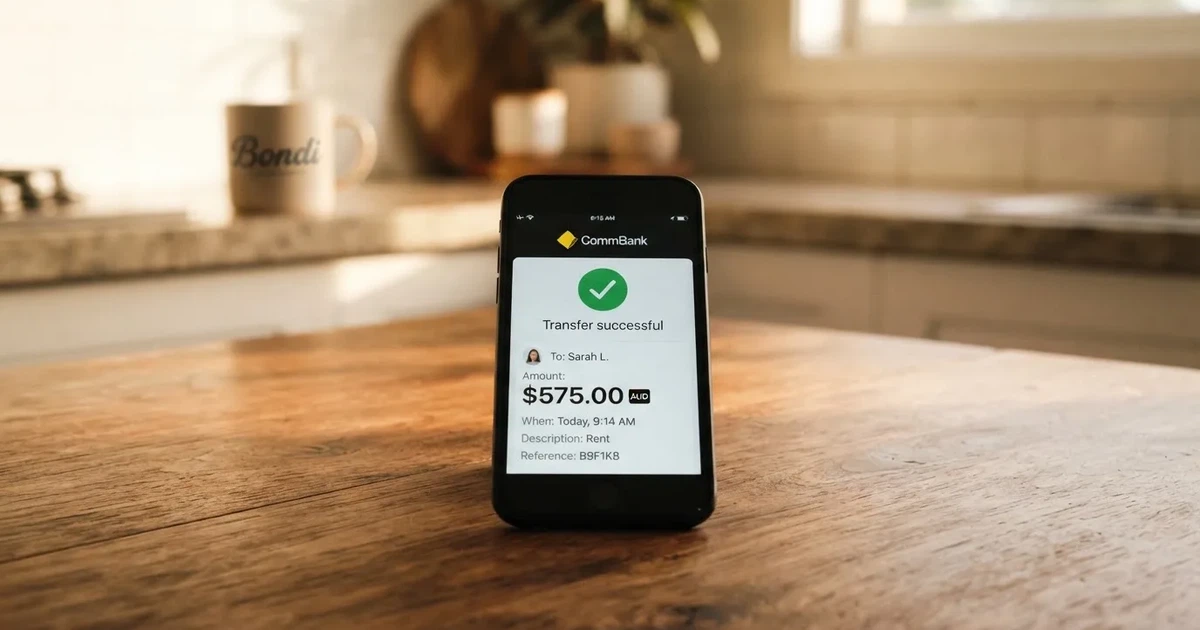
Two things follow from that structure. The first is the obvious one: an e-wallet is only as fast as the rails into and out of it. A transfer from an Australian bank to ecoPayz lands in roughly the time an Osko transfer takes — under a minute, twenty-four hours a day, including weekends. A transfer back, from ecoPayz to an Australian bank, depends on the destination’s rails and on whether a currency conversion sits in the middle. The 5% conversion charge is not hidden; it sits on the page ecoPayz publishes for anyone to read. The second is less obvious: a stored-value wallet that anyone can open without a credit check is also a wallet that an offshore operator can take deposits from without verifying anything about the person on the other end. That is part of why offshore casinos like it, and part of why the regulator has spent 2026 building a record against the brands that accept it.
What the e-wallet does not give you
An e-wallet is a payment method. It is not a consumer-protection scheme. If an offshore casino refuses to pay out, ecoPayz will not arbitrate, refund, or even contact the operator on the holder’s behalf — that is the operator’s job, and the operator is offshore. The wallet can show a transaction record. It cannot enforce the terms that record points to.
That gap matters more than the marketing sounds. Australia’s own licensed wagering market, run under the Interactive Gambling Act, sits behind a complaints body (the Australian Financial Complaints Authority for some disputes, and state gaming regulators for the rest), behind the National Self-Exclusion Register BetStop, and behind rules that ban credit cards and digital currency as a funding route from 11 June 2024. ecoPayz, as a debit-funded e-wallet, would in principle be acceptable on a licensed wagering site — the ban hits credit products and crypto, not stored-value wallets. None of those consumer rails reach an offshore casino. The same method, used offshore, simply moves money there faster.
What the law actually says about offering casino games online in Australia
Online casino games and online pokies cannot be licensed anywhere in Australia. The Interactive Gambling Act 2001, strengthened by the Interactive Gambling Amendment Act 2017, makes it an offence to provide those products to a person physically in Australia. Wagering on races and sporting events placed before the event is licensable, mostly through the Northern Territory Racing and Wagering Commission — which regulates 52 of Australia’s online bookmakers but, according to an ABC report on 7 April 2026, runs with no full-time staff and meets once a month in Darwin. Lotteries and keno fall under separate state regimes. Casino games fall under none.

The Interactive Gambling Amendment (Gambling Reform) Bill 2026 passed Parliament on 19 August 2026; its advertising and inducement measures commence on 1 January 2027. That is a law with a start date, not yet in force. It does not change what is and is not allowed to be offered in the meantime.
Enforcement runs through the ACMA. The regulator investigates, issues formal warnings, and directs Australian internet service providers to block illegal services. The individual player is not the target of prosecution — the IGA points at the provider. But the practical consequences for the player are real: an offshore site gives no Australian consumer protection, no complaints body, and no enforceable right to a withdrawal. And the site itself can be blocked while a balance is still sitting on it.
The ACMA’s enforcement tally to date
By June 2026, a total of 1,751 illegal gambling and affiliate marketing websites had been blocked since the first blocking request in November 2019, and more than 230 unlicensed gambling services had left the Australian market since enforcement was strengthened in 2017. A single round reported on 26 June 2026 asked ISPs to block twelve more — 7Signs, ChromaBet, Donbet, Duospin, Freshbet, Slots Gem, Jacks Club, Lucky Start, Pointsbetz, Spinrise, Vinyl Casino and Wildsino. H2 Gambling Capital’s 2025 report puts annual losses to illegal sites at roughly A$3.9 billion, and notes the share of gambling going through legal channels fell from 74% in 2021 to 64%.
That is the landscape the eleven brands below sit inside. None of them is a recommendation. None of them is legal to play at from Australia. The reason each appears on this page is that the ACMA itself has said so, in writing, and the warning tells you what to expect if you reach the cashier anyway.
What a blocking rate looks like over the years
The arithmetic behind the ACMA’s tally is the page’s factual record. The first blocking request went out in November 2019. By the end of June 2026, the running total of blocked sites and affiliate pages stood at 1,751. That is roughly 1,751 blocked domains spread across about 80 months from the first request to the most recent count — a band of roughly 18 to 26 blocked sites per month on average over that period, with the pace clearly accelerating in the later rounds (twelve in one June 2026 batch alone) and the early months much quieter. The condition that holds the band together: every blocked domain is one the ACMA investigated, found to be offering a prohibited interactive gambling service to Australians, and referred to ISPs. The number does not capture services that left voluntarily, nor does it distinguish a casino brand from an affiliate marketing page that simply points at one.
The conclusion the band supports is blunt: the regulator is not issuing warnings and walking away. It is adding to a list that grows, on the long-run average, by roughly two dozen sites a month, and the pace has visibly quickened. For a brand, a formal warning is the step before a blocking request. For a player, the practical read is the same — the site’s shelf life in Australia is finite, and the closer it sits to a recent warning, the shorter that shelf life is likely to be.
Responsible gambling supports that actually reach Australian players
The responsible-gambling supports an Australian can use sit on the licensed side of the fence, not on the offshore side. BetStop, the National Self-Exclusion Register, has been live since August 2023 — but it binds only Australian-licensed online and phone wagering services. An offshore casino is not connected to it. Self-excluding through BetStop will not stop a deposit going from an Australian bank to ecoPayz to an offshore cashier.
The two supports that do reach an Australian, regardless of where the gambling happens, are the National Gambling Helpline on 1800 858 858 (free, 24/7) and Gambling Help Online, which carries the chat service. State-level self-exclusion registers exist too — New South Wales, Victoria, Western Australia, South Australia, Queensland and Tasmania each run their own schemes that apply to the licensed venues in their state. None of them binds an offshore operator.
A useful framing for anyone reading this page: the responsible-gambling infrastructure in Australia is built around the licensed market, and the offshore market sits outside it. That is what makes the offshore offer what it is — fewer rails in, no rails out when things go wrong, and no support network that can intervene on the player’s behalf if a balance is held or an account is closed.
Deposits and withdrawals through ecoPayz at offshore sites
The mechanics of paying in through ecoPayz at an offshore casino are usually described the same way on the operator’s payments page: deposit from the wallet, withdraw back to the wallet, with settlement inside twenty-four to forty-eight hours on the casino’s side. That description is honest as far as it goes. The parts that matter more are not on it.
The rails underneath
PayID-based instant transfers are available at more than 100 Australian financial institutions; Osko, which runs over the New Payments Platform, moves money between participating banks in under a minute, 24/7. Paying to a PayID shows the recipient’s registered name before the transfer is sent — and AP+ warns that being asked to transfer to a PayID on an illegal gambling site almost certainly means a scam. New Payments Platform Australia Ltd became accessible to the public on 13 February 2018; by April 2025 more than 25 million PayID identifiers had been registered on it. The platform’s participants must keep monthly outages to no more than two minutes, and in 2021 the ACCC authorised merging NPP Australia with BPAY and eftpos into Australian Payments Plus.
What that means for an ecoPayz transaction is that the leg from an Australian bank to the e-wallet is fast and traceable. The leg from the e-wallet to an offshore casino is whatever the casino’s cashier says it is. And the leg back is the one that matters when something goes wrong.
Where the rails stop
AUSTRAC’s threshold-transaction-report rule, which requires reporting of transfers of A$10,000 or more, applies only to physical cash. Ordinary electronic bank transfers are not subject to that per-transaction reporting rule, regardless of the amount. That is a point that often comes up wrongly framed. The bigger rail-side issue is the bank-level gambling block. Westpac’s gambling block works at card level — it refuses authorisation of transactions registered under the merchant category code for betting and casino gambling on eligible personal credit and debit cards. ANZ’s gambling transaction block, activated in the ANZ app, also blocks gambling transactions made through a digital wallet such as Apple Pay on an eligible card, not just the physical card. Once turned on, removing ANZ’s block requires a 48-hour waiting period, and the bank warns that not all gambling transactions will be blocked and some non-gambling transactions might be blocked in error.
By the end of 2025, Apple Pay, Google Pay and Samsung Pay collectively accounted for around 45% of all card payments in Australia by number. Apple itself does not charge consumer fees for using Apple Pay; any surcharge comes from the merchant’s card-processing fees. Apple sets limits and PIN requirements through the card issuer or merchant, not on its own platform. The point that ties all of this together is that the bank-side block sits one layer below the wallet. Whether a deposit reaches ecoPayz from an Australian bank depends on the bank’s own rules, not on the wallet’s. And whether a withdrawal reaches the player back is governed by the offshore casino’s own cashier, with no Australian body able to compel a payout.
The fee shape nobody advertises
A 5% currency-conversion fee is not large enough to keep a player out and not small enough to ignore. If a player loads ecoPayz in Australian dollars and the offshore cashier settles in euros or US dollars, the conversion is taken on the way in. If the withdrawal comes back in the foreign currency and the player converts on the way out, it is taken again. A round trip through one conversion each way costs roughly 10% of the balance moved, before any casino-side edge is applied. None of this is a charge the casino collects; it is a charge the wallet takes on the movement itself, and the marketing around offshore play tends to describe the wallet as “fee-free” because the deposit at the casino is fee-free. The two are different statements.
What the ACMA has actually warned each brand about
The table below sets the eleven brands the ACMA has acted against in 2026 and the recent past against the e-wallet they accept. The “subject support” column reads the listings that research was able to confirm: only Instant Casino has a confirmed listing-level appearance for ecoPayz in the consulted set; the rest sit as no-data here because no listing evidence in the inputs confirms ecoPayz support for them, and the page does not invent it. The “ACMA action and date” column carries the formal warning the regulator published. The “operator named by the ACMA” column carries the corporate entity the warning was issued against — which is not always the same as the brand name.
| Brand | ACMA action and date | Operator named by the ACMA | Subject support |
|---|---|---|---|
| RocketPlay | Formal warning, March 2026 | Pulsup Ltd (RocketPlay) | — |
| Level Up Casino | Formal warning, May 2022 | Dama N.V. | — |
| Woo Casino | Formal warning, March 2025 | Dama N.V. | — |
| Spirit Casino | Formal warning, May 2025 | Dama N.V. | — |
| National Casino | Formal warning, July 2025 | Consolutetish S.R.L. | — |
| Bizzo Casino | Formal warning, July 2025 (earlier 2022, TechSolutions) | Consolutetish S.R.L. | — |
| Ignition Casino | Formal warning, July 2025 | Bamboo Media | — |
| Instant Casino | Formal warning, February 2025 | EOD Code SRL | listings only |
| Jackbit | Formal warning, April 2026 | Ryker B.V. | — |
| Casino Intense | Formal warning, April 2025 | Sterplay Holding Ltd | — |
| Sky Crown | Formal warning (Hollycorn N.V., September 2022) | Hollycorn N.V. | — |
The honest read of the table: every brand sits outside Australian licensing, every one carries a formal warning from the regulator, and only one (Instant Casino) has a confirmed listing-level appearance for ecoPayz in the consulted sources. The other ten are described on affiliate pages as accepting the wallet; the page does not assert what those affiliate pages assert. The rest of what follows takes each row one at a time.
RocketPlay — most recent warning in the set
The ACMA’s formal warning over Rocketplay.com.au went to Pulsup Ltd in March 2026. That makes RocketPlay the most recent addition to the warning list in the eleven-brand set. A second warning on the RocketPlay brand sits in the record from May 2022, against Dama N.V. — the same corporate group that picks up several other warnings below. The brand has changed hands at the operator-of-record level without leaving the regulator’s view.
RocketPlay’s official payment listings do not mention ecoPayz, so the subject column reads as a dash. The page describes what the warning covered, not what the cashier takes.
RocketPlay is the brand a reader should treat as the freshest example of the pattern this page is built around: a recent warning, an offshore operator, no Australian licence for the product being offered, and no Australian complaints body that can move a balance if the operator declines to.
Level Up Casino — same operator as Woo and Spirit
Dama N.V. was the named operator on the May 2022 ACMA warning that covered six casino brands: Bambet, Dazard, Level Up, Rocketplay, Wild Tornado and Cobra Casinos. Three of those — Level Up, Woo and Spirit — appear in the eleven-brand set on this page. The corporate entity recurs across multiple brands in the regulator’s record, which means the warning history is shared in a real sense: the regulator has acted against the operator, not just the brand. A “new” brand with the same operator behind it is not a fresh operator for compliance purposes.
Level Up is the earliest of the three in the warning list. Woo followed in March 2025 and Spirit in May 2025 — both Dama N.V. warnings, eighteen months apart. None of the three has a listing-level appearance for ecoPayz in the consulted sources.
The read that matters: a single operator carrying three warnings is not the same as three unrelated operators. The same parent has been told, formally, to stop — more than once.
Woo Casino — Dama N.V., March 2025
The March 2025 warning over Woo Casino went to Dama N.V., the same operator behind the May 2022 batch and the May 2025 Spirit Casino warning. The page does not assert ecoPayz support for Woo; the listings evidence in the consulted sources does not confirm it.
Woo sits roughly in the middle of the timeline — after the early-2026 ACMA activity, before the most recent Dama N.V. warning in May 2025. For a reader choosing between this brand and the earlier 2022 Dama N.V. brands, the practical read is that the warning is more recent, which means the brand is closer to the blocking step that follows the formal-warning step in the ACMA’s enforcement sequence.
Spirit Casino — Dama N.V., May 2025
The May 2025 warning over Spirit Casino went to Dama N.V., the third in the Dama N.V. sequence covered here. Spirit Casino does not list ecoPayz in official payment disclosures; the subject column reads as a dash.
What Spirit Casino offers, on this page, is a reminder that a warning is a discrete event, not a closure. The brand sits in the regulator’s record, the regulator’s record has been growing by roughly two dozen sites a month over the long run, and the next step after a formal warning is the blocking request that follows. Spirit Casino is the brand a reader is most likely to encounter on an affiliate page right alongside Woo Casino — same operator, almost the same date.
National Casino — Consolutetish S.R.L., July 2025
The July 2025 warning over National Casino went to Consolutetish S.R.L., the same operator named in the parallel Bizzo Casino warning that month. National Casino does not list ecoPayz in official payment disclosures; the subject column reads as a dash.
The Consolutetish pair — National Casino and Bizzo Casino, both July 2025 — is the second clearest example in the set of one operator carrying two warnings at once. Dama N.V. holds the same shape across Level Up, Woo and Spirit. The page describes the warnings; the choice between them is the reader’s, and the choice does not need the page to point at one as a place to play.
Bizzo Casino — Consolutetish S.R.L., July 2025, plus the 2022 TechSolutions warning
Bizzo Casino carries two warnings in the regulator’s record: the July 2025 warning to Consolutetish S.R.L., and an earlier 2022 formal warning to TechSolutions (CY) Group Limited and TechSolutions Group N.V.. That is the only brand in the eleven with two distinct corporate operators on its warning history.
Bizzo Casino has no verified ecoPayz support in official payment disclosures, so the subject column reads as a dash. The relevant read for a player is that the brand has been through two operators and two warnings. A brand that has changed hands under regulatory pressure is not, on this evidence, a stable place to leave a balance.
Ignition Casino — Bamboo Media, July 2025
The July 2025 warning over Ignition Casino went to Bamboo Media. Ignition Casino does not list ecoPayz in official payment disclosures; the subject column reads as a dash.
Ignition Casino sits alongside National Casino and Bizzo Casino in the July 2025 batch — the same month three separate ACMA warnings went out, against three different operators. That is a useful indicator of the regulator’s pace in mid-2025, not of any relationship between the three brands.
Instant Casino — EOD Code SRL, February 2025
The February 2025 warning over Instant Casino went to EOD Code SRL. Instant Casino is the one brand in the eleven with a confirmed listing-level appearance for ecoPayz in the consulted sources — the only one the page can describe as a confirmed payment-method appearance rather than an absence.
That confirmed appearance does not change the legal read. Instant Casino is still offering online casino games to a person in Australia, which is what the ACMA warned EOD Code SRL about. But it is the brand the page can describe honestly as taking ecoPayz deposits at the listings level. For a reader who arrived at this page looking specifically for an offshore site that accepts the wallet, this is the brand the listings evidence actually points at.
The honest framing: a confirmed payment-method appearance is the smallest possible piece of information. It does not speak to payout reliability, complaint handling, or the brand’s chances of remaining reachable. It says only that ecoPayz is listed, in the sources consulted, as a deposit and withdrawal route.
Jackbit — Ryker B.V., April 2026
The April 2026 warning over Jackbit went to Ryker B.V., the same operator named in the parallel CasinOK warning that month. No listing evidence in the consulted sources confirms ecoPayz support for Jackbit, so the subject column reads as a dash.
Jackbit is the second-most-recent warning in the eleven-brand set, after RocketPlay in March 2026. The brand sits in the same enforcement batch as CasinOK — one operator, two brands, one month. The pattern is familiar by now: one warning often travels with several brands under the same operator.
Casino Intense — Sterplay Holding Ltd, April 2025
The April 2025 warning over Casino Intense went to Sterplay Holding Ltd. No listing evidence in the consulted sources confirms ecoPayz support for Casino Intense, so the subject column reads as a dash.
Casino Intense sits in the middle of the timeline — after the early 2025 EOD Code SRL warning, before the July 2025 Consolutetish and Bamboo Media warnings. It is the eleventh brand the page describes and the one with the quietest operator-side footprint in the consulted record; Sterplay Holding Ltd does not recur elsewhere in the eleven-brand set.
Sky Crown — Hollycorn N.V., September 2022
The warning over Sky Crown went to Hollycorn N.V. in September 2022, covering both Sky Crown and Blue Leo. No listing evidence in the consulted sources confirms ecoPayz support for Sky Crown, so the subject column reads as a dash.
Sky Crown is the oldest formal warning in the eleven-brand set, with the September 2022 Hollycorn N.V. action sitting at the back of the timeline. The regulator’s pace has quickened since: a single April 2026 warning over Ryker B.V. covered two brands, a single July 2025 batch covered three warnings across three operators, and the Dama N.V. sequence runs across three brands over three years. Sky Crown marks the floor of the timeline and a useful reminder that a warning from 2022 does not mean a brand has left the market — only that the regulator has spoken.
What a player in Australia is actually choosing
The eleven brands above share three properties. Each has been the subject of an ACMA formal warning. Each offers online casino games to a person in Australia, which is what the warnings were about. None is connected to BetStop, the National Self-Exclusion Register, or the Australian complaints bodies that cover the licensed market. ecoPayz is the payment method this page is built around, and it is confirmed at the listings level for one of them only.
The honest summary the page can offer is short. Accepting ecoPayz does not make a casino legal in Australia. The wallet is a fast, traceable, fee-bearing way to move money between an Australian bank and an offshore cashier. The regulator’s record against the brands that take it is growing. Player protection, in any enforceable sense, sits on the licensed side of the fence, and the licensed side does not include any of the eleven brands above.
For a reader who arrived at this page looking for a recommendation, the recommendation the page can offer is the same one the regulator’s record supports: a licensed Australian wagering service is the only place in the Australian market that is licensed to take bets online, and the only one a complaint can be taken to if something goes wrong. The licensed products are wagering on races and sport placed before the event, lotteries and keno. Casino games are not in that list. ecoPayz, as a stored-value e-wallet loaded by debit, would in principle be an acceptable funding route on a licensed wagering site — and is, for an offshore casino, simply a faster way to reach a cashier the regulator has already asked ISPs to block.
Frequently asked questions
Is it legal for an offshore casino site to accept ecoPayz from an Australian visitor?
No. Under the Interactive Gambling Act 2001, it is an offence to provide online casino games or online pokies to a person physically in Australia, and no state or territory licences those products. The ACMA enforces the prohibition through formal warnings and blocking requests; the operator is the target of prosecution, not the player. EcoPayz is the payment rail, not a defence for the operator.
How quickly does an ecoPayz transaction typically settle?
The leg from an Australian bank to ecoPayz lands as fast as Osko, which moves money between participating banks in under a minute, twenty-four hours a day. The leg from ecoPayz to an offshore casino depends on the operator’s cashier — typically advertised as instant, occasionally held for manual review. The leg back depends on the operator’s withdrawal queue and on whether a currency conversion sits in the middle.
Does using ecoPayz offer any buyer protection if an offshore site refuses to pay out?
No. ecoPayz is a payment method. It can produce a transaction record, but it does not arbitrate disputes, contact the operator on the holder’s behalf, or refund funds an offshore operator declines to release. Buyer protection, in the Australian market, sits behind the licensed wagering regime and the complaints bodies connected to it — none of which reach an offshore casino.
Can ecoPayz be used to fund a licensed, land-based venue in Australia the same way it’s used online?
Land-based gaming in Australia operates under state and territory rules that govern cash, EFTPOS and ticket-in-ticket-out machines at the venue. EcoPayz is an online stored-value wallet; whether it can fund a specific venue depends on that venue’s own payment terms. The product the e-wallet is most commonly used for in Australia is funding an offshore casino cashier, which is what this page is about.
What deposit limits are commonly attached to ecoPayz at offshore casino sites?
The e-wallet itself does not impose a deposit ceiling for offshore use. The limits that bite are the operator’s: minimum and maximum deposit amounts at the cashier, daily or per-transaction caps the operator sets, and currency-conversion fees of 5% on any transaction that crosses currencies. On the bank side, Westpac’s gambling block operates at card level on the merchant category code, and ANZ’s block also covers gambling transactions through digital wallets on an eligible card, with a 48-hour wait to remove.
Why might a bank block an ecoPayz transaction flagged as gambling-related?
Banks in Australia operate gambling blocks at the card level. Westpac’s block refuses authorisation on transactions registered under the merchant category code for betting and casino gambling; ANZ’s block, activated in the app, covers gambling transactions made through a digital wallet on an eligible card as well. EcoPayz itself is not a gambling merchant, so a direct top-up from a bank to the wallet does not trip the block — but a card-funded top-up may, depending on how the transaction is coded.