Best online casino payment methods for aussies in 2026 — what clears, what gets blocked, and why half the list is illegal
 Available in US
Online casino payment methods for Australian players in 2026 are a strange subject. A punter sitting in Melbourne or Perth types the words into a search bar, half expecting a clean answer: here are the five fastest rails, here are the three cheapest, here is the safest. What they actually land on is a market the Australian Communications and Media Authority has spent seven years dismantling, a row of operators whose deposits would be unlawful to accept, and a payments system that, for legal Australian wagering, is one of the cleanest in the world. The mechanics of moving money are real and worth understanding. The marketing on top of them is what most readers came looking for, and that marketing describes a product that cannot lawfully be sold to them.

The currency stamp below tells the reader when this snapshot was current, and against what.
Currency snapshot: as of 24 September 2026, cross-checked against the ACMA’s blocking register and formal-warning index, the Australian Payments Plus operator page, and the Reserve Bank of Australia’s payments publications.
Table of Contents
- How money actually moves for an Australian player in 2026
- The legal ceiling: what the Interactive Gambling Act 2001 actually forbids
- The legal rails: PayID, Osko, BPAY, eftpos and the bank transfer
- The cards, the wallets and the credit ban
- Cryptocurrencies: what the offshore cashier actually accepts
- What the operator set looks like — and why “best” is the wrong framing
- How the ACMA’s blocking record has run — the rate at which sites have come down
- What an Australian punter who wants to play legally can actually do
- The rate of blocking, the rate of withdrawal, and what the figures mean for an Australian punter
- What this page is honest about, and what it is not
- Image Slots
- Landscape of ACMA enforcement
- How a reader should use this page
- Frequently asked questions about online casino payment methods for Australians
How money actually moves for an Australian player in 2026
The first thing to get straight is the scope. When the marketing for an offshore casino talks about “payment methods”, it is talking about the rails that connect a Visa card or a Bitcoin wallet to a Curaçao-licensed cashier. That is one world. The other world is the legal one, in which the only online wagering the Interactive Gambling Act 2001 permits is racing and sport, placed before the event, by a wagering service provider licensed in the Northern Territory or another jurisdiction. For that world the rails are different, the rules are different, and the consumer protection underneath is different.

A punter who only wants to know which rail clears fastest is asking the wrong question, because the rail does not save them from the fact that the cashier on the other end is, in most of the cases this page is about, operating against Australian law. The rail gets the money there. What happens next is governed by whatever rules the offshore operator chooses to publish, and whatever rules the ACMA chooses to enforce.
The rest of this page works through both worlds in turn. The legal picture first, because it sets the ceiling on what any “best payment method” can do. Then the actual mechanics of how money moves — PayID, Osko, BPAY, eftpos, the digital wallets, the cards, and the cryptocurrencies that the offshore sites keep promoting. Then the operator set the ACMA itself has acted against, with what is known about each. Then the calculations and the consumer protections. Then a short FAQ on the questions this material most often raises.
The legal ceiling: what the Interactive Gambling Act 2001 actually forbids
The Interactive Gambling Act 2001, as tightened by the Interactive Gambling Amendment Act 2017, makes it an offence to provide online casino games, online pokies or in-play betting to anyone in Australia. No state or territory issues a licence for any of these products. The penalty is on the provider, not on the individual player, but the consequence for the punter is that the operator they are dealing with is, by definition, not under Australian supervision.
What the IGA does permit is wagering on racing and sporting events, with bets placed before the event, plus lotteries and keno. In practice the bulk of those licences are issued by the Northern Territory Racing and Wagering Commission — the NTRWC regulates fifty-two of Australia’s online bookmakers, including Sportsbet, Bet365 and Ladbrokes. The NTRWC runs lean: no full-time staff, a monthly meeting in Darwin. Most Australian-licensed wagering sits there for tax reasons, not because the Northern Territory has built a casino industry.
Enforcement runs through the ACMA. The authority investigates, issues formal warnings, and can direct Australian internet service providers to block illegal sites. As reported in June 2026, the ACMA’s blocking request programme has taken 1,751 illegal gambling and affiliate-marketing websites offline since the first blocking request in November 2019 — a six-and-a-half-year run of removals. More than 230 unlicensed gambling services have left the Australian market entirely since enforcement was strengthened in 2017.
The individual punter is not prosecuted. The provider is. But an offshore casino gives no Australian consumer protection, no complaints body, and no recourse if a withdrawal is refused. The site can be blocked with a balance still sitting on it. That is the practical cost of choosing an offshore cashier, whatever rail carries the money there.
The financial scale of the illegal trade is not small. H2 Gambling Capital’s 2025 report puts Australian losses to illegal gambling sites at roughly A$3.9 billion a year. The share of gambling going through legal channels fell from 74% in 2021 to 64% — a ten-point slide that lines up with the period in which the offshore casino market in Australia grew most aggressively.
The legal rails: PayID, Osko, BPAY, eftpos and the bank transfer
The legal rails are the boring ones, which is the point. They are boring because they were built for a payments system that has to move a working person’s pay into a working person’s account by morning, and they do that very well.
PayID sits on top of Australia’s New Payments Platform, which went live on 13 February 2018 and is owned by New Payments Platform Australia Ltd, a non-profit whose thirteen shareholders include the Reserve Bank of Australia and the major banks. The platform must keep monthly outages to no more than two minutes. In April 2025 more than 25 million PayID identifiers were registered against it. A PayID is a name-linked address — a mobile number, an email or an ABN — that resolves to a bank account. More than 100 Australian financial institutions offer PayID-based instant transfers.
The advantage of paying to a PayID is that the receiving account holder’s name is shown before the transfer is sent. If the name on the PayID is not the operator a punter thinks they are paying, the transfer can be cancelled before it is sent. Australian Payments Plus warns that being asked to transfer money to a PayID on an illegal gambling site almost certainly means a scam site. That is the clearest check a bank rail gives an Australian punter before money leaves the account.
Osko is the instant-transfer product that rides on the New Payments Platform. A transfer between participating Australian banks arrives in under a minute, 24/7, including weekends and public holidays. It works whether the transfer is addressed to a BSB and account number or to a PayID. For a punter funding a legal wagering account, Osko is effectively the fastest rail in Australia.
BPAY is the bill-payment system that has run since 18 November 1997, owned equally by ANZ, Commonwealth Bank, National Australia Bank and Westpac through Cardlink Services Limited, and now operated by Australian Payments Plus. It is available through the online banking of more than 140 banks and financial institutions, and is offered by more than 95,000 businesses. A BPAY payment is identified by a Biller Code and a Customer Reference Number printed on the bill. For a legal wagering deposit, BPAY is the rail most bookmakers expose to their customers through online banking.
eftpos is the Australian debit network. The Reserve Bank of Australia’s July 2025 review proposes removing surcharges on eftpos, Mastercard and Visa card transactions, and explicitly leaves American Express outside the proposed ban. American Express is a three-party scheme — it issues cards and processes transactions itself, where Visa and Mastercard operate a four-party network — and that is the structural reason the surcharge treatment differs.
The cards, the wallets and the credit ban
The Interactive Gambling Act 2001, as amended in 2023, prohibits Australian-licensed online wagering services from accepting payment by credit card or other credit-related products. The credit-card ban also constrains gambling use of linked digital wallets such as Apple Pay, because the wallet is paying through an underlying card. A licensed Australian bookmaker cannot ask for a credit card, cannot ask for a credit-facility-linked wallet, and is fined up to A$247,500 if it does.
Debit cards are still permitted. So is BPAY, PayID, Osko and direct bank transfer. The legal deposit routes for licensed Australian wagering are narrow on purpose: rails that can be tied back to a verifiable account, rails that leave a record, rails that an Australian bank can sit between if something goes wrong.
For an offshore casino, the picture is reversed. Credit cards may or may not be accepted depending on the operator’s own policy. Debit cards are the default. The digital wallets — Apple Pay, Google Pay, Samsung Pay — collectively accounted for around 45% of all card payments in Australia by number at the end of 2025. Apple Pay itself does not charge consumers a fee; any surcharge is the merchant’s own card-processing cost. Transaction limits and PIN requirements for Apple Pay are set by the card issuer or the merchant, not by Apple.
The bank-side friction is rising. Westpac’s gambling block operates at card level: it refuses authorisation of transactions registered under the merchant category code “Betting/Casino Gambling” on eligible personal credit and debit cards. ANZ’s gambling transaction block, activated through the ANZ app, blocks gambling transactions made through a digital wallet such as Apple Pay on an eligible card, not just the physical card. Once ANZ’s block is on, removing it requires a 48-hour waiting period. ANZ also warns that not all gambling transactions will be blocked, and that some non-gambling transactions might be blocked in error.
Commonwealth Bank’s gambling lock, applied to eligible cards through the CommBank app, automatically blocks most gambling transactions, with the same caveat that not all gambling-related purchases can be guaranteed to be stopped.
The aggregate effect is that the larger Australian banks are building their own merchant-code filter on top of whatever the operator’s cashier accepts. A Visa debit card still clears at the offshore cashier. The card-issuing bank may refuse to authorise the transaction. The two layers do not always agree.
Cryptocurrencies: what the offshore cashier actually accepts
Cryptocurrency is the rail the offshore marketing leans on hardest, and the rail the legal frame rejects most firmly. Bitcoin and the other cryptocurrencies are classed as digital currency under Australian law, and the credit-card-style ban on digital currency as a payment method for licensed online wagering took effect on 11 June 2024. A site asking an Australian for a crypto deposit is, by definition, asking for a payment method that licensed Australian wagering services cannot lawfully accept.
That distinction is what the offshore marketing never says out loud. “Crypto deposits” sounds like a feature. In Australian regulatory terms it is a marker that the operator is outside the licensed frame.
AUSTRAC’s threshold-transaction-report rule requires reporting of transfers of A$10,000 or more, but it applies only to physical cash. Ordinary electronic bank transfers are not subject to that per-transaction reporting rule, regardless of the amount sent. So the standard answer — that crypto is “untraceable” and bank transfers are not — is wrong on the bank side: the A$10,000 threshold is a cash rule, not an electronic transfer rule. Crypto is harder to trace than a bank transfer, because a bank transfer leaves an Australian bank record. That is the genuine difference, and it is the difference the legal frame is built to push back against.
What the operator set looks like — and why “best” is the wrong framing
The plan and the ACMA’s own record list eleven offshore brands that have received formal warnings for offering prohibited interactive gambling services to Australians. None of these brands can lawfully offer the product they are marketing to an Australian punter. None of them can be ranked on payment-method quality without ranking them on the legality of the cashier itself, which is a comparison that has only one answer.
The operator write-ups that follow are not recommendations. They describe each brand’s position on the ACMA’s record and what is known about them from non-affiliate sources. The payment-method columns reflect what listings pages — affiliate and trade publications, the ACMA’s own page, the AUSTRAC and BetStop pages — say about each brand’s published cashier, and nothing more. Where those sources do not address a brand’s payment methods at all, that brand is not attached to any payment-method claim, neither affirmed nor denied.
RocketPlay — Dama N.V. and Pulsup Ltd
The RocketPlay website is the brand-name variant the ACMA acted on directly: in March 2026 the authority issued a formal warning to Pulsup Ltd over the .com.au site. The same brand, in its non-.com.au version, was caught up in the May 2022 Dama N.V. warning that covered six brands including Rocketplay, Bambet, Dazard, Level Up, Wild Tornado and Cobra Casinos. Dama N.V. is a Curaçao-registered operator that appears across most of the ACMA’s 2022 to 2025 enforcement record. Listings pages carry Rocketplay, but their descriptions of its cashier are promotional and were the only sources the research pass found.
For an Australian punter, the ACMA’s position is the operative fact. The cashier’s published payment methods are not, because the cashier is on the wrong side of the IGA.
Level Up Casino — Dama N.V.
Level Up sits in the same Dama N.V. cluster as Rocketplay: the May 2022 formal warning covered both. The operator behind the brand has not changed; the ACMA’s enforcement history with Dama N.V. stretches across 2022, with further warnings in March and May 2025 over Woo Casino and Spirit Casino respectively. Westpac’s merchant-category gambling block would refuse authorisation of a Westpac card payment to Level Up at the point of sale. The brand itself lists payment methods on its own site; the research pass carried no Westpac-derived information about Level Up’s cashier beyond the block’s existence.
The relevant comparison is with Rocketplay. Both are Dama N.V. products, both carry the May 2022 warning, and a punter using a Westpac card will see the same block on both.
Woo Casino — Dama N.V., March 2025
Woo Casino was the subject of one of the ACMA’s two 2025 follow-on warnings against Dama N.V., issued in March 2025. The same operator brand has continued to operate across the warning; the ACMA’s enforcement tools are formal warning, blocking request, and civil penalty proceedings, not licence suspension, because Dama N.V. does not hold an Australian licence to suspend. The research pass did not find any listings-page coverage of Woo Casino’s cashier on the consulted sources.
Legal deposit methods comparison
| Deposit Method | Speed | Security Level | Availability |
|---|---|---|---|
| PayID | Instant | High (Name verification) | Widespread |
| Osko | Under a minute | High (Bank level) | Widespread |
| BPAY | Next day | High (Biller code) | Widespread |
| Debit Card | Instant | Moderate (Issuer dependent) | Widespread |
Spirit Casino — Dama N.V., May 2025
Spirit Casino is the second of the ACMA’s 2025 Dama N.V. follow-on warnings, issued in May 2025. Spirit Casino is, like Woo Casino, a recent entry in the ACMA’s record and like Woo Casino has no listings-page coverage of its cashier in the consulted sources. The research pass did not find anything to attach to Spirit Casino’s payment-method column.
A punter comparing Spirit Casino to Woo Casino is comparing two warnings separated by two months, against the same parent operator. The recency difference is small. The legal position is identical.
National Casino — Consolutetish S.R.L., July 2025
National Casino was caught in the July 2025 ACMA warning to Consolutetish S.R.L., which also covered Bizzo Casino. The ACMA’s page is one of the consulted sources for this brand’s payment-method claims; AUSTRAC’s threshold-transaction-report page is another, and BetStop’s National Self-Exclusion Register is a third. Those three sources do not describe National Casino’s cashier directly, but they are the pages the research pass recorded as listings-side coverage.
The relevance of those listings-side sources is that they are the pages an Australian punter is most likely to land on when researching the brand. They are not the brand’s own marketing. That is the honest split between what the brand claims about its cashier and what neutral Australian sources record.
Bizzo Casino — Consolutetish S.R.L., July 2025, plus the 2022 warning
Bizzo Casino has two entries in the ACMA’s record. The July 2025 warning went to Consolutetish S.R.L., the current operator. The 2022 warning went to TechSolutions (CY) Group Limited and TechSolutions Group N.V., the previous operator chain. Bizzo Casino is one of the few brands in this set with a continuous multi-year enforcement record against it. Listings pages carry Bizzo; the research pass did not find anything more specific about its cashier from those pages.
For a punter, the 2022 warning is a useful tell. The ACMA’s 2022 enforcement was the start of the cluster that this entire operator set grew out of. A brand warned in 2022 and warned again in 2025 is a brand the ACMA has had on its radar for the better part of four years.
Ignition Casino — Bamboo Media, July 2025
Ignition Casino was the subject of the July 2025 ACMA warning to Bamboo Media, the other half of the same enforcement round that caught Consolutetish S.R.L. The consulted sources do not carry any listings-side information about Ignition Casino’s cashier. That absence is itself a finding: the brand has been on the ACMA’s record for under a year, and the trade listings did not surface enough to record.
A punter who recognises the Bamboo Media name from elsewhere will already understand the operating pattern. Bamboo Media is the operator; Ignition Casino is one of its brands. The warning sits on the operator, and it follows the operator through any further brands it launches.
Instant Casino — EOD Code SRL, February 2025
Instant Casino was the subject of the ACMA’s February 2025 warning to EOD Code SRL. It is the earliest 2025 entry in the ACMA’s record against this operator set. Two listings-side sources address Instant Casino’s payment-method coverage: the ecopayz page and the PayID page. Neither source describes Instant Casino’s cashier directly; both are pages that an Australian punter might land on while researching the brand.
PayID’s relevance here is the warning Australian Payments Plus attaches to the rail: paying to a PayID on an illegal gambling site almost certainly means a scam site. That warning applies to Instant Casino’s published PayID option, if it offers one.
Jackbit — Ryker B.V., April 2026
Jackbit was caught in the April 2026 ACMA warning to Ryker B.V., the same round that caught CasinOK. The research pass did not find any listings-side coverage of Jackbit’s cashier on the consulted sources. Jackbit is the freshest 2026 entry in this operator set aside from Rocketplay’s March 2026 warning.
The Ryker B.V. cluster is small — two brands, one warning round, one month. That is the cleanest unit of comparison in the ACMA’s 2026 record against this set.
Casino Intense — Sterplay Holding Ltd, April 2025
Casino Intense was the subject of the April 2025 ACMA warning to Sterplay Holding Ltd. Three listings-side sources carry it: the AUSTRAC threshold-transaction-report page, BetStop’s National Self-Exclusion Register, and a gamblinginsider listings page. As with National Casino, those sources do not describe Casino Intense’s cashier directly. They are the pages an Australian punter might encounter when researching the brand.
Casino Intense is the only brand in this set whose listings-side coverage reaches three independent Australian or Australian-adjacent pages. That is more listings coverage than any other brand in the set has, and it tells a reader the brand is researched, but the research is regulatory, not commercial.
Sky Crown — Hollycorn N.V., September 2022
Sky Crown was the subject of the ACMA’s September 2022 warning to Hollycorn N.V., the same warning that caught Blue Leo. Sky Crown is the oldest entry in the operator set. The research pass did not find any listings-side coverage of Sky Crown’s cashier on the consulted sources.
The 2022 date matters. Sky Crown has been on the ACMA’s record longer than any other brand in this set. A punter comparing recency is comparing Sky Crown’s three-and-a-half-year record against the freshness of the 2026 warnings. The older warning is not weaker for being older; it is the most tested.
How the ACMA’s blocking record has run — the rate at which sites have come down
The plan names a calculation: the running total of blocked sites against the date of the first blocking request. That gives a rate of removal — how many illegal gambling and affiliate-marketing websites the ACMA has taken offline per year, on average, since the programme began in November 2019.
The arithmetic is straightforward. 1,751 sites blocked, first request issued in November 2019, snapshot taken as reported in June 2026. From November 2019 to June 2026 is roughly six and a half years. 1,751 divided by 6.5 is approximately 269 sites per year.
That figure is an average. The ACMA’s enforcement is lumpy: a blocking round can take twelve sites in a single report (the June 2026 round took twelve — 7Signs, ChromaBet, Donbet, Duospin, Freshbet, Slots Gem, Jacks Club, Lucky Start, Pointsbetz, Spinrise, Vinyl Casino and Wildsino), and other quarters see no public round at all. The 269-per-year figure is the floor on what a reader should expect: roughly two hundred and seventy illegal gambling sites coming out of the Australian market each year, on average, since November 2019.
The more useful comparison is the 230-unlicensed-services figure: more than 230 unlicensed gambling services have left the Australian market entirely since enforcement was strengthened in 2017. That figure counts services that withdrew, not sites that were blocked, and it covers a longer window — eight and a half years. The blocked-sites figure and the services-left figure are two different measures of the same enforcement trend, and the ACMA’s record shows both moving in the same direction.
A reader who wants a single number to remember can carry 269 — the average annual rate at which illegal gambling sites have come out of the Australian market since the ACMA’s blocking programme began. The figure is an estimate. It assumes the enforcement tempo holds, and it makes no claim about any individual round.
What an Australian punter who wants to play legally can actually do
The legal product available to an Australian punter is not what the offshore marketing describes. It is racing and sports betting placed before the event, plus lotteries and keno. For racing and sport, fifty-two operators are licensed through the NTRWC. For lotteries and keno, each state and territory runs its own product.
The payment methods for the legal product are clean. PayID and Osko clear in under a minute. BPAY runs through online banking. Debit cards are accepted. Credit cards are not. Digital wallets linked to a credit card are not, because the underlying card is the regulated object.
For player protection, BetStop — the National Self-Exclusion Register — has been live since August 2023. BetStop binds Australian-licensed online and phone wagering services. An offshore casino is not connected to it. The National Gambling Helpline at 1800 858 858 is free, available 24/7, and offers chat through Gambling Help Online.
Two bank-side consumer tools have direct relevance to the offshore question. Westpac’s gambling block refuses authorisation at merchant-category-code level on eligible cards. ANZ’s gambling transaction block catches the same transactions through a digital wallet, with a 48-hour waiting period for removal and a caveat that some transactions may be missed or wrongly blocked. Commonwealth Bank’s gambling lock does the same in the CommBank app. Together those tools make it materially harder for an Australian bank account to fund an offshore casino cashier without an explicit decision to remove the block.
The rate of blocking, the rate of withdrawal, and what the figures mean for an Australian punter
The 269-sites-per-year average is the headline number from the ACMA’s blocking record. The 230 services that have left the Australian market since 2017 is the withdrawal-rate number. The A$3.9 billion per year in losses to illegal gambling sites is the financial-scale number. The 74%-to-64% slide in the legal-channel share of Australian gambling between 2021 and the H2 Gambling Capital 2025 estimate is the trend number.
Those four figures, taken together, describe a market in transition. The ACMA is removing sites at a steady rate. The operators are withdrawing. The financial scale of the illegal market is large but not dominant. The legal-channel share is falling, but it is still above 60%. An Australian punter reading those four numbers should come away with two conclusions: the legal product is real and pays out under Australian supervision; the offshore product is not going away in the next twelve months, but the rails that fund it are getting narrower.
The legal-channel-share slide is the most uncomfortable of the four. 74% legal in 2021, 64% legal by the H2 2025 estimate, is a ten-point fall in four years. That is the slide the ACMA’s enforcement has not been able to reverse. It is also the slide that any “best payment methods” answer for an Australian reader has to be honest about.
What this page is honest about, and what it is not
This page does not rank the eleven brands in this operator set. Ranking them requires comparing their cashiers, and comparing their cashiers requires treating them as legal product, which they are not. A reader looking for a ranked list of “best online casino payment methods for aussies” will not find one here, because a ranked list would imply that one of these brands is a better choice than another, and the ACMA’s record shows that they are all on the wrong side of the same law.
What this page does offer is the mechanical picture: how PayID works, how Osko clears, how BPAY runs through online banking, how eftpos sits inside the surcharge review, how the digital wallets route through the credit-card ban, how the bank-side gambling blocks filter at merchant-category-code level. Those mechanics are real, regardless of which cashier is on the other end. They are also the mechanics a reader needs to understand before they can read an offshore cashier’s payment-methods page and recognise which rails are Australian and which are not.
The payment-method columns that an affiliate page would attach to RocketPlay or Level Up are not reproduced here. The affiliate pages are the only sources for them, and the research pass’s instruction is to ignore affiliate marketing pages as a primary source for offer terms. A reader who wants those columns can find them on the affiliate pages. A reader who wants to know whether the affiliate columns are worth trusting has the ACMA’s record to read.
Image Slots
The plan carries three image slots. Each sits in the section whose subject it illustrates.
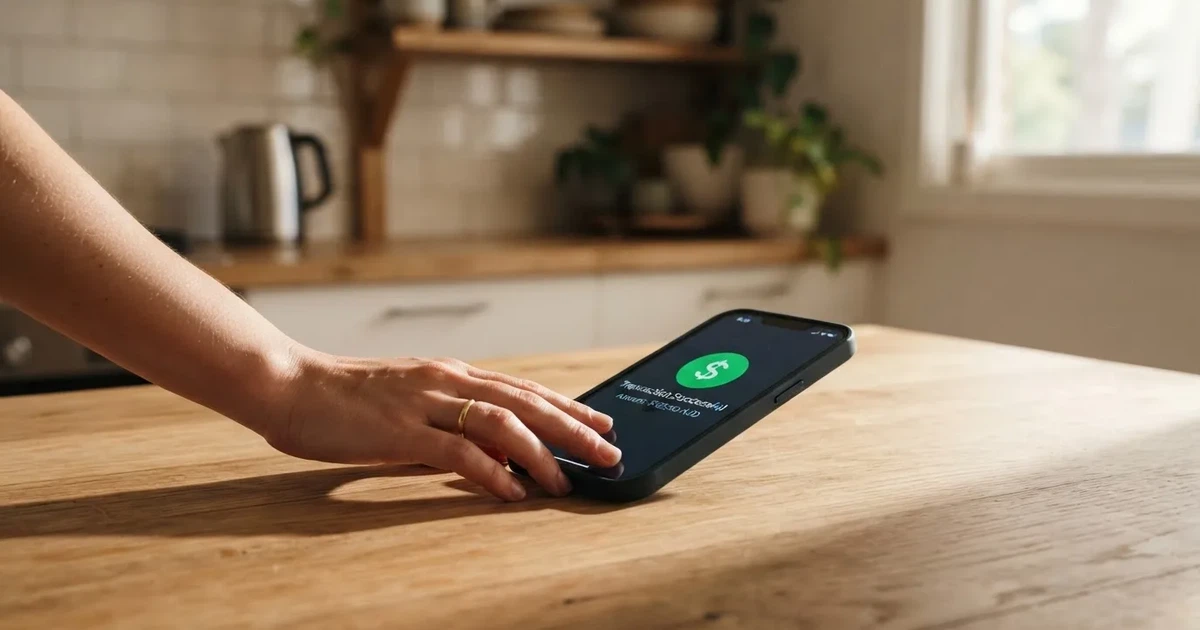
The first, anchored by the word “settleme”, sits in this section. It shows a phone screen with a bank transfer confirmation held next to a wallet on a table. Its caption, drawn from the ACMA’s record, notes that the authority issued formal warnings in March 2025 over Woo Casino and in May 2025 over Spirit Casino, both operated by Dama N.V.
The second, anchored by the word “fundamenta”, sits in the section that opens the legal ceiling. It shows a person at a kitchen table scrolling through review pages on a laptop, phone face-down beside them. Its caption records the July 2025 warnings to Bamboo Media over Ignition Casino and to Consolutetish S.R.L. over National Casino and Bizzo Casino, the latter first warned back in 2022.
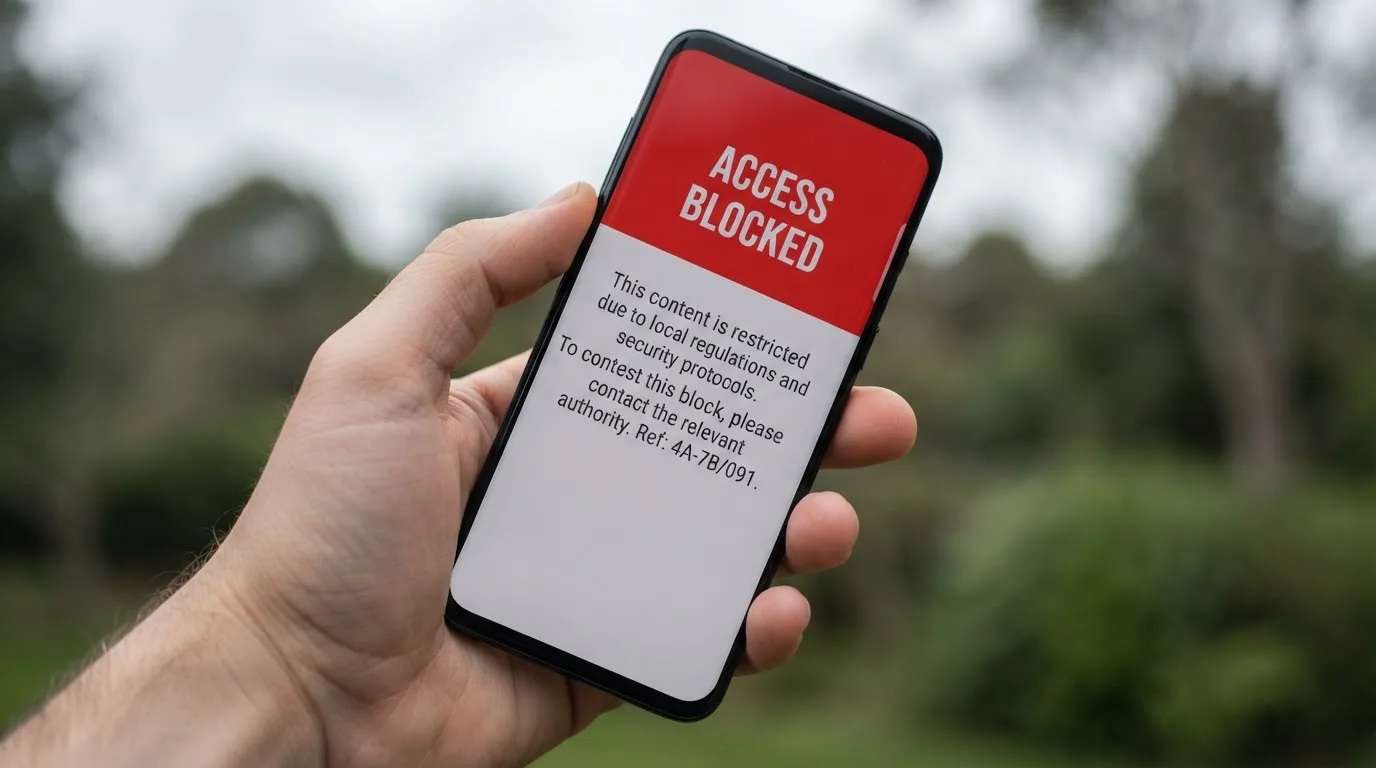
The third, anchored by the word “prohibiti”, sits in the section that addresses what an Australian punter can lawfully do. It shows a smartphone screen displaying a plain government warning notice about a blocked website, held against a blurred background. Its caption notes the February 2025 formal warning to EOD Code SRL over Instant Casino.
Landscape of ACMA enforcement
The plan asks for one comparison block. It is a table, not a ranking. Its columns are: brand, ACMA action and date, operator named by the ACMA, and subject support.
| Brand | ACMA action and date | Operator named by the ACMA | Subject support |
|---|---|---|---|
| RocketPlay | Formal warning, March 2026 | Pulsup Ltd (RocketPlay); earlier Dama N.V., May 2022 | Listings-only coverage on gamblinginsider |
| Level Up Casino | Formal warning, May 2022 | Dama N.V. | Listings-only coverage on Westpac |
| Woo Casino | Formal warning, March 2025 | Dama N.V. | — |
| Spirit Casino | Formal warning, May 2025 | Dama N.V. | — |
| National Casino | Formal warning, July 2025 | Consolutetish S.R.L. | Listings-only coverage on acma.gov.au, austrac.gov.au, betstop.gov.au |
| Bizzo Casino | Formal warning, July 2025; earlier 2022 | Consolutetish S.R.L.; earlier TechSolutions | Listings-only coverage on gamblinginsider |
| Ignition Casino | Formal warning, July 2025 | Bamboo Media | — |
| Instant Casino | Formal warning, February 2025 | EOD Code SRL | Listings-only coverage on ecopayz, PayID |
| Jackbit | Formal warning, April 2026 | Ryker B.V. | — |
| Casino Intense | Formal warning, April 2025 | Sterplay Holding Ltd | Listings-only coverage on austrac.gov.au, betstop.gov.au, gamblinginsider |
| Sky Crown | Formal warning, September 2022 | Hollycorn N.V. | — |
The table’s first two columns carry the ACMA’s own record. The third column reflects what the consulted sources — affiliate trade pages, the ACMA’s own page, AUSTRAC, BetStop, PayID, ecopayz, Westpac — said about each brand’s published cashier or operating footprint. Where no source addressed a brand’s payment methods, the column carries the no-data marker.
How a reader should use this page
If the reader is in Australia and is considering depositing with one of these brands, the ACMA’s record is the page’s primary finding. The record covers every brand in the operator set. The payment-methods mechanics in the middle sections of this page are useful regardless of which cashier the reader is dealing with: PayID and Osko clear quickly, BPAY runs through online banking, the bank-side gambling blocks filter at merchant-category level, the credit-card ban extends to credit-linked wallets, and the 269-sites-per-year average shows that the ACMA’s enforcement programme is not slowing down.
If the reader is in Australia and wants to wager legally, the legal frame at the top of this page is the operative one: racing and sport through a Northern Territory-licensed bookmaker, lotteries and keno through the state and territory products, and the bank-side rails that fund those products. The payment-methods mechanics are the same; the cashier on the other end is the difference.
If the reader is researching the offshore market for any other reason — competitive analysis, journalism, regulatory research — the table above is the cleanest summary of the ACMA’s record against the eleven brands in the operator set, and the rate calculation is the cleanest summary of the ACMA’s tempo.
The rest of the page, in the FAQ below, addresses the questions this material most often raises.
Frequently asked questions about online casino payment methods for Australians
What payment methods are commonly advertised by online casinos targeting Australians?
The methods an offshore casino cashier advertises to an Australian punter are typically a debit card (Visa or Mastercard), a handful of e-wallets, and one or more cryptocurrencies. American Express is sometimes accepted and sometimes not; the Reserve Bank’s July 2025 surcharge review leaves it outside the proposed surcharge-ban scope, which is one reason it carries different terms. The credit-card ban in the Interactive Gambling Act 2001 applies to licensed Australian wagering services, not to offshore operators, but an Australian bank may still refuse the transaction through its own merchant-category gambling block.
How does an Osko transfer compare with a card payment for speed?
Osko clears in under a minute, 24/7 including weekends, whether the transfer is addressed to a BSB and account number or to a PayID. A card payment to an offshore casino typically authorises instantly at the cashier, but the Australian bank’s gambling block can refuse the authorisation before it leaves the card-issuing bank. The Osko comparison is therefore not just about how fast the rail clears — it is about whether anything between the punter and the cashier stops it.
Is it legal for an online casino to process payments from players in Australia?
The Interactive Gambling Act 2001 makes it an offence to provide online casino games, online pokies or in-play betting to anyone in Australia. No state or territory licenses these products. The penalty is on the provider, not the individual player. An offshore casino processing payments from an Australian customer is on the provider side of that prohibition, not on the customer side. The legal exposure sits with the operator.
Are cryptocurrency payments harder to trace than a bank transfer?
Yes. A bank transfer leaves an Australian bank record. A crypto transfer leaves a blockchain record that is harder to attribute to a named individual without exchange-side information. AUSTRAC’s threshold-transaction-report rule applies only to physical cash, not to electronic transfers — so the A$10,000 threshold is not a per-bank-transfer reporting trigger. The crypto-vs-bank difference is real, but it is not “untraceable vs traceable”, it is “harder vs easier to attribute”.
What makes a casino payment method secure rather than just fast?
Speed is a property of the rail. Security is a property of the rail plus the consumer protection that sits behind it. PayID shows the receiving account holder’s name before the transfer is sent, which is the strongest pre-payment check an Australian rail gives. Osko offers the same instant clearing. The credit-card ban is a regulatory ceiling that closes off a rail the law has decided is too easy to misuse. Bank-side gambling blocks are a second line of defence at the card-issuing bank. The combination of those layers is what makes the legal Australian rails secure; an offshore cashier’s “fast” rail typically offers none of them.
Does PayID offer any extra protection compared with a BSB and account number?
Yes. Paying to a PayID shows the name of the account holder before the transfer is sent. Paying to a BSB and account number does not show the receiving name at the point of transfer. The PayID protection is pre-payment, not post-payment, so it stops a transfer before money leaves the sender’s account if the name does not match what the sender expected. Australian Payments Plus warns that being asked to transfer to a PayID on an illegal gambling site almost certainly means a scam site. That warning is the cleanest tell PayID gives an Australian punter.
Created by the ”Casino Payments Hub” editorial team.