
Same-day payout casinos in Australia in 2026: what the promise hides and what the regulator has done about it
The phrase “same day payout” sells the part of an offshore casino experience Australians notice most when they want to leave: how long the money takes. It does not change the part that matters before that — whether the site is even permitted to take Australians in the first place. This page lays out what the marketing claim points to, the Australian law that surrounds it, the practical settlement mechanics a transfer actually goes through, and the eleven brands the ACMA has acted against specifically because they kept offering these services here.
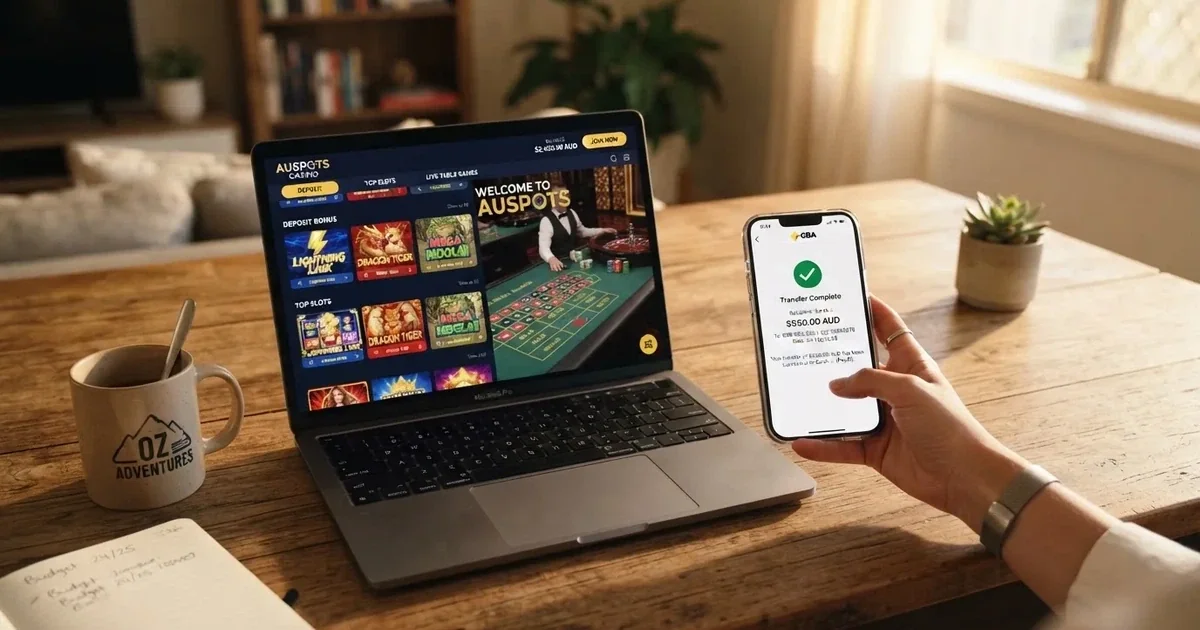
Current as of 31 October 2026. Licence claims and ACMA action dates verified against the ACMA’s formal warning register and the public blocking notices.
Table of Contents
- Why “same day payout” is a marketing promise before it is a transaction
- The legal frame Australians actually live inside
- How ACMA enforcement actually moves against these sites
- The arithmetic behind the enforcement pace
- Where player protection actually sits
- What “same day payout” actually means at the payment rail
- The credit-card and wallet environment around the cashier
- H2 Gambling Capital’s reading of the illegal market
- The eleven brands the ACMA has formally warned
- RocketPlay — the most recent Dama-related warning
- Level Up Casino — original Dama 2022 warning
- Woo Casino — Dama’s 2025 follow-up
- Spirit Casino — Dama’s second 2025 warning
- National Casino — Consolutetish S.R.L., July 2025
- Bizzo Casino — the repeat-offender case
- Ignition Casino — Bamboo Media, July 2025
- Instant Casino — EOD Code SRL, February 2025
- Jackbit — Ryker B.V., April 2026
- Casino Intense — Sterplay Holding Ltd, April 2025
- Sky Crown — Hollycorn N.V.
- What an Australian-facing player actually faces at the cashier
- Reading the offshore claims without being sold to them
- A bank-block-first routine for an Australian who has decided to keep playing offshore
- The H2 Gambling Capital numbers and what they tell a reader
- What “same day payout” stops meaning once the offshore operator is in the chain
- Where the ACMA’s 2026 reform sits in the picture
- The Australian terms a reader will meet
- What the reader should take from this page
- Frequently asked questions
Why “same day payout” is a marketing promise before it is a transaction
“Same day” sits on a sliding scale. At one end it means a transfer that genuinely arrives in the same calendar day the player requested the cashout. At the other, it means the operator’s internal “approved and queued” step ran on the day, with the actual settlement left to the next business day, the next bank processing window, or a manual review that has no published ceiling. Offshore casinos writing the phrase in their promotional copy use both ends, and they almost never pick one in writing.
Australian banking works against that vagueness. Osko by Australian Payments Plus moves money between participating banks in under a minute, twenty-four hours a day including weekends — the rail the marketing claim leans on when it claims “instant.” That infrastructure sits inside Australian Payments Plus alongside PayID and BPAY, and it is genuinely fast when both ends are Australian banks and the PayID has been verified. The bottleneck, when there is one, is the offshore operator, not the rail. A casino can release a withdrawal on its own books in seconds and still take one to three business days to actually push the transfer, because it batches payouts, runs fraud reviews, or holds the funds until an internal “pending” period has elapsed.

So a reader weighing “same day payout casino Australia 2026” is weighing two quite different things: how quickly Australian money moves when nothing in the chain is broken, and how often an offshore operator keeps the chain broken by choice. The first is a known quantity — Osko, PayID, BPAY all publish their settlement windows. The second is unknown by design, because no Australian regulator licenses these sites to audit them.
The legal frame Australians actually live inside
The Interactive Gambling Act 2001, as tightened by the Interactive Gambling Amendment Act 2017, makes it an offence to provide online casino games, online pokies or in-play betting to a person physically in Australia. No state or territory licenses those products. What can be licensed is wagering on races and sport placed before the event, lotteries and keno — and in practice most online bookmakers (Sportsbet, Bet365, Ladbrokes and the rest of the licensed wagering set) sit under the Northern Territory Racing and Wagering Commission, which regulates 52 of them, has no full-time staff and meets once a month in Darwin.
That means an “Australian-facing online casino” offering pokies or table games to Australians is, by definition, operating outside the regime. The Interactive Gambling Amendment (Gambling Reform) Bill 2026 passed Parliament on 19 August 2026, with its advertising and inducement measures commencing on 1 January 2027 — a law with a start date that has not yet arrived on a 2026 page. It does not change the underlying prohibition; it tightens how operators may market around it.
Three consequences fall out of that frame for a reader who is choosing where to play:
- The site cannot be licensed for casino games in Australia. Any “Curacao” or “Anjouan” badge it displays governs the operator’s relationship with that overseas regime; it is not an Australian licence and confers no Australian consumer protection.
- There is no Australian complaints body to take a refused-withdrawal dispute to. The ACMA investigates the operator for offering prohibited services; it does not arbitrate individual payout complaints.
- The site can be blocked with a balance still on it. Australia’s regulator has been steadily removing offshore casino and affiliate sites from reach, and the site being accessible today is no guarantee it is accessible tomorrow.
The credit-card ban reinforces the third point in a way that matters at the cashier. From 11 June 2024, Australian-licensed wagering services cannot accept credit cards or credit-related products, and the same constraint has been read to cover linked digital wallets like Apple Pay. An offshore casino asking for a credit card or a crypto deposit is therefore not just unlicensed — it is operating to a different payments standard from the one Australian banks are enforcing.
How ACMA enforcement actually moves against these sites
The ACMA does three things that touch an Australian who is trying to play at an offshore casino. It investigates complaints and referrals. It issues formal warnings naming both the operator company and the brand, and it publishes them in a register. And it directs Australian internet service providers to block specific sites, working through a process that began in November 2019.
The headline number for 2026 is the running total. As at June 2026, 1,751 illegal gambling and affiliate marketing websites had been blocked since the first blocking request in November 2019, and more than 230 unlicensed gambling services had withdrawn from the Australian market since enforcement was strengthened in 2017. The most recent round reported on 26 June 2026 added another twelve names to the blocked list — 7Signs, ChromaBet, Donbet, Duospin, Freshbet, Slots Gem, Jacks Club, Lucky Start, Pointsbetz, Spinrise, Vinyl Casino and Wildsino — every one of them a casino offering the kind of products this page is about.
A blocking request is not the only lever. The ACMA also issues formal warnings, which carry a different cost to the operator but produce a publicly named record. In March 2026 the authority warned Pulsup Ltd over RocketPlay; in May 2022 it warned Dama N.V. over six brands (Bambet, Dazard, Level Up, Rocketplay, Wild Tornado and Cobra Casinos); in March 2025 and May 2025 it warned Dama N.V. again over Woo Casino and Spirit Casino; in July 2025 it warned Bamboo Media over Ignition Casino and Consolutetish S.R.L. over National Casino and Bizzo Casino, the latter of which had already been warned in 2022 under its previous TechSolutions operator. In February 2025 the ACMA warned EOD Code SRL over Instant Casino; in April 2026 it warned Ryker B.V. over Jackbit and CasinOK; in April 2025 it warned Sterplay Holding Ltd over Casino Intense; and Hollycorn N.V. was warned over its Sky Crown and Blue Leo services.
The pattern that matters here is that warnings repeat across the same operator groups. Dama N.V. was warned in 2022 and warned again in 2025 and 2026 under different brand names. TechSolutions and Consolutetish both sat behind Bizzo Casino across two warning rounds. A reader who has heard of one brand in a group is, statistically, looking at a group that has been told more than once.
The arithmetic behind the enforcement pace
Running total of blocked sites at the most recent published count: 1,751. First blocking request: November 2019. That spans roughly eighty months from the first action to the June 2026 figure — a pace that depends on what one counts as a “blocking round.” The 26 June 2026 round alone added twelve names, and earlier reported rounds have moved the count by double digits in a single week.
The honest reading is that the figure is a band rather than a single number, because the ACMA reports in rounds and the rounds are not evenly spaced. A reader who tries to forecast when the next twelve sites will land from this pace will be guessing at the regulator’s casework schedule, not at a trend line. What the running total does say, plainly, is that the regulator’s enforcement is not a one-off announcement — it has produced a four-digit list across less than a decade and continues to extend it in public. An offshore casino’s continuing accessibility to an Australian player today is not evidence of regulatory tolerance. It is evidence only that the next blocking request has not yet named it.
Where player protection actually sits
Australian-licensed online and phone wagering services have to connect to BetStop, the National Self-Exclusion Register that has been live since August 2023. A person who signs up to BetStop is excluded from every licensed wagering operator in the country for the period they nominate. That protection does not extend to offshore casinos — an offshore site is not connected to BetStop, and signing up to BetStop does not stop an offshore site from accepting deposits or letting the person play. The mechanism an Australian player needs to limit offshore play sits with the bank, not with the regulator’s exclusion list.
Three of the four major banks have built that mechanism. ANZ’s gambling transaction block, activated in the ANZ app, blocks gambling transactions made through a digital wallet like Apple Pay on an eligible card, not just the physical card; once the block is turned on, removing it requires a 48-hour waiting period, and the bank warns that not all gambling transactions will be blocked and some non-gambling transactions might be blocked in error. Westpac’s gambling block works at the card level and refuses authorisation of transactions registered under the merchant category code “Betting/Casino Gambling” on eligible personal credit and debit cards. Commonwealth Bank lets customers apply a gambling lock to eligible cards through the CommBank app, with the same caveat that most — but not all — gambling transactions will be stopped.
The bank block is the more useful tool for an Australian reader worried about their own play, because it operates at the point of payment rather than at the point of account creation. An offshore casino that respects the player’s choice to self-exclude can be avoided; an offshore casino that the player can reach from a card without a bank block is harder to avoid. A bank block is not a complete answer — non-gambling transactions can be falsely blocked, and some gambling transactions coded under different merchant categories may slip through — but it is the only tool that operates whether or not the offshore site cooperates.
For anyone whose gambling has stopped being a choice, the National Gambling Helpline on 1800 858 858 is free, twenty-four hours a day, with chat available through Gambling Help Online. It is the same number regardless of whether the person played at a licensed wagering service or at an offshore casino, and it is the one place in this landscape where the question “where do Australians get help” has a clean answer.
What “same day payout” actually means at the payment rail
Osko by Australian Payments Plus is the rail the marketing claim leans on most often when it says “instant.” A bank transfer between participating Australian banks using Osko arrives in under a minute, twenty-four hours a day including weekends, whether it is addressed to a BSB and account number or to a PayID. PayID is available at more than 100 Australian financial institutions, and paying to a PayID shows the account holder’s name before the transfer is sent — a feature Australian Payments Plus specifically warns about, because being asked to transfer to a PayID on an illegal gambling site almost certainly means a scam site.
The New Payments Platform that runs Osko and PayID has been live to the public since 13 February 2018. It is owned by New Payments Platform Australia Ltd, whose thirteen shareholders include the Reserve Bank of Australia and the country’s major banks. Participants have to keep monthly outages to no more than two minutes — a service-level target that explains why “the network was down” is rarely the real reason an offshore casino’s “instant withdrawal” did not arrive. By April 2025 more than 25 million PayID identifiers had been registered on the platform. The infrastructure is genuinely fast, and it is genuinely available to most Australian account holders. The bottleneck, where there is one, is upstream of the rail.
BPAY, the older bill-payment service, runs alongside Osko and PayID inside Australian Payments Plus. It has operated in Australia since 1997, is available in the online banking of over 140 banks and financial institutions, and is offered by over 95,000 businesses. It is owned equally, through parent company Cardlink Services Limited, by Australia’s four major banks — ANZ, Commonwealth Bank, National Australia Bank and Westpac. Where Osko moves money account-to-account in near-real time, BPAY is built around bill payment: the payer enters the Biller Code and a Customer Reference Number (CRN). It is not the rail a “same day payout” claim is built around, but it is the rail a licensed Australian wagering operator is most likely to use for deposits.
For an Australian-facing casino, the question is which of these rails the operator is willing to use for withdrawals. PayID and Osko are fast on the Australian side; whether the offshore operator pushes the transfer through that rail or sits on it is the variable the marketing claim obscures.
The credit-card and wallet environment around the cashier
The Interactive Gambling Act’s 2024 ban on credit cards and credit-related products as payment for licensed online wagering matters at the cashier in three ways. First, a licensed wagering operator cannot take a credit card or a credit-linked digital wallet. Second, the major banks’ gambling blocks operate on the card and on the digital wallet attached to the card — ANZ’s block covers Apple Pay transactions on eligible cards, and Westpac’s block refuses card authorisation at the merchant-category-code level. Third, the same restrictions do not bind an offshore casino. An offshore casino can ask for a credit card or a crypto deposit, and an Australian bank cannot always stop the transaction reaching a card network that does not check the merchant category the same way.
Apple Pay, Google Pay and Samsung Pay together accounted for around 45% of all card payments in Australia by number at the end of 2025. That share is why the bank-block mechanism has been built at the wallet level rather than only at the physical card. ANZ’s block, again, is the most explicit: it covers gambling transactions made through a digital wallet on an eligible card, not just the card itself. Removing the block carries a 48-hour cooling-off period. Apple itself does not charge fees to consumers for using Apple Pay — any surcharge is the merchant’s own card-processing fee — and the transaction limits and PIN requirements are set by the card issuer or the merchant, not by Apple.
The Reserve Bank of Australia’s July 2025 review proposes removing surcharges only on eftpos, Mastercard and Visa card transactions, and explicitly leaves American Express outside the proposed surcharge ban. American Express operates as a three-party scheme — issuer, processor and network — rather than the four-party model Visa and Mastercard run, which is part of why it has been treated separately in the surcharging review. None of this changes the underlying prohibition: an Australian-facing casino cannot be licensed for casino games, and the surcharging review is about how card payments are priced, not about whether the merchant is allowed to take them.
AUSTRAC’s threshold-transaction-report rule — transfers of A$10,000 or more — applies only to physical cash, not to ordinary electronic bank transfers. A large withdrawal paid via Osko or PayID does not, on its own, trigger a threshold report. That is useful background for a reader who has heard that “casino winnings over ten thousand” attract reporting and is wondering what actually applies.
H2 Gambling Capital’s reading of the illegal market
H2 Gambling Capital’s 2025 report estimates that Australians lose about A$3.9 billion a year to illegal gambling sites, and that the share of gambling going through legal channels fell from 74% in 2021 to 64%. The same report is the source behind much of the public discussion of offshore casino reach in Australia. The figure is an estimate, not an audited count, and it sits beside — not above — the ACMA’s running totals of blocked sites and withdrawn services.
What the figure shows is that the offshore market is large enough to be measured in billions and that its share has been growing across the years H2 has been tracking it. That is the market context in which the ACMA’s blocking rounds are happening: a regulator cutting sites off at the network edge while the underlying demand continues to flow to whichever offshore brand has not yet been named in a blocking request.
The eleven brands the ACMA has formally warned
The list below is not a ranking and not a recommendation. Each brand is on it because the ACMA itself issued a formal warning over it for offering prohibited online casino services to people in Australia. The shape of the list — operator names, dates, and the same operator group reappearing under different brand skins — is the point.
| Brand | ACMA action and date | Operator named by the ACMA | Payment or compliance notes |
|---|---|---|---|
| RocketPlay | March 2026 (Pulsup Ltd); earlier May 2022 (Dama N.V.) | Pulsup Ltd (RocketPlay), Dama N.V. | Listed by Gambling Insider as a same-day payout operator; no Australian licence |
| Level Up Casino | May 2022 | Dama N.V. | Westpac gambling-block mechanism flags this merchant category; no Australian licence |
| Woo Casino | March 2025 | Dama N.V. | — |
| Spirit Casino | May 2025 | Dama N.V. | — |
| National Casino | July 2025 | Consolutetish S.R.L. | Referenced in AUSTRAC and BetStop materials as an offshore operator; no Australian licence |
| Bizzo Casino | July 2025 (Consolutetish S.R.L.); earlier 2022 (TechSolutions) | Consolutetish S.R.L., TechSolutions Group | Listed by Gambling Insider; previous warning carried forward under a new operator entity |
| Ignition Casino | July 2025 | Bamboo Media | — |
| Instant Casino | February 2025 | EOD Code SRL | Listed alongside ecopayz and PayID as payment options; PayID name-check applies |
| Jackbit | April 2026 | Ryker B.V. | — |
| Casino Intense | April 2025 | Sterplay Holding Ltd | Referenced in AUSTRAC and BetStop materials; listed by Gambling Insider |
| Sky Crown | Hollycorn N.V. formal warning | Hollycorn N.V. | — |
A reader working down the table will notice the operator column repeats more than the brand column does. Dama N.V. carries four entries on the list, Consolutetish S.R.L. carries two, and Hollycorn N.V. and TechSolutions each appear under related brands across different years. The implication for the reader is straightforward: where the operator behind a brand has been told once by the regulator, it has often been told more than once, and the next brand it launches is statistically more likely than not to receive the same letter.
RocketPlay — the most recent Dama-related warning
The ACMA’s March 2026 formal warning to Pulsup Ltd over RocketPlay is the most recent entry on this list and the second warning the RocketPlay brand has received: Dama N.V. was warned over it in May 2022 as part of a six-brand round. The pattern there is the Dama pattern writ small — the same brand appearing under different operator names across four years.
For a reader comparing payout speed claims, the listings that pick out RocketPlay as a same-day-payout operator describe a payment-processing window rather than a regulatory status. The site has no Australian licence for casino games, and the ACMA has twice used its formal-warning power to say so. A reader whose reason for choosing RocketPlay is the speed of withdrawal is choosing on a metric the regulator is not in a position to enforce if the operator drops the ball.
Level Up Casino — original Dama 2022 warning
The May 2022 ACMA formal warning to Dama N.V. covered Level Up Casino alongside Bambet, Dazard, Rocketplay, Wild Tornado and Cobra Casinos. That is the warning the ACMA published, and the same operator was warned again in 2025 and 2026 under different brand skins. A reader who encounters Level Up Casino today is encountering a brand whose operator was on the regulator’s list before the blocking regime’s first anniversary.
Level Up Casino is one of the brands that payments-industry listings point to when discussing same-day payouts. The merchant category “Betting/Casino Gambling” is exactly the code Westpac’s gambling block refuses, so a player using a Westpac card would already be meeting a wall at the deposit stage. Withdrawal speed, for those who get past the deposit, is again a function of the operator’s choices rather than of the payment rail underneath.
Woo Casino — Dama’s 2025 follow-up
In March 2025 the ACMA issued a formal warning to Dama N.V. over Woo Casino. That is the first Dama-related warning after the original 2022 round, and it came nearly three years later — long enough that a reader who only looked at recent enforcement activity would have seen a quiet period. The 2025 warning closes that gap and reminds a reader that the 2022 list was the start of a sequence rather than a single event.
Spirit Casino — Dama’s second 2025 warning
The ACMA’s May 2025 formal warning over Spirit Casino is the second Dama warning of that year. Two warnings in three months, against the same operator group, under different brand names. The point is not that Spirit Casino’s payout infrastructure is faster or slower than Woo Casino’s — neither is licensed for Australian casino play in any case — but that the operator behind both has now been told twice in the same calendar year.
National Casino — Consolutetish S.R.L., July 2025
The July 2025 ACMA formal warning over National Casino was issued to Consolutetish S.R.L. The brand has been referenced in AUSTRAC and BetStop materials as an offshore operator — meaning the brand is on the regulator’s wider radar as well as on the formal-warning register. A reader choosing between National Casino and a licensed wagering operator is choosing between a brand the regulator has publicly named and a brand operating under the local regime.
Bizzo Casino — the repeat-offender case
Bizzo Casino is the clearest repeat-offender case on the list. The ACMA issued a formal warning over it to Consolutetish S.R.L. in July 2025, and a 2022 formal warning had already been issued to TechSolutions (CY) Group Limited and TechSolutions Group N.V. over the same brand. The operator changed; the brand name did not. For a reader, this is the case where the regulator’s own record shows that the warning produced a rebrand rather than a withdrawal from the Australian market.
Ignition Casino — Bamboo Media, July 2025
The ACMA’s July 2025 formal warning to Bamboo Media over Ignition Casino is the only Bamboo Media entry on this list. Ignition Casino is one of the smaller presences in the Australian-facing offshore market, but the warning still places it in the public register.
Instant Casino — EOD Code SRL, February 2025
In February 2025 the ACMA issued a formal warning to EOD Code SRL over Instant Casino. The brand is listed alongside ecopayz and PayID as payment options in third-party directories. PayID’s name-check feature — showing the account holder’s name before a transfer is sent — applies here: if the name on the PayID does not match an Australian account, the transfer is to a destination the regulator has already named.
Jackbit — Ryker B.V., April 2026
Ryker B.V. received an ACMA formal warning in April 2026 covering both Jackbit and CasinOK. The April 2026 warning is one of the more recent entries and is the only Ryker B.V. action on this list.
Casino Intense — Sterplay Holding Ltd, April 2025
Sterplay Holding Ltd received an ACMA formal warning in April 2025 over Casino Intense. Casino Intense appears in AUSTRAC and BetStop materials and in Gambling Insider listings — placing it in the same overlap of regulator-side and listings-side coverage as National Casino.
Sky Crown — Hollycorn N.V.
Hollycorn N.V. received an ACMA formal warning over its Sky Crown and Blue Leo casino services. The published warning covers both brands from the same operator. A reader who has heard of Blue Leo is encountering the same operator group, and the formal-warning register treats them together.
What an Australian-facing player actually faces at the cashier
Three practical limits shape what an Australian-facing casino player experiences at the cashier, even before the question of how quickly money moves.
The first is the credit-card ban. From 11 June 2024 an Australian-licensed wagering service cannot accept a credit card or a credit-related product, and the rule has been read to cover linked digital wallets. An offshore casino is not bound by that ban and may still ask for a credit card, and the bank block is the mechanism that stops the transaction reaching the merchant. The practical effect is that a player whose bank block is on cannot deposit through a credit card on the licensed side or the offshore side. With the block off, the same player can deposit through credit at the offshore casino but not at the licensed wagering service — an asymmetry the regulator has chosen deliberately.
The second is the digital-wallet overlap. Apple Pay, Google Pay and Samsung Pay together carry around 45% of Australian card payments by number. ANZ’s gambling block, again, covers Apple Pay transactions on eligible cards, not just the card itself. The 48-hour cooling-off period on removal is the bank’s answer to the case where a player turns the block on in a moment of resolve and turns it off in a moment of weakness. The mechanism has been built to assume both moments exist.
The third is the PayID name-check. Paying to a PayID shows the account holder’s name before the transfer is sent, and Australian Payments Plus specifically warns that being asked to transfer to a PayID on an illegal gambling site almost certainly means a scam site. For an Australian-facing casino, the PayID name-check is the rail’s own safety belt, and an offshore casino asking for an Osko or PayID transfer is asking the player to ignore it.
The same three limits explain why “same day payout” claims survive even though the rail underneath them is fast and public. The rail is fast; the operator chooses whether to use it. The bank blocks operate at the card and wallet; the operator’s payout side is not protected by them. PayID’s name-check shows the destination name; the operator chooses whether to use PayID at all.
Reading the offshore claims without being sold to them
A reader weighing “same day payout casino Australia 2026” is reading a market that has been shaped, on the Australian side, by the Interactive Gambling Act 2001 as amended in 2017 and 2024 and, on the operator side, by a small set of offshore operator groups that have received formal warnings from the ACMA more than once. The honest comparison to draw is not between two offshore brands — it is between the offshore market and the licensed wagering market that Australians can actually use.
The licensed wagering market offers pre-event sports and racing betting, lotteries and keno under the supervision of the Northern Territory Racing and Wagering Commission, with consumer protection through the regulator and self-exclusion through BetStop. It does not offer online casino games, online pokies or in-play betting, because those products are prohibited for Australians. A reader who wants casino games has to choose between going unlicensed (withdrawal disputes with no Australian complaints body, no BetStop coverage, a real risk of the site being blocked with a balance on it) and going without.
The Offshore market offers the prohibited products but with no Australian consumer protection. The same-day-payout claim is, at best, a description of how fast the operator chooses to push the transfer once it has approved the withdrawal — which is a function of the operator’s own queue, review and batch policy rather than of the payment rail. At worst, it is a marketing word for “we will release your funds today and send them when we send them.”
A reader who has decided to play at an unlicensed casino anyway should treat the marketing claim as a question rather than an answer. What does the operator publish about its pending period? What is its stated maximum cashout per transaction? Does it batch payouts at certain times of day? Does it run additional verification on withdrawals above a threshold? None of these questions has an answer in the marketing copy, and the absence of an answer is itself the signal.
A bank-block-first routine for an Australian who has decided to keep playing offshore
For an Australian reader who has decided to play at an unlicensed casino despite the prohibition, the practical sequence is: turn on the bank’s gambling block first, decide on a budget second, pick the operator third, and treat the marketing claim as a question rather than a fact.
The bank block has to come first because it is the only mechanism in this landscape that operates whether or not the offshore casino cooperates. ANZ’s block covers digital-wallet transactions on eligible cards and carries a 48-hour cooling-off on removal; Westpac’s block operates at the merchant-category-code level on credit and debit cards; Commonwealth Bank’s lock is set in the CommBank app and blocks most — but not all — gambling transactions. Each block is the player’s own safety belt; none of them is the casino’s.
The budget has to come second because the block is a guardrail, not a substitute for a limit. A block stops the card from authorising the transaction; it does not tell the player what to do with the money that is already on the casino account. Setting the budget before picking the operator is the order that keeps the limit honest.
The operator is third because the order the budget and the block are set in matters more than the operator chosen. An Australian-facing casino that meets the budget and respects the block is a different proposition from one that pushes the player past the budget on bonuses and reloads. The eleven brands on this page’s table have been formally warned by the ACMA; the warning register does not tell a reader which one will be the next to push hardest.
The marketing claim is fourth because the claim is the question, not the answer. “Same day payout” describes an outcome the operator chooses to deliver; it does not describe a right the player can enforce. Asking what the operator’s stated maximum cashout is, what its pending period is, and how it handles withdrawals above the threshold is the way to convert the marketing claim into information the player can use.
The H2 Gambling Capital numbers and what they tell a reader
H2 Gambling Capital’s 2025 estimate of A$3.9 billion in annual losses to illegal gambling sites, and the drop in the legal-channel share from 74% in 2021 to 64%, are estimates rather than audited counts. They are useful because they put the offshore market in proportion to the rest of Australian gambling, and because they show the legal-channel share has been falling over the years H2 has tracked it.
A reader looking at those numbers alongside the ACMA’s blocking totals — 1,751 sites blocked since November 2019, more than 230 unlicensed services having left the market since 2017 — sees two different kinds of measurement pointing in the same direction. The regulator is removing supply at the network edge. The market researcher is measuring demand that has continued to flow to whichever offshore brand has not yet been named. Both numbers are real; they describe different parts of the same picture.
What “same day payout” stops meaning once the offshore operator is in the chain
“Same day payout” in a domestic retail context — paying out a TAB winnings ticket, settling a wagering account to a debit card on the same business day — has a clean meaning because the operator is licensed, the rails are Australian, and the consumer has recourse. “Same day payout” in an offshore-casino context has a different meaning because the operator is unlicensed, the rails vary by what the operator chooses to use, and the consumer has no Australian recourse.
The honest reading is that the phrase describes a marketing intent, not a contractual right. The Australian payment rails — Osko, PayID, BPAY — are genuinely fast when the operator chooses to use them. The bottleneck, where there is one, is the operator. A reader who treats the marketing claim as a question rather than an answer is treating the offshore market the way it treats itself: as a place where the claim and the outcome may or may not line up.
Where the ACMA’s 2026 reform sits in the picture
The Interactive Gambling Amendment (Gambling Reform) Bill 2026 passed Parliament on 19 August 2026, with its advertising and inducement measures commencing on 1 January 2027. It is law with a start date, not yet in force on a 2026 page. When it commences, it will change what offshore operators can say about their services in Australian-facing marketing; it does not change whether they can offer those services to Australians in the first place.
For a reader on a 2026 page, the right reading is that the 2026 reform is a forthcoming tightening rather than a current change. The legal position this page describes — online casino games prohibited, ACMA enforcement continuing, bank blocks in place — is the position that holds until 1 January 2027, and the reform’s inducement measures will sit on top of that position once they commence.
The Australian terms a reader will meet
A few terms recur in the ACMA’s public material and in Australian banking pages, and a reader who has not met them before will meet them several times in this landscape. The Interactive Gambling Act 2001 (IGA) is the federal statute that prohibits online casino games and pokies for Australians; the Interactive Gambling Amendment Act 2017 tightened it. The Australian Communications and Media Authority (ACMA) is the regulator that investigates, warns and blocks. BetStop is the National Self-Exclusion Register, live since August 2023, that binds Australian-licensed wagering services but not offshore casinos. The National Gambling Helpline (1800 858 858) is free and twenty-four hours a day.
On the payment side, PayID is the account-resolution layer that lets a payer send to a phone number, email or ABN rather than a BSB and account number, and lets the payer verify the recipient’s identity before the transfer is sent. Osko by Australian Payments Plus is the near-real-time settlement service that runs across the New Payments Platform. BPAY is the older bill-payment service that runs on Biller Codes and Customer Reference Numbers. Pokies is the Australian term for slot machines. Punter is the colloquial term for a better. The currency sign is A$, and dates follow the 11 June 2024 notation common in the ACMA’s formal-warning register.
What the reader should take from this page
Three things sit underneath every “same day payout” claim an Australian reader will meet in 2026. First, the site cannot be licensed for casino games in Australia, and the ACMA has been naming specific brands in formal warnings across at least four years. Second, the Australian payment rails — Osko, PayID, BPAY — are genuinely fast, but the bottleneck, where there is one, is the offshore operator rather than the rail. Third, the only mechanism that operates whether or not the offshore casino cooperates is the bank block, and the bank block has been built at the card level and at the digital-wallet level for that reason.
The eleven brands on the table above are not a shortlist to play at. They are the brands the regulator has chosen to name, in public, across more than four years. A reader comparing “same day payout” claims will encounter these names in marketing copy that does not mention the regulator’s action. The page’s job is to put both pieces of information on the same surface.
Frequently asked questions
Does “same day payout” mean the same calendar day or within 24 hours?
The phrase covers both ends. At one end it means a transfer that genuinely arrives in the player’s account on the calendar day the withdrawal was requested. At the other, it means the operator’s internal approval ran on the day and the actual settlement was left to the next business day or a manual review. Offshore casinos writing the phrase use both ends and almost never pick one in writing, so a reader should read the marketing claim as a question — what is your stated pending period, what is your stated maximum cashout per transaction, how are withdrawals above the threshold handled — rather than an answer.
How does a same-day cash-out claim compare with the real Osko transfer times Australian banks describe?
Osko by Australian Payments Plus moves money between participating Australian banks in under a minute, twenty-four hours a day including weekends. That is the rail a same-day claim leans on when it claims to be fast. PayID is available at more than 100 Australian financial institutions, and paying to a PayID shows the account holder’s name before the transfer is sent. The bottleneck, where there is one, is the offshore operator choosing whether to push the transfer through that rail.
Is a same-day payout promise from an offshore casino something Australians can hold the operator to?
No. Online casino games are prohibited for Australians under the Interactive Gambling Act 2001 as tightened by the 2017 amendments, and no state or territory licenses them. An offshore casino is not licensed in Australia, sits outside the Australian complaints regime, and gives the player no recourse if the operator refuses a withdrawal. The same-day promise is a marketing claim, not a contractual right enforceable by an Australian regulator.
What is the largest withdrawal amount that a “same day” payout claim usually still applies to?
Offshore casinos advertising same-day payouts usually tier the claim by withdrawal size: smaller withdrawals may be approved and queued automatically, while larger withdrawals pass through manual review, batched processing or additional verification. The marketing phrase does not state the threshold, and most operators do not publish one. A reader should treat the threshold as a question to ask the operator, not as a fact to read off the homepage.
Why do some sites specifically say “same day cash out” rather than “instant withdrawal”?
“Same day” leaves the rail unspecified and allows the operator to claim the day even if the actual settlement runs into the next business day. “Instant” is closer to Osko’s published settlement window of under a minute between participating Australian banks. Sites that want the marketing effect of speed without committing to a settlement window prefer “same day” — the phrase absorbs the gap between operator approval and bank settlement and lets the operator claim the day either way.
What verification steps might still delay a same-day payout claim in practice?
Most offshore casinos run identity verification on first withdrawal, often again on withdrawals above a stated threshold, and sometimes on changes to the payment method. Some batch payouts at fixed times of day rather than continuously. AUSTRAC’s threshold-transaction-report rule applies only to physical cash and does not, on its own, delay an electronic bank transfer. The verification steps that actually delay a withdrawal are the operator’s own — a question to ask before depositing, not a fact to read off the marketing copy.