
Casinos That Accept Ethereum in Australia: What the 2026 Market Actually Looks Like
The choice facing an Australian who wants to play online casino games with Ethereum is not really a choice between operators. It is a choice between paths: deposit ETH at an offshore site that has no Australian licence and may already be on the ACMA’s blocking list, or use a locally licensed wagering service where digital currency is not an accepted payment method at all. The Interactive Gambling Act 2001 prohibits the activity itself, and the coin used to fund it does not change that. What follows is a map of that terrain, built from the ACMA’s own enforcement record and the mechanics of how an Ethereum transaction actually clears a casino balance.
Data current as of 31 October 2026, cross-checked against the Australian Communications and Media Authority’s formal warning register and its published blocking-round notices.
Table of Contents
- What “Accepting Ethereum” Actually Means at an Online Casino
- Slot and Live Dealer Titles at ETH-Accepting Sites
- The Eleven Operators in This Ranking
- The Australian Legal Frame for ETH Casino Play
- Responsible Gaming and the Offshore Gap
- How Ethereum Deposits and Withdrawals Actually Work
- The Path That Does Exist for Australian Players
- Frequently Asked Questions
What “Accepting Ethereum” Actually Means at an Online Casino
Ethereum is a public blockchain and software platform powered by the cryptocurrency ether (ETH), launched in July 2015 by Vitalik Buterin and a small team of co-founders including Gavin Wood, Charles Hoskinson, Anthony Di Iorio and Joseph Lubin. The network switched its consensus mechanism from proof-of-work to proof-of-stake on 15 September 2022 in an upgrade known as the Merge, cutting its energy consumption by more than 99 percent. Since then a new block has been produced roughly every 12 seconds, and unlike Bitcoin, ETH has no fixed maximum supply cap. Total supply sat at approximately 120.52 million ETH at the time of the Merge.
When a casino “accepts Ethereum,” what it means in practice is that the cashier page lists ETH as a deposit method alongside card and e-wallet options, generates a unique deposit address for the player’s transfer, and credits the account in a parallel balance once the transaction has received enough on-chain confirmations. The reels, the rules, the random number generator, the house edge and the bonus terms are the same as they would be for a player funding the account with a Visa card. The coin is the delivery mechanism, not the product.
The Ethereum-accepting casino market for Australian residents is therefore an offshore one. Sites holding a Curaçao, Anjouan or Kahnawake licence are the ones that list ETH at the cashier; sites holding an Australian Northern Territory Racing and Wagering Commission licence do not, because Australian-licensed online wagering services have been prohibited from accepting digital currency, credit cards and other credit-related products since 11 June 2024.
Why Australian-Licensed Sites Do Not Take ETH
The Northern Territory Racing and Wagering Commission regulates 52 of Australia’s online bookmakers, including the big three of Sportsbet, Bet365 and Ladbrokes, but only for wagering on races and sport placed before the event, lotteries and keno. The commission has no full-time staff and meets once a month in Darwin. Online casino games and online pokies sit outside what it can licence at all, and the Interactive Gambling Act 2001 makes the provision of those products to a person in Australia an offence. A 2023 amendment to the Act extended the prohibition to digital currency as a payment method for licensed wagering, alongside credit cards. Penalties for licensed operators accepting either reach A$247,500. A site offering ETH deposits to an Australian is therefore operating outside the Australian regulatory frame from the moment the deposit page renders.
Slot and Live Dealer Titles at ETH-Accepting Sites
The slot library at an Ethereum-accepting casino does not differ from the slot library at the same brand’s card-only version. A title is licensed from a provider — Pragmatic Play, Evolution, NetEnt, BGaming, Hacksaw Gaming, Nolimit City, Betsoft and a handful of others — and that same title runs on the same reels, the same paylines, the same hit frequency and the same return-to-player figure regardless of the coin used to fund the spin. The cashier routes the deposit; the game engine does not see it.
ETH Slots and How They Play
For the slots side of the catalogue, titles marketed as accepting ETH are the standard catalogue of an offshore casino: a mix of high-volatility bonus-buy games, mid-volatility five-reelers and progressive jackpot networks. The volatility class and the RTP are properties of the game, not the funding rail, and an ETH-funded spin pays the same combination probabilities as a card-funded spin on the same title. What changes between the two funding paths is settlement speed and the irreversibility of the transfer once it has cleared on-chain.
ETH Live Casino Tables
Live dealer tables at ETH-accepting sites run on the same Evolution, Pragmatic Play Live and Vivo Gaming feeds that card-funded players see. A roulette spin or a blackjack hand is the same hand, streamed from the same studio, with the same shoe and the same dealer. The player’s balance is denominated in crypto internally and converted at the cashier if and when a withdrawal is requested in fiat. The live product itself is unaffected by which token the player used to top up.
Game Providers and the Funding Rail
From the provider’s perspective, the funding rail is invisible. Pragmatic Play, Evolution, Hacksaw Gaming and the rest are licensed to the operator, not to the player’s wallet. The certification of the random number generator and the game RTP is the same in both cases, and a player looking for the published RTP of a specific title will find it on the provider’s documentation regardless of how the account is funded. The decision a player faces when picking a title is therefore the decision they would face at any online casino: volatility tolerance, hit frequency, maximum win and feature buy cost. The choice of coin does not enter into it.
The Eleven Operators in This Ranking
The table below lists eleven brands the ACMA has issued formal warnings against for offering prohibited interactive gambling services to Australians. The list is not a recommendation and not a quality ranking — every operator named sits outside the Australian licensing frame, and the ACMA’s enforcement record is the reason each appears here. The order mirrors the order in which the ACMA’s formal warnings are most directly relevant to an Australian reader today, with the most recent action at the top.
| Brand | ACMA action and date | Operator named by the ACMA | Subject support |
|---|---|---|---|
| RocketPlay | March 2026 formal warning; earlier May 2022 warning to same group | Pulsup Ltd (Rocketplay.com.au); previously Dama N.V. | — |
| Jackbit | April 2026 formal warning | Ryker B.V. | — |
| Woo Casino | March 2025 formal warning | Dama N.V. | listings-only |
| Spirit Casino | May 2025 formal warning | Dama N.V. | — |
| National Casino | July 2025 formal warning | Consolutetish S.R.L. | listings-only |
| Bizzo Casino | July 2025 formal warning; earlier 2022 warning to prior operator | Consolutetish S.R.L.; previously TechSolutions | — |
| Ignition Casino | July 2025 formal warning | Bamboo Media | — |
| Instant Casino | February 2025 formal warning | EOD Code SRL | — |
| Casino Intense | April 2025 formal warning | Sterplay Holding Ltd | — |
| Level Up Casino | May 2022 formal warning | Dama N.V. | — |
| Sky Crown | September 2022 formal warning | Hollycorn N.V. | — |
Two of the eleven have an Ethereum reference in the listings pages that surfaced in the source material; the remaining nine carry no confirmed listing for ETH at all in what the consulted sources reported. The “Subject support” column reflects that: a dash means the sources consulted carried no listing for ETH at that brand, and the operator is presented only on the other fields the ACMA action and the formal warning cover.
RocketPlay
RocketPlay operates under Pulsup Ltd, which the ACMA formally warned in March 2026 over Rocketplay.com.au. The same group sits under Dama N.V., which the ACMA warned in May 2022 over Rocketplay alongside five other brands. An Australian reader arriving at RocketPlay today is arriving at a site the regulator has named twice in four years, on the most recent occasion as recently as the start of the year. Whatever Ethereum option the cashier offers, the regulatory status has not changed: the site is not licensed in Australia and the IGA applies.
The brand carries no confirmed Ethereum listing in the sources consulted, and what it offers at the cashier is not stated in this write-up beyond the fact that the site has been the subject of repeated ACMA action.
Jackbit
Jackbit is operated by Ryker B.V., which the ACMA formally warned in April 2026 alongside CasinOK. Ryker B.V. is a relatively new entrant to the ACMA’s enforcement record, and the brand surfaces in crypto-gambling listings that reference ETH support, though the operator’s own publication of an ETH cashier page is not confirmed by the sources consulted. The April 2026 warning is the freshest regulatory fact the ACMA carries on the brand, and it places Jackbit among the most recent additions to the Australian block list.
Woo Casino
Woo Casino is operated by Dama N.V., which the ACMA formally warned in March 2025 specifically over this brand. Dama N.V. is a repeat presence on the regulator’s record, named also in May 2022 over six brands and again in May 2025 over Spirit Casino. Woo Casino’s position in crypto-gambling listings as an ETH-accepting site is confirmed by listings sources, though the brand’s own terms page on ETH settlement specifics is not detailed in the material consulted. The standout fact for an Australian reader is the ACMA’s own naming of the brand in March 2025 — a current, specific action rather than a historical one.
Spirit Casino
Spirit Casino is the second Dama N.V. brand the ACMA named in 2025, with a formal warning issued in May 2025. The brand carries no confirmed ETH listing in the sources consulted, and what it offers at the cashier is not stated. What is stated is the regulator’s own action: a formal warning in the middle of last year over a brand that, like its sibling Woo Casino, sits under an operator the ACMA has now named more than once.
National Casino
National Casino is operated by Consolutetish S.R.L., which the ACMA formally warned in July 2025. The brand surfaces in listings material that references ETH support, though the operator’s own terms are not detailed in the sources consulted. The ACMA warning is the operative fact for an Australian reader, and the brand’s appearance alongside Bizzo Casino under the same operator means the reader is looking at one enforcement action that names two brands in a single stroke.
Bizzo Casino
Bizzo Casino shares the July 2025 formal warning to Consolutetish S.R.L. with National Casino, and it carries a further layer of regulatory history: a 2022 formal warning to TechSolutions (CY) Group Limited and TechSolutions Group N.V. over the same brand. That makes Bizzo one of the few entries on this list with two separate ACMA actions naming the brand under two separate corporate parents. The brand carries no confirmed ETH listing in the sources consulted.
Ignition Casino
Ignition Casino is operated by Bamboo Media, which the ACMA formally warned in July 2025 specifically over this brand. Ignition’s position in the offshore casino market is well-established outside Australia, but the ACMA’s action places it firmly inside the Australian regulatory picture. The sources consulted show no specific evidence that this brand facilitates ETH deposits.
Instant Casino
Instant Casino is operated by EOD Code SRL, which the ACMA formally warned in February 2025. The brand’s appearance in the market is relatively recent and the formal warning is the freshest authoritative fact the ACMA carries on it. Information on whether this brand accepts ETH is not available in the material reviewed.
Casino Intense
Casino Intense is operated by Sterplay Holding Ltd, which the ACMA formally warned in April 2025. The brand carries no confirmed ETH listing in the sources consulted. The warning is the operative regulatory fact.
Level Up Casino
Level Up Casino is operated by Dama N.V., named in the May 2022 formal warning that covered six brands. The brand’s appearance in the ACMA record is therefore historical rather than recent, though the underlying operator continues to surface with new warnings in 2025 and 2026. No confirmed ETH listing is reported in the sources consulted.
Sky Crown
Sky Crown is operated by Hollycorn N.V., which the ACMA formally warned in September 2022 over both Sky Crown and Blue Leo. The warning is the earliest in the chronological arc of this list, and the brand has not been the subject of a more recent ACMA action in the material consulted. No confirmed ETH listing is reported in the sources consulted.
The Australian Legal Frame for ETH Casino Play
The Interactive Gambling Act 2001, strengthened by the Interactive Gambling Amendment Act 2017, makes it an offence to provide online casino games, online pokies or in-play betting to a person physically in Australia. No state or territory issues a licence for those products, and the Act targets the provider rather than the individual player. The person clicking “deposit” from a Melbourne address is not the one the regulator prosecutes — the company on the other end of the transaction is. That distinction matters for what an Australian reader is actually risking, and it shapes the rest of the legal frame.
The ACMA’s Enforcement Record
The Australian Communications and Media Authority is the body that investigates, issues formal warnings and directs Australian internet service providers to block illegal sites. As reported in June 2026, the ACMA had asked ISPs to block a cumulative total of 1,751 illegal gambling and affiliate marketing websites since the first blocking request in November 2019, and more than 230 unlicensed gambling services had left the Australian market since enforcement was strengthened in 2017. A blocking round reported on 26 June 2026 alone added twelve more sites to the list: 7Signs, ChromaBet, Donbet, Duospin, Freshbet, Slots Gem, Jacks Club, Lucky Start, Pointsbetz.com, Spinrise, Vinyl Casino and Wildsino. The blocking rate over the period since November 2019 comes to roughly 22 sites per month, or close to 266 per year — a steady cadence of enforcement rather than a one-off sweep.
The blocking-rate calculation here is straightforward. From November 2019 to June 2026 is approximately 79 months. Dividing the 1,751 blocked sites by 79 months gives a long-run average of around 22 sites per month. Extrapolated across a year, that is roughly 266 sites blocked annually. The figure is a long-run average rather than a steady drumbeat: some months the ACMA publishes a blocking round of one or two sites, other months it publishes a round of a dozen or more. The condition that produces the band is the size of the round the ACMA happens to publish in any given month — anywhere from a handful of sites to a dozen or more — against the backdrop of the cumulative total.
Payment Rules for Australian-Licensed Wagering
Since the June 2024 commencement of the credit-card and digital-currency ban, Australian-licensed online wagering services have been prohibited from accepting credit cards, credit-related products and digital currency as payment methods. Penalties for licensed operators that accept any of those reach A$247,500. Legal deposit routes at licensed Australian wagering services are debit card, bank transfer, PayID/Osko and BPAY. A cashier page offering an Australian player a credit card option or a crypto deposit option is, by definition, operating outside the Australian regulatory frame.
What Offshore Status Costs the Player
An offshore site gives an Australian player no Australian consumer protection, no access to an Australian complaints body, and no recourse if a withdrawal is refused. The site can also be blocked while the player still has a balance on it, and the ACMA’s blocking rate of roughly 22 sites per month means that the brand a player opened an account with last week may be on the block list this week. The provider-side prosecution under the IGA does not flow back to refund the player. BetStop, the National Self-Exclusion Register, is live since August 2023 but binds only Australian-licensed services — an offshore casino is not connected to it. The self-exclusion tool that exists for Australian-licensed wagering simply does not reach an ETH-accepting offshore site.
ATO Treatment of Crypto Gains and Losses
The Australian Taxation Office classifies crypto assets including ETH as property, not money or foreign currency. Most disposals — selling ETH for AUD, swapping ETH for another crypto, or spending it — are capital gains tax events. The ATO currently allows a 50 percent CGT discount on crypto held longer than 12 months; from 1 July 2027 that flat discount is replaced by Consumer Price Index indexation of the cost base plus a 30 percent minimum tax rate on net capital gains. Gambling winnings of a recreational player are not assessable income and losses are not deductible, unless the person carries on a business of gambling. An Australian reader who treats ETH casino play as a recreational activity will find the tax treatment of any gain on the ETH itself separate from the question of whether the gambling winnings are taxable.
Responsible Gaming and the Offshore Gap
The responsible-gaming framework an Australian reader is used to at a locally licensed wagering service does not travel to an offshore ETH casino. The gap is structural, not a matter of which site has better policies written into its terms page.
BetStop and the National Self-Exclusion Register
BetStop, the National Self-Exclusion Register, went live in August 2023 and is the centrepiece of Australia’s responsible-gaming infrastructure for online wagering. A person who registers with BetStop is excluded from all Australian-licensed online and phone wagering services for a chosen period. The exclusion is binding on the licensed operator, and it is enforced at the platform level. An offshore ETH-accepting casino is not connected to BetStop. Self-excluding from Australian-licensed wagering does not transfer to the offshore site, and the offshore site has no obligation to honour an Australian self-exclusion register entry even if it were aware of one.
The National Gambling Helpline
The National Gambling Helpline on 1800 858 858 is free, available 24/7 and offers chat support through Gambling Help Online. The service is funded for Australian residents regardless of where they gamble, and the counsellors will work with a caller on an offshore gambling problem the same as they would with a caller on a locally licensed service. The helpline does not require the caller to be a customer of any particular operator and does not share caller details with operators. For an Australian reader who has been playing at an offshore ETH site and wants to stop, the helpline and Gambling Help Online are the entry points that exist today.
Budget Discipline at an Irreversible Rail
An Ethereum transfer, once confirmed on-chain, cannot be undone. There is no chargeback mechanism, no card issuer to call, no Australian bank to escalate to. The transaction settles on the blockchain and the funds leave the wallet permanently. That property of the rail is part of what makes crypto attractive to operators — it removes the payment-processor dispute pathway — and it is part of what makes it costly to the player who has overextended. Setting a firm budget before opening an offshore ETH casino account, and sticking to it, is the only practical safeguard against an irreversible transfer to a site that cannot be compelled to return the funds.
How Ethereum Deposits and Withdrawals Actually Work
The mechanics of moving ETH between a player’s wallet and a casino cashier are governed by the Ethereum network itself, not by the casino. Understanding those mechanics is what separates a player who knows what they have agreed to from one who finds out at the withdrawal stage.
Block Confirmations and Settlement
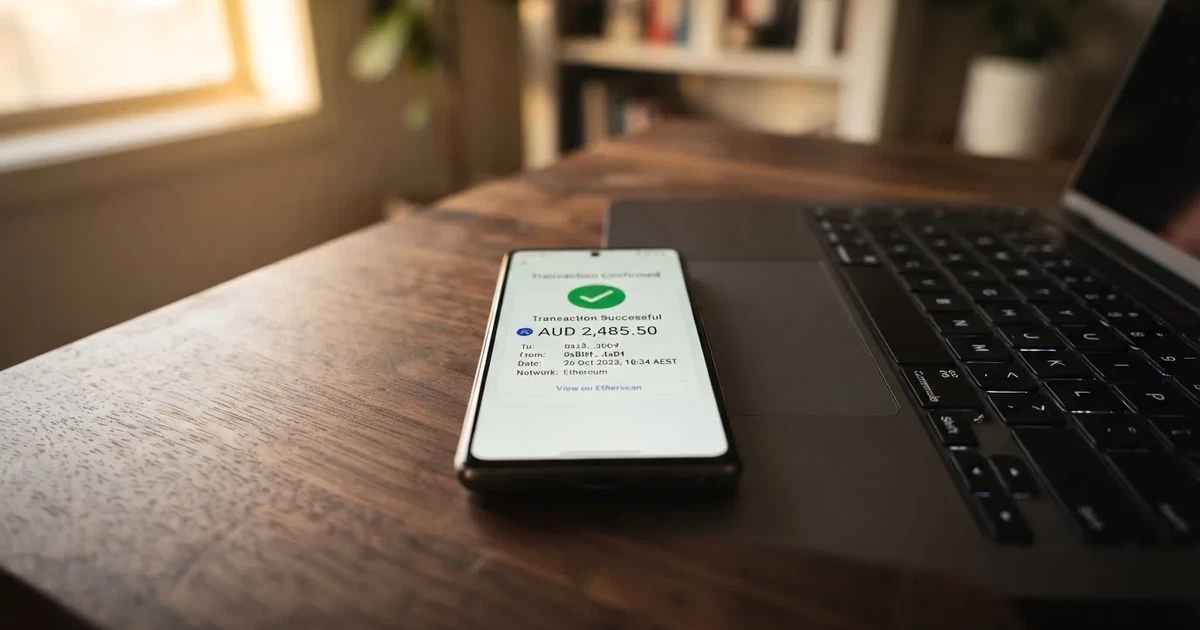
Ethereum produces a new block roughly every 12 seconds. A casino cashier typically credits an ETH deposit after a small number of confirmations — often one or two for small amounts, more for larger ones. Once the deposit has cleared the confirmation threshold, the casino credits the account in its internal balance, which may be denominated in USD or in crypto at a fixed rate. The on-chain transaction is final at that point: the ETH has left the player’s wallet, and only the casino’s internal ledger record connects the player to the funds.
Network Fees (Gas)
Every Ethereum transaction pays a network fee, known as gas, which goes to the validators processing the transaction rather than to the casino. Gas fees fluctuate with network congestion and have risen and fallen through the cycle of Ethereum’s history. The fee is deducted from the player’s wallet before the transfer reaches the casino, and the casino receives the net amount. On a low-fee day the deduction is trivial; on a high-fee day the deduction can be meaningful relative to a small deposit. The player sees the fee in their wallet software before signing the transaction, and the casino has no say in the amount.
Wallet Identity and On-Chain Traceability
An Ethereum wallet address is a string of characters with no name attached to it. The casino sees the address, not the person behind it. What the blockchain sees, however, is every transaction the address has ever made, and analytics firms exist whose entire business is clustering wallet addresses and linking them to known services. A player who funds an offshore casino account from a wallet they have used elsewhere has, in effect, handed the casino a public audit trail of their prior crypto activity — which exchanges they bought from, which other services they used, how much they hold. The wallet is pseudonymous, not anonymous, and the distinction matters for anyone who treats crypto deposit as a privacy measure.
Withdrawal Mechanics
A withdrawal at an ETH-accepting casino reverses the deposit flow: the player requests a withdrawal in their casino balance, the casino processes it manually or automatically, and ETH is sent from the casino’s hot wallet to the address the player provides. The same gas fee applies, this time paid by the casino or deducted from the withdrawal amount depending on the operator’s terms. Withdrawal processing times at offshore sites vary from instant to several business days depending on the operator’s internal review queue, and the on-chain settlement itself is final once confirmed. If the operator delays the internal review, the funds remain on the operator’s balance; if the operator declines the withdrawal, the player’s recourse is limited to the operator’s own complaints process, which sits outside any Australian framework.
Crypto Exchange Registration in Australia
Any business providing digital currency exchange services to Australian customers must register with AUSTRAC as a Digital Currency Exchange (DCE) provider, regardless of where the business is incorporated. Operating an unregistered exchange is a criminal offence. From 31 March 2026 the registration requirement expanded beyond crypto-to-fiat exchange to also cover crypto-to-crypto exchange platforms, digital asset transferors, digital asset custody providers, and stablecoin issuers and distributors. AUSTRAC requires DCE providers on its register to renew their registration every three years, or the registration automatically expires under the AML/CTF Act. An Australian reader who buys ETH through an exchange that is not on the DCE register is using a service that is itself in breach of Australian law — a separate compliance problem from the offshore casino question.
The Path That Does Exist for Australian Players
The honest framing for an Australian reader who wants to use crypto to fund gambling is that the locally licensed option does not take crypto, and the offshore option takes crypto at the cost of Australian consumer protection, Australian complaints pathways and the persistent risk of the ACMA blocking the site. The choice is not between a good ETH casino and a bad one. It is between a licensed Australian wagering service that accepts debit card, bank transfer, PayID/Osko and BPAY only, and an offshore casino that accepts ETH but sits outside the Australian frame entirely.
For a reader whose interest is wagering on races and sport before the event, the Northern Territory-licensed operators remain the lawful option. For a reader whose interest is online casino games and pokies, there is no lawful Australian option that accepts ETH, and the Interactive Gambling Act 2001 is the reason. The block list the ACMA maintains, with its long-run average of roughly 22 sites added per month, is the regulator’s response to the demand the locally licensed frame cannot meet, and the published warnings over the eleven brands above are the most recent named examples of that response.
The practical question for the reader is not which offshore ETH casino pays out fastest or has the best bonus — those are questions the operator’s marketing copy will answer, and the ACMA’s enforcement record will contradict. The practical question is whether the activity the reader wants to fund is one the Australian regulatory frame permits at all, and for online casino games and pokies the answer is that it does not, regardless of the coin.
Frequently Asked Questions
Is it legal for a casino site to accept Ethereum from a player in Australia?
No. The Interactive Gambling Act 2001 prohibits the provision of online casino games, online pokies and in-play betting to a person in Australia, and the prohibition applies to the activity rather than the funding method. A 2023 amendment extended the ban to digital currency as a payment method for licensed wagering, alongside credit cards. The site offering an Australian player an ETH deposit is operating outside the Australian regulatory frame.
How does an Ethereum deposit get confirmed before it is credited to a casino account?
Ethereum produces a new block roughly every 12 seconds under proof-of-stake consensus. A casino cashier typically credits a deposit after one or two confirmations for small amounts and more for larger ones. The on-chain transaction is final once confirmed, and the funds have left the player’s wallet permanently regardless of whether the casino credits the account promptly.
Are network fees deducted from an Ethereum deposit before it reaches a casino balance?
Yes. Every Ethereum transaction pays a gas fee to the network validators, and the fee is deducted from the sending wallet before the transfer reaches the recipient. The casino receives the net amount, and the player sees the fee in their wallet software before signing the transaction. Gas fees fluctuate with network congestion and can be meaningful relative to a small deposit on a high-fee day.
Do Ethereum slot titles pay out any differently from the same game funded with cash?
No. The slot title, its reels, its paylines, its hit frequency and its return-to-player figure are properties of the game engine licensed from the provider, not of the funding rail. An ETH-funded spin on a Pragmatic Play title pays the same combination probabilities as a card-funded spin on the same title. The choice of coin affects settlement speed and the reversibility of the transfer, not the game’s mathematics.
Is an Ethereum wallet address linked to a person’s identity by the casino?
The wallet address itself carries no name. The casino sees the address and the transaction history, not the person behind it. However, the blockchain records every transaction the address has ever made, and blockchain analytics firms cluster addresses and link them to known services. A wallet that has been used to buy ETH on a registered exchange, or to interact with other services, carries a public audit trail that pseudonymous does not mean anonymous.